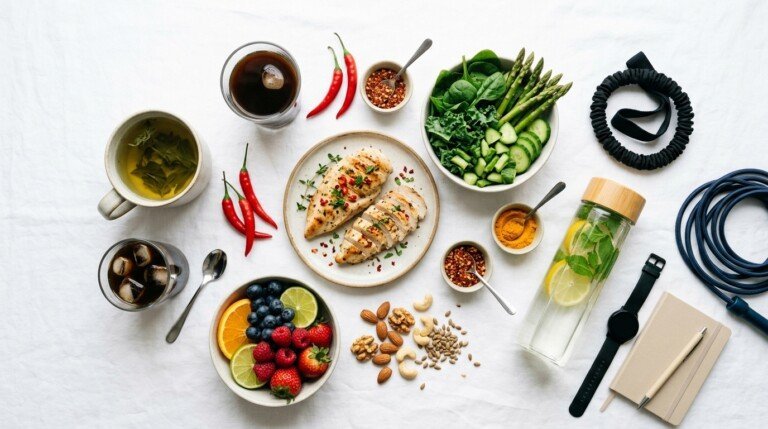
How to Increase Sex Drive Naturally: Foods & Habits
If your sex drive feels lower than it used to, the answer is rarely one magical food or drink. How to Increase Sex Drive Naturally is really about creating the conditions in which sexual desire can function normally: adequate sleep, regular movement, good nutrition, manageable stress, healthy relationships, and enough overall energy.
That matters because libido is not an isolated switch. Sexual desire is influenced by physical health, emotional wellbeing, lifestyle, relationships, medications, hormones, and the context in which intimacy happens. Mayo Clinic describes male libido as something that can be affected by factors including stress, fatigue, alcohol, medications, depression, health conditions, and hormonal changes. (Mayo Clinic)
So if you are looking for the fastest way to increase sex drive naturally, be careful with promises about a particular food or drink producing an immediate transformation.
Some nutrients matter when you are deficient. Certain dietary patterns are associated with better cardiovascular and metabolic health, which can support sexual function. Exercise and sleep can also make a meaningful difference.
But “eat this tonight and feel instantly horny” is usually marketing, not a reliable biological rule.
What is the fastest way to increase sex drive naturally?
The fastest meaningful improvement usually comes from identifying what is suppressing your desire rather than adding a supposedly powerful aphrodisiac.
If you have been sleeping badly, constantly stressed, drinking heavily, barely exercising, or eating poorly, correcting those factors can be more relevant than searching for a single libido boosting ingredient.
There is also a difference between increasing desire and improving sexual performance.
A person can have strong sexual desire but struggle with erections. Another person can have normal erections but very little interest in sex. Someone else can experience both.
That distinction matters because foods and habits that support general cardiovascular health may help the physical side of sexual function without necessarily producing an immediate increase in sexual desire.
Regular physical activity is one of the more practical places to start. Exercise can support cardiovascular health, mood, stamina, and body confidence. Mayo Clinic includes regular exercise, healthy eating, good sleep, smoking cessation, and management of alcohol or drug use among lifestyle measures that can support erectile health.
Sleep deserves equal attention.
A man who is chronically exhausted may interpret his reduced interest in sex as a libido disorder when the more immediate problem is inadequate recovery. Sleep problems can also overlap with hormonal and sexual-health issues. Mayo Clinic notes that untreated obstructive sleep apnea can contribute to unusually low testosterone and that treating the sleep disorder can improve sex drive when it is a contributing factor.
So the quickest sensible strategy is not a “natural Viagra.”
It is a short audit of the things most likely to interfere with desire:
- Are you sleeping enough?
- Are you physically active?
- Are you eating a reasonably balanced diet?
- Are you drinking heavily?
- Are you constantly stressed?
- Has your mood changed?
- Has your relationship changed?
- Did your libido change after starting a medication?
- Are you also experiencing erectile or other sexual problems?
If several answers point in the wrong direction, there is probably more value in fixing those factors than buying an expensive libido product.
And if your loss of desire is persistent or unexplained, Low Libido in Men: Causes and How to Get It Back addresses the medical and psychological causes in greater depth.
Which foods are actually linked to sex drive?
There is no single food proven to reliably produce a dramatic increase in male libido.
That does not mean nutrition is irrelevant.
Food influences energy availability, cardiovascular health, metabolic health, body composition, and nutrient status. All of those can indirectly affect sexual wellbeing.
The better question is therefore not “Which food turns on sex drive?”
It is:
Which eating patterns support the physical and mental conditions associated with healthy sexual function?
A varied diet containing vegetables, fruits, whole grains, legumes, nuts, seeds, fish, and other nutrient-dense foods is a much more defensible strategy than relying on one supposed aphrodisiac.
Mayo Clinic’s guidance on erectile health specifically emphasizes eating well, including fruits and vegetables, alongside physical activity, sleep, and other lifestyle factors.
Evidence-based options (zinc-rich foods, etc.)
Zinc is often mentioned in men’s sexual-health discussions because it is important for normal biological function.
That does not mean taking more zinc automatically increases libido.
The distinction is important.
If someone is deficient in an essential nutrient, correcting the deficiency can support normal physiology. That is very different from taking large amounts of a nutrient when no deficiency exists and expecting an extra sexual effect.
Zinc-rich foods include oysters, meat, poultry, dairy products, beans, nuts, seeds, and some fortified foods.
The practical advantage of getting zinc from food is that it fits into an overall balanced diet rather than turning one nutrient into a supposed sexual-performance shortcut.
The same principle applies to other nutrients frequently promoted for libido.
A nutrient deficiency can matter.
More is not necessarily better.
A balanced eating pattern also gives you a wider range of nutrients that work together to support normal health.

Foods that support the bigger picture
Rather than ranking foods according to how “powerful” they are in the bedroom, think about what each food contributes to the overall pattern.
Oily fish provides protein and healthy fats and can fit into a cardiovascular-friendly eating pattern.
Nuts and seeds provide healthy fats, minerals, protein, and other nutrients.
Beans and lentils provide plant protein, fiber, and minerals.
Leafy vegetables provide folate, vitamin K, carotenoids, and other compounds.
Fruit provides fiber, vitamins, minerals, and naturally occurring plant compounds.
Whole grains provide fiber and a range of nutrients that refined carbohydrates may contain in smaller amounts.
Eggs, poultry, and other protein sources can help build a balanced diet when combined with vegetables, fruits, whole grains, or legumes.
None of these should be presented as a guaranteed libido enhancer.
Their value is that they contribute to the kind of nutritional foundation that supports overall health.
That is a much less exciting claim than “eat this and increase testosterone tonight.”
It is also much more defensible.
What about zinc specifically?
Zinc deserves attention because inadequate intake can be a genuine nutritional issue, but there is no reason to assume that every man with low libido is zinc deficient.
If you eat a varied diet, you may already be getting enough.
Taking excessive amounts of zinc can also cause problems, including gastrointestinal symptoms and interference with copper status.
That is why a food-first approach is sensible unless a healthcare professional identifies a reason to supplement.
The same rule applies to vitamins marketed as libido boosters.
A vitamin is not automatically a sexual-performance compound simply because the body needs it.
If your libido has changed substantially, looking for the underlying cause is more useful than guessing which nutrient you might be missing.
“Natural Viagra” claims: what’s real
The phrase “natural Viagra” should immediately make you skeptical.
It is commonly used to describe foods, herbs, drinks, and supplements that supposedly produce Viagra-like effects.
But Viagra and similar prescription medications work through specific pharmacological mechanisms. A food does not become equivalent to a prescription drug simply because a marketing page calls it “natural Viagra.”
The same warning applies to products sold as herbal sexual enhancers.
NCCIH notes that many dietary supplements marketed for men’s sexual health have not been shown to be safe or effective, and the FDA has warned about some products marketed as “herbal Viagra” because they may contain undeclared drug ingredients. (NCCIH)
That creates a particularly important distinction:
A healthy food can support health without being a medication.
Garlic, watermelon, beetroot, pomegranate, dark chocolate, ginger, chili, and other foods are frequently described online as natural Viagra alternatives.
Some contain compounds that have interesting biological properties.
That does not prove that eating them will create a clinically meaningful increase in sexual desire or erection quality.
A good nutrition article should separate biological plausibility from demonstrated human outcomes.
That is where many online libido articles go wrong.
They find an interesting compound in a food, connect it to blood flow or hormones, and then leap to the conclusion that the food will dramatically improve sexual performance.
That leap is not justified.

What drinks increase sex drive?
There is no drink that reliably switches male libido on in the way online marketing sometimes suggests.
Water is probably the least exciting answer, but hydration matters because dehydration can contribute to fatigue and reduced physical wellbeing.
That does not make water an aphrodisiac.
It simply means being adequately hydrated is part of taking care of the body.
Other drinks deserve a more cautious approach.
Alcohol is particularly important because it is often treated as a social lubricant even though heavier drinking can work against sexual health. Mayo Clinic identifies alcohol use as a factor that can contribute to reduced sex drive and erectile problems. (Mayo Clinic)
A small amount of alcohol may make some people feel more relaxed, but feeling less inhibited is not the same thing as having a healthier libido.
Heavy drinking can impair judgment, interfere with sexual response, and contribute to longer-term health problems.
So if your goal is better sexual health, replacing excessive alcohol with water or another non-alcoholic drink may be more meaningful than searching for a special libido beverage.

What about pomegranate juice?
Pomegranate is frequently promoted in men’s sexual-health content because it contains polyphenols and has been studied in relation to cardiovascular health.
That makes it an interesting food, but “interesting” is not the same as “proven libido booster.”
You should not expect a glass of pomegranate juice to create an immediate surge in sexual desire.
If you enjoy it, it can be part of a balanced diet.
That is enough.
What about coffee?
Coffee is more complicated.
Caffeine can increase alertness and reduce the subjective feeling of fatigue in some people.
If exhaustion is making you uninterested in sex, feeling more awake could indirectly change how you feel.
But caffeine is not a direct libido medication.
Too much caffeine can also interfere with sleep, especially when consumed later in the day. If poor sleep is already contributing to low libido, using caffeine to compensate for inadequate rest can create a cycle that works against you.
The same principle applies to energy drinks.
More stimulation does not necessarily mean more sexual desire.
What daily habits support healthy libido?
If you want a natural approach that has a realistic chance of helping, habits deserve more attention than exotic ingredients.
Sexual desire is connected to the rest of your life.
When your physical health, mental health, sleep, and relationship are all under pressure, libido can become one of the first things to change.

Protect your sleep
Sleep should not be treated as an optional recovery tool.
Consistently poor sleep can affect mood, energy, concentration, stress tolerance, and overall health.
For some men, improving sleep may make them feel more interested in sex simply because they no longer feel exhausted all the time.
If you snore heavily, wake frequently, wake up feeling unrefreshed, or experience significant daytime sleepiness, it is worth discussing sleep quality with a healthcare professional.
The issue may be more than simply staying up too late.
Sleep apnea, for example, can be associated with hormonal and sexual-health problems.
Exercise consistently
Exercise is another habit with multiple potential benefits.
Regular physical activity supports cardiovascular health, mood, stamina, and metabolic health.
Those effects matter because sexual response depends on a combination of brain, blood vessels, nerves, hormones, emotions, and physical wellbeing.
You do not need to turn your life into a professional training program.
Consistency matters more than an extreme routine.
Walking, cycling, swimming, resistance training, recreational sports, and other activities can all contribute to a more active lifestyle.
If you currently do very little physical activity, becoming more active may be more meaningful than searching for a specialized libido supplement.
Reduce the habits that work against desire
Some habits have an obvious downside.
Smoking damages cardiovascular health and is associated with erectile problems.
Heavy alcohol use can reduce sexual desire and impair sexual function.
Illicit drugs can also interfere with sexual health.
These are not glamorous topics, but they matter.
The goal is not perfection.
It is reducing the factors that repeatedly push sexual health in the wrong direction.
Make stress management practical
Stress is frequently mentioned in libido advice, but telling someone to “relax” is not useful.
A better approach is to identify where the pressure is coming from.
If your workday is overwhelming, creating a boundary between work and personal time may help.
If your mind races at night, journaling, relaxation practices, or reducing stimulating screen use before bed may be useful.
If relationship tension is affecting intimacy, having an honest conversation may matter more than changing your diet.
If anxiety is a major part of the problem, it deserves its own strategy.
Stress and Libido: How Anxiety Kills Sex Drive focuses specifically on that connection without turning every low-libido problem into a nutritional issue.
Pay attention to your relationship
Sexual desire is not purely biological.
A person can be physically healthy and still experience reduced desire when intimacy has become associated with conflict, pressure, resentment, boredom, or emotional distance.
Communication can therefore be a legitimate part of a natural libido strategy.
That does not mean scheduling intimacy guarantees desire.
It means making space for connection can remove some of the obstacles that make desire harder to access.
Do not turn libido into another performance test
This may be the most overlooked habit of all.
If you constantly monitor your libido, you can create another source of pressure.
You wake up and ask whether you feel horny.
You eat a particular food and wait for an effect.
You try a drink and assess your response.
You compare yourself with your partner.
You search for another “fastest libido booster.”
Eventually, sex becomes another performance metric.
That can make the problem worse.
Healthy sexual desire is variable.
Some days you may want sex immediately.
Other days you may be distracted, tired, stressed, or simply not interested.
The objective is not maximum libido every day.
It is a healthy and satisfying sexual life that feels appropriate for you.
When should food and habits not be your only strategy?
Natural lifestyle changes are useful, but they should not become an excuse to ignore persistent sexual-health problems.
If your libido has dropped suddenly, remains low for a prolonged period, or is accompanied by other symptoms, speak with a healthcare professional.
This is particularly important if you also have:
- Significant fatigue
- Persistent mood changes
- Erectile difficulties
- Changes in ejaculation
- Unexplained weight changes
- Reduced muscle mass or other physical changes
- Symptoms of a sleep disorder
- A new medication that coincided with the change
- Concerns about fertility
- Other unexplained health changes
Low libido can sometimes be associated with hormonal conditions, depression, medication effects, sleep apnea, diabetes, obesity, and other health problems.
Food cannot correct every one of these problems.
Exercise cannot correct every one either.
And a supplement certainly should not be assumed to.
That is why this article should be viewed as a lifestyle-focused approach rather than a substitute for medical evaluation.
If your primary concern is persistent low desire, Low Libido in Men: Causes and How to Get It Back is the more appropriate place to understand the possible medical, psychological, medication-related, and relationship causes.
Frequently Asked Questions
1. What is the fastest way to increase sex drive?
There is no universally proven instant libido booster. The fastest meaningful improvement may come from addressing whatever is currently suppressing desire, such as poor sleep, stress, excessive alcohol, inactivity, relationship problems, medication effects, or an underlying health condition.
2. Which food is best to increase sex drive?
No single food is proven to reliably produce a dramatic increase in male libido. Nutrient-dense foods such as seafood, nuts, seeds, beans, vegetables, fruit, whole grains, and other balanced choices can support overall health, but they should not be treated as instant aphrodisiacs.
3. What drink increases sex drive?
No drink has been established as a reliable, immediate male libido booster. Staying hydrated supports general wellbeing, while excessive alcohol can work against sexual desire and function.
4. What triggers high sex drive?
Sex drive can be influenced by hormones, mood, physical health, sleep, relationship circumstances, stress levels, attraction, and individual differences. There is no single trigger that produces a high libido in every man.
The Natural Approach That Actually Makes Sense
The internet makes libido sound as though it can be switched on with the right ingredient.
Real life is less dramatic.
A healthy sex drive is usually supported by a healthy body, adequate recovery, manageable stress, emotional wellbeing, and satisfying relationships.
That means the most useful natural strategy is not necessarily finding the strongest aphrodisiac.
It is removing the things that are quietly suppressing desire.
Sleep better if you are chronically exhausted.
Move your body if you are inactive.
Eat a varied diet instead of chasing one “libido food.”
Keep alcohol from becoming a regular obstacle.
Pay attention to stress.
Protect your relationships.
And if your libido has changed substantially without an obvious explanation, do not spend months trying random foods and supplements while ignoring the possibility of an underlying problem.
There is also a useful distinction between supporting sexual health and treating sexual dysfunction.
A healthy diet can support the body.
Exercise can support cardiovascular health and mood.
Good sleep can improve energy and recovery.
None of those claims means they can replace medical treatment when a specific condition is present.
That is the more realistic answer to How to Increase Sex Drive Naturally.
You are not looking for a magic food.
You are creating an environment in which normal sexual desire has a better chance to return and remain healthy.
And if the change in libido persists, becomes distressing, or comes with other symptoms, the smartest next step is not another “natural Viagra” claim.
It is finding out why your sex drive changed in the first place.
Disclaimer:
This post may contain affiliate links. If you purchase through them, we may earn a small commission at no extra cost to you. Also, this content is for informational purposes only and does not substitute professional medical advice.
Know Your Body Better
Use our free tools to track your cycle, find your fertile window, estimate your due date, and more.
Open Free Tools →