AI Tools for SEO Writing: 7 Proven Steps That Actually Rank
If your AI-written blog posts aren’t ranking, the problem is not the tools.
It’s your execution.
Most bloggers are using AI tools for SEO writing the wrong way:
• They generate one big draft
• They publish it raw
• They skip structure
• They ignore subtopics
• They don’t optimize headings
• They don’t rewrite robotic sections
• They don’t build internal links
That workflow guarantees failure.
SEO blog writing is not about generating text.
It’s about building search-intent-aligned, structured, optimized content that Google actually rewards.
This guide shows the exact execution system I use to write SEO blog posts using AI tools — step by step — without killing rankings or publishing thin garbage.
If you’re still evaluating which platforms to use for blogging overall, start with my main breakdown of the best AI writing tools for bloggers.
That guide covers long-form writing, affiliate content, and content scaling — this page focuses only on execution.
No hype.
No tool promotion.
No shortcuts.
Just the workflow that actually works.
Why Most AI SEO Blog Posts Fail
Most bloggers think SEO writing means:
• Generate a draft
• Paste it into WordPress
• Add a focus keyword
• Hit publish
That’s not SEO writing.
That’s content spam.
AI tools fail at rankings because bloggers misuse them.
Here’s what actually kills AI-written SEO blog posts:
• No search intent alignment
• No subtopic coverage
• No topical depth
• No internal linking
• No structure
• No rewriting
• No human editing
• No optimization flow
The tool is not the issue.
The execution is.
Most bloggers blame tools when rankings fail, but the real problem is workflow misuse.
If you want to understand how AI writing tools for SEO actually affect rankings, structure, and topical depth, I break that down separately.
What “SEO Writing Execution” Actually Means
Using AI tools for SEO writing is not about one button.
It’s a multi-step production system:
- SERP-aligned outline
- Section-by-section drafting
- Subtopic expansion
- Rewriting for originality
- Heading optimization
- Internal linking logic
- Readability cleanup
- Final SEO polish
If you skip any of these, your content will underperform.
The SEO Blog Writing Stack (Minimal Tools Required)
This workflow works with any decent stack of:
• One drafting tool
• One rewriting tool
• One editing tool
• One SEO research tool
You don’t need 10 tools.
You need the right sequence.
This is the same execution logic used in ranking-focused workflows and long-form SEO production.
If you’re choosing tools based on SEO capability, that belongs in the buyer guide to AI writing tools for SEO content — not here.
This page is about execution.
If you’re still deciding which platforms are actually capable of producing ranking-ready drafts, see my buyer guide on AI writing tools for SEO content.
That comparison focuses on output quality, long-form handling, and SEO usefulness.
Step-by-Step Workflow to Write SEO Blog Posts With AI
This is the actual system.
No shortcuts.
No fluff.
Step 1 — Build an SEO-Aligned Outline
This is the most important step.
And the one most bloggers skip.
Before writing anything:
You must define:
• Primary keyword
• Search intent
• Subtopics Google expects
• Question coverage
• Content depth level
Your outline determines 80% of ranking success.
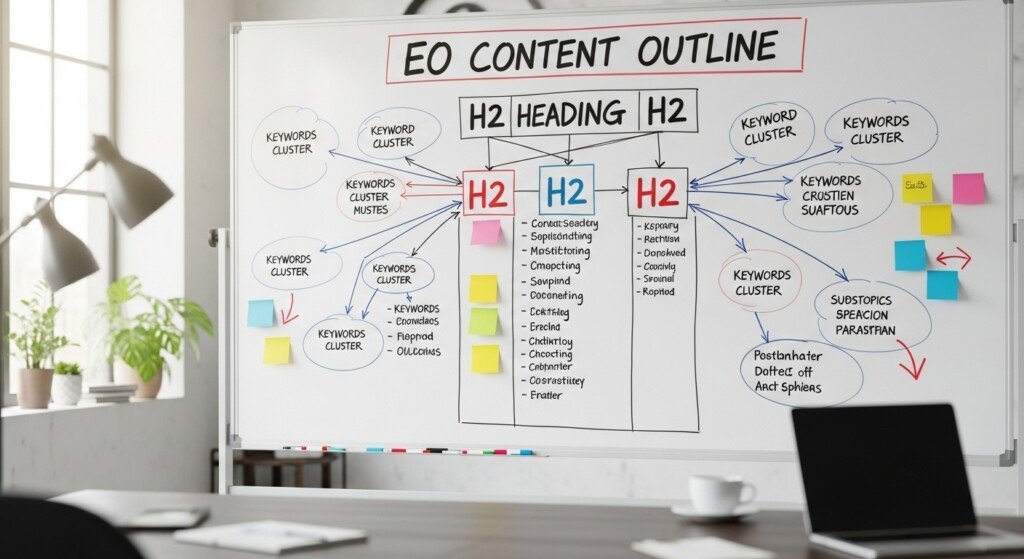
How to Build the Outline
- Enter your keyword into an SEO tool
- Analyze top-ranking pages
- Extract:
• Common H2 headings
• Repeated subtopics
• FAQ questions
• Section structure
• Content gaps
- Build an outline with:
• H1
• 6–10 H2 sections
• Supporting H3 subtopics
• FAQ section
Do NOT let AI invent your structure.
AI guesses wrong.
You define structure.
AI fills it.
Step 2 — Draft Each Section With AI
Never generate the full article in one prompt.
That’s how you get incoherent garbage.
You write SEO blog posts section by section.
Drafting Prompt (Core)
Use this structure:
Write a detailed section for the heading: [H2 Title]
Topic: [Primary keyword]
Search intent: [Informational / Buyer / Comparison]
Subtopics to include:
– [Subtopic 1]
– [Subtopic 2]
– [Subtopic 3]Tone: Clear, practical, non-salesy
Avoid fluff and repetition.
Use simple language.
Generate each H2 separately.
Paste into your draft document.

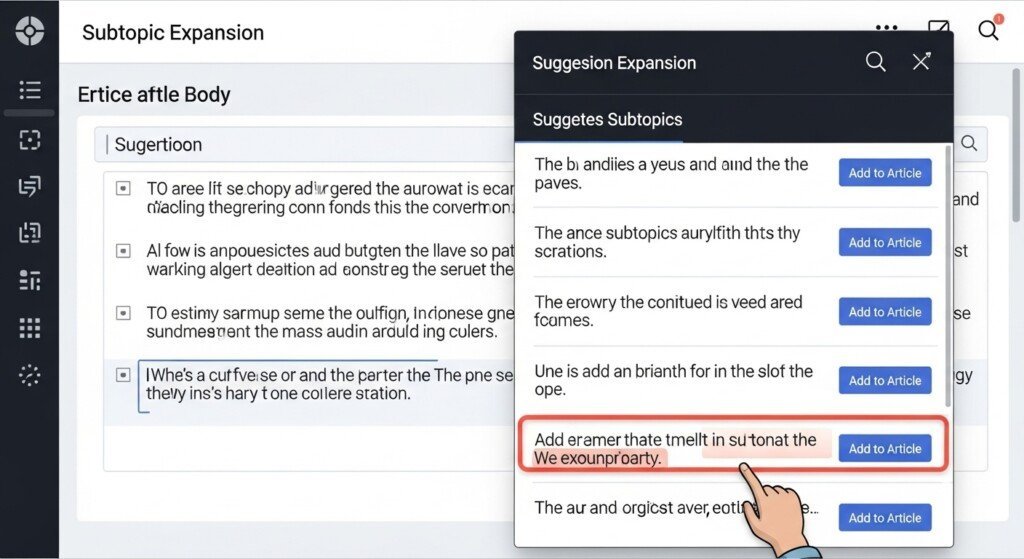
Step 3 — Expand Subtopics for Topical Depth
AI drafts are shallow.
You must expand.
For each H2:
• Add missing subtopics
• Add examples
• Add explanations
• Add comparisons
• Add internal logic
Expansion Prompt
Expand this section by adding:
– Deeper explanation
– One practical example
– One clarification pointKeep tone simple and non-repetitive.
Do this for every major section.
This is where topical authority is built.
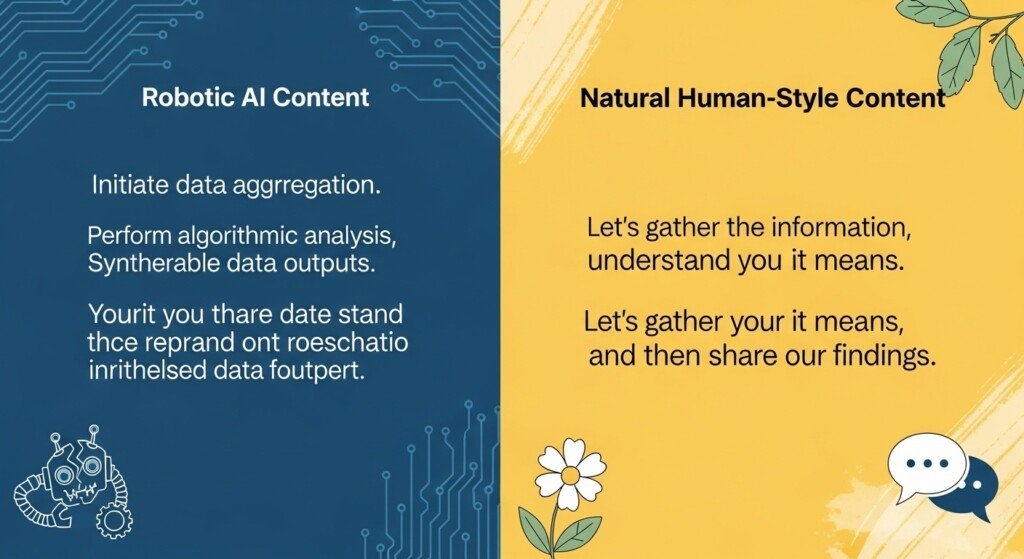
Step 4 — Rewrite Robotic Sections
Raw AI content always sounds robotic.
Always.
You must rewrite.
Rewriting Prompt
Rewrite this section to sound more natural, human, and clear.
Remove repetition.
Improve flow.
Simplify sentences.
Keep meaning unchanged.
Run this on:
• Intros
• Conclusions
• Long paragraphs
• Repetitive sections
This step alone improves SEO performance dramatically.
Step 5 — Optimize Headings and Structure
Now fix structure.
Your H2 headings must:
• Match search intent
• Contain keyword variations
• Be logically ordered
• Avoid duplication
• Avoid fluff
Heading Optimization Prompt
Rewrite these headings to be:
– SEO-friendly
– Clear
– Non-clickbait
– Intent-alignedDo not change meaning.
This prevents heading mismatch issues.
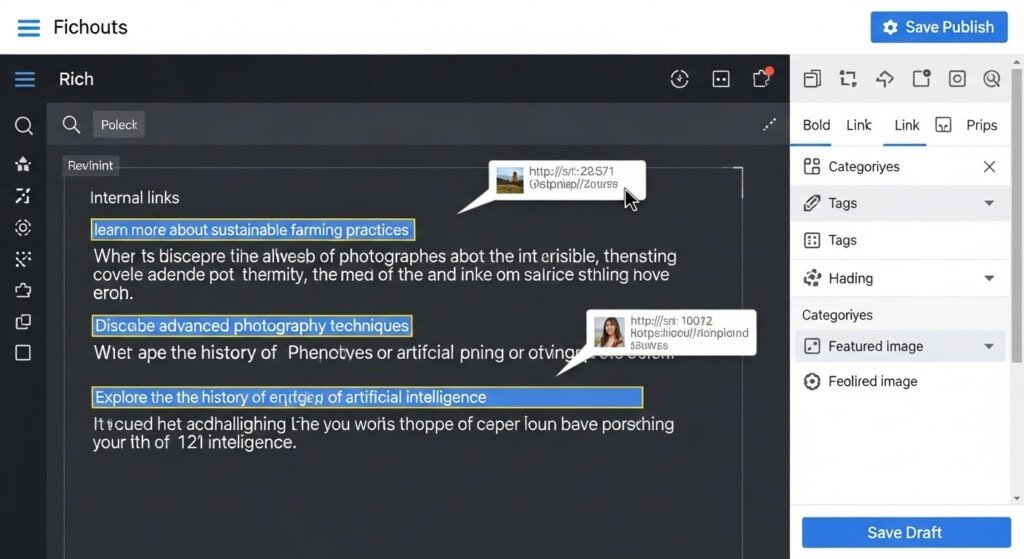
Step 6 — Add Internal Linking Logic
This is where most AI content fails SEO.
Internal links build:
• Topical authority
• Crawl paths
• Contextual relevance
Internal Linking Rules
For each article:
• Add 2–5 internal links
• Link to:
– Pillar page
– Tier-2 pages
– Supporting content
• Use natural anchors
• Avoid exact-match spam
• Place links in:
– Explanatory sections
– Transitional paragraphs
– Supporting points
For deeper execution workflows, see my breakdown of AI tools for SEO blog writing.
It shows how to turn outlines into fully optimized SEO posts without publishing thin content.
Step 7 — Improve Readability and Clarity
Now clean the content.
Fix:
• Long sentences
• Passive voice
• Jargon
• Awkward phrasing
• Redundant words
Readability Prompt
Simplify this section for readability.
Use shorter sentences.
Remove unnecessary words.
Keep meaning intact.
This directly improves engagement signals.
Step 8 — Final SEO Optimization Flow
This is the last pass.
Do not skip it.
Final Optimization Checklist
• Add primary keyword to:
– H1
– First paragraph
– One H2
– One image alt
– Meta title
– Meta description
• Add secondary keywords naturally
• Add FAQ schema questions
• Add internal links
• Fix grammar
• Check flow
• Remove repetition
• Add clarity

Prompt Examples That Actually Work
1) Outline Generation Prompt
Create an SEO-aligned blog outline for the keyword:
“ai tools for seo writing”Include:
– H1
– 8–10 H2 headings
– Supporting H3 subtopics
– FAQ sectionAlign with informational + execution intent.
2) Section Drafting Prompt
Write a 400-word section for the heading:
“Why Most AI SEO Blog Posts Fail”Include:
– Execution mistakes
– Workflow failures
– Structural issuesTone: Clear, practical, non-salesy.
3) Expansion Prompt
Expand this section by adding:
– One deeper explanation
– One practical example
– One supporting argumentAvoid repetition.
4) Rewriting Prompt
Rewrite this content to:
– Remove robotic tone
– Improve sentence flow
– Simplify language
– Keep meaning intact.
5) Internal Linking Prompt
Insert a natural internal link to:
“AI tools for SEO blog writing”Use a contextual anchor.
Do not make it salesy.
Common Execution Mistakes
These kill rankings.
Mistake #1 — One-Prompt Articles
Never generate full posts in one go.
Mistake #2 — No Outline
No structure = no rankings.
Mistake #3 — No Subtopic Coverage
Thin content fails.
Mistake #4 — No Rewriting
Robotic tone kills trust.
Mistake #5 — No Internal Links
No topical authority.
How This Workflow Supports Rankings
This system:
• Matches search intent
• Covers subtopics
• Builds topical depth
• Improves originality
• Improves structure
• Improves readability
• Adds internal linking
• Reduces thin content
This is how AI tools for SEO writing actually work.
Not by generating text.
By supporting execution.
Final Verdict
AI tools do not rank content.
Execution does.
If you:
• Build SEO-aligned outlines
• Draft section by section
• Expand subtopics
• Rewrite robotic text
• Optimize structure
• Add internal links
• Improve readability
Your AI-written blog posts can rank.
If you skip these steps:
They won’t.
This workflow is not optional.
It is the difference between publishable SEO content and thin garbage.
If you want tool-by-tool SEO capability comparisons, see my breakdown of AI tools for long-form writing.
If you want monetization workflows, see AI tools for affiliate content.
This page exists for one job only:
Teaching execution.
And now you have it.
FAQ
1. What are the best AI tools for SEO writing in 2026?
The best AI tools for SEO writing in 2026 are Jasper, Frase, Writesonic, Grammarly, and QuillBot. Jasper handles long-form drafting, Frase builds SEO-aligned outlines, Writesonic works for budget drafts, Grammarly improves readability, and QuillBot fixes robotic tone and originality issues. No single tool does everything, so serious bloggers use a stack.
2. Can AI tools write SEO blog posts that actually rank?
Yes — but only when used with a proper workflow.
AI tools can generate drafts, expand subtopics, and structure sections, but rankings depend on search intent alignment, topical depth, internal linking, and human editing. Publishing raw AI output without optimization will not rank long-term.
3. Do I need prompts to use AI tools for SEO writing?
Yes.
Generic prompts produce thin, repetitive content.
Effective SEO writing requires structured prompts for:
• Outline generation
• Section expansion
• Subtopic coverage
• Rewriting robotic text
• Improving clarity and tone
Without prompt control, AI tools behave like typing assistants, not SEO tools.
4. How do bloggers actually use AI tools for SEO writing?
Real SEO bloggers use a multi-step workflow:
• Build an SEO outline using Frase
• Draft sections using Jasper or Writesonic
• Expand subtopics for topical depth
• Rewrite robotic sections using QuillBot
• Polish grammar and clarity using Grammarly
• Add internal links manually
• Final SEO optimization pass
This hybrid execution flow produces ranking-ready content.
5. Is one AI tool enough for SEO blog writing?
No.
No single AI tool handles SEO research, drafting, rewriting, and polishing well.
A minimum usable stack is:
• Frase (SEO research + outlines)
• Jasper or Writesonic (drafting)
• QuillBot (rewriting)
• Grammarly (polishing)
Using one tool alone limits content quality and ranking stability.
Disclaimer
Some links on this page may be affiliate links.
If you click and purchase, I may earn a small commission at no extra cost to you.
I only recommend tools I genuinely use or believe are useful for bloggers.
This helps support the site and keep content free.