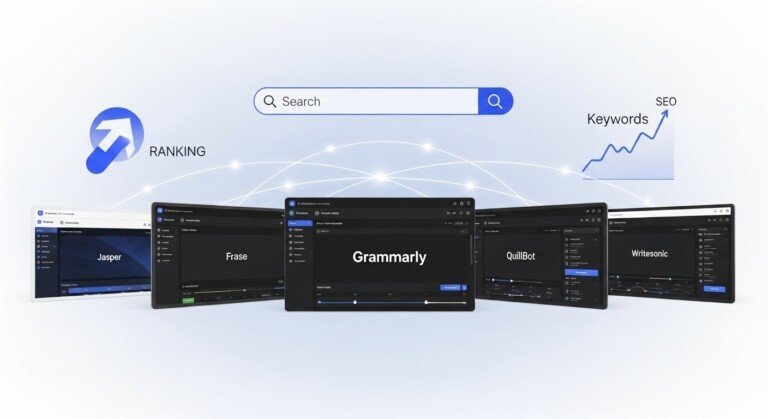

AI Writing Tools for Affiliate Marketing That Actually Convert
AI writing tools for affiliate marketing are not about shortcuts.
They are about controlling scale without destroying conversion quality.
Most affiliate blogs don’t fail because the niche is bad.
They fail because the content production model breaks.
Here’s what actually happens to most affiliate bloggers:
- They start manually writing reviews
- They publish slowly but carefully
- They see some traction
- They try to scale
- Quality drops
- Trust drops
- Conversions die
AI writing tools exist to prevent that exact collapse — but only if used with the correct boundaries.
Best AI writing tools for bloggers only work for affiliate blogs when they are used as part of a controlled content system, not as a replacement for judgment or strategy. This is why understanding how AI writing tools fit into a complete blogging ecosystem matters more than choosing any specific platform.
This guide is not about tools.
It is about how AI fits into affiliate content systems without killing monetization.
No SEO risk theory.
No pricing talk.
No free tools.
No human vs AI ideology.
Only affiliate execution.
Why Affiliate Content Is Different From Normal Blog Content
Affiliate content is not neutral.
Every affiliate page has commercial intent, whether you admit it or not.
That changes reader behavior completely.
Affiliate readers are:
- More skeptical
- More defensive
- Faster to leave
- Slower to trust
A normal informational blog post can survive being mediocre.
An affiliate post cannot.
This is why generic AI usage fails so badly for affiliate blogs.
AI is trained to be:
- Neutral
- Safe
- Vague
- Balanced to a fault
Affiliate content requires:
- Conditional judgment
- Clear positioning
- Honest trade-offs
- Explicit recommendations
If AI controls those elements, conversions drop immediately.
So the correct question is not:
“Can AI write affiliate content?”
The correct question is:
“Which parts of affiliate content must never be automated?”
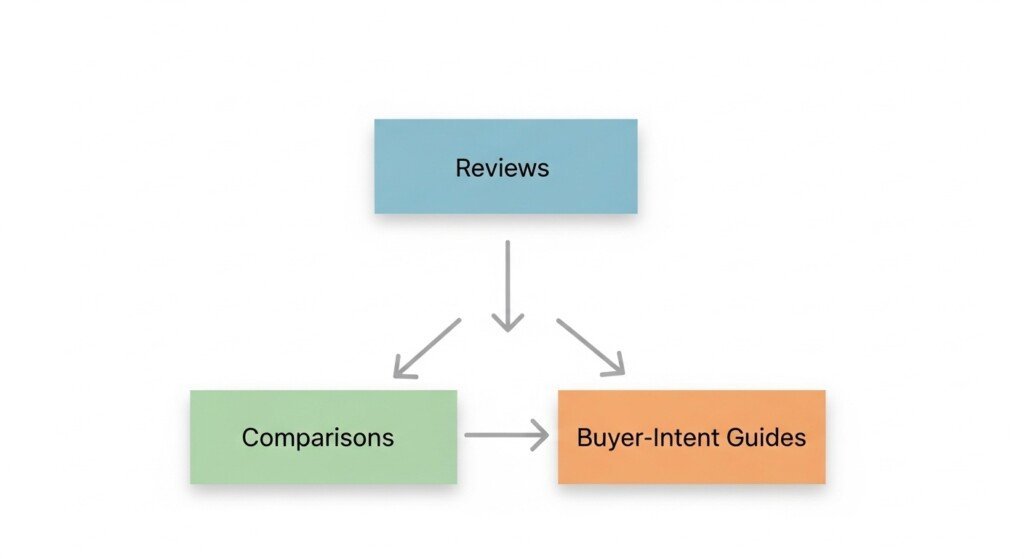
The Only 3 Affiliate Content Types That Matter
Affiliate blogs that earn consistently are structured.
They do not publish random reviews.
They publish three specific content types, each with a different role.
1. Product Review Content (Decision Pages)
These pages answer one question only:
“Should I buy this product?”
Examples:
- “Product X review”
- “Is Tool Y worth it?”
- “Product Z pros and cons”
These pages convert ready buyers.
They require:
- Clear benefits
- Clear drawbacks
- Clear verdicts
- Clear audience fit
AI can assist here — but only in controlled ways.
2. Comparison & “Best Of” Content (Money Pages)
These pages decide where the money flows.
Examples:
- “Best AI tools for affiliate blogs”
- “Tool A vs Tool B”
- “Top platforms for X in 2026”
These pages:
- Rank for high-intent keywords
- Funnel traffic to reviews
- Generate the majority of affiliate revenue
They are also the easiest to destroy with bad AI usage.
Why?
Because rankings and conversions depend on relative judgment, not absolute descriptions.
3. Buyer-Intent Informational Content (Trust Builders)
These pages prepare readers to trust you before the pitch.
Examples:
- “How to choose the right AI tool for affiliate blogging”
- “What to look for in affiliate writing software”
- “Affiliate content mistakes beginners make”
These pages:
- Warm traffic
- Reduce skepticism
- Increase conversion rates across the site
This is the safest and most underused AI use case in affiliate blogging.
Where AI Writing Tools Actually Belong in Affiliate Content
AI writing tools should never own the entire article.
They should support execution, not judgment.
Here is the correct division of labor.
What AI Should Handle (Safely)
AI writing tools are excellent at:
- Drafting feature explanations
- Expanding benefit descriptions
- Maintaining consistent section structure
- Rewriting repetitive paragraphs
- Producing neutral comparisons
- Generating supporting explanations
These tasks are:
- Repetitive
- Time-consuming
- Low judgment
Perfect for AI.
What Must Stay Human (Non-Negotiable)
Humans must control:
- Final verdicts
- Ranking order in comparisons
- Audience fit statements
- Risk disclosures
- Downsides emphasis
- Ethical boundaries
If AI decides these, your affiliate blog becomes untrustworthy.
Not eventually.
Immediately.

Product Review Content: How AI Fits Without Killing Trust
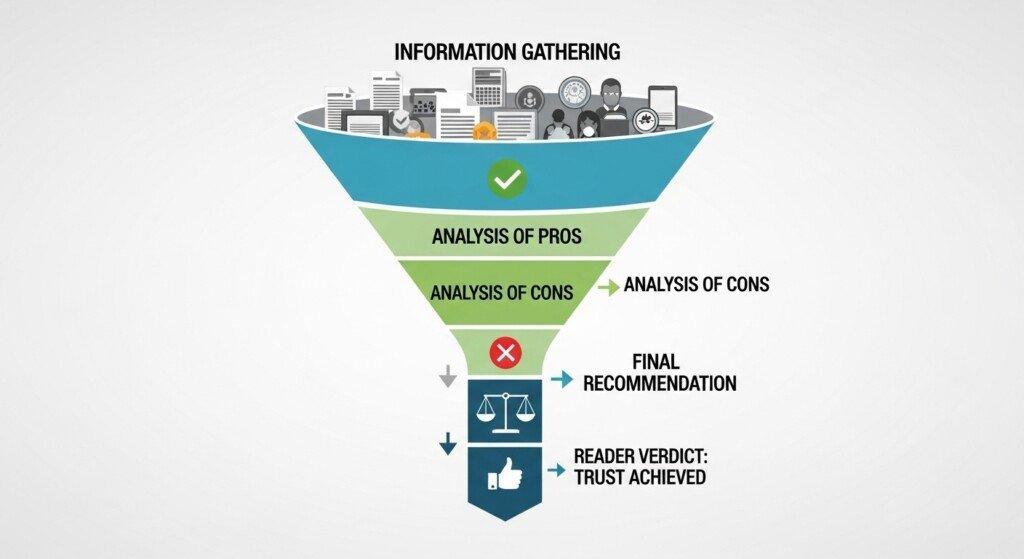
Product reviews are the most sensitive affiliate pages.
Readers are asking:
“Can I trust this recommendation with my money?”
Correct AI Usage in Reviews
AI writing tools can safely help with:
- Drafting “What it does” sections
- Explaining features in plain language
- Structuring pros and cons lists
- Summarizing use cases
- Improving clarity and flow
This speeds up production without affecting credibility.
Dangerous AI Usage in Reviews
AI must never:
- Claim personal usage
- Invent experiences
- Overstate results
- Soften real drawbacks
- Write final verdicts
The verdict section must always be human-written.
This is where trust is either built or destroyed.
For bloggers who rely heavily on product reviews as decision pages, using AI carefully at the drafting and explanation stage can dramatically reduce workload without hurting credibility. This approach becomes clearer when broken down specifically for AI tools for review articles, where structure matters more than speed.
Comparison Content: The Highest-Risk, Highest-Reward Pages
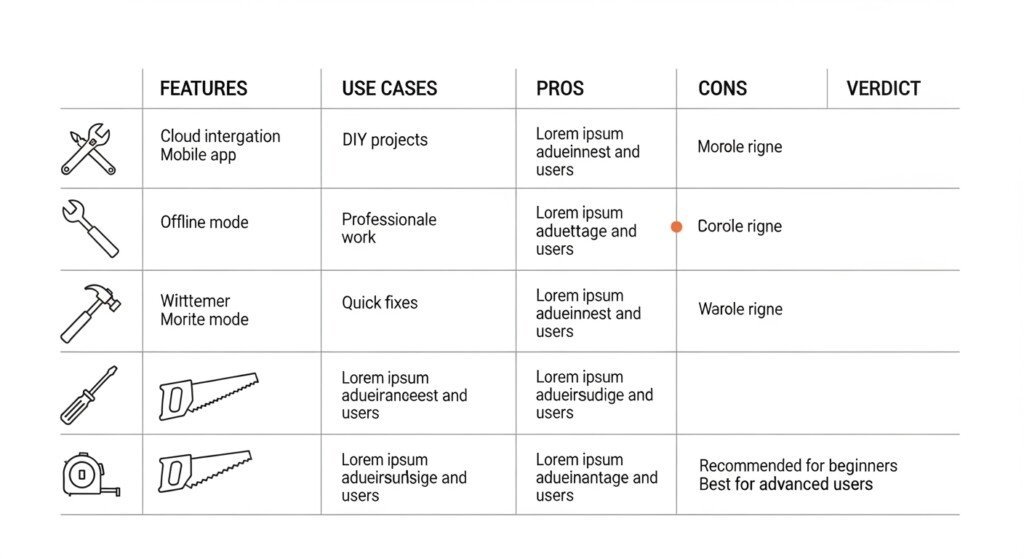
Comparison and “best of” pages are where affiliate blogs either scale or collapse.
Why?
Because these pages require:
- Consistent evaluation criteria
- Relative weighting
- Clear differentiation
- Explicit recommendations
AI is good at formatting comparisons.
AI is bad at making choices.
Correct Use of AI in Comparison Pages
AI can:
- Draft individual product sections
- Maintain parallel structure across tools
- Explain feature differences
- Rewrite repetitive explanations
- Standardize formatting
This is massive leverage when comparing many products.
What Must Stay Human in Comparisons
Humans must decide:
- Which product ranks first
- Why one tool beats another
- Which audience fits each option
- Which trade-offs matter
If AI ranks products, the page becomes generic and unconvincing.
Readers feel it instantly.
Buyer-Intent Content: The Safest Place to Use AI Aggressively
Buyer-intent informational content is where AI shines.
These pages are not selling directly.
They are educating.
Examples:
- “How affiliate review content actually converts”
- “Mistakes that kill affiliate commissions”
- “How to structure comparison posts”
AI works well here because:
- The content is explanatory
- The tone should be neutral
- Judgment is lower
- Structure matters more than opinion
These pages:
- Support money pages
- Improve site-wide trust
- Increase dwell time
- Feed internal links
This is where AI can be used at high volume safely.
Conversion Structure Matters More Than Writing Style
Affiliate conversions do not come from clever wording.
They come from sequence.
A high-converting affiliate page follows this order:
- Identify the reader’s problem
- Explain available solutions
- Clarify trade-offs honestly
- Match products to use cases
- Recommend conditionally
AI can fill text inside this structure.
AI must not design the structure itself.
Structure is strategy.
Strategy stays human.
Monetization Without Destroying Credibility
Affiliate blogs die when readers feel manipulated.
Common trust-killers:
- Every product is “the best”
- Downsides are buried
- Language feels scripted
- Recommendations feel forced
AI makes this worse if misused.
Correct approach:
- AI drafts neutral sections
- Humans inject judgment
- Pros and cons stay balanced
- Recommendations are conditional
Affiliate trust compounds slowly — and disappears instantly.
Monetization Workflows That Actually Scale With AI
Affiliate blogs don’t fail because they lack content.
They fail because monetization logic doesn’t scale with production.
AI writing tools change how fast you can publish — but if your monetization workflow is not designed for scale, revenue plateaus quickly.
Here’s the correct way to integrate AI into affiliate monetization without breaking conversions.
The Only Affiliate Workflow That Scales With AI
Forget tools. Focus on flow.
A scalable affiliate content system looks like this:
- Buyer-intent informational content (top of funnel)
- Comparison / “best of” pages (money hubs)
- Individual product reviews (decision pages)
- Continuous updates + internal link reinforcement
AI fits inside this system — not outside it.
Step 1: Use AI to Multiply Buyer-Intent Content
Buyer-intent informational content is where AI delivers the highest ROI with the lowest risk.
Examples:
- “How to choose the right [product type]”
- “What to look for before buying [tool category]”
- “Common mistakes when buying [solution]”
These pages:
- Attract cautious buyers
- Build trust before selling
- Warm readers for conversions
AI’s role here
- Draft explanations
- Expand subtopics
- Maintain consistent tone
- Speed up publishing
Human role
- Decide what matters to buyers
- Decide which mistakes are critical
- Decide which trade-offs are real
These pages become internal link feeders to comparison and review content.
Step 2: Protect Comparison Pages at All Costs
Comparison pages are where money concentrates.
AI must never control:
- Rankings
- Final recommendations
- “Best for X” decisions
What AI can do safely:
- Draft individual product sections
- Normalize formatting
- Rewrite repetitive explanations
- Maintain consistency across listings
What humans must do:
- Set evaluation criteria
- Rank products intentionally
- Match products to user intent
- Decide who should not buy
If comparison pages feel neutral, they don’t convert.
If they feel biased, they don’t last.
AI supports execution.
Humans protect trust.
Step 3: Use AI to Speed Up Review Production — Not Replace Judgment
Individual product reviews scale painfully without AI.
This is where many affiliate bloggers burn out.
Correct approach:
- Use AI to draft feature explanations
- Use AI to expand benefit sections
- Use AI to clean language and flow
Non-negotiable human elements:
- Real drawbacks
- Audience fit
- Risk disclosures
- Final verdict
If AI writes the verdict, the review feels fake — even if the facts are correct.
Readers are extremely sensitive to artificial confidence.
Internal Linking: The Affiliate Multiplier Most Bloggers Miss
Affiliate revenue does not come from isolated pages.
It comes from link relationships.
AI helps you publish more pages — but without internal linking logic, that extra content does nothing.
Here’s the correct internal linking structure for AI-assisted affiliate blogs:
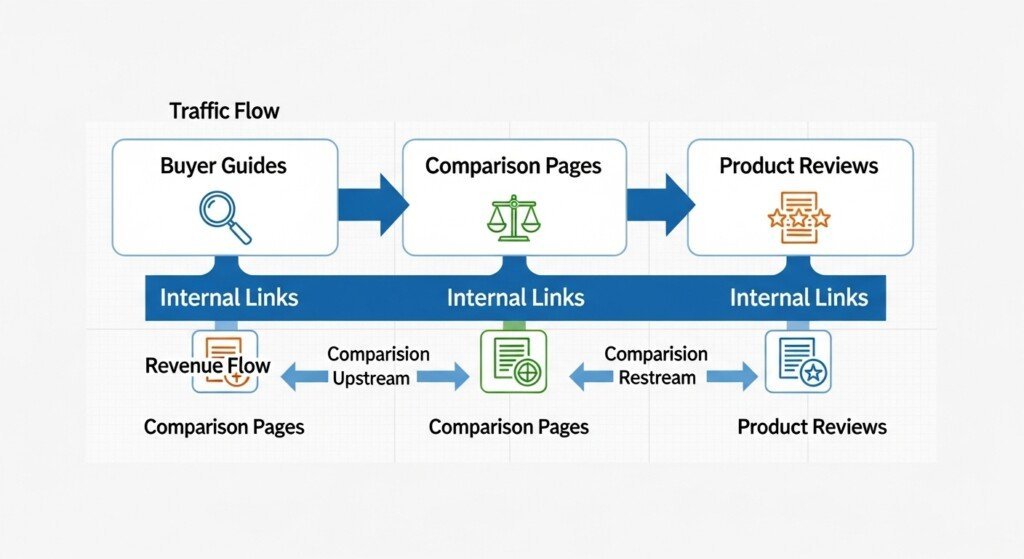
1. Buyer-Intent Pages → Comparison Pages
Buyer-intent informational posts should always link upward to comparison hubs.
Example logic:
- “How to choose X” → “Best X tools”
- “Mistakes when buying Y” → “Top Y products compared”
These links:
- Transfer trust
- Move readers closer to purchase
- Strengthen money pages
AI can help insert links — but humans must decide where and why.
2. Comparison Pages → Individual Reviews
Every comparison page should link out to:
- Detailed reviews
- Deep-dive pages
- Use-case specific breakdowns
This:
- Improves dwell time
- Increases review traffic
- Boosts conversion probability
AI can draft the transition text.
Humans must ensure intent alignment.
3. Reviews → Supporting Content (Reverse Trust Loop)
This is where most affiliate blogs fail.
Reviews should also link back to:
- Buyer guides
- “How it works” explanations
- Educational content
Why?
Because hesitant buyers don’t always convert immediately.
They leave — and often never return.
Internal links give them a reason to stay.

Updating Affiliate Content: Where AI Pays You Back Long-Term
Affiliate income compounds only if content stays relevant.
Manual updates are slow.
AI-assisted updates are manageable.
Correct AI usage for updates:
- Refresh feature lists
- Rewrite outdated sections
- Expand new use cases
- Improve clarity
- Fix repetition
Human control remains essential for:
- Pricing claims
- Availability changes
- Policy updates
- Risk disclosures
AI makes updates feasible at scale — which directly impacts revenue stability.
Keeping affiliate content accurate over time is often harder than publishing it in the first place. This is where AI rewriting tools become valuable, allowing bloggers to refresh outdated sections, improve clarity, and maintain relevance without rewriting entire posts manually.
Why Affiliate Blogs Fail When AI Is Misused
Let’s be blunt.
Affiliate blogs die when AI is used to:
- Fake experience
- Avoid decision-making
- Mask weak strategy
- Replace judgment
Common failure patterns:
- Every product sounds identical
- Every tool is “great”
- No clear audience fit
- No strong recommendations
Readers don’t consciously analyze this.
They feel it.
And they leave.
The Correct Role of AI in Affiliate Monetization
AI is not a closer.
AI is not a strategist.
AI is not a decision-maker.
AI is:
- A production accelerator
- A consistency engine
- A fatigue reducer
Used correctly, it:
- Increases content velocity
- Preserves human judgment
- Extends publishing lifespan
- Improves revenue potential
Used incorrectly, it:
- Scales mediocrity
- Destroys trust
- Lowers conversions
- Burns domains
Long-Term Revenue Impact: The Quiet Advantage
The biggest benefit of AI writing tools for affiliate marketing is not speed.
It’s survivability.
Affiliate blogs fail when:
- Writers burn out
- Publishing slows
- Updates stop
- Competitors outpace them
AI absorbs mechanical work so humans can:
- Think strategically
- Focus on monetization
- Improve trust signals
- Optimize conversions
That’s how affiliate sites survive past year one.
Final Verdict: AI Writing Tools for Affiliate Blog Content
AI writing tools do not replace affiliate marketers.
They replace friction.
If you:
- Use AI for drafting
- Keep judgment human
- Protect trust
- Structure monetization intentionally
- Maintain internal linking logic
AI becomes a revenue multiplier.
If you:
- Let AI decide
- Avoid real trade-offs
- Fake experience
- Skip structure
AI becomes a trust destroyer.
Affiliate blogging is not about writing faster.
It’s about earning trust at scale.
AI helps only when humans stay in control.
FAQ
1. Can AI writing tools be safely used for affiliate blog content?
Yes, AI writing tools can be safely used for affiliate blog content when they support drafting and structure, not decision-making. Human oversight is required for product recommendations, comparisons, and final verdicts to maintain trust and conversions.
2. What type of affiliate content works best with AI writing tools?
AI writing tools work best for buyer-intent informational articles, comparison drafts, supporting product explanations, and content updates. They are less effective when used alone for verdicts, rankings, or experience-based reviews.
3. Do AI-written affiliate reviews convert as well as human-written ones?
AI-written drafts can convert well only after human editing. Raw AI reviews tend to underperform because they lack clear judgment, audience fit, and trust signals that drive affiliate conversions.
4. How do AI writing tools help scale affiliate websites?
AI writing tools help scale affiliate websites by reducing drafting time, speeding up content updates, increasing publishing consistency, and supporting large content clusters without burnout.
5. What is the biggest mistake bloggers make using AI for affiliate marketing?
The biggest mistake is letting AI replace judgment. When AI decides product rankings, verdicts, or recommendations, content loses credibility and conversion rates drop.
Disclaimer
Some links on this page may be affiliate links.
If you click and purchase, I may earn a small commission at no extra cost to you.
I only recommend tools I genuinely use or believe are useful for bloggers.
This helps support the site and keep content free.