
Does Cortisol Cause Belly Fat? Signs, Causes, and Solutions
Cortisol belly fat is one of those health topics that seems to be everywhere.
You may have seen social media posts claiming that stress is secretly causing weight gain around your midsection.
Perhaps you’ve heard someone talk about having a “cortisol belly.”
Or maybe you’ve noticed that during particularly stressful periods of life, your eating habits, energy levels, and waistline all seem to change at the same time.
The idea sounds believable.
Life becomes stressful.
Sleep suffers.
Cravings increase.
Weight appears around the abdomen.
But is cortisol really responsible?
The answer is more nuanced than many headlines suggest.
Cortisol is a real hormone with important functions throughout the body. Chronic stress can influence behaviors and biological processes that affect body composition. However, cortisol is not a magical switch that suddenly creates belly fat overnight.
Understanding what cortisol actually does can help separate fact from fiction and provide a clearer picture of how stress may influence weight gain over time.
A Typical Day in a High-Stress Life
Imagine someone waking up after only five hours of sleep.
They rush through the morning.
Skip breakfast.
Spend the day responding to emails, solving problems, and dealing with deadlines.
Lunch happens at a desk.
Exercise gets postponed.
By evening, exhaustion sets in.
The easiest dinner option wins.
Snacking becomes more tempting.
Sleep is delayed again.
This cycle repeats day after day.
Many people assume the resulting weight gain is caused entirely by cortisol.
In reality, several factors are working together:
- Poor sleep
- Reduced physical activity
- Emotional eating
- Increased calorie intake
- Chronic stress
Cortisol often sits at the center of this chain, influencing many of these behaviors simultaneously.
What Is Cortisol?
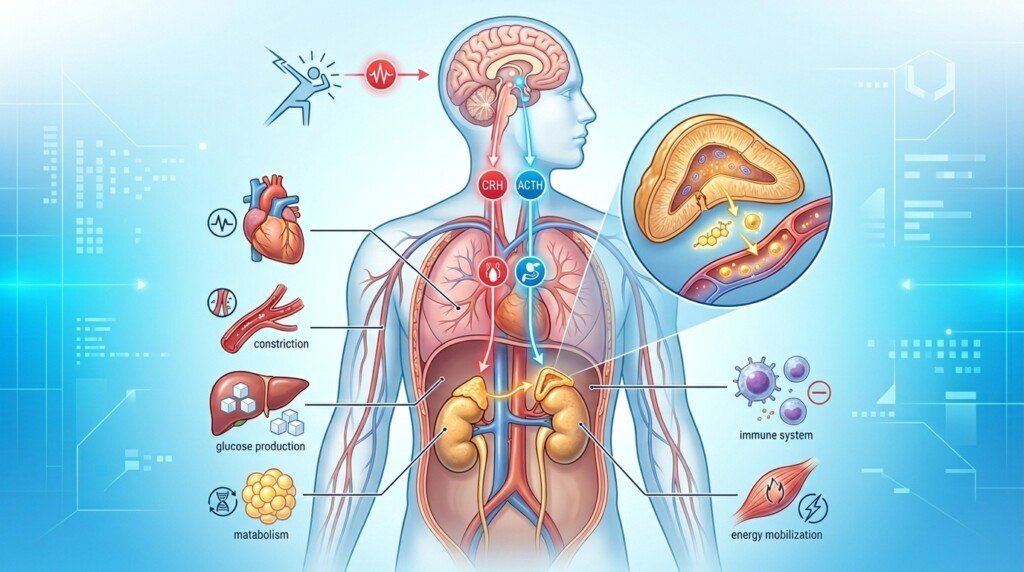
Cortisol is a hormone produced by the adrenal glands.
It is often called the stress hormone because the body releases more cortisol during stressful situations.
However, cortisol is not inherently bad.
In fact, it is essential for survival.
Cortisol helps regulate:
- Blood sugar levels
- Energy production
- Immune responses
- Inflammation
- Blood pressure
- Sleep-wake cycles
Without cortisol, the body would struggle to respond to everyday challenges.
Why Cortisol Exists
Thousands of years ago, cortisol helped humans survive dangerous situations.
When a threat appeared, cortisol helped mobilize energy so the body could react quickly.
This response was useful when escaping predators or facing physical danger.
The problem is that modern stress rarely looks like that.
Today’s threats are often:
- Financial pressure
- Work demands
- Relationship challenges
- Information overload
- Constant connectivity
The body may respond to these pressures using the same hormonal systems that evolved for short-term survival.
How Cortisol Affects Fat Storage
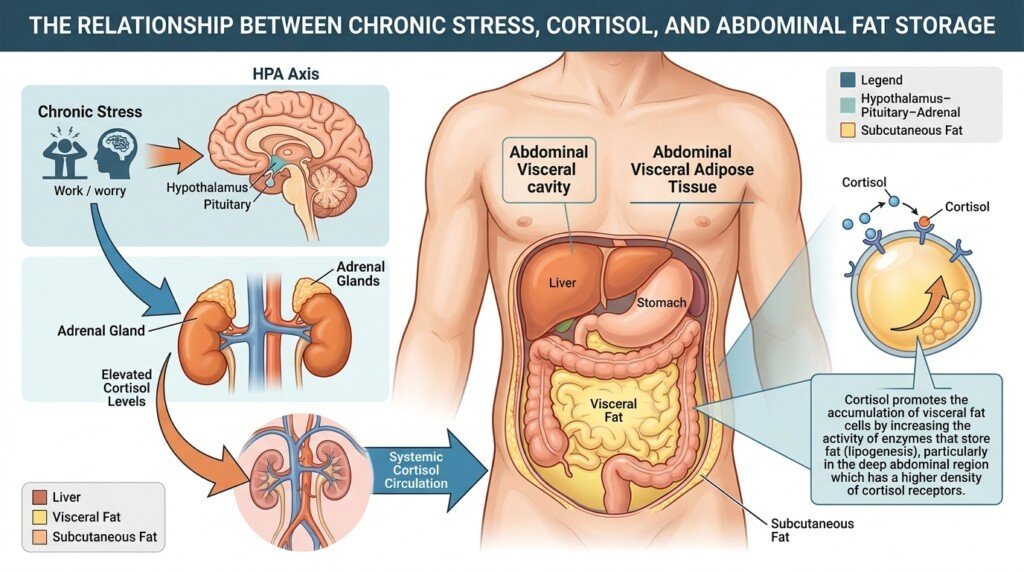
Researchers have spent years studying the relationship between cortisol and body composition.
The connection appears to be indirect rather than simple.
Cortisol and Energy Availability
When cortisol levels rise, the body prepares for increased energy demands.
Part of this response involves influencing how energy is stored and utilized.
Over time, chronic elevation of cortisol may contribute to metabolic changes that affect body weight.
Cortisol and Food Choices
Stress affects decision-making.
Many people notice stronger cravings during stressful periods.
Foods commonly chosen during stress often include:
- Sweets
- Processed snacks
- Fast food
- Comfort foods
These foods tend to be calorie-dense and highly palatable.
The combination of stress and increased calorie intake may contribute to weight gain over time.
Cortisol and Physical Activity
Chronic stress can also reduce motivation and energy.
When people feel exhausted, they often become less physically active.
Lower activity levels combined with higher calorie intake create conditions that support fat accumulation.
Cortisol and Sleep
One of the most important links between cortisol and weight gain involves sleep.
Poor sleep may affect:
- Hunger signals
- Food cravings
- Energy levels
- Recovery
People who sleep poorly often find it harder to maintain healthy habits consistently.
Signs of High Cortisol
High cortisol is not always obvious.
Many symptoms overlap with other health concerns.
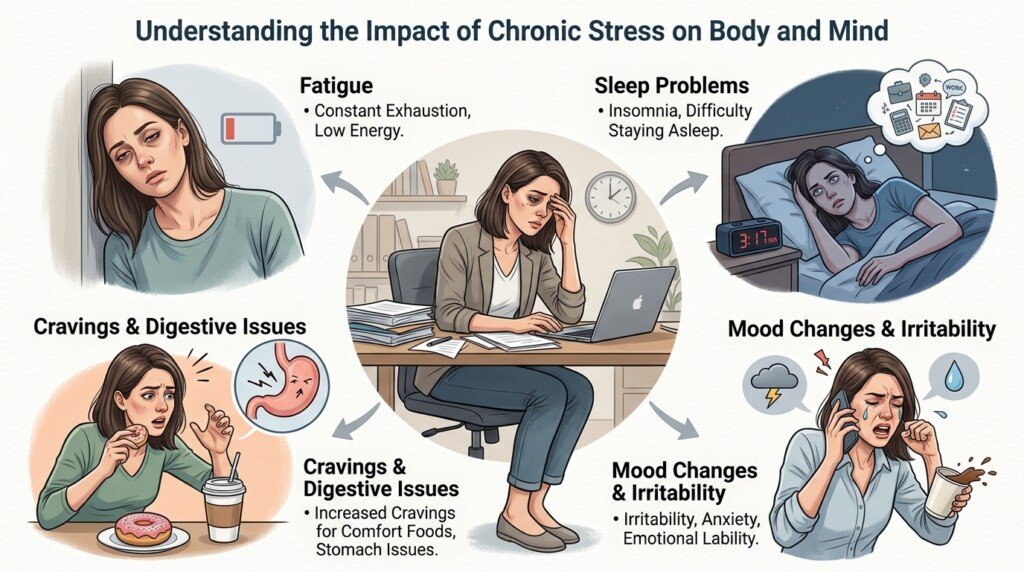
However, several common signs are frequently associated with chronic stress and elevated cortisol levels.
Persistent Fatigue
Feeling tired despite getting adequate rest may indicate that stress is affecting recovery.
Difficulty Sleeping
Some individuals struggle to fall asleep.
Others wake frequently during the night.
Sleep disruption is commonly linked to chronic stress.
Increased Cravings
Stress-related cravings often involve highly processed foods rich in sugar, salt, or fat.
Mood Changes
People experiencing chronic stress may notice:
- Irritability
- Anxiety
- Difficulty concentrating
- Reduced motivation
Weight Gain Around the Midsection
Although many factors contribute to abdominal weight gain, persistent stress is often part of the picture.
It’s important to remember that these symptoms do not automatically mean cortisol levels are elevated.
Professional medical evaluation is necessary for accurate diagnosis.
Can Stress Cause Belly Fat?
This is where the discussion becomes most interesting.
Strictly speaking, stress does not directly create belly fat.
What stress often does is influence behaviors and biological processes associated with weight gain.

Stress Changes Behavior
When stress becomes chronic, healthy habits frequently suffer.
People may:
- Exercise less
- Sleep less
- Eat more
- Drink more alcohol
- Skip meal planning
These changes can gradually affect body composition.
Stress Changes Appetite
Many individuals experience stronger cravings during stressful periods.
Emotional eating becomes more common.
Food may temporarily provide comfort or distraction.
Over time, increased calorie intake can contribute to weight gain.
Stress Changes Recovery
Recovery influences overall health and physical performance.
When stress remains high for extended periods, recovery may become less effective.
This can affect energy, exercise consistency, and lifestyle choices.
For a deeper look at how chronic stress influences body composition and long-term health, our guide on stress and weight loss explores the relationship in greater detail.
Ways to Lower Cortisol Naturally
The goal is not eliminating cortisol.
The goal is supporting healthy cortisol regulation.

Improve Sleep Quality
Sleep remains one of the most powerful tools available.
Focus on:
- Consistent sleep schedules
- Limiting screens before bed
- Creating a relaxing sleep environment
Regular Physical Activity
Exercise helps many people manage stress more effectively.
Walking, strength training, cycling, and other activities may support both mental and physical health.
Manage Daily Stressors
Simple practices may help reduce stress levels, including:
- Meditation
- Deep breathing
- Journaling
- Spending time outdoors
- Social connection
Prioritize Recovery
Many people focus heavily on productivity while neglecting recovery.
Rest is not laziness.
It is a necessary part of health.
Maintain Balanced Nutrition
Consistent, balanced meals help support energy levels and overall wellness.
Extreme diets often increase stress rather than reduce it.
Supplements That May Support Stress Management
No supplement can eliminate stress.
However, some ingredients are commonly used to support stress management and relaxation.
Examples include:
- Magnesium
- Ashwagandha
- L-theanine
- Rhodiola rosea
The goal of these supplements is not direct fat loss.
Instead, they may help support the body’s response to stress.
Individuals interested in broader approaches to abdominal fat management may also explore our guide to the best supplement for belly fat.
The Bigger Picture
The phrase “cortisol belly fat” has become popular because it contains a grain of truth.
Stress does influence health.
Cortisol does affect important biological systems.
But abdominal weight gain rarely comes from a single cause.
Most often, belly fat develops through a combination of:
- Lifestyle habits
- Nutrition
- Physical activity
- Sleep quality
- Stress levels
- Age-related changes
Focusing only on cortisol risks overlooking the bigger picture.
The most effective strategy is improving the habits that support overall health rather than searching for a single hormone to blame.

Final Thoughts
Cortisol is not the villain many articles make it out to be.
It is an essential hormone that helps the body respond to challenges and maintain normal function.
Problems typically arise when stress becomes chronic and begins affecting sleep, eating habits, activity levels, and recovery.
Over time, these changes may contribute to weight gain, including fat stored around the abdomen.
Understanding this connection can help shift the focus away from quick fixes and toward sustainable lifestyle improvements.
The goal isn’t simply lowering cortisol.
The goal is building a healthier, less stressful environment that supports both physical and mental well-being over the long term.
FAQ
1. What is cortisol belly fat?
Cortisol belly fat refers to abdominal weight gain that may be associated with chronic stress and elevated cortisol levels. While cortisol does not directly create belly fat, it can influence behaviors and biological processes linked to weight gain.
2. Can high cortisol cause belly fat?
High cortisol alone does not directly cause belly fat. However, chronic stress may contribute to increased cravings, emotional eating, poor sleep, and reduced physical activity, which can lead to abdominal weight gain over time.
3. What are the signs of high cortisol?
Common signs may include fatigue, sleep problems, increased cravings, mood changes, difficulty concentrating, and weight gain around the midsection.
4. How can I lower cortisol naturally?
Healthy sleep habits, regular exercise, stress management techniques, balanced nutrition, and adequate recovery may help support healthy cortisol regulation.
5. Does stress cause weight gain?
Stress can influence eating habits, sleep quality, and physical activity levels. These factors may contribute to gradual weight gain if they persist over time.
6. Can reducing stress help with belly fat?
Reducing stress may support healthier lifestyle habits and improve sleep quality, which can indirectly help with long-term weight management.
7. Are there supplements that lower cortisol?
Some supplements such as magnesium, ashwagandha, L-theanine, and rhodiola are commonly used to support stress management. However, they are not direct treatments for belly fat.
Disclaimer:
This post may contain affiliate links. If you purchase through them, we may earn a small commission at no extra cost to you. Also, this content is for informational purposes only and does not substitute professional medical advice.
Ready to Start Your Journey?
Use our free 7-in-1 Weight Loss Toolkit to calculate your numbers and build your plan in minutes.
Open Free Tools →