
Why Am I Losing Inches but Not Weight? 9 Reasons the Scale Isn’t Moving
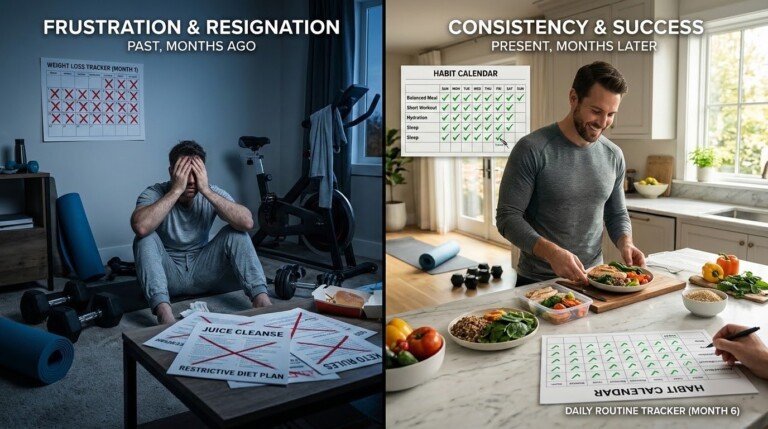
You’ve been eating well, exercising consistently, and making healthier choices every day. Your jeans fit better, your waist feels smaller, and friends begin commenting that you look different. Yet every time you step on the scale, the number barely changes. It’s enough to make anyone wonder, “Why am I losing inches but not weight?”
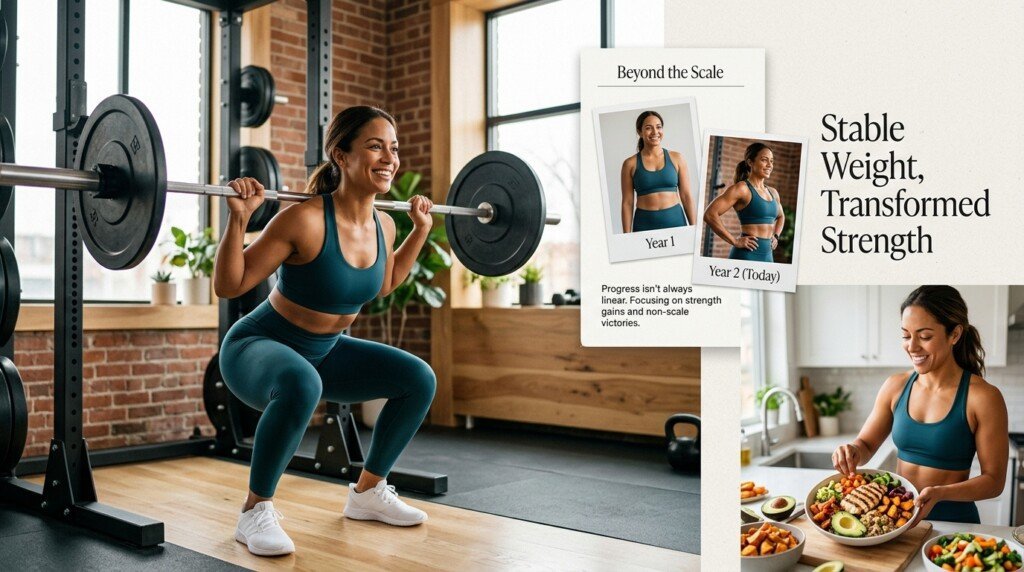
The good news is that this situation is far more common than many people realize. In fact, losing inches while your weight stays the same is often a positive sign that your body composition is improving. Instead of focusing only on total body weight, your body may be reducing fat while maintaining or even gaining lean muscle. Since muscle is denser than fat, the scale may not reflect these positive changes immediately.
Other factors can also influence scale weight. Temporary water retention, changes in hydration, muscle recovery after exercise, and normal daily weight fluctuations can all mask fat loss. This is why relying only on the scale often creates unnecessary frustration and may cause people to abandon habits that are actually working.
Understanding the difference between body weight and body composition can completely change the way you evaluate your progress. Measuring waist circumference, taking progress photos, tracking strength improvements, and noticing how your clothes fit often provide a much clearer picture than the number on the scale alone.
In this article, you’ll learn why you’re Losing Inches but Not Weight, whether fat loss can happen without immediate weight loss, how muscle gain affects the scale, why water retention sometimes hides progress, which measurements you should track, how long body recomposition typically takes, and when it may be appropriate to seek additional guidance.
Why Am I Losing Inches but Not Weight?
Seeing your body change while the scale remains unchanged can feel confusing.
Fortunately, this is often a sign that positive changes are happening beneath the surface.
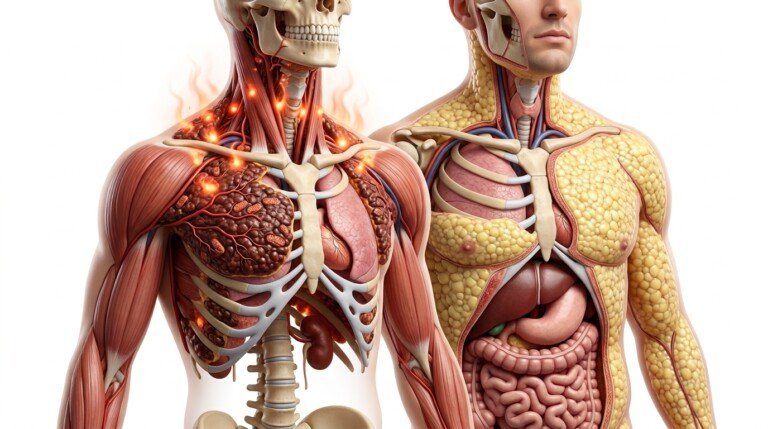
The scale measures your total body weight, but it cannot distinguish between body fat, lean muscle, water, or other tissues.
That means you can improve your body composition without seeing dramatic changes in your weight.
Body Weight Is Only One Measurement
Your total body weight includes:
- Body fat
- Lean muscle
- Water
- Bones
- Organs
- Digestive contents
Because all of these contribute to the number on the scale, weight alone cannot accurately measure fat loss.
Body Composition Matters More
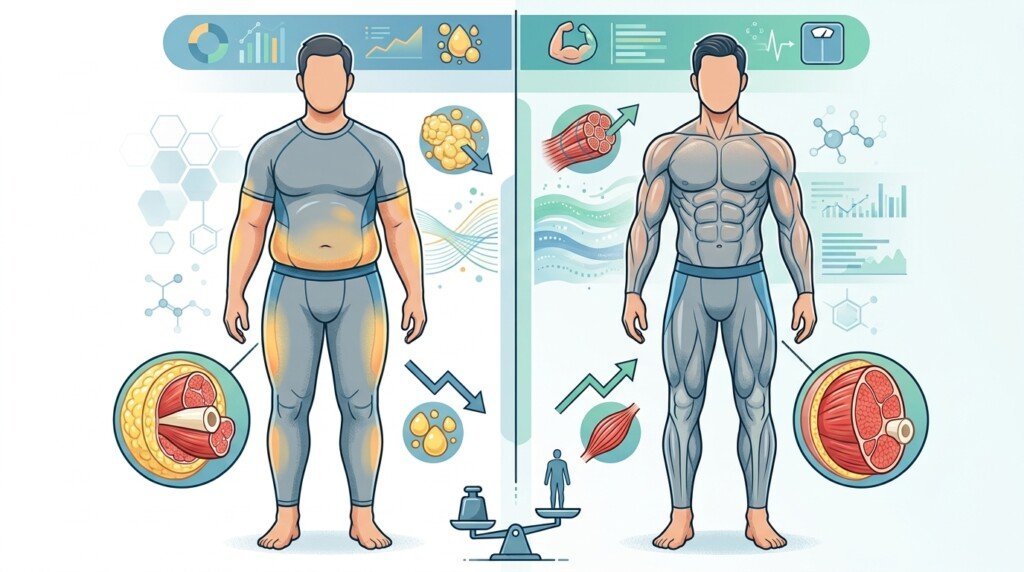
Body composition describes the proportion of fat and lean tissue in your body.
Improving body composition often means:
- Less body fat
- More lean muscle
- Better strength
- Smaller waist measurements
- Improved physical appearance
These improvements can occur even if your total body weight changes very little.
Healthy Habits Often Produce Invisible Progress
Many positive changes happen before the scale reflects them.
Examples include:
- Increased strength
- Better endurance
- Improved posture
- Smaller clothing sizes
- Reduced waist circumference
- Better energy levels
These improvements deserve just as much attention as the number on the scale.
The Scale Doesn’t Tell the Whole Story
If your clothes fit better and your measurements continue improving, your healthy habits are likely working.
Rather than becoming discouraged, continue looking at long-term trends instead of focusing on one measurement.
People who understand this difference are often less frustrated during periods that resemble a Weight Loss Plateau, since they recognize that body composition may still be improving.
Can You Lose Fat Without Losing Weight?
Yes.
This is one of the most misunderstood parts of weight management.
Fat loss and weight loss are related, but they are not exactly the same thing.
Your body can reduce fat while maintaining overall body weight because other tissues may change at the same time.
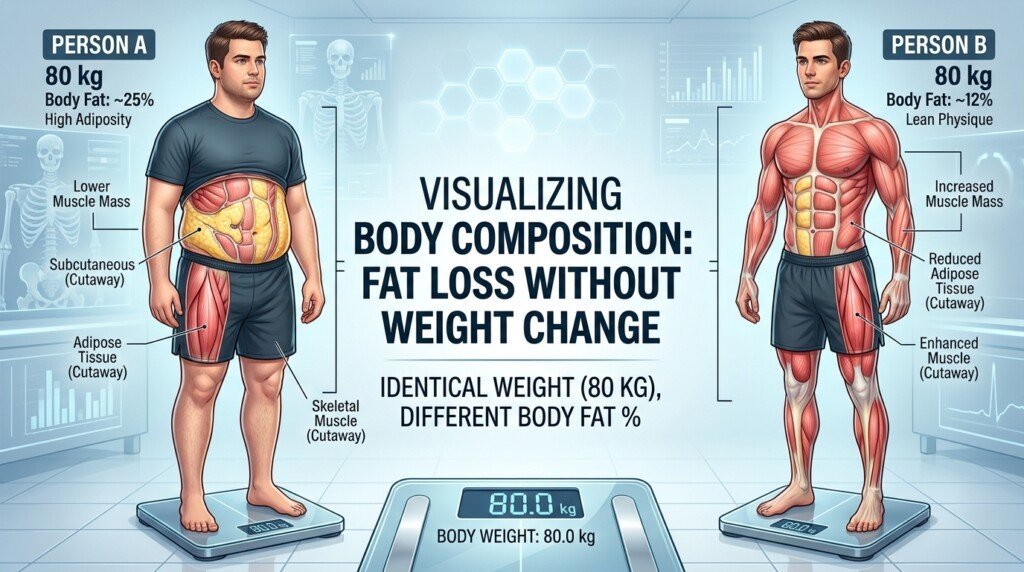
Fat Loss and Weight Loss Are Different
Fat loss refers specifically to reducing stored body fat.
Weight loss refers to any decrease in total body weight.
Since total body weight includes many different components, these two outcomes do not always occur together.
Body Recomposition Can Keep Weight Stable
Body recomposition occurs when you lose body fat while maintaining or increasing lean muscle.
This often happens in people who:
- Begin strength training
- Return to exercise after a long break
- Increase protein intake
- Improve overall nutrition
- Become more physically active
Because muscle is denser than fat, your body may become leaner without large changes on the scale.
Muscle Takes Up Less Space Than Fat
A pound of muscle and a pound of fat weigh exactly the same.
However, muscle occupies less space.
This explains why your waist, hips, and clothing size may change even though the scale remains stable.
Your body becomes more compact while maintaining a similar weight.
Fitness Improvements Often Come First
Many people notice improvements in:
- Strength
- Balance
- Endurance
- Flexibility
- Confidence
before seeing major changes in body weight.
These improvements indicate that your body is adapting positively to your healthy lifestyle.
Does Building Muscle Affect the Scale?
Absolutely.
Strength training changes your body in ways that the scale cannot fully capture.
While building large amounts of muscle takes time, even modest increases in lean muscle can influence body weight.
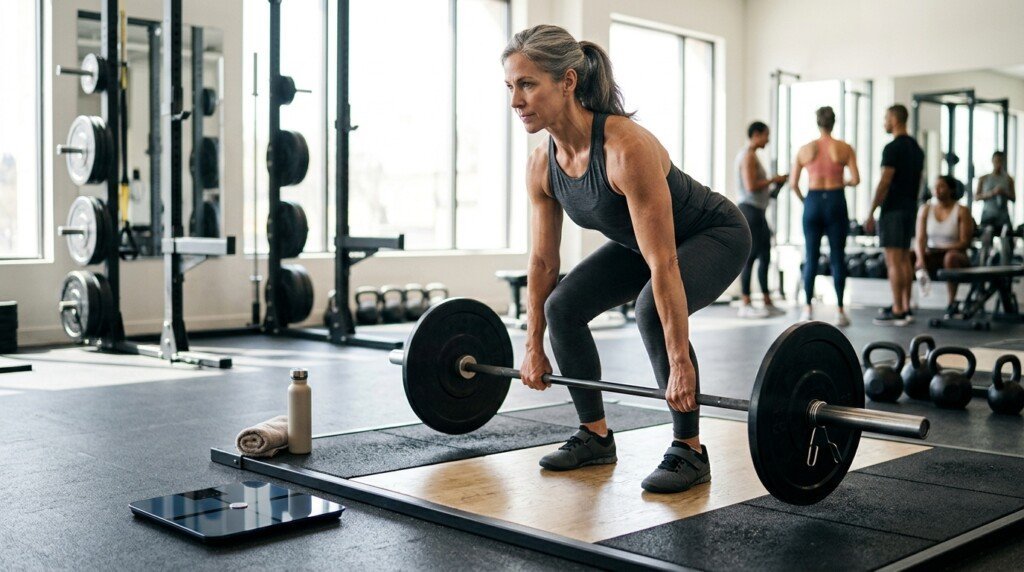
Resistance Training Supports Lean Muscle
Exercises such as:
- Squats
- Lunges
- Push-ups
- Deadlifts
- Rows
- Resistance band exercises
help stimulate muscle growth while supporting fat loss.
This combination often improves body composition.
The benefits of resistance exercise are discussed further throughout Strength Training for Fat Loss, where preserving muscle during weight loss is explained in greater detail.
Muscle Can Offset Fat Loss
Imagine losing three pounds of fat while gaining three pounds of muscle.
Your weight would remain unchanged.
However, your body would appear leaner, stronger, and healthier.
This is one of the most common explanations for Losing Inches but Not Weight.
Protein Supports Muscle Maintenance
Eating adequate protein becomes especially important during weight loss.
Protein helps support:
- Muscle maintenance
- Recovery
- Fullness
- Exercise performance
Combined with resistance training, adequate protein encourages healthier body composition over time.
Building Muscle Is Gradual
Muscle growth happens slowly.
Do not expect dramatic changes within a few weeks.
Instead, focus on:
- Consistent training
- Balanced nutrition
- Progressive improvement
- Long-term habits
These factors produce meaningful body composition changes over time.
Can Water Retention Hide Weight Loss?
Yes.
Temporary water retention is one of the biggest reasons people believe their progress has stopped.
Even when body fat decreases, extra water stored in your body can temporarily keep the scale unchanged.
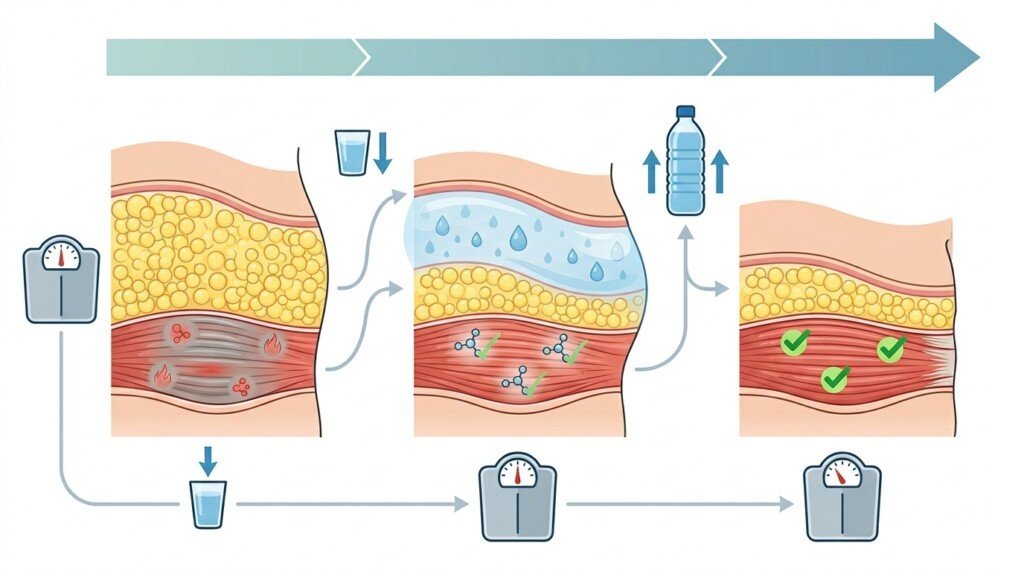
Exercise Recovery Increases Water Storage
After challenging workouts, muscles naturally retain additional water while repairing themselves.
This process supports recovery and adaptation.
It is temporary and usually improves as recovery continues.
Sodium Influences Body Water
Meals containing more sodium than usual can temporarily increase water retention.
This does not mean you have gained body fat.
Once your body restores normal fluid balance, your weight often returns to its previous trend.
Carbohydrates Affect Water Balance
Carbohydrates are stored in the body as glycogen.
Each gram of glycogen stores several grams of water.
Increasing carbohydrate intake after a lower-carbohydrate eating pattern may temporarily increase body weight without increasing body fat.
Hydration Also Changes Scale Weight
Drinking more or less water throughout the day naturally influences scale weight.
This is why weighing yourself under similar conditions each time provides more consistent results.
Water Retention Is Temporary
Temporary increases in water weight often disappear naturally over several days.
Understanding this helps reduce unnecessary frustration while continuing healthy habits.
If your measurements continue improving, patience is usually more productive than making drastic changes.
Which Measurements Should You Track Besides Weight?
The bathroom scale can be a helpful tool, but it should never be the only way you measure progress. If your goal is improving your body composition, several other measurements provide a much clearer picture of what is actually happening.
Many people become discouraged because they weigh themselves every day but never notice improvements that are happening elsewhere.
Tracking multiple forms of progress helps you stay motivated and prevents you from abandoning healthy habits that are producing real results.
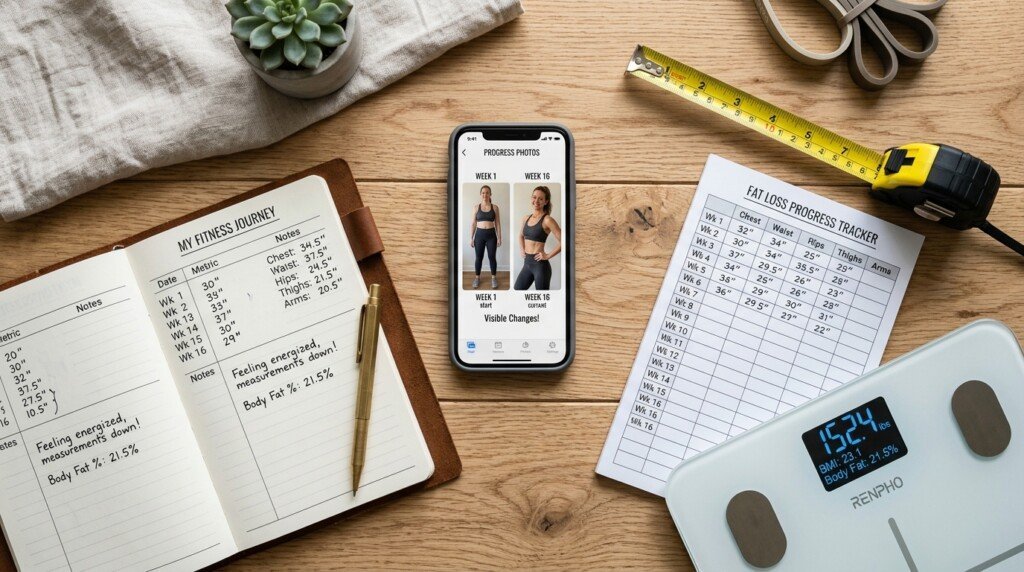
Measure Your Waist Circumference
Your waist measurement is one of the simplest ways to monitor fat loss.
Reducing abdominal fat often leads to noticeable changes in waist size even when overall body weight remains stable.
Measure your waist:
- At the same location each time
- At the same time of day
- Under similar conditions
- About once every two weeks
Small reductions over several months often indicate meaningful fat loss.
Take Progress Photos
Photos often reveal gradual changes that are difficult to notice in the mirror.
Take pictures:
- Every two to four weeks
- Wearing similar clothing
- In similar lighting
- From the front, side, and back
Comparing photos over time often provides a much clearer picture than daily weigh-ins.
Notice How Your Clothes Fit
Your clothing can become one of the most reliable indicators of body recomposition.
You may notice:
- Jeans fitting more comfortably
- Shirts feeling looser
- Belts tightening by another notch
- Jackets fitting better around the shoulders
- Less tightness around the waist
These changes often appear before significant differences on the scale.
Monitor Strength Improvements
If you’re becoming stronger, your body is adapting positively.
Examples include:
- Lifting heavier weights
- Completing more repetitions
- Walking longer distances
- Recovering more quickly
- Feeling less tired during workouts
These improvements reflect increasing fitness and healthier body composition.
Track Body Fat Percentage if Available
Some fitness centers and smart scales estimate body fat percentage.
Although these measurements are not perfectly accurate, using the same method consistently may help identify long-term trends when combined with other progress markers.
Combine Several Measurements
Rather than relying on one number, consider tracking:
- Body weight
- Waist circumference
- Progress photos
- Clothing fit
- Strength gains
- Energy levels
Together, these measurements provide a much more complete picture of your progress.
Building these healthy tracking habits is one of the practical strategies discussed throughout Weight Loss Habits, where consistency is emphasized over perfection.
How Long Does Body Recomposition Take?
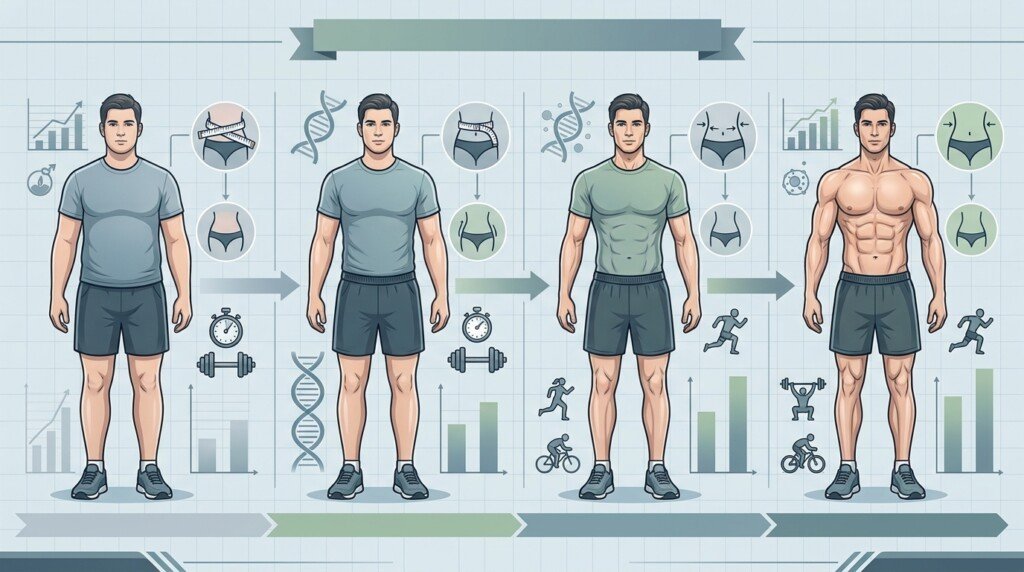
Body recomposition is a gradual process.
Unlike rapid weight loss claims often seen online, meaningful changes in body composition develop through consistent nutrition, strength training, and patience.
There is no fixed timeline because everyone responds differently based on age, activity level, nutrition, sleep, and training experience.
The First Few Weeks
During the first several weeks, many improvements happen internally.
You may notice:
- Better workout performance
- Increased energy
- Improved confidence
- Better movement quality
Visible body changes may still be limited.
One to Three Months
Many people begin noticing:
- Smaller waist measurements
- Better muscle definition
- Clothes fitting differently
- Improved posture
- Increased strength
Even if body weight changes slowly, these improvements often indicate successful body recomposition.
Three to Six Months
With consistent habits, longer-term improvements become easier to recognize.
You may experience:
- Noticeably leaner body shape
- Better muscle tone
- Improved endurance
- Greater confidence
- Healthier body composition
These gradual changes are usually more sustainable than rapid weight loss.
Consistency Determines the Timeline
Body recomposition depends far more on consistency than perfection.
Helpful habits include:
- Regular strength training
- Adequate protein intake
- Balanced meals
- Daily movement
- Quality sleep
- Patience
Small improvements repeated over months often produce remarkable long-term results.
Understanding that progress naturally varies from person to person also helps reduce frustration if you recently wondered How Long Does a Weight Loss Plateau Last. Sometimes what appears to be a plateau is actually steady body recomposition taking place beneath the surface.
When Should You Be Concerned?
Most people who are Losing Inches but Not Weight are actually making positive progress.
However, there are situations where it makes sense to review your routine more carefully.
Measurements Have Stopped Changing
If your:
- Waist circumference
- Progress photos
- Clothing fit
- Strength
- Scale weight
have all remained unchanged for several weeks despite consistent habits, it may be time to review your nutrition and activity levels.
You’re No Longer Improving in the Gym
If workouts consistently become harder instead of easier, consider whether you are:
- Recovering adequately
- Eating enough protein
- Sleeping well
- Following a balanced training plan
Supporting recovery is just as important as challenging your body.
Your Healthy Habits Have Changed
Sometimes progress slows because routines gradually shift.
Ask yourself:
- Have portion sizes increased?
- Am I walking less?
- Have workouts become inconsistent?
- Am I sleeping enough?
- Has stress increased?
Small adjustments often restore progress without major changes.
Your Goals May Need Updating
If you’ve already reduced body fat significantly, future improvements naturally occur more slowly.
At this stage, focusing on strength, fitness, endurance, and overall health may become more meaningful than chasing lower scale numbers.
If you have confirmed that your progress has genuinely stalled rather than simply shifted toward body recomposition, the practical strategies discussed in How to Break a Weight Loss Plateau can help you decide which adjustments may be appropriate.
Frequently Asked Questions
1. Can you lose inches without losing weight?
Yes. Losing body fat while maintaining or gaining lean muscle can reduce body measurements even when total body weight changes very little.
2. Why do my clothes fit better but the scale stays the same?
This often happens because body composition is improving. Fat occupies more space than muscle, so replacing fat with lean muscle can make your clothes fit better without causing major weight changes.
3. How long does body recomposition take?
Visible improvements often begin within one to three months of consistent strength training, balanced nutrition, and adequate protein intake, although the exact timeline varies between individuals.
4. Should I keep weighing myself?
Yes, but do not rely on the scale alone. Combine body weight with waist measurements, progress photos, clothing fit, and fitness improvements to evaluate your overall progress.
5. Is losing inches more important than losing weight?
For many people, reducing body fat and improving body composition are more meaningful indicators of better health than the number on the scale alone.
Final Thoughts
If you’re Losing Inches but Not Weight, there is a good chance your body is changing in positive ways that the scale simply cannot measure. Fat loss, muscle development, temporary water retention, and improvements in body composition can all influence your appearance without causing dramatic changes in total body weight.
Instead of relying on a single number, pay attention to the bigger picture. Waist measurements, progress photos, clothing fit, strength gains, and overall fitness often provide a far more accurate reflection of your progress. These improvements represent meaningful changes that support long-term health and sustainable weight management.
Most importantly, remember that successful transformation is about improving your body composition, not just lowering the number on the scale. By staying consistent with balanced nutrition, regular strength training, daily movement, and healthy recovery habits, you can continue making measurable progress even during periods when the scale appears unchanged.
Disclaimer:
This post may contain affiliate links. If you purchase through them, we may earn a small commission at no extra cost to you. Also, this content is for informational purposes only and does not substitute professional medical advice.
Ready to Start Your Journey?
Use our free 7-in-1 Weight Loss Toolkit to calculate your numbers and build your plan in minutes.
Open Free Tools →