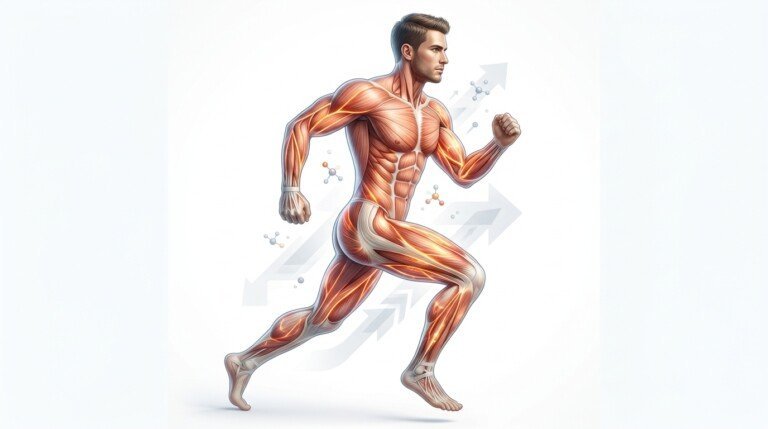

When Does a Calorie Deficit Stop Working? Causes, Plateaus, and What to Do Next
You started eating fewer calories, saw steady progress for a while, and then everything seemed to stop. The scale hasn’t moved in weeks, your clothes fit the same, and you’re wondering whether your calorie deficit has simply stopped working.
It’s one of the most common questions people ask during a weight-loss journey.
When Does a Calorie Deficit Stop Working is often misunderstood because a plateau doesn’t necessarily mean your body has stopped burning fat. In many cases, your body is adapting to weight loss, your calorie needs have changed, or everyday habits have shifted without you realizing it. Temporary water retention and small tracking errors can also make it appear as though progress has completely stalled.
The encouraging news is that most calorie deficit plateaus have practical explanations. Understanding why progress slows can help you respond with informed adjustments instead of frustration or unnecessary restrictions.
In this article, you’ll explore why a calorie deficit may become less effective over time, what metabolic adaptation actually means, how maintenance calories change during weight loss, and what practical steps can help you move forward safely.
Quick Answer
When Does a Calorie Deficit Stop Working does not mean your body becomes immune to burning fat. Progress usually slows because maintenance calorie needs decrease as you lose weight, daily energy expenditure changes, calorie tracking becomes less accurate, or temporary water retention hides ongoing fat loss.
Does a Calorie Deficit Stop Working Over Time?
The short answer is no.
A calorie deficit continues to follow the same principle of energy balance throughout your weight-loss journey. However, the size of that deficit can gradually become smaller without you noticing.
This makes it feel as though your calorie deficit has stopped working when, in reality, your body’s energy requirements have changed.
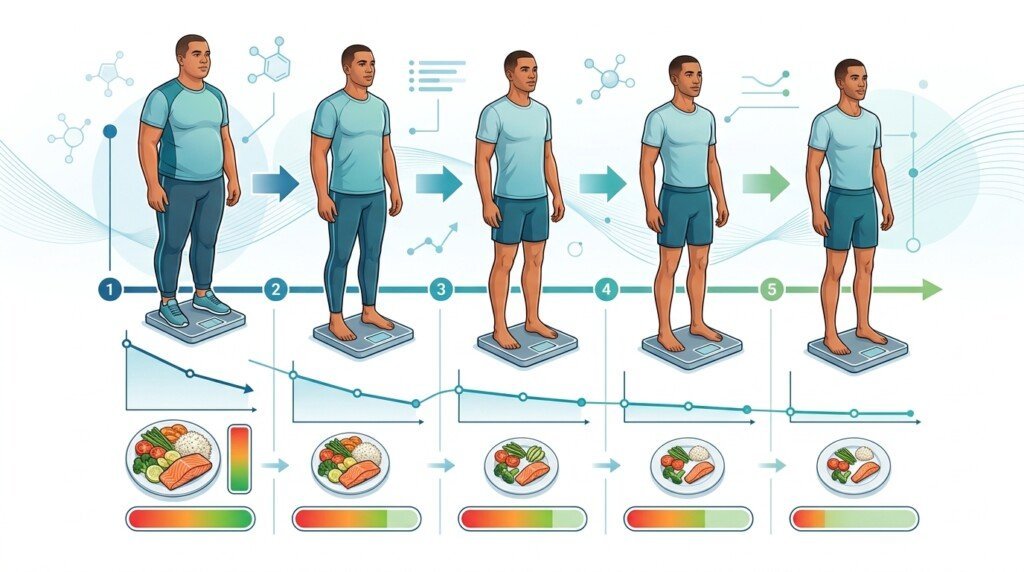
Your Body Uses Less Energy After Weight Loss
As body weight decreases, your body naturally requires fewer calories to support everyday activities.
Walking, climbing stairs, exercising, and even sitting all require slightly less energy when you’re carrying less body weight.
Over time, the calorie deficit that once produced steady weight loss may become much smaller.
Readers new to this concept may find Calorie Deficit useful for understanding how energy balance drives fat loss.
Progress Naturally Slows
Early weight loss often happens faster because changes in glycogen stores and body water contribute to the initial drop on the scale.
Later, weight loss becomes more gradual as fat loss accounts for a greater proportion of overall progress.
This slower pace is completely normal.
A Plateau Does Not Mean Failure
Many people assume that a stable scale means fat loss has stopped.
In reality, plateaus are often temporary.
Changes in water balance, digestion, and body composition can temporarily hide improvements that are still occurring beneath the surface.
Readers experiencing prolonged stalls may also benefit from Weight Loss Plateau, which explains the broader causes of stalled progress.
Why Does Weight Loss Slow Down During a Calorie Deficit?
Weight loss rarely follows a perfectly straight line.
Instead, it tends to occur in phases, with periods of faster progress followed by slower periods.
Understanding why this happens makes plateaus much less discouraging.
Smaller Bodies Burn Fewer Calories
One of the simplest explanations is that lighter bodies require less energy.
For example, someone who loses 20 pounds generally burns fewer calories performing the same daily activities than they did before losing weight.
Without adjusting calorie intake or physical activity, the calorie deficit gradually becomes smaller.
Everyday Movement Often Decreases
Many people unknowingly move less as they lose weight.
This reduction in spontaneous daily movement is commonly related to NEAT, or non-exercise activity thermogenesis.
Examples include:
- Walking less
- Standing less frequently
- Reduced fidgeting
- Taking fewer stairs
- Less household movement
Although each change seems minor, together they may noticeably reduce total daily energy expenditure.
Healthy Progress Is Not Always Linear
Even with perfect consistency, body weight naturally fluctuates.
Looking only at daily scale readings can make it seem like progress has stopped when long-term trends still show improvement.
Readers comparing long-term progress may also enjoy Why Did My Weight Loss Stop, which explores different types of weight-loss plateaus.
Is Metabolic Adaptation the Reason?
Metabolic adaptation is one of the most discussed topics in weight management, but it is also one of the most misunderstood.
Some people believe it means their metabolism has become permanently damaged.
That is not what current evidence suggests.
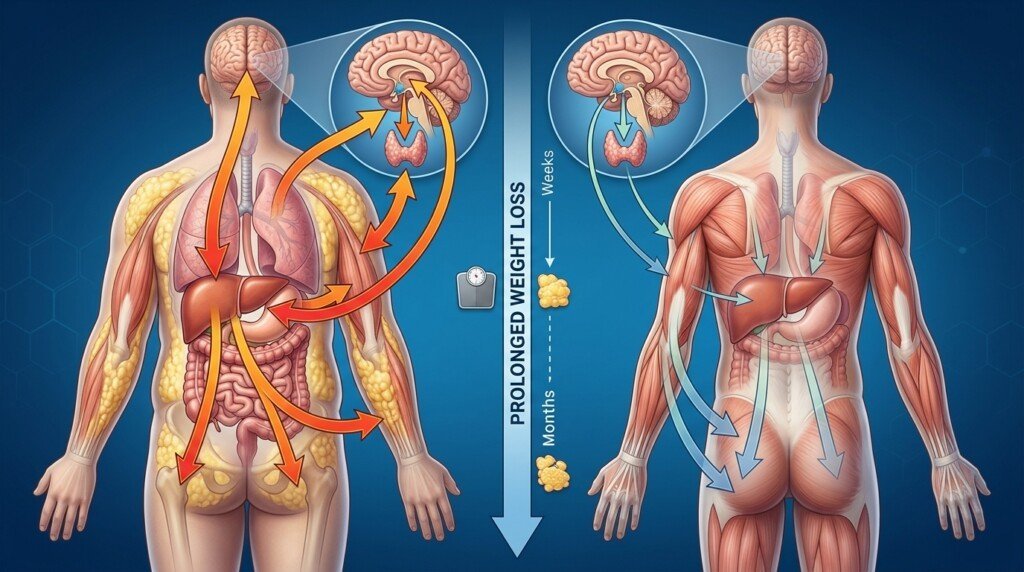
What Is Metabolic Adaptation?
Metabolic adaptation refers to the body’s natural response to prolonged weight loss.
As body weight decreases, the body gradually becomes more energy efficient.
This process is sometimes called adaptive thermogenesis.
It is considered a normal biological response rather than a sign that fat loss is impossible.
How Does It Affect Weight Loss?
Metabolic adaptation can contribute to slower progress by slightly reducing total daily energy expenditure.
This occurs alongside other expected changes such as:
- Lower maintenance calorie needs
- Reduced body weight
- Less spontaneous movement
- Greater energy efficiency during physical activity
The combined effect may reduce the size of your original calorie deficit.
Readers interested in this topic can explore Metabolic Adaptation for a more detailed explanation of how the body responds during prolonged weight loss.
It Does Not Override Energy Balance
Although metabolic adaptation influences calorie expenditure, it does not eliminate the importance of energy balance.
Fat loss still depends on maintaining a calorie deficit over time.
The difference is that the calorie deficit often becomes smaller than it was at the beginning of the journey.
How Do Maintenance Calories Change After Weight Loss?
Many people continue eating the same number of calories that worked at the beginning of their weight-loss journey.
Over time, however, their body’s calorie requirements gradually change.
Maintenance Calories Are Not Fixed
Maintenance calories represent the amount of energy needed to maintain current body weight.
As body weight changes, maintenance calories also change.
This means a calorie target that created a 500-calorie deficit several months ago may now create only a much smaller deficit.
Muscle Preservation Matters
Lean muscle contributes to daily calorie expenditure.
Maintaining muscle through regular physical activity and adequate nutrition supports overall body composition while helping maintain energy expenditure.
This is one reason gradual, sustainable weight loss is generally preferred over rapid approaches.
Consistency Remains the Foundation
Rather than making frequent large adjustments, reviewing calorie intake, activity levels, and long-term progress usually provides a better picture of whether your calorie deficit still matches your current needs.
For readers interested in maintaining progress without unnecessary restriction, Sustainable Weight Loss offers practical long-term strategies that support lasting habits.
Can Inaccurate Calorie Tracking Cause a Plateau?
Yes.
One of the most common reasons people believe their calorie deficit has stopped working is that their actual calorie intake has gradually increased without them realizing it.
This is completely normal and can happen even to people who have been tracking calories for months.

Small Tracking Errors Add Up
Many foods are difficult to estimate accurately by sight alone.
Even small differences in portion size can significantly affect total calorie intake over an entire week.
Common examples include:
- Cooking oils
- Nut butters
- Salad dressings
- Cheese
- Mixed dishes
- Snacks between meals
Individually these foods may seem insignificant, but together they can reduce or even eliminate a calorie deficit.
Portion Sizes Often Increase Over Time
People naturally become more relaxed with calorie tracking after several weeks or months.
Without noticing, serving sizes may gradually become larger.
This isn’t a lack of willpower. It’s simply human nature.
Reviewing portion sizes occasionally can improve tracking accuracy without becoming obsessive.
Restaurant Meals Can Be Misleading
Restaurant meals frequently contain:
- More cooking oil
- Larger serving sizes
- Hidden ingredients
- Extra sauces
Even meals that appear healthy may contain considerably more calories than expected.
Improving tracking accuracy is often enough to restart progress without making major dietary changes.
Can Water Retention Make It Look Like Your Calorie Deficit Has Stopped Working?
Absolutely.
Water retention is one of the biggest reasons people mistakenly believe fat loss has stopped.
The scale measures total body weight, not body fat alone.
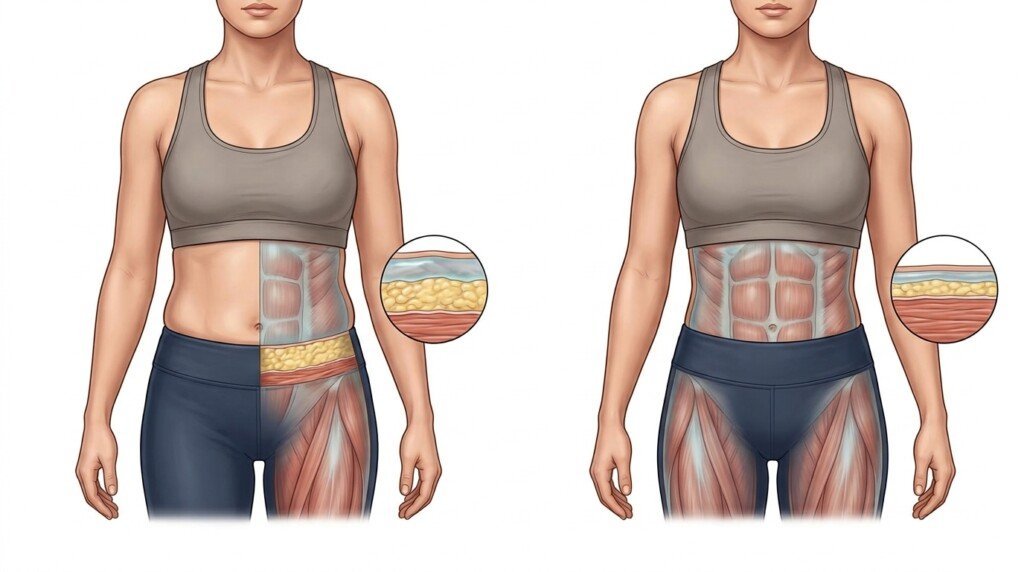
Exercise Can Temporarily Increase Water Weight
Increasing workout intensity or starting resistance training often causes temporary water retention while muscles recover.
This response is completely normal.
It may temporarily hide ongoing fat loss for several days.
Sodium Intake Changes Body Water
Meals containing more sodium than usual can increase water retention.
The result is temporary weight gain that has nothing to do with gaining body fat.
Glycogen Storage Also Influences Weight
Every gram of glycogen stored in the muscles and liver is accompanied by water.
Changes in carbohydrate intake or exercise habits can therefore cause noticeable scale fluctuations.
Readers wanting a broader explanation of temporary stalls may also find Weight Loss Plateau useful.
What Should You Do If Your Calorie Deficit Stops Working?
Instead of making dramatic changes, take a systematic approach.
Small, thoughtful adjustments are usually far more effective than reacting emotionally to a temporary plateau.
1. Review Your Calorie Tracking
Start by checking whether your current calorie intake is still accurate.
Ask yourself:
- Have portion sizes increased?
- Am I tracking beverages?
- Do I count cooking oils?
- Have restaurant meals become more frequent?
Sometimes the solution is simply improving consistency.
2. Reassess Your Current Maintenance Calories
If you’ve lost a meaningful amount of weight, your maintenance calorie needs have probably changed.
The calorie target that worked months ago may now produce a much smaller deficit.
Future readers may also benefit from Calorie Deficit Calculator Guide, which explains how calorie needs change throughout a weight-loss journey.
3. Look Beyond the Scale
Progress is measured in many ways.
Pay attention to:
- Waist circumference
- Clothing fit
- Progress photos
- Exercise performance
- Overall energy levels
These indicators often improve before major scale changes occur.
4. Stay Consistent Before Making Changes
Temporary stalls lasting a week or two are common.
Avoid making immediate adjustments based on only a few weigh-ins.
Looking at trends over several weeks provides a much more reliable picture of progress.
5. Avoid Making Your Deficit Too Aggressive
Many people respond to a plateau by drastically reducing calories.
A moderate, sustainable approach is generally easier to maintain while supporting healthy nutrition and long-term adherence.
Future discussions in Safe Calorie Deficit and Signs Your Calorie Deficit Is Too Extreme explore how to recognize when adjustments become too restrictive.
When Should You Ask a Healthcare Professional for Advice?
Most plateaus are temporary and can be explained by normal changes in energy expenditure, body weight, or daily habits.
However, there are situations where professional guidance is appropriate.
Progress Has Stalled for Several Months
If you’ve maintained accurate calorie tracking, consistent physical activity, and healthy habits for an extended period without meaningful progress, it may be helpful to consult a healthcare professional or registered dietitian.
They can review your current approach and identify areas that may need adjustment.
Symptoms Extend Beyond Weight Loss
Seek professional advice if stalled progress is accompanied by concerns such as:
- Persistent fatigue
- Unexplained weakness
- Significant appetite changes
- Other ongoing health concerns
These symptoms deserve individual evaluation rather than self-diagnosis.
Personalized Advice Can Save Time
Weight management is highly individual.
Professional guidance can provide recommendations tailored to your health status, activity level, and personal goals while supporting safe, sustainable progress.
Key Takeaways
| Topic | What You Should Know |
|---|---|
| Calorie deficit | A calorie deficit does not stop working, but it can become smaller over time. |
| Maintenance calories | Weight loss lowers calorie needs, reducing the size of your original deficit. |
| Metabolic adaptation | The body becomes more energy efficient during prolonged weight loss, but fat loss remains possible. |
| Tracking accuracy | Small calorie tracking errors are one of the most common reasons progress slows. |
| Water retention | Temporary increases in body water can hide ongoing fat loss. |
| Sustainable adjustments | Reviewing habits and making gradual changes is usually more effective than drastic calorie cuts. |
| Professional guidance | Seek advice if progress remains stalled despite consistent healthy habits or if concerning symptoms develop. |

Frequently Asked Questions
1. Can your body adapt to a calorie deficit?
Yes. The body naturally becomes more energy efficient as you lose weight, a process known as metabolic adaptation. However, this does not mean fat loss becomes impossible.
2. When does a calorie deficit stop working?
A calorie deficit does not truly stop working. Progress often slows because maintenance calorie needs decrease, activity levels change, or temporary factors such as water retention affect the scale.
3. Should I lower my calories further?
Not immediately. First review calorie tracking, portion sizes, daily activity, and long-term progress before deciding whether adjustments are necessary.
4. How long before a calorie deficit becomes less effective?
This varies from person to person. As body weight decreases over weeks or months, maintenance calorie needs gradually decline, reducing the size of the original calorie deficit.
5. Does metabolic adaptation prevent fat loss?
No. Metabolic adaptation may slow the rate of weight loss by reducing energy expenditure, but maintaining an appropriate calorie deficit still supports fat loss.
6. Can water retention cause a weight-loss plateau?
Yes. Temporary water retention from exercise, sodium intake, or glycogen changes can hide ongoing fat loss for days or even weeks.
7. Does inaccurate calorie tracking matter?
Absolutely. Small inaccuracies in portion sizes, cooking oils, snacks, or restaurant meals can significantly reduce your calorie deficit over time.
8. Does taking a diet break help?
Some people find that a planned break from dieting improves long-term adherence. However, whether it is appropriate depends on individual goals and circumstances, and it should be approached thoughtfully rather than as a solution to every plateau.
9. When should I seek professional advice?
If you’ve maintained consistent healthy habits for an extended period without progress or have symptoms beyond a typical plateau, consult a qualified healthcare professional.
10. Can I continue losing weight after a plateau?
Yes. Most plateaus are temporary. Reviewing calorie intake, activity levels, tracking accuracy, and long-term progress often helps restore momentum without extreme changes.
Conclusion
Understanding When Does a Calorie Deficit Stop Working begins with recognizing that the calorie deficit itself does not suddenly become ineffective. What changes over time are your body’s energy requirements, maintenance calorie needs, daily activity levels, and natural adaptations to weight loss. Temporary water retention and small tracking inaccuracies can also make it seem as though progress has stopped, even when body fat is still gradually decreasing. These are normal parts of the weight-loss process rather than signs that your efforts have failed.
Long-term success comes from adapting your approach as your body changes instead of assuming you need drastic solutions. Reviewing calorie tracking, reassessing maintenance calorie needs, staying physically active, and focusing on sustainable habits are often enough to overcome most plateaus. By understanding why progress slows and responding with patience and consistency, you can continue moving toward your goals while building healthy habits that last well beyond the number on the scale.
Disclaimer:
This post may contain affiliate links. If you purchase through them, we may earn a small commission at no extra cost to you. Also, this content is for informational purposes only and does not substitute professional medical advice.
Ready to Start Your Journey?
Use our free 7-in-1 Weight Loss Toolkit to calculate your numbers and build your plan in minutes.
Open Free Tools →