What Are Food Cravings? Causes, Types & How to Manage Them
Have you ever finished a satisfying meal only to find yourself thinking about chocolate, chips, pizza, or ice cream an hour later? Or maybe you’ve noticed that stressful days seem to trigger an irresistible urge for comfort foods, even when you’re not physically hungry.
If that sounds familiar, you’re far from alone.
Food cravings are one of the most common eating experiences people have. They affect people of all ages, body sizes, and dietary patterns. Sometimes a craving passes within minutes. Other times it lingers until you satisfy it. Understanding why cravings happen is often the first step toward managing them more effectively.
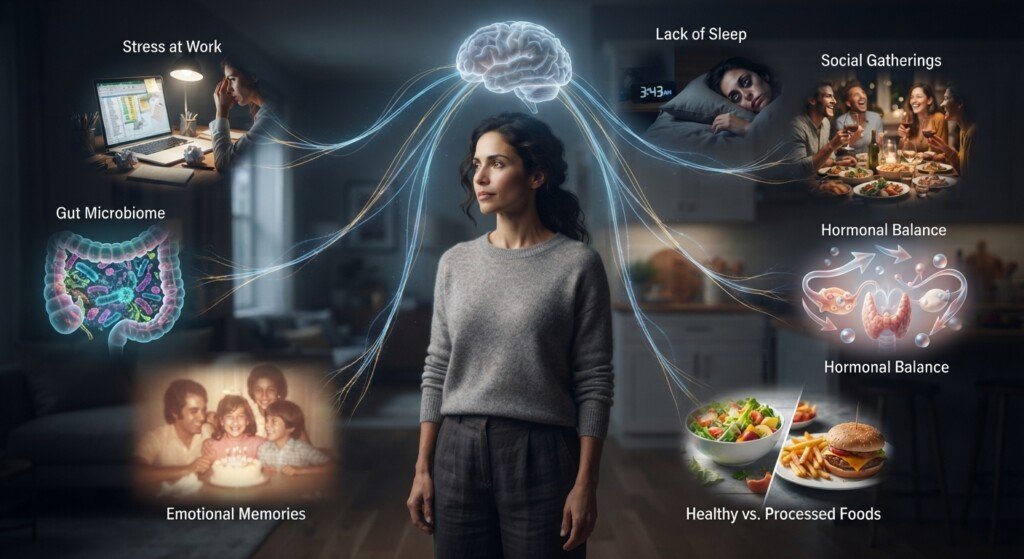
Many people assume cravings are simply a sign of weak willpower. Modern research paints a much more interesting picture. Food cravings are influenced by biology, hormones, emotions, learned behaviors, your environment, and even your gut. In many cases, several of these factors work together at the same time.
That is why two people can experience completely different cravings under similar circumstances. One person may crave salty snacks after a stressful meeting, while another reaches for sweets during the same situation.
This guide explores food cravings from a broad perspective. Rather than focusing on one specific cause, it explains the major factors that influence cravings and introduces the topics covered in the rest of this content cluster. By the end, you’ll have a clearer understanding of what cravings are, why they happen, and what they may be trying to tell you.
Quick Answer
Food cravings are strong, specific urges to eat a particular food, even when you are not physically hungry. They can be influenced by physiological needs, hormones, emotions, habits, gut health, environmental cues, and, in some cases, nutritional deficiencies. Understanding the underlying cause of a craving makes it easier to respond appropriately instead of treating every craving the same way.
What Are Food Cravings and What Causes Them?
Almost everyone experiences cravings, but they are often misunderstood.
A craving is different from simply wanting something to eat.
When you’re hungry, many foods sound appealing because your body needs energy.
A craving is much more specific.
You might suddenly want:
- Chocolate
- Potato chips
- Pizza
- Ice cream
- Bread
- French fries
- Cookies
- Cheese
Interestingly, another equally filling food may not satisfy that desire.
This specificity is what makes cravings unique.
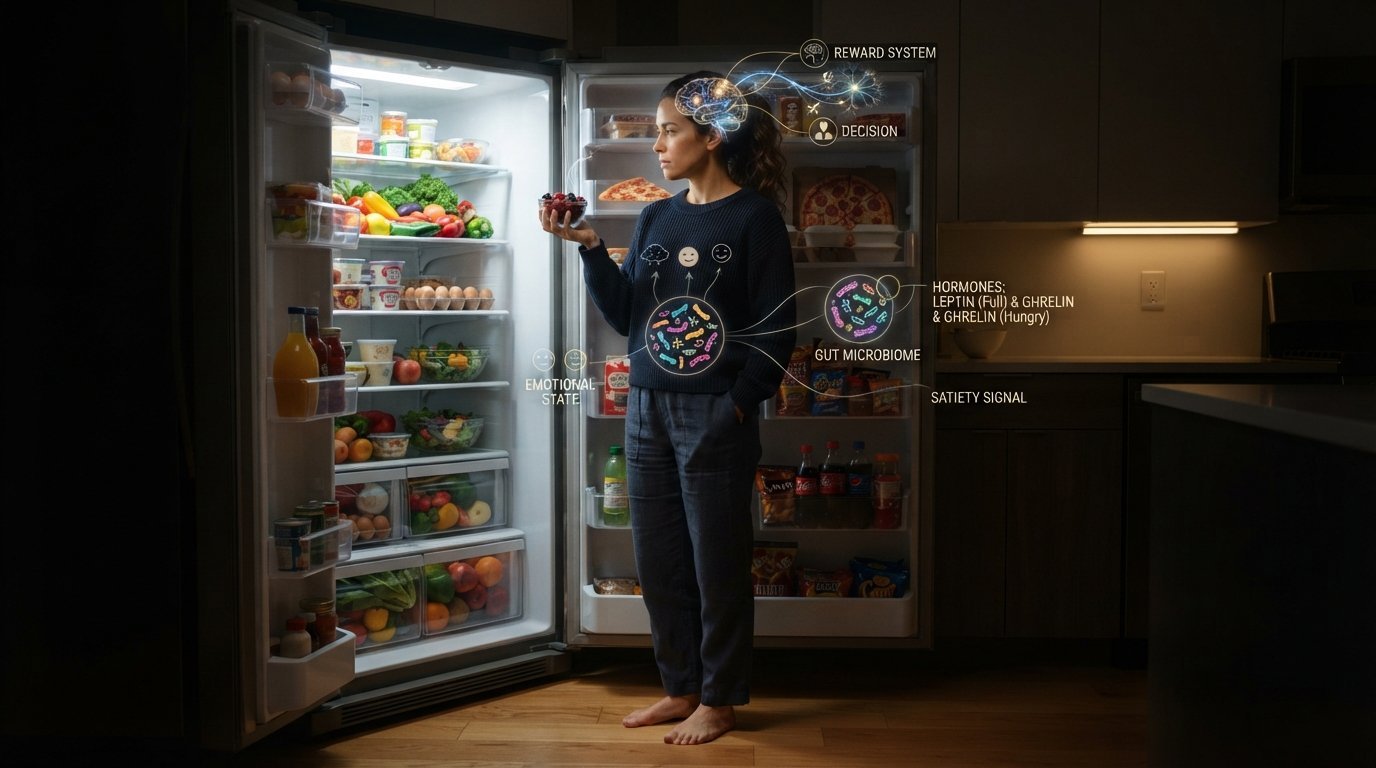
Food cravings develop because the brain integrates information from many different systems at once.
These include:
- Physical hunger
- Hormonal signals
- Past experiences
- Emotional state
- Environmental cues
- Food availability
- Reward pathways
- Habit formation
Instead of having a single cause, cravings usually reflect several influences working together.
What Are the Common Types of Cravings and Their Potential Triggers?
Although every person experiences cravings differently, most fall into recognizable patterns.
Understanding these categories helps identify possible underlying causes.
Sweet Cravings
Sweet foods are among the most commonly reported cravings.
Examples include:
- Chocolate
- Candy
- Cake
- Cookies
- Ice cream
- Sweetened drinks
These cravings may be influenced by:
- Habit
- Emotional associations
- Reward pathways
- Hormonal changes
- Sleep quality
- Meal composition
The biology behind frequent sugar cravings is explored separately in Why Do I Crave Sugar So Much?, where the mechanisms are discussed in much greater detail.
Salty Cravings
Some people consistently crave foods high in salt.
Examples include:
- Potato chips
- Pretzels
- Popcorn
- Salted nuts
- Processed snacks
These cravings may relate to taste preferences, eating habits, hydration status, or specific physiological situations.
Fat-Rich Cravings
Highly satisfying foods often combine fat with refined carbohydrates.
Examples include:
- Pizza
- Burgers
- Fried foods
- Pastries
- Fast food
These foods strongly stimulate the brain’s reward system, making them particularly memorable and appealing.
Comfort Food Cravings
Some cravings focus less on nutrients and more on emotional familiarity.
Foods associated with childhood, celebrations, or relaxation often become comfort foods.
Examples vary widely between individuals because they are shaped by personal experiences rather than biology alone.
The emotional side of cravings is explored further in What Are Emotional Cravings?
Texture-Based Cravings
Sometimes people crave the experience of eating rather than a particular flavor.
Examples include:
- Crunchy snacks
- Creamy desserts
- Chewy candies
- Crispy foods
Texture can play a surprisingly important role in satisfaction.
Time-Based Cravings
Many cravings occur at predictable times.
For example:
- Chocolate every evening
- Chips during television
- Coffee with pastries each morning
- Dessert after dinner
Repeated behaviors gradually become learned habits.
Over time, the brain begins expecting certain foods whenever those situations occur.
Can Cravings Be Linked to Specific Health Conditions or Nutrient Deficiencies?
This is one of the most common questions people ask.
The answer is sometimes, but not always.
Many internet articles suggest that every craving points to a specific nutrient deficiency.
The evidence is much more nuanced.
For example:
Craving chocolate does not automatically mean magnesium deficiency.
Craving salty foods does not necessarily indicate low sodium.
Craving meat does not always signal iron deficiency.
In reality, most food cravings have multiple contributing factors.
That said, certain medical conditions, medications, hormonal changes, and nutritional inadequacies can influence appetite and food preferences.
Examples include:
- Pregnancy
- Hormonal fluctuations
- Poor sleep
- Chronic stress
- Certain medications
- Medical conditions affecting appetite
Possible nutrient-related cravings should always be interpreted alongside the individual’s overall health rather than assumed from one food preference alone.
Because nutritional deficiencies represent only one possible explanation, How to Identify the Root Cause of Your Cravings helps readers evaluate multiple contributing factors instead of jumping to conclusions.
How Are Cravings Different From Hunger?
Although people often use these terms interchangeably, they describe different experiences.
Physical hunger develops gradually.
It reflects your body’s need for energy.
Signs may include:
- Stomach emptiness
- Mild stomach growling
- Reduced concentration
- Increasing appetite over time
- Willingness to eat many different foods
Cravings behave differently.
They often:
- Appear suddenly.
- Focus on one specific food.
- Occur even after eating.
- Feel emotionally urgent.
- Fade if attention shifts elsewhere.
For example, after eating a balanced dinner, you may still crave chocolate.
That is not necessarily hunger.
It is a craving.
The complete comparison between these two experiences is explored separately in Emotional Hunger vs Physical Hunger, where the differences are examined in much greater depth.
Understanding this distinction is one of the most useful skills for recognizing why you want to eat in a particular moment.
What Causes Food Cravings?
Once you understand what cravings are, the next question naturally becomes: Why do they happen?
There is no single explanation.
A craving usually develops because several systems inside the body interact at the same time. Your brain processes signals about energy needs, hormone levels, emotions, habits, memories, and even the microbes living in your digestive system. The result is a specific desire for a particular food rather than a general need to eat.
Instead of thinking of cravings as random events, it helps to view them as messages. The challenge is learning which message your body is sending.

What Are the Common Physiological Triggers for Food Cravings?
The body constantly monitors its energy balance. When that balance changes, it can influence appetite and food preferences.
One of the simplest physiological triggers is going too long without eating.
Long gaps between meals may increase appetite, making highly palatable foods more appealing. These foods often combine sugar, fat, and salt, providing a quick source of energy that the brain naturally finds rewarding.
Other physiological factors that may contribute include:
- Poor sleep
- Physical fatigue
- Dehydration
- Increased energy demands
- Intense physical activity
- Recovery after illness
The brain is also heavily influenced by learned experiences.
If you regularly eat popcorn while watching movies, your brain may begin expecting popcorn whenever a movie starts, even if your body does not need additional calories.
Likewise, routinely eating dessert after dinner may create an expectation that something sweet should follow every evening meal.
Over time, repeated experiences strengthen these associations until they become automatic.
How Do Hormones Influence Food Cravings?
Hormones help regulate both hunger and food preferences.
Rather than acting independently, they work together to communicate information between the digestive system, body fat, brain, and other organs.
Some hormones encourage eating.
Others help signal fullness.
During certain life stages or health conditions, these signals may temporarily change.
Examples include:
- Menstrual cycle fluctuations
- Pregnancy
- Menopause
- Chronic stress
- Poor sleep
- Weight loss attempts
These hormonal shifts can influence both the intensity and type of foods people crave.
For example, some individuals notice stronger cravings for sweet or high-fat foods during specific phases of the menstrual cycle.
Others report increased appetite after several nights of inadequate sleep.
Hormones do not force someone to eat a particular food.
Instead, they influence how rewarding certain foods appear at that moment.
Because hormonal influences vary greatly between individuals, they represent only one part of the overall picture.
What Role Do Emotions Play in Food Cravings?
Food is more than fuel.
It is also deeply connected to memory, comfort, celebration, culture, and routine.
Many cravings begin long before the stomach signals hunger.
Stressful workdays, boredom, loneliness, anxiety, excitement, or even happiness can trigger thoughts of specific foods.
This happens because the brain learns associations over time.
If eating ice cream repeatedly helped you relax after stressful days, your brain may eventually connect stress with ice cream.
Likewise:
- Watching television may trigger popcorn cravings.
- Celebrations may trigger cake cravings.
- Rainy evenings may remind someone of warm comfort foods.
- Weekend relaxation may trigger takeout cravings.
These learned associations become powerful because they involve both memory and reward.
Importantly, emotional cravings are not imaginary.
They represent genuine psychological experiences, even though they are different from physical hunger.
Since emotional eating deserves its own detailed discussion, What Are Emotional Cravings? explores how emotions influence eating behavior and how emotional cravings differ from other types of food urges.
What Role Does Gut Health Play in Food Cravings?
Interest in the gut microbiome has grown rapidly over the past decade.
Researchers now understand that trillions of microorganisms live inside the digestive system, influencing many aspects of health.
Scientists continue studying whether the gut microbiome also affects food cravings.
Although research is still evolving, several theories have emerged.
The gut communicates continuously with the brain through what is often called the gut-brain axis.
Signals traveling along this pathway may influence:
- Appetite
- Fullness
- Food preferences
- Mood
- Reward responses
Diet itself also shapes the gut microbiome.
Different eating patterns encourage different microbial communities, which may partly explain why food preferences sometimes change after dietary changes.
However, it is important not to overstate current evidence.
Researchers continue investigating exactly how gut microbes influence cravings, and many questions remain unanswered.
The relationship appears promising, but it is also complex.
Are Nutritional Deficiencies Linked to Specific Cravings?
Few topics generate more myths than nutrient deficiencies and cravings.
Many social media posts claim that:
- Chocolate cravings always mean magnesium deficiency.
- Salt cravings always indicate mineral deficiencies.
- Meat cravings always signal iron deficiency.
Current evidence does not support such simple one-to-one relationships.
While certain deficiencies can influence appetite or eating behavior, most cravings cannot be accurately diagnosed based on one desired food.
For example:
Someone craving chocolate may actually be experiencing:
- Habit
- Emotional comfort
- Taste preference
- Hormonal changes
- Environmental cues
- Learned reward
Rather than magnesium deficiency.
Likewise, craving salty snacks does not automatically indicate low sodium.
Nutritional status represents only one possible factor among many.
If cravings become unusually intense, persistent, or are accompanied by other concerning symptoms, discussing them with a healthcare professional may be appropriate.
For most people, however, identifying the root cause requires considering lifestyle, sleep, stress, habits, emotions, and physical hunger together rather than assuming a single explanation.
A more structured approach to evaluating these influences is covered in How to Identify the Root Cause of Your Cravings, which helps readers think beyond common myths.
Key Takeaways
| Topic | Main Insight |
|---|---|
| Food cravings | Cravings are specific urges for particular foods and differ from general hunger. |
| Main causes | Biology, hormones, emotions, habits, gut health, environment, and learned behaviors often work together. |
| Hunger vs cravings | Hunger develops gradually and accepts many foods, while cravings are usually sudden and highly specific. |
| Nutrient deficiencies | Deficiencies may contribute in some cases but rarely explain cravings on their own. |
| Individual differences | The same craving can have different underlying causes in different people. |
Frequently Asked Questions
1. What causes food cravings?
Food cravings can be influenced by physical hunger, hormones, emotions, habits, environmental cues, gut health, and sometimes nutritional deficiencies. Most cravings result from several factors working together rather than a single cause.
2. How are cravings different from hunger?
Hunger is the body’s need for energy and usually develops gradually, making many foods appealing. Cravings are more specific, often appear suddenly, and focus on a particular food even when you have recently eaten.
3. Are cravings a sign of a deficiency?
Not always. While some nutrient deficiencies may affect appetite, most cravings are better explained by habits, emotions, hormonal changes, or learned food associations rather than a single missing nutrient.
4. Why do I crave certain foods at the same time every day?
Repeated routines can train the brain to expect certain foods in specific situations. Over time, these habits become conditioned responses that trigger cravings even without physical hunger.
5. Can stress really increase food cravings?
Yes. Stress can influence hormones, emotions, and the brain’s reward pathways, making highly palatable foods more appealing for some people.
Conclusion
Understanding food cravings begins with recognizing that they are far more complex than simple hunger. They reflect an ongoing conversation between the brain, body, hormones, emotions, habits, environment, and digestive system. Because these influences often overlap, the same craving can have very different causes from one person to another.
Instead of treating every craving as a lack of willpower, it is more helpful to ask what might be driving it. Sometimes the answer is physical hunger. Other times it may involve stress, routine, poor sleep, hormonal changes, or learned behaviors. Looking at the bigger picture provides a much clearer understanding than focusing on a single explanation.
The remaining articles in this cluster explore each of these causes in greater depth, helping you understand specific cravings, identify their likely triggers, and develop more informed ways to respond to them over time.
Disclaimer:
This post may contain affiliate links. If you purchase through them, we may earn a small commission at no extra cost to you. Also, this content is for informational purposes only and does not substitute professional medical advice.
Fuel Your Body Right
Use our free Nutrition Toolkit to find your protein target, fasting window, and net carbs in minutes.
Open Free Tools →