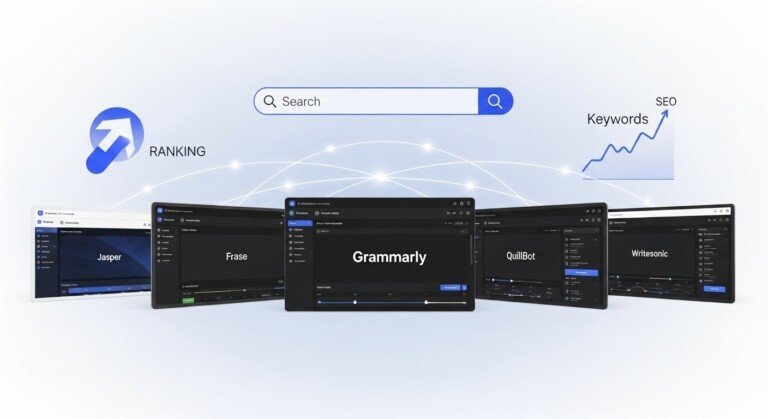
5 AI Writing Tools for SEO That Help Content Rank in Google
If you’re using AI to write blog content and your pages aren’t ranking, the problem is not “AI.”
The problem is how you’re using it.
Most bloggers fail with AI writing tools because they:
- Publish raw AI output
- Ignore search intent
- Skip SEO structure
- Don’t optimize headings
- Don’t rewrite robotic text
- Don’t add topical depth
- Don’t build internal links
AI doesn’t rank content.
Good content does.
And the right AI writing tools for SEO don’t replace SEO thinking.
They make SEO execution faster, cleaner, and more scalable.
In this guide, I’m not listing tools because they’re popular.
I’m showing you five AI writing tools that actually support ranking workflows when used correctly.
This is about:
- Ranking mechanics
- SEO-first workflows
- Search intent alignment
- Content structure logic
- Subtopic coverage
- Topical depth
- SERP-aligned writing
- Internal linking logic
Not hype.
Not features.
Not pricing.
If you’re still comparing different tools for blogging workflows, I’ve already broken down the best AI writing tools for bloggers in a separate guide that covers long-form writing, affiliate content, and content scaling.
Why Most AI Content Fails in Google
Before we talk about tools, we need to fix the real problem.
AI content fails because people:
- Generate drafts and publish them raw
- Don’t match search intent
- Don’t cover subtopics
- Don’t optimize headings
- Don’t rewrite repetitive sections
- Don’t add internal links
- Don’t improve clarity
- Don’t expand thin sections
Google doesn’t penalize AI content.
Google penalizes:
- Thin content
- Unhelpful content
- Low-quality content
- Duplicate content
- Robotic content
- Poor structure
- Weak topical coverage
So if your AI content isn’t ranking, the tool is not the main issue.
Your workflow is.
The right AI writing tools for SEO don’t replace your judgment.
They remove manual effort and speed up execution.
That’s the difference.
What Makes an AI Writing Tool “SEO-Ready”
Not all AI writing tools are SEO tools.
A real SEO-capable AI tool must support:
- Long-form content generation
- SEO-friendly structure
- Topic expansion
- Tone control
- Rewriting
- Grammar and clarity
- Content optimization
- Internal linking logic
- SERP-aligned outlines
If a tool only generates text and nothing else, it’s not an SEO tool.
It’s a typing assistant.
The five tools below actually support ranking-focused workflows.
Not by magic.
By removing friction from real SEO execution.
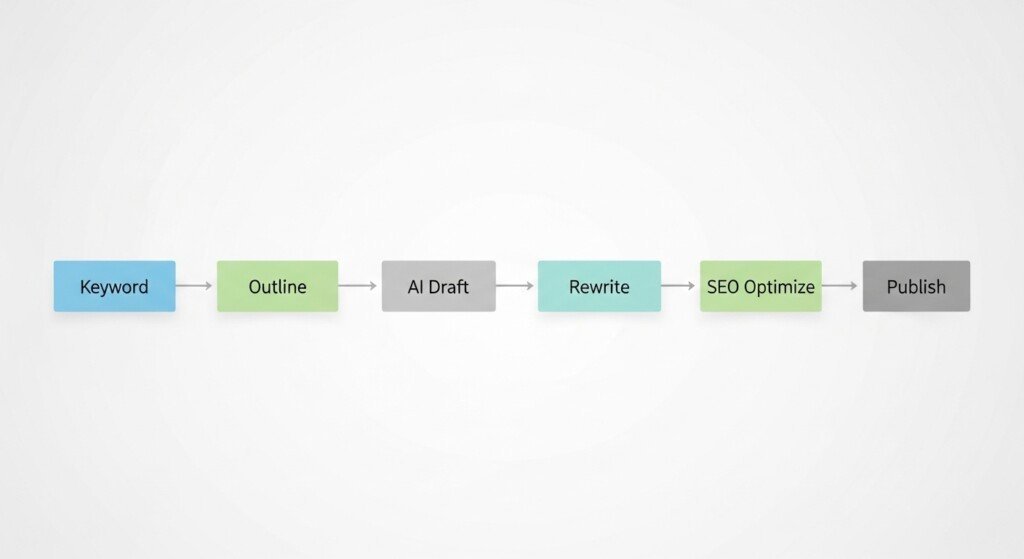
SEO Workflow That Actually Ranks
This is the baseline workflow all ranking AI content follows:
- Identify search intent
- Analyze top-ranking pages
- Build a SERP-aligned outline
- Expand subtopics cleanly
- Rewrite weak sections
- Improve tone and clarity
- Add internal links
- Optimize headings
- Expand thin sections
- Final human edit
The tools below plug into that workflow.
They don’t replace it.
1. Jasper AI — Best Overall AI Writing Tool for SEO Content
Jasper is the most complete SEO-capable AI writing tool for bloggers.
It’s not cheap.
It’s not simple.
But it’s the only tool here that consistently handles long-form SEO content properly.
Why Jasper Works for SEO
Jasper is built for structured content workflows.
It supports:
- Long-form blog writing
- SEO-friendly templates
- Outline generation
- Section expansion
- Tone control
- Brand voice consistency
- Buyer-intent content
- Structured formatting
Unlike generic AI tools, Jasper is designed to scale blog content without destroying structure or coherence.
Real SEO Workflow With Jasper
Here’s a ranking-focused workflow:
- Build your SEO outline using Frase
- Paste the outline into Jasper
- Expand each H2 section
- Rewrite weak paragraphs
- Adjust tone for your audience
- Final polish with Grammarly
This workflow produces publishable SEO content, not raw garbage.
Why Jasper Helps Content Rank
Jasper helps because it:
- Maintains structure across long posts
- Expands subtopics cleanly
- Avoids extreme repetition
- Supports SEO-friendly formatting
- Keeps tone consistent
- Speeds up long-form writing
If you care about serious SEO content production, Jasper is the backbone.
2. Frase — Best SEO Research + Content Optimization Tool
Frase is not a writing tool first.
It’s an SEO intelligence tool that makes AI writing tools actually useful for rankings.
Why Frase Is Critical for SEO
Frase fixes the biggest AI problem:
Search intent mismatch.
It analyzes:
- Top-ranking pages
- Subtopics Google expects
- Questions users ask
- SERP coverage gaps
- Keyword relevance
- Topic modeling
Without Frase, you’re guessing what to write.
With Frase, you’re writing what Google already rewards.
Real SEO Workflow With Frase
This is how Frase fits into a ranking workflow:
- Enter your target keyword
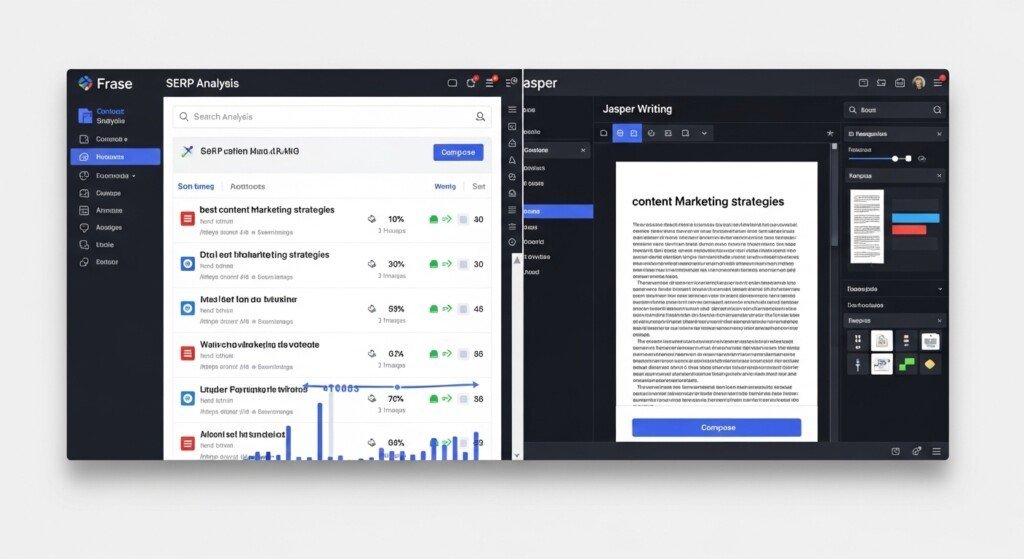
- Frase analyzes top-ranking pages
- It generates a content brief
- You build an outline from it
- Generate content using Jasper or Writesonic
- Optimize inside Frase
- Final polish in Grammarly
This is how you turn generic drafts into SEO-ready content.
Why Frase Helps Content Rank
Frase helps because it:
- Aligns content with SERP intent
- Builds SEO-first outlines
- Prevents thin content
- Improves topical coverage
- Reduces ranking guesswork
- Supports content scoring
If SEO matters to you, Frase is not optional.
3. Grammarly — Best Editing + SEO Polish Tool
Grammarly is not a content generator.
It’s a quality control system.
And every serious SEO blogger needs it.
Why Grammarly Matters for SEO
AI writing tools write fast.
They don’t write clean.
Grammarly fixes:
- Grammar mistakes
- Awkward phrasing
- Repetitive sentences
- Poor tone
- Weak clarity
- Low readability
Google doesn’t rank messy content.
It ranks clean, readable, helpful content.
That’s where Grammarly matters.
Real SEO Workflow With Grammarly
This is how Grammarly fits into a ranking workflow:
- Generate content using Jasper or Writesonic
- Paste into Grammarly
- Fix grammar and clarity
- Improve tone
- Remove repetition
- Simplify wording
- Final human edit
- Publish
This step alone improves content quality dramatically.
Why Grammarly Helps Content Rank
Grammarly helps because it:
- Improves readability
- Fixes grammar issues
- Enhances clarity
- Reduces bounce rates
- Increases trust
- Improves UX signals
If you publish AI content without Grammarly, you’re sabotaging your SEO.
4. QuillBot — Best Rewriting + Paraphrasing Tool
QuillBot is the cleanup layer.
It doesn’t generate content.
It makes AI content publishable.
Why QuillBot Matters for SEO
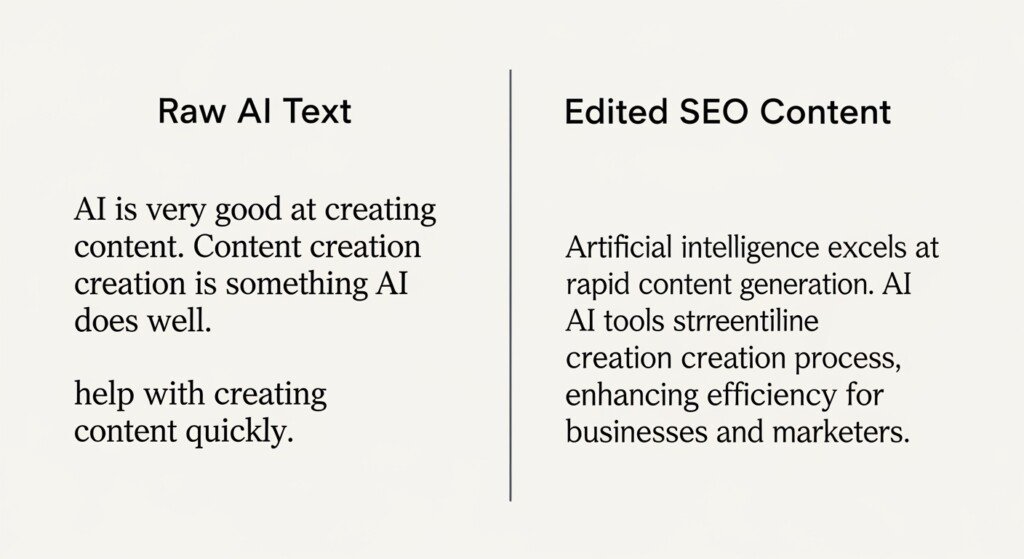
Raw AI output has problems:
- Robotic tone
- Phrase repetition
- Plagiarism risk
- Poor sentence flow
- Duplicate content issues
QuillBot fixes all of that.
Real SEO Workflow With QuillBot
Here’s how QuillBot fits into SEO workflows:
- Generate draft using Jasper or Writesonic
- Paste sections into QuillBot
- Rewrite using Standard or Fluency mode
- Improve tone and clarity
- Run plagiarism checker
- Final polish in Grammarly
- Publish
This turns raw AI output into human-like content.
Why QuillBot Helps Content Rank
QuillBot helps because it:
- Removes robotic phrasing
- Reduces plagiarism risk
- Improves sentence flow
- Increases originality
- Fixes tone issues
If you publish AI content and skip QuillBot, you’re doing it wrong.
5. Writesonic — Best Budget SEO Writing Tool
Writesonic is the practical alternative.
It’s not Jasper.
It’s not elite.
But it’s usable and affordable.
Why Writesonic Works for SEO
Writesonic handles:
- First-draft content
- SEO templates
- Blog posts
- Product reviews
- Outline generation
- Bulk content
It’s one of the few cheap tools that doesn’t produce complete garbage.
Real SEO Workflow With Writesonic
Here’s a cost-efficient workflow:
- Generate outline using Frase
- Draft content in Writesonic
- Rewrite in QuillBot
- Polish in Grammarly
- Optimize inside Frase
- Publish
This stack produces ranking-capable content at a lower cost.
Why Writesonic Helps Content Rank
Writesonic helps because it:
- Produces usable drafts
- Supports SEO structure
- Works for long-form content
- Generates content fast
- Keeps costs low
If you’re comparing AI writing tools for SEO content on a budget, Writesonic is one of the few that makes sense.
How These AI Writing Tools Actually Help Content Rank
None of these tools magically rank your content.
They help because they improve:
- Speed
- Structure
- Coverage
- Quality
- Optimization
- Workflow efficiency
Here’s the real effect.
1. They Increase Content Velocity
More content = more ranking opportunities.
AI tools let you go from:
- 1 post/week → 3–5 posts/week
- 4 posts/month → 12–20 posts/month
That’s how topical authority is built.
2. They Improve Content Quality
When used correctly:
- Content is cleaner
- Grammar improves
- Structure improves
- Readability improves
- Originality improves
That directly impacts rankings.
3. They Support SEO-First Workflows
With tools like Frase + Jasper:
- You match search intent
- You cover subtopics
- You optimize structure
- You reduce thin content
- You improve topical depth
That’s what Google rewards.
Internal Linking Logic With AI-Generated Content
Most AI content fails because bloggers ignore internal linking.
Topical authority requires:
- Contextual internal links
- Hub-and-spoke architecture
- Semantic relevance
- Crawl path clarity
Your workflow must include:
- Linking to supporting articles
- Linking back to pillar content
- Linking between related subtopics
- Linking to SEO explainers
This is why SEO content stacks must include internal linking logic.
If you want deeper optimization, compare AI writing tools for SEO content instead of chasing random generators.
Common SEO Mistakes With AI Writing Tools
If your content isn’t ranking, it’s probably one of these.
Mistake #1 — Publishing Raw AI Content
Guaranteed failure.
Mistake #2 — Ignoring Search Intent
You can’t rank content that doesn’t answer the query.
Mistake #3 — Thin Content
Google doesn’t rank surface-level articles.
Mistake #4 — No Internal Linking
Topical authority needs internal links.
Mistake #5 — No Human Editing
AI content without editing is trash.
Final Verdict
AI writing tools don’t rank content.
Good workflows do.
If your goal is rankings:
- Use Frase for SEO research
- Use Jasper or Writesonic for drafting
- Use QuillBot for rewriting
- Use Grammarly for polishing
This is how you turn AI into a ranking engine.
If you’re still worried about penalties, read do AI writing tools hurt SEO before publishing anything.
Bottom Line
AI writing tools are not shortcuts.
They are accelerators.
Used correctly, they:
- Save time
- Improve quality
- Increase output
- Support SEO workflows
- Help content rank
Used incorrectly, they destroy your site.
Choose your stack wisely.
FAQ
1. Do AI writing tools really help content rank in Google?
Yes — but only when used inside an SEO-first workflow.
AI tools speed up drafting, topic expansion, and rewriting.
They don’t replace search intent alignment, structure, internal links, or human editing.
2. What is the best AI writing tool for SEO content?
There is no single “best” tool.
Frase handles SEO research and SERP alignment.
Jasper or Writesonic handle drafting.
Grammarly and QuillBot handle polishing and rewriting.
Ranking comes from the stack, not one tool.
3. Why doesn’t raw AI content rank well?
Because it’s usually thin, repetitive, poorly structured, and misaligned with search intent.
Google doesn’t punish AI.
It punishes bad content.
4. Is it safe to use AI writing tools for SEO?
Yes, if you edit the output, add topical depth, optimize structure, and build internal links.
If you publish raw drafts, your rankings will suffer.
5. Do I still need human editing if I use AI tools?
Yes. Always.
AI removes manual effort.
It does not replace judgment, SEO logic, or quality control.
Disclaimer
Some links on this page may be affiliate links.
If you click and purchase, I may earn a small commission at no extra cost to you.
I only recommend tools I genuinely use or believe are useful for bloggers.
This helps support the site and keep content free.