When Is the Best Time to Test Your VO2 Max?
If you are scheduling a VO2 max test, the exact appointment time may seem like a minor detail. It is not the only thing that matters, but it can matter when your goal is to get a result that you can compare with another test later.
The best time to test VO2 max is usually a time when you are well rested, adequately recovered, able to follow the testing center’s preparation instructions, and unlikely to have your performance affected by an unusually hard workout, poor sleep, heavy meal, caffeine, or other temporary factors.
That last point is important. A VO2 max test measures your performance under a particular set of conditions. It is not a permanent number stamped on your body. Your result can be influenced by how you slept, what you ate, how recently you exercised, your hydration, your medications, the testing protocol, and even the time of day. The American Thoracic Society notes that repeated cardiopulmonary exercise testing is preferably performed at the same time of day because meaningful daily variation in test results has been reported. (American Thoracic Society)
So, if you are preparing for your first test, do not obsess over finding a magical hour when your VO2 max will be highest.
Instead, aim for repeatable conditions.
That approach gives you a much more useful result, especially if you intend to test again later to see whether your fitness has actually changed.
What factors influence VO2 Max testing results throughout the day?
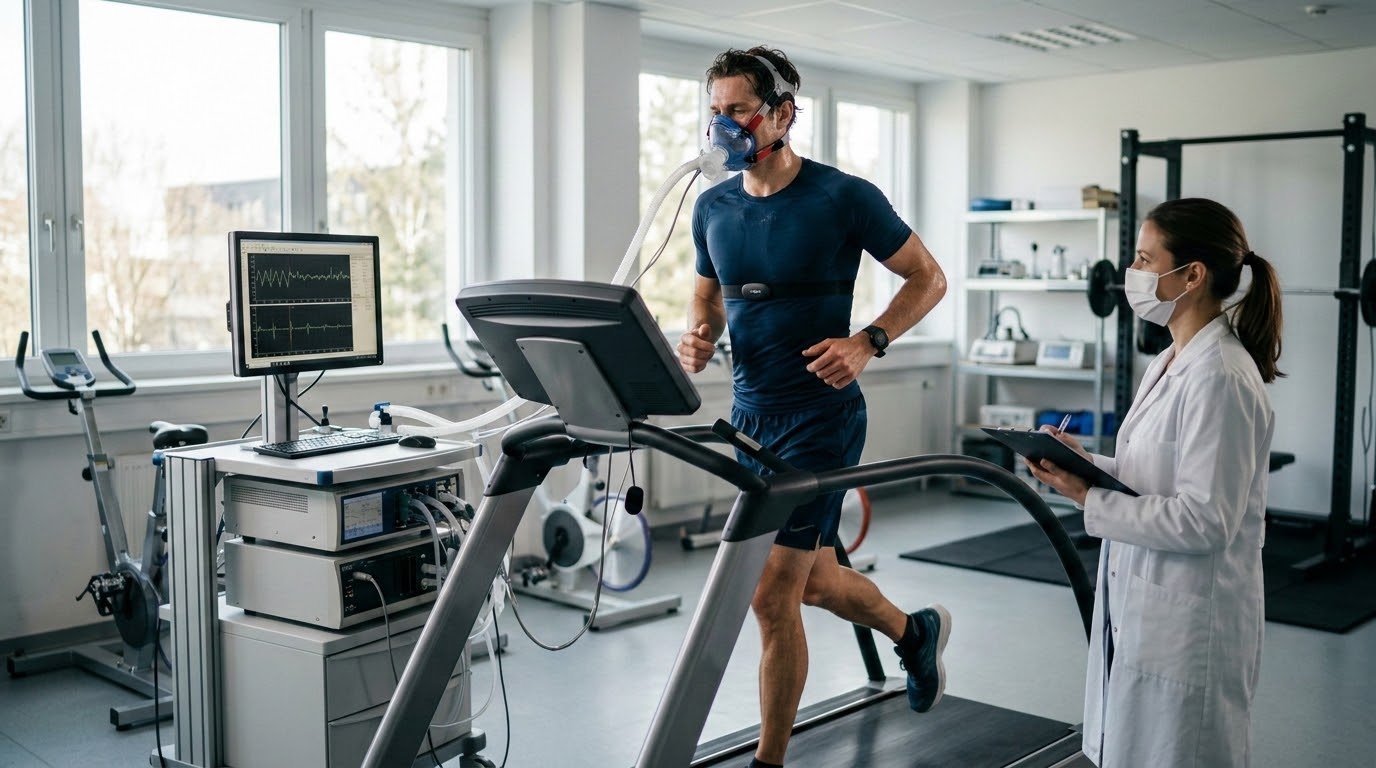
VO2 max testing is designed to push the cardiovascular and respiratory systems toward their maximum capacity. That means anything that changes how prepared you are to exercise intensely can potentially influence the final result.
Time of day is one factor. Sleep is another. So are food, caffeine, hydration, recent exercise, stress, illness, medication, and your familiarity with the testing environment.
This does not mean every small variation will completely change your result. It means that a test performed after a terrible night’s sleep and a test performed after several nights of good recovery are not necessarily measuring you under identical conditions.
The goal is therefore not to create a perfectly controlled laboratory version of your life. The goal is to avoid obvious factors that could unnecessarily reduce your performance.
For anyone planning repeated tests, consistency becomes even more valuable. The American Thoracic Society specifically notes that repeated testing should preferably occur at the same time of day because diurnal variation can affect reproducibility.
Does sleep quality affect morning test accuracy?
Yes, sleep can matter, particularly when poor sleep leaves you feeling noticeably fatigued.
A VO2 max test requires maximal or near-maximal effort. If you arrive at the laboratory after a night of fragmented sleep, you may technically be capable of completing the test, but you may not feel as prepared to push yourself to your true maximum.
This creates an important distinction.
Poor sleep does not necessarily mean the equipment will suddenly measure oxygen incorrectly. The bigger issue is that your exercise performance may not represent your usual state.
Imagine you normally sleep seven to eight hours and feel alert in the morning. On the morning of your test, you sleep poorly because you were awake several times during the night. You arrive feeling sluggish, your legs feel heavier than usual, and you struggle to maintain the final stages of the test.
Your result may still be a legitimate measurement of what your body could do under those circumstances. But if your goal is to understand your usual aerobic capacity, it may not be the most representative day.
This is one reason it is sensible to tell the testing staff if something unusual happened before your appointment.
A stressful night, acute illness, unusual fatigue, or significant disruption to your normal routine can provide useful context when interpreting the result.
There is also a practical issue with morning testing.
Some people naturally feel better exercising in the morning. Others feel stiff, sleepy, or underprepared until later in the day. Neither preference automatically makes one person healthier or fitter. Individual circadian patterns can influence perceived readiness and exercise performance.
That is why the best appointment time is partly personal.
If you regularly perform well in the morning, a morning test may work perfectly well. If you consistently feel stronger later in the day, an afternoon appointment may be more comfortable.
What matters most is avoiding an appointment that clashes badly with your normal rhythm when you have a choice.
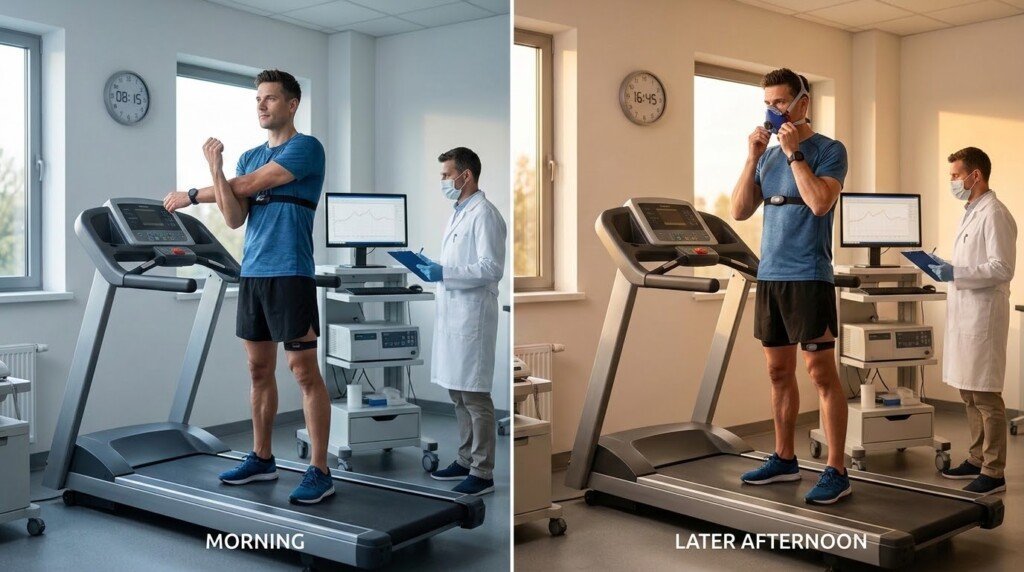
And if you plan to repeat the test, try to reproduce the same general timing.
For example, testing at 8 a.m. this year and 6 p.m. next year introduces a potential difference that has nothing to do with your training. Testing at approximately the same time makes the comparison cleaner.
This is especially relevant if you are using your VO2 max test as a progress marker rather than simply getting a one-time fitness assessment.
What is the recommended pre-test protocol for optimal performance?
There is no single universal preparation protocol that applies to every VO2 max laboratory.
Your testing facility’s instructions should take priority because protocols differ according to the reason for testing, the equipment being used, your health status, and the laboratory’s procedures.
However, several practical principles are commonly used.
First, avoid arriving immediately after a demanding workout. The American Thoracic Society’s patient guidance for cardiopulmonary exercise testing recommends not exercising on the day of the test. It also advises eating lightly and avoiding food for at least two hours before testing, while noting that caffeine may need to be avoided on the test day.
That gives you a useful checklist.
Before your test:
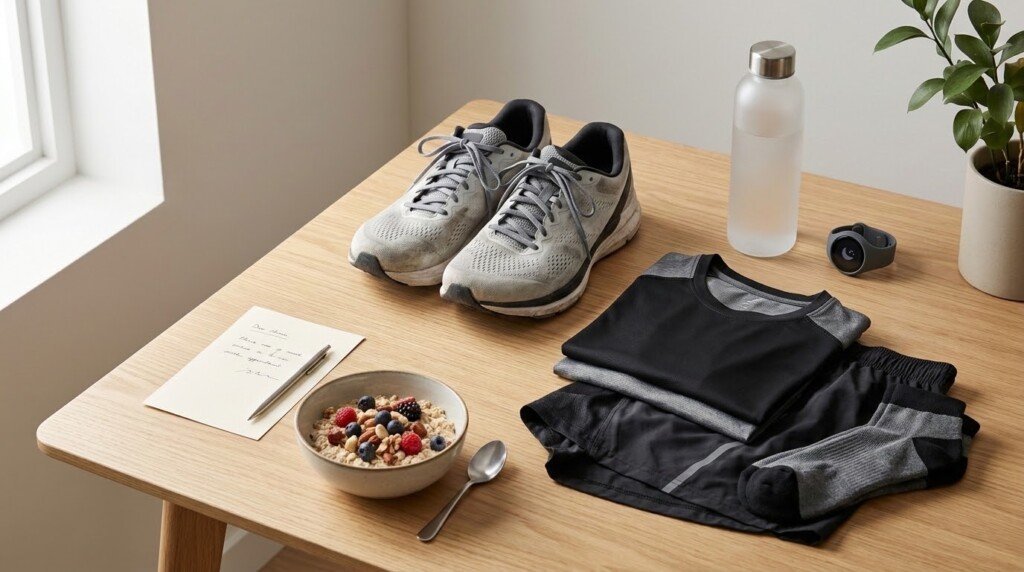
Arrive rested rather than trying to squeeze in a workout beforehand. A hard training session can leave your muscles fatigued and may reduce your ability to perform maximally.
Follow the laboratory’s food instructions. Do not experiment with a large meal immediately before the test. A heavy meal can make intense exercise uncomfortable and may interfere with your ability to perform at your best.
Ask about caffeine. If the facility tells you to avoid caffeine, take that instruction seriously. Do not assume your usual coffee is irrelevant simply because it feels routine.
Stay appropriately hydrated, but do not turn hydration into a last-minute challenge. You want to arrive normally hydrated, not dehydrated or uncomfortably full of fluid.
Wear clothing and shoes suitable for the exercise test. The American Thoracic Society recommends comfortable exercise clothing and appropriate footwear for walking, running, or cycling.
Do not smoke or vape on the day if your laboratory has provided that instruction.
Bring your medication list and follow the laboratory’s instructions regarding medications. Do not stop prescribed medication on your own simply because you read that it could affect exercise performance. Medication instructions should come from the healthcare professional or testing facility.
Finally, tell the staff if your health status has changed.
An acute infection, injury, unusual shortness of breath, or other significant change may affect whether the test should proceed. The American Thoracic Society specifically advises patients to notify the laboratory about recent changes in health that might prevent them from exercising safely.
The mistake to avoid is trying to “hack” the test.
You do not need to starve yourself, dehydrate yourself, overload yourself with caffeine, or perform a brutal workout beforehand to make the result more meaningful.
Those strategies are more likely to create noise than useful information.
Are certain times of day generally better for lab-based testing?
There is no universally superior clock time that guarantees the highest or most accurate VO2 max result for every person.
Morning and afternoon testing can both be appropriate.
The better question is: Which time allows you to arrive rested, prepared, and in conditions you can reproduce later?
For some people, that may be morning.
A morning appointment can be convenient because it gets the test finished before work, daily stress, meals, and other activities accumulate. If you naturally exercise well in the morning, it may also fit your normal performance pattern.
For others, afternoon or early evening may be better.
Some people feel physically warmer, more alert, and more ready for intense exercise later in the day. If you are one of those people, there is little reason to assume that an early-morning appointment is automatically superior.
The most important consideration changes when you are comparing tests.
Suppose your first VO2 max test is performed at 9 a.m. after a normal night’s sleep. Six months later, you retest at 7 p.m. after a full workday, a large lunch, and a different preparation routine.
If the score changes, you cannot confidently attribute all of that difference to your fitness.
This is why standardization is so useful.
The testing protocol itself should remain consistent whenever possible. The American Thoracic Society notes that protocol, procedure, patient instructions, and time of testing can all affect reproducibility.
That does not mean you need to control every variable perfectly.
You simply want to avoid unnecessary differences.
If your first test is at 8:30 a.m., make a future test roughly similar if your goal is to compare results. If your testing facility uses a particular treadmill or cycle protocol, repeating the test under the same protocol is also preferable.
This turns the VO2 max test into something much more useful.
Instead of asking, “Did my score change?”
You can ask, “Did my aerobic capacity change under broadly comparable testing conditions?”
That is a much stronger question.
Frequently Asked Questions
1. When is the best time to test VO2 Max?
The best time is generally when you are rested, recovered, and able to follow the laboratory’s preparation instructions. Morning is not automatically better than afternoon. For repeat testing, using approximately the same time of day can improve comparability because VO2 max results can vary across the day.
2. How do I prepare for a VO2 Max test?
Follow the specific instructions from the testing facility. Common guidance includes avoiding exercise on the day of testing, eating lightly, avoiding food for at least two hours beforehand, and avoiding caffeine if instructed. Wear comfortable exercise clothing and appropriate shoes, and tell the laboratory about any recent illness, injury, or health change.
3. Does time of day affect VO2 Max results?
It can. Physiological and performance differences across the day may influence exercise-test results, which is why the American Thoracic Society recommends keeping the time of day consistent when repeated testing is being used for comparison.
4. Should I exercise before a VO2 Max test?
Usually, no. A hard workout immediately before testing can leave you fatigued and potentially reduce your ability to perform maximally. Follow the laboratory’s instructions, but many clinical testing protocols advise avoiding exercise on the day of the test.
5. Should I take my normal medications before a VO2 Max test?
Do not change prescribed medication without professional guidance. Medication instructions can vary depending on the purpose of the test and the medication involved. Ask the testing facility or your healthcare provider whether anything needs to be adjusted before your appointment.
Disclaimer:
This post may contain affiliate links. If you purchase through them, we may earn a small commission at no extra cost to you. Also, this content is for informational purposes only and does not substitute professional medical advice.
Train Smarter, Not Harder
Use our free Fitness Toolkit to find your heart rate zones and calories burned in minutes.
Open Free Tools →