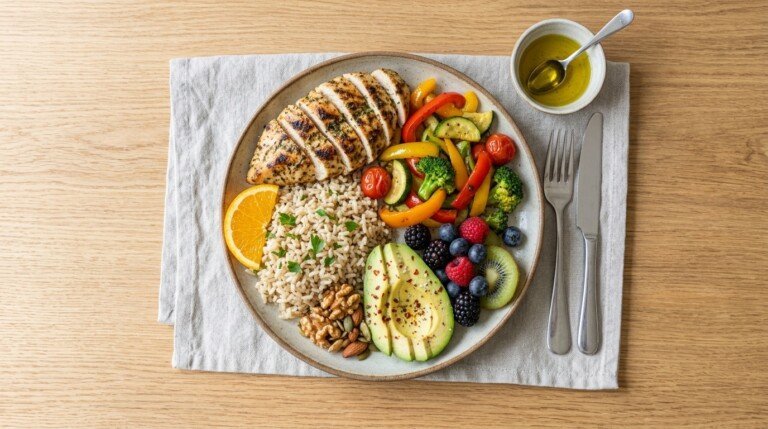
Common Diet Mistakes That Hinder Weight Loss
You can spend weeks choosing healthier foods, avoiding sugary drinks, and preparing meals at home, yet still feel as though your weight refuses to change. When that happens, it’s tempting to believe your metabolism is broken or that your body simply doesn’t respond to healthy eating.
More often than not, neither explanation is correct.
Many people unknowingly make small food-related decisions every day that quietly interfere with fat loss. These choices rarely seem serious on their own. Skipping breakfast because you’re busy, choosing heavily processed “diet” foods, eating too little for extended periods, forgetting to include enough protein, or ignoring natural hunger signals can all influence progress without attracting much attention.
This is why understanding diet mistakes weight loss is so important. Weight loss is not determined by one perfect meal or one unhealthy snack. It is shaped by eating patterns repeated consistently over weeks and months. Small nutritional habits, whether helpful or harmful, gradually accumulate until they either support sustainable fat loss or make progress increasingly difficult.
The encouraging news is that these mistakes are usually much easier to fix than people expect.
You do not need another trendy diet or expensive nutrition program. In many cases, improving a handful of everyday food habits produces better long-term results than completely changing everything you eat.
This article focuses specifically on diet mistakes weight loss that happen at the food-choice level rather than calorie calculations. You’ll learn why eating too little can become counterproductive, why processed “diet” products are not always healthier choices, why protein deserves more attention, and how everyday eating habits influence long-term success.
Quick Answer
The most common diet mistakes weight loss include undereating, relying heavily on processed “diet” foods, eating too little protein, poor hydration, inconsistent meal patterns, and regularly ignoring natural hunger signals. Correcting these everyday nutrition habits often improves sustainable fat loss more than following another restrictive diet.
What Are the Most Common Diet-Specific Mistakes That Stall Weight Loss?
Many people assume that healthy eating is simply about choosing foods labeled as low-fat, low-calorie, or sugar-free.
Nutrition is much more complex than that.
Successful fat loss depends on creating eating habits that nourish the body while remaining realistic enough to continue for months rather than days.
The problem is that many common nutrition mistakes look healthy on the surface.
Someone may proudly skip meals to reduce food intake.
Another person fills the shopping cart with highly processed “diet” snacks because they appear healthier than regular products.
Someone else removes carbohydrates completely while unintentionally eating too little protein.
None of these decisions necessarily come from poor intentions.
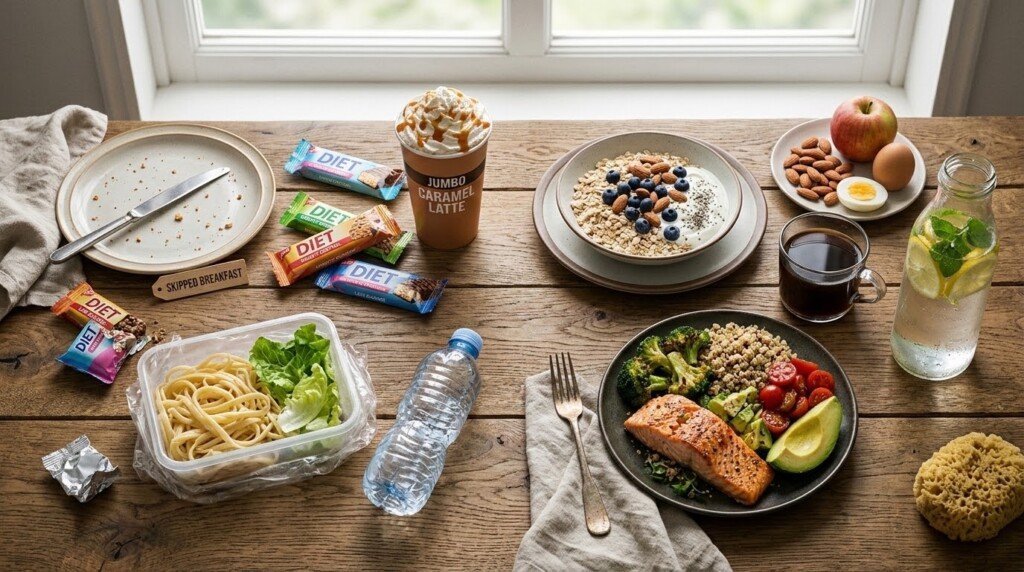
Most people genuinely believe they are helping themselves.
Unfortunately, some of these habits make healthy eating harder to maintain, increase hunger, reduce meal satisfaction, or create nutritional imbalances that eventually affect consistency.
The purpose of this article is not to criticize individual foods or promote strict rules.
Instead, think of these sections as a practical nutrition audit.
If progress has slowed despite consistent effort, one or more of these everyday habits may deserve closer attention.
How Does Undereating Actually Slow Down Metabolism and Hinder Progress?
One of the biggest misconceptions in weight loss is believing that eating as little as possible automatically produces faster fat loss.
At first glance, the idea seems logical.
If eating less encourages fat loss, then eating dramatically less should produce even better results.
The human body does not respond quite so simply.
Food provides far more than calories.
It supplies protein for tissue maintenance, carbohydrates for energy, fats for hormone production, vitamins, minerals, fiber, and countless nutrients required for normal biological function.

When food intake remains extremely low for extended periods, maintaining consistency often becomes increasingly difficult.
Persistent hunger develops.
Energy levels may decline.
Exercise performance frequently suffers.
Daily movement sometimes decreases because the body naturally conserves energy.
Meals that once felt manageable begin creating constant thoughts about food.
Many people eventually respond by overeating after prolonged restriction, creating a frustrating cycle of strict dieting followed by loss of control.
Another issue involves nutritional adequacy.
Consistently eating too little can make it challenging to consume sufficient protein, fiber, vitamins, minerals, and healthy fats needed for overall health.
Rather than encouraging sustainable fat loss, severe restriction often creates eating patterns that feel impossible to maintain.
It is important to distinguish moderate calorie reduction from excessive restriction.
Healthy fat loss generally requires an energy deficit.
However, an overly aggressive deficit may become increasingly difficult to sustain over time.
If you suspect your eating pattern has become excessively restrictive, Signs Your Calorie Deficit Is Too Extreme discusses those warning signs in much greater detail.
The healthiest eating pattern is rarely the one with the fewest calories.
It is the one that supports consistent healthy habits month after month.
What Are the Risks of Relying Too Heavily on Processed “Diet” Foods?
Supermarket shelves are filled with products marketed specifically for weight loss.
Low-fat cookies.
Sugar-free desserts.
Diet snack bars.
Reduced-calorie frozen meals.
These products often appear to make healthy eating easier because they promise fewer calories while allowing people to continue enjoying familiar foods.
Some can certainly fit within a balanced eating pattern.
The problem begins when processed “diet” foods replace most whole foods instead of complementing them.
Many highly processed products achieve lower calorie counts by replacing ingredients, altering textures, or using combinations of additives that reduce overall satisfaction.
As a result, meals sometimes become less filling despite containing similar amounts of food.
People may finish eating without experiencing the same sense of fullness they would have gained from minimally processed foods such as vegetables, fruits, legumes, whole grains, lean proteins, and healthy fats.

Another challenge is the so-called health halo effect.
When a package says “low fat” or “diet,” people sometimes assume they can eat substantially larger portions without consequence.
This can unintentionally increase overall food intake despite choosing products marketed for weight management.
Whole foods generally provide additional benefits beyond calorie content.
Higher fiber.
Greater nutrient density.
Better texture.
Improved satiety.
These qualities often make balanced eating easier to sustain naturally.
Healthy nutrition should not depend entirely on processed convenience products.
The foundation should still come from foods that require minimal processing whenever practical.
Why Does Insufficient Protein Intake Sabotage Both Fat Loss and Muscle Retention?
Protein deserves attention during fat loss because it supports much more than muscle building.
It contributes to tissue repair, immune function, meal satisfaction, and preservation of lean body mass throughout weight loss.
Many people unintentionally consume far less protein than they realize.
Breakfast may consist only of refined carbohydrates.
Lunch may rely heavily on processed snack foods.
Dinner may contain very small portions of protein alongside larger amounts of refined grains.
Although calorie intake may appear reasonable, overall protein intake sometimes remains lower than ideal.
This matters because protein-rich meals generally promote greater fullness than many highly refined foods.
Feeling satisfied after meals often makes it easier to maintain healthy eating patterns without constant snacking or cravings.
Protein also becomes particularly important during fat loss because preserving lean muscle contributes to healthier body composition.
Weight loss should not simply reduce body weight.
Ideally, it reduces body fat while maintaining as much lean muscle as possible.
This is another reason balanced nutrition consistently outperforms highly restrictive eating plans.
Rather than removing major food groups or obsessing over individual ingredients, building meals around adequate protein, vegetables, fiber-rich carbohydrates, and healthy fats usually creates a much more sustainable approach.
These nutritional habits also complement many of the broader lifestyle strategies discussed in the Weight Loss Mistakes pillar, where nutrition is examined alongside planning, exercise, and long-term consistency.
What Are Other Everyday Diet Habits That Quietly Hurt Progress?
Not every nutrition mistake involves choosing the wrong foods.
Sometimes the foods themselves are perfectly reasonable, but the habits surrounding them gradually make healthy eating more difficult to maintain. These small behaviors rarely receive much attention because they do not appear dramatic. Yet repeated day after day, they can influence hunger, meal satisfaction, energy levels, and consistency just as much as major dietary changes.
Many people spend considerable time searching for the perfect meal plan while overlooking the everyday routines that determine whether that plan actually works.
Questions such as “Am I drinking enough water?” or “Do I eat at roughly consistent times?” may seem simple, but the answers often reveal why progress has become unpredictable.
Healthy eating is not only about what appears on your plate.
It is also about the daily patterns that support better food choices over the long term.

What’s the Mistake of Not Drinking Enough Water, and How Does It Affect Appetite?
Water is one of the simplest nutritional tools available, yet it is also one of the most overlooked.
Many people focus entirely on calories, protein, carbohydrates, and fats while paying very little attention to hydration. Although drinking more water does not directly burn body fat, inadequate hydration can influence eating behaviors in ways that quietly interfere with weight loss.
The body does not always distinguish thirst from hunger perfectly.
Mild dehydration may sometimes be interpreted as the need to eat, leading people to snack when what their body actually needs is fluid.
This does not happen every time, but it occurs often enough that hydration deserves attention during any healthy eating plan.
Water also supports normal digestion, exercise performance, circulation, temperature regulation, and countless metabolic processes.
When hydration is consistently poor, everyday activities may feel more tiring, making healthy routines harder to maintain.
Another common issue is replacing water with high-calorie beverages.
Specialty coffees, sugar-sweetened drinks, fruit juices, and flavored beverages can contribute substantial calories without creating the same feeling of fullness as solid foods.
Over time, these beverages may quietly increase overall energy intake without attracting much attention.
Making water your primary beverage does not mean eliminating every other drink.
It simply creates a consistent habit that supports healthier food choices while reducing unnecessary calories from beverages.
Many people notice that regular hydration also makes it easier to recognize genuine hunger because thirst is less likely to confuse appetite signals.
Hydration alone will not determine fat loss.
However, it removes one unnecessary obstacle that can make healthy eating more challenging than it needs to be.
Why Do Inconsistent Eating Patterns Make Weight Loss Harder to Sustain?
Consistency is one of the strongest predictors of long-term nutrition success.
That does not mean every meal must occur at exactly the same time every day.
Life rarely works with that level of precision.
Instead, consistency means developing eating habits that remain reasonably predictable despite changes in work schedules, family responsibilities, weekends, and social events.
Many people unintentionally alternate between extremes.
One day they skip breakfast, eat very little during the afternoon, and arrive home extremely hungry.
The following day they eat continuously because they feel guilty about the previous day’s restriction.
These constantly changing eating patterns make appetite much harder to regulate.
Meals become reactive instead of planned.
Food choices are often driven by immediate hunger rather than thoughtful decisions.
This inconsistency also affects meal quality.
When hunger becomes overwhelming, convenience usually wins.
Fast food, highly processed snacks, oversized portions, and impulsive eating become much more attractive than preparing balanced meals.
Regular eating patterns help reduce this cycle by preventing excessive hunger from developing throughout the day.
Consistency does not require perfection.
Vacations, celebrations, holidays, and busy workdays naturally change routines from time to time.
The goal is simply returning to balanced eating patterns afterward rather than allowing one irregular day to become an irregular week.
Healthy nutrition succeeds because the overall pattern remains stable, not because every individual meal is perfect.
What Happens When You Consistently Ignore Hunger and Fullness Cues?
Repeatedly ignoring natural hunger and fullness signals can gradually make eating decisions more difficult. A deeper explanation of recognizing and responding to these internal cues is covered in Hunger and Fullness Cues for Mindful Eating, where the topic is explored in detail.
A Practical Checklist to Catch Diet Mistakes Before They Slow Your Progress
Before changing your entire nutrition plan, take a few minutes to evaluate your current habits honestly.
Ask yourself these questions.
Am I eating enough to support healthy, sustainable fat loss rather than constantly feeling deprived?
Do most of my meals include a quality source of protein?
Am I relying heavily on processed “diet” foods instead of building meals around whole, minimally processed ingredients?
Do I drink enough water throughout the day, or am I regularly mistaking thirst for hunger?
Are my eating patterns reasonably consistent throughout the week?
Do I pay attention to hunger and fullness, or do I frequently ignore both?
Am I trying to fix nutrition by following increasingly restrictive rules instead of improving everyday habits?
Often, correcting just one or two of these behaviors produces more lasting improvement than switching to another trendy eating plan.
Successful nutrition is rarely built on perfection.
It is built on repeatable habits that continue working even when life becomes busy.
Key Takeaways
Most diet mistakes weight loss occur through everyday habits rather than obvious nutrition failures. Eating too little, relying heavily on processed “diet” products, consuming insufficient protein, poor hydration, inconsistent eating patterns, and ignoring natural hunger signals can all quietly reduce long-term progress. None of these habits guarantees failure on its own, but together they often make healthy eating much harder to sustain.
Rather than searching for another restrictive diet, focus on improving the quality and consistency of your daily food choices. Small nutritional adjustments repeated over time usually produce far better results than dramatic changes that last only a few weeks.
Frequently Asked Questions
1. What diet mistakes are hurting my weight loss?
Common mistakes include undereating, eating too little protein, relying heavily on processed diet foods, poor hydration, inconsistent meal patterns, and ignoring natural hunger signals.
2. Can eating too little stall weight loss?
Severely restricting food intake can make healthy eating difficult to sustain, increase hunger, reduce exercise performance, and make long-term progress harder to maintain. If you suspect your calorie deficit has become too aggressive, Signs Your Calorie Deficit Is Too Extreme explains the warning signs in greater detail.
3. Does ignoring hunger cues cause weight loss problems?
Consistently ignoring hunger and fullness signals can make appetite regulation more difficult over time, increasing the likelihood of overeating or developing inconsistent eating habits.
4. Are processed diet foods always bad for weight loss?
No. They can fit into a balanced eating plan, but relying on them too heavily may reduce meal satisfaction and displace more nutrient-dense whole foods.
5. Why is protein so important during fat loss?
Protein helps support meal satisfaction, preserves lean muscle during fat loss, and contributes to healthier body composition alongside balanced nutrition and regular physical activity.
Conclusion
Understanding diet mistakes weight loss is often the missing piece between working hard and seeing consistent results. Most people do not struggle because they lack determination. They struggle because small nutritional habits gradually move them away from the eating pattern that supports sustainable fat loss. Undereating, inconsistent meals, inadequate protein, processed diet foods, and poor hydration may seem like minor issues individually, but together they can quietly slow progress for weeks or even months.
The good news is that these habits are entirely within your control. You do not need another restrictive diet or complicated nutrition strategy. By focusing on balanced meals, consistent eating patterns, adequate protein, proper hydration, and greater awareness of your body’s natural signals, you create an eating style that supports fat loss while remaining realistic enough to continue for the long term. That consistency, far more than perfection, is what ultimately drives lasting results.
Disclaimer:
This post may contain affiliate links. If you purchase through them, we may earn a small commission at no extra cost to you. Also, this content is for informational purposes only and does not substitute professional medical advice.
Fuel Your Body Right
Use our free Nutrition Toolkit to find your protein target, fasting window, and net carbs in minutes.
Open Free Tools →