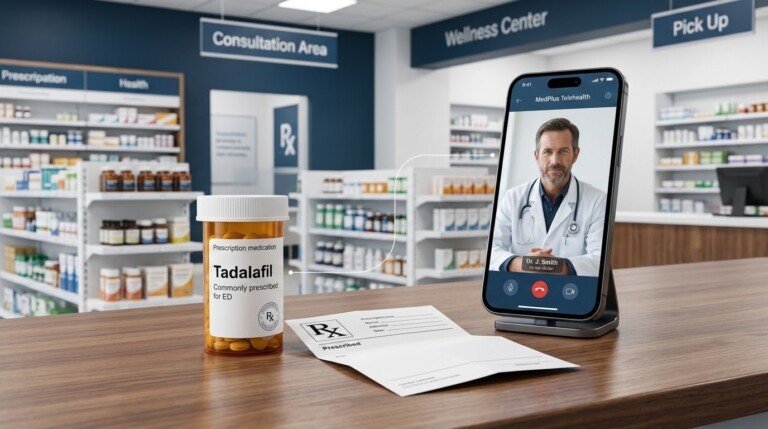

Exercise for Erectile Dysfunction: What Works
Erectile problems can make a man feel as though his body has suddenly stopped responding the way it used to. That can lead to a search for quick fixes, but exercise is one of the few lifestyle approaches with meaningful clinical evidence behind it.
Exercise for Erectile Dysfunction is not about finding one magic movement that creates an erection. The more useful question is whether regular physical activity can improve the systems that erections depend on, especially circulation, cardiovascular fitness, metabolic health, and overall physical function.
The answer is yes, particularly for aerobic exercise.
A 2023 systematic review and meta-analysis of 11 randomized controlled trials found that regular aerobic exercise significantly improved erectile-function scores compared with non-exercising controls. The average improvement was 2.8 points on the erectile-function domain of the International Index of Erectile Function, with larger improvements among men who started with more severe erectile difficulties. (PubMed)
That does not mean exercise replaces medical treatment in every case. It means movement can be a legitimate part of improving erectile health rather than just generic lifestyle advice.
What type of exercise is best for erectile dysfunction?
If the goal is specifically to improve erectile function, aerobic exercise currently has the clearest evidence.
That does not mean strength training is unimportant. It does not mean pelvic floor training has no value. It means the research base for aerobic activity is currently stronger and more consistent.
Erections depend heavily on blood flow. During sexual arousal, blood vessels supplying erectile tissue need to relax and allow increased blood flow. The vascular system therefore plays a central role in whether an erection can become and remain firm.
Regular aerobic exercise works on that larger system.
It can improve cardiovascular fitness, support vascular function, and help address several health conditions that commonly overlap with erectile difficulties.
The important point is that exercise does not need to be marketed as a sexual technique.
You are not exercising your way into an erection immediately before sex. You are improving the physical environment in which normal erectile function occurs.
Aerobic/cardio exercise
Walking, jogging, cycling, swimming, rowing, and other activities that raise your heart rate for sustained periods fall into this category.
Among these, aerobic exercise has the strongest direct evidence for erectile function.
The 2023 meta-analysis of randomized controlled trials found significant improvements in erectile function from aerobic exercise, and the benefit was particularly noticeable in men who began with poorer erectile function. (PubMed)
Another systematic review and meta-analysis found that physical activity and exercise interventions improved erectile-function scores, with aerobic exercise showing particularly consistent benefits.
More recent evidence has continued to point in the same direction. A 2024 systematic review and meta-analysis of randomized trials found significant improvement in erectile function among men who participated in physical activity interventions, with aerobic training showing a significant effect in subgroup analysis. (PubMed)
That makes cardio the logical starting point when someone asks which type of exercise has the best evidence for ED.
It also explains why consistency matters more than novelty.
You do not need a complicated machine, unusual exercise, or sexual-health-specific workout. The useful activity is the activity you can perform regularly and safely.
Walking is a good example.
It may not look impressive compared with an intense gym workout, but regular brisk walking can contribute to cardiovascular fitness and is often easier to maintain over time.
For someone who has been inactive, starting with manageable activity can make more sense than immediately attempting demanding workouts.
There is another reason cardio matters: erectile dysfunction can sometimes appear alongside cardiovascular risk factors.
The AUA notes that the presence of ED can indicate other health conditions and cardiovascular risk factors. Its guideline specifically discusses lifestyle changes and increased physical activity as having potential benefits for erectile function as well as broader health. (American Urological Association)
So exercise has two roles.
It may directly support erectile function, and it may improve some of the underlying health factors associated with erectile difficulties.
That is a much stronger argument than saying exercise simply “boosts testosterone” or produces more sexual stamina.
Those claims are often too simplistic.

Pelvic floor training
The pelvic floor deserves a place in the conversation, but it should not be confused with the broader exercise evidence.
Pelvic floor muscles are involved in urinary control and sexual function, including aspects of erection and ejaculation. Some research has investigated pelvic floor muscle training as a possible approach for men with erectile difficulties.
However, the evidence is not as straightforward as the evidence for aerobic exercise.
A 2024 meta-analysis examining different physical activity approaches found significant improvement with aerobic training, while the pooled result for pelvic floor muscle training alone was not statistically significant in that particular analysis. (PubMed)
That does not prove pelvic floor training is useless. It means the evidence should not be exaggerated.
If you specifically want to understand how pelvic floor exercises are performed and how they relate to erectile function and premature ejaculation, Kegel Exercises for Men: Do They Help With PE and ED? covers that narrower topic in much greater depth.
For this article, the key distinction is simple: pelvic floor work is one possible component of sexual health, while aerobic fitness currently has the stronger evidence base for exercise-related improvement in ED.
Strength training
Strength training is valuable for overall health, but it has a different evidence profile from aerobic exercise when the specific outcome is erectile function.
Resistance exercise can help maintain muscle strength, physical independence, and general fitness. It can also complement cardiovascular activity as part of a balanced exercise routine.
But it would be misleading to tell someone that lifting weights is a proven direct treatment for ED in the same way that aerobic exercise has been studied.
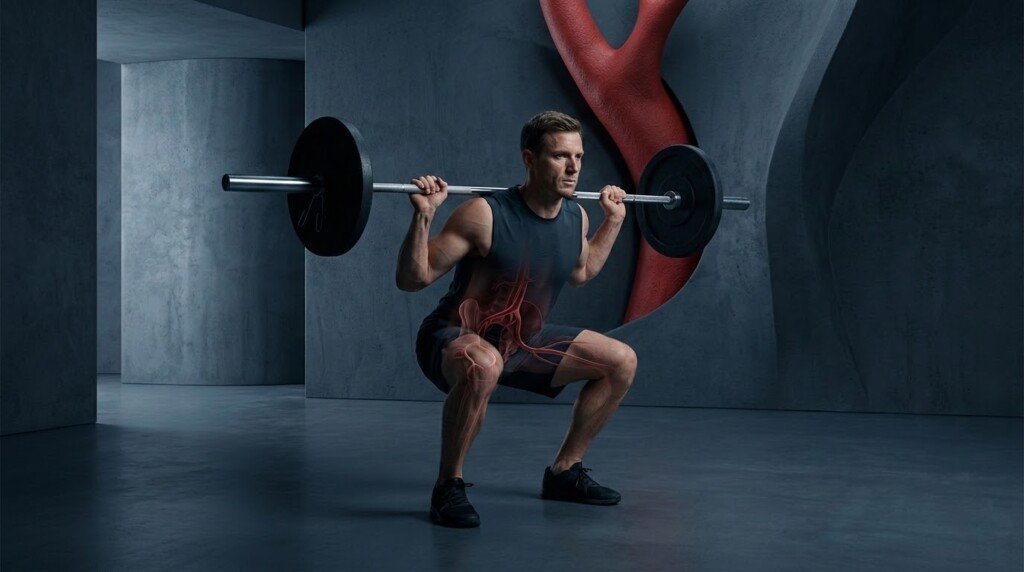
The best way to view strength training is as part of the larger physical-health picture.
A man who becomes stronger, more active, and more physically capable may gain several health benefits that indirectly support sexual function. Strength training can also make it easier to remain active as the years pass.
That matters because exercise should not be treated as a short-term ED experiment.
The goal is to build a body that remains physically capable of supporting good circulation and sexual function over time.
Can ED actually be reversed with exercise?
Sometimes exercise can substantially improve erectile function, but “reversed” needs to be used carefully.
Erectile dysfunction is not one single disease with one single cause.
A man may have erectile difficulties related to vascular health, diabetes, obesity, cardiovascular disease, medication effects, neurological problems, psychological factors, hormonal issues, or a combination of several factors.
Exercise is more likely to make a meaningful difference when physical inactivity and cardiovascular or metabolic health are contributing to the problem.
The research supports that idea.
The 2023 randomized-trial meta-analysis found that aerobic exercise improved erectile-function scores compared with non-exercising controls. The improvement was statistically significant, and the effect was larger in men with more severe baseline erectile dysfunction. (PubMed)
But statistical improvement does not mean every man will experience complete recovery.
That distinction is important.
A person with mild erectile difficulties related partly to inactivity may experience a noticeable improvement after becoming consistently active.
Someone with significant vascular disease, diabetes, medication-related ED, or another medical condition may improve with exercise but still require medical treatment.
And someone whose main problem is psychological or situational may need a different approach altogether.
Exercise should therefore be viewed as a potential contributor to recovery rather than a guaranteed cure.
There is also a timing issue.
Exercise changes the body gradually. Cardiovascular fitness does not transform after one workout. Blood-vessel health does not suddenly reset because you completed a difficult session.
That is why claims promising dramatically stronger erections after a few days of exercise should be treated with skepticism.
The more realistic expectation is progressive improvement.
As fitness improves, daily activity becomes easier. Cardiovascular capacity can increase. Metabolic health can improve. Body composition may change. Confidence may improve. These changes can interact with erectile function over time.
The relationship can also work in reverse.
ED can be psychologically frustrating. A man may start avoiding sex because he expects another disappointing experience. That can increase self-consciousness and reduce confidence. Becoming physically active can improve general wellbeing without forcing every workout to become a test of sexual performance.
That is an underrated advantage.
Exercise should not become another performance measurement.
You do not need to check whether your erection is better immediately after every workout. That approach can turn a healthy habit into another source of anxiety.
Instead, look at the broader picture.
Are you becoming more active?
Is your cardiovascular fitness improving?
Are ordinary physical tasks becoming easier?
Are you maintaining the habit?
Those are better indicators that the intervention is moving in the right direction.
If erectile function remains consistently poor despite meaningful lifestyle changes, that is a reason to look beyond exercise rather than simply exercising harder.
Persistent ED deserves proper evaluation because it can sometimes provide an early warning about underlying vascular or metabolic problems.
How long until exercise-based improvements show?
There is no universal countdown.
Research studies have used different exercise programs, different populations, and different follow-up periods. Some interventions have lasted several weeks, while others have continued for months.
A systematic review of physical activity interventions in men with ED included studies with follow-up ranging from eight weeks to two years. (PubMed)
The 2024 review of aerobic exercise trials found that interventions commonly involved regular sessions over an extended period rather than a few isolated workouts. (PubMed)
That tells you something important.
Exercise for Erectile Dysfunction works through repetition, not a single session.
The first changes you notice may not be sexual.
You might notice that walking feels easier. Your recovery after physical activity may improve. You may sleep better. You may have more energy during the day. You may feel less physically sluggish.
Those changes are not irrelevant.
They are part of the physiological environment that regular exercise creates.
Erectile improvements, when they occur, may become noticeable later.
It is also possible for progress to fluctuate.
One week may feel better than another. Stress, sleep, illness, alcohol, relationship circumstances, and other factors can influence erectile function independently of exercise.
That means a temporary setback does not automatically mean the exercise is failing.
The mistake is expecting a straight upward line.
Real biological change rarely behaves that way.
A better approach is to judge progress over months rather than individual sexual encounters.
If you have been inactive, beginning regular aerobic activity and maintaining it consistently gives your cardiovascular system a much better chance to benefit than doing occasional intense workouts followed by long periods of inactivity.
This is where consistency beats intensity.
A sustainable routine that you can continue is generally more useful than a punishing routine that lasts two weeks.
There is also no need to turn every session into a maximum-effort workout.
The research supporting aerobic exercise does not require the message that harder is always better. In fact, exercise programs in clinical studies have varied considerably.
For many men, the practical goal is simply to become reliably active.
If you already exercise regularly and still have persistent ED, do not assume you simply need more exercise.
That is where the cause of the ED becomes important.
If erection quality has declined gradually, it may be worth reviewing cardiovascular and metabolic health.
If the problem appeared suddenly, especially alongside other symptoms, it deserves medical attention rather than a more aggressive workout routine.
And if erections work normally in some situations but not others, the pattern may point toward factors that exercise alone cannot address.
Exercise is a tool.
It is not a diagnostic test.
Can older men still see benefits?
Absolutely.
Age changes the context, but it does not eliminate the possibility of improving physical fitness or erectile function.
The idea that erectile problems are simply something every older man must accept is too simplistic.
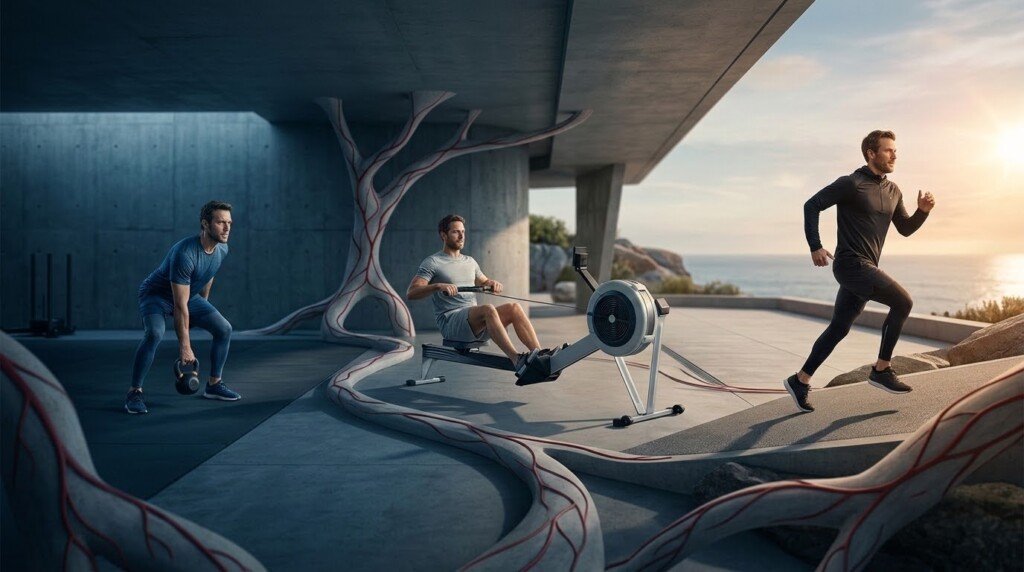
Older men can improve cardiovascular fitness, strength, mobility, and overall physical function through appropriate physical activity. Those improvements can support the systems involved in sexual function as well.
The research on exercise and ED has included men with a variety of ages and health conditions, and the evidence does not suggest that exercise suddenly becomes irrelevant after a certain birthday.
In fact, exercise can become increasingly valuable as people age because cardiovascular risk factors and physical inactivity often accumulate over time.
That does not mean every older man will regain the erectile function he had at 25.
Age is one factor among many.
The more useful question is whether the body can become healthier and more physically capable than it is now.
Often, the answer is yes.
A 60-year-old man who becomes regularly active may improve his cardiovascular fitness even if he does not achieve the same physical capacity he had decades earlier.
That improvement can still matter.
It can affect circulation, stamina, metabolic health, mobility, confidence, and quality of life.
And sexual function is part of quality of life.
This is also why older men should not automatically dismiss a new change in erections as “just aging.”
A gradual change can occur with age, but persistent or newly developing erectile dysfunction may also be associated with cardiovascular or metabolic health conditions.
So exercise has a double value for older men.
It may support erectile function, and it may help improve the broader health factors that matter for long-term sexual health.
That is a much more useful way to think about exercise than asking whether a particular workout can produce an erection.
If you are older and experiencing persistent changes in erection quality, exercise should not be used as an excuse to postpone medical evaluation.
You can work on physical activity while also discussing the symptoms with a healthcare professional.
The two approaches are not competing choices.

A realistic way to think about exercise and erections
There are three levels to keep in mind.
First, physical activity supports the foundation. Regular movement can improve cardiovascular fitness and general health.
Second, aerobic exercise has the strongest direct evidence. Research from randomized controlled trials supports meaningful improvements in erectile-function scores. (PubMed)
Third, exercise is not a universal cure. If ED has another major underlying cause, treating that cause may still be necessary.
This is why a man should not judge his entire sexual health based on whether exercise produces a dramatic change in erection quality within a few weeks.
The body is interconnected.
Better cardiovascular health can support erectile function, but erectile function also depends on nerves, hormones, psychological state, sexual stimulation, medications, and other factors.
That complexity is exactly why the “one exercise fixes ED” approach is misleading.
If your goal is natural improvement, regular aerobic activity is one of the most defensible places to start.
If nutrition is another part of your plan, Foods That Help Erectile Dysfunction covers the dietary side without confusing it with exercise.
And if your main problem is declining firmness rather than general physical fitness, Why Isn’t My Erection as Hard as Before? focuses more directly on the possible reasons erection quality can change.
The important thing is to keep those problems separate enough that you do not try to solve every sexual-health issue with the same tool.
Frequently Asked Questions
1. What type of exercise is best for erectile dysfunction?
Aerobic exercise currently has the strongest direct evidence for improving erectile function. Walking, jogging, cycling, swimming, and similar cardiovascular activities have been studied in men with ED. A 2023 meta-analysis of randomized controlled trials found that aerobic exercise significantly improved erectile-function scores compared with non-exercising controls.
2. Can ED be reversed with exercise?
Exercise can improve erectile function for some men, particularly when inactivity, cardiovascular health, obesity, metabolic problems, or related risk factors contribute to ED. However, it cannot guarantee complete reversal because ED has many possible causes. Persistent symptoms should be medically evaluated rather than treated with exercise alone.
3. How to improve erection naturally?
Regular aerobic exercise is one evidence-supported approach. Maintaining physical activity can support cardiovascular fitness and the vascular systems involved in erections. Other lifestyle factors can also matter, but persistent or worsening ED should not be assumed to be a simple fitness problem.
4. Can a 60 year old man still get hard?
Yes. Age does not eliminate the ability to have erections. Erectile function can change with age, but older men can still experience erections and may benefit from improved physical fitness. New or persistent erectile difficulties should not automatically be dismissed as normal aging because ED can also be associated with cardiovascular and other health conditions.
The Bottom Line
The most important takeaway from the evidence is not that one workout can fix erectile dysfunction.
It is that regular aerobic exercise can genuinely improve erectile function for some men.
The strongest evidence comes from randomized trials and meta-analyses, with aerobic exercise consistently showing the clearest benefit. (PubMed)
The effect is not instant, and it is not guaranteed to eliminate ED. Exercise works best as part of a broader approach to physical and sexual health.
For men who are inactive, becoming consistently active may be one of the most practical changes to make.
For men who already exercise but continue to experience persistent ED, the answer is not necessarily to train harder. The more important step may be identifying what is actually causing the erection problem.
That distinction keeps exercise in its proper place.
It is not a miracle cure.
It is a legitimate, evidence-supported tool that can improve the physical foundation on which healthy erections depend.
Disclaimer:
This post may contain affiliate links. If you purchase through them, we may earn a small commission at no extra cost to you. Also, this content is for informational purposes only and does not substitute professional medical advice.
Know Your Body Better
Use our free tools to track your cycle, find your fertile window, estimate your due date, and more.
Open Free Tools →