
How to Choose the Best Fiber Supplement for Your Needs
Walk into any pharmacy or browse an online supplement store, and you’ll quickly notice one thing. There isn’t just one fiber supplement. There are dozens.
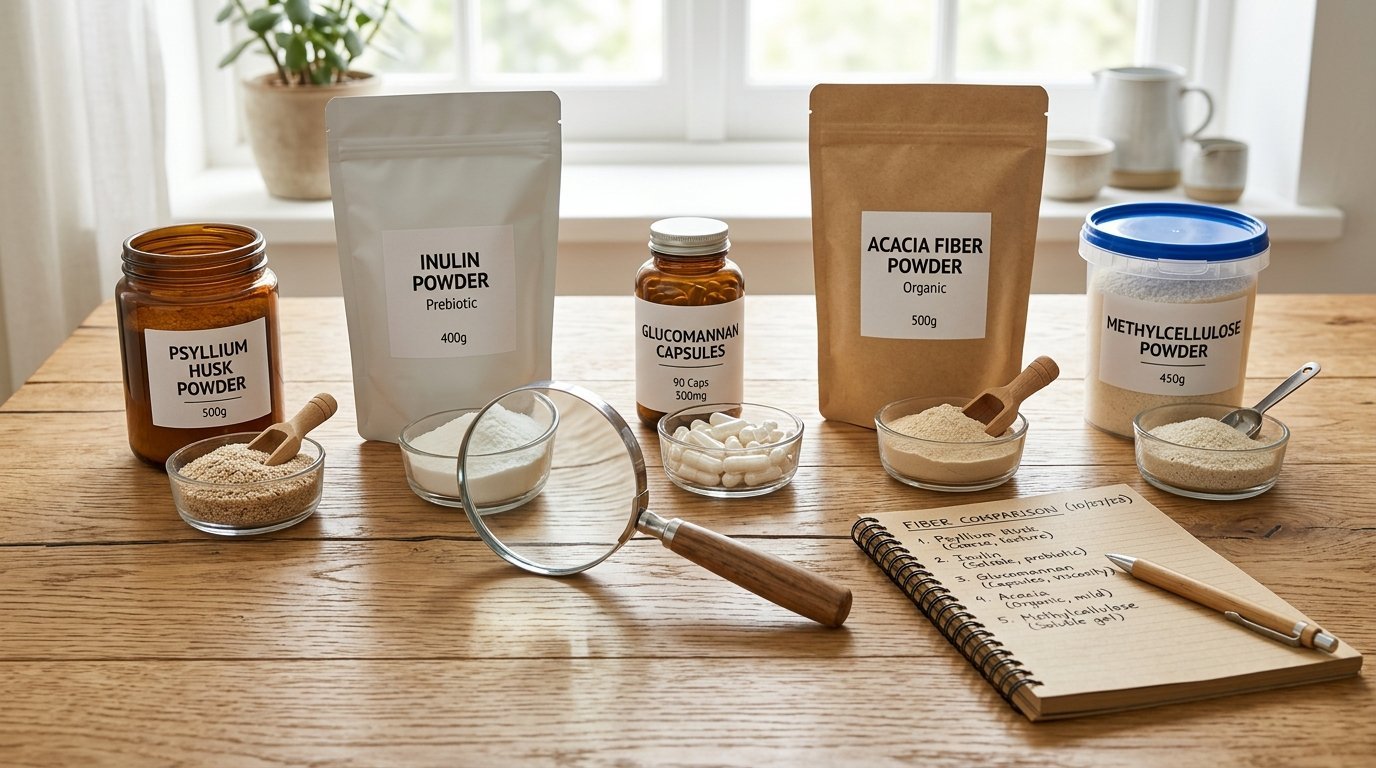
Some contain psyllium husk. Others promote inulin, acacia fiber, wheat dextrin, methylcellulose, or blends of several ingredients. Powders, capsules, gummies, and drink mixes all promise similar results, making it surprisingly difficult to know which product deserves a place in your daily routine.
This is exactly why understanding How to Choose a Fiber Supplement matters.
The right choice is rarely the product with the flashiest packaging or the highest review count. Instead, it’s the supplement whose ingredients, quality standards, and formulation match your specific health goal.
Many people buy a fiber supplement without ever reading the ingredient list. They compare brands instead of fibers, flavors instead of functionality, or marketing slogans instead of manufacturing quality. Unfortunately, that often leads to buying products that don’t actually fit their needs.
This guide takes a different approach.
Instead of recommending a single product, you’ll learn how to evaluate fiber supplements like a nutrition professional. By the end, you’ll know exactly what to look for, which ingredients serve different purposes, how certifications improve product quality, and how to compare labels with confidence.
Quick Answer
Knowing How to Choose a Fiber Supplement starts with identifying your health goal, understanding the fiber ingredient, comparing soluble and insoluble fibers, checking third-party quality certifications, reading ingredient labels carefully, and selecting a format that fits your daily routine. The best supplement is the one that matches your needs rather than the one with the biggest marketing campaign.
Why Does Choosing the Right Fiber Supplement Matter?
Two products may both say “fiber supplement” on the front of the package.
That doesn’t mean they work the same way.
The ingredient inside determines far more than the brand name printed outside.
Every Fiber Behaves Differently
Some fibers absorb large amounts of water.
Others primarily support beneficial gut bacteria.
Some dissolve completely, while others remain largely unchanged as they move through the digestive tract.
Understanding these differences helps you avoid choosing products based solely on advertising.
This becomes much easier after understanding the different Types of Fiber Supplements, since ingredient selection is the foundation of a smart purchase.
Better Decisions Begin With Better Questions
Instead of asking:
“What’s the best fiber supplement?”
Ask:
- What ingredient does it contain?
- Why was that ingredient selected?
- Does it match my health goal?
- Is the label transparent?
- Is the manufacturer reputable?
Those questions usually lead to much better purchasing decisions.
What Should You Look for When Choosing a Fiber Supplement?
Most people compare price first.
A smarter approach is to compare quality before cost.
An inexpensive supplement isn’t a bargain if it doesn’t contain the ingredient you’re actually looking for.
Start With the Active Fiber Ingredient
The first thing to examine is the fiber itself.
Common ingredients include:
- Psyllium husk
- Inulin
- Acacia fiber
- Glucomannan
- Wheat dextrin
- Methylcellulose
- Calcium polycarbophil
The ingredient tells you far more than the product name ever will.
Look for Transparent Labels
High-quality manufacturers clearly identify:
- Fiber source
- Total fiber content
- Complete ingredient list
- Serving format
Transparency reflects confidence in the product.
Vague proprietary blends make it difficult to know exactly what you’re purchasing.
Fewer Ingredients Can Sometimes Be Better
Many supplements contain long lists of added ingredients.
While some additions are useful, others exist primarily for taste, texture, or marketing appeal.
A cleaner ingredient list often makes comparing products much easier.
Which Ingredient Is Best?
This is one of the most frequently searched questions online.
The answer depends entirely on your objective.
There isn’t a single ingredient that’s superior in every situation.

Psyllium Husk
Psyllium remains one of the best-known fiber ingredients.
It absorbs water effectively and appears in countless fiber products around the world.
Its long history of use makes it one of the most recognizable fiber sources available today.
Inulin
Inulin is commonly selected by people interested in prebiotic fiber.
It occurs naturally in foods such as chicory root, onions, garlic, and asparagus.
Many nutrition products include inulin because of its ability to support beneficial gut bacteria.
Glucomannan
Glucomannan has become increasingly popular in products marketed for appetite management because of its remarkable ability to absorb water.
It is commonly included in weight management formulations.
If that is your primary goal, comparing the Best Fiber Supplement for Weight Loss can help you understand how glucomannan compares with other fiber ingredients.
Acacia Fiber
Acacia fiber dissolves smoothly and mixes easily into beverages.
Its mild taste has made it popular among manufacturers creating drink powders.
No Ingredient Fits Every Goal
The best ingredient depends on whether you’re looking to support:
- Appetite management
- Gut health
- General fiber intake
- Heart health
- Blood sugar balance
Matching the ingredient to your goal is far more effective than chasing the newest supplement trend.
Which Certifications Matter When Buying Fiber Supplements?
Quality varies considerably between manufacturers.
Fortunately, several certifications can provide additional confidence when evaluating supplements.

Third-Party Testing
Independent testing helps verify that products contain the ingredients listed on the label.
This additional level of quality control provides reassurance for consumers.
Good Manufacturing Practices (GMP)
GMP certification indicates that products are manufactured according to recognized quality standards.
Although this doesn’t guarantee effectiveness, it demonstrates that manufacturing processes follow established procedures.
NSF and USP Certifications
Some manufacturers voluntarily pursue certifications such as:
- NSF
- USP
These organizations evaluate products against specific quality standards.
Seeing recognized certifications often indicates a stronger commitment to manufacturing quality.
Country of Manufacturing
Reputable companies usually provide clear information regarding where their products are manufactured.
Transparency regarding sourcing and production often reflects greater confidence in product quality.
Which Fiber Matches Your Goal?
One of the biggest mistakes shoppers make is choosing fiber before deciding what they actually want the supplement to accomplish.
Instead, reverse the process.
Start with your goal.
Then identify the ingredient that best aligns with it.
General Daily Fiber Intake
If your diet simply lacks enough fiber, many different fiber ingredients may help increase overall intake.
The emphasis should be on consistency rather than finding a perfect ingredient.
Appetite Support
People focused on appetite management often look toward gel-forming soluble fibers because of their ability to promote fullness.
This is why psyllium and glucomannan frequently appear in weight management products.
Gut Microbiome Support
Individuals interested in gut bacteria often compare prebiotic fibers such as inulin with other fermentable fibers.
Your health goal should always determine your ingredient choice rather than advertising claims.
Powder vs Capsules: Which Fiber Supplement Format Is Better?
One of the first decisions you’ll make when shopping for fiber supplements isn’t the ingredient.
It’s the format.
Should you choose a powder that mixes into water, or would capsules fit your routine better?
The answer depends less on effectiveness and more on convenience, consistency, and personal preference.

Fiber Powders
Powder remains the most common fiber supplement format.
Many people prefer it because it can be mixed into:
- Water
- Smoothies
- Yogurt
- Oatmeal
- Protein shakes
Powders also allow manufacturers to include larger amounts of fiber in a single serving.
This makes them a popular choice for individuals who regularly consume fiber supplements.
Fiber Capsules
Capsules appeal to people who value convenience.
They’re easy to carry, require no mixing, and fit well into busy schedules.
For travelers or office workers, capsules often provide a practical solution when preparing drinks isn’t convenient.
Which Format Should You Choose?
Rather than asking which format is better, ask which one you’ll actually use consistently.
The most effective supplement is rarely the most expensive or the newest.
It’s the one that naturally fits your daily routine.
Consistency always matters more than convenience alone.
How Can You Read a Fiber Supplement Label Like an Expert?
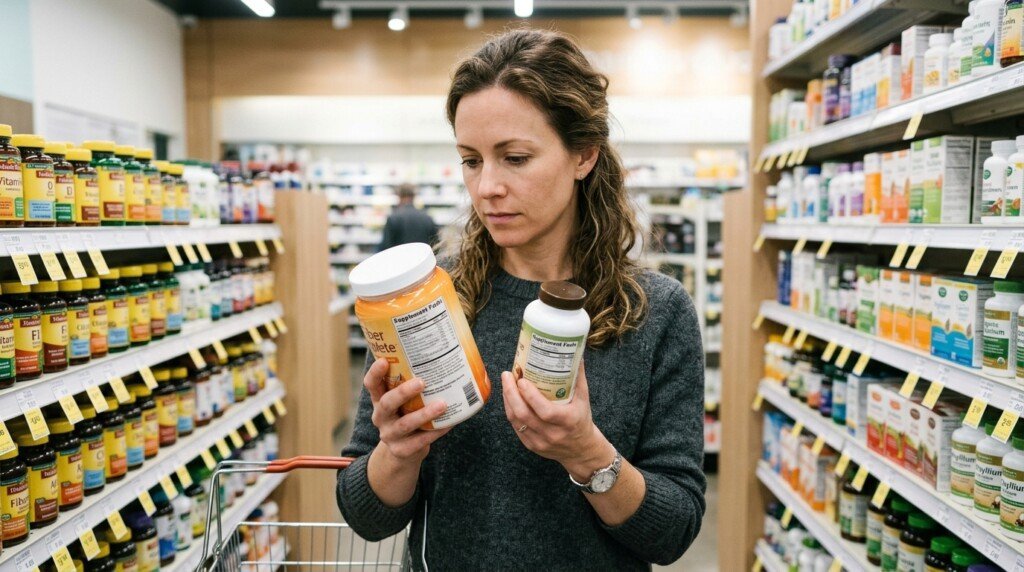
Most consumers spend more time looking at the front of the package than the nutrition panel.
Ironically, the front often contains the least useful information.
The ingredient label tells you far more about product quality than marketing slogans ever will.

Start With the Ingredient List
The first ingredient listed is usually the primary fiber source.
Look specifically for names such as:
- Psyllium husk
- Inulin
- Acacia fiber
- Glucomannan
- Methylcellulose
- Wheat dextrin
- Calcium polycarbophil
If the ingredient isn’t clearly identified, consider another product.
Check Total Dietary Fiber
Products can differ significantly in the amount of dietary fiber they provide.
Comparing total fiber content allows you to evaluate products more fairly instead of relying on packaging claims.
Watch for Unnecessary Additives
Some supplements include:
- Artificial colors
- Artificial sweeteners
- Excessive flavoring
- Fillers
- Preservatives
While these ingredients are not always problematic, a cleaner label often makes it easier to understand exactly what you’re purchasing.
Ignore Marketing Buzzwords
Terms like:
- Premium
- Advanced
- Maximum strength
- Ultimate formula
- Professional grade
have no standardized scientific definition.
Instead, evaluate the product based on:
- Ingredient quality
- Fiber source
- Manufacturing standards
- Label transparency
Those factors provide much more useful information.
What Buying Mistakes Should You Avoid?
Even experienced shoppers sometimes choose supplements based on marketing instead of evidence.
Avoiding a few common mistakes can save both money and disappointment.
Choosing the Brand Instead of the Ingredient
Many buyers recognize brand names but never examine the ingredient list.
Two products from different companies may contain identical fiber sources, while products from the same brand may use completely different formulations.
The ingredient should always come first.
Assuming More Ingredients Mean Better Quality
Long ingredient lists often appear impressive.
However, a supplement containing six fiber sources isn’t automatically superior to one containing a single high-quality ingredient.
Simplicity often makes products easier to evaluate.
Ignoring Product Transparency
Trustworthy manufacturers typically provide:
- Complete ingredient disclosure
- Manufacturing information
- Certification details
- Clear labeling
Companies that openly share product information generally inspire greater confidence.
Buying Based Only on Reviews
Customer reviews can provide helpful insights about taste or texture.
However, reviews should never replace evaluating:
- Ingredients
- Product quality
- Certifications
- Your own health goals
The supplement that works well for someone else may not be the best match for you.
What Questions Should You Ask Before Buying a Fiber Supplement?
A few simple questions can dramatically improve your purchasing decisions.
Instead of focusing on advertising, focus on whether the supplement genuinely matches your needs.
Ask yourself:
- What health goal am I trying to support?
- Which fiber ingredient matches that goal?
- Is the ingredient clearly identified?
- Does the manufacturer provide transparent labeling?
- Has the product been independently tested?
- Will this format fit naturally into my routine?
- Can I realistically use this product consistently?
Answering these questions often eliminates many unsuitable options before you even compare prices.
Key Takeaways
| Topic | Key Point |
|---|---|
| Start with your goal | Choose a fiber supplement based on your specific health objective, not marketing claims. |
| Compare ingredients | Psyllium, inulin, glucomannan, acacia fiber, and other ingredients each have different characteristics. |
| Quality matters | Look for transparent labels, third-party testing, and recognized manufacturing certifications. |
| Powder vs capsules | The best format is the one you’ll use consistently. |
| Read labels carefully | Focus on the fiber source, total dietary fiber, and unnecessary additives. |
| Avoid common mistakes | Don’t choose products based only on brand popularity, long ingredient lists, or customer reviews. |

Frequently Asked Questions
1. How to Choose a Fiber Supplement?
How to Choose a Fiber Supplement begins with identifying your health goal, comparing fiber ingredients, checking quality certifications, reading the ingredient label carefully, and selecting a format that fits your lifestyle.
2. Is psyllium better than inulin?
Neither is universally better. Psyllium and inulin have different characteristics, and the better choice depends on your individual health goals and the type of fiber you are looking for.
3. Should I choose powder or capsules?
Both formats can be effective. Powders often provide larger amounts of fiber and mix into foods or drinks, while capsules offer greater convenience for people with busy schedules.
4. What should I look for on a fiber supplement label?
Look for the primary fiber ingredient, total dietary fiber content, transparent labeling, minimal unnecessary additives, and recognized quality certifications whenever possible.
5. Do expensive fiber supplements work better?
Not necessarily. Price alone does not determine quality. The ingredient, manufacturing standards, product transparency, and suitability for your goals are much more important than cost.
Conclusion
Understanding How to Choose a Fiber Supplement is about making informed decisions rather than following marketing trends. By starting with your health goal, comparing ingredients instead of brand names, checking for quality certifications, and reading labels carefully, you can confidently narrow your options to products that genuinely meet your needs. Small details, such as whether a supplement contains psyllium, inulin, or another type of fiber, often matter far more than eye-catching packaging or promotional claims.
The best fiber supplement is ultimately the one that aligns with your lifestyle and supports long-term consistency. Whether you prefer powders or capsules, prioritize products with transparent ingredient lists, reputable manufacturing practices, and a format you’ll actually use every day. Approaching fiber supplements with this mindset helps you make smarter purchasing decisions and build a routine that supports your long-term health goals.
Disclaimer:
This post may contain affiliate links. If you purchase through them, we may earn a small commission at no extra cost to you. Also, this content is for informational purposes only and does not substitute professional medical advice.