Morning Wood: What It Means (and When Its Absence Matters)
If you wake up with an erection, it can seem like your body is making a very deliberate statement before your brain has even switched on. But Morning Wood: What It Means is less about sexual thoughts and more about what your body is doing while you sleep.
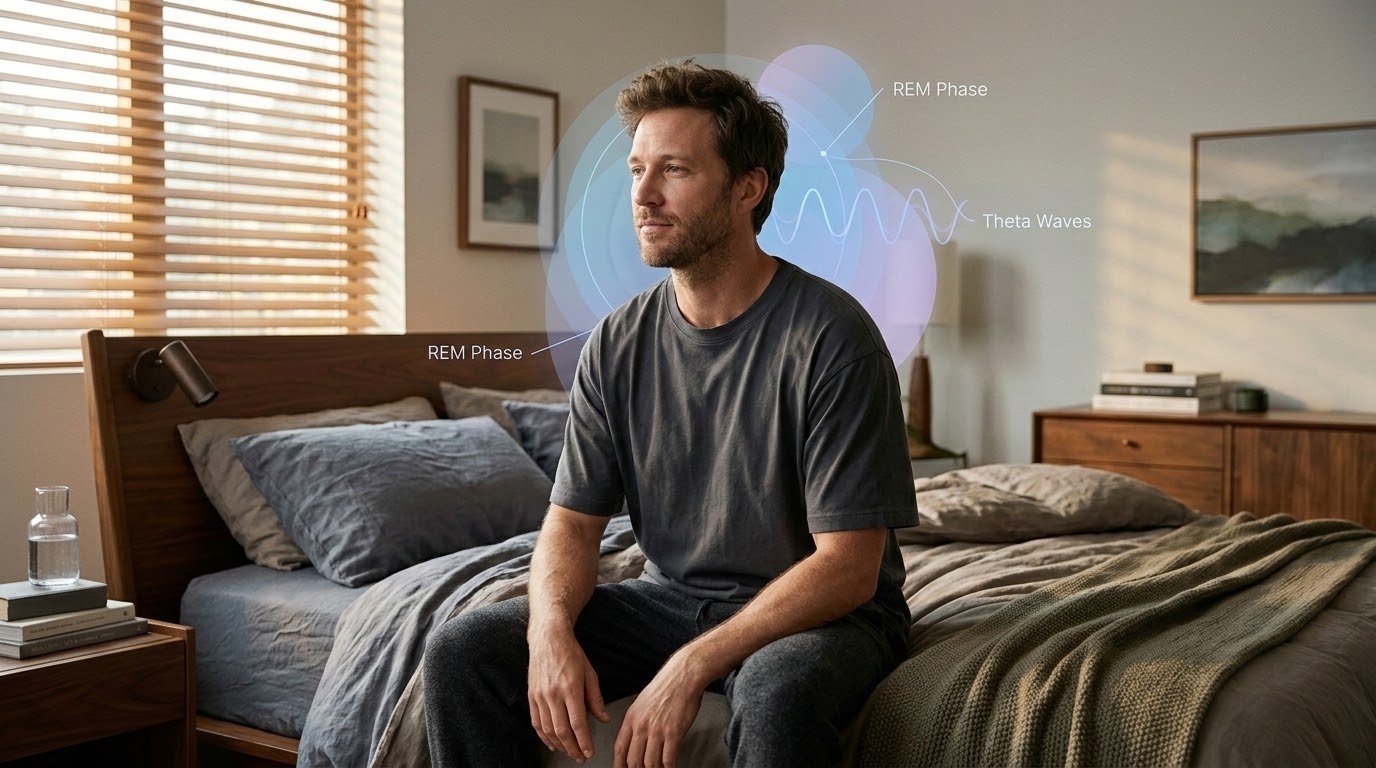
Morning erections are commonly called nocturnal penile tumescence, or NPT. They are involuntary erections that can occur several times during the night, particularly around periods of REM sleep. You may only notice the final one because you happen to wake while it is happening.
That distinction matters.
You do not need to be having a sexual dream. You do not need to be sexually aroused. And you do not need to wake up with an erection every morning to be healthy.
At the same time, a persistent change in nighttime erections can sometimes provide useful information about sleep, sexual function, hormones, stress, or vascular health.
So the useful question is not simply, “Do I still get morning wood?”
It is, “Has something meaningfully changed?”
What causes morning wood?
Morning wood is the visible part of a process that can happen repeatedly throughout the night.
An erection can develop during sleep without conscious sexual stimulation. These sleep-related erections are a normal physiological phenomenon and occur predominantly during REM sleep.
The reason you associate them with waking is mostly timing.
You are not necessarily becoming erect because morning has arrived. You may have already had an erection during the night, then happened to wake during or shortly after one of these episodes.
Cleveland Clinic notes that a man may become erect and then lose the erection several times during a single night, which is why “morning wood” is not necessarily a once-per-day event. (Cleveland Clinic)
That also explains why some mornings you notice it clearly while other mornings you do not.
Your wake-up time, sleep duration, sleep interruptions, and where you are in your sleep cycle can all affect whether you happen to notice an erection.
The REM sleep connection
REM, or rapid eye movement sleep, is one of the most important pieces of the puzzle.
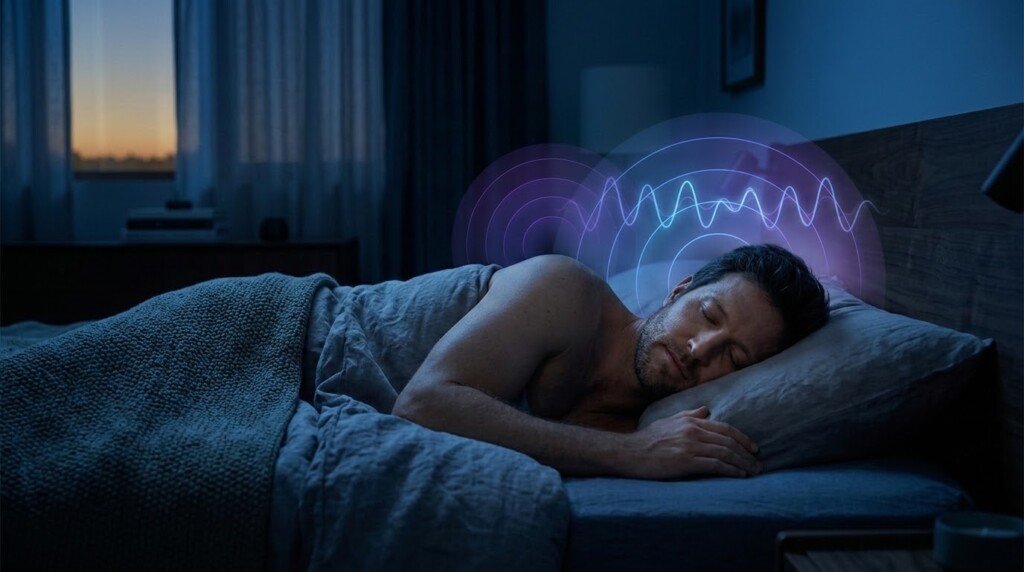
Sleep moves through repeating cycles, and REM periods become more prominent later in the night. Sleep-related erections occur most often during these REM periods. Research has demonstrated an association between REM sleep and changes in penile blood flow and erectile activity.
This is why waking naturally after a full night of sleep can make morning wood more noticeable than waking abruptly after only a few hours.
The erection itself is not a conscious decision.
Your nervous system continues regulating the body while you sleep. Sexual thoughts are not required.
The precise biological purpose of sleep-related erections is still not completely understood. Researchers have proposed several explanations, including a role in maintaining healthy erectile tissue, but the mechanisms behind sleep-related erections are more complicated than the simple claim that “REM sleep causes testosterone to rise and gives you an erection.” (PubMed)
This is an important distinction because online discussions often turn morning wood into a crude testosterone test.
It is not.
Sleep-related erections and testosterone secretion are related physiological processes, but seeing or not seeing an erection on a particular morning cannot tell you what your testosterone level is.
If you are concerned about possible Low Testosterone Symptoms: How to Tell, the symptoms and appropriate medical evaluation matter far more than using morning wood as a home hormone test.
There is another useful detail here.
Sleep-related erections are not exactly the same as erections caused by sexual stimulation while awake.
That is why morning wood can tell you something about involuntary erectile function without necessarily telling you how you will perform during partnered sex.
Is morning wood a sign of good health?
In a broad sense, regular sleep-related erections can be reassuring because they demonstrate that the body’s erectile system is capable of producing an erection without conscious sexual stimulation.
But there is a major caveat:
Morning wood is not a health score.
Having it does not prove that every aspect of your sexual or cardiovascular health is perfect.
Not having it on a particular morning does not prove that something is wrong.
Think of it as one piece of information rather than a diagnostic test.
A man might wake without an erection because he woke during a different phase of sleep.
He might have slept poorly.
He might have been awakened by an alarm.
He might have consumed alcohol.
He might be dealing with significant stress.
He might simply have had an ordinary variation in his sleep-related erections.
None of those situations automatically indicates disease.
The bigger picture matters.
Why you may not notice it every morning
The phrase “morning wood” creates an unrealistic expectation that a healthy man should wake up every day with an erection.
That is not how the physiology works.
You can have several sleep-related erections without being awake to see them.
Imagine waking at 6:30 a.m. after a normal night’s sleep.
If an erection occurred during an earlier REM period and disappeared before you woke, you would have no reason to know it happened.
The next night, you wake during a later REM period and notice one.
Your experience has changed, but your underlying physiology may not have changed at all.
This is why counting morning erections can quickly become counterproductive.
There is no practical benefit in waking yourself up repeatedly to check.
There is also no reliable “normal number” that you can use as a personal scorecard. Sleep-related erection studies use specialized monitoring equipment because simply asking someone whether they woke with an erection does not capture every nocturnal event.
Is morning wood connected to erections during sex?
There can be a relationship, but they should not be treated as identical.
Sleep-related erections demonstrate that the body can produce involuntary erections during sleep. That can provide useful context when evaluating erectile function.
However, partnered sex involves additional factors.
Sexual desire, stimulation, psychological state, relationship dynamics, attention, anxiety, medications, and physical health can all influence erections while awake.
A man can have regular morning erections and still experience erection difficulties during sex.
Likewise, a man can occasionally wake without morning wood and have completely normal erections during sexual activity.
That is why morning wood should not be used as a pass-or-fail test for erectile function.
If your concern is specifically that erections during sex have become weaker, the more relevant question is whether there has been a persistent change in erection quality. That is the focus of Why Isn’t My Erection as Hard as Before?, which looks at vascular, psychological, medication, and other factors affecting firmness.
Does morning wood mean testosterone is high?
Not necessarily.
Testosterone has an important role in male sexual physiology, and hormone secretion changes during sleep.
But that does not make morning wood a testosterone meter.
You cannot look at an erection and determine whether your testosterone is low, normal, or high.
A man with low testosterone may experience fewer spontaneous or sleep-related erections, but erectile function is influenced by much more than testosterone alone.
Blood vessels, nerves, sleep quality, medications, psychological health, and other medical factors can all matter.
So if your concern is hormonal, do not try to diagnose yourself by counting erections.
What does it mean if you stop getting it?
A short period without noticeable morning erections is usually not enough to tell you anything meaningful.
A sustained change is different.
If a man who regularly experienced morning erections suddenly stops noticing them for a prolonged period, it is reasonable to pay attention to what else has changed.
That does not mean assuming erectile dysfunction or a hormone disorder.
It means looking at the context.
Has sleep become worse?
Has stress increased?
Has alcohol consumption changed?
Did you start taking a new medication?
Have erections during sex also become weaker?
Has sexual desire changed?
Are there other symptoms?
Those questions are more useful than simply counting mornings.
When it’s a normal variation
There are plenty of harmless reasons why morning wood may become less noticeable.
Sleep disruption is an obvious one.
If you are waking frequently during the night, sleeping fewer hours, changing your sleep schedule, or waking at a different point in your sleep cycle, you may simply be less likely to notice a sleep-related erection.
Stress can also affect sleep and sexual physiology. Fatigue and psychological factors have been reported as influences on sleep-related erections, so the absence of one morning erection should not be interpreted in isolation.
Alcohol may also affect sleep architecture and sexual function.
Medication can be another variable.
And sometimes there is no obvious reason at all.
Human physiology is not perfectly repetitive.
You do not need to wake up with exactly the same body response every morning.
Age also changes the pattern.
Research in healthy men has found that the frequency and duration of nocturnal penile tumescence tend to decline with age. One study involving healthy men from their 20s through their 70s found progressively lower frequency and duration of nocturnal erections with aging, while the degree of circumferential change during episodes did not show the same pattern. (PubMed)
That means a 65-year-old should not necessarily expect the same nighttime erection pattern he experienced at 25.
The important question is whether the change fits the broader picture of aging and health or represents a new, unexplained decline in sexual function.
When it’s worth mentioning to a doctor
A persistent absence of morning erections becomes more relevant when it occurs alongside other changes.
For example, suppose you used to wake with erections regularly.
Over several months, you stop noticing them entirely.
At the same time, your erections during sex have become consistently weaker.
Your libido has fallen.
You are experiencing significant fatigue.
Or you have developed other health changes.
That combination deserves a conversation with a healthcare professional.
Morning wood alone cannot diagnose a medical condition, but a persistent change combined with other sexual or physical symptoms provides more useful clinical information.
The same principle applies if you have a known condition that affects vascular or metabolic health.
High blood pressure, diabetes, cardiovascular disease, obesity, and other conditions can affect erectile function. In that situation, a persistent change in spontaneous erections is worth mentioning rather than dismissing it as “just getting older.”
And if you are already experiencing difficulty getting or maintaining erections during sex, that is a separate issue that should be evaluated on its own merits.
You do not need to wait for morning wood to disappear before asking about erection problems.
If you are unsure whether your symptoms warrant an appointment, When to See a Doctor for ED can help clarify the situations where professional evaluation makes sense.

Do older men still get morning wood?
Yes.
Older men can still experience sleep-related erections.
The frequency and firmness may decrease with age, but aging does not switch the phenomenon off completely. A review of sleep-related erections describes the phenomenon across the lifespan, from infancy through old age, while noting that its magnitude and duration tend to decline with aging.
This is an important distinction.
There is a difference between:
“I do not get morning wood as often as I did when I was younger.”
and
“I suddenly stopped having erections altogether.”
The first can occur as part of normal aging.
The second deserves more context.
Research specifically examining healthy aging men found that the frequency and duration of nocturnal penile tumescence declined progressively with age. In men over 60, full sleep erections were less common, although many of these men continued to have regular sexual activity. (PubMed)
That finding is useful because it challenges a common assumption.
A reduction in morning erections does not automatically mean a man has lost his sexual function.
Nighttime erections and sexual performance are related but not interchangeable.
An older man may have fewer or less rigid sleep-related erections and still have satisfying sexual activity.
Why age changes the pattern
Aging affects several systems involved in erectile function.
Vascular function can change.
Hormonal patterns can change.
Sleep can become more fragmented.
Medications become more common.
Chronic health conditions become more prevalent.
All of these factors can influence sleep-related erections.
Recent research continues to examine the relationship between REM sleep, sleep fragmentation, aging, and erectile physiology. A 2026 review notes that sleep-related erections occur predominantly during REM sleep and discusses how sleep fragmentation and aging can influence their frequency and erectile physiology. (PubMed)
This is another reason not to reduce the entire subject to testosterone.
Testosterone is part of the picture.
It is not the whole picture.
What about men who never notice morning wood?
Some men may rarely notice morning erections despite having normal sleep-related erectile activity.
The simplest explanation is that they are not awake at the right time.
Others may genuinely have fewer sleep-related erections.
If that is lifelong and there are no other symptoms, it may simply represent individual variation.
If it is a clear change from your previous pattern, the situation is more worth discussing.
The distinction between a lifelong pattern and a recent change is often more useful than comparing yourself with what other men claim online.
There is no need to compete over who wakes up with the strongest erection.
Your body does not need to match somebody else’s morning routine.
Frequently Asked Questions ( Morning Wood: What It Means )
1. What causes morning wood?
Morning wood is usually the result of involuntary sleep-related erections, which occur most commonly during REM sleep. They can happen several times throughout the night, so the erection you notice after waking may simply be the one that happened to coincide with waking.
2. Is morning wood good or not?
Morning wood is a normal physiological phenomenon and can be reassuring because it shows that the erectile system can produce an involuntary erection during sleep. However, it is not a medical test or requirement for good health. Missing it occasionally is usually not concerning.
3. What happens if a guy doesn’t get morning wood?
Occasionally waking without an erection does not necessarily mean anything is wrong. Sleep quality, stress, fatigue, medications, alcohol, waking time, and normal variation can all affect whether you notice one. A persistent disappearance, particularly alongside weaker erections or reduced libido, is worth mentioning to a healthcare professional.
4. Do older men still get morning wood?
Yes. Older men can still have sleep-related erections, although frequency, duration, and firmness may decline with age. Research has documented sleep-related erections in older men, so aging does not mean they should disappear completely.
The Morning Check That Matters More Than Counting Erections
Morning wood is easy to overthink because it is something you can notice without trying.
One morning you wake up with an erection and feel reassured.
The next morning you do not, and suddenly you are wondering whether your testosterone has crashed or whether something is wrong with your circulation.
That is not a useful way to evaluate your health.
Sleep-related erections naturally fluctuate.
They can occur several times during the night, and you may simply wake at a point when you do not notice one. (Cleveland Clinic)
Age can change their frequency and quality too.
What matters more is a persistent change in your overall sexual function.
If morning erections become less frequent but erections during sex remain normal, libido remains normal, and there are no other concerning symptoms, there may be little reason to worry.
If morning erections disappear alongside consistently weaker erections, reduced sexual desire, significant fatigue, or other changes, that is a different situation.
Do not use morning wood as a testosterone test.
Do not use it as a daily masculinity score.
And do not assume that getting one every morning means your health is automatically perfect.
Instead, treat it as one small piece of information about a much larger system involving sleep, the nervous system, blood flow, hormones, and sexual health.
Sometimes the most reassuring answer is simply that your body is doing something normal while you sleep.
And when the pattern genuinely changes, paying attention rather than ignoring it can help you catch a problem worth discussing with a professional.
Disclaimer:
This post may contain affiliate links. If you purchase through them, we may earn a small commission at no extra cost to you. Also, this content is for informational purposes only and does not substitute professional medical advice.
Know Your Body Better
Use our free tools to track your cycle, find your fertile window, estimate your due date, and more.
Open Free Tools →