COMPLETE WEIGHT LOSS GUIDE: FAT LOSS, DIET, HABITS & SCIENCE
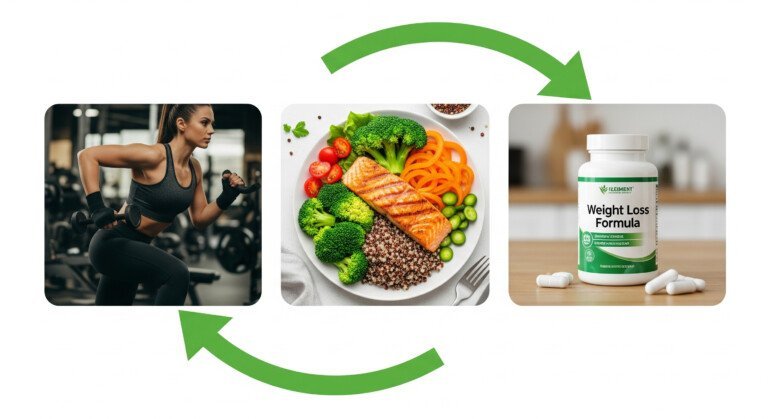
This weight loss guide is a complete blueprint for sustainable fat loss built on science, structure, and long-term consistency. Instead of quick fixes, this guide focuses on metabolism, nutrition, training, recovery, and behavioral strategy. If you want lasting results without extreme dieting, this weight loss guide will show you exactly how to do it correctly.
What Weight Loss Really Means (And Why Most People Fail)
When people say they want to lose weight, they usually mean one of three things:
- Lose belly fat
- Look leaner in clothes
- Improve confidence and health
But most never define what “weight loss” actually means.
That lack of clarity is the first reason progress stalls.
Your body weight is composed of:
- Fat mass
- Muscle mass
- Water
- Glycogen
- Organs and bone
If you drop 4–5 kg quickly, the loss often includes:
- Water
- Glycogen
- Some muscle
- A small amount of fat
Real transformation focuses on body fat reduction while preserving muscle.
That distinction matters because:
- Muscle maintains metabolic rate
- Muscle improves body shape
- Muscle protects long-term fat loss
Crash dieting lowers scale weight fast but weakens metabolism and increases rebound risk.
This is why sustainable-weight-loss approaches outperform extreme restriction.
If your goal is long-term change, you must shift from:
“Lose weight quickly”
to
“Reduce body fat strategically.”
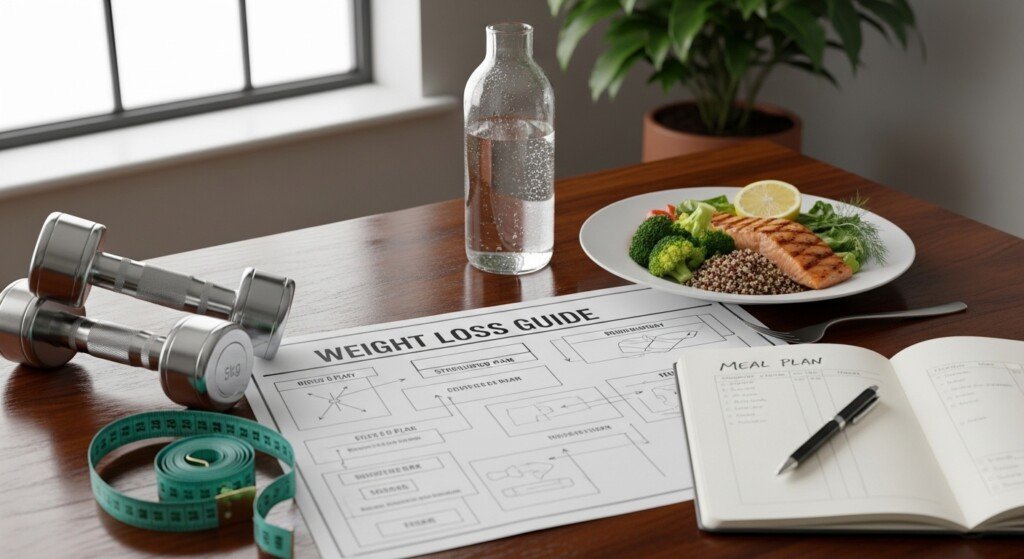
The Three Types of Weight Loss
Understanding the difference prevents confusion.
1. Water Loss
Occurs quickly. Common during low-carb dieting. Temporary.
2. Muscle Loss
Occurs during severe calorie deficits without strength training or adequate protein.
3. Fat Loss
Slow, consistent, metabolically controlled reduction of stored adipose tissue.
Only the third type creates lasting transformation.
Why Most People Regain Weight
Weight regain is not a mystery.
It happens because:
- The diet was unsustainable
- Calories were cut too aggressively
- Muscle was lost
- Habits never changed
- Old identity remained intact
When someone relies on motivation instead of systems, they relapse under stress.
Weight-loss-habits exist to solve this exact issue — small repeatable behaviors that anchor long-term success.
The Truth About Fat Loss Speed
Healthy fat loss rate:
0.5%–1% of body weight per week.
That means:
- If you weigh 80 kg → 0.4 to 0.8 kg per week
- If you weigh 100 kg → 0.5 to 1 kg per week
Anything significantly faster increases:
- Muscle loss
- Hormonal disruption
- Fatigue
- Binge cycles
Slow is not weak.
Slow is sustainable.
The Foundation Principle
Fat loss requires:
- Calorie control
- Protein adequacy
- Resistance training
- Stress management
- Sleep quality
- Behavioral consistency
Miss one pillar and progress slows.
Miss multiple pillars and frustration builds.
This guide will address all of them — in logical order.
No gimmicks.
No magic detoxes.
No starvation plans.
Just structured strategy.
The Science of Fat Loss: Energy, Metabolism & Hormones
Fat loss is governed by biology, not motivation.
If you do not understand the mechanism, you will constantly chase tactics instead of building a system.
Let’s remove confusion.
The Energy Balance Principle (Explained Correctly)
At its core, fat loss requires:
Sustained energy deficit over time.
This means your body must use more energy than it receives from food.
But energy expenditure is not just “exercise.”
Your body burns calories through four main channels:
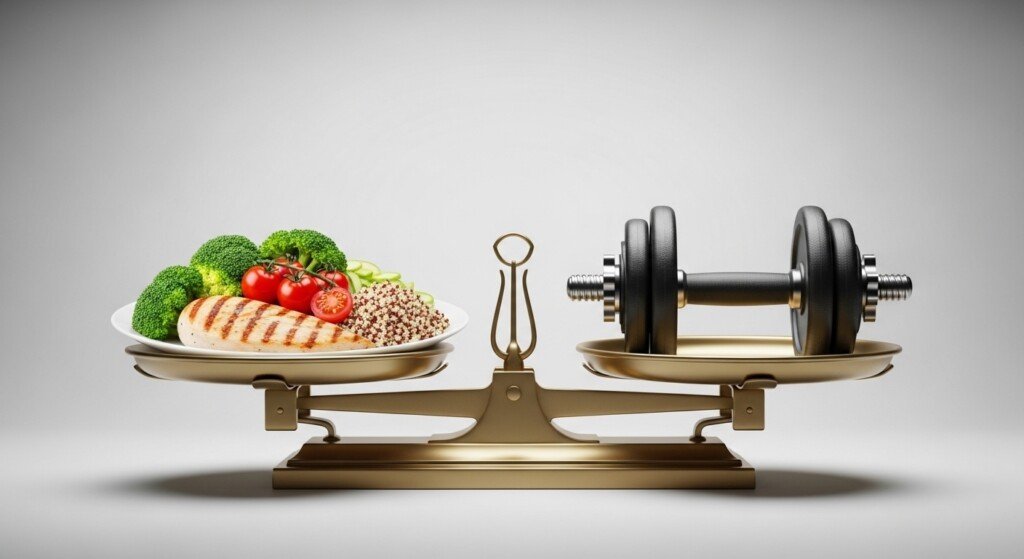
1. Basal Metabolic Rate (BMR)
This is the energy required to:
- Keep your heart beating
- Maintain organ function
- Regulate temperature
- Support brain activity
BMR accounts for 60–70% of daily calorie burn.
It depends heavily on:
- Body size
- Lean muscle mass
- Hormonal health
This is why preserving muscle during dieting is critical.
2. Non-Exercise Activity Thermogenesis (NEAT)
NEAT includes:
- Walking
- Standing
- Cleaning
- Fidgeting
- General movement
For some people, NEAT contributes more to calorie burn than workouts.
When dieting aggressively, NEAT often drops subconsciously — you move less without realizing it.
This adaptation slows fat loss.
That’s why walking-based strategies like walking-vs-running-for-weight-loss can be extremely effective long term.
3. Exercise Activity
This includes:
- Strength training
- Cardio
- HIIT
Exercise supports fat loss, but it rarely creates it alone.
You cannot out-train poor nutrition.
But structured training improves:
- Muscle retention
- Metabolic stability
- Insulin sensitivity
We will break this down further in upcoming sections.
4. Thermic Effect of Food (TEF)
Digesting food burns calories.
Protein has the highest thermic effect.
This means eating protein slightly increases calorie expenditure.
Another reason high-protein-foods-that-burn-fat are foundational.
Why “Calories In vs Calories Out” Feels Misleading
The principle is correct.
But execution is influenced by:
- Hunger hormones
- Stress
- Sleep
- Food environment
- Emotional triggers
For example:
Chronic stress increases cortisol.
Cortisol can increase cravings and abdominal fat retention — something deeply explored in stress-and-weight-loss.
Poor sleep increases ghrelin (hunger hormone) and reduces leptin (satiety hormone).
So while energy balance drives fat loss, lifestyle regulates how easily you maintain that balance.
Metabolic Adaptation: The Hidden Resistance
When you diet:
- BMR can decrease
- NEAT often decreases
- Hormones shift
- Appetite increases
This is not your body “breaking.”
It is survival biology.
Severe calorie restriction accelerates adaptation.
Moderate deficit slows it.
This is why sustainable-weight-loss approaches outperform crash dieting.
The Ideal Calorie Deficit
For most people:
300–500 calories below maintenance
is effective and sustainable.
Extreme deficits:
- Increase muscle loss
- Increase fatigue
- Reduce performance
- Increase rebound risk
Slow and controlled wins.
Why Muscle Matters More Than You Think
Muscle:
- Burns more calories than fat
- Improves insulin sensitivity
- Supports metabolic flexibility
Without resistance training, dieting alone can reduce lean mass.
This lowers metabolic rate and makes future fat loss harder.
That’s why strength-training-for-fat-loss is not optional.
It is protective.
Fat Loss Is a Signal, Not a Guess
Your body responds predictably when:
- Calories are controlled
- Protein is adequate
- Training stimulus exists
- Stress is managed
- Sleep is sufficient
There is no mystery.
There is only consistency.
The Psychology of Long-Term Fat Loss & Habit Architecture
Most people think weight loss is about knowledge.
It isn’t.
It’s about behavior.
You already know that:
- Vegetables are healthy
- Protein is important
- Exercise burns calories
- Sugar excess isn’t helpful
Yet knowing that does not guarantee action.
The real battle is psychological.

Why Motivation Fails
Motivation is emotional.
Emotion fluctuates.
If your fat loss strategy depends on feeling motivated, it will collapse during:
- Stress
- Travel
- Social events
- Fatigue
- Work pressure
That is why most diets last 2–4 weeks.
Not because they don’t work —
but because they require constant willpower.
Willpower is finite.
Systems are sustainable.
Identity Drives Behavior
If someone identifies as:
“I’m someone who always struggles with weight”
Their behavior unconsciously supports that belief.
They may:
- Self-sabotage after small progress
- Overeat after minor mistakes
- Quit when progress slows
Real transformation begins when identity changes to:
“I am someone who takes care of my body.”
Psychology-of-weight-loss explores this identity shift deeply.
Without identity change, behavior remains temporary.
The Habit Loop
Every habit follows three components:
1. Trigger
2. Behavior
3. Reward
For example:
Stress → Eating snacks → Temporary comfort
To change the habit, you don’t just remove food.
You replace the response.
Stress → Walk / Journal / Protein snack → Regulated response
Weight-loss-habits focus on replacing destructive loops rather than fighting them directly.
Replacing destructive patterns with structured weight loss habits improves long-term consistency.
All-or-Nothing Thinking
One of the biggest fat loss killers:
“I ate one bad meal, so the whole day is ruined.”
This mindset turns small deviations into binge cycles.
Perfection is not required.
Consistency is.
A single meal does not determine body fat.
Repeated patterns do.
Emotional Eating Food is often used for:
- Stress relief
- Celebration
- Comfort
- Distraction
If emotional eating is not addressed, calorie control becomes unstable.
Stress-and-weight-loss connections show how unmanaged stress amplifies appetite.
The solution is not extreme restriction.
It is awareness + alternative coping strategies.
Environment Shapes Results
Your environment influences:
- What food is visible
- How often you snack
- Your movement levels
- Your sleep quality
If your house is full of ultra-processed snacks, discipline becomes harder.
Behavioral design matters.
Simple changes like:
- Keeping protein sources visible
- Prepping meals
- Tracking lightly
- Scheduling workouts
Reduce decision fatigue.
Decision fatigue kills progress more than lack of knowledge.
The Power of Small Wins
Large transformations are built on small repeated actions.
Examples:
- 8,000–10,000 steps daily
- 25–35g protein per meal
- 3 strength sessions weekly
- 7–8 hours of sleep
These are not dramatic.
But repeated over 90 days, they produce significant change — as outlined in weight-loss-benefits-90-days.
Small consistency beats short bursts of intensity.
The Real Secret
You don’t need more discipline.
You need:
- Clear structure
- Fewer decisions
- Sustainable calorie targets
- Realistic expectations
Fat loss is psychological consistency supported by biological principles.
If behavior stabilizes, results follow.
Nutrition Fundamentals: Calories, Protein & Sustainable Structure
If psychology builds consistency, nutrition creates the deficit.
Fat loss does not require complicated dieting.
It requires controlled structure.
Let’s break this down properly.
Calorie Awareness Without Obsession
Calories are units of energy.
Your body stores excess energy as fat.
You do not need to obsessively count every gram forever.
But at some point, awareness is necessary.
Most people underestimate intake by 20–40%.
That gap alone explains stalled progress.
The goal is not extreme tracking.
The goal is understanding:
- How much you typically eat
- Where hidden calories exist
- Which foods keep you full
Once awareness increases, adjustment becomes easier.
Protein: The Anchor Nutrient
If there is one macronutrient you must prioritize, it is protein.
Protein helps:
- Preserve muscle during deficit
- Increase satiety
- Reduce cravings
- Improve recovery
- Slightly increase calorie burn (thermic effect)
Most people under-consume protein.
A simple target:
0.7–1 gram per pound of goal body weight
(or roughly 1.6–2.2g per kg)
High-protein-foods-that-burn-fat provide practical examples of affordable options.
Protein is not optional in fat loss.
It is protective.
Carbohydrates: Not the Enemy
Carbs are not inherently fattening.
Excess calories are.
Carbohydrates:
- Fuel training
- Support thyroid function
- Improve workout performance
Problems arise when carb intake exceeds activity needs.
If comparing strategies, low-carb-vs-low-fat-diet explains how both approaches can work — if calories are controlled.
Carbs are a tool, not a villain.
Fats: Essential But Calorie-Dense
Dietary fat:
- Supports hormones
- Aids vitamin absorption
- Provides satiety
However, fat contains more than double the calories per gram compared to protein or carbs.
This makes portion awareness critical.
Fat intake should be moderate, not eliminated.
Fiber & Satiety
Fiber improves:
- Fullness
- Digestion
- Blood sugar control
Low-fiber diets increase hunger.
Vegetables, fruits, legumes, and whole grains support sustainable deficit.
If budget is a concern, cheap-foods-for-weight-loss demonstrates cost-effective fiber sources.
Portion Control: The Hidden Driver
Many people eat nutritious food — but too much of it.
Portion-control-for-weight-loss is not about restriction.
It is about alignment.
Simple strategies:
- Use smaller plates
- Avoid eating from packages
- Measure calorie-dense foods occasionally
- Build meals around protein first
Small awareness shifts prevent accidental overconsumption.
Meal Timing & Frequency
There is no magic meal frequency.
Some prefer:
- 3 larger meals
Others prefer: - 4–5 smaller meals
Intermittent fasting condenses eating windows and may simplify calorie control.
If interested, intermittent-fasting-weight-loss-guide explains structured implementation.
What matters is consistency.
Not eating at a “perfect time.”
The Sustainable Diet Principle
A diet fails when:
- It is socially isolating
- It eliminates too many foods
- It causes constant hunger
- It demands extreme tracking forever
Sustainable-weight-loss comes from flexible structure.
The best diet is the one you can follow without feeling deprived.
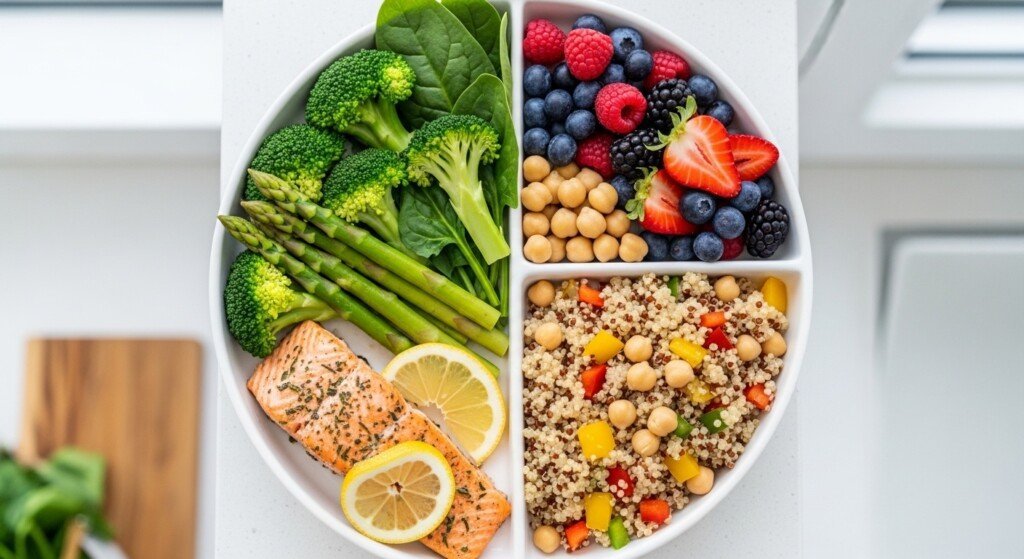
The Balanced Fat Loss Plate
A simple template:
½ plate vegetables
¼ plate lean protein
¼ plate carbs
Healthy fats added moderately
This works for most people without complexity.
Precision is useful at the beginning.
But perfection is unnecessary.
Nutrition is the engine of fat loss.
But it must support lifestyle, not dominate it.
Choosing the Right Diet Strategy: Low Carb, Low Fat & Intermittent Fasting
Most people waste months searching for the “perfect diet.”
The truth is simpler.
There is no universally superior diet.
There is only:
- Calorie control
- Protein adequacy
- Sustainability
Different strategies simply make those principles easier for different personalities.
Let’s break them down intelligently.
Low-Carb Dieting
Low-carb approaches reduce carbohydrate intake and often increase protein and fat.
Why it works:
- Reduces water retention initially
- Stabilizes blood sugar swings
- Can reduce appetite for some people
- Simplifies food choices
However:
- It is not metabolically magical
- Fat loss still depends on calorie deficit
- It may reduce workout performance for some
The real comparison between carb and fat distribution is explored in low-carb-vs-low-fat-diet.
Low-carb works if you adhere to it.
Not because carbs are evil.
Low-Fat Dieting
Low-fat strategies reduce dietary fat while keeping carbs moderate.
Why it works:
- Fat is calorie-dense
- Reducing fat lowers overall calorie intake
- Carbs support training performance
Potential downside:
- Lower satiety if protein is insufficient
- Overconsumption of refined carbs
Again, success depends on adherence, not ideology.
Intermittent Fasting
Intermittent fasting (IF) does not directly increase fat burning beyond calorie control.
It works because:
- Eating windows shrink
- Total daily intake often drops
- Structure reduces snacking
Popular formats:
- 16:8 fasting
- 18:6 fasting
- 24-hour fast once weekly
Intermittent-fasting-weight-loss-guide explains how to structure it without harming performance.
Additionally, intermittent-fasting-secrets-burn-fat breaks down metabolic myths versus reality.
Fasting is a scheduling tool.
Not a metabolic cheat code.
Keto Diet
Keto is an extreme form of low-carb dieting.
It may:
- Reduce appetite
- Improve certain metabolic markers
- Increase initial water weight loss
But:
- It is difficult socially
- It restricts food variety
- Long-term adherence is low for many
Keto is a tool, not a necessity.
Flexible Dieting (Recommended for Most)
Flexible dieting focuses on:
- Total calories
- Protein target
- Allowing variety
It reduces psychological restriction.
This approach often supports sustainable-weight-loss better than rigid elimination diets.
It allows:
- Occasional indulgences
- Social flexibility
- Long-term adherence
How to Choose Your Strategy
Ask yourself:
- Can I sustain this for 6–12 months?
- Does this improve my energy?
- Can I train effectively?
- Does it reduce binge cycles?
- Is it socially manageable?
If the answer is no to most, it is not your strategy.
The Real Diet Hierarchy
No matter the strategy, prioritize:
1. Protein target
2. Calorie control
3. Fiber intake
4. Training consistency
5. Sleep quality
The method matters less than consistency.
Diet selection is not about trends.
It is about alignment with your personality and lifestyle.
Choose structure.
Avoid extremism.
Smart Food Choices, Meal Planning & Practical Implementation
Understanding calories and macros is theory.
Execution happens in your kitchen.
This is where most people fail.
They understand what to eat — but do not structure how to eat.
Fat loss becomes easier when food decisions are simplified.
Build Meals Around Protein First
Instead of asking:
“What should I eat?”
Ask:
“What is my protein source?”
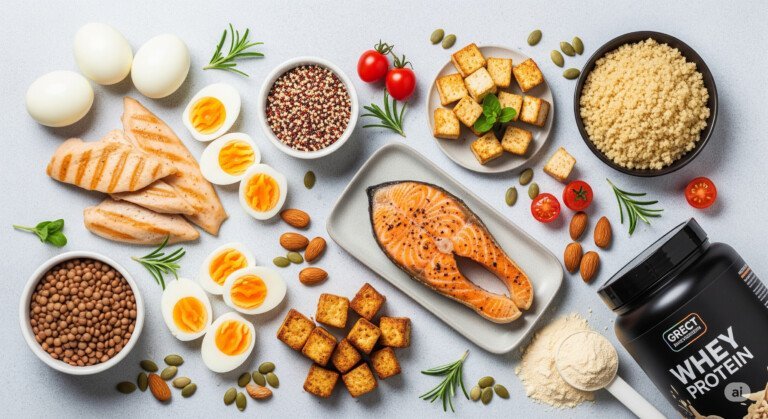
Every meal should begin with:
- Chicken
- Eggs
- Greek yogurt
- Lean beef
- Fish
- Tofu
- Protein-rich legumes
High-protein-foods-that-burn-fat exist for one reason — they reduce hunger and preserve muscle.
When protein anchors the plate, overeating decreases automatically.
Fruits & Fat Loss
Fruits are often misunderstood.
They contain natural sugars, but they also provide:
- Fiber
- Micronutrients
- Volume
- Satiety
Strategically choosing lower-calorie, high-fiber fruits helps control hunger.
Best-fruits-for-weight-loss outlines options that provide fullness without calorie overload.
Fruit is not the problem.
Portion excess is.
Smart Snacking Strategy
Snacking becomes destructive when it is:
- Emotional
- Boredom-driven
- Untracked
Structured snacks improve adherence.
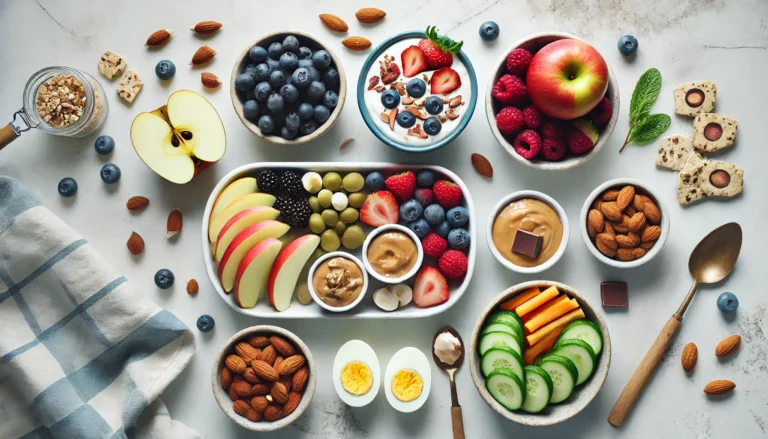
Healthy-snacks-for-weight-loss show how to choose options that stabilize appetite instead of spiking cravings.
Better snack examples:
- Greek yogurt + berries
- Cottage cheese
- Protein shake
- Apple + peanut butter (controlled portion)
Snacks should prevent overeating later — not trigger it.
Herbal & Low-Calorie Support
Some beverages help control appetite and reduce liquid calorie intake.
Herbal-teas-for-weight-loss may support satiety and hydration.
The key benefit is often substitution:
Replacing sugary drinks with low-calorie alternatives.
Hydration reduces false hunger signals.
Meal Preparation: The Discipline Multiplier
If food is unplanned, decisions become reactive.
Reactive eating leads to:
- Fast food
- Processed snacks
- Overconsumption
Meal-prep-for-weight-loss explains how preparing food 1–2 times weekly reduces chaos.
Meal prep does not require perfection.
Even preparing:
- Protein in bulk
- Pre-chopped vegetables
- Measured carb portions
Can drastically reduce daily friction.
Grocery Shopping Strategy
Never shop hungry.
Make a list based on:
- Protein sources
- Vegetables
- Carb staples
- Healthy fats
Avoid:
- Highly processed snack aisles
- Sugary beverages
- “Diet” junk food marketing traps
Your home environment determines your eating behavior.
If unhealthy food is not present, consumption decreases automatically.
Eating Out Without Ruining Progress
You do not need to avoid restaurants.
But you need strategy:
- Choose grilled over fried
- Prioritize protein
- Ask for sauces separately
- Avoid liquid calories
- Control portion size
Perfection is not required.
Damage control is.
Budget-Friendly Fat Loss
Financial stress should not derail fat loss.
Cheap-foods-for-weight-loss prove that results do not require expensive “superfoods.”
Affordable staples:
- Eggs
- Oats
- Rice
- Frozen vegetables
- Beans
- Chicken thighs
- Tuna
Structure beats luxury.
The Practical Fat Loss Template
Simple daily structure:
Meal 1: Protein + fiber
Meal 2: Protein + carbs + vegetables
Meal 3: Protein-focused dinner
Snack: Protein-based if needed
Repeat consistently.
Consistency creates results.
Food choices do not need to be complicated.
They need to be repeatable.
Structure reduces mental load.
Reduced mental load improves adherence.
Strength Training for Fat Loss: The Metabolic Anchor
If nutrition creates the calorie deficit, strength training protects your metabolism.
Many people try to lose weight with cardio alone.
That approach works short term.
But it fails long term.
Here’s why.

Why Muscle Preservation Matters
When you diet without resistance training:
- Muscle mass decreases
- Metabolic rate drops
- Body composition worsens
- Rebound weight gain becomes easier
Muscle is metabolically active tissue.
The more lean mass you maintain, the more energy your body burns at rest.
Strength-training-for-fat-loss is not optional.
It is insurance.
The Role of Progressive Overload
Muscle maintenance requires stimulus.
That stimulus must gradually increase.
Progressive overload means:
- Adding weight
- Adding reps
- Increasing time under tension
- Improving movement quality
If your workouts remain identical for months, adaptation slows.
Fat loss does not require bodybuilding routines.
It requires consistent stimulus.
Ideal Training Frequency
For most people:
3–4 strength sessions per week is optimal.
Full-body programs are effective for beginners and intermediates.
Example weekly structure:
Day 1 – Full Body
Day 2 – Rest / Walking
Day 3 – Full Body
Day 4 – Rest
Day 5 – Full Body
Consistency beats complexity.
Compound Movements First
Compound lifts burn more calories and stimulate more muscle mass.
Examples:
- Squats
- Deadlifts
- Lunges
- Bench press
- Rows
- Overhead press
Isolation movements are secondary.
Focus on movements that recruit multiple muscle groups.
Repetition Range for Fat Loss
There is no special “fat-burning rep range.”
However:
6–12 reps per set
3–4 sets per exercise
Works well for muscle preservation and growth.
Heavier weight preserves strength.
Moderate volume supports muscle retention.
Training Intensity During Calorie Deficit
When calories drop:
- Recovery slows
- Performance may decline
Do not try to dramatically increase volume while dieting.
Maintain strength.
Protect muscle.
Reduce volume slightly if needed.
Fat loss phase is about maintenance of muscle, not aggressive bulking.
Common Strength Training Mistakes
1. Doing only light weights with high reps
2. Skipping leg training
3. Avoiding progressive overload
4. Training randomly without structure
Structured training produces structured results.
Gym vs Home Training
Both can work.
Gym advantages:
- Equipment variety
- Progressive overload easier
Home training advantages:
- Convenience
- Reduced friction
Resistance-bands-for-strength-training and basic dumbbell setups can be effective.
Environment matters less than consistency.
The Long-Term Advantage
Strength training:
- Improves insulin sensitivity
- Supports hormonal health
- Enhances body composition
- Increases confidence
It changes how your body looks — not just what the scale says.
Strength training is the anchor of sustainable fat loss.
Cardio supports it.
Nutrition drives it.
But muscle protection ensures longevity.
Cardio, HIIT & Walking: How to Use Them Without Burning Out
Cardio is often misunderstood.
Some people rely on it completely.
Others avoid it entirely.
Both extremes are inefficient.
Cardio is a tool.
Used correctly, it accelerates fat loss.
Used incorrectly, it increases fatigue and muscle loss.
The Role of Cardio in Fat Loss
Cardio helps by:
- Increasing calorie expenditure
- Improving cardiovascular health
- Supporting recovery (low-intensity)
- Enhancing insulin sensitivity
But it does not replace calorie control.
You cannot outrun poor nutrition.
Walking: The Most Underrated Tool
Walking is sustainable.
It:
- Burns calories
- Reduces stress
- Supports recovery
- Does not spike hunger dramatically
For many people, increasing daily steps from 4,000 to 10,000 can significantly support fat loss without overwhelming the nervous system.
Walking-vs-running-for-weight-loss explores why lower-intensity movement may be more sustainable long term.
Walking is boring.
But boring works.

Steady-State Cardio
This includes:
- Jogging
- Cycling
- Rowing
- Swimming
Moderate intensity, steady pace.
Benefits:
- Predictable calorie burn
- Improves endurance
- Easy to program
Downside:
- Excessive use can increase fatigue
- May increase hunger if overdone
2–3 sessions weekly is sufficient for most people.
HIIT: Efficient but Demanding
High-Intensity Interval Training:
- Short bursts of intense effort
- Alternating with rest periods
Benefits:
- Time-efficient
- High calorie burn per minute
- Improves conditioning
But:
- Stressful on nervous system
- Harder to recover from
- Not ideal daily
Hiit-workouts-for-weight-loss explain how to structure sessions without overtraining.
For most people:
1–2 HIIT sessions weekly is enough.
More is not better.
Strength vs Cardio Debate
The debate is flawed.
The real question is:
How do we combine them intelligently?
Cardio-vs-strength-training-for-weight-loss breaks down the comparison.
In practical terms:
Strength training preserves muscle.
Cardio increases energy expenditure.
Use both strategically.
Ideal Weekly Structure
Example balanced week:
3 Strength Sessions
2 Cardio Sessions (steady or HIIT)
Daily Walking
This creates:
- Muscle retention
- Calorie deficit support
- Cardiovascular improvement
Without excessive fatigue.
Signs You’re Doing Too Much Cardio
- Constant exhaustion
- Decreased strength
- Increased hunger
- Poor sleep
- Irritability
Fat loss requires sustainability.
Overtraining increases cortisol, which may negatively influence fat retention.
More effort does not equal more progress.
Smart effort does.
Cardio During Plateaus
If fat loss stalls:
Increase daily steps first.
Before:
- Cutting calories drastically
- Adding extreme HIIT
Small adjustments maintain sustainability.
The Cardio Mindset Shift
Cardio is not punishment.
It is support.
Do not use it to “earn food.”
Use it to improve health and increase total energy expenditure.
Cardio complements strength training.
It does not replace it.
Balance wins.
Recovery, Sleep & Stress: The Invisible Fat Loss Drivers
Most people focus on:
- Calories
- Workouts
- Supplements
Very few focus on recovery.
That mistake slows progress more than they realize.
Fat loss is not just about burning energy.
It is about how well your body adapts to stress.
Sleep: The Metabolic Regulator
Sleep influences:
- Hunger hormones
- Insulin sensitivity
- Cortisol levels
- Recovery capacity
When sleep drops below 6 hours consistently:
- Ghrelin (hunger hormone) increases
- Leptin (satiety hormone) decreases
- Cravings intensify
- Decision-making weakens
Sleep-weight-loss-connection explains how poor sleep can stall fat loss even when calories are controlled.
Aim for:
7–9 hours nightly.
Sleep is not optional.
It is foundational.
Stress & Cortisol
Chronic stress elevates cortisol.
Short-term cortisol is normal.
Chronic elevation can:
- Increase appetite
- Promote abdominal fat storage
- Reduce recovery
- Disrupt sleep
Stress-and-weight-loss research highlights how unmanaged stress sabotages otherwise good plans.
High stress + aggressive dieting = burnout.
Recovery Is Not Laziness
Recovery includes:
- Rest days
- Low-intensity walking
- Mobility work
- Adequate protein
- Sufficient sleep
Without recovery:
- Strength declines
- Motivation drops
- Injury risk increases
- Hormonal balance shifts negatively
Recovery-tools-for-weight-loss offer structured ways to integrate recovery intelligently.
Fat loss is not about constant exhaustion.
It is about sustainable output.
Hydration & Performance
Even mild dehydration:
- Reduces training performance
- Increases fatigue
- Increases perceived hunger
Easy-hydration-tricks-fat-loss show how consistent water intake stabilizes appetite and supports metabolism.
Hydration is simple — but often ignored.
Signs You Are Under-Recovering
- Persistent soreness
- Declining gym performance
- Irritability
- Insomnia
- Cravings increase
- Plateau despite compliance
When recovery is insufficient, the body resists further stress.
This is not weakness.
It is biological protection.
Recovery Strategy Blueprint
Daily:
- 7–9 hours sleep
- 8,000–10,000 steps
- 2–3 liters of water
Weekly:
- 3–4 strength sessions
- 1–2 cardio sessions
- 1–2 active recovery days
Monthly:
- Slight calorie adjustments if needed
- Monitor progress trends, not daily fluctuations
Fat loss requires pressure.
Recovery ensures that pressure leads to adaptation, not breakdown.
The Hormonal Balance Perspective
Extreme dieting combined with poor sleep:
- Lowers testosterone
- Disrupts thyroid output
- Increases cortisol
- Reduces metabolic rate
This explains why crash diets often stall.
Moderation preserves hormonal function.
Consistency outperforms intensity.
Fat loss is not simply math.
It is biology plus behavior.
Recovery makes biology cooperate.
Gut Health, Inflammation & Metabolic Efficiency
Gut health is often exaggerated in marketing.
But it is not irrelevant.
Your digestive system influences:
- Nutrient absorption
- Appetite regulation
- Inflammation levels
- Hormonal signaling
It does not magically cause fat loss.
But it can influence how smoothly fat loss occurs.
What Is the Gut Microbiome?
Your gut contains trillions of bacteria.
These microbes:
- Help digest food
- Produce certain vitamins
- Influence immune response
- Communicate with the brain
An imbalanced microbiome may contribute to:
- Bloating
- Cravings
- Digestive discomfort
- Increased inflammation
Gut-health-and-weight-loss explores this relationship in more depth.
Inflammation & Fat Storage
Chronic inflammation can:
- Disrupt insulin sensitivity
- Increase water retention
- Reduce metabolic efficiency
Ultra-processed foods, poor sleep, and high stress increase inflammatory markers.
Reducing inflammation supports:
- Better recovery
- Improved digestion
- More stable hunger patterns
Inflammation control does not replace calorie deficit.
But it makes adherence easier.
Fiber: The Microbiome Fuel
Fiber feeds beneficial gut bacteria.
Sources include:
- Vegetables
- Fruits
- Legumes
- Whole grains
Low fiber intake often leads to:
- Increased hunger
- Digestive irregularity
- Poor satiety
Most people consume less than half the recommended daily fiber.
Increasing fiber gradually improves gut stability.
Protein & Digestive Comfort
High protein intake supports muscle preservation.
But sudden increases may cause digestive discomfort.
Gradual adjustments help.
Hydration and fiber balance reduce bloating.
Probiotics & Supplements
Probiotics are not required for everyone.
They may help individuals with:
- Digestive distress
- Antibiotic recovery
- Specific imbalances
However, no probiotic replaces structured nutrition.
Be cautious of exaggerated claims.
Gut Health & Appetite Regulation
Some gut bacteria influence:
- Ghrelin production
- Satiety signals
- Craving intensity
Improving gut health may:
- Stabilize appetite
- Reduce sugar cravings
- Improve consistency
But remember:
Gut optimization enhances fat loss indirectly.
Calorie control still drives it directly.
Practical Gut Health Strategy
1. Increase fiber slowly
2. Include fermented foods occasionally
3. Reduce ultra-processed foods
4. Stay hydrated
5. Sleep consistently
Simple changes often produce noticeable improvement.
The Realistic View
Gut health is a support system.
Not a shortcut.
It does not override poor diet.
It enhances a structured one.
When digestion feels stable:
- Energy improves
- Training performance improves
- Adherence improves
And adherence determines results.
Special Considerations: Age, Gender Differences & Fat Loss Plateaus
Fat loss principles are universal.
But application varies based on:
- Age
- Hormonal profile
- Lifestyle
- History of dieting
Ignoring these variables leads to frustration.
Let’s break this down intelligently.
Weight Loss After 40
Metabolism does not suddenly collapse at 40.
But several changes occur:
- Slight reduction in muscle mass
- Lower natural testosterone (men)
- Perimenopause/menopause transitions (women)
- Increased work and life stress
The solution is not extreme dieting.
It is prioritizing:
- Strength training
- Protein intake
- Sleep quality
- Stress control
Weight-loss-after-40 explains why resistance training becomes even more critical with age.
Muscle becomes your metabolic insurance policy.
Women vs Men: Physiological Differences
Men generally:
- Have more muscle mass
- Higher basal metabolic rates
- Lose weight slightly faster initially
Women experience:
- Hormonal fluctuations
- Menstrual cycle changes
- Higher fat storage efficiency (biological design)
Weight-loss-for-women-vs-men explores these differences in more depth.
This is not unfairness.
It is biology.
Women often benefit from:
- Slightly slower deficit
- Stress reduction emphasis
- Consistent strength training
Comparisons between genders are pointless.
Individual consistency wins.
Understanding Fat Loss Plateaus
Plateaus are not failure.
They are biological adaptation.
Common reasons:
1. Reduced calorie deficit due to weight loss
2. Decreased NEAT (moving less subconsciously)
3. Increased water retention
4. Hormonal shifts
5. Inconsistent tracking
Plateaus often occur after 4–8 weeks.
The mistake people make:
They panic.
They cut calories drastically.
They add excessive cardio.
They burn out.
How to Break a Plateau (Intelligently)
Step 1: Confirm actual plateau
Weigh daily for 2 weeks and track average.
Step 2: Check adherence
Are calories truly controlled?
Step 3: Increase daily steps slightly
Before cutting food.
Step 4: Reduce calories moderately
(200–300 kcal if needed)
Step 5: Maintain strength training
Do not cut protein.
Do not eliminate entire food groups.
Moderate adjustments maintain sustainability.
The 90-Day Perspective
Most people judge results too early.
Weight-loss-benefits-90-days shows how body composition improves progressively over three months.
Expect:
Month 1: Noticeable water + fat reduction
Month 2: Visible body shape change
Month 3: Significant composition shift
But only with consistency.
Short-term scale fluctuations are normal.
Long-term trends matter.
Psychological Plateaus
Sometimes the plateau is mental, not physical.
You may:
- Feel bored
- Lose excitement
- Miss novelty
This is where habit architecture matters again.
Fat loss is not always exciting.
It is structured repetition.
Excitement fades.
Systems remain.
Red Flags During Fat Loss
Seek adjustment if:
- Strength drops drastically
- Sleep worsens
- Mood declines severely
- Menstrual cycle disrupts
- Fatigue becomes constant
These signal excessive deficit.
Moderation preserves long-term results.
Fat loss is not linear.
It is cyclical.
Understanding this prevents emotional overreaction.
Supplements for Weight Loss: What Works, What Doesn’t & When to Use Them
Let’s remove the illusion first.
No supplement melts fat in the absence of:
- Calorie control
- Strength training
- Sleep
- Consistency
If those pillars are missing, supplements waste money.
If those pillars are in place, certain supplements can amplify effort.
That is the correct perspective.
The Real Role of Fat Loss Supplements
Supplements can:
- Slightly increase metabolic rate
- Improve workout energy
- Suppress appetite temporarily
- Enhance focus during dieting
They cannot:
- Override overeating
- Replace training
- Compensate for poor sleep
- Fix emotional eating
Use them as support tools.
Not as solutions.
Caffeine: The Most Proven Fat Loss Aid
Caffeine:
- Increases alertness
- Improves training intensity
- Slightly increases calorie expenditure
- Reduces perceived fatigue
It is inexpensive and effective.
But tolerance builds.
Cycling caffeine periodically helps maintain sensitivity.
Thermogenic Formulas
Many commercial fat burners combine:
- Caffeine
- Green tea extract
- Yohimbine
- Capsaicin
- B vitamins
Their impact is modest.
Usually increasing daily calorie burn by 50–150 calories.
That is supportive — not transformative.
Before using any product, review ingredient transparency.
Supplements-for-weight-loss explains what to look for in detail.
Appetite Suppressants
Some compounds reduce hunger temporarily.
But appetite suppression without habit change often leads to rebound overeating when the supplement stops.
Suppression must accompany structured eating.
Pre-Workout Supplements
Pre-workouts can improve:
- Strength output
- Training intensity
- Focus
Better workouts protect muscle during deficit.
But overuse increases cortisol and sleep disruption.
Moderation matters.
Product Evaluation Strategy
When reviewing products like:
- java-burn-reviews
- ehplabs-oxyshred
Ask:
1. What are the active ingredients?
2. Are doses clinically effective?
3. Is stimulant load too high?
4. Is there transparency?
5. Is cost justified per serving?
Marketing is louder than science.
Always analyze ingredients.
Creatine During Fat Loss
Creatine does not burn fat.
But it:
- Preserves strength
- Supports muscle retention
- Improves performance
Maintaining strength protects metabolic rate.
Best-creatine-supplements are often simple monohydrate formulas.
Do not overcomplicate it.
Supplements That Are Overhyped
Be cautious of:
- “Detox” teas
- Extreme stimulant blends
- Fat-melting gummies
- Hormone reset pills
Most exaggerate claims.
Remember:
Fat loss responds to calorie deficit.
Not marketing slogans.
When Supplements Make Sense
Consider supplements if:
- Diet is structured
- Training is consistent
- Sleep is stable
- Plateau persists
Supplements enhance a disciplined foundation.
They do not replace one.
Smart Supplement Stack Example
Simple and practical:
- Protein powder (to meet targets)
- Creatine (muscle retention)
- Caffeine (training performance)
- Optional thermogenic (short cycles)
Nothing more is necessary for most people.
The Strategic Mindset
Supplements are leverage.
Leverage only works when the base system exists.
Build the base first.
Then optimize.
The Most Common Weight Loss Mistakes That Keep People Stuck
Most people don’t fail because fat loss is impossible.
They fail because they repeat predictable mistakes.
Avoiding these errors often produces better results than adding new tactics.
Let’s break them down clearly.
Mistake 1: Cutting Calories Too Aggressively
Extreme deficits may cause fast initial weight drop.
But they also cause:
- Muscle loss
- Hormonal disruption
- Increased cravings
- Fatigue
- Lower metabolic rate
The body adapts quickly to severe restriction.
Sustainable-weight-loss always outperforms crash dieting.
Moderate deficits win long term.
Mistake 2: Ignoring Protein
Low protein intake leads to:
- Muscle loss
- Increased hunger
- Slower recovery
- Reduced metabolic stability
Without protein, weight loss becomes muscle loss.
High-protein-foods-that-burn-fat exist for this reason.
Protein is protective.
Mistake 3: Over-Reliance on Cardio
Doing excessive cardio while under-eating:
- Increases cortisol
- Increases fatigue
- Raises injury risk
- Can stall progress
Cardio supports fat loss.
It does not replace structured nutrition and strength training.
Cardio-vs-strength-training-for-weight-loss explains the balance clearly.
Mistake 4: Not Tracking Progress Properly
Many people:
- Weigh inconsistently
- Panic over daily fluctuations
- Ignore trend averages
Weight can fluctuate due to:
- Sodium
- Carbohydrate intake
- Hormonal shifts
- Sleep
- Stress
Track weekly averages.
Not daily emotional reactions.
Mistake 5: All-or-Nothing Thinking
One “bad” meal does not erase progress.
But one bad weekend every week does.
Perfection is not required.
Consistency is.
Weight-loss-habits help break destructive cycles of binge and restriction.
Mistake 6: Underestimating Liquid Calories
Calories from:
- Sugary drinks
- Specialty coffees
- Alcohol
- Smoothies
Add up quickly.
Liquid calories rarely produce satiety.
Reducing them is one of the easiest wins.
Mistake 7: Skipping Strength Training
Without resistance training:
- Muscle decreases
- Metabolism slows
- Body shape does not improve
Strength-training-for-fat-loss protects your long-term results.
Do not skip it.
Mistake 8: Expecting Linear Progress
Fat loss is not a straight line.
There will be:
- Plateaus
- Temporary increases
- Water retention phases
Weight-loss-benefits-90-days show how results compound over time.
Short-term stalls are normal.
Mistake 9: Overcomplicating the Process
People often chase:
- Exotic diets
- Expensive supplements
- Complex training splits
The fundamentals remain:
- Moderate calorie deficit
- Adequate protein
- Strength training
- Walking
- Sleep
Complexity increases dropout risk.
Simplicity increases adherence.
Mistake 10: Focusing Only on the Scale
The scale does not measure:
- Muscle gain
- Fat redistribution
- Water retention
- Strength improvement
Track:
- Measurements
- Progress photos
- Strength levels
- Energy
- Clothing fit
Fat loss is multidimensional.
The Pattern Behind Every Mistake
Every mistake stems from:
Impatience.
Fat loss requires time.
The body does not rush transformation.
When you align:
- Behavior
- Nutrition
- Training
- Recovery
Results become predictable.
You do not need a new strategy.
You need disciplined execution of proven principles.
The 90-Day Fat Loss Blueprint: From Strategy to Execution
You now understand:
- The science
- The psychology
- The nutrition fundamentals
- The training structure
- The recovery requirements
- The supplement reality
- The common mistakes
Now we convert knowledge into action.
Fat loss is not about information.
It is about structured execution.
This is your 90-day blueprint.
Phase 1: Foundation (Weeks 1–4)
Objective: Establish structure and stability.
Do not chase aggressive results.
Build consistency.
Step 1: Calculate Your Calorie Target
Use a moderate deficit:
Maintenance – 300 to 500 calories
Not more.
Extreme restriction leads to early burnout.
Step 2: Lock Protein First
Daily protein target:
1.6–2.2g per kg body weight
(or 0.7–1g per pound)
Build meals around protein anchors.
Use high-protein-foods-that-burn-fat as your base.
Step 3: Start Strength Training (3x per week)
Full-body sessions.
Focus on:
- Squats or leg press
- Push movement
- Pull movement
- Hinge movement
- Core
Do not skip legs.
Strength-training-for-fat-loss protects your metabolism early.
Step 4: Increase Daily Movement
Target:
8,000–10,000 steps daily.
Walking-vs-running-for-weight-loss shows why this matters more than people think.
Walking stabilizes your deficit without draining recovery.
Step 5: Improve Sleep
Target:
7–9 hours nightly.
Sleep-weight-loss-connection proves how much this influences hunger and hormonal control.
Without sleep, compliance drops.
Phase 2: Optimization (Weeks 5–8)
Objective: Increase efficiency without burnout.
By now, initial water weight is gone.
True fat loss begins showing.
Step 6: Introduce Structured Cardio
Add:
1–2 HIIT or steady-state sessions weekly.
Hiit-workouts-for-weight-loss explains safe programming.
Cardio supports deficit — not replaces it.
Step 7: Monitor Progress Correctly
Weigh daily.
Track weekly averages.
Ignore daily fluctuations.
If progress stalls for 2 full weeks:
- Increase steps slightly
OR - Reduce calories by 200–300
Small adjustments only.
Step 8: Stress Control
If cravings increase:
Review stress-and-weight-loss factors.
High stress increases hunger and reduces adherence.
Stress management is fat loss management.
Phase 3: Refinement (Weeks 9–12)
Objective: Sustain momentum and avoid plateau panic.
This is where most people quit.
Do not.
Step 9: Adjust Calories Carefully
As body weight drops, maintenance drops slightly.
Recalculate intake if needed.
Moderation only.
Step 10: Maintain Strength
Your goal during deficit:
Maintain or slightly increase strength.
If strength collapses:
You are dieting too aggressively.
Step 11: Consider Strategic Supplement Use
Only if:
- Diet is controlled
- Training is consistent
- Sleep is stable
Supplements-for-weight-loss outlines realistic expectations.
If evaluating specific products:
Review java-burn-reviews or ehplabs-oxyshred carefully before purchasing.
Supplements amplify discipline.
They do not create it.
Step 12: Evaluate 90-Day Results
After 90 days, you should see:
- Noticeable fat reduction
- Improved strength
- Better energy regulation
- Healthier eating patterns
- Improved body composition
Weight-loss-benefits-90-days explains how transformation compounds when consistency remains intact.
What Real Success Looks Like
Not:
- 10 kg lost in 30 days
- Extreme deprivation
- Burnout cycles
But:
- 4–8 kg of sustainable fat loss
- Preserved muscle
- Structured habits
- Reduced emotional eating
- Improved confidence
Slow success is durable success.
Final Truth
Fat loss is not mysterious.
It is structured biology guided by disciplined behavior.
You do not need:
- Secret hacks
- Extreme detoxes
- Miracle pills
You need:
- Calorie control
- Protein discipline
- Strength training
- Walking
- Sleep
- Stress management
- Patience
Apply this blueprint for 90 days.
Then repeat.
Consistency compounds.
FAQ
1. How fast can I safely lose weight?
In a properly structured weight loss guide, a sustainable rate is about 0.5% to 1% of body weight per week. Faster loss usually means water or muscle loss, which increases rebound risk. Slow and consistent fat reduction preserves muscle and protects metabolism.
2. Is calorie counting necessary for weight loss?
Not forever but awareness is necessary. Most people underestimate intake by 20–40%. A weight loss guide should teach calorie awareness first, then transition into structured portion control once habits stabilize.
3. What is more important for fat loss: diet or exercise?
Diet creates the calorie deficit. Strength training protects muscle. Cardio supports energy expenditure. In any serious weight loss guide, nutrition drives fat loss, while training preserves body composition.
4. Why do I stop losing weight after a few weeks?
Plateaus happen due to:
1.Metabolic adaptation
2.Reduced daily movement (NEAT)
3.Smaller calorie deficit as body weight drops
4.Water retention
A structured weight loss guide recommends small adjustments — not drastic calorie cuts.
5. Do carbs prevent weight loss?
No. Excess calories prevent weight loss. Carbohydrates can be included as long as total calorie intake remains controlled. A balanced weight loss guide focuses on protein adequacy and total intake rather than demonizing macronutrients.
6. How important is protein during fat loss?
Protein is critical. It helps preserve muscle, increases satiety, and supports recovery. Most effective weight loss guide strategies recommend 0.7–1 gram per pound of goal body weight.
7. Can I lose weight without going to the gym?
Yes, but resistance training improves long-term results. Walking, bodyweight workouts, and calorie control can reduce fat, but strength training helps maintain metabolism and improve body shape.
8. Does intermittent fasting burn more fat?
Intermittent fasting does not magically increase fat burning beyond a calorie deficit. It works because it simplifies eating structure and reduces total intake. A weight loss guide should treat fasting as a tool not a shortcut.
9. Are fat burner supplements effective?
Most fat burners increase calorie burn only slightly. They can support a disciplined plan but cannot replace proper nutrition and training. Any serious weight loss guide prioritizes lifestyle over supplements.
10. Why do I regain weight after dieting?
Weight regain usually happens because:
1.Calories were cut too aggressively
2.Muscle was lost
3.Habits were not built
4.Old identity patterns remained
Sustainable weight loss requires behavioral change, not temporary restriction.
11. How many days per week should I work out for fat loss?
Most people benefit from:
1.3–4 strength training sessions
2.1–2 cardio sessions
3.Daily walking
A weight loss guide emphasizes balance and recovery rather than extreme training volume.
12. What matters more: the scale or body composition?
Body composition matters more. The scale does not show muscle retention, water fluctuations, or fat redistribution. A well-designed weight loss guide tracks strength, measurements, and long-term trends not daily scale emotions.
13. What is the best weight loss strategy for beginners?
The best beginner strategy includes:
1.Moderate calorie deficit
2.High protein intake
3.3 weekly strength sessions
4.8,000+ daily steps
5.7–9 hours sleep
Simplicity and consistency outperform extreme dieting every time.
Disclaimer:
This post may contain affiliate links. If you purchase through them, we may earn a small commission at no extra cost to you. Also, this content is for informational purposes only and does not substitute professional medical advice.