

Why Is Emotional Eating a Problem?
Most people experience emotional eating at some point in their lives. Having ice cream after a difficult day, ordering pizza during a stressful week, or celebrating an achievement with dessert is part of being human. These occasional experiences are not usually a cause for concern. Problems begin to develop when emotional eating changes from an occasional response into a primary way of coping with life’s challenges.
That distinction is important because emotional eating is not defined by a single meal or one difficult weekend. It is defined by a recurring pattern where emotions repeatedly determine eating behavior instead of physical hunger. Over time, this pattern can influence physical health, emotional well-being, relationships with food, body image, and even confidence. The consequences often extend far beyond the food itself.
Understanding why is emotional eating a problem does not mean viewing food as the enemy. Food is meant to provide nourishment, enjoyment, celebration, and connection with others. Emotional eating becomes problematic only when food gradually replaces healthier ways of processing emotions. Instead of solving stress, sadness, loneliness, or frustration, it temporarily masks them while allowing the original emotional challenges to remain unresolved.
This article explores the long-term effects of emotional eating, explains why repeated emotional reliance on food can become increasingly difficult over time, and discusses when emotional eating may indicate that professional support could be beneficial.
Quick Answer
Why is emotional eating a problem? Emotional eating becomes a problem when food is repeatedly used to manage emotions instead of physical hunger. Over time, this pattern may contribute to weight gain, reduced self-esteem, emotional distress, an unhealthy relationship with food, and difficulty developing healthier coping strategies. In some cases, emotional eating can become severe enough to require professional support.
What Are the Negative Consequences of Emotional Eating?
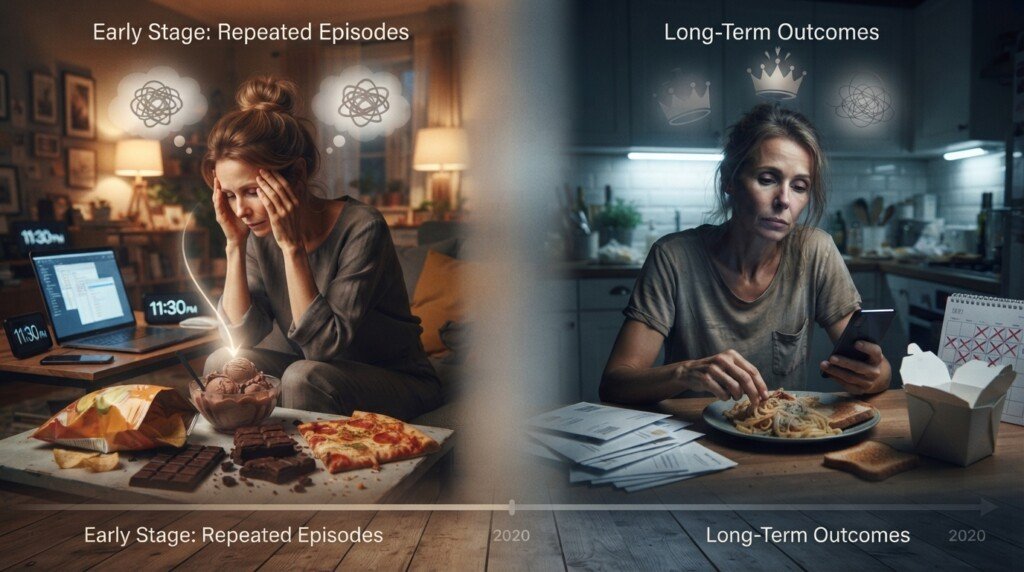
The consequences of emotional eating rarely appear overnight. Most people do not notice dramatic changes after a few stressful meals or occasional comfort food. Instead, the effects develop gradually through repetition. Small emotional eating episodes accumulate over weeks, months, and years until they begin influencing multiple areas of life.
One reason emotional eating can become so challenging is that it often provides temporary relief while quietly creating longer-term difficulties. The immediate emotional comfort makes the behavior feel helpful, even though the underlying emotions remain unresolved. As this cycle repeats, emotional eating may begin affecting physical health, emotional well-being, confidence, and everyday decision-making in ways that are not always immediately obvious.
Understanding these consequences is not about creating guilt or fear. It is about recognizing why emotional eating deserves attention before it becomes deeply established.
How Does Emotional Eating Impact Physical Health Over Time?
Food serves many valuable purposes beyond providing nutrients. It brings families together, celebrates important milestones, and allows people to enjoy meaningful cultural traditions. Emotional eating becomes concerning only when eating consistently shifts away from responding to physical hunger and instead becomes the primary response to emotional discomfort.
When emotional eating occurs frequently, daily energy intake may gradually increase without corresponding changes in physical activity. Because emotional eating often happens in addition to regular meals rather than replacing them, the body may receive more energy than it requires over extended periods. This gradual imbalance can contribute to changes in body weight over time.
Beyond weight itself, emotional eating may also affect meal quality. During emotionally difficult moments, people often choose foods based on comfort rather than nutritional balance. Highly processed snacks, desserts, fast food, and calorie-dense convenience meals frequently become the preferred options because they provide familiarity and immediate satisfaction. While enjoying these foods occasionally is perfectly normal, relying on them repeatedly may reduce overall dietary quality.
Some individuals also experience increasingly irregular eating patterns. Emotional eating can encourage skipping meals earlier in the day followed by heavy evening eating, frequent grazing between meals, or eating despite already feeling physically satisfied. These inconsistent habits may make it more difficult to recognize natural hunger and fullness signals over time.
Sleep quality may also be indirectly affected. Late-night emotional eating sometimes interferes with comfortable digestion or reinforces nighttime eating routines that gradually become habitual. Although emotional eating does not automatically cause poor sleep, repeated late-evening eating patterns may contribute to disrupted routines for some individuals.
Perhaps most importantly, emotional eating often delays addressing the original emotional challenge. Stress remains stressful. Loneliness remains lonely. Anxiety remains unresolved. While food may temporarily soften these feelings, it rarely changes the circumstances that created them. As a result, emotional discomfort returns, often encouraging another episode of emotional eating.

Why Does Emotional Eating Lead to Weight Gain?
One of the most common questions people ask is whether emotional eating automatically causes weight gain. The answer is more nuanced than many expect.
Not everyone who emotionally eats gains weight, and not everyone with excess body weight emotionally eats. However, emotional eating can contribute to gradual weight gain because it encourages eating in response to emotions rather than energy needs.
Unlike physical hunger, emotional hunger often appears suddenly and usually focuses on specific comfort foods that are rich in calories and highly enjoyable. These foods are frequently consumed after regular meals, meaning they increase overall energy intake instead of replacing existing meals.
Emotional eating also tends to reduce awareness during meals. Many people eat quickly, snack while watching television, or continue eating without noticing fullness because their attention remains focused on emotional relief rather than the eating experience itself. This makes it easier to consume larger portions before recognizing satisfaction.
Repeated dieting can make the situation even more complicated. After emotional eating episodes, many individuals respond by imposing strict food rules or skipping meals the following day. This restriction often increases both physical hunger and emotional frustration, making future emotional eating episodes more likely. Over months or years, this cycle of overeating and restriction may contribute to repeated fluctuations in body weight, sometimes referred to as weight cycling.
The important point is that emotional eating itself is not solely about body weight. Someone can maintain a stable weight while still experiencing a deeply unhealthy relationship with food. Likewise, another individual may gain weight for many reasons unrelated to emotional eating. The behavior deserves attention because of its overall impact on well-being, not simply because of numbers on a scale.
What Are the Psychological Effects of Relying on Food for Emotional Comfort?
The emotional consequences of emotional eating are often even more significant than the physical ones. Many people describe feeling trapped in a pattern they fully understand but struggle to change. They recognize that food does not solve their emotional problems, yet it continues to feel like the easiest source of relief during difficult moments.
This repeated experience often creates frustration. People begin questioning their self-control, assuming they simply lack enough discipline to change their habits. In reality, emotional eating is rarely about willpower alone. It reflects a learned pattern where food has gradually become associated with emotional comfort.
As the cycle continues, guilt frequently becomes part of the experience. Someone may initially feel better while eating, only to criticize themselves afterward for making the same choice again. These self-critical thoughts create additional emotional distress, which ironically increases the likelihood of turning back to food during the next difficult situation.
Over time, food may also begin occupying far more mental space than it should. Individuals sometimes spend large portions of the day thinking about what they should eat, what they should avoid, or regretting what they ate previously. Meals that once felt enjoyable gradually become surrounded by anxiety, rules, and self-judgment.
Relationships may also be affected. Some people begin avoiding social situations involving food because they fear losing control. Others prefer eating alone to avoid embarrassment or unwanted attention. What began as a private coping strategy can gradually influence social confidence and emotional well-being.
These psychological effects often reinforce one another, creating a cycle where emotional distress encourages emotional eating, and emotional eating creates additional emotional distress. This is one reason the pattern can become increasingly difficult to interrupt without first understanding how it developed.

How Does Emotional Eating Affect Self-Esteem and Body Image Long-Term?
The effects of emotional eating are often far greater than the food itself. While many people initially worry about calories or weight, the longer-term emotional impact frequently becomes the more significant challenge. Emotional eating can gradually change how people view themselves, influencing confidence, self-esteem, and body image in ways that extend well beyond eating habits.
One reason this happens is because emotional eating often creates a gap between intentions and actions. Someone may begin the day with every intention of eating according to their usual routine, only to find themselves turning to food after a stressful meeting or an emotionally exhausting evening. When this pattern repeats, many people begin believing they lack discipline or self-control. They stop viewing emotional eating as a learned coping behavior and instead interpret it as a personal weakness.
That belief can become incredibly damaging. Instead of asking why emotional eating continues to happen, people often criticize themselves for not being able to stop. Each episode becomes evidence, in their mind, that they have failed again. Over time, this constant self-criticism gradually erodes confidence, even in areas of life unrelated to food.
Body image may also begin to change. For individuals whose emotional eating contributes to weight gain or repeated weight fluctuations, dissatisfaction with appearance can become more intense. They may avoid mirrors, photographs, fitted clothing, or social activities because they no longer feel comfortable in their own bodies. However, poor body image is not limited to changes in body weight. Even people whose weight remains relatively stable may experience negative body image if guilt and self-judgment become closely tied to eating.
Another consequence is the development of an unhealthy relationship with food itself. Meals that once brought enjoyment can begin to feel emotionally complicated. Instead of approaching food with curiosity or pleasure, people may experience constant internal conflict, wondering whether they are eating for the “right” reasons or worrying about how they will feel afterward. This ongoing mental tension often makes eating far more stressful than it needs to be.
Relationships with other people can also be affected. Some individuals decline invitations involving food because they fear losing control or being judged for what they eat. Others secretly eat alone before or after social gatherings because they feel embarrassed about their eating habits. These behaviors may increase feelings of isolation, creating even more emotional discomfort and reinforcing the very cycle that emotional eating began as a way of coping with.
Perhaps the most important point is that emotional eating affects how people speak to themselves. Many individuals who struggle with emotional eating use language they would never direct toward someone they care about. Harsh self-criticism, shame, and unrealistic expectations become part of everyday thinking. Over months or years, those internal conversations may have a much greater impact on emotional well-being than the food itself.
Understanding this helps explain why why is emotional eating a problem cannot be answered simply by discussing weight. Emotional eating has the potential to influence confidence, relationships, emotional health, and overall quality of life in ways that are often invisible to others.

When Does Emotional Eating Become a Disorder?
Occasional emotional eating is a normal human experience. Most people have celebrated with food, eaten after a stressful day, or reached for a favorite dessert during a difficult week. These isolated experiences are not usually signs of a medical condition.
The concern arises when emotional eating stops being an occasional response and becomes the primary way someone manages emotions. At that point, food begins replacing healthier coping strategies instead of simply accompanying life’s emotional experiences.
It is important to approach this topic carefully. Not everyone who emotionally eats has an eating disorder, and emotional eating should never be viewed as a diagnosis by itself. However, there are situations where emotional eating becomes so frequent, distressing, or disruptive that professional evaluation is appropriate. Recognizing those situations early can make a meaningful difference.

What Signs Indicate Emotional Eating Has Become a Disorder?
The transition from habit to something more serious is usually gradual rather than sudden. Instead of looking for one dramatic event, it is more helpful to observe how emotional eating affects daily life over time.
One important warning sign is frequency. If eating in response to emotions becomes the primary coping strategy for stress, sadness, loneliness, frustration, or anxiety, it suggests that food is beginning to replace other emotional coping skills. Occasional emotional eating becomes repeated emotional dependence.
Another sign is loss of control. Many people describe feeling as though they know they are eating for emotional reasons but cannot stop once the behavior begins. They may promise themselves they will not repeat the pattern, only to find themselves returning to it again during the next emotionally difficult situation.
Increasing emotional distress is another indicator. Rather than providing occasional comfort, emotional eating begins creating persistent guilt, shame, anxiety, or hopelessness. Food no longer feels enjoyable. Instead, it becomes associated with fear, disappointment, or self-criticism.
Some people also notice significant disruption to their daily lives. They may avoid restaurants, cancel social plans involving meals, hide food from family members, or organize large parts of their day around opportunities to eat privately. When emotional eating begins interfering with work, relationships, family life, or emotional well-being, professional guidance becomes increasingly valuable.
Repeated weight cycling may also occur in some individuals. Emotional eating episodes are followed by strict dieting, which eventually leads back to emotional eating again. This repeating pattern can become physically and emotionally exhausting.
Most importantly, emotional eating deserves professional attention when someone feels trapped. If repeated attempts to change the behavior consistently fail and emotional eating continues causing distress despite sincere efforts, seeking support is not a sign of weakness. It is a practical step toward understanding a complex behavior.
How Is Emotional Eating Differentiated From Binge Eating Disorder?
Although emotional eating and binge eating disorder can sometimes overlap, they are not the same condition. The full comparison is discussed in Binge Eating vs Emotional Eating, where the differences are explained in detail.
What Are the Recommended Treatment Options Once It Crosses Into Disorder Territory?
When emotional eating begins causing significant emotional distress or interfering with daily life, professional treatment focuses on understanding the underlying relationship between emotions and food rather than simply restricting eating.
Many people benefit from working with a licensed psychologist or therapist who has experience with eating behaviors. Therapy can help identify emotional patterns, improve coping strategies, and address the underlying challenges that repeatedly lead to emotional eating.
A registered dietitian who specializes in eating behaviors may also be valuable. Rather than prescribing highly restrictive meal plans, they often help rebuild a healthier relationship with food, restore consistent eating habits, and reduce fear surrounding meals.
For individuals experiencing anxiety, depression, or other mental health concerns alongside emotional eating, treatment may also include appropriate medical evaluation and psychological support. Addressing these underlying conditions often improves emotional eating because the behavior is no longer carrying the full burden of emotional regulation.
Support groups may benefit some people by reducing feelings of isolation and helping them recognize that emotional eating is a common human struggle rather than a personal failure.
The important message is that seeking help does not mean emotional eating has become hopeless. Quite the opposite. Professional support provides tools that are often difficult to develop alone, particularly when emotional eating has been reinforcing itself for many years.
Readers interested in practical day-to-day behavior change can continue with How to Stop Emotional Eating, while those curious about why breaking the pattern feels so difficult may find additional insight in Why Is It Hard to Stop Emotional Eating.
Key Takeaways
Why is emotional eating a problem is ultimately a question about much more than food. While occasional emotional eating is a normal part of life, repeatedly relying on food to manage emotions can gradually affect physical health, emotional well-being, self-esteem, body image, and everyday quality of life. The consequences usually develop slowly, making them easy to overlook until the pattern has become deeply established.
One of the greatest challenges of emotional eating is that it offers temporary emotional relief without resolving the underlying issue. As this cycle repeats, food may gradually replace healthier ways of coping, while guilt, self-criticism, and emotional distress become increasingly common. In some situations, emotional eating may become severe enough to interfere with relationships, work, daily functioning, or mental health, making professional support appropriate.
Understanding these consequences is not about creating fear or shame. Instead, it provides a realistic perspective on why emotional eating deserves attention and why recognizing the pattern early is often the best opportunity to build a healthier relationship with food.
| Topic | Main Insight |
|---|---|
| Physical health | Frequent emotional eating may contribute to irregular eating patterns, reduced dietary quality, and gradual weight changes. |
| Mental health | Guilt, anxiety, self-criticism, and emotional distress often become part of the emotional eating cycle. |
| Self-esteem | Repeated emotional eating may gradually reduce confidence and negatively affect body image. |
| Disorder warning signs | Persistent loss of control, emotional distress, and interference with daily life suggest professional evaluation may be helpful. |
| Professional support | Therapy, registered dietitians, and appropriate healthcare professionals can provide effective treatment when emotional eating becomes severe. |
Frequently Asked Questions
1. Why is emotional eating a problem?
Emotional eating becomes problematic when food is repeatedly used to cope with emotions instead of physical hunger. Over time, this pattern may affect physical health, emotional well-being, self-esteem, and overall quality of life.
2. Does emotional eating cause weight gain?
It can contribute to weight gain for some people because emotional eating often increases calorie intake beyond physical needs. However, not everyone who emotionally eats gains weight, and body weight alone does not determine whether emotional eating is a concern.
3. When does emotional eating become a disorder?
Emotional eating deserves professional attention when it becomes frequent, difficult to control, causes significant distress, or begins interfering with work, relationships, or everyday functioning.
4. Can emotional eating affect mental health?
Yes. Emotional eating may contribute to guilt, shame, anxiety, reduced confidence, and an increasingly negative relationship with food if the pattern continues over time.
5. Should I seek professional help for emotional eating?
If emotional eating feels overwhelming, repeatedly disrupts your life, or continues despite your efforts to change, speaking with a qualified healthcare professional can provide valuable guidance and support.
Conclusion
Understanding why is emotional eating a problem requires looking beyond individual meals and considering the larger pattern. Emotional eating becomes concerning not because people occasionally seek comfort in food, but because repeated reliance on food can gradually replace healthier emotional coping strategies. Over time, this may affect physical health, emotional well-being, self-esteem, relationships with food, and overall quality of life.
The encouraging reality is that emotional eating is a learned behavior, and learned behaviors can change. Recognizing when emotional eating has become more than an occasional habit allows people to seek appropriate support before the pattern becomes even more deeply established. Whether that support comes through greater self-awareness, guidance from qualified professionals, or a healthier understanding of the emotions driving eating behavior, recognizing the problem is often the first meaningful step toward lasting change.
Disclaimer:
This post may contain affiliate links. If you purchase through them, we may earn a small commission at no extra cost to you. Also, this content is for informational purposes only and does not substitute professional medical advice.
Ready to Start Your Journey?
Use our free 7-in-1 Weight Loss Toolkit to calculate your numbers and build your plan in minutes.
Open Free Tools →