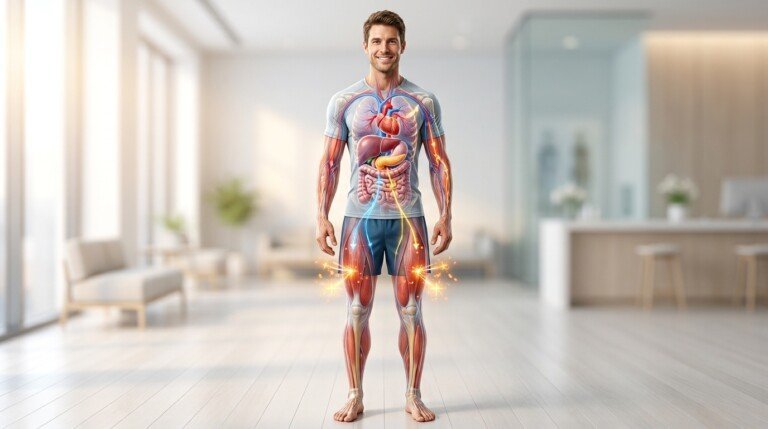
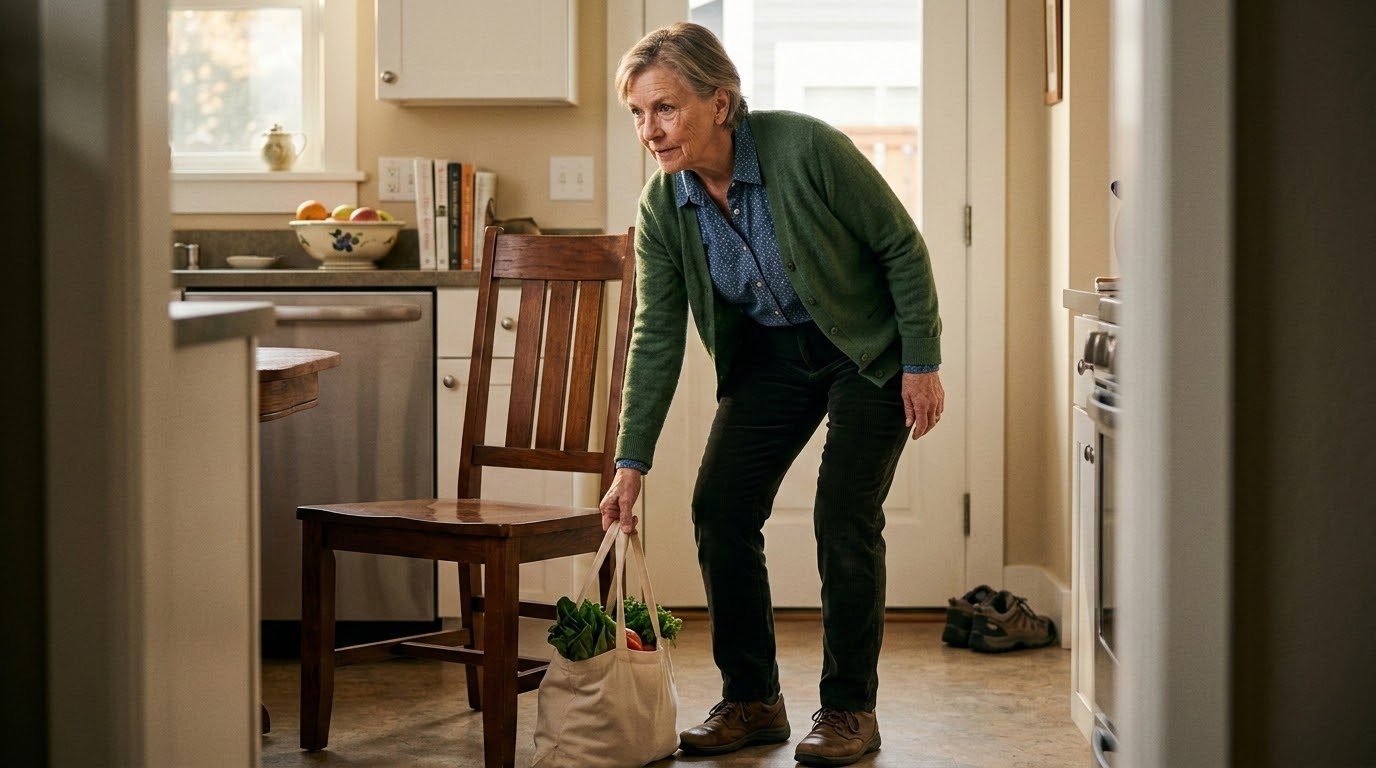
What Is Sarcopenia? Age-Related Muscle Loss Explained
Getting older does not automatically mean becoming weak, frail, or unable to do the things you enjoy. Some changes in muscle are a normal part of aging, but there is an important point where muscle loss becomes more than an ordinary consequence of getting older.
That is where sarcopenia comes into the conversation.
Sarcopenia is a progressive muscle condition involving declines in muscle strength and muscle quantity or quality, with physical performance becoming especially important when the condition is more advanced. Modern clinical definitions place muscle strength at the center of identifying the condition rather than treating muscle size alone as the deciding factor. (PubMed)
This distinction matters because an older adult can have less muscle than they had at 30 without necessarily having sarcopenia. Aging changes the body. Sarcopenia describes a clinically meaningful problem involving muscle function and capacity.
The difference is not merely semantic.
Muscle helps you stand, walk, climb stairs, carry groceries, get out of a chair, maintain balance, and remain independent. When muscle strength and physical function decline substantially, the consequences can extend far beyond appearance.
Sarcopenia is also not exclusively an “old person’s problem.” It is strongly associated with aging, but it can occur earlier in life, particularly when other conditions or factors contribute to accelerated muscle loss. The World Health Organization describes it as a progressive and generalized skeletal muscle condition and recognizes both age-related and secondary forms.
Understanding that difference is the starting point for making sense of everything else that follows.
What is sarcopenia?
Sarcopenia is a condition characterized by a decline in skeletal muscle strength and muscle quantity or quality, with impaired physical performance used to identify more severe disease. The widely used EWGSOP2 clinical consensus emphasizes low muscle strength as the key characteristic, with low muscle quantity or quality used to confirm the condition and poor physical performance indicating severe sarcopenia.
In plain language, sarcopenia is not simply having smaller muscles.
It is about losing the muscle capacity your body needs to function.
That distinction is easy to miss.
Someone can have relatively modest muscle mass but remain strong, active, and physically capable. Another person may not look dramatically different but experience a meaningful decline in strength and physical performance.
The second situation can be much more concerning.
This is why modern approaches to sarcopenia do not rely on appearance alone. A healthcare professional considers muscle strength, muscle quantity or quality, and physical performance rather than asking only whether someone’s arms or legs look smaller.
The condition is often associated with aging, but it can have more than one cause. The WHO notes that sarcopenia can be primary, meaning age-related without another specific cause, or secondary when factors other than aging contribute to the muscle decline.
That makes sarcopenia different from the everyday phrase “losing muscle as you get older.”
Some degree of age-related muscle decline can happen gradually without meeting the clinical definition of sarcopenia.
The problem becomes more significant when the decline begins to affect strength and physical function.
Consider two older adults.
The first person notices that they cannot lift as much as they could in their 40s, but they still walk regularly, climb stairs comfortably, carry groceries, and get up from chairs without difficulty.
The second person has also lost muscle over the years, but now struggles to rise from a chair, finds stairs increasingly difficult, and has become noticeably less physically capable.
The difference between those situations is exactly why sarcopenia needs to be viewed through the lens of function rather than appearance alone.
What are the primary causes of sarcopenia?
There is no single cause that explains every case.
Age is an important factor, but sarcopenia develops through a combination of biological, behavioral, nutritional, and health-related influences.
As people age, the body undergoes changes that can affect how muscle is maintained and rebuilt. The muscle may become less responsive to some of the signals that previously supported maintenance. Hormonal changes can also influence the muscle environment.
Physical inactivity adds another layer.
Muscle responds to demand. When muscles are regularly challenged, the body has a reason to maintain their capacity. When physical activity declines for long periods, the stimulus becomes weaker.
This can become especially important after an illness, injury, hospitalization, or prolonged period of inactivity.
Nutrition also matters.
Muscle requires energy and amino acids for maintenance and repair. Poor dietary intake, inadequate protein, reduced appetite, or difficulty eating enough can contribute to muscle loss, particularly when combined with inactivity or illness.
The WHO specifically identifies inactivity and inadequate nutrition as important factors associated with losses in muscle mass and strength.
Chronic health conditions can also contribute.
Some diseases increase inflammation, alter metabolism, reduce appetite, interfere with movement, or otherwise make it harder for the body to maintain muscle.
This is one reason sarcopenia should not automatically be blamed on aging.
An older person experiencing substantial weakness may have several contributing factors, and identifying those factors is part of appropriate medical evaluation.
There is also a cumulative effect.
A person may lose a small amount of muscle after one period of inactivity, recover partially, then experience another period of illness or inactivity years later. Repeated disruptions can gradually reduce the amount of muscle and strength available.
The process is often slow enough that the person does not notice it immediately.
That is one of the reasons sarcopenia can remain under-recognized.
A gradual reduction in physical ability can become normalized as “just getting older.”
But aging should not automatically be used to explain away meaningful functional decline.
How is sarcopenia diagnosed by healthcare professionals?
Sarcopenia is diagnosed through clinical assessment rather than simply looking at someone’s body shape or asking how much they weigh.
Healthcare professionals may evaluate muscle strength, muscle quantity or quality, and physical performance using validated assessments. The exact approach can vary depending on the clinical setting, available equipment, the person’s health status, and the diagnostic framework being used.
The EWGSOP2 consensus places low muscle strength at the center of the initial identification process. Reduced muscle quantity or quality is then used to confirm the diagnosis, while impaired physical performance helps identify more severe cases.
That framework represents an important shift in how sarcopenia is understood.
Muscle size alone does not tell the whole story.
Imagine someone whose muscle mass is relatively low but who can move well, remain active, and perform everyday tasks without difficulty. Another person may have a similar measured muscle quantity but substantially reduced strength and physical performance.
Those two people should not necessarily be viewed in exactly the same way.
A healthcare professional may use several types of assessments when evaluating suspected sarcopenia. These can include strength assessments, physical performance tests, and methods for estimating or measuring muscle quantity or quality.
The point is not to turn this into a home diagnosis.
A consumer body-composition scale cannot independently diagnose sarcopenia.
Neither can a mirror.
Neither can one difficult workout.
And neither can simply being over a certain age.
If an older adult develops persistent weakness or a noticeable decline in physical function, that is a reason to discuss the change with a healthcare professional rather than assuming it is an unavoidable part of aging.
The distinction is important because weakness can have many causes.
Medication effects, neurological conditions, nutritional problems, cardiovascular limitations, joint problems, illness, and other health issues can affect physical function.
A proper assessment helps separate these possibilities.
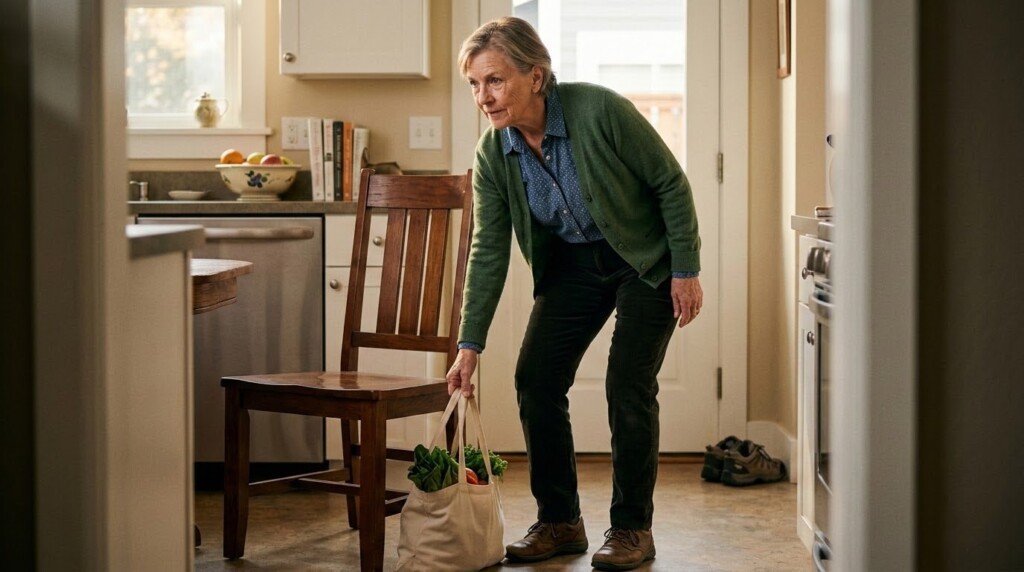
What are the recommended treatment and management strategies?
Treatment depends on the individual rather than following one universal sarcopenia prescription.
The goal is generally to address the factors contributing to muscle decline while supporting muscle strength, physical function, and overall health.
Resistance exercise is an important component of management because muscle responds to mechanical demand. Nutrition is also relevant because muscle maintenance requires adequate energy and protein.
However, treatment should not be reduced to “eat more protein and lift weights.”
An older adult with sarcopenia may also have other health conditions, mobility limitations, medication issues, nutritional deficiencies, or a history of inactivity that need to be considered.
That is why professional guidance can be valuable.
The appropriate exercise intensity for a healthy older adult who regularly trains is not necessarily appropriate for someone recovering from hospitalization or dealing with significant functional limitations.
Likewise, dietary recommendations need to account for the person’s overall health and medical circumstances.
Treatment may therefore involve a coordinated approach that considers physical activity, nutrition, underlying health conditions, functional limitations, and the person’s ability to participate safely.
The objective is not simply to increase a measurement on a body-composition report.
It is to improve or maintain useful physical capacity.
Can the person stand up more easily?
Can they walk more confidently?
Can they perform everyday tasks?
Can they maintain independence?
Those outcomes matter because muscle is valuable for what it allows the person to do.
This is also why treatment should be individualized rather than copied from someone else’s routine.
An exercise program designed for a healthy 65-year-old who has been strength training for years may not be appropriate for an 80-year-old who has recently experienced significant weakness.
The same diagnosis can exist in very different people.
Why is sarcopenia officially considered a disease, not just “getting older”?
The word “disease” can make sarcopenia sound more dramatic than it is, but the classification reflects an important distinction.
Normal aging involves biological changes.
A disease or clinical disorder involves a condition that can produce meaningful impairment or adverse outcomes.
Sarcopenia is recognized in modern clinical and research frameworks as a muscle disease or muscle condition rather than simply being treated as an unavoidable feature of getting older. The EWGSOP2 consensus explicitly describes sarcopenia as a muscle disease characterized by muscle failure and emphasizes its clinical consequences.
At the same time, terminology can vary across classification systems and clinical contexts. The WHO describes sarcopenia as a progressive and generalized skeletal muscle condition rather than simply calling it “normal aging.”
The important point is not the label itself.
The important point is that clinically significant muscle decline should not automatically be dismissed as normal aging.
That distinction gives healthcare professionals a framework for recognizing a problem that may otherwise go unnoticed.
If every decline in muscle were considered an unavoidable part of aging, there would be little reason to identify people whose strength and function are deteriorating faster or more severely than expected.
Sarcopenia creates a way to distinguish those situations.

How is sarcopenia differentiated from normal, expected age-related muscle loss?
This is where the difference between “getting older” and “developing a muscle disorder” becomes clearer.
Muscle mass and strength tend to change across the lifespan. That does not mean every older adult has a disease.
The clinical concern is the degree and functional consequence of the decline.
An older adult may be somewhat weaker than they were decades earlier and still function independently.
Another person may experience a substantial reduction in strength that interferes with walking, standing, climbing stairs, or performing ordinary daily tasks.
Those situations are not equivalent.
Modern sarcopenia definitions therefore emphasize muscle strength and physical performance rather than treating muscle size as the only criterion. EWGSOP2 specifically identifies low muscle strength as the key characteristic and uses muscle quantity or quality and physical performance to further characterize the condition.
This approach makes sense in everyday life.
A person’s body does not need to look muscular to function well.
Conversely, someone can appear reasonably healthy while experiencing a meaningful decline in physical capability.
Function reveals something that appearance cannot.
This is also why the phrase “age-related muscle loss” should not automatically be used as a synonym for sarcopenia.
Age-related muscle decline is a broad concept.
Sarcopenia is a clinical condition involving a more significant deterioration in muscle strength and related characteristics.
The distinction is important because it prevents two opposite mistakes.
The first mistake is assuming every reduction in muscle with age means someone has sarcopenia.
The second is assuming every meaningful loss of strength is simply something that older adults should accept.
Neither assumption is appropriate.
What are the long-term health implications if left unaddressed?
The long-term concern is not simply that someone may have smaller muscles.
It is what reduced muscle strength and physical performance can eventually prevent them from doing.
Sarcopenia is associated with weakness, impaired mobility, falls, fractures, disability, and other adverse outcomes. The National Institute on Aging identifies age-related muscle loss as a risk factor for falls and notes that sarcopenia can be associated with difficulty standing, walking, and climbing stairs. (National Institute on Aging)
Mobility is closely connected to independence.
When an older adult can comfortably move around their home, shop for groceries, use stairs, get in and out of a chair, and participate in social activities, they have a much larger degree of independence.
When those activities become difficult, everyday life can become narrower.
A person may stop going out because walking feels exhausting.
They may avoid stairs.
They may become reluctant to carry shopping bags.
They may reduce social activities because transportation and movement feel increasingly difficult.
The consequences can then reinforce the original problem.
Less movement can mean less muscle stimulation.
Less muscle stimulation can contribute to further physical decline.
That can make movement even more difficult.
This is one reason sarcopenia deserves attention before severe functional limitations develop.
The issue is not vanity.
It is preserving the physical capacity that supports independence.
Sarcopenia is also associated with a greater risk of falls. Falls can be particularly serious in older adults because they may result in fractures, hospitalization, disability, and prolonged periods of reduced activity.
A fall can therefore create a cascade.
An older adult falls.
They become afraid of falling again.
They reduce their activity.
Their strength and confidence decline further.
Everyday movement becomes harder.
Their risk of future problems can increase.
This does not happen to everyone with sarcopenia, but it illustrates why muscle function has consequences beyond the gym.
The long-term issue is therefore not simply maintaining a certain amount of muscle tissue.
It is maintaining enough strength and physical capacity to continue living the life you want.
Why is muscle loss such a concern in older adults specifically?
Muscle becomes increasingly important as a person gets older because physical independence depends heavily on strength and mobility.
When you are young, you may be able to lose some physical capacity without noticing much difference in everyday life.
You can compensate.
You can climb stairs without thinking about it.
You can get up from the floor easily.
You can carry heavy shopping bags.
You can walk long distances.
As strength declines, the margin for compensation becomes smaller.
A relatively modest reduction in physical capacity can make a previously effortless task noticeably harder.
That is why sarcopenia is particularly relevant in older adults.
The issue is not that older adults need to look athletic.
They need enough functional capacity to remain active and independent.

How does muscle loss impact mobility, balance, and independence?
Walking requires more than simply moving one foot in front of the other.
Your muscles help stabilize your body, produce force, control movement, and respond when your balance changes.
When strength and physical performance decline, ordinary movement can become less efficient and less confident.
Getting out of a chair is a good example.
A strong adult may stand without consciously thinking about which muscles are working.
Someone with substantial lower-body weakness may need to push off the armrests, rock forward several times, or ask for assistance.
The same principle applies to stairs.
Climbing a flight of stairs requires the legs and hips to generate enough force repeatedly. When strength declines, stairs can become tiring or intimidating.
Walking speed can also change.
An older adult who once walked comfortably through a supermarket may begin taking shorter steps or moving more cautiously.
That change may look insignificant from the outside, but it can represent a meaningful reduction in physical confidence.
Balance is another part of the equation.
Muscle weakness does not explain every balance problem, but adequate strength contributes to the body’s ability to control movement and respond to changes in position.
When mobility, balance, and strength decline together, the consequences can become much more significant.
The National Institute on Aging notes that maintaining physical function helps older adults perform daily activities and supports independent living. It also identifies muscle loss, strength loss, and sarcopenia as relevant to falls and physical function.
Independence is therefore one of the most important reasons to take muscle health seriously.
It is not about lifting a certain amount of weight.
It is about being able to lift the grocery bag you need.
It is about standing from the chair without assistance.
It is about walking across a parking lot.
It is about getting out of bed.
It is about continuing to participate in ordinary life.
Those are meaningful outcomes.
What are the broader health consequences beyond just physical strength?
The consequences of muscle decline can spread into several areas of health and daily life.
Physical activity becomes more difficult when strength declines.
When activity decreases, cardiovascular fitness can suffer.
Reduced activity can also limit social participation.
Someone who becomes less mobile may stop attending activities they previously enjoyed. They may spend more time sitting because movement requires greater effort.
This can create a cycle in which declining strength reduces activity and reduced activity makes maintaining strength more difficult.
There is also a relationship between muscle function and metabolic health.
Skeletal muscle is a major site for glucose uptake and storage. It is also a significant contributor to whole-body energy use.
That does not mean having more muscle automatically prevents metabolic disease, but maintaining functional muscle is part of maintaining a physically active and metabolically capable body.
There are also consequences related to recovery.
An older adult with good physical reserves may tolerate an illness, hospitalization, or period of inactivity better than someone who already has substantial weakness.
This does not mean muscle prevents complications.
It means physical reserve matters.
If someone enters an illness already struggling to stand or walk, a period of bed rest can have a much larger functional impact.
That is why maintaining muscle and strength throughout adulthood is not just about what happens today.
It is also about preserving a reserve for tomorrow.
The National Institute on Aging notes that mobility limitations in older adults are associated with falls, disability, hospitalization, and poorer quality of life.
This gives sarcopenia a much broader significance.
The condition affects more than muscle.
It can influence how easily a person moves through the world, how independently they live, how confidently they participate in activities, and how well they cope with physical challenges.
That is why dismissing significant muscle decline as “just getting old” can be a mistake.
Aging is inevitable.
Severe loss of strength and function should not automatically be accepted as inevitable.
FAQ
1. What is sarcopenia?
Sarcopenia is a progressive skeletal muscle condition involving reduced muscle strength and reduced muscle quantity or quality, with impaired physical performance indicating more severe disease. It is strongly associated with aging but can also occur earlier in life when other contributing factors are present.
2. Is sarcopenia a disease or just normal aging?
Sarcopenia is treated as a clinical muscle disease or condition rather than simply being considered a normal consequence of aging. The distinction matters because ordinary age-related muscle changes do not automatically mean a person has sarcopenia. Clinically significant declines in strength, muscle characteristics, and physical function are what make the condition different from normal aging.
3. Why does muscle loss matter so much for older adults?
Muscle supports strength, mobility, balance, and the ability to perform everyday tasks independently. Significant muscle decline can make activities such as standing, walking, climbing stairs, and carrying objects more difficult and is associated with greater risks of falls, disability, and loss of independence.
4. Can younger adults develop sarcopenia?
Yes. Although sarcopenia is strongly associated with older age, it can occur earlier in life. The WHO recognizes primary sarcopenia associated with aging and secondary forms linked to other contributing conditions or factors.
5. Does having low muscle mass automatically mean someone has sarcopenia?
No. Modern clinical definitions do not rely on muscle mass alone. Low muscle strength is a central characteristic, while muscle quantity or quality helps confirm the condition and physical performance helps identify more severe cases. A healthcare professional should interpret these findings rather than relying on appearance or a consumer body-composition measurement alone.
Disclaimer:
This post may contain affiliate links. If you purchase through them, we may earn a small commission at no extra cost to you. Also, this content is for informational purposes only and does not substitute professional medical advice.
Ready to Start Your Journey?
Use our free 7-in-1 Weight Loss Toolkit to calculate your numbers and build your plan in minutes.
Open Free Tools →