
How to Lose Diabetic Belly Fat: Diet, Exercise, and Supplements
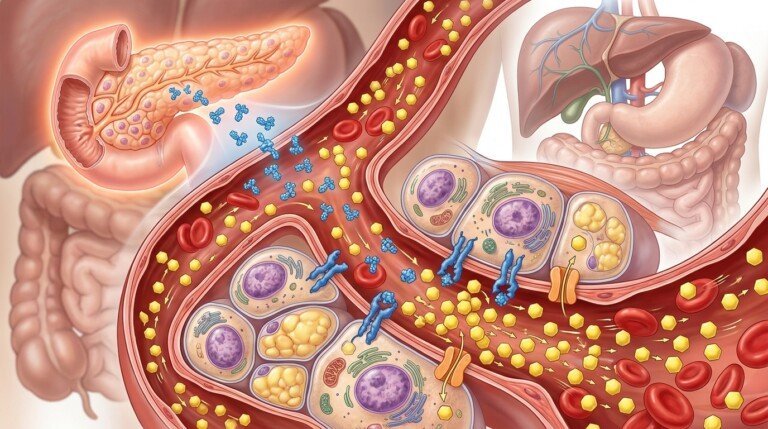
Diabetic belly fat is often more than a cosmetic concern.
For many people living with type 2 diabetes, prediabetes, or insulin resistance, excess fat around the waist can become one of the most frustrating health challenges they face.
The problem isn’t simply appearance.
Abdominal fat is closely connected to metabolic health, blood sugar regulation, insulin sensitivity, and long-term disease risk.
Many people notice a pattern.
As blood sugar control becomes more difficult, weight gain around the midsection often becomes more noticeable.
At the same time, losing that fat may feel harder than expected.
This creates an important question:
Is diabetic belly fat different from ordinary belly fat?
In many ways, the answer is yes.
Understanding why this happens can help explain why some weight-loss approaches work better than others and why improving metabolic health often becomes the foundation of long-term success.
The Hidden Cycle Behind Diabetic Belly Fat
Imagine a cycle that feeds itself.
Blood sugar rises.
The body produces more insulin.
Fat storage becomes easier.
Weight increases.
Physical activity becomes more difficult.
Insulin resistance worsens.
Blood sugar control becomes harder.
The cycle repeats.
This is one reason diabetic belly fat can feel so stubborn.
The issue is not simply eating too much or exercising too little.
Several biological systems are interacting at the same time.
Breaking the cycle usually requires addressing the underlying metabolic factors rather than focusing only on calories.
Why Diabetes Increases Belly Fat
People with diabetes and insulin resistance often experience changes in the way their bodies process and store energy.
These changes can contribute to fat accumulation around the abdomen.
The Role of Insulin
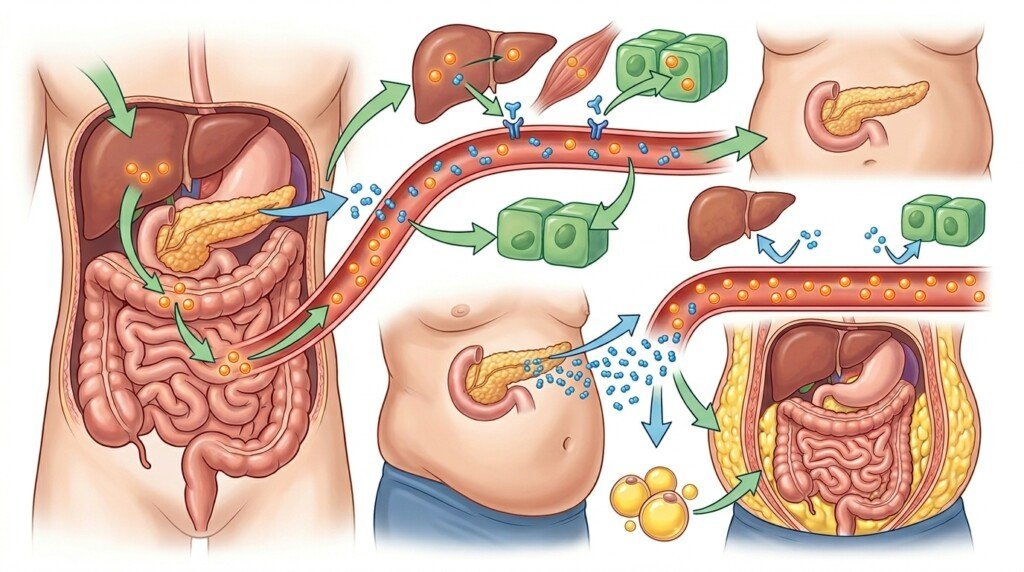
Insulin is a hormone responsible for helping glucose move from the bloodstream into cells.
When the body becomes resistant to insulin, more insulin may be needed to perform the same job.
Over time, elevated insulin levels may influence how energy is stored throughout the body.
Fat Storage Around the Midsection
Researchers have observed that insulin resistance is frequently associated with increased abdominal fat accumulation.
This type of fat often develops around the waist and deep within the abdominal cavity.
Because of its location, it receives significant attention from researchers studying metabolic health.
Energy Imbalance Isn’t the Whole Story
Calories still matter.
However, metabolic health also matters.
Blood sugar regulation, hormone activity, sleep quality, stress levels, and physical activity all influence long-term outcomes.
This is why diabetic belly fat often requires a more comprehensive approach than traditional dieting alone.
Insulin Resistance and Visceral Fat
One of the most important concepts to understand is visceral fat.
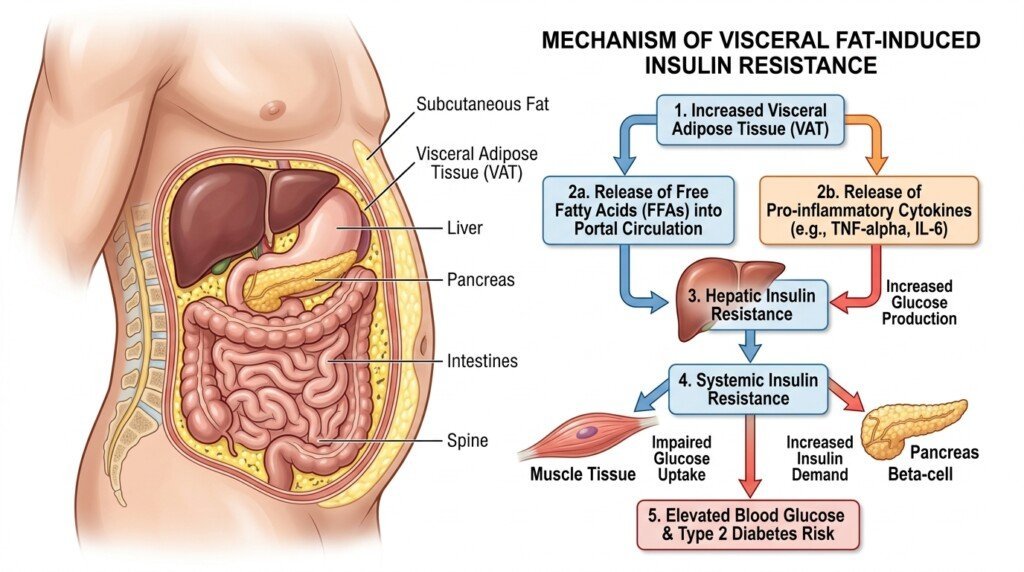
Unlike fat located directly beneath the skin, visceral fat surrounds internal organs within the abdominal cavity.
Why Visceral Fat Matters
Higher levels of visceral fat have been associated with:
- Insulin resistance
- Elevated blood sugar
- Metabolic syndrome
- Cardiovascular risk factors
Because visceral fat is metabolically active, it can influence several important biological processes.
The Relationship Goes Both Ways
Visceral fat may contribute to insulin resistance.
Insulin resistance may contribute to visceral fat accumulation.
This creates a cycle that becomes increasingly difficult to break if left unaddressed.
Measuring Progress
Many people focus exclusively on body weight.
However, waist circumference often provides additional insight into abdominal fat levels and metabolic health improvements.
Small reductions around the waist may represent meaningful progress even when scale changes appear modest.
Foods That Help
No single food eliminates diabetic belly fat.
However, certain dietary patterns may support healthier blood sugar regulation and body composition.
Prioritize Protein
Protein helps support:
- Fullness
- Muscle maintenance
- Recovery
Including adequate protein at meals may help improve dietary consistency and reduce excessive snacking.
Increase Fiber Intake
Fiber-rich foods often digest more slowly and may support healthier blood sugar responses.
Good sources include:
- Vegetables
- Beans
- Lentils
- Oats
- Chia seeds
Choose Whole Foods More Often
Highly processed foods frequently contain combinations of sugar, refined carbohydrates, and unhealthy fats that make portion control more difficult.
Replacing these foods with minimally processed options can support overall health.
Focus on Consistency
The most effective eating pattern is usually the one you can maintain.
Extreme approaches often produce short-term results but are difficult to sustain.
For readers interested in how digestive health may influence body composition, our guide to gut health and weight loss explores another important piece of the puzzle.
Exercise Strategies
Exercise plays an important role in improving insulin sensitivity and supporting healthy body composition.
The goal is not perfection.
The goal is consistency.

Walking
Walking remains one of the most underrated forms of exercise.
Regular walking may help:
- Improve blood sugar control
- Increase daily calorie expenditure
- Support cardiovascular health
Strength Training
Building and maintaining muscle helps improve glucose utilization.
Muscle tissue acts as an important site for glucose storage and use.
Aerobic Exercise
Activities such as:
- Cycling
- Swimming
- Jogging
- Rowing
may support both cardiovascular fitness and calorie expenditure.
Start Where You Are
One common mistake is trying to do too much too quickly.
Sustainable progress usually comes from small improvements repeated consistently over time.
Supplements That May Support Blood Sugar Balance
Supplements should never replace medical treatment.
However, some ingredients are commonly discussed for their potential role in supporting healthy blood sugar regulation.
Examples include:
- Berberine
- Magnesium
- Chromium
- Alpha-lipoic acid
- Soluble fiber supplements
The goal is not rapid fat loss.
The goal is supporting metabolic health.
Individuals exploring additional options for abdominal fat management may also benefit from reviewing our guide to the best supplement for belly fat.

When to Talk to Your Doctor
Professional medical guidance becomes especially important when dealing with diabetes, insulin resistance, or unexplained weight changes.
Consider speaking with your doctor if:
- Blood sugar remains difficult to manage
- Weight gain continues despite lifestyle changes
- Symptoms worsen
- New health concerns develop
Medical professionals can help evaluate:
- Blood sugar control
- Medication effects
- Hormonal factors
- Nutrient deficiencies
- Overall metabolic health
Early intervention often produces better long-term outcomes.
What Most People Get Wrong About Diabetic Belly Fat
Many people believe the solution is finding a special diet, supplement, or exercise program.
In reality, diabetic belly fat is often the result of multiple interconnected factors.
These may include:
- Insulin resistance
- Blood sugar regulation
- Physical inactivity
- Sleep quality
- Stress levels
- Nutrition habits
Focusing on only one factor while ignoring the others rarely produces lasting results.
The most successful approach is usually a comprehensive one.

Final Thoughts
Diabetic belly fat can be frustrating because it often reflects deeper metabolic challenges rather than simple weight gain.
Insulin resistance, blood sugar regulation, visceral fat accumulation, and lifestyle habits all play important roles.
The encouraging news is that improvements are possible.
Better nutrition.
Consistent movement.
Improved sleep.
Stress management.
Appropriate medical care.
These factors work together to support healthier metabolic function and long-term body composition changes.
Rather than searching for a quick fix, focus on breaking the cycle that allows diabetic belly fat to persist.
Small improvements repeated consistently often create the most meaningful results over time.
FAQ
1. What is diabetic belly fat?
Diabetic belly fat refers to excess abdominal fat commonly associated with insulin resistance, type 2 diabetes, and metabolic dysfunction. It is often linked to increased visceral fat around internal organs.
2. Why does diabetes cause belly fat?
Diabetes and insulin resistance can affect how the body stores and uses energy. Over time, these changes may contribute to increased abdominal fat accumulation.
3. Can losing belly fat improve blood sugar levels?
In many cases, reducing excess abdominal fat may help improve insulin sensitivity and support better blood sugar management when combined with healthy lifestyle habits.
4. What foods help reduce diabetic belly fat?
Foods rich in protein, fiber, vegetables, legumes, and minimally processed carbohydrates may support blood sugar balance and healthy weight management.
5. What is the best exercise for diabetic belly fat?
A combination of walking, strength training, and aerobic exercise is often recommended because it supports insulin sensitivity, calorie expenditure, and overall metabolic health.
6. Are supplements helpful for diabetic belly fat?
Some supplements may support blood sugar balance and metabolic health. However, they should complement, not replace, medical care and healthy lifestyle habits.
7. When should I talk to my doctor about belly fat and diabetes?
You should speak with your healthcare provider if blood sugar remains difficult to manage, symptoms worsen, or weight changes continue despite lifestyle improvements.
Disclaimer:
This post may contain affiliate links. If you purchase through them, we may earn a small commission at no extra cost to you. Also, this content is for informational purposes only and does not substitute professional medical advice.
Ready to Start Your Journey?
Use our free 7-in-1 Weight Loss Toolkit to calculate your numbers and build your plan in minutes.
Open Free Tools →