
How Long Do Probiotics Take to Work for Weight Loss? Timeline and Expectations
One of the biggest misconceptions about probiotics is that they work like a quick-fix supplement.
Many people start taking a probiotic and expect noticeable changes within a few days. If the scale doesn’t move or they don’t immediately feel different, they assume the supplement isn’t working.
That expectation doesn’t match how probiotics actually interact with the body.
Unlike products that produce an immediate effect, probiotics support the gut microbiome, a complex community of trillions of microorganisms that gradually adapts over time. Changes within this ecosystem don’t happen overnight, and visible results related to weight management may take even longer because body weight is influenced by many factors beyond gut bacteria.
Understanding How Long Do Probiotics Take to Work for Weight Loss requires realistic expectations. Some people notice improvements in digestive comfort relatively early, while changes related to long-term weight management generally depend on consistency, overall lifestyle, and individual differences.
In this article, we’ll explore what current research suggests about probiotic timelines, what changes may occur first, why results vary from person to person, and what habits may support better long-term outcomes.
Quick Answer
How Long Do Probiotics Take to Work for Weight Loss depends on several factors, including consistency, diet, physical activity, and the individual’s gut microbiome. Some people notice digestive improvements within the first few weeks, while changes related to long-term weight management generally require sustained healthy habits over a longer period. Probiotics should be viewed as one part of an overall lifestyle approach rather than a fast-acting weight loss solution.
Why Don’t Probiotics Produce Immediate Results?
Modern culture often encourages instant results.
Unfortunately, biology rarely works that way.
The gut microbiome is a living ecosystem that responds gradually to changes in diet, lifestyle, and probiotic use.
Gut Bacteria Need Time to Adapt
When beneficial bacteria are introduced into the digestive system, they interact with an existing microbial community rather than replacing it overnight.
Researchers describe this process as gradual adaptation rather than immediate colonization.
Changes within the gut microbiome occur progressively and vary between individuals.
Weight Management Is Influenced by Many Factors
Even if probiotics support gut health, body weight depends on multiple lifestyle factors working together, including:
- Overall dietary pattern
- Physical activity
- Sleep quality
- Stress management
- Calorie balance
- Daily consistency
For this reason, probiotics should never be expected to produce rapid changes on their own.
The broader relationship between the gut microbiome and healthy weight regulation is explained in How Probiotics Help with Weight Loss, where these biological connections are explored in greater detail.
How Long Does It Usually Take for Gut Health to Start Improving?
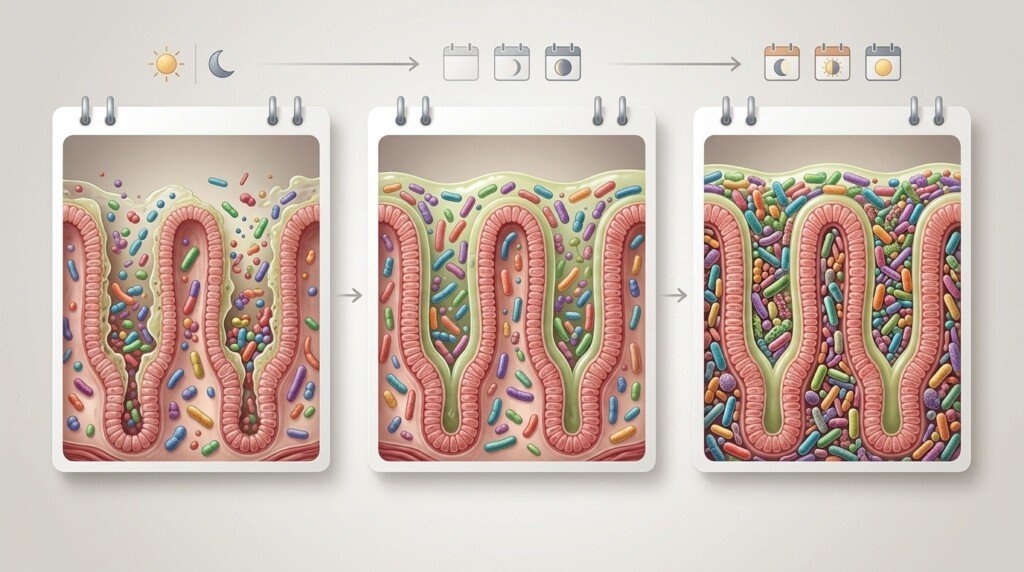
Digestive changes are often the first improvements people notice.
However, the timeline is not identical for everyone.
Early Digestive Changes May Come First
Some individuals report gradual improvements in digestive comfort before noticing any broader health changes.
These early observations may include:
- More comfortable digestion
- Reduced occasional bloating
- Improved bowel regularity
- Better digestive consistency
The timing varies considerably depending on the individual and overall lifestyle.
The Gut Microbiome Changes Gradually
Researchers continue studying how quickly the microbiome responds to probiotics.
Current evidence suggests that meaningful shifts in microbial balance develop progressively rather than all at once.
Consistency plays a much larger role than expecting immediate results.
When Might Weight Management Changes Become Noticeable?
This is often the question people care about most.
The answer requires realistic expectations.

Weight Is Different From Digestion
Digestive comfort and body weight do not always change at the same pace.
Someone may notice improvements in digestion without seeing immediate changes in body composition.
That does not necessarily mean the probiotic is ineffective.
These are separate outcomes influenced by different biological processes.
Healthy Habits Create the Best Environment
Research suggests probiotics work alongside healthy lifestyle practices rather than replacing them.
Long-term weight management typically depends on combining probiotics with habits such as:
- Balanced nutrition
- Regular exercise
- Adequate sleep
- Stress management
- Consistent routines
Probiotics become one supportive part of a much larger picture.
Why Do Probiotic Results Differ Between People?
Two people can take the same probiotic for the same length of time and experience different outcomes.
This variation is completely normal.
Everyone Has a Unique Gut Microbiome
No two digestive systems are exactly alike.
The bacteria already living inside your gut influence how new microorganisms interact with the existing microbial community.
Because every microbiome is unique, responses naturally differ.
Lifestyle Makes a Significant Difference
Daily habits strongly influence gut health.
Factors that may affect probiotic results include:
- Food choices
- Fiber intake
- Physical activity
- Hydration
- Sleep
- Stress levels
These factors often have just as much influence as the probiotic itself.
Supporting beneficial bacteria with enough dietary fiber is another reason many people prioritize fiber-rich foods or, when appropriate, Fiber Supplements as part of an overall gut-friendly lifestyle.
What Habits May Help Support Better Probiotic Results?
Although probiotics are only one part of the equation, several healthy habits may help create an environment where beneficial bacteria can thrive.
Stay Consistent
Skipping days or frequently changing routines makes it more difficult to build lasting habits.
Following the manufacturer’s instructions consistently is generally more important than searching for shortcuts.
Practical advice for maintaining daily consistency is covered in How to Take Probiotics for Weight Loss, including storage and routine-building strategies.
Focus on Overall Gut Health
A healthy gut microbiome depends on much more than one supplement.
Supporting digestive health through balanced nutrition, hydration, regular movement, and adequate sleep creates a stronger foundation for long-term wellness.
What Can Slow Down Probiotic Progress?
People often assume that probiotics either work or they do not.
In reality, many outside factors can influence how quickly someone notices changes.
Rather than expecting the probiotic to overcome unhealthy habits on its own, it helps to look at the bigger picture.

An Inconsistent Routine
One of the most common obstacles is irregular use.
Taking probiotics for a few days, skipping several more, and then starting again makes it difficult to build a consistent habit.
Following the product instructions day after day is generally more helpful than using the supplement only occasionally.
A Diet That Doesn’t Support the Gut Microbiome
Beneficial bacteria rely on nutrients from the foods you eat.
A dietary pattern that includes plenty of fiber-rich plant foods helps create an environment where the gut microbiome can thrive.
Supporting gut health is not about one supplement alone. It also involves daily food choices.
Unrealistic Expectations
Many people stop taking probiotics simply because they expected dramatic results within a few days.
Clinical research does not support that expectation.
Probiotics are intended to support long-term digestive and metabolic wellness rather than deliver rapid changes.
When Should You Consider Switching Probiotics?
Changing supplements too quickly is another common mistake.
It takes time to evaluate whether a probiotic fits into your routine and overall lifestyle.
Give Your Routine Time
Because gut microbiome changes develop gradually, switching products after only a few days rarely provides meaningful information.
Consistency is important before deciding whether another option may be more appropriate.
Review the Basics First
Before changing products, ask yourself a few practical questions:
- Have you been using the probiotic consistently?
- Are you following the manufacturer’s instructions?
- Is the product stored correctly?
- Has it passed its expiration date?
- Are your daily eating habits supporting gut health?
Sometimes improving these habits is more valuable than immediately changing supplements.
Speak With a Healthcare Professional if Needed
If you have ongoing digestive concerns or questions about your supplement routine, consulting a qualified healthcare professional is the most appropriate next step.
They can help evaluate your individual situation and determine whether changes are necessary.
What Do Clinical Studies Suggest About Probiotic Timelines?
Scientists continue studying how probiotics influence digestive health and long-term weight management.
Although individual study designs vary, several consistent themes appear across the research.
Digestive Changes Often Come Before Weight Changes
Clinical studies frequently observe that digestive improvements may occur earlier than changes related to body composition.
This reflects the different biological processes involved.
Better digestive comfort should not automatically be interpreted as immediate weight loss, nor should the absence of early weight changes be viewed as evidence that probiotics are ineffective.
Long-Term Habits Matter Most
Researchers consistently emphasize that probiotics work alongside healthy lifestyle practices.
The greatest benefits are generally observed when probiotics become part of a broader wellness routine that includes:
- Balanced nutrition
- Regular physical activity
- Healthy sleep habits
- Stress management
- Long-term consistency
The connection between healthy digestion and sustainable wellness is explored further in Gut Health and Weight Loss, where the importance of daily habits is discussed in greater depth.
What Should You Realistically Expect?
Setting realistic expectations helps prevent disappointment and supports better long-term habits.
Instead of asking whether probiotics will produce rapid changes, it is often more helpful to focus on gradual improvements in overall digestive wellness.
Progress Looks Different for Everyone
Some individuals notice digestive changes earlier than others.
Some experience improvements in digestive comfort before any noticeable differences related to weight management.
Others may simply appreciate that probiotics become another healthy habit supporting their overall lifestyle.
There is no universal timeline that applies to everyone.
Think Long Term Instead of Short Term
Healthy weight management is rarely the result of one product or one decision.
It develops through consistent behaviors repeated over time.
Viewing probiotics as one supportive part of that process creates more realistic expectations than expecting immediate results.
Key Takeaways
| Topic | Key Point |
|---|---|
| Gut health | The gut microbiome adapts gradually rather than overnight. |
| Digestive changes | Improvements in digestive comfort may appear before changes related to weight management. |
| Weight management | Long-term results depend on healthy habits working together with probiotic use. |
| Consistency | Regular use according to the product instructions is one of the most important factors. |
| Lifestyle | Diet, exercise, sleep, hydration, and fiber intake all influence long-term outcomes. |
| Expectations | Probiotics support overall wellness and should not be viewed as a rapid weight loss solution. |

Frequently Asked Questions
1. How quickly do probiotics work?
Some people notice gradual improvements in digestive comfort within the first few weeks, but the timeline varies depending on individual factors and overall lifestyle.
2. Why don’t probiotics work immediately?
The gut microbiome is a complex ecosystem that adapts gradually. Meaningful changes take time and depend on consistent use alongside healthy daily habits.
3. When should I change probiotics?
Rather than switching after only a short period, first ensure you’re using the product consistently, storing it correctly, and following the manufacturer’s instructions. If you have ongoing concerns, speak with a healthcare professional.
4. Can probiotics work in one week?
Some individuals may notice early digestive changes within a week, but probiotics are generally intended to support long-term gut health rather than produce immediate weight management results.
Conclusion
Understanding How Long Do Probiotics Take to Work for Weight Loss begins with recognizing that probiotics are designed to support gradual improvements rather than deliver overnight results. The gut microbiome changes over time, and visible outcomes related to weight management depend on many factors, including consistency, diet, physical activity, sleep, and other everyday habits. For many people, digestive comfort may improve before any noticeable changes in body weight or body composition.
The most realistic approach is to view probiotics as one part of a long-term wellness strategy instead of a quick solution. Following the product instructions, maintaining consistent daily use, supporting your gut with a balanced diet and adequate fiber, and practicing healthy lifestyle habits all contribute to creating the best environment for lasting results. Patience, consistency, and realistic expectations remain the foundation of successful probiotic use.
Disclaimer:
This post may contain affiliate links. If you purchase through them, we may earn a small commission at no extra cost to you. Also, this content is for informational purposes only and does not substitute professional medical advice.