
Best Collagen for Weight Loss: What to Look for Before You Buy
Choosing a collagen supplement sounds simple until you start comparing products.
One container says “marine collagen peptides.” Another highlights “grass-fed bovine collagen.” Some promise better absorption, while others advertise dozens of added ingredients. Before long, you’re left wondering whether any of these differences actually matter.
The truth is that finding the Best Collagen for Weight Loss isn’t about choosing the most expensive product or the one with the flashiest marketing. It’s about understanding what separates a high-quality collagen supplement from one that’s relying on attractive packaging and bold claims.
Current research shows that collagen can support healthy weight management by contributing to protein intake, helping maintain lean muscle, and supporting connective tissues that keep you active. However, those potential benefits depend on choosing a product that delivers quality collagen with transparent labeling and minimal unnecessary ingredients.
This article focuses on practical buying decisions rather than marketing hype. You’ll learn how to evaluate collagen quality, compare different collagen sources, understand supplement labels, and recognize the features that matter most before making a purchase.
Quick Answer
The Best Collagen for Weight Loss is one that provides high-quality hydrolyzed collagen peptides, transparent ingredient labeling, third-party testing when available, and minimal unnecessary additives. Marine and bovine collagen are both excellent choices depending on your health goals. Instead of searching for miracle ingredients, focus on purity, protein quality, and reputable manufacturing standards.
What Makes a Collagen Supplement High Quality?
Not every collagen supplement is manufactured to the same standard.
Two products may look nearly identical on the shelf while offering very different levels of quality.
Understanding what defines a high-quality collagen supplement helps you make a more informed decision.
High-Quality Collagen Starts With Quality Ingredients
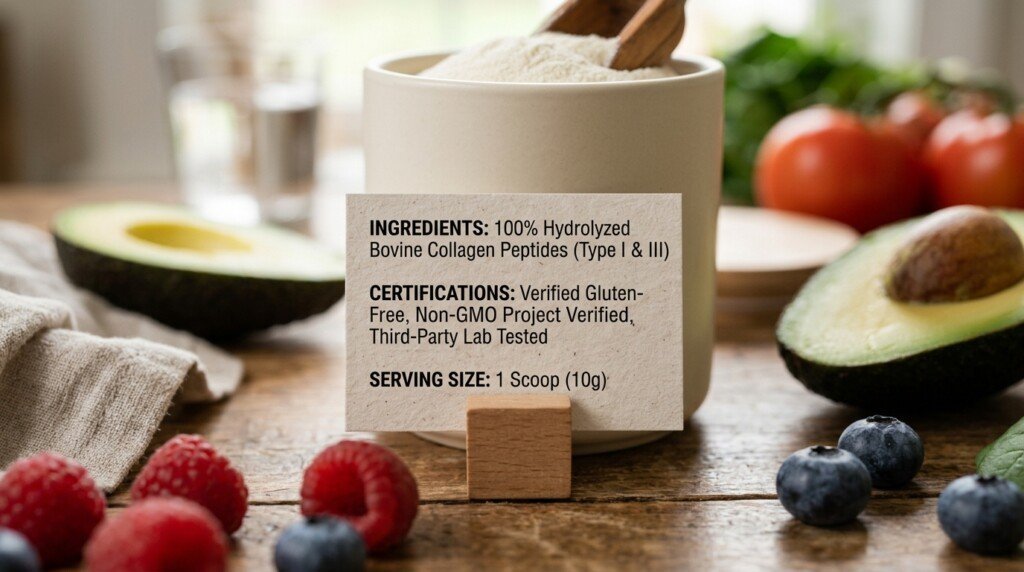
The first thing to examine is the collagen itself.
Reputable manufacturers clearly identify:
- The collagen source
- The collagen type
- Whether the collagen is hydrolyzed
- The protein content
Products that avoid explaining where their collagen comes from often provide less transparency.
Hydrolyzed Collagen Peptides Improve Convenience
Most premium collagen supplements use hydrolyzed collagen peptides.
Hydrolysis breaks larger collagen proteins into smaller peptides that dissolve easily in liquids and are simple to incorporate into everyday routines.
This processing method has become the industry standard for collagen powders.
Simple Ingredient Lists Are Usually Better
One common mistake buyers make is assuming longer ingredient lists indicate a better supplement.
In reality, many high-quality collagen products contain surprisingly few ingredients.
A clean ingredient label often includes:
- Hydrolyzed collagen peptides
- Natural flavoring when applicable
- Minimal sweeteners
- No unnecessary fillers
The fewer unnecessary ingredients, the easier it becomes to understand exactly what you’re consuming.
Which Type of Collagen Is Best for Weight Loss?
This question appears in nearly every collagen discussion.
Fortunately, the answer is simpler than marketing often suggests.
Marine Collagen
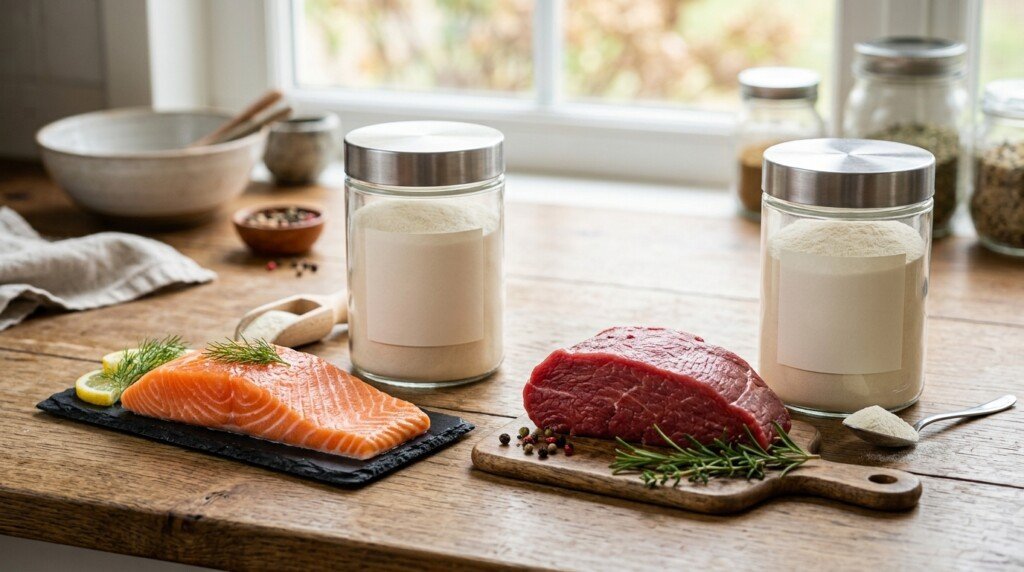
Marine collagen is sourced from fish and primarily provides Type I collagen.
It is commonly chosen by people interested in supporting:
- Skin elasticity
- Connective tissues
- Healthy aging
Marine collagen peptides also dissolve easily, making them popular in powdered supplements.
Bovine Collagen
Bovine collagen comes from cattle and naturally contains both Type I and Type III collagen.
These collagen types support a broader range of connective tissues throughout the body.
Many of the most widely used collagen powders are bovine-based because of this versatility.
Weight Loss Depends on More Than Collagen Source
Current evidence does not show that marine collagen causes greater fat loss than bovine collagen.
Both provide collagen peptides that contribute dietary protein.
Long-term success still depends on balanced nutrition, physical activity, and maintaining healthy habits.
Understanding the different Types of Collagen for Weight Loss can help you match a collagen source with your broader wellness goals rather than expecting one type to outperform another for fat loss.
Should You Choose Powder, Capsules, or Liquid Collagen?
Collagen is available in several forms.
Each offers advantages depending on your lifestyle and preferences.

Collagen Powder
Powder remains the most popular option.
Many people appreciate that it:
- Mixes into coffee
- Blends into smoothies
- Works well in yogurt
- Can be added to recipes
Because powders are highly versatile, they are often preferred by people using collagen consistently.
Collagen Capsules
Capsules provide convenience for people who travel frequently or prefer not to mix drinks.
They require no preparation and are easy to carry throughout the day.
However, they typically provide smaller amounts of collagen per serving than powders.
Liquid Collagen
Liquid collagen offers another convenient option.
Some products contain ready-to-drink collagen beverages, while others are concentrated liquid supplements.
When comparing liquids, carefully review ingredient labels since flavored products may contain additional sweeteners or preservatives.
No single format is universally better.
The best choice is the one you’ll realistically use consistently.
What Ingredients Should You Avoid?
Reading the ingredient label may be the single most valuable habit when buying collagen.
Marketing claims often receive the most attention, but the ingredient panel tells the real story.
Watch for Excess Added Sugar
Some flavored collagen products contain significant amounts of added sugar.
While occasional added sugar is not necessarily harmful, excessive amounts may work against healthy weight management goals.
Avoid Unnecessary Fillers
Some supplements include ingredients that provide little nutritional value.
Examples may include:
- Artificial fillers
- Excessive stabilizers
- Unnecessary coloring agents
Simpler formulations are often easier to evaluate.
Be Careful With Long Ingredient Lists
When a collagen product contains dozens of additional compounds, it becomes more difficult to know which ingredient is responsible for any benefits.
High-quality collagen should remain the primary ingredient rather than becoming one small component among many additives.
People interested in broader nutritional support often combine collagen with carefully selected Supplements for Weight Loss, but each supplement should still have a clear purpose instead of trying to solve every health goal in a single product.
Are Flavored Collagen Products a Good Choice?
Flavored collagen products have become increasingly popular because they’re convenient and often more enjoyable to drink. However, flavor should never be the main factor when choosing a supplement.
The quality of the collagen matters far more than the taste.
Unflavored Collagen Offers Greater Flexibility
Unflavored collagen powders can easily be mixed into:
- Coffee
- Smoothies
- Yogurt
- Oatmeal
- Soups
- Baking recipes
Because they have little or no noticeable taste, they fit naturally into many daily meals.
Flavored Products Deserve a Closer Look
Flavored collagen can be an excellent option, but it’s important to read the label carefully.
Look for products that use:
- Natural flavorings
- Minimal added sugar
- Simple ingredient lists
- Transparent labeling
Some flavored collagen products contain artificial sweeteners, colors, or unnecessary additives that increase the ingredient list without improving collagen quality.
Taste Should Never Replace Quality
Choosing a supplement you’ll actually enjoy using is important.
However, flavor should always come after evaluating collagen source, purity, protein quality, and manufacturing standards.
Which Certifications Should You Look For?
A supplement label can tell you a great deal about the company’s commitment to quality.
Although certifications do not guarantee effectiveness, they often demonstrate better manufacturing practices.
Third-Party Testing Adds Confidence
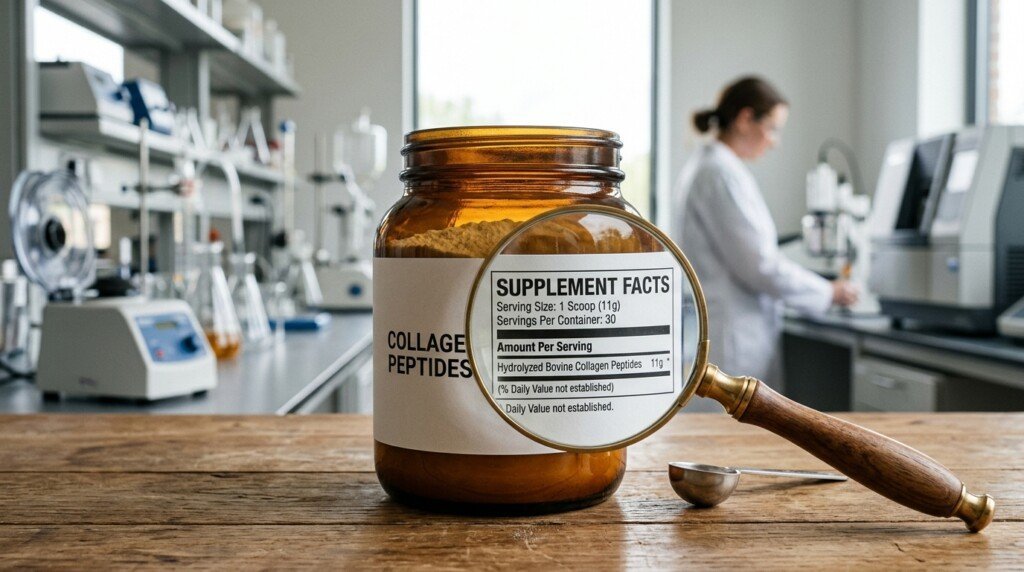
Independent testing helps verify that a product contains what the label claims.
Third-party testing may evaluate factors such as:
- Ingredient identity
- Purity
- Contaminants
- Manufacturing consistency
Products that voluntarily undergo independent testing often provide greater transparency.
Good Manufacturing Practices Matter
Many reputable collagen manufacturers follow Good Manufacturing Practices (GMP).
These standards help ensure products are manufactured under controlled quality conditions.
Although GMP certification is not unique to collagen, it reflects a commitment to consistent production.
Responsible Ingredient Sourcing
Some collagen brands also provide information about ingredient sourcing.
Examples include:
- Grass-fed bovine collagen
- Sustainably sourced marine collagen
- Responsibly produced collagen peptides
While these claims do not automatically make one product superior, they provide additional transparency that many consumers value.
How Do You Compare Collagen Labels?
Learning to read supplement labels is one of the smartest skills any buyer can develop.
Marketing on the front of the container often highlights attractive phrases, but the back label usually tells the complete story.
Start With the Ingredient List
The first ingredient should typically be hydrolyzed collagen peptides.
From there, examine whether the product contains unnecessary additions such as:
- Artificial colors
- Artificial flavors
- Excess fillers
- Large amounts of added sugar
Cleaner ingredient lists are generally easier to evaluate.
Check the Protein Content
Because collagen is a protein supplement, reviewing the protein content helps you understand what you’re actually purchasing.
Products that clearly list protein content and collagen source demonstrate greater transparency.
Review the Source of the Collagen
A quality label should clearly identify whether the collagen comes from:
- Marine sources
- Bovine sources
- Chicken sources
Understanding the source helps you choose a product that aligns with your personal preferences and wellness goals.
Ignore Marketing Buzzwords
Terms such as “premium,” “ultimate,” or “advanced” have no standardized scientific definition.
Instead of relying on advertising language, compare objective information such as:
- Ingredient quality
- Collagen source
- Protein content
- Third-party testing
- Manufacturing standards
These factors provide a much clearer picture of product quality.
Buying Smarter Means Looking Beyond the Front Label
Finding the Best Collagen for Weight Loss isn’t about chasing the newest trend or the most expensive container on the shelf.
The smartest buyers focus on quality rather than marketing.
A well-made collagen supplement should provide hydrolyzed collagen peptides, transparent labeling, minimal unnecessary ingredients, and reliable manufacturing standards. Whether you choose marine or bovine collagen depends more on your overall wellness priorities than on expectations of faster fat loss.
As you continue comparing products, future articles covering a detailed Dosage Guide, practical Timing Guide, and possible Side Effects will help answer additional questions after you’ve selected a high-quality collagen supplement.
Collagen also works best alongside a balanced lifestyle that may include other evidence-informed Best Weight Loss Supplements, rather than replacing healthy nutrition and regular physical activity.
Key Takeaways
| Topic | Key Point |
|---|---|
| High-quality collagen | Choose products with hydrolyzed collagen peptides, transparent labeling, and minimal unnecessary ingredients. |
| Collagen source | Marine and bovine collagen are both excellent options depending on your wellness goals. |
| Product form | Powder, capsules, and liquid collagen each offer different convenience benefits. |
| Ingredients | Avoid excessive added sugar, artificial fillers, and overly complicated ingredient lists. |
| Certifications | Third-party testing and GMP manufacturing help indicate product quality and transparency. |
| Label reading | Focus on collagen source, protein content, purity, and ingredient quality instead of marketing claims. |

Frequently Asked Questions
1. Which collagen is best for weight loss?
The Best Collagen for Weight Loss is a high-quality product made with hydrolyzed collagen peptides, transparent ingredient labeling, and minimal unnecessary additives. Marine and bovine collagen are both strong choices depending on your wellness goals.
2. Is marine collagen better?
Marine collagen is rich in Type I collagen and is often chosen for skin and connective tissue support. Current evidence does not show that it produces greater weight loss than bovine collagen.
3. Should I buy collagen powder or capsules?
Both are effective. Powder offers greater flexibility and is easy to mix into foods and beverages, while capsules provide convenience for people who prefer a portable option.
4. What should I avoid in collagen supplements?
Look out for products with excessive added sugar, artificial fillers, unnecessary coloring agents, and ingredient lists packed with additives that contribute little nutritional value.
5. Is third-party testing important when buying collagen?
Yes. Third-party testing helps verify ingredient quality, purity, and manufacturing consistency, making it a valuable feature when comparing collagen supplements.
Conclusion
Choosing the Best Collagen for Weight Loss starts with understanding what truly matters on a supplement label. Rather than focusing on bold marketing claims, prioritize products that clearly identify their collagen source, use hydrolyzed collagen peptides, maintain simple ingredient lists, and demonstrate quality through transparent manufacturing practices and third-party testing when available. These factors provide a far better indication of product quality than attractive packaging or promotional language.
Collagen should also be viewed as one part of a broader approach to health. A quality supplement can complement balanced nutrition, regular exercise, and consistent lifestyle habits, but it cannot replace them. By learning how to evaluate labels, compare collagen sources, and recognize trustworthy manufacturing standards, you’ll be in a much stronger position to choose a collagen supplement that supports your long-term wellness goals.
Disclaimer:
This post may contain affiliate links. If you purchase through them, we may earn a small commission at no extra cost to you. Also, this content is for informational purposes only and does not substitute professional medical advice.