What Is the Best Diet for Menopause Weight Loss? 13 Science-Backed Tips
Best Diet for Menopause Weight Loss is a topic many women start researching when familiar eating habits no longer seem to work. Many women reach menopause expecting hot flashes and irregular sleep, but they are often surprised by something else. The eating habits that helped them maintain a healthy weight for years suddenly become less effective. The scale moves more slowly, belly fat becomes more noticeable, and losing weight requires more effort than it once did.
It is easy to assume that menopause completely changes how the body responds to food. While hormonal changes certainly influence metabolism, muscle mass, appetite, and fat distribution, they do not eliminate your ability to lose weight. In fact, research consistently shows that the quality of your overall eating pattern matters far more than following a trendy or restrictive diet.
There is no single “menopause diet” that works for everyone. Instead, the best approach focuses on providing enough protein to preserve muscle, plenty of fiber to support fullness, healthy fats for heart health, and nutrient-dense foods that supply calcium, vitamin D, and other important nutrients needed during healthy aging.
Another common mistake is believing that eating less is always better. During menopause, overly restrictive diets often backfire by increasing hunger, making muscle loss more likely, and becoming difficult to maintain. Sustainable eating habits consistently outperform short-term dieting.
The goal is not simply losing weight. It is improving body composition by preserving lean muscle while gradually reducing excess body fat. This approach supports long-term metabolic health, energy levels, strength, and overall well-being.
In this article, you’ll learn what current research says about the Best Diet for Menopause Weight Loss, which foods deserve a larger place on your plate, which foods are worth limiting, why protein and fiber become more important after menopause, what a balanced one-day meal plan looks like, and which eating habits support lasting success.
What Is the Best Diet for Menopause Weight Loss?
There is no single eating plan that guarantees weight loss during menopause.
Instead, research consistently supports eating patterns that are rich in whole foods, adequate protein, high-fiber carbohydrates, healthy fats, and minimally processed ingredients.
These eating habits help support body composition, muscle preservation, heart health, and long-term metabolic function.
Focus on Overall Eating Patterns
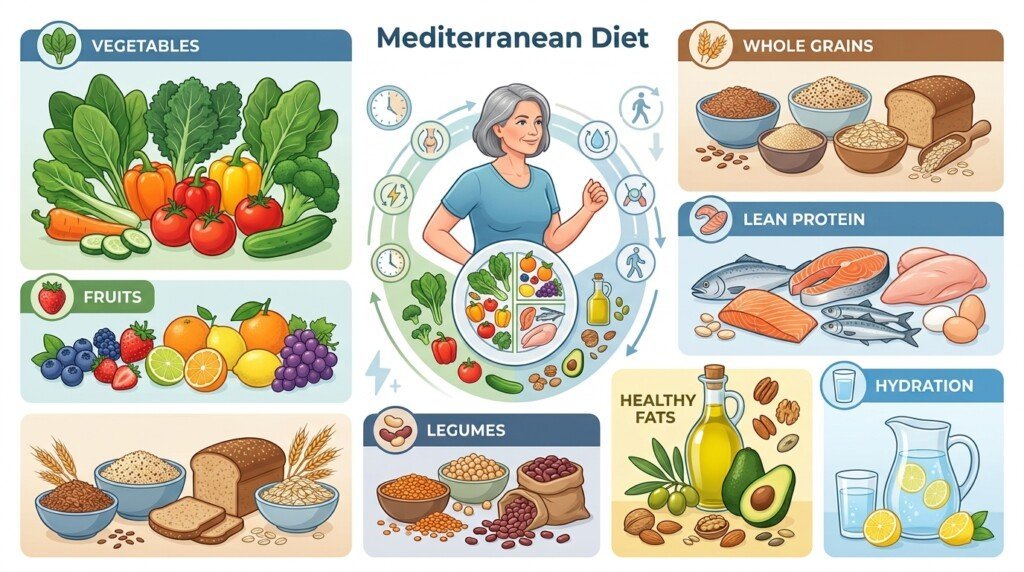
Rather than searching for one perfect food, look at your overall diet.
A healthy eating pattern includes:
- Vegetables
- Fruits
- Whole grains
- Lean protein
- Healthy fats
- Legumes
- Dairy or fortified alternatives
Eating consistently nutritious meals has a much greater impact than any individual food.
Mediterranean-Style Eating Has Strong Evidence
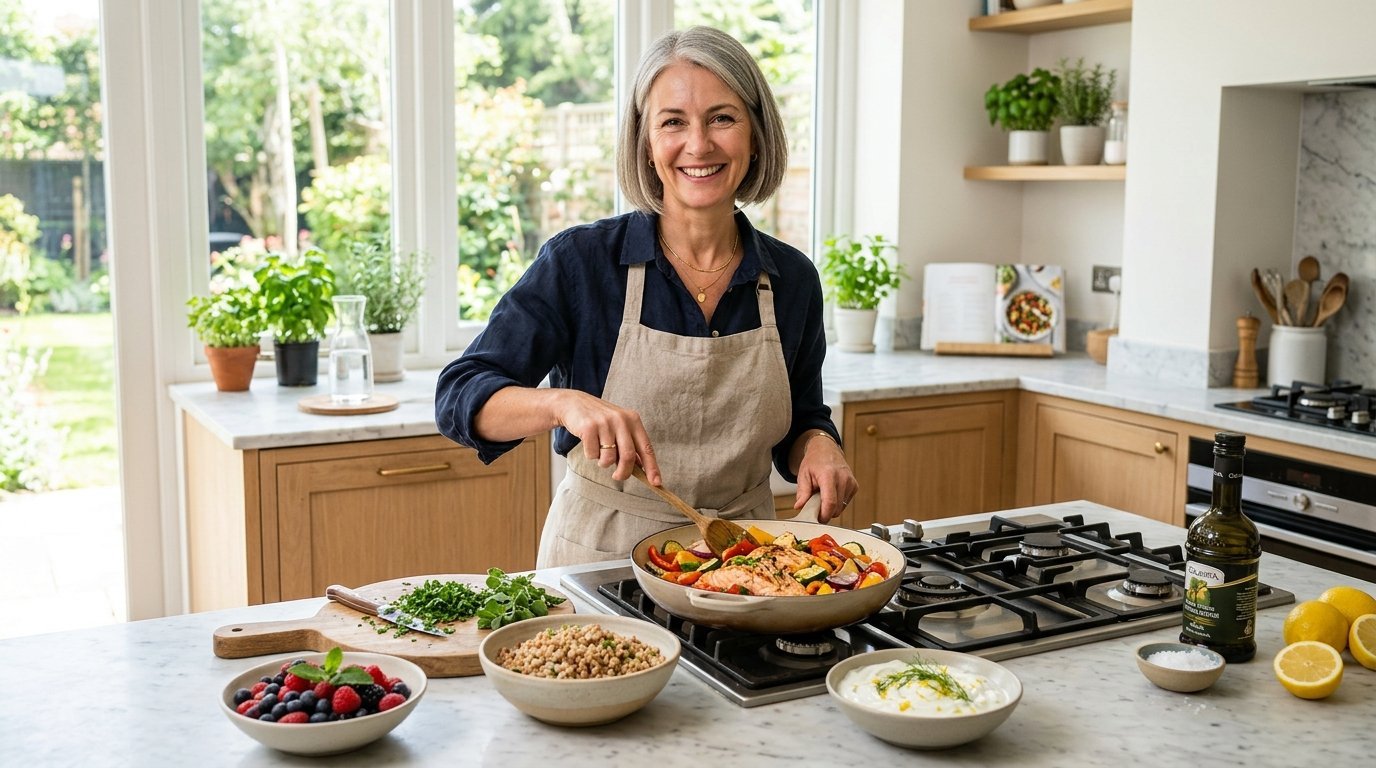
One of the most researched eating patterns for healthy aging is the Mediterranean diet.
This style of eating emphasizes:
- Vegetables
- Fruits
- Olive oil
- Fish
- Beans
- Whole grains
- Nuts
- Seeds
It naturally provides fiber, healthy fats, vitamins, minerals, and antioxidants that support overall health.
Rather than treating it as a strict diet, think of it as a flexible eating pattern built around minimally processed foods.
Muscle Preservation Matters
During menopause, maintaining muscle becomes nearly as important as reducing body fat.
A diet that provides enough protein while supporting regular resistance training helps preserve lean tissue and maintain healthy metabolism.
This complements many of the long-term strategies discussed throughout Menopause Weight Loss, where nutrition and exercise work together to improve body composition.
Balance Is More Effective Than Restriction
Many restrictive diets eliminate entire food groups.
Although these approaches sometimes produce short-term weight loss, they are often difficult to maintain.
A balanced eating pattern allows flexibility while encouraging healthier choices most of the time.
Healthy Aging Is Part of the Goal
The best menopause diet supports much more than body weight.
It also promotes:
- Bone health
- Heart health
- Muscle maintenance
- Energy
- Healthy metabolism
- Long-term well-being
Thinking beyond the scale often leads to healthier long-term decisions.
Which Foods Should You Eat More Often?
Choosing nutrient-dense foods makes weight management easier because these foods provide more nutrition while helping you stay satisfied.
Rather than focusing on what to eliminate, begin by increasing foods that consistently support healthy aging.
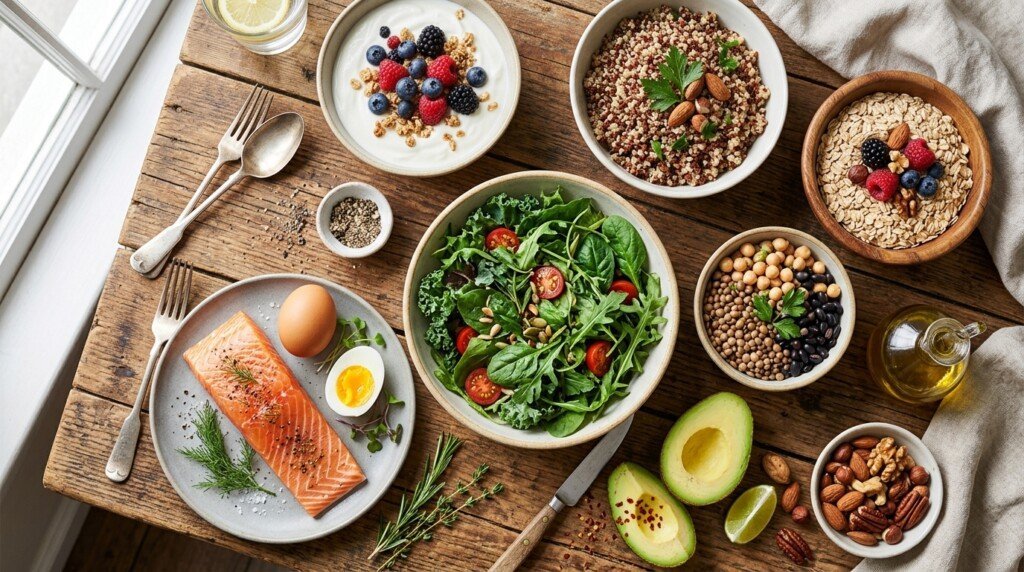
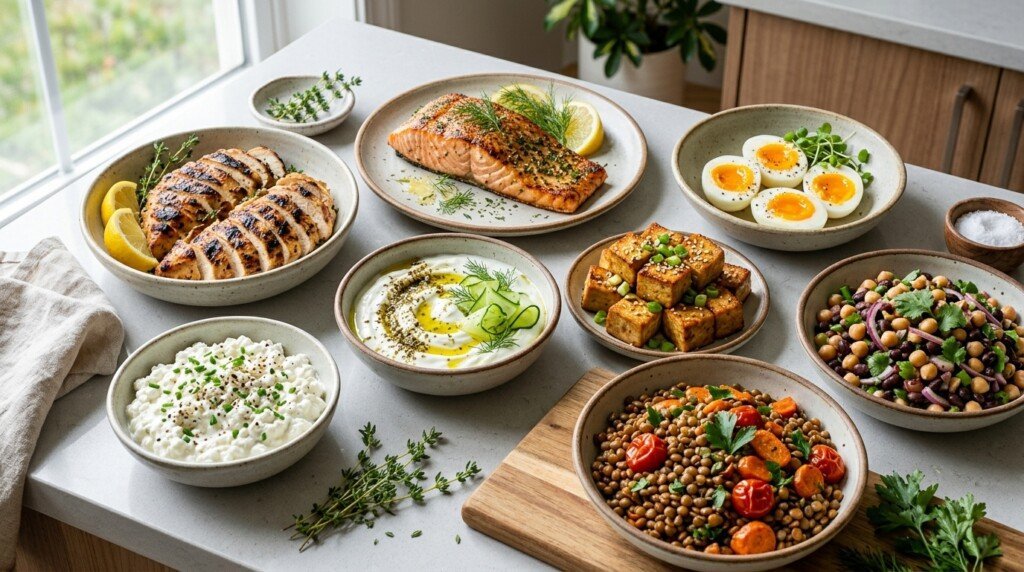
Lean Protein
Protein becomes especially important during menopause.
Excellent choices include:
- Fish
- Chicken
- Turkey
- Eggs
- Greek yogurt
- Cottage cheese
- Tofu
- Tempeh
- Beans
- Lentils
These foods help preserve muscle while improving fullness after meals.
Women looking to increase protein intake can also benefit from many of the meal ideas discussed throughout High-Protein Foods That Burn Fat.
Colorful Vegetables
Vegetables provide:
- Fiber
- Vitamins
- Minerals
- Water
- Antioxidants
Aim to fill at least half your plate with vegetables at lunch and dinner whenever possible.
Including a wide variety of colors increases nutritional diversity.
Fruits
Fruit provides natural sweetness along with fiber and valuable nutrients.
Excellent options include:
- Berries
- Apples
- Oranges
- Pears
- Kiwi
- Grapefruit
Whole fruit is generally far more filling than fruit juice.
Many menopause-friendly fruit choices are also featured throughout Best Fruits for Weight Loss, where they are discussed in greater detail.
Whole Grains
Whole grains digest more slowly than refined grains.
Nutritious choices include:
- Oats
- Brown rice
- Quinoa
- Whole wheat
- Barley
These foods provide lasting energy while supporting healthy digestion.
Healthy Fats
Healthy fats improve meal satisfaction and contribute important nutrients.
Examples include:
- Olive oil
- Avocados
- Almonds
- Walnuts
- Chia seeds
- Flaxseed
- Salmon
Although healthy fats are nutritious, portion awareness remains important because they are calorie dense.
Calcium-Rich Foods
Bone health becomes increasingly important after menopause.
Calcium-rich foods include:
- Greek yogurt
- Milk
- Fortified plant beverages
- Cheese
- Tofu prepared with calcium
- Leafy greens
Meeting calcium needs through food supports healthy aging.
Vitamin D Sources
Vitamin D supports calcium absorption and bone health.
Food sources include:
- Fatty fish
- Egg yolks
- Fortified dairy products
- Fortified plant beverages
Sunlight also contributes to vitamin D production, although individual needs vary.
Phytoestrogen Foods
Some plant foods naturally contain compounds called phytoestrogens.
Examples include:
- Soybeans
- Tofu
- Tempeh
- Edamame
- Flaxseed
These foods can be included as part of a balanced eating pattern and provide additional protein and fiber.
Which Foods Should You Limit?
Healthy eating during menopause is not about completely avoiding certain foods.
Instead, it is about reducing foods that make it easier to consume excess calories without providing lasting fullness.
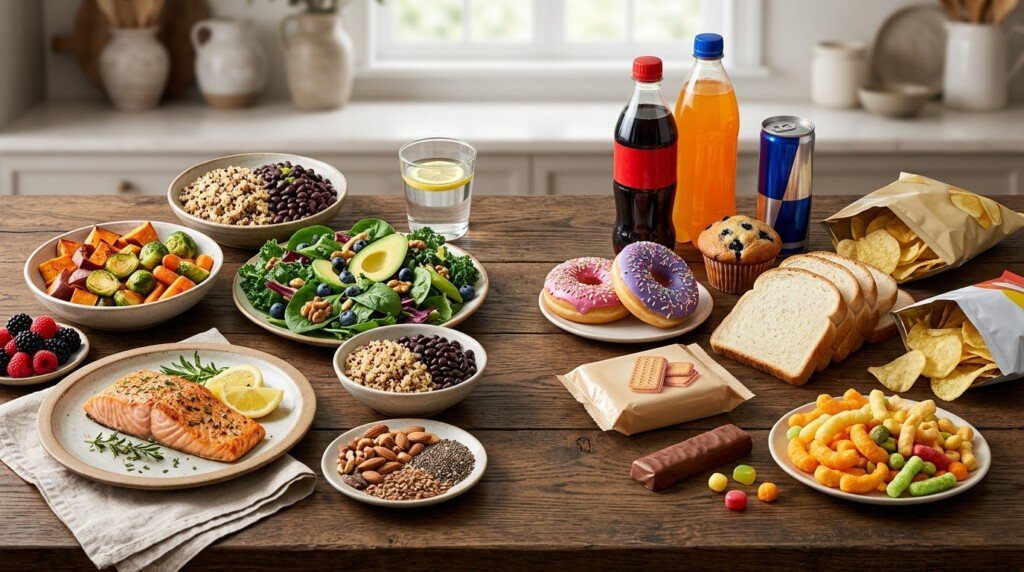
Highly Processed Snack Foods
Many packaged snack foods are:
- High in refined carbohydrates
- Low in fiber
- Easy to overeat
Keeping nutritious snacks readily available often makes healthier choices easier.
Balanced snack ideas are explored throughout Healthy Snacks for Weight Loss.
Sugary Drinks
Calories from beverages are often consumed quickly without creating the same fullness as solid foods.
Examples include:
- Soft drinks
- Sweetened coffee drinks
- Energy drinks
- Sweetened teas
Water remains the best everyday beverage for most people.
Refined Grains
Highly refined grains digest quickly and generally provide less fiber.
Examples include:
- White bread
- White rice
- Pastries
- Cakes
- Many breakfast cereals
Choosing whole grain versions more often supports fullness and blood sugar balance.
Excess Added Sugar
Occasional treats can absolutely fit into a healthy eating pattern.
However, regularly consuming large amounts of added sugar may make appetite control more difficult.
Moderation is generally more sustainable than complete restriction.
Highly Processed Fast Foods
Fast foods often combine:
- High calorie density
- Refined carbohydrates
- Excess sodium
- Saturated fat
Preparing meals at home more often allows better control over ingredients and portion sizes.
Does Protein Help During Menopause?
Absolutely.
Protein becomes one of the most valuable nutrients during menopause because it supports both weight management and healthy aging.
Protein Helps Preserve Muscle
Maintaining lean muscle is essential because muscle naturally declines with age.
Preserving muscle supports:
- Healthy metabolism
- Physical strength
- Better mobility
- Improved body composition
Regular resistance training combined with adequate protein produces the greatest benefits.
Protein Improves Fullness
Protein slows digestion and increases satiety.
Meals containing adequate protein often reduce hunger between meals and make portion control easier.
This helps support a sustainable calorie deficit without excessive hunger.
Protein Supports Recovery
Women who perform strength training or regular exercise recover more effectively when they consume enough protein throughout the day.
Rather than eating most protein at dinner, aim to include moderate amounts at breakfast, lunch, dinner, and snacks.
A protein-rich breakfast is especially helpful for starting the day feeling satisfied, making many of the ideas in Best Breakfast for Weight Loss practical additions to a menopause-friendly eating pattern.
Does Fiber Support Menopause Weight Loss?
Fiber is one of the most valuable nutrients for women during menopause, yet many people consume far less than recommended. While fiber does not directly burn fat, it supports several processes that make healthy weight management easier.
Including more fiber-rich foods can help you stay full longer, improve digestion, support blood sugar balance, and make a moderate calorie deficit easier to maintain.
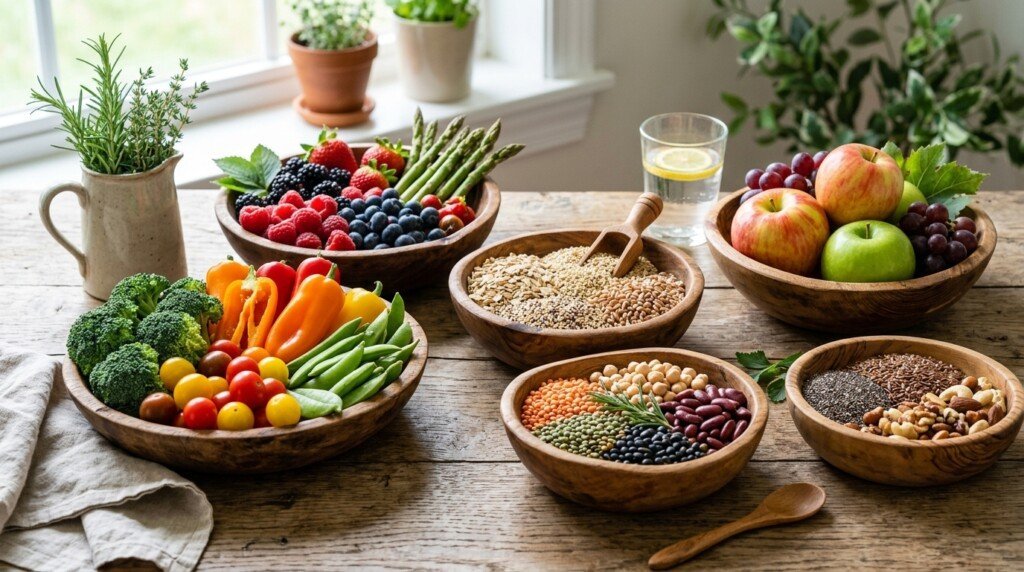
Fiber Helps You Feel Full
One of fiber’s greatest benefits is increasing satiety.
High-fiber foods slow digestion, allowing meals to remain satisfying for longer periods.
This may help reduce:
- Frequent snacking
- Large portion sizes
- Hunger between meals
- Cravings for highly processed foods
Feeling satisfied after meals makes long-term healthy eating much easier.
Fiber Supports Blood Sugar Balance
Foods rich in fiber are generally digested more slowly than refined carbohydrates.
This gradual digestion supports more stable energy levels throughout the day.
Good blood sugar regulation may also help reduce sudden hunger that often follows highly refined meals.
Fiber Supports Digestive Health
Digestive changes become more common with age.
Fiber supports regular bowel movements while helping maintain a healthy digestive system.
Excellent fiber sources include:
- Vegetables
- Fruits
- Beans
- Lentils
- Whole grains
- Oats
- Chia seeds
- Flaxseed
Eating a variety of fiber-rich foods provides additional vitamins and minerals at the same time.
Fiber Works Best With Protein
Protein and fiber make an excellent combination.
For example:
- Greek yogurt with berries
- Oatmeal topped with nuts
- Lentil soup with vegetables
- Chicken salad with leafy greens
- Whole grain toast with eggs
Meals that combine both nutrients tend to be filling without being overly restrictive.
What Does a One-Day Menopause Meal Plan Look Like?
There is no perfect menopause meal plan.
However, building each meal around protein, fiber, healthy fats, and minimally processed foods creates a balanced eating pattern that supports long-term success.
Here is one practical example.
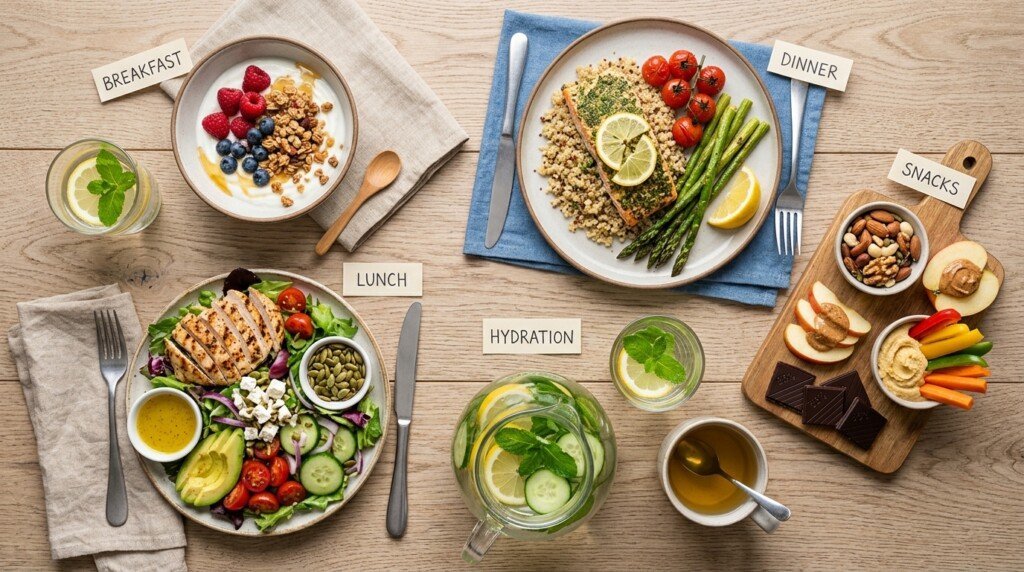
Breakfast
Greek yogurt topped with:
- Mixed berries
- Chia seeds
- Chopped walnuts
Serve with one slice of whole grain toast.
This breakfast provides protein, fiber, healthy fats, and calcium while helping you stay satisfied throughout the morning.
Mid-Morning Snack
A medium apple with a small handful of almonds.
This combination provides fiber, healthy fats, and lasting energy.
Lunch
Grilled chicken salad with:
- Mixed leafy greens
- Tomatoes
- Cucumbers
- Bell peppers
- Chickpeas
- Olive oil and lemon dressing
Serve with a small whole grain roll or quinoa.
Afternoon Snack
Cottage cheese with sliced cucumber and cherry tomatoes.
This protein-rich snack helps maintain fullness until dinner.
Dinner
Baked salmon served with:
- Roasted broccoli
- Brown rice
- Steamed green beans
This meal provides protein, healthy fats, fiber, vitamin D, and important nutrients that support healthy aging.
Evening Option
If you’re genuinely hungry later in the evening, choose a light snack such as:
- Plain Greek yogurt
- Fresh berries
- A kiwi
- A boiled egg
Eating because of true hunger rather than habit supports better long-term appetite awareness.
Which Eating Habits Improve Long-Term Success?
The best menopause diet is one you can realistically maintain for years.
Daily habits usually determine long-term success far more than temporary diet plans.
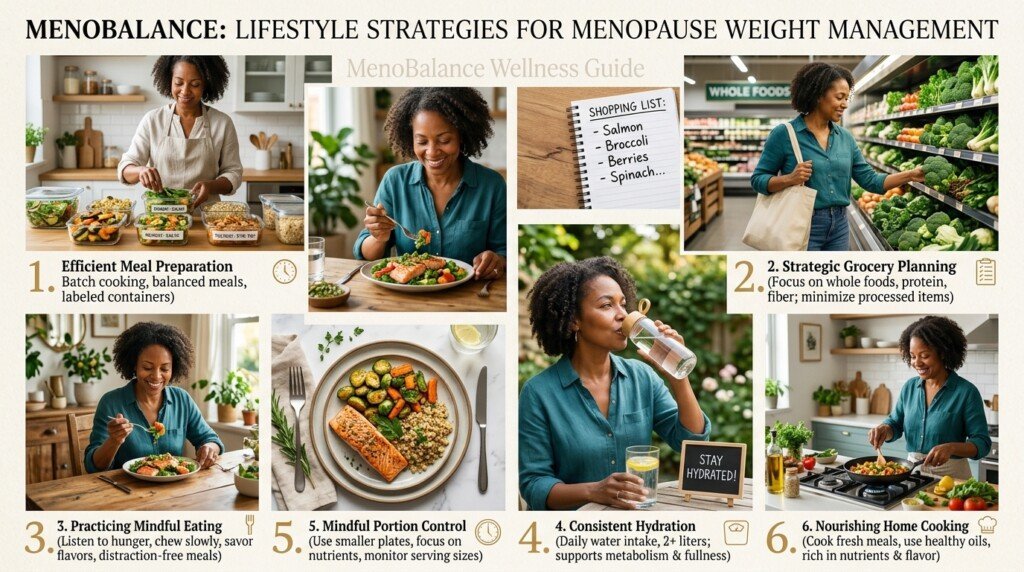
Plan Meals Ahead
Meal planning reduces impulsive food choices during busy days.
Preparing ingredients in advance makes balanced meals easier to assemble throughout the week.
Eat Regular Meals
Skipping meals often leads to excessive hunger later in the day.
Eating consistent meals helps many women better regulate appetite and avoid overeating.
Practice Mindful Eating
Slow down while eating.
Pay attention to:
- Hunger
- Fullness
- Portion sizes
- Meal enjoyment
Mindful eating often improves satisfaction without requiring strict food rules.
Keep Healthy Foods Visible
The foods that are easiest to reach are often the foods we eat most.
Keep healthy options available such as:
- Fresh fruit
- Cut vegetables
- Greek yogurt
- Nuts
- Hard-boiled eggs
Making nutritious choices convenient supports better consistency.
Drink Enough Water
Hydration supports:
- Digestion
- Appetite regulation
- Exercise performance
- Overall health
Many women find that drinking water before meals also helps them recognize true hunger more accurately.
Avoid All-or-Nothing Thinking
Healthy eating is not about perfection.
One higher-calorie meal does not undo weeks of healthy habits.
Returning to your normal routine at the next meal is far more effective than giving up after occasional indulgences.
Build Habits You Can Maintain
The most successful menopause eating plans share one characteristic.
They are sustainable.
Instead of searching for dramatic short-term results, focus on creating routines that fit your everyday life.
This long-term mindset closely aligns with the principles discussed throughout Sustainable Weight Loss, where lasting habits consistently outperform restrictive dieting.
Frequently Asked Questions
1. What is the best diet for menopause weight loss?
The best diet emphasizes lean protein, vegetables, fruits, whole grains, legumes, healthy fats, and minimally processed foods while supporting a moderate calorie deficit and preserving muscle mass.
2. Is the Mediterranean diet good during menopause?
Yes. Research consistently associates Mediterranean-style eating with healthy aging, improved heart health, balanced nutrition, and sustainable weight management.
3. Why is protein important after menopause?
Protein helps preserve lean muscle, supports metabolism, improves satiety, and enhances recovery after exercise, making it especially valuable during menopause.
4. How does fiber help with menopause weight loss?
Fiber promotes fullness, supports digestive health, helps regulate blood sugar, and makes healthy eating easier by reducing hunger between meals.
5. Should you avoid carbohydrates during menopause?
No. Whole grain carbohydrates, fruits, vegetables, and legumes provide fiber, vitamins, minerals, and long-lasting energy. The focus should be on choosing minimally processed carbohydrate sources rather than eliminating carbohydrates completely.
Final Thoughts
Finding the Best Diet for Menopause Weight Loss is not about following restrictive food rules or chasing the latest nutrition trend. The strongest scientific evidence supports a balanced eating pattern built around lean protein, fiber-rich vegetables and fruits, whole grains, healthy fats, and minimally processed foods. These choices help preserve muscle, support metabolism, improve satiety, and provide the nutrients needed for healthy aging.
Rather than trying to eat as little as possible, focus on eating smarter. Prioritizing protein, increasing fiber intake, planning balanced meals, staying hydrated, and practicing consistent eating habits make long-term weight management much more achievable during menopause. Combined with regular physical activity and resistance training, these nutrition strategies support improvements in body composition while helping you maintain energy and strength.
Remember that lasting success is measured by more than the number on the scale. Better health, increased strength, improved waist circumference, stable energy levels, and sustainable habits are all meaningful signs of progress. By choosing an eating pattern you can enjoy for years instead of weeks, you give yourself the best opportunity to manage weight successfully while supporting your overall health throughout menopause and beyond.
Disclaimer:
This post may contain affiliate links. If you purchase through them, we may earn a small commission at no extra cost to you. Also, this content is for informational purposes only and does not substitute professional medical advice.
Ready to Start Your Journey?
Use our free 7-in-1 Weight Loss Toolkit to calculate your numbers and build your plan in minutes.
Open Free Tools →