What Is Body Recomposition? How to Lose Fat and Build Muscle at the Same Time
Body recomposition sounds almost contradictory at first. Losing fat requires your body to use stored energy, while building muscle requires your body to repair and add new tissue. So how can both happen at the same time?
The answer is that your body does not treat fat tissue and muscle tissue as one single pool of weight. They are different tissues with different jobs, and your body can change them in different directions at the same time.
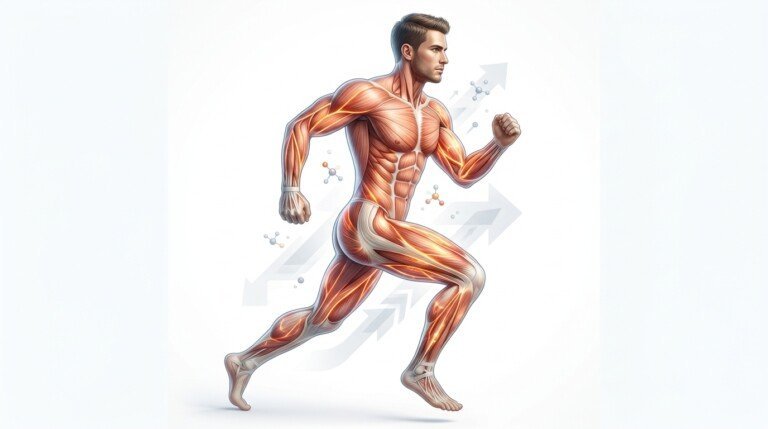
During body recomposition, the goal is to reduce body fat while maintaining or increasing lean muscle mass. That means the number on the scale may change slowly, stay relatively stable, or even fluctuate while your waist becomes smaller, your muscles become more defined, and your physical performance improves.
This is one reason body recomposition can feel very different from traditional weight loss.
A conventional weight-loss approach often focuses heavily on reducing scale weight. Body recomposition puts more attention on what that weight is made of.
That distinction matters. Research on resistance training during dietary weight loss shows that adding resistance exercise can help protect fat-free mass while also supporting greater fat loss compared with diet alone. A recent systematic review and meta-analysis of adults with overweight or obesity found that resistance exercise during weight loss protected against loss of fat-free mass and increased fat-mass reduction, even though overall body weight was not significantly different from diet-only approaches.
Body recomposition is therefore not a trick that allows someone to ignore nutrition or exercise. It is better understood as a different way of defining success.
Instead of asking only, “How many pounds did I lose?”
You also ask:
“How much body fat did I lose?”
“Did I preserve or gain muscle?”
“Is my strength improving?”
“Are my measurements changing?”
Those questions give you a much clearer picture of what is happening beneath the scale.
What Is Body Recomposition and How Does It Actually Work?
Body recomposition is the process of changing body composition by reducing fat mass while maintaining or increasing lean mass, particularly skeletal muscle.
It does not mean that stored body fat literally turns into muscle. Fat cells and muscle cells are different tissues. The body can break down stored fat for energy while simultaneously stimulating muscle protein synthesis and adapting muscle tissue in response to resistance training.
That is the physiological basis behind simultaneous fat loss and muscle gain.
The process is not equally easy for everyone, though.
Someone who has never trained with resistance exercise may respond very differently from an experienced lifter who has spent years building muscle. A person returning to training after a long break may also have an easier time regaining lost muscle than someone who is already highly trained.
Your starting body composition matters too.
Someone carrying a higher amount of body fat has a larger stored energy reserve than someone who is already very lean. That can make simultaneous changes in fat mass and muscle mass more achievable under the right conditions.
What Are the Key Principles of Body Recomposition?
The basic principle is simple: create conditions that encourage fat loss without unnecessarily compromising muscle tissue.
That requires several pieces working together.
Nutrition needs to provide enough energy and nutrients to support normal function and muscle repair while still allowing the body to draw on stored energy over time.
Resistance training gives the muscles a reason to adapt. Without a meaningful training stimulus, the body has less reason to preserve or build additional muscle during a period when energy availability is lower.
Recovery matters because muscle adaptation does not happen during the workout itself. Training creates the stimulus, while recovery provides the environment in which the body can respond.
Consistency matters more than short bursts of extreme effort.
This is where body recomposition differs from aggressive dieting. A very large energy deficit may make the scale fall faster, but prolonged energy deficiency can make gaining lean mass more difficult. A meta-analysis of resistance-training studies found that energy deficiency impaired lean-mass gains compared with training without an energy deficit, while strength gains were less affected.
The goal, therefore, is not to make the scale move as quickly as possible.
The goal is to create a sustainable environment where fat can gradually decrease while muscle is maintained or, in the right person, increased.
How Does Diet Contribute to Successful Body Recomposition?
Diet determines much of the environment in which recomposition takes place.
If someone consistently consumes substantially more energy than they use, gaining muscle may be possible, but losing body fat at the same time becomes much harder.
At the other extreme, if someone aggressively restricts food for an extended period, fat loss may occur, but gaining new muscle becomes more difficult because the body has fewer resources available for building tissue.
That is why body recomposition often works best with a moderate approach rather than an extreme one.
Food quality matters too, but that does not mean there is one magical recomposition diet.
A useful eating pattern provides adequate protein, enough carbohydrate and fat to support training and normal physiological function, and enough micronutrients and fiber to support overall health.
Protein is particularly important because muscle tissue is constantly being broken down and rebuilt. However, the exact protein target, meal timing, and detailed nutrition strategy belong in the practical body-recomposition plan rather than this foundational guide.
The bigger point is that body recomposition is not created by eliminating one food group.
It comes from creating a nutritional pattern that supports training while allowing body fat to gradually decline.
What Types of Exercise Are Most Effective for Body Recomposition?
Resistance training is the central exercise stimulus because muscle needs a reason to adapt.
When muscles are repeatedly challenged against resistance, the body receives a signal that those tissues are needed. Over time, appropriate training can increase strength and support increases or maintenance of lean mass.
That does not mean cardio has no place.
Walking, running, cycling, swimming, and other aerobic activities can contribute to energy expenditure, cardiovascular fitness, and general health. But if the specific goal is to improve body composition while losing fat, resistance training provides something cardio alone cannot fully replace: a direct stimulus for maintaining and developing muscle.
Research supports this distinction. A large systematic review of resistance training in people with overweight or obesity found that resistance exercise can reduce body fat while also increasing lean mass, with resistance training alone producing the strongest improvements in lean mass compared with no exercise.
The detailed exercise structure, progression, frequency, and programming deserve their own practical treatment in how to achieve body recomposition.
Can Body Recomposition Be Achieved by Vegetarians or Vegans?
Yes.
Body recomposition does not require eating meat, eggs, or dairy.
Vegetarians and vegans can build muscle while reducing body fat if their overall diet provides sufficient energy, protein, essential nutrients, and variety.
Plant-based diets simply require more attention to food selection because protein quality and protein density can vary substantially between foods.
Beans, lentils, peas, soy foods, tofu, tempeh, seitan, nuts, seeds, and protein-rich dairy alternatives can all contribute to a muscle-supportive eating pattern.
The important question is not whether a person eats animal products.
It is whether the overall diet provides what the body needs to recover from training and maintain or build lean tissue.
For someone following a vegetarian or vegan diet, planning becomes particularly useful because a diet can be completely plant-based and still be poorly structured for muscle development.
How Does Body Recomposition Actually Work Inside the Body?
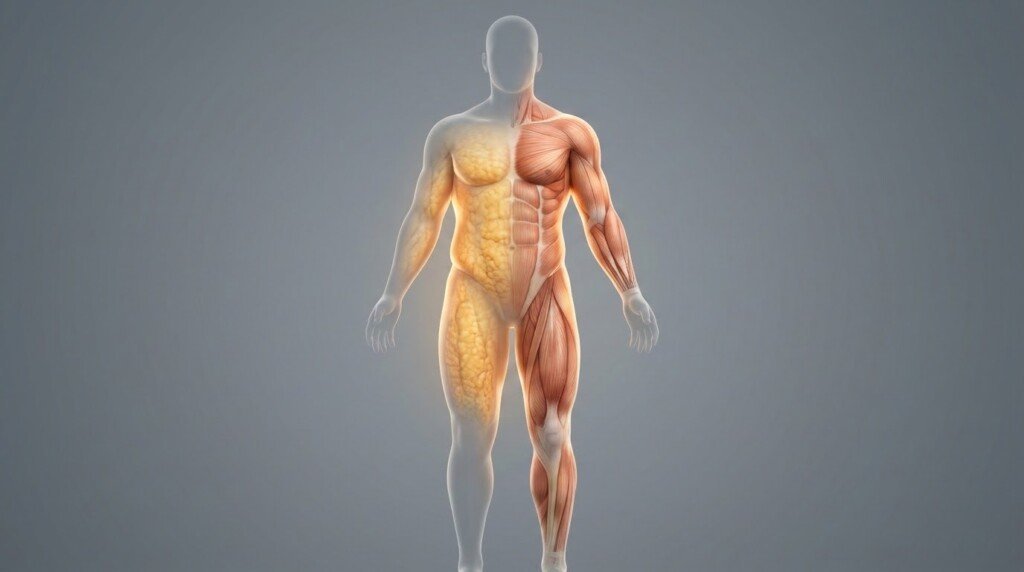
Body recomposition becomes easier to understand when you stop thinking about body weight as one number and start thinking about it as several compartments.
Your body contains fat mass, muscle tissue, organs, bone, water, glycogen, and other lean tissues.
These components do not all change at the same rate.
You can lose several kilograms of fat while gaining some muscle and retaining more water or glycogen. The scale may therefore show a surprisingly small change even though your physical appearance and measurements have changed considerably.
This is why body recomposition is often described as a change in body composition rather than simply body weight.
What Is the Role of Diet in Achieving Simultaneous Fat Loss and Muscle Gain?
Fat loss requires the body to mobilize stored energy over time.
Muscle gain requires a combination of training stimulus, sufficient nutrients, recovery, and the body’s ability to adapt to that stimulus.
Those processes can overlap.
Imagine someone begins resistance training after being inactive and adjusts their diet so that body fat gradually decreases. Their muscles are receiving a new training stimulus at the same time that stored fat provides some of the energy required by the body.
The body does not need to take a fat molecule and transform it into muscle tissue.
Instead, fat stores can be reduced while muscle tissue is being repaired and developed through a separate biological process.
That is why the phrase “fat turns into muscle” is misleading.
The two changes can occur simultaneously, but one tissue is not physically becoming the other.
The practical challenge is maintaining the conditions that allow both processes to happen.
How Does Strength Training Contribute to Body Recomposition?
Strength training provides the signal that tells the body muscle tissue is worth maintaining and potentially expanding.
Without that signal, weight loss can involve reductions in both fat mass and lean mass.
This is one of the biggest reasons resistance training matters during fat loss.
A 2025 systematic review and meta-analysis found that resistance exercise added to dietary weight loss reduced the loss of fat-free mass and produced greater fat-mass reduction compared with dietary weight loss alone.
The effect is especially important because losing weight is not automatically the same as improving body composition.
Two people could each lose 10 pounds, yet have very different outcomes.
One person might lose mostly fat while preserving muscle.
Another might lose a mixture of fat and lean tissue.
Their scale results are identical.
Their body composition is not.
This is why resistance training is not simply an optional activity added to make a weight-loss program more interesting. For someone prioritizing body composition, it is a central part of the strategy.

What Is the Optimal Macronutrient Split for Body Recomposition?
There is no single macronutrient split that works optimally for every person pursuing body recomposition.
The ideal balance depends on factors such as body size, activity level, training volume, food preferences, dietary restrictions, and the person’s overall energy needs.
Protein deserves particular attention because it provides amino acids required for muscle protein synthesis.
Carbohydrates can support training performance by providing readily available fuel, particularly during higher-volume resistance exercise.
Dietary fats contribute essential fatty acids and help support normal physiological functions.
Trying to eliminate one macronutrient simply because it is associated with weight gain can make a diet unnecessarily restrictive.
Body recomposition is not about finding a perfect percentage of protein, carbohydrate, and fat.
It is about creating a sustainable nutritional pattern that supports training and recovery while allowing body fat to decline when appropriate.
The detailed protein targets and nutrition calculations are best handled in a practical recomposition plan rather than treated as universal rules.
Can You Really Lose Fat and Build Muscle at the Same Time?
Yes, it is physiologically possible.
But it is not equally achievable for everyone, and it should not be presented as an effortless outcome.
The likelihood is generally higher in people who have more room for improvement, including beginners, people returning to resistance training after a long break, and people with higher levels of body fat.
New trainees often experience rapid improvements because their muscles are being exposed to a novel stimulus. Returning lifters may also regain previously developed muscle relatively efficiently.
At the other end of the spectrum, highly trained individuals who already have substantial muscle mass and relatively low body fat generally have a harder time gaining muscle while simultaneously losing fat.
That does not mean advanced lifters cannot improve body composition.
It means the rate and magnitude of change are usually smaller and require more precise management.
For a deeper explanation of the common misconception that one tissue literally turns into another, see can you turn fat into muscle.
Who Is Body Recomposition Actually Suitable For?
Body recomposition can work for many people, but some groups have a much better starting position than others.
A person who is new to resistance training and wants to lose excess body fat may have a particularly favorable environment for recomposition.
Someone returning to exercise after months or years away may also see noticeable changes in strength and muscle relatively quickly.
People with higher levels of body fat may have another advantage because their bodies have more stored energy available while they begin developing new training adaptations.
This does not mean body recomposition is impossible for lean or experienced individuals.
It simply means expectations should be different.
Does Body Recomposition Work Equally Well for Beginners and Experienced Lifters?
No.
Beginners generally have the easiest path.
When someone starts resistance training, the body has a large amount of room to adapt. Strength can increase rapidly, coordination improves, and muscle tissue can respond strongly to the new stimulus.
Someone returning after a long training break may also experience significant improvements because previously developed muscle can be regained.
Experienced lifters are working with a much smaller margin for change.
If someone has trained consistently for years and already carries substantial muscle mass, gaining additional muscle requires a stronger stimulus and more precise recovery and nutrition. At the same time, getting leaner can become increasingly difficult as body fat gets lower.
This is why a body-recomposition timeline should never be copied from someone else.
The starting point changes the expected result.
A beginner may notice significant changes in the first several months.
An experienced lifter may need much longer to produce a visibly meaningful change.
The goal should therefore be measured against your own starting point rather than another person’s transformation.
What Are the Benefits of Body Recomposition Compared With Traditional Weight Loss?
Traditional weight loss is often built around one primary outcome: reducing scale weight.
That approach can work, but the scale does not tell you whether the weight you lost came from fat, muscle, water, glycogen, or a combination of these.
Body recomposition takes a different view.
It prioritizes the quality of the weight change.
A successful recomposition may produce a smaller change on the scale while creating a much larger change in appearance and physical capability.
Why Might the Scale Barely Move Even When Your Body Is Clearly Changing?
Because muscle and fat are not interchangeable units of scale weight.
Suppose someone loses five pounds of body fat while gaining three pounds of muscle.
The scale shows a two-pound decrease.
That person may look noticeably leaner despite seeing only a small change in body weight.
This is one of the reasons people sometimes conclude that their diet “isn’t working” when their waist measurement, clothing fit, strength, and photographs tell a different story.
Water also complicates the picture.
Resistance training can influence glycogen storage, inflammation, and water retention. Menstrual-cycle changes can influence scale weight in women. Sodium intake, carbohydrate intake, digestion, and hydration can all produce short-term fluctuations.
So a single weigh-in is a poor way to judge body recomposition.
If you want to understand why scale weight and actual fat loss can tell different stories, the comparison of body composition vs weight and fat loss provides the broader context.

What Should You Track During Body Recomposition?
Scale weight can still be useful.
It simply should not be the only measurement.
A more complete picture can include waist circumference, other body measurements, progress photographs, strength performance, clothing fit, and, when appropriate, a body-composition assessment.
The important thing is consistency.
If measurements are taken randomly under different conditions, they become difficult to compare.
For example, a waist measurement taken after a large meal should not be compared directly with a morning measurement taken several weeks later.
The same principle applies to photographs.
Use similar lighting, clothing, posture, distance, and camera position whenever possible.
Strength is another useful signal.
If body weight is stable but you are gradually becoming stronger while your waist measurement decreases, that combination can be more informative than the scale alone.
Body recomposition is fundamentally about seeing the whole picture.
Why Is Preserving Muscle So Important During Fat Loss?
Muscle is not simply an aesthetic tissue.
It contributes to strength, physical function, movement, and metabolic health.
Losing a large amount of lean tissue during weight loss can undermine the quality of the result, particularly in older adults and people already at risk of low muscle mass.
Research consistently supports resistance training as a way to help preserve lean mass during dietary weight loss. A systematic review of adults with overweight or obesity found that adding resistance exercise to dietary weight loss protected fat-free mass and increased fat-mass loss compared with diet alone.
That is one of the strongest arguments for thinking beyond scale weight.
A lower number is not automatically a better outcome.
The goal is to improve the composition of the body, not simply make the body lighter at any cost.
What Happens When Body Recomposition Is Working but You Cannot See It Yet?
This is where patience becomes important.
Fat loss and muscle gain happen at different speeds.
Muscle development is gradual.
Fat loss is also affected by water fluctuations, adherence, energy intake, activity, sleep, stress, and many other variables.
As a result, body recomposition rarely produces the dramatic week-to-week visual changes associated with heavily edited transformation content online.
You may have several weeks where the scale appears unchanged.
Then your clothes fit differently.
Your waist measurement decreases.
A previously difficult exercise becomes easier.
Your posture changes.
Your shoulders, arms, legs, or back begin to look more defined.
These changes may occur before the scale provides an obvious signal.
That is not a failure of the process.
It is a reminder that body weight is only one measurement.
Is Body Recomposition Better Than Traditional Weight Loss?
There is no universal winner.
It depends on the person’s goal.
If someone needs to lose a substantial amount of weight for health reasons, reducing overall body weight may be an important priority.
If someone is already relatively close to their desired weight but wants a leaner, stronger appearance, body recomposition may be a more useful framework.
For many people, the best approach is somewhere in between.
They want fat loss, but they also want to maintain muscle.
They want better fitness, not simply a smaller body.
They want a result that remains useful after the diet ends.
That is where body recomposition becomes particularly valuable.
It changes the question from “How quickly can I become lighter?” to “How can I become leaner without unnecessarily sacrificing muscle?”
That is a much more sustainable question.
What Are the Biggest Misunderstandings About Body Recomposition?
One common misunderstanding is that body recomposition means eating anything you want because you are building muscle.
It does not.
Another is that everyone can gain significant muscle while losing fat.
They cannot.
A third is that fat literally transforms into muscle.
It does not.
Another mistake is assuming that the scale must continuously decrease.
It may not.
There is also a tendency to believe that more exercise automatically creates better recomposition.
That can backfire if excessive training interferes with recovery, increases fatigue, or makes a sustainable eating pattern harder to maintain.
Finally, some people expect dramatic changes within a few weeks.
Body recomposition is usually a slower process because it involves changing the relationship between two different tissues.
The people who succeed with it tend to think in months rather than days.
What Does a Successful Body Recomposition Ultimately Look Like?
A successful body recomposition does not necessarily have a dramatic “before and after” scale difference.
It may look like someone who weighs almost the same but has a smaller waist.
It may look like someone whose body fat has decreased while their strength has increased.
It may look like a person who can lift more, move better, and maintain a healthier body composition without repeatedly cycling through restrictive diets.
The scale might still matter.
It just becomes one piece of the evidence rather than the final judge.
Research supports the broader concept behind this approach. Resistance training can help reduce fat mass and preserve or increase lean mass, while resistance exercise during dietary weight loss can reduce the amount of fat-free mass lost.
That does not make body recomposition easy.
It makes the goal physiologically reasonable.
The practical details come next: how to structure nutrition, how to approach protein, how to organize resistance training, how to monitor progress, and how to adjust when progress slows.
Those details should be treated as the implementation stage rather than confused with the definition of body recomposition itself.
Frequently Asked Questions
1. What Is Body Recomposition?
Body recomposition is the process of reducing body fat while maintaining or increasing lean muscle mass. Unlike traditional weight loss, which focuses primarily on reducing scale weight, body recomposition focuses on improving the ratio of fat mass to lean mass. The scale may decrease slowly or remain relatively stable while body measurements, appearance, and strength improve.
2. Can You Lose Fat and Build Muscle at the Same Time?
Yes. Fat loss and muscle gain are separate physiological processes, so they can occur during the same period. The likelihood is generally higher in beginners, people returning to resistance training, and people with higher levels of body fat. Experienced, lean lifters may find simultaneous progress considerably slower and more difficult.
3. Who Should Try Body Recomposition?
Body recomposition can be particularly suitable for beginners, people returning to training after a long break, and people who want to reduce body fat without sacrificing muscle. It can also be useful for people who care more about becoming leaner and stronger than simply reaching a lower scale weight.
4. Why Is My Weight Not Dropping During Body Recomposition?
Fat loss and muscle gain can partially offset each other on the scale. Water, glycogen, digestion, and other short-term changes can also affect body weight. If your waist measurement is decreasing, your clothes fit better, and your strength is improving, those changes may indicate progress even when scale weight changes very little.
5. Is Body Recomposition Better Than Regular Weight Loss?
Not necessarily. It depends on the person’s goals and starting point. Traditional weight loss can be appropriate when reducing overall body weight is the main priority. Body recomposition is especially useful when the goal is to become leaner while maintaining or building muscle. For many people, combining fat loss with muscle preservation is more meaningful than focusing exclusively on the scale.
The Bottom Line on Body Recomposition
Body recomposition is not about finding a loophole in the laws of energy balance.
It is about understanding that the human body contains different tissues that respond to different signals.
Fat can be mobilized for energy while muscle responds to resistance training.
Those changes can overlap.
The process tends to be most favorable for beginners, returning lifters, and people with higher levels of body fat. More experienced and already-lean lifters can still improve their body composition, but they should expect slower progress and smaller changes.
The most important shift is the way you measure success.
If the only question is “Did I lose weight?”, you may miss meaningful progress.
If you also ask “Did I lose fat?”, “Did I maintain muscle?”, “Is my strength improving?”, and “Are my measurements changing?”, you get a much more complete picture.
Research supports resistance training as an important component of this approach. During dietary weight loss, resistance exercise can help preserve fat-free mass while supporting greater fat-mass reduction.
Body recomposition is therefore best viewed as a long-term body-composition goal, not a quick transformation technique.
The objective is not simply to make the body lighter.
It is to make the body composition better.
Disclaimer:
This post may contain affiliate links. If you purchase through them, we may earn a small commission at no extra cost to you. Also, this content is for informational purposes only and does not substitute professional medical advice.
Ready to Start Your Journey?
Use our free 7-in-1 Weight Loss Toolkit to calculate your numbers and build your plan in minutes.
Open Free Tools →