

What Is Brown Fat? Function, Location & Why It Matters for Weight Loss
If you have ever wondered why some types of body fat seem to store energy while another type actually uses energy to produce heat, the answer starts with brown fat.
Brown fat, also called brown adipose tissue or BAT, is a specialized type of fat tissue that helps the body generate heat without requiring visible shivering. Unlike the large energy-storing role associated with most white fat, brown fat is metabolically active and contains many mitochondria, which help it use fuels such as glucose and fatty acids to produce heat. (National Institutes of Health)
That makes brown fat particularly interesting in weight-loss research.
But there is an important distinction between brown fat being biologically capable of burning energy and brown fat being a practical weight-loss solution. Researchers have found meaningful associations between active brown fat and better metabolic health, but there is not enough evidence to treat brown fat as a shortcut for losing body fat. Studies investigating ways to activate it have produced interesting metabolic findings, while clinically significant long-term weight loss remains much less certain. (PubMed)
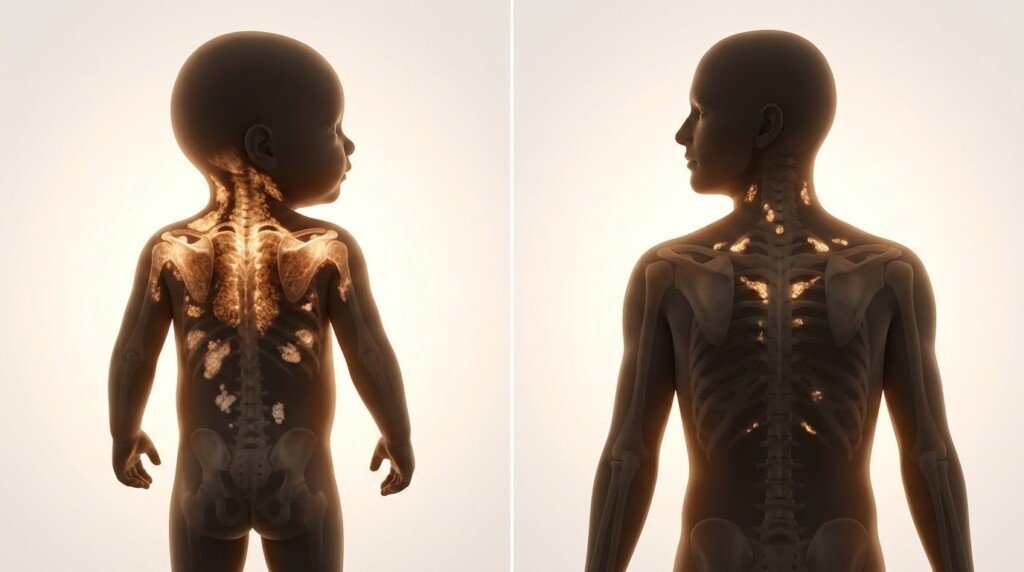
Brown fat is also fascinating for another reason: babies have proportionally much more of it than adults. That difference makes sense when you consider the enormous challenge newborns face in maintaining body temperature.
So what exactly is brown fat, where is it located, and why has it become such an important area of metabolic research?
This guide looks at the fundamentals first, then moves into the connection between brown fat, weight management, aging, childhood development, and future metabolic treatments.
What Is Brown Fat and What Does It Actually Do?
Brown fat is a specialized form of adipose tissue designed primarily for heat production.
Its scientific name is brown adipose tissue, and its brown appearance comes largely from its unusually high concentration of mitochondria and blood vessels. Mitochondria are structures inside cells that are heavily involved in energy production. Brown fat cells contain many more mitochondria than typical white fat cells, which helps explain their ability to generate heat.
The central job of brown fat is thermogenesis, particularly a process called non-shivering thermogenesis.
Instead of relying on muscle contractions to create heat, brown fat can use stored and circulating fuels to produce heat directly. This makes it especially valuable when the body is exposed to cold. NIH research describes brown fat as tissue that uses blood glucose and fat molecules to generate heat and maintain body temperature. (National Institutes of Health).
That role is particularly important early in life.
Newborn babies have a relatively large body surface compared with their body mass, which means they can lose heat quickly. They also have less muscle mass and less ability to rely on shivering than older children and adults. Brown fat provides an efficient alternative for producing heat. (PubMed Central (PMC))
For adults, brown fat is less abundant, but it has not disappeared completely.
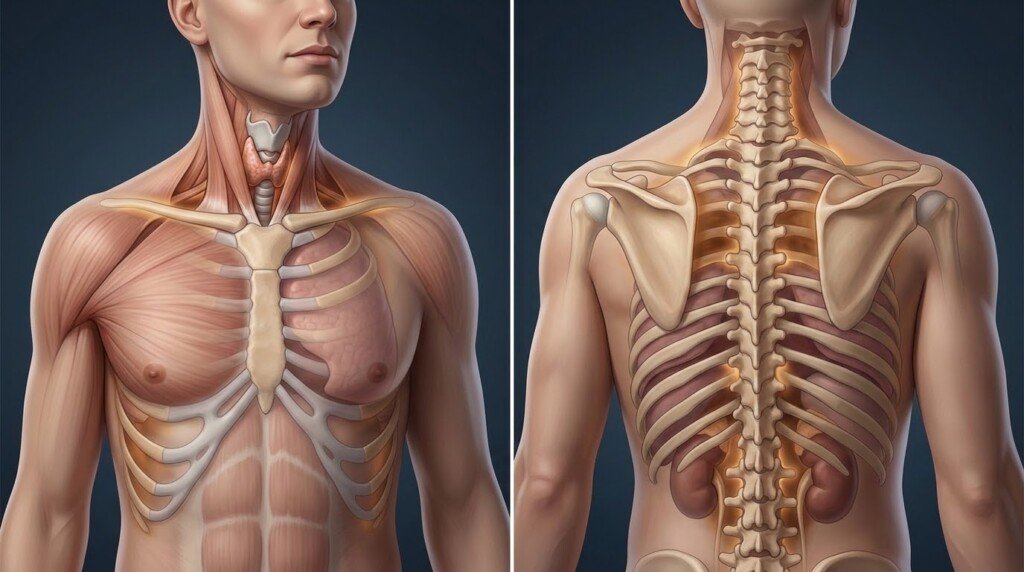
Modern imaging studies have shown that functioning brown fat can be detected in adults, particularly around the neck and shoulders, along the spine, and around the kidneys.
That discovery changed how researchers think about human metabolism.
What Is the Primary Function of Brown Fat in the Human Body?
The primary function of brown fat is heat production.
When the body becomes cold, the nervous system can activate brown adipose tissue. Brown fat then increases its use of metabolic fuels and converts that energy into heat rather than storing all of it as chemical energy.
This is different from the primary role of most white adipose tissue, which is energy storage.
The distinction is important because brown fat should not be thought of simply as “good fat” while white fat is “bad fat.” Both tissues have legitimate biological functions.
White fat provides energy storage, insulation, cushioning, and important endocrine functions. Brown fat specializes in heat generation.
The body needs both.
The interesting question for researchers is whether increasing brown fat activity could improve metabolic health beyond its role in keeping the body warm.
Human studies have provided some encouraging clues. For example, researchers have observed relationships between measurable brown fat and healthier glucose and lipid profiles, lower visceral fat, and lower rates of certain cardiometabolic diseases. These findings are associations, however, and they do not prove that brown fat alone prevents those diseases.
How Is Brown Fat Different From White Fat?
Brown fat and white fat have different primary jobs.
White fat is the body’s major energy-storage tissue. It stores energy largely in the form of triglycerides and can accumulate beneath the skin or around internal organs.
Brown fat is specialized for energy expenditure and heat production.
The visual difference also comes from their cellular structure. Brown adipocytes generally contain many smaller lipid droplets and large numbers of mitochondria, while mature white adipocytes typically contain one large lipid droplet that occupies much of the cell.
You can see the broader structural and functional differences in the detailed comparison of brown fat vs white fat, but the simplest distinction is this:
White fat is primarily designed to store energy.
Brown fat is primarily designed to use energy to generate heat.
That difference is exactly why brown fat has attracted so much attention in obesity and metabolic research.
What Potential Health Benefits Are Associated With More Active Brown Fat?
The most interesting potential benefits extend beyond calorie expenditure.
Researchers have found associations between detectable brown fat and several markers of healthier metabolism. In a large observational analysis using PET/CT scans, people with detectable brown fat had lower rates of type 2 diabetes, cardiovascular disease, heart failure, hypertension, and abnormal blood lipids. These associations remained after accounting for several other factors, although observational research cannot establish that brown fat caused the improved outcomes. (National Institutes of Health)
Other research has connected brown fat with healthier body-fat distribution, lower visceral adipose tissue, lower blood glucose, improved lipid profiles, and less liver fat. (PubMed)
That creates an important research question.
Could brown fat be one part of the explanation for why some people maintain better metabolic health despite having similar levels of overall body fat?
Possibly.
But researchers are still working out exactly how much of the association is caused by brown fat itself and how much reflects other characteristics that tend to occur alongside active brown fat.
This is one reason it is too early to describe brown fat as a guaranteed protection against obesity or diabetes.
Where Is Brown Fat Found in the Body, and Where Does It Come From?
Brown fat is not spread evenly throughout the body.
That is one of the reasons it can be difficult to study and why researchers often use specialized imaging techniques to identify active deposits.
In adults, brown fat is commonly detected around the neck and collarbone region, near the spine, around the kidneys, and in several deeper areas of the body.
The exact amount varies considerably between individuals.
Where Is Brown Adipose Tissue Typically Located in Adults?
The most commonly discussed adult deposits are in the supraclavicular and cervical regions, meaning around the collarbone and neck.
Researchers have also identified brown or brown-like thermogenic tissue near the spine, around the kidneys and adrenal region, near major blood vessels, and in other internal locations. (PubMed Central (PMC))
This location matters because brown fat is not the soft layer of fat you can easily pinch under your skin.
Someone cannot look in the mirror and determine how much active brown fat they have.
In research, one of the established ways of identifying metabolically active brown fat involves PET/CT imaging using a glucose tracer. Because active brown fat takes up glucose during activation, it can become visible under appropriate imaging conditions. (National Institutes of Health)
That creates an important limitation.
If a study says someone has “more brown fat,” it does not necessarily mean that person has a visibly larger amount of brown tissue in a particular area. Researchers may be referring to measurable activity, volume, glucose uptake, or another imaging-derived characteristic.
This is also why claims such as “you can tell if your brown fat is active by touching your neck” are not reliable.
What Tissue Does Brown Fat Actually Develop From?
Brown fat is more complicated than one simple lineage.
Classical brown adipocytes can develop from precursor cells with developmental characteristics that overlap with muscle-lineage cells. Research has identified Myf5-positive precursor cells as an important source for classical brown adipocytes, particularly those that develop prenatally in dedicated brown-fat depots. (PubMed Central (PMC))
But not all thermogenic fat follows exactly the same developmental path.
Researchers also study beige adipocytes, which are thermogenic cells that can appear within white adipose tissue. These cells are sometimes described as “brown-like” because they can acquire characteristics associated with brown fat.
That distinction matters because “brown fat” and “beige fat” are related but not identical concepts.
Brown fat is associated with dedicated thermogenic depots.
Beige fat can emerge within white-fat depots under certain physiological conditions.
This difference is one reason modern research often uses the broader term thermogenic adipose tissue when discussing the body’s heat-producing fat cells.
The field is still developing, and researchers continue to investigate exactly how different precursor populations contribute to brown and beige adipocytes across the lifespan.
Why Is Brown Fat Linked to Weight Loss?
The connection between brown fat and weight loss comes from one simple idea.
Brown fat uses energy.
When brown fat becomes active, it consumes fuels and converts some of that energy into heat. In theory, increasing this process could increase total energy expenditure and therefore contribute to weight management.
That sounds straightforward.
Human weight regulation is not.
How Does Brown Fat’s Calorie-Burning Function Connect to Weight Management?
Brown fat can burn glucose and fatty acids to generate heat, so activating it can increase energy expenditure.
In controlled human research, cold exposure has been shown to activate brown fat and increase metabolic activity. In one study, people with measurable brown fat showed increased resting energy expenditure and changes in glucose handling during prolonged cold exposure.
This provides a genuine physiological connection between brown fat and energy expenditure.
But increased energy expenditure does not automatically translate into substantial weight loss.
That distinction is crucial.
A systematic review of human trials examining brown-fat activation strategies found that interventions could increase thermogenesis, but changes in energy expenditure did not consistently translate into major weight changes. The researchers concluded that more evidence is needed before brown-fat activation can be considered a practical long-term obesity treatment.
In other words, brown fat can burn calories.
That does not mean activating brown fat will burn enough calories to replace the fundamentals of weight management.
The human body can also compensate for changes in energy expenditure through appetite, activity, metabolic adaptation, and other mechanisms.
So the most accurate way to describe brown fat is as one interesting component of human energy metabolism, not a secret fat-burning switch.
What Current Strategies Exist for Activating Brown Fat?
Cold exposure is one of the clearest physiological triggers for brown-fat activation.
When the body becomes cold, the nervous system responds by increasing mechanisms that help maintain body temperature, including brown-fat thermogenesis.
Researchers have also investigated pharmacological approaches and other compounds that may stimulate brown-fat activity.
For example, a small NIH-supported trial found that mirabegron, a medication approved for overactive bladder, increased brown-fat activity and produced changes in resting metabolism and insulin sensitivity in healthy women. However, the study was small, and the medication also increased resting heart rate and blood pressure-related cardiovascular activity, making it inappropriate to interpret as a general-purpose weight-loss strategy.
This is an important distinction between research and consumer advice.
A substance can activate brown fat in a laboratory or clinical study without being an appropriate intervention for weight loss.
For the practical details of cold exposure and metabolism, the relevant cold exposure and metabolism discussion covers that subject separately.
The important point here is that brown-fat activation remains an active research area, not a replacement for established weight-management strategies.

Why Do Babies Have More Brown Fat Than Adults?
This may be the most intuitive part of the brown-fat story.
Babies need brown fat because maintaining body temperature is unusually difficult during the first stages of life.
A newborn cannot regulate heat in exactly the same way as an adult.
Their bodies are small, their surface area relative to body mass is high, and their ability to generate heat through shivering is limited.
Brown fat provides another mechanism.
When Does Brown Fat Typically Start Decreasing With Age?
Brown fat is especially prominent around birth and early infancy, then generally declines as people grow.
Research on thermogenic adipose tissue indicates that brown-fat abundance and activity decrease substantially through infancy and childhood, with some changes occurring around puberty and a broader decline across adulthood. (PubMed Central (PMC))
This does not mean that brown fat simply disappears.
Adults can retain active brown fat.
The amount and activity can vary substantially from person to person, and researchers have identified functional brown fat in adults using imaging techniques.
Age is one factor associated with differences in brown-fat activity, but it is not the only one.
Temperature exposure, body composition, biological sex, hormonal signals, and other metabolic factors can also influence brown-fat activity.
Why Did Humans Evolve to Have More Brown Fat as Infants?
The simplest explanation is temperature regulation.
Newborn humans are particularly vulnerable to heat loss.
A baby’s relatively large surface area compared with its body mass means heat can be lost quickly. At the same time, newborn skeletal muscle is not as effective at producing heat through shivering as adult muscle.
Brown fat solves part of that problem by generating heat without requiring shivering.
This is a good example of why the body should not be judged purely by whether a tissue “burns calories.”
From a weight-loss perspective, calorie burning sounds desirable.
From a newborn’s perspective, producing heat can be essential for survival.
The biological purpose comes first.
Weight loss is simply a modern research question built around a system that evolved for a different reason.
Why Is Brown Fat Research Significant for Metabolic Disease?
Brown fat has become interesting to researchers for a reason that goes beyond calorie burning.
Studies increasingly suggest that brown-fat activity may be connected with how the body handles glucose, fats, and overall metabolic health.
That raises a much bigger question.
Could brown fat eventually become part of a treatment strategy for obesity, diabetes, or other metabolic diseases?
Researchers are investigating exactly that possibility.
What Role Might Brown Fat Play in Future Obesity or Diabetes Treatments?
Brown fat has several characteristics that make it attractive as a therapeutic target.
It can take up glucose.
It can use fatty acids.
It can increase energy expenditure.
And human studies have connected detectable brown fat with markers of better metabolic health. (PubMed)
In a controlled human study, activation of brown fat through prolonged cold exposure increased resting energy expenditure and improved glucose disposal and insulin sensitivity in people with measurable brown fat.
Another small clinical trial found that pharmacologically activating brown fat with mirabegron increased resting metabolic rate and improved insulin sensitivity, although body weight did not change over the four-week treatment period.
Those findings are scientifically interesting because they suggest brown fat may influence metabolism in ways that do not depend entirely on losing body weight.
However, the research is still far from establishing a simple brown-fat treatment for obesity.
The systematic review of brown-fat activation interventions found substantial variation between studies and noted that increases in energy expenditure did not reliably produce major weight loss. (PubMed Central (PMC))
There are also practical safety questions.
A drug that increases brown-fat activity may affect heart rate, blood pressure, or other physiological systems.
That means researchers cannot simply ask, “Does this burn more calories?”
They also need to ask:
Is the effect large enough to matter?
Does it last?
Does the body compensate?
What are the side effects?
Who benefits most?
Can the intervention be used safely over years?
Those questions are still being investigated.
Could Brown Fat Help Explain Why Some People Have Better Metabolic Health?
Possibly, but this is where careful interpretation matters.
Large observational research has found that people with detectable brown fat tend to have lower rates of several cardiometabolic conditions. NIH summarized findings showing lower rates of type 2 diabetes, cardiovascular disease, heart failure, high blood pressure, and unhealthy cholesterol levels among people with measurable brown fat. (National Institutes of Health)
Another study found associations between brown fat and lower visceral fat, better glucose levels, improved lipid profiles, and less liver fat. (PubMed)
These results are intriguing.
But they do not prove that brown fat is the sole reason those people were healthier.
People with more active brown fat may differ from people with less detectable brown fat in other ways.
They may have different body compositions, lifestyles, temperatures exposures, genetics, hormone levels, or metabolic characteristics.
This is why researchers distinguish between association and causation.
The evidence tells us brown fat is strongly worth studying.
It does not yet tell us that increasing brown fat will automatically make a person healthier.
Does Having More Brown Fat Mean You Will Lose More Weight?
Not necessarily.
This is one of the biggest misconceptions surrounding the topic.
Brown fat burns energy, but the human body’s total energy balance is much larger than the energy used by a relatively small amount of brown adipose tissue.
A person can have active brown fat and still gain weight if their overall energy intake consistently exceeds expenditure.
Likewise, someone with less measurable brown fat can maintain a healthy weight through many other physiological and behavioral mechanisms.
Brown fat should therefore be viewed as one piece of metabolism rather than the master control for body weight.
The current evidence supports the idea that brown fat is metabolically relevant.
It does not support the idea that brown fat alone determines whether someone gains or loses body fat.
Can Adults Increase Their Brown Fat?
Adults can influence brown-fat activity, but the answer needs more nuance than many headlines suggest.
Cold exposure can activate brown fat.
Some research has also investigated whether certain compounds, medications, dietary factors, or environmental conditions can increase brown-fat activity or encourage the development of beige fat.
However, “activating brown fat” and “creating large amounts of new brown fat” are not the same thing.
And neither automatically means substantial weight loss.
The human evidence remains limited enough that there is no established everyday protocol that can be recommended as a guaranteed method for increasing brown fat and losing weight.
Researchers continue to study how brown and beige adipocytes respond to environmental and hormonal signals, and how these cells change with age. (PubMed Central (PMC))
That is an exciting area of science.
It is not a reason to chase extreme cold exposure or unproven supplements.
Does Brown Fat Become Less Active as We Age?
Generally, yes.
Research on thermogenic adipose tissue suggests that brown-fat occurrence and activity decline across the lifespan, particularly from infancy into adulthood. Aging is also associated with changes in the precursor cells, mitochondrial function, and sympathetic signaling involved in thermogenic adipose tissue. (PubMed Central (PMC))
But aging does not mean an adult has no brown fat.
Functioning brown fat can still be detected in older adults, although activity and amount may be lower than in younger people.
This decline is one reason researchers are interested in whether age-related reductions in brown-fat activity contribute to changes in metabolic health.
Again, the research question is more complicated than “brown fat disappears, so metabolism slows down.”
Human metabolism changes with age for many reasons.
Muscle mass, physical activity, hormones, diet, sleep, organ function, body composition, and energy intake all matter.
Brown fat is one part of that larger picture.
Should You Be Worried If You Have Little Brown Fat?
For most people, no.
There is currently no standard clinical recommendation telling healthy adults to measure their brown-fat levels as part of routine weight management.
Brown fat is primarily a research interest rather than something most people need to monitor at home.
PET/CT imaging can identify active brown fat under appropriate conditions, but exposing healthy people to advanced imaging simply to find out how much brown fat they have would not be a practical routine health strategy.
There is also no simple home test that tells you how much brown fat you have.
If you are concerned about body weight, blood glucose, cholesterol, blood pressure, or metabolic health, those are much more established measures to discuss with a healthcare professional.
Brown fat may be scientifically fascinating, but it should not distract from measurable health markers that already have established clinical importance.
What Does Brown Fat Mean for Someone Trying to Lose Weight?
Brown fat is worth understanding, but it should not change the fundamentals of a weight-loss plan.
The tissue is real.
Its calorie-burning function is real.
Its role in heat production is well established.
Its association with metabolic health is supported by human research.
Its potential as a therapeutic target is genuinely promising.
But the leap from those facts to “activate your brown fat and lose weight” is much larger than it sounds.
Current evidence suggests that brown-fat activation can increase energy expenditure, but interventions studied so far have not consistently produced large, sustainable weight loss. (PubMed Central (PMC))
That means brown fat should be viewed as an additional piece of metabolic science rather than a shortcut.
For someone trying to reduce body fat, established fundamentals still matter far more.
A sustainable eating pattern.
Adequate protein and fiber.
Regular physical activity.
Resistance training to support muscle.
Good sleep.
Appropriate calorie intake.
And a plan that can actually be maintained.
Brown fat may eventually add another tool to the metabolic-health toolbox.
It is not yet a replacement for the tools we already know work.
How Does Brown Fat Fit Into the Bigger Picture of Body Fat?
Body fat is not one uniform tissue.
That is perhaps the most useful lesson from brown-fat research.
Different fat depots have different biological roles.
White fat stores energy.
Brown fat generates heat.
Beige fat can develop thermogenic characteristics within white-fat depots.
Visceral fat behaves differently from subcutaneous fat and has different associations with metabolic disease.
That means the old idea that “fat is simply stored calories” is incomplete.
Adipose tissue is metabolically active.
It communicates with other organs.
It responds to hormones and environmental signals.
And its location and cellular characteristics matter.
Brown fat research has helped make that complexity much more visible.
If you want to understand how brown and white fat differ in greater detail, the brown fat vs white fat comparison goes deeper into their structural and functional differences.
If your interest is specifically in how the body generates heat, thermogenesis covers the broader process without making brown fat responsible for every aspect of heat production.
Frequently Asked Questions
1. What Is Brown Fat?
Brown fat, or brown adipose tissue, is a specialized type of fat that helps the body produce heat. It contains many mitochondria and can use fuels such as glucose and fatty acids during thermogenesis. Brown fat is especially important in newborns because they have limited ability to generate heat through shivering. Adults retain smaller amounts of active brown fat, particularly around areas such as the neck, shoulders, spine, and kidneys.
2. Does Brown Fat Help You Lose Weight?
Brown fat can burn energy and increase heat production, so it has a genuine connection to energy expenditure. However, activating brown fat has not been shown to reliably produce large amounts of long-term weight loss in humans. Research suggests that brown-fat activation can increase energy expenditure, but the resulting changes in body weight have generally been modest or inconsistent.
3. Why Do Babies Have More Brown Fat Than Adults?
Babies need efficient ways to maintain body temperature because they lose heat quickly and have less muscle mass and a limited ability to shiver. Brown fat provides non-shivering heat production and is therefore particularly important during infancy. Brown-fat abundance generally decreases as people grow, although adults retain some functioning brown fat.
4. Can Adults Increase Their Brown Fat?
Brown-fat activity can be influenced by factors such as cold exposure, and researchers are investigating medications and other approaches that may increase brown-fat activity or thermogenic tissue. However, there is currently no established consumer protocol that reliably produces substantial weight loss by increasing brown fat. Research remains ongoing.
5. Does Brown Fat Affect Metabolic Health?
Research suggests an association between measurable brown fat and several markers of better metabolic health, including lower rates of type 2 diabetes and cardiovascular disease and healthier glucose and lipid profiles. However, most large human studies are observational, so they cannot prove that brown fat itself caused these benefits. (PubMed)
The Bottom Line on Brown Fat
Brown fat is one of the most interesting examples of how complicated human metabolism really is.
It is not simply another place where the body stores fat.
It is specialized tissue that can use metabolic fuels to generate heat, making it particularly important for newborns and cold adaptation.
Adults retain smaller amounts of brown fat, especially around the neck, collarbone, spine, and kidneys. Its activity varies between people and generally declines with age.
The connection with weight loss is real but easy to exaggerate.
Active brown fat consumes energy.
That means it can contribute to total energy expenditure.
But the amount of energy involved does not automatically translate into major weight loss, and current intervention research has not established brown-fat activation as a standalone obesity treatment.
The bigger story may actually be metabolic health.
Human research has found associations between detectable brown fat and healthier glucose regulation, lipid profiles, lower visceral fat, and lower rates of several cardiometabolic diseases. Those findings are promising, but researchers are still determining exactly how much of the benefit comes directly from brown fat.
That is why brown fat deserves attention without being turned into another weight-loss miracle.
The science is interesting enough on its own.
Brown fat shows that body fat is not metabolically passive, that different fat tissues can perform very different jobs, and that the body’s approach to energy storage and energy use is far more sophisticated than a simple calories-in, calories-out diagram suggests.
And the most interesting question may not be whether brown fat can help you burn a few extra calories.
It may be whether understanding this unusual tissue can eventually help researchers develop safer and more effective treatments for obesity, insulin resistance, diabetes, and other metabolic diseases.
That research is still underway.
For now, brown fat is best understood as an important part of human thermoregulation and an intriguing piece of metabolic biology, not as a shortcut around the fundamentals of sustainable weight management.
Disclaimer:
This post may contain affiliate links. If you purchase through them, we may earn a small commission at no extra cost to you. Also, this content is for informational purposes only and does not substitute professional medical advice.
Ready to Start Your Journey?
Use our free 7-in-1 Weight Loss Toolkit to calculate your numbers and build your plan in minutes.
Open Free Tools →