
Can Eating Too Little Stop Weight Loss? What the Science Says
You’ve probably heard someone say, “You’re not losing weight because you’re not eating enough.” It’s one of the most common explanations given when the scale stops moving, especially during a long weight loss journey. But is it actually true?
The answer is more nuanced than a simple yes or no.
From a scientific perspective, your body still follows the principles of energy balance. If you consistently consume fewer calories than you burn, body fat can be lost over time. However, eating far too little for an extended period can create several indirect problems that make continued progress slower, more difficult, and less sustainable. Your metabolism adapts, your daily movement often decreases, workouts become less effective, recovery suffers, and maintaining healthy habits becomes increasingly challenging.
This is where confusion often begins. Many people mistake these normal biological adaptations for something called “starvation mode,” believing their body has completely stopped burning fat. In reality, the science tells a different story.
Understanding what actually happens when calorie intake becomes too low can help you avoid unnecessary frustration. Instead of chasing extreme diets or dramatically cutting calories, you can build a sustainable approach that supports fat loss while preserving muscle, energy, and long-term health.
In this article, you’ll learn whether Eating Too Little Stop Weight Loss are connected, what metabolic adaptation really means, whether starvation mode is a myth, how to recognize signs that your calorie intake may be too low, how many calories are generally considered too few, and how to create a sustainable calorie deficit that supports healthy, long-term progress.
Can Eating Too Little Stop Weight Loss?
Many people believe that eating very little forces the body to completely stop burning fat.
Scientific research does not support this idea.
Your body cannot create energy from nothing. If your calorie intake remains below your energy needs, fat loss can still occur. However, eating far too little for a prolonged period creates several adaptations that can slow progress indirectly.
Understanding these changes helps explain why aggressive calorie restriction often becomes less effective over time.
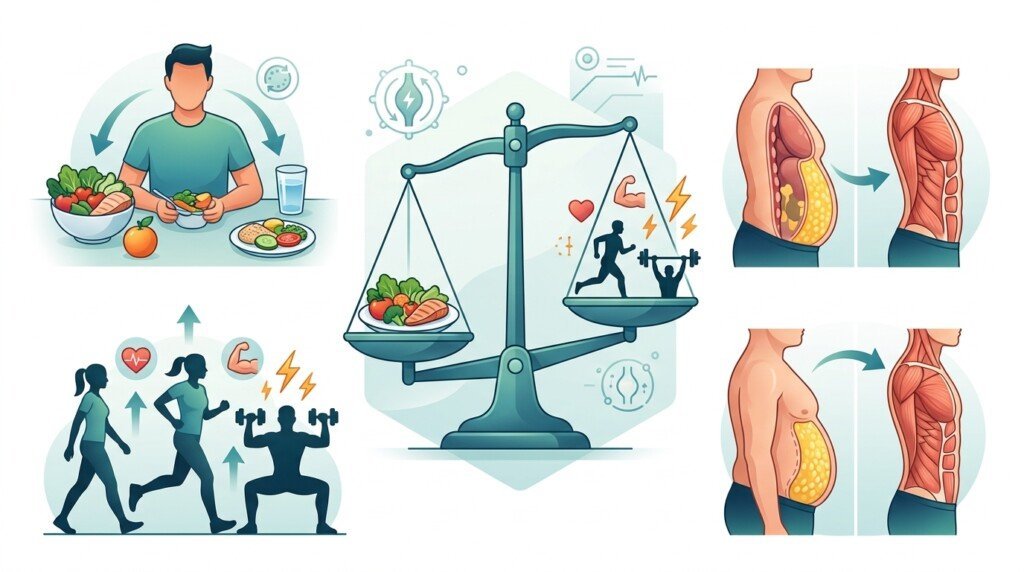
Weight Loss Still Depends on Energy Balance
Body weight is primarily influenced by energy balance.
This means:
- Calories consumed
- Calories burned
- Daily activity
- Exercise
- Resting metabolism
A calorie deficit remains necessary for fat loss.
However, the size of that deficit matters.
Moderate deficits are generally easier to maintain than extremely restrictive ones.
Very Low Calorie Intake Changes Behavior
When calorie intake becomes excessively low, many people naturally experience:
- Lower energy
- Increased hunger
- Stronger cravings
- Reduced motivation
- Poor workout performance
These changes often make consistency much more difficult.
Rather than helping weight loss, they increase the likelihood of overeating later.
Your Body Becomes More Efficient
Your body naturally adapts when food becomes scarce.
It attempts to conserve energy by reducing calorie expenditure where possible.
Examples include:
- Moving less throughout the day
- Lower spontaneous activity
- Reduced exercise intensity
- Slight reductions in resting energy expenditure
These adaptations are normal survival responses rather than evidence that fat loss has stopped.
Muscle Preservation Becomes More Difficult
Large calorie deficits combined with inadequate protein intake increase the risk of losing lean muscle.
Maintaining muscle is important because it supports:
- Physical strength
- Healthy metabolism
- Daily function
- Long-term body composition
This is one reason balanced nutrition remains essential during weight loss.
Sustainable Progress Matters More Than Fast Progress
Losing weight as quickly as possible often sounds appealing.
However, approaches that are impossible to maintain rarely produce lasting success.
The long-term strategies discussed throughout Sustainable Weight Loss focus on gradual, realistic progress instead of extreme restriction.
What Is Metabolic Adaptation?
One of the biggest reasons people believe eating too little “stops” weight loss is misunderstanding metabolic adaptation.
This is a real biological process, but it is often exaggerated online.
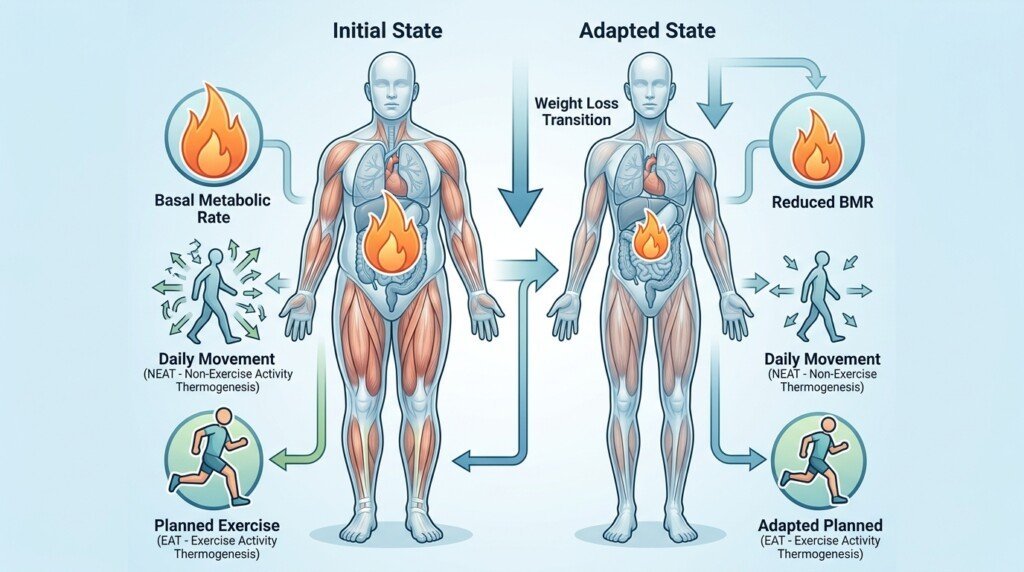
Your Metabolism Adjusts Naturally
As you lose weight, your body requires fewer calories.
A smaller body burns less energy because it has less tissue to maintain and move throughout the day.
This reduction happens naturally.
It does not mean your metabolism is damaged.
Resting Energy Expenditure Decreases
Your body burns calories even while resting.
This is commonly called your resting metabolic rate or basal metabolic rate (BMR).
After weight loss, these calorie needs gradually decline because:
- Body weight decreases
- Lean mass may decrease slightly
- Daily energy demands become lower
These changes are expected during successful weight loss.
Daily Movement Often Decreases
Metabolic adaptation involves more than resting metabolism.
Many people unknowingly reduce their everyday movement.
You might:
- Sit longer
- Walk less
- Stand less frequently
- Fidget less
- Take fewer steps
Although each change seems small, together they reduce total daily calorie expenditure.
Exercise Efficiency Improves
As fitness improves, familiar workouts become easier.
Your body performs the same activities using less energy than before.
This improvement reflects better fitness rather than reduced fat-burning ability.
Gradually increasing exercise difficulty helps continue this adaptation in a positive direction.
Metabolic Adaptation Is Normal
Metabolic adaptation should be viewed as your body’s normal response to weight loss.
It is not permanent.
It does not prevent continued fat loss.
Instead, it simply means your nutrition and activity habits may need occasional adjustment as your body changes.
Understanding this process also helps explain why many people experience a Weight Loss Plateau after losing significant weight.
Is Starvation Mode Real?
Few topics create more confusion than starvation mode.
Some people believe eating too little completely stops fat loss.
Others believe starvation mode does not exist at all.
The scientific answer lies somewhere between these extremes.
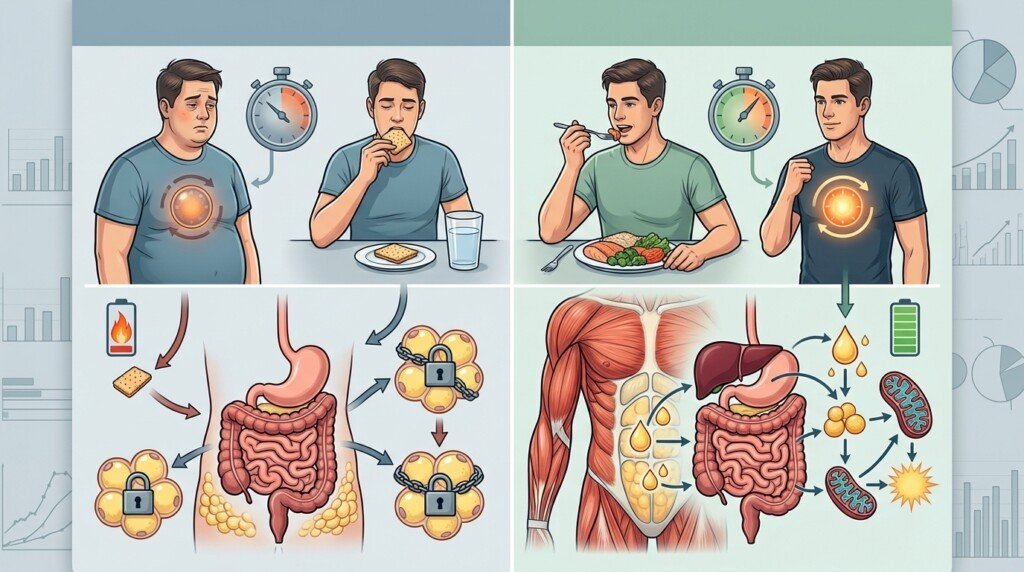
The Popular Version Is a Myth
The common claim that eating too little causes your body to stop burning fat completely is not supported by scientific evidence.
If energy intake remains below energy expenditure, the body continues using stored energy.
Fat loss does not suddenly stop because calories become too low.
Real Adaptation Does Occur
Although fat loss continues, your body adapts by conserving energy where possible.
These adaptations include:
- Lower resting energy expenditure
- Reduced daily movement
- Increased hunger
- Greater fatigue
- Lower exercise performance
These changes make maintaining a calorie deficit more difficult over time.
Extreme Restriction Creates New Problems
Very restrictive diets often increase the likelihood of:
- Muscle loss
- Nutrient deficiencies
- Poor recovery
- Fatigue
- Reduced exercise quality
- Difficulty maintaining healthy habits
These effects explain why aggressive dieting frequently fails in the long term.
Moderate Deficits Work Better
Research consistently supports moderate calorie deficits combined with:
- Adequate protein
- Regular physical activity
- Resistance training
- Good sleep
- Balanced nutrition
These habits improve adherence while supporting healthy fat loss.
Protein intake becomes especially important during calorie restriction, which is one reason High-Protein Foods That Burn Fat emphasizes preserving lean muscle throughout a weight loss journey.
How Can You Tell If You’re Eating Too Little?
Many people unintentionally create a calorie deficit that is larger than necessary.
Recognizing the signs early helps you make appropriate adjustments before consistency begins to suffer.

Persistent Fatigue
Feeling tired occasionally is normal.
However, constant fatigue despite adequate sleep may indicate that your body is not receiving enough energy to support your daily activities.
Constant Hunger
While some hunger is expected during weight loss, feeling hungry almost all day is different.
Persistent hunger often makes long-term adherence extremely difficult.
Poor Workout Performance
If your strength, endurance, or recovery consistently decline, your body may not be receiving enough fuel to support exercise.
Performance often suffers before noticeable weight changes occur.
Difficulty Concentrating
Very low calorie intake may affect:
- Focus
- Memory
- Productivity
- Decision-making
These changes often make meal planning and healthy habits even more difficult to maintain.
Increased Irritability
Mood changes frequently accompany prolonged calorie restriction.
Feeling unusually irritable or emotionally exhausted may reflect both physical and psychological fatigue.
Recovery Takes Longer
Sore muscles lasting much longer than expected, declining exercise performance, or persistent exhaustion after workouts may all indicate inadequate recovery.
Balanced nutrition and sufficient energy intake help support normal recovery while maintaining progress.
How Many Calories Are Too Few?
There is no single calorie number that is too low for everyone. Your age, sex, height, weight, activity level, muscle mass, and overall health all influence how many calories your body needs each day.
Instead of searching for a universal number, it is more useful to understand whether your calorie intake is meeting your body’s basic energy requirements while still creating a realistic calorie deficit.
The goal is not to eat as little as possible. The goal is to eat enough to support health, daily activity, and muscle preservation while allowing gradual fat loss.
Your Basal Metabolic Rate Matters
Your basal metabolic rate (BMR) represents the calories your body needs to perform essential functions such as:
- Breathing
- Circulating blood
- Maintaining body temperature
- Supporting organ function
- Repairing tissues
These calories are required even if you spend the entire day resting.
Although total calorie needs are always higher than BMR because they include movement and exercise, understanding this concept highlights why extremely restrictive diets are difficult to sustain.
Larger Deficits Are Not Always Better
Many people believe that doubling their calorie deficit will double their results.
Unfortunately, the body does not work that way.
Very large calorie deficits often lead to:
- Greater hunger
- Lower energy
- Reduced workout quality
- Poor recovery
- Increased muscle loss
- Difficulty maintaining healthy habits
For most people, moderate calorie deficits provide a better balance between fat loss and long-term adherence.
Nutrient Quality Still Matters
Two eating plans may contain the same number of calories but produce very different experiences.
Meals built around:
- Lean protein
- Vegetables
- Fruits
- Whole grains
- Healthy fats
- Fiber
often improve fullness and provide important nutrients that support recovery and overall health.
Choosing nutrient-dense foods also makes it easier to remain consistent during a calorie deficit.
Avoid Comparing Yourself to Others
Calorie needs vary considerably between individuals.
A calorie intake that supports healthy progress for one person may be far too little or too much for someone else.
Rather than copying another person’s diet, focus on building a plan that matches your own body, activity level, and lifestyle.
How Can You Create a Sustainable Calorie Deficit?
The most successful weight loss plans are rarely the most restrictive.
Instead, they create a calorie deficit that feels realistic enough to maintain for months rather than days.
A sustainable approach supports steady fat loss while preserving muscle, energy, and overall well-being.

Build Meals Around Protein
Protein plays an important role during weight loss because it helps support lean muscle while increasing fullness.
Good protein sources include:
- Eggs
- Fish
- Chicken
- Greek yogurt
- Cottage cheese
- Beans
- Lentils
- Tofu
Including protein at each meal often makes controlling hunger much easier.
Practical examples can be found throughout High-Protein Foods That Burn Fat, where balanced meal ideas are discussed.
Eat Plenty of Fiber
Fiber-rich foods digest more slowly and help you feel satisfied for longer.
Examples include:
- Vegetables
- Fruits
- Whole grains
- Legumes
- Oats
- Beans
Combining fiber with protein often creates meals that are filling without being excessively high in calories.
Stay Physically Active
Exercise supports far more than calorie burning.
Regular physical activity helps:
- Preserve muscle
- Improve fitness
- Support heart health
- Increase daily energy expenditure
- Improve overall well-being
Walking and resistance training are especially valuable because they are effective and sustainable for many people.
Plan Meals Ahead
Meal planning reduces the likelihood of impulsive food choices.
Preparing meals in advance also makes portion control more consistent during busy weeks.
Simple planning often improves adherence more than making complicated nutrition rules.
Focus on Long-Term Consistency
One perfect week will not determine your long-term results.
Likewise, one challenging weekend will not erase months of healthy habits.
The most successful approach is one that remains realistic throughout different stages of life.
This philosophy is central to Metabolic Health, where consistent lifestyle habits are emphasized over short-term fixes.
When Should You Increase Calories?
Increasing calories may sound contradictory during weight loss, but there are situations where doing so can support long-term success.
The purpose is not to accelerate fat loss overnight but to improve recovery, adherence, and overall sustainability.

Your Energy Levels Remain Extremely Low
If you consistently feel exhausted despite sleeping well and following your plan carefully, it may be worth reviewing whether your calorie intake has become unnecessarily restrictive.
Persistent fatigue can make healthy habits difficult to maintain.
Workout Performance Continues Declining
Exercise should challenge you, but it should not leave you feeling progressively weaker every week.
If strength, endurance, or recovery continue declining despite consistent training, your body may benefit from additional energy.
Hunger Becomes Difficult to Manage
Constant hunger often leads to overeating later.
Rather than cycling between extreme restriction and overeating, creating a more moderate calorie deficit usually supports better long-term consistency.
Your Weight Has Plateaued Despite Excellent Consistency
Sometimes increasing calories temporarily toward maintenance can improve adherence after a prolonged period of restriction.
This is not a “cheat period.”
Instead, it is a structured approach that continues emphasizing nutritious foods while giving both your body and mind a break from constant dieting.
If you’ve already confirmed that your progress has genuinely stalled, the practical strategies discussed in How to Break a Weight Loss Plateau can help you decide when adjustments are appropriate.
Focus on Sustainability
The healthiest weight loss plan is one you can continue long after reaching your goal.
Building flexible eating habits that fit your lifestyle is usually far more successful than following highly restrictive plans that become impossible to maintain.
Intermittent eating patterns may also work well for some people when they remain balanced and sustainable, which is why Intermittent Fasting Weight Loss focuses on consistency rather than extreme restriction.

Frequently Asked Questions
1. Can eating too little stop weight loss?
Eating too little does not completely stop fat loss if you remain in a calorie deficit. However, very low calorie intake can reduce daily movement, lower exercise performance, increase hunger, and make long-term consistency much more difficult.
2. Is starvation mode real?
The popular idea that your body completely stops burning fat because you eat too little is a myth. What does happen is metabolic adaptation, where your body becomes more efficient and conserves energy, making continued weight loss more challenging but not impossible.
3. How can I tell if I’m eating too little?
Common signs include persistent fatigue, constant hunger, declining workout performance, slower recovery, difficulty concentrating, and increased irritability.
4. Should I increase my calories if my weight loss has stalled?
It depends on the situation. If you’ve been following a very restrictive diet for a long time and your energy, recovery, and consistency are declining, a temporary increase toward maintenance calories may support long-term adherence.
5. What is the best calorie deficit for sustainable weight loss?
A moderate calorie deficit combined with adequate protein, regular physical activity, balanced nutrition, and consistent healthy habits is generally easier to maintain than extreme calorie restriction.
Final Thoughts
Understanding the relationship between Eating Too Little stop Weight Loss helps separate common myths from scientific evidence. Fat loss still depends on maintaining a calorie deficit, but creating an excessively large deficit can make your journey much harder by increasing hunger, reducing energy, slowing recovery, and making healthy habits difficult to sustain.
Instead of focusing on eating as little as possible, aim to create a balanced calorie deficit that supports your body’s needs while allowing steady, realistic progress. Prioritize protein, include plenty of fiber-rich foods, stay physically active, and give yourself enough energy to recover from daily life and exercise.
Long-term success is built through consistency, not extreme restriction. By choosing a sustainable approach and making thoughtful adjustments as your body changes, you can continue losing fat while protecting your health, preserving muscle, and building habits that remain effective long after you reach your goal.
Disclaimer:
This post may contain affiliate links. If you purchase through them, we may earn a small commission at no extra cost to you. Also, this content is for informational purposes only and does not substitute professional medical advice.
Ready to Start Your Journey?
Use our free 7-in-1 Weight Loss Toolkit to calculate your numbers and build your plan in minutes.
Open Free Tools →