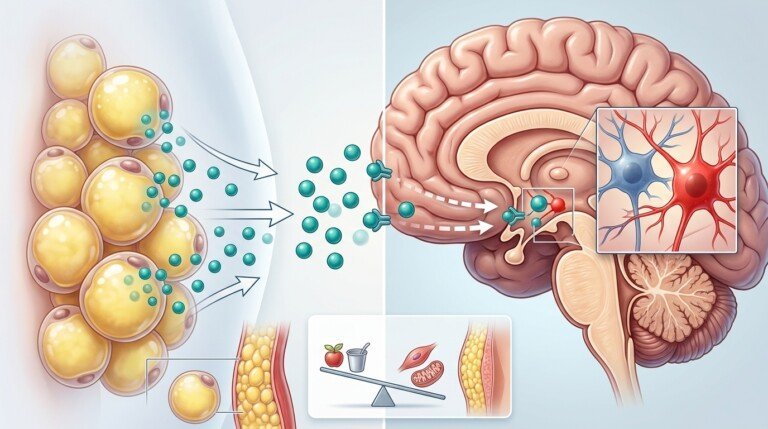

Which Exercises Are Best for Menopause Weight Loss? A Complete Guide
Exercise for Menopause Weight Loss is one of the most effective strategies for managing weight, preserving muscle, and supporting long-term health during menopause. Many women notice that the workouts they relied on in their thirties no longer produce the same results. The scale may stop moving, belly fat becomes more noticeable, and recovery takes longer after exercise. These changes often lead to frustration and the belief that exercise simply does not work anymore.
Fortunately, that is not true.
Exercise remains one of the most effective ways to support weight management during menopause. The difference is that your body now benefits from a more balanced approach. Instead of spending hours doing cardio or trying intense workout programs every day, research shows that combining strength training, aerobic exercise, daily movement, flexibility work, and proper recovery delivers the greatest long-term benefits.
During menopause, preserving muscle becomes just as important as losing fat. Muscle naturally declines with age, and lower estrogen levels can accelerate that process. Since muscle helps support metabolism, maintaining it makes healthy weight management easier while also improving strength, bone health, balance, and independence.
Exercise also provides benefits that extend far beyond the number on the scale. Regular physical activity supports cardiovascular health, improves sleep quality, reduces stress, increases energy, strengthens bones, and helps maintain mobility throughout healthy aging.
The encouraging news is that you do not need to become an athlete to experience these benefits. A well-designed routine that fits your schedule can improve body composition while remaining realistic enough to maintain for years.
In this article, you’ll learn which types of Exercise for Menopause Weight Loss are supported by research, why strength training deserves a central role, whether walking is enough, how to combine cardio with resistance training, how often to exercise, what a beginner-friendly weekly plan looks like, and which common mistakes may slow your progress.
Which Exercises Are Best for Menopause Weight Loss?
There is no single exercise that melts away body fat during menopause.
Instead, the most effective approach combines several forms of physical activity that work together to improve body composition while supporting overall health.
Each type of exercise provides unique benefits.

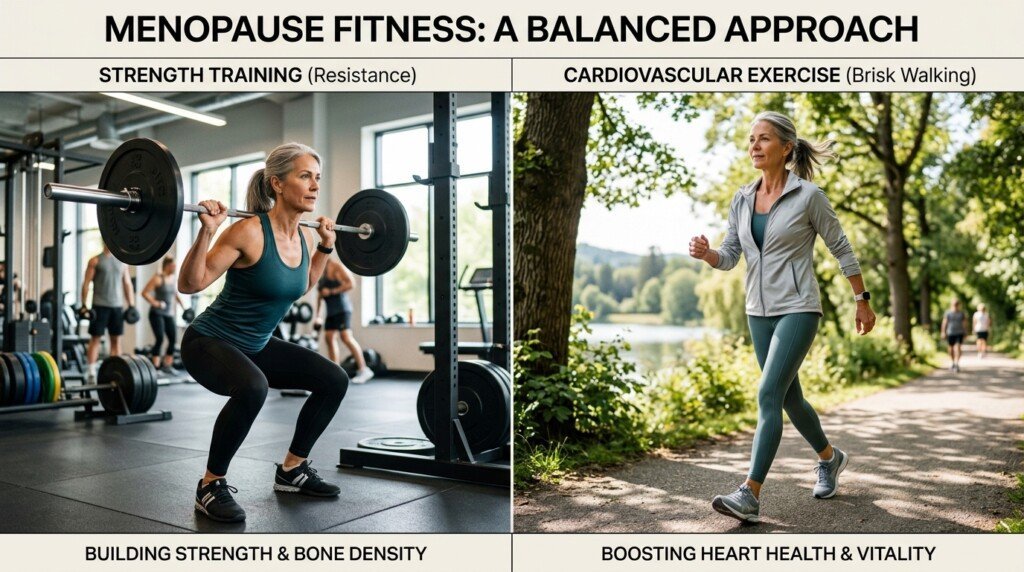
Resistance Training
Resistance training should become the foundation of most menopause workout programs.
It helps:
- Preserve lean muscle
- Improve strength
- Support metabolism
- Maintain bone density
- Improve body composition
Examples include:
- Dumbbell exercises
- Resistance bands
- Machines
- Bodyweight exercises
- Free weights
Maintaining muscle is one of the most valuable long-term investments for healthy aging.
Walking
Walking remains one of the easiest forms of exercise to maintain consistently.
Regular walking supports:
- Heart health
- Daily calorie expenditure
- Recovery
- Stress reduction
- Long-term consistency
Walking also complements strength training without placing excessive stress on the body.
Aerobic Exercise
Cardiovascular exercise improves overall fitness while increasing energy expenditure.
Examples include:
- Brisk walking
- Cycling
- Swimming
- Dancing
- Hiking
- Rowing
Choose activities that you genuinely enjoy because consistency matters more than intensity.
Flexibility and Balance Training
Mobility often receives less attention than strength or cardio.
However, flexibility and balance help maintain:
- Joint health
- Coordination
- Posture
- Functional movement
Yoga and stretching are excellent additions to a weekly exercise routine.
Recovery Is Part of the Program
Exercise only creates positive adaptations when recovery is adequate.
Recovery includes:
- Quality sleep
- Rest days
- Protein intake
- Hydration
- Stress management
Skipping recovery often reduces long-term progress.
Why Is Strength Training So Important?
Strength training is often considered the most valuable exercise during menopause because it addresses many of the physical changes that naturally occur with aging.
Rather than focusing only on calorie burning, resistance exercise improves the body’s ability to maintain lean tissue.

Muscle Naturally Declines With Age
Beginning in midlife, women gradually lose muscle mass if they do not perform resistance exercise regularly.
Lower estrogen may accelerate this process during menopause.
Maintaining muscle supports:
- Healthy metabolism
- Better posture
- Functional strength
- Physical independence
Muscle Helps Support Metabolism
Lean muscle requires energy to maintain.
Although muscle is not a magic calorie burner, preserving it helps maintain daily energy expenditure.
This makes healthy weight management easier over the long term.
Bone Health Also Benefits
Bone density naturally declines during menopause.
Weight-bearing resistance exercise helps stimulate bones while supporting long-term skeletal health.
Strong muscles and strong bones work together to reduce injury risk as you age.
Functional Fitness Improves
Strength training makes everyday activities easier.
Examples include:
- Carrying groceries
- Climbing stairs
- Lifting grandchildren
- Gardening
- Household chores
Improving strength often increases confidence while encouraging greater daily movement.
Progressive Improvement Matters
The goal is gradual improvement rather than lifting extremely heavy weights.
Increase difficulty over time by:
- Adding repetitions
- Increasing resistance
- Improving technique
- Performing more challenging variations
Women interested in building muscle safely often recognize many of these principles throughout Strength Training for Fat Loss, where progressive resistance training is explained in greater detail.
Is Walking Enough During Menopause?
Walking is one of the healthiest forms of exercise available.
However, walking alone usually is not enough to fully address the physical changes associated with menopause.
It works best when combined with resistance training.

Walking Supports Daily Activity
Regular walking helps increase total daily movement.
This contributes to overall calorie expenditure without requiring exhausting workouts.
Walking is also easy to recover from, making it suitable for nearly every fitness level.
Walking Improves Heart Health
Brisk walking supports:
- Cardiovascular fitness
- Blood circulation
- Blood pressure
- Endurance
These benefits extend well beyond weight management.
Walking Helps Manage Stress
Many women find walking relaxing.
Walking outdoors may improve mood while helping reduce stress that sometimes interferes with healthy eating habits.
Walking Alone Does Not Preserve Muscle
While walking offers many benefits, it provides relatively little resistance for maintaining lean muscle.
This is why combining walking with strength training generally produces better results.
Walking Is Still One of the Best Habits
Aim to walk consistently throughout the week.
Even several shorter walks often provide meaningful health benefits.
Women deciding between different forms of cardio often appreciate the comparisons discussed throughout Walking vs Running for Weight Loss, where both options are evaluated for different fitness levels.
Should You Combine Cardio and Strength Training?
Yes.
Research consistently supports combining both forms of exercise.
Together they improve body composition more effectively than relying on either one alone.
Strength Training Preserves Muscle
Resistance exercise protects lean tissue while supporting metabolism.
This becomes increasingly important during menopause.
Cardio Supports Heart Health
Aerobic exercise improves:
- Endurance
- Heart health
- Lung function
- Daily calorie expenditure
These benefits complement strength training rather than replacing it.
Combined Training Supports Better Body Composition
Women who include both strength and cardio often improve:
- Muscle mass
- Fat loss
- Fitness
- Mobility
- Overall health
The goal is balance rather than choosing one over the other.
Weekly Variety Reduces Boredom
Alternating workouts also keeps exercise enjoyable.
A varied program might include:
- Strength training
- Walking
- Cycling
- Yoga
- Swimming
Enjoyable routines are far easier to maintain over the long term.
Nutrition Supports Training
Exercise works best when supported by balanced nutrition.
Adequate protein, hydration, and overall diet quality help maximize recovery while preserving muscle.
Many women successfully combine these exercise strategies with the nutrition principles discussed throughout Best Diet for Menopause Weight Loss, creating a comprehensive approach to healthy body composition.
How Often Should You Exercise?
One of the most common questions women ask is whether they need to exercise every day to lose weight during menopause.
The answer is no.
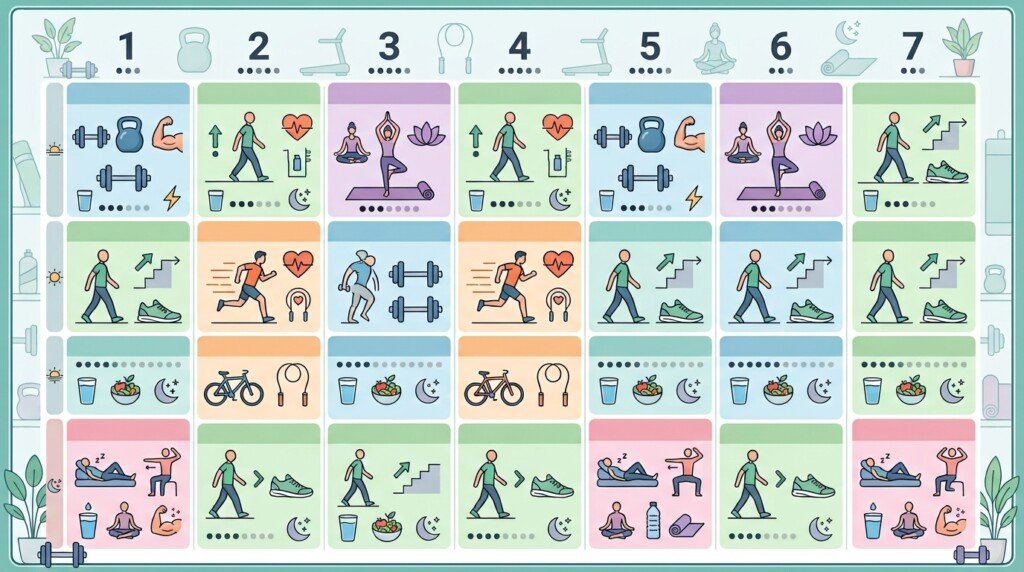
Consistency matters far more than exercising for long hours. A balanced weekly routine that includes strength training, cardiovascular activity, flexibility work, and recovery is usually far more effective than exercising intensely every day.
The goal is building a routine that supports your body instead of exhausting it.
Aim for Regular Weekly Movement
Rather than focusing on one perfect workout, think about your total weekly activity.
Most women benefit from including:
- Strength training
- Walking
- Aerobic exercise
- Flexibility work
- Recovery days
This balanced approach supports healthy aging while reducing the risk of burnout.
Strength Train Two to Three Times Each Week
Strength sessions do not need to be daily.
Allowing muscles time to recover helps them become stronger.
A typical schedule might include:
- Monday
- Wednesday
- Friday
Each session can focus on the entire body using compound exercises.
Include Cardio Most Days
Cardiovascular activity supports heart health and overall fitness.
This does not always mean formal workouts.
Walking, cycling, swimming, or dancing all contribute toward daily activity.
Even twenty to thirty minutes most days provides meaningful health benefits.
Move Throughout the Day
Structured workouts are important, but everyday movement also matters.
Simple habits include:
- Walking after meals
- Taking the stairs
- Parking farther away
- Standing regularly
- Gardening
- Household chores
These small activities increase total daily energy expenditure without feeling like exercise.
Recovery Days Improve Results
Rest is part of progress.
Recovery allows muscles to repair while reducing fatigue and lowering injury risk.
Active recovery may include:
- Easy walking
- Stretching
- Gentle yoga
- Mobility exercises
Giving your body time to recover helps maintain long-term consistency.
What Does a Beginner Workout Week Look Like?
Starting an exercise routine during menopause does not require spending hours in the gym.
The best workout plan is one that feels realistic enough to maintain consistently.
Here is an example of a balanced beginner week.

Monday
Full-Body Strength Training
Focus on basic movements such as:
- Squats
- Rows
- Chest presses
- Lunges
- Shoulder presses
Finish with light stretching.
Tuesday
Brisk Walking
Walk for 30 to 45 minutes at a comfortable pace.
Add gentle stretching afterward.
Wednesday
Strength Training
Repeat a full-body workout using manageable resistance.
Concentrate on proper technique rather than heavy weights.
Thursday
Active Recovery
Choose one activity such as:
- Yoga
- Mobility work
- Easy walking
- Stretching
The goal is movement without intense effort.
Friday
Strength Training
Perform another full-body resistance workout while gradually increasing repetitions or resistance when appropriate.
Saturday
Cardio Day
Choose an enjoyable activity such as:
- Cycling
- Swimming
- Hiking
- Dancing
- Brisk walking
Aim for moderate intensity.
Sunday
Recovery and Gentle Movement
Enjoy light activity like:
- Walking
- Stretching
- Gardening
Recovery helps prepare your body for the following week.
Adjust According to Your Fitness Level
If you are new to exercise, begin with shorter sessions.
Gradually increase:
- Duration
- Intensity
- Resistance
- Weekly activity
Steady progress is safer and easier to maintain than doing too much too quickly.
Which Mistakes Should You Avoid?
Many women work extremely hard but unknowingly choose habits that slow progress.
Avoiding these common mistakes often improves results without increasing workout time.
Doing Only Cardio
Long cardio sessions without strength training may make preserving muscle more difficult.
Combining both forms of exercise provides better support for healthy body composition.
Skipping Recovery
Recovery is essential for:
- Muscle repair
- Energy
- Injury prevention
- Long-term consistency
Training hard every day often leads to fatigue instead of better results.
Ignoring Nutrition
Exercise alone rarely produces optimal weight loss.
Balanced nutrition provides the energy and protein needed for recovery while supporting muscle maintenance.
Expecting Fast Results
Healthy body composition changes gradually.
Looking for dramatic weekly changes often leads to frustration.
Instead, focus on improvements in:
- Strength
- Energy
- Endurance
- Waist circumference
- Clothing fit
These changes often appear before major weight loss.
Comparing Yourself With Others
Every woman’s menopause journey is different.
Hormonal changes, age, fitness level, and lifestyle all influence progress.
Compare yourself only with where you were a few months ago.
Choosing Exercise You Dislike
The most effective workout is the one you will continue doing.
If you dislike running, choose walking.
If you enjoy dancing, make it part of your routine.
Enjoyment increases consistency, and consistency drives long-term success.
Forgetting Healthy Aging
Exercise during menopause is not only about weight loss.
It also supports:
- Bone strength
- Muscle preservation
- Better balance
- Improved mobility
- Heart health
- Independence
These benefits continue paying dividends long after body weight stabilizes.
Women deciding whether strength or cardio deserves more attention often find the comparisons discussed throughout Cardio vs Strength Training for Weight Loss especially helpful. Those who prefer early workouts may also benefit from the practical ideas in Morning Exercise for Weight Loss, making it easier to build a routine that fits everyday life.

Frequently Asked Questions
1. What is the best exercise for menopause weight loss?
A combination of resistance training, walking, aerobic exercise, and flexibility work provides the greatest benefits for reducing body fat while preserving muscle and supporting healthy aging.
2. Is walking enough during menopause?
Walking is excellent for cardiovascular health and daily calorie expenditure, but combining it with strength training provides better support for muscle preservation, metabolism, and body composition.
3. How many days a week should I exercise during menopause?
Most women benefit from two to three strength training sessions each week, regular walking or cardio on most days, and one or two recovery days that include light movement.
4. Does strength training help menopause weight loss?
Yes. Strength training helps preserve lean muscle, supports metabolism, improves bone density, and contributes to healthier body composition during menopause.
5. Is HIIT necessary during menopause?
No. High-intensity interval training can be included if appropriate for your fitness level, but it is not essential. Many women achieve excellent results with resistance training, walking, moderate cardio, and consistent daily movement.
Final Thoughts
Finding the right Exercise for Menopause Weight Loss is not about exercising longer or harder. It is about choosing a balanced routine that works with your changing body. Resistance training helps preserve muscle and support metabolism, walking and cardio improve heart health and daily energy expenditure, while flexibility, balance, and recovery keep you moving comfortably as you age.
The most successful exercise plan is one you can maintain consistently. Three well-planned strength sessions, regular walking, moderate aerobic exercise, and enough recovery often produce better long-term results than extreme workout programs that quickly become exhausting. Pairing exercise with balanced nutrition, adequate protein, and healthy sleep habits creates a powerful foundation for improving body composition and supporting overall health.
Remember that progress is measured by much more than the number on the scale. Increased strength, better endurance, improved mobility, healthier waist measurements, higher energy levels, and greater confidence are all meaningful signs that your efforts are paying off. By focusing on sustainable movement rather than perfection, you can successfully manage your weight during menopause while building a stronger, healthier body for the years ahead.
Disclaimer:
This post may contain affiliate links. If you purchase through them, we may earn a small commission at no extra cost to you. Also, this content is for informational purposes only and does not substitute professional medical advice.
Train Smarter, Not Harder
Use our free Fitness Toolkit to find your heart rate zones and calories burned in minutes.
Open Free Tools →