Can You Be Skinny and Still Have Visceral Fat? Understanding TOFI
Skinny Fat Visceral Fat is a concept that surprises many people. Most of us associate dangerous body fat with being overweight, but body weight alone doesn’t always tell the whole story. It is possible to appear slim on the outside while carrying unhealthy amounts of fat deep inside the abdomen. This hidden fat is known as visceral fat, and it can affect long-term health even when the number on the scale looks normal.
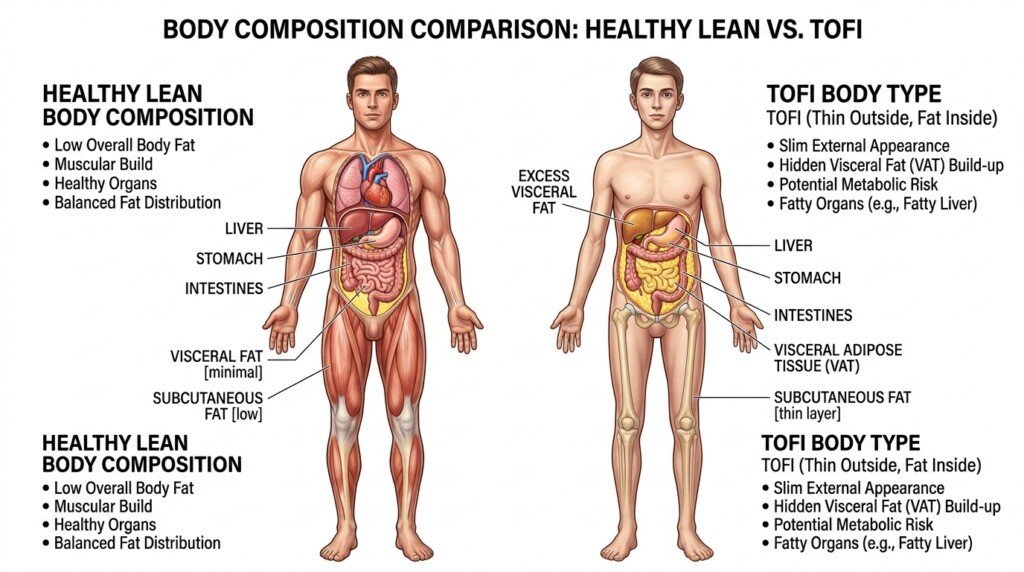
Healthcare professionals often use the term TOFI, which stands for Thin Outside, Fat Inside, to describe people who have a normal Body Mass Index (BMI) but still carry excessive visceral fat and relatively low muscle mass. Because this fat surrounds vital organs such as the liver, stomach, pancreas, and intestines, it may increase the risk of metabolic health problems without causing obvious changes in appearance.
One reason TOFI often goes unnoticed is that people who are naturally thin may assume they are automatically healthy. However, body composition matters just as much as body weight. A person with a healthy BMI but high body fat percentage and low muscle mass may have a greater health risk than someone who weighs more but has a healthier distribution of body fat.
The encouraging news is that hidden visceral fat can often be reduced through healthy lifestyle habits. Improving nutrition, building muscle, staying physically active, and monitoring waist circumference can all support better metabolic health.
In this guide, you’ll learn how skinny fat visceral fat develops, what TOFI means, why some thin people carry hidden belly fat, how to recognize the signs, and the lifestyle habits that help improve body composition naturally.
Can Thin People Have Visceral Fat?
Yes.
Many people assume visceral fat only affects individuals who are overweight or obese, but research shows that thin people can also develop excess visceral fat.
Body weight measures how heavy someone is, but it does not show:
- Where body fat is stored
- How much muscle they have
- Their body fat percentage
- Their metabolic health
Two people with the same weight and BMI can have completely different body compositions.
One person may have:
- Higher muscle mass
- Lower body fat
- Less visceral fat
Another person may have:
- Lower muscle mass
- Higher body fat percentage
- More visceral fat around internal organs
Although they appear similar from the outside, their health risks may be very different.
This is why healthcare professionals increasingly emphasize body composition rather than body weight alone.
If you’re new to this topic, our guide on Visceral Fat explains why internal belly fat affects health differently than other types of body fat.
What Is TOFI (Thin Outside, Fat Inside)?
TOFI stands for Thin Outside, Fat Inside.
It describes people who appear lean but carry unhealthy amounts of visceral fat and often have relatively low muscle mass.
Unlike obesity, TOFI usually cannot be identified simply by looking at someone.
A person with TOFI may:
- Wear small clothing sizes
- Have a normal BMI
- Look slim
- Still carry excessive fat around internal organs
This hidden fat often develops gradually over many years.
Because it is stored beneath the abdominal muscles, it remains invisible from the outside.
Why Is TOFI Important?
TOFI demonstrates that appearance does not always reflect health.
Someone who appears fit may still have several metabolic risk factors if they have excessive visceral fat.
This is why routine health screenings remain valuable regardless of body weight.
Many people first learn about TOFI after routine blood work or body composition testing reveals unexpected metabolic concerns.
Why Can Normal-Weight People Develop Visceral Fat?
Several factors influence where your body stores fat.
Genetics
Genetics play an important role in fat distribution.
Some individuals naturally store more fat around their abdomen than others, even while maintaining a healthy body weight.
Low Muscle Mass
Muscle tissue supports healthy body composition.
People with relatively little muscle may have a higher body fat percentage despite appearing slim.
This is one reason resistance training is important for overall health.
Physical Inactivity
Someone can maintain a stable body weight while living a largely sedentary lifestyle.
Low activity levels often contribute to poorer body composition over time.
Poor Nutrition
Consistently eating highly processed foods while consuming too little protein, fiber, fruits, and vegetables may gradually contribute to higher body fat percentages.
Aging
As people age, muscle mass naturally declines unless steps are taken to preserve it through regular physical activity and resistance exercise.
This gradual shift may increase body fat percentage even if body weight changes very little.
Lifestyle Habits
Sleep quality, stress, daily movement, and long-term eating habits all influence overall body composition.
Rather than one single cause, TOFI usually develops from a combination of several lifestyle and genetic factors.
How Can You Tell If You Have Hidden Visceral Fat?
Hidden visceral fat can be difficult to recognize because it isn’t always reflected in your appearance.
However, several clues may suggest that further evaluation is worthwhile.

Waist Circumference
A growing waistline is often one of the simplest indicators of increasing abdominal fat.
Even people with a healthy BMI should monitor their waist circumference over time.
Body Composition Testing
Body composition analysis provides much more information than body weight alone.
Depending on the method used, it can estimate:
- Body fat percentage
- Muscle mass
- Fat distribution
- Visceral fat estimates
Fitness Level
Someone with low cardiovascular fitness and low muscle strength despite appearing thin may benefit from evaluating their overall body composition.
Although fitness alone cannot diagnose visceral fat, it often provides useful context.
Medical Evaluation
Healthcare providers may recommend additional evaluation if routine blood tests reveal metabolic risk factors despite a normal body weight.
If you’re interested in learning practical ways to estimate internal belly fat, our guide on How to Measure Visceral Fat explains several home and clinical methods.
How Can You Reduce Visceral Fat If You’re Already Thin?
Being thin does not mean you should focus on losing as much weight as possible.
For people with a TOFI body type, the goal is usually to improve body composition rather than simply reduce the number on the scale.
This means lowering excess visceral fat while maintaining or increasing lean muscle mass.
Focus on Nutrient-Dense Foods
Building meals around whole, minimally processed foods helps support a healthier body composition.
Aim to include:
- Lean protein
- Vegetables
- Fruits
- Whole grains
- Legumes
- Nuts and seeds
- Healthy fats
These foods provide essential nutrients while supporting muscle maintenance and overall metabolic health.
Rather than following restrictive diets, focus on creating eating habits you can maintain over the long term.
For practical meal ideas, our guide on High-Protein Foods That Burn Fat explains how protein-rich foods support healthy body composition.
Increase Daily Movement
Even if your weight remains stable, becoming more physically active improves overall health.
Simple activities include:
- Walking
- Cycling
- Swimming
- Hiking
- Taking the stairs
- Gardening
Regular movement supports cardiovascular fitness while complementing strength training.
Prioritize Sleep
Sleep influences recovery, energy, appetite regulation, and long-term health.
Adults generally benefit from seven to nine hours of quality sleep each night.
Consistent sleep also helps support regular physical activity and healthier food choices.
Stay Consistent
Improving body composition takes time.
Unlike crash diets, sustainable lifestyle habits gradually reduce visceral fat while supporting stronger muscles and better overall fitness.
Small improvements repeated every day are far more effective than short periods of extreme effort.
Does Strength Training Help Skinny Fat Individuals?
Yes.
For people with a TOFI body type, strength training is often one of the most valuable lifestyle habits.
Unlike activities that focus primarily on burning calories, resistance training helps preserve and build lean muscle mass.
Increasing muscle provides several important benefits.

Improved Body Composition
Building muscle changes the proportion of lean tissue to body fat.
Someone may weigh nearly the same while becoming significantly healthier because their body composition improves.
Better Metabolic Health
Muscle tissue plays an important role in overall metabolism.
Maintaining healthy muscle mass supports better long-term metabolic function and physical performance.
Increased Functional Strength
Strength training improves more than appearance.
Daily activities often become easier, including:
- Carrying groceries
- Climbing stairs
- Lifting objects
- Standing from a seated position
- Maintaining balance
These improvements contribute to long-term quality of life.
Beginner-Friendly Exercises
People new to resistance training can begin with simple movements such as:
- Bodyweight squats
- Wall push-ups
- Glute bridges
- Resistance band rows
- Dumbbell presses
- Step-ups
The focus should always be on proper technique before increasing resistance.
If you’d like a complete beginner guide, our article on Strength Training for Fat Loss explains how resistance exercise supports healthier body composition.
When Should You Seek Medical Advice?
Many people with a TOFI body type feel healthy and experience no obvious symptoms.
However, certain situations may warrant professional evaluation.
Consider speaking with a healthcare provider if you have:
- A steadily increasing waist circumference despite maintaining a normal weight
- High blood pressure
- Elevated cholesterol
- Abnormal blood sugar results
- A family history of cardiovascular disease or metabolic disorders
- Concerns about your body composition or metabolic health
A healthcare professional may recommend additional assessments such as:
- Waist circumference measurement
- Body composition analysis
- Blood pressure testing
- Blood tests
- Imaging studies when appropriate
Early evaluation allows potential concerns to be identified before more serious health problems develop.
Remember that preventive healthcare is valuable regardless of your clothing size or Body Mass Index.

Frequently Asked Questions
1. Can skinny people really have visceral fat?
Yes. A person with a normal body weight can still carry excess visceral fat around internal organs. This pattern is often described as TOFI, or Thin Outside, Fat Inside.
2. Is BMI enough to determine whether I have visceral fat?
No. BMI estimates body weight relative to height, but it does not measure body fat percentage, muscle mass, or fat distribution.
3. Is TOFI the same as being overweight?
No. People with TOFI often have a normal Body Mass Index but carry higher levels of visceral fat and lower muscle mass than expected.
4. Does strength training help people with hidden visceral fat?
Yes. Resistance training helps build or preserve muscle while improving overall body composition, making it an important part of a healthy lifestyle for individuals with a TOFI body type.
5. Can women and men both develop TOFI?
Yes. Both men and women can develop hidden visceral fat, although fat distribution patterns often differ between the sexes.
Our guide on Weight Loss for Women vs Men explains how hormones and body composition influence these differences.
Final Thoughts
Understanding skinny fat visceral fat helps challenge the common belief that a normal body weight always means good health. People with a TOFI body type may look lean on the outside while carrying excess visceral fat around important internal organs. Because this fat is hidden, it often goes unnoticed until body composition or metabolic health is evaluated.
The encouraging news is that TOFI is not permanent. Building muscle through strength training, eating a balanced diet, staying physically active, getting enough sleep, and maintaining consistent healthy habits can all improve body composition over time.
Rather than focusing only on the number on the scale, pay attention to the quality of your body composition, your waist circumference, your fitness level, and your overall metabolic health. These factors provide a much clearer picture of long-term wellness than body weight alone.
Disclaimer:
This post may contain affiliate links. If you purchase through them, we may earn a small commission at no extra cost to you. Also, this content is for informational purposes only and does not substitute professional medical advice.
Ready to Start Your Journey?
Use our free 7-in-1 Weight Loss Toolkit to calculate your numbers and build your plan in minutes.
Open Free Tools →