Why Do Men and Women Store Fat Differently? The Science Explained
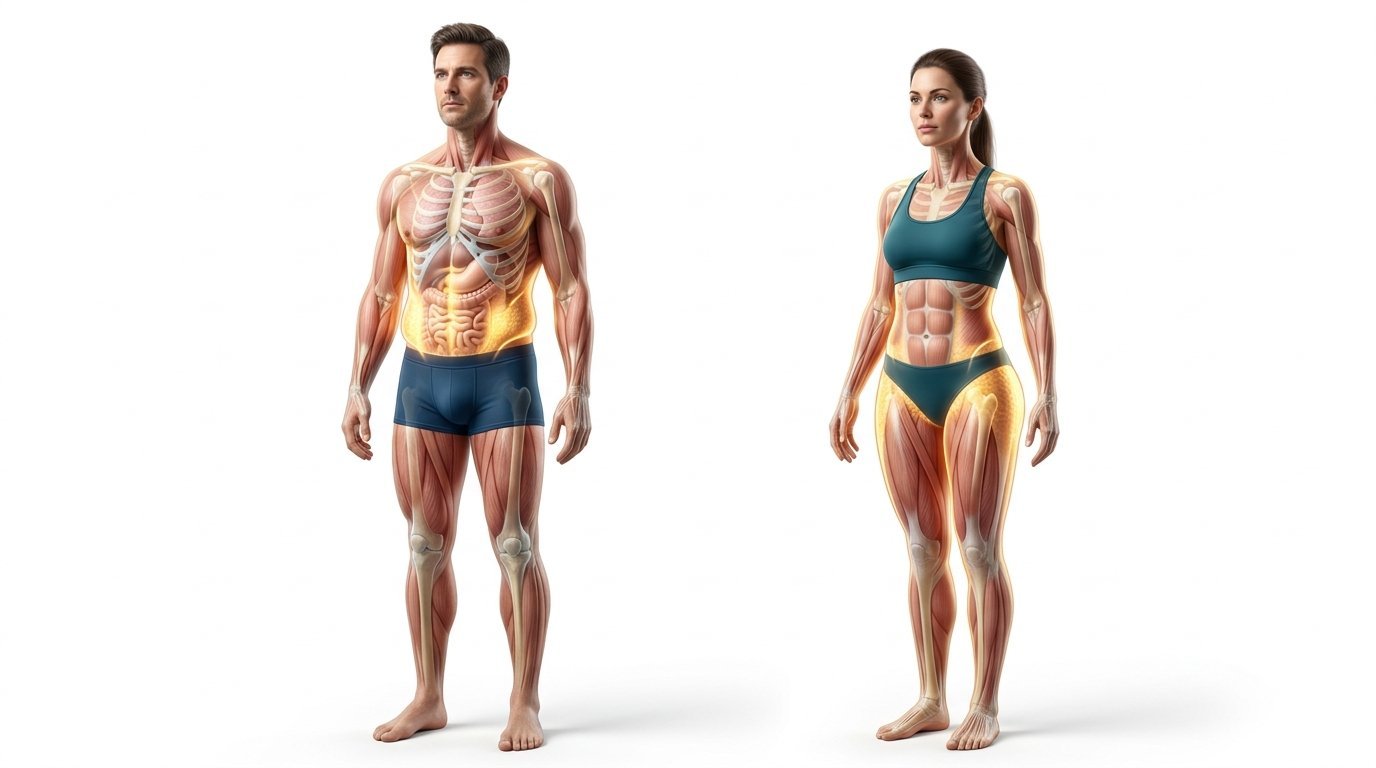
If you’ve ever noticed that men tend to gain weight around their abdomen while women often carry more fat around their hips and thighs, you’re not imagining it. These patterns are among the most well-established differences in human biology, and they are influenced by a combination of hormones, genetics, aging, and body composition.
Fat distribution refers to where your body stores excess fat. While overall body fat percentage is important, the location of stored fat can have an even greater impact on health. Two people with the same body fat percentage may have very different health risks depending on whether most of their fat is stored beneath the skin or around internal organs.
Men and women have evolved to store fat differently for biological reasons. Women naturally require higher essential body fat levels to support reproductive health, while men typically carry more lean muscle mass and store a greater proportion of fat around the abdomen. These differences begin during puberty and continue throughout adulthood, although they gradually change with age.
Hormones such as estrogen and testosterone play a major role, but they are not the only factors involved. Genetics, physical activity, nutrition, and lifestyle also influence body composition and fat storage patterns. During menopause, declining estrogen levels often shift fat storage toward the abdominal area, while age-related muscle loss affects both men and women.
Understanding Fat Distribution helps explain why weight loss looks different from person to person. It also highlights why comparing your body to someone else’s can be misleading. Instead of focusing on where your body stores fat, it is more helpful to understand the biological processes that shape body composition and learn which healthy habits support long-term metabolic health.
In this article, you’ll learn why men and women store fat differently, which hormones influence fat distribution, why men often gain belly fat, why women typically store more fat around the hips, how fat distribution changes with age, whether you can change where your body stores fat, and which lifestyle habits help support a healthier body composition.
Why Do Men and Women Store Fat Differently?
Men and women store body fat differently because their bodies have different biological roles, hormone profiles, and patterns of muscle development.
These differences are completely normal and begin during puberty.
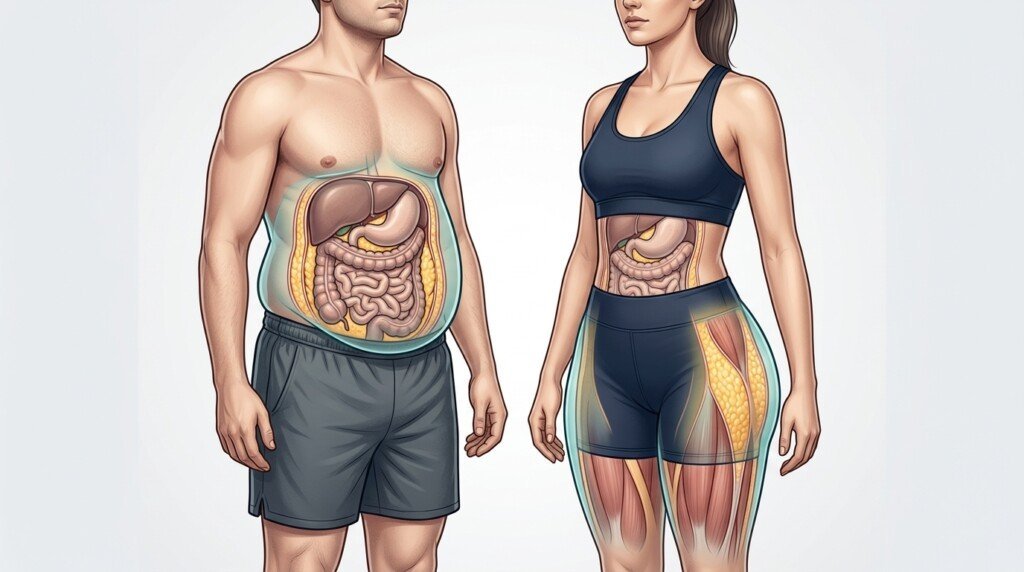
Hormones Shape Body Composition
Sex hormones strongly influence where fat is stored.
As hormone levels change throughout life, body composition changes as well.
These hormonal effects help explain why men and women usually develop different fat distribution patterns.
Reproductive Biology Influences Fat Storage
Women naturally maintain more essential body fat than men.
This additional fat supports important biological functions, including:
- Hormone production
- Pregnancy
- Breastfeeding
- Reproductive health
Men do not have these same physiological requirements, so their average body fat percentage is typically lower.
Muscle Mass Plays an Important Role
Men generally have greater lean muscle mass than women.
More muscle influences:
- Overall body composition
- Daily energy expenditure
- Fat distribution patterns
Although individuals vary considerably, this difference contributes to the distinct body shapes commonly seen between the sexes.
Genetics Influence Fat Storage
Genes help determine:
- Body shape
- Bone structure
- Fat distribution
- Muscle development
Some people naturally store more fat around the hips, while others tend to accumulate more around the abdomen.
Lifestyle affects these patterns, but genetics establish the underlying tendency.
Fat Distribution Is Normal Variation
There is no single “correct” place for the body to store fat.
Healthy individuals naturally display a wide range of body shapes.
Understanding these differences encourages realistic expectations when working toward healthier body composition.
The relationship between fat storage and overall body composition is explored further throughout Body Fat, where the different functions of adipose tissue are explained.
Which Hormones Affect Fat Distribution?
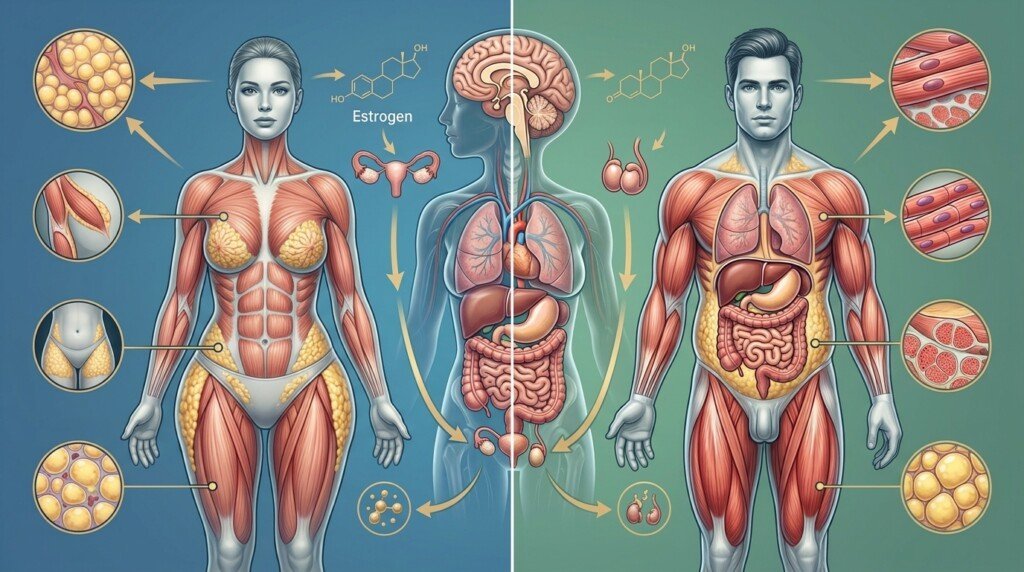
Hormones act as chemical messengers that influence where fat is stored throughout the body.
Although several hormones are involved, estrogen and testosterone have the greatest influence on the typical differences between men and women.
Estrogen
Estrogen encourages fat storage around the:
- Hips
- Thighs
- Buttocks
This pattern is commonly called a gynoid fat distribution.
It supports reproductive health and represents the typical pattern seen in many premenopausal women.
Testosterone
Testosterone contributes to:
- Greater muscle development
- Lower overall body fat
- Increased abdominal fat storage when excess fat accumulates
Men with higher lean muscle mass often have lower overall body fat percentages than women.
Insulin
Insulin helps regulate blood sugar while also influencing how excess energy is stored.
Its primary role is maintaining normal glucose balance, but long-term changes in insulin sensitivity may also affect body composition.
The relationship between insulin and body fat is discussed in greater detail throughout Weight Loss for Women vs Men, where metabolic differences between the sexes are explored.
Stress Hormones
Hormones released during periods of stress influence many aspects of metabolism.
While stress alone does not determine fat distribution, long-term unhealthy lifestyle habits associated with chronic stress may contribute to changes in body composition.
This relationship is explained further throughout Hormonal Belly Fat.
Hormones Work Together
No single hormone controls fat distribution.
Instead, multiple hormones interact with:
- Genetics
- Nutrition
- Physical activity
- Sleep
- Aging
Together, these factors determine how body fat is distributed over time.
Why Do Men Store More Belly Fat?
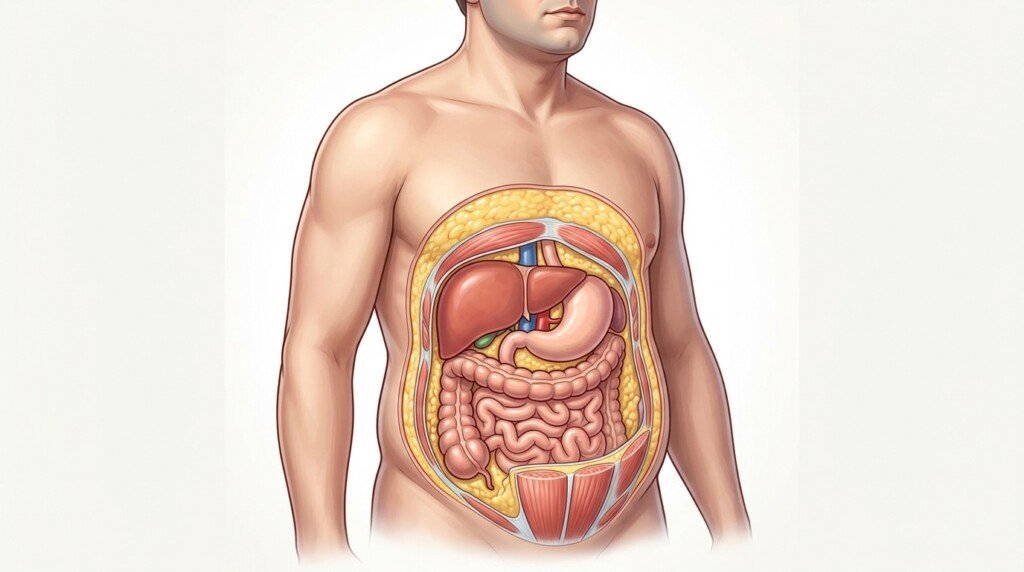
Men commonly store a greater proportion of body fat around the abdomen.
This pattern is one of the most recognizable differences in human body composition.
Abdominal Fat Is More Common in Men
Compared with women, men are generally more likely to accumulate fat around the waist.
This creates the familiar “apple-shaped” body pattern.
Not every man develops this pattern, but it is more common because of hormonal and genetic influences.
Visceral Fat Is More Common
Men also tend to carry a greater proportion of visceral fat.
Unlike subcutaneous fat beneath the skin, visceral fat surrounds internal organs inside the abdominal cavity.
Higher levels of visceral fat are associated with increased metabolic health risks.
The characteristics of abdominal fat are explained further throughout Visceral Fat.
Muscle Mass Changes Fat Distribution
Because men usually have greater lean muscle mass, fat often accumulates differently than it does in women.
Body composition reflects the balance between:
- Muscle
- Bone
- Water
- Fat
rather than body weight alone.
Lifestyle Still Matters
Although biology influences fat distribution, lifestyle continues to play an important role.
Regular physical activity, balanced nutrition, adequate sleep, and maintaining a healthy body weight all influence long-term body composition.
Individual Differences Are Normal
Not every man stores fat primarily around the abdomen.
Genetics produce considerable variation, even among individuals with similar body weights.
Comparisons with others are rarely helpful because body composition is highly individual.
Why Do Women Store More Fat Around the Hips?
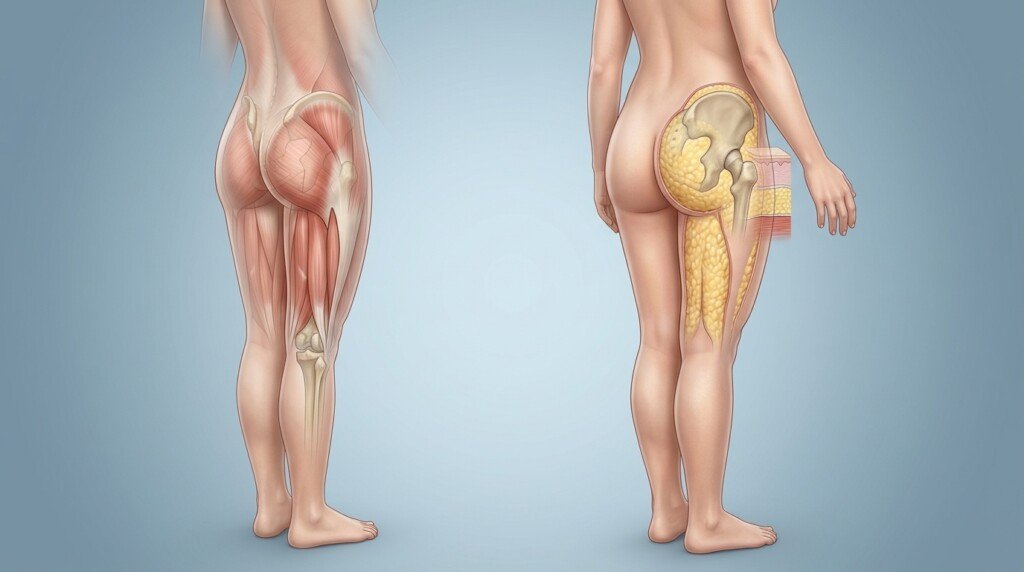
Women naturally store a larger proportion of body fat around the hips, thighs, and buttocks.
This pattern develops gradually during puberty and remains common throughout much of adulthood.
Lower Body Fat Supports Reproductive Health
Fat stored around the lower body serves several important biological functions.
This pattern has long been associated with healthy reproductive physiology.
It represents a normal feature of female body composition rather than a health problem.
Subcutaneous Fat Is More Common
Much of the fat stored around the hips and thighs is subcutaneous fat.
Unlike visceral fat, subcutaneous fat sits directly beneath the skin.
Although excessive body fat of any type should be managed appropriately, lower-body subcutaneous fat generally behaves differently from abdominal visceral fat.
Estrogen Helps Maintain This Pattern
During the reproductive years, estrogen encourages fat storage in the lower body.
This hormonal influence contributes to the classic “pear-shaped” body pattern seen in many women.
Pregnancy Influences Fat Storage
Pregnancy places significant energy demands on the body.
Natural fat storage helps provide energy reserves that support both pregnancy and breastfeeding.
This is another reason women naturally maintain higher essential body fat levels.
Every Woman Has a Unique Pattern
Not every woman stores fat primarily around the hips and thighs.
Genetics strongly influence body shape.
Some women naturally accumulate more abdominal fat, while others store most fat below the waist.
These variations are completely normal.
Does Fat Distribution Change With Age?
Yes.
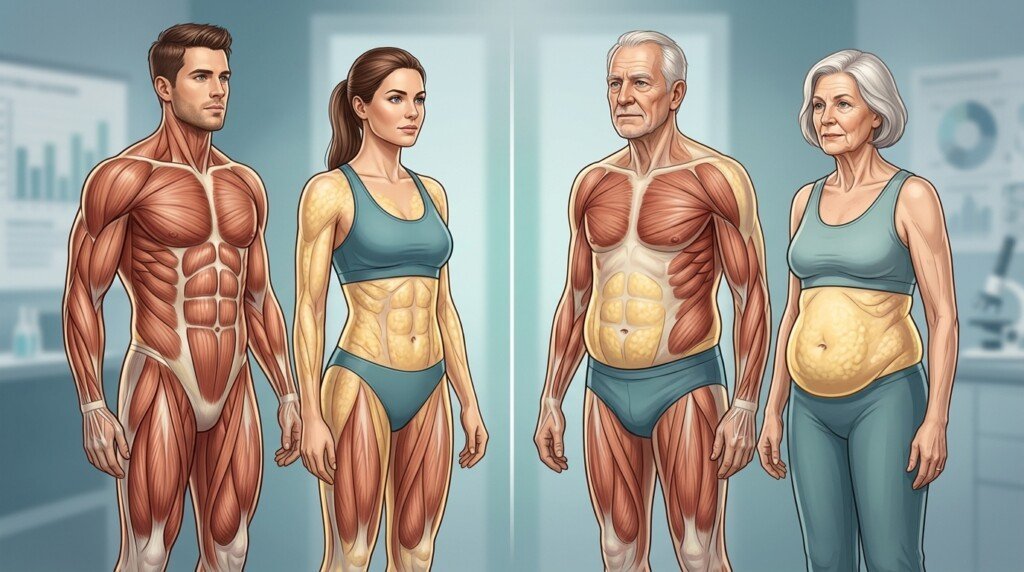
Fat distribution naturally changes throughout life. Even if your body weight remains relatively stable, aging influences where fat is stored, how much muscle you maintain, and how your overall body composition changes.
These changes occur gradually and are influenced by hormones, genetics, lifestyle, and physical activity.
Muscle Mass Gradually Declines
Beginning in adulthood, most people slowly lose lean muscle mass as they age.
This natural process changes body composition by increasing the proportion of body fat, even when body weight stays the same.
Maintaining muscle becomes increasingly important because it supports:
- Strength
- Mobility
- Balance
- Physical independence
- Healthy metabolism
Hormonal Changes Affect Fat Storage
Hormones continue changing throughout adulthood.
In women, declining estrogen during menopause often shifts fat storage toward the abdominal area.
In men, gradual reductions in testosterone over time may also influence muscle mass and body composition.
These hormonal changes are normal parts of aging rather than signs that something is wrong.
More about these changes is discussed throughout Menopause Weight Loss, where the effects of menopause on body composition are explained in greater detail.
Visceral Fat Often Increases With Age
As people grow older, the proportion of visceral fat commonly increases.
Unlike subcutaneous fat, visceral fat surrounds internal organs inside the abdomen.
This increase helps explain why waist circumference often becomes a more useful health measurement during middle age and beyond.
Lifestyle Can Slow These Changes
Although aging cannot be stopped, healthy habits can significantly influence body composition.
Regular exercise, balanced nutrition, quality sleep, and maintaining muscle through resistance training all help reduce age-related changes.
Healthy Aging Looks Different for Everyone
No two people age in exactly the same way.
Genetics, lifestyle, medical history, and physical activity all contribute to individual differences.
Rather than comparing yourself with others, focus on maintaining healthy habits that support long-term well-being.
Can You Change Where Your Body Stores Fat?
This is one of the most frequently asked questions about body composition.
The answer is straightforward.
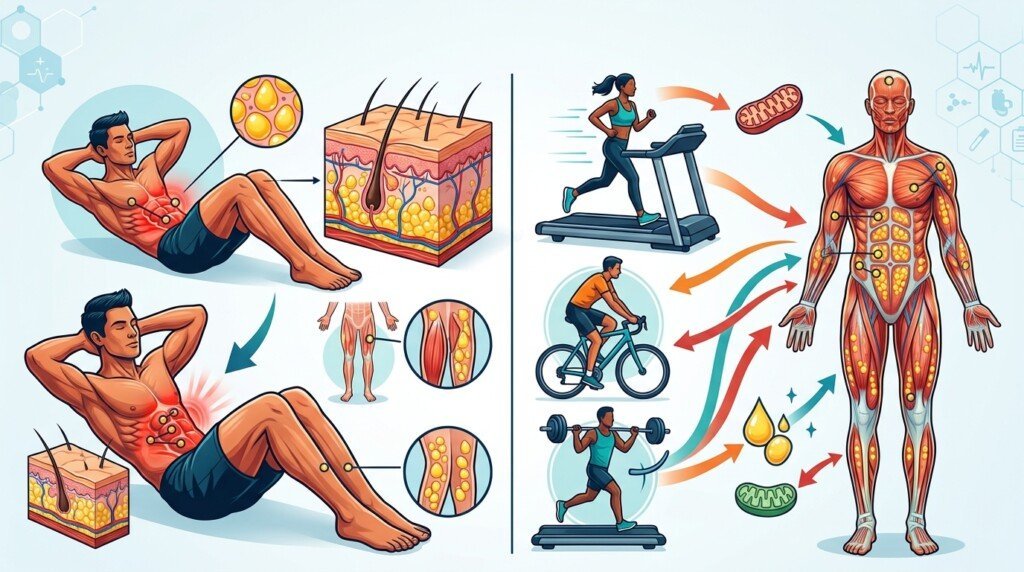
You can reduce overall body fat, but you cannot choose exactly where your body loses fat first.
Genetics Determine Fat Distribution
Your genes largely determine where your body prefers to store fat.
Some people naturally carry more fat around the:
- Abdomen
- Hips
- Thighs
- Arms
- Buttocks
These patterns are established long before adulthood.
Spot Reduction Is a Myth
Many people believe exercises such as crunches can remove belly fat directly.
Scientific research has consistently shown this is not how fat loss works.
Exercises strengthen muscles underneath the fat but do not selectively remove fat from that area.
Overall fat loss occurs throughout the body according to individual genetics.
Fat Loss Happens Gradually
As body fat decreases, your body decides where stored fat is released.
Some people notice changes in the face first.
Others lose fat from the legs, arms, or waist before seeing changes elsewhere.
This pattern varies from one individual to another.
Building Muscle Can Change Appearance
Although you cannot control fat distribution, increasing lean muscle can improve body shape.
Resistance training helps create a healthier body composition by preserving muscle while body fat decreases.
This often produces visible improvements even when body weight changes slowly.
Focus on Overall Body Composition
Instead of trying to change one specific area, aim to improve total body composition.
Reducing excess body fat while maintaining muscle supports:
- Better movement
- Greater strength
- Improved metabolic health
- Long-term wellness
Which Lifestyle Habits Support Healthy Body Composition?
Healthy body composition develops from consistent daily habits rather than dramatic short-term efforts.
Although genetics influence fat distribution, lifestyle plays a powerful role in determining overall health.
Stay Physically Active
Regular movement increases daily energy expenditure while supporting cardiovascular health.
Helpful activities include:
- Walking
- Cycling
- Swimming
- Strength training
- Recreational sports
Consistency is more important than choosing one perfect activity.
Prioritize Strength Training
Resistance exercise helps preserve lean muscle while reducing excess body fat.
Maintaining muscle supports:
- Healthy metabolism
- Functional strength
- Bone health
- Physical independence
Strength training becomes increasingly valuable with age.
Eat Balanced Meals
Nutritious meals built around:
- Lean protein
- Whole grains
- Fruits
- Vegetables
- Healthy fats
provide the nutrients needed to support body composition and long-term health.
Rather than eliminating entire food groups, focus on building sustainable eating habits.
Get Enough Sleep
Sleep supports nearly every aspect of metabolic health.
Consistent sleep helps regulate:
- Appetite
- Recovery
- Physical performance
- Daily energy levels
Poor sleep often makes healthy habits more difficult to maintain.
Manage Stress
Healthy stress management supports both physical and emotional well-being.
Helpful approaches include:
- Walking outdoors
- Meditation
- Deep breathing
- Spending time with family
- Reading
- Relaxing hobbies
These activities help make long-term healthy habits easier to maintain.
Stay Consistent
The most successful body composition changes come from small habits repeated consistently.
There is no single workout or meal that determines your results.
Instead, long-term consistency gradually improves overall health.
Understanding your Body Fat Percentage alongside your overall Body Fat provides a much clearer picture of progress than body weight alone. Regardless of whether you naturally store more fat around your abdomen or hips, maintaining healthy lifestyle habits remains the most effective strategy for improving body composition over time.

Frequently Asked Questions
1. Why do men and women store fat differently?
Men and women store fat differently because of differences in hormones, genetics, muscle mass, and reproductive biology. Estrogen encourages more fat storage around the hips and thighs, while men are generally more likely to accumulate fat around the abdomen.
2. Which hormones affect fat distribution?
The primary hormones influencing fat distribution are estrogen and testosterone. Other hormones involved in metabolism and energy regulation also contribute, but fat distribution results from multiple factors working together.
3. Does fat distribution change with age?
Yes. Aging often leads to gradual muscle loss and changes in hormone levels, which can alter where body fat is stored. Many people experience increased abdominal fat as they grow older.
4. Can you change where your body stores fat?
No. Genetics largely determine fat distribution. While you can reduce overall body fat through healthy lifestyle habits, you cannot choose which body area loses fat first.
5. What habits support healthy body composition?
Regular physical activity, strength training, balanced nutrition, quality sleep, stress management, and long-term consistency all support healthier body composition and overall metabolic health.
Final Thoughts
Understanding Fat Distribution helps explain why people with similar body weights can have very different body shapes and health profiles. Men and women naturally store fat differently because of hormones, genetics, muscle mass, and reproductive biology. These differences are a normal part of human physiology and continue to evolve throughout life as hormone levels and body composition change with age.
While you cannot choose where your body stores or loses fat, you can influence your overall body composition through healthy lifestyle habits. Regular physical activity, resistance training, balanced nutrition, quality sleep, and effective stress management all help reduce excess body fat while preserving lean muscle. These habits improve health regardless of whether your body naturally stores more fat around the abdomen, hips, or thighs.
The most important takeaway is that healthy body composition is about far more than appearance. Focusing on sustainable habits rather than trying to change one specific body area supports better metabolic health, greater physical function, and healthier aging. By understanding the science behind fat distribution, you can set realistic expectations and build long-term habits that benefit both your body and your overall well-being.
Disclaimer:
This post may contain affiliate links. If you purchase through them, we may earn a small commission at no extra cost to you. Also, this content is for informational purposes only and does not substitute professional medical advice.
Ready to Start Your Journey?
Use our free 7-in-1 Weight Loss Toolkit to calculate your numbers and build your plan in minutes.
Open Free Tools →