
Which Exercises Are Best for Visceral Fat? A Beginner-Friendly Guide
Exercises for Visceral Fat are among the most searched topics by people who want to lose stubborn belly fat and improve their overall health. While no workout can target fat around your organs directly, research consistently shows that regular physical activity is one of the most effective ways to reduce visceral fat over time.
Unlike the fat just beneath your skin, visceral fat surrounds important organs such as the liver, stomach, and intestines. Carrying excess visceral fat has been linked to a higher risk of heart disease, metabolic syndrome, fatty liver disease, and other chronic health conditions. Fortunately, visceral fat often responds well to consistent exercise, especially when combined with healthy lifestyle habits.
The key is choosing exercises you can perform regularly. You don’t need complicated workout programs or advanced fitness equipment. Walking, resistance training, aerobic exercise, and high-intensity interval training can all contribute to reducing visceral fat while improving strength, endurance, and overall metabolic health.
In this guide, you’ll learn which exercises for visceral fat are supported by research, how different types of workouts compare, how often you should exercise, and what kind of progress you can realistically expect over time.
Can Exercise Reduce Visceral Fat?
Yes. Exercise is one of the most effective lifestyle strategies for reducing visceral fat.
Your body cannot choose to burn fat from one specific area during a workout. Instead, regular physical activity increases energy expenditure, helping reduce overall body fat over time. As total body fat decreases, visceral fat often decreases as well.
One reason visceral fat receives so much attention is that it tends to respond well to consistent exercise. Even moderate improvements in activity levels can lead to measurable reductions in abdominal fat while supporting better metabolic health.
Exercise also provides benefits that extend beyond fat loss.
Regular physical activity can help:
- Improve cardiovascular fitness
- Preserve muscle mass
- Support healthy metabolism
- Improve insulin sensitivity
- Increase daily energy levels
- Support long-term weight management
Unlike short-term fitness challenges, the greatest benefits come from building an exercise routine that fits your lifestyle and can be maintained consistently.
If you’re still learning about this type of abdominal fat, our guide on Visceral Fat explains why reducing it is an important goal for long-term health.
Which Exercises Burn Visceral Fat the Fastest?
Many people want to know which workout burns visceral fat the fastest.
The honest answer is that no single exercise has been proven to target visceral fat directly.
Instead, the most effective approach combines several forms of physical activity.

Brisk Walking
Walking remains one of the most accessible exercises for beginners.
It requires no special equipment, places relatively little stress on the joints, and can easily fit into most daily routines.
A brisk walking pace that slightly increases your breathing rate can contribute significantly to weekly physical activity goals.
Cycling
Whether outdoors or on a stationary bike, cycling improves cardiovascular fitness while helping increase calorie expenditure.
Cycling is also a low-impact option for individuals who experience discomfort during running.
Swimming
Swimming provides a full-body workout while placing minimal stress on the joints.
Because multiple muscle groups work together, swimming is an excellent choice for improving overall fitness.
Jogging
Jogging burns more calories than walking at the same duration and can be an effective option for individuals who already have a basic fitness foundation.
However, walking remains an excellent alternative for beginners.
For a detailed comparison, read our article on Walking vs Running for Weight Loss.
Rowing
Rowing engages both the upper and lower body while improving cardiovascular endurance.
This makes it one of the most efficient full-body aerobic exercises available.
Rather than searching for one “perfect” workout, choose activities you genuinely enjoy. Consistency almost always produces better long-term results than short bursts of intense exercise followed by inactivity.
Is Walking Enough to Reduce Visceral Fat?
Walking is often underestimated because of its simplicity.
In reality, regular walking can be remarkably effective when performed consistently.
Walking helps by:
- Increasing daily calorie expenditure
- Improving cardiovascular fitness
- Supporting healthy metabolism
- Encouraging long-term consistency
- Reducing prolonged sitting
For beginners, walking is frequently the best place to start because it is easy to maintain over months and years.
How Much Walking Is Enough?
Many health organizations recommend aiming for at least 150 minutes of moderate-intensity activity each week.
This could mean:
- 30 minutes per day
- Five days each week
Some people prefer shorter walks several times throughout the day, while others enjoy one longer session.
Either approach can contribute to healthier activity levels.
Walking after meals is another simple strategy many people find practical because it fits naturally into daily routines.
The most important factor is consistency rather than speed.
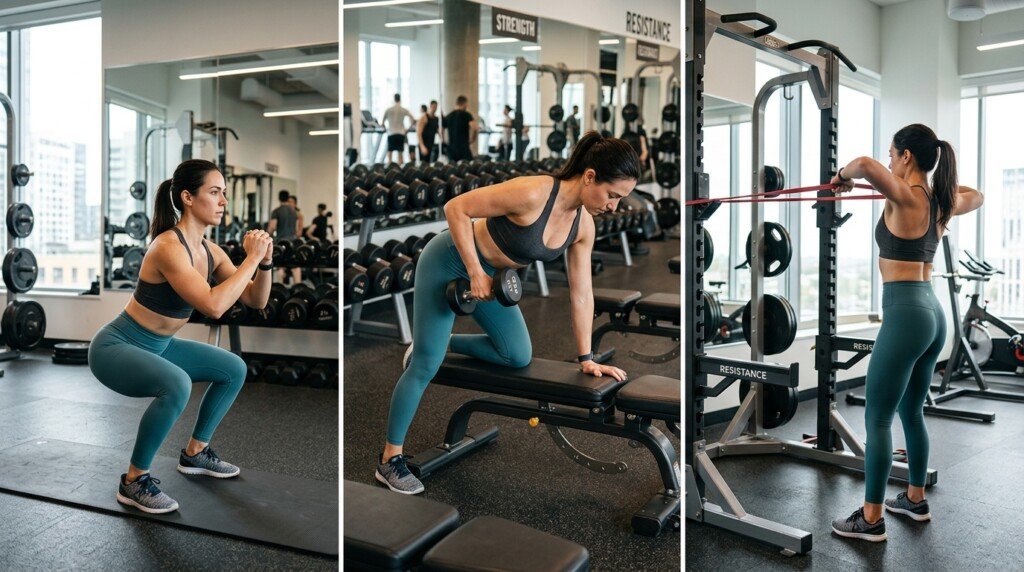
Does Strength Training Help Reduce Visceral Fat?
Strength training plays an important role in improving body composition.
While lifting weights does not specifically burn visceral fat during the workout, it helps preserve and build lean muscle mass.
Maintaining muscle provides several important benefits.
Muscle Supports Metabolism
Muscle tissue requires energy to maintain.
Although the increase in resting metabolism is often smaller than many people expect, preserving muscle remains an important part of long-term health and weight management.
Strength Training Improves Body Composition
People who lose weight without resistance training often lose both fat and muscle.
Including strength training helps maintain lean tissue while encouraging healthier body composition.
Beginner-Friendly Strength Exercises
Beginners can start with basic movements such as:
- Squats
- Wall push-ups
- Bodyweight lunges
- Glute bridges
- Resistance band rows
- Dumbbell shoulder presses
Focus on learning proper technique before increasing resistance.
Our guide on Strength Training for Fat Loss explains how resistance exercise supports healthy body composition.
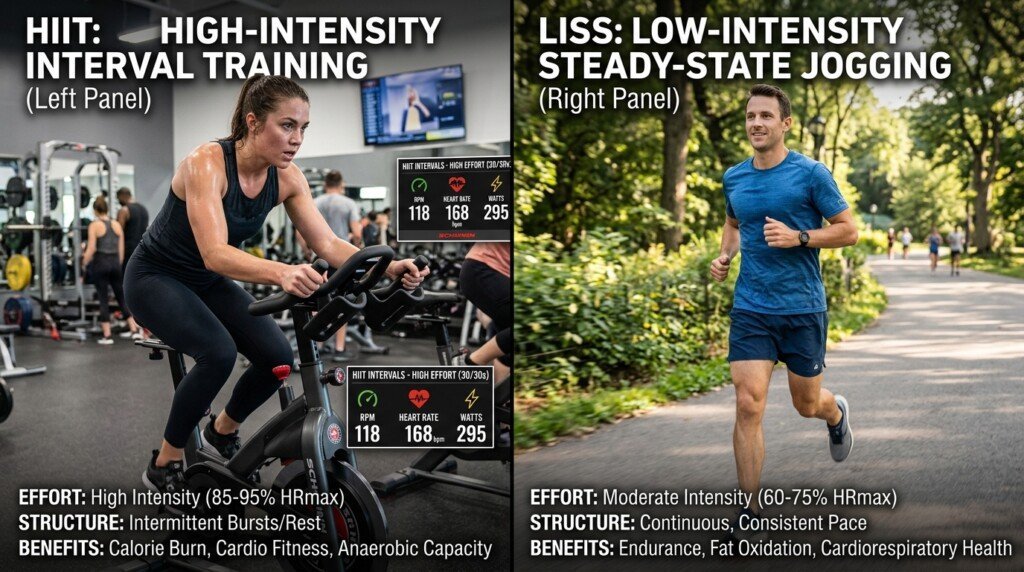
Is HIIT Better Than Cardio for Visceral Fat?
High-Intensity Interval Training, commonly called HIIT, alternates short bursts of vigorous activity with brief recovery periods.
A typical HIIT workout might include:
- 30 seconds of fast cycling
- 60 seconds of slower recovery
- Repeated for 15 to 20 minutes
Research suggests HIIT can improve cardiovascular fitness while requiring less total workout time.
However, that does not automatically mean HIIT is better than traditional cardio for everyone.
People who enjoy HIIT are more likely to remain consistent.
Others may prefer walking, cycling, or swimming because those activities feel more sustainable.
The best workout is the one you can continue doing week after week.
If you’re interested in interval training, our guide on HIIT Workouts for Weight Loss explains how beginners can get started safely.
How Often Should You Exercise?
One of the biggest misconceptions about reducing visceral fat is that you need to exercise every day for hours at a time.
In reality, consistency matters far more than perfection.
Most health organizations recommend adults aim for:
- At least 150 minutes of moderate-intensity aerobic activity each week, or
- 75 minutes of vigorous-intensity aerobic activity, or
- A combination of both.
In addition, strength training should be performed at least two days per week, focusing on all major muscle groups.
These recommendations provide an excellent foundation for improving cardiovascular health while supporting gradual reductions in visceral fat.
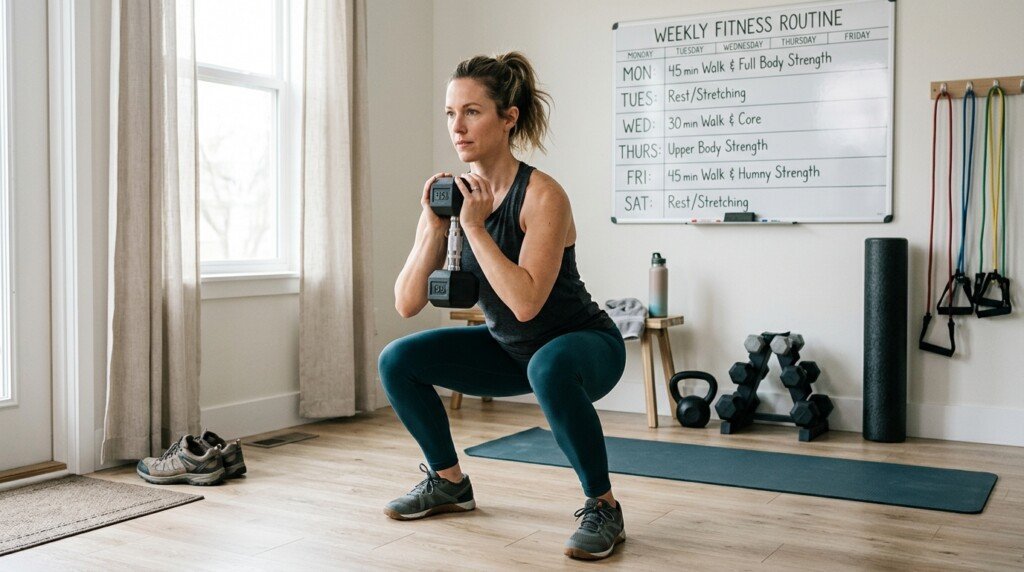
A Beginner-Friendly Weekly Exercise Schedule
If you’re just getting started, keep your routine simple.
Monday
- 30-minute brisk walk
Tuesday
- Full-body strength training for 30 to 40 minutes
Wednesday
- 30-minute walk or light cycling
Thursday
- Rest day or gentle stretching
Friday
- Full-body strength training
Saturday
- 40 to 60 minutes of walking, hiking, swimming, or another enjoyable activity
Sunday
- Easy walk and mobility exercises
This type of schedule combines aerobic exercise with resistance training while allowing enough recovery between workouts.
As your fitness improves, you can gradually increase the duration or intensity of your sessions.
The goal is to create a routine you can maintain throughout the year rather than following an aggressive program for only a few weeks.
Why Daily Movement Matters
Structured workouts are important, but they represent only a small portion of your day.
Increasing your overall activity level can make a significant difference.
Simple habits include:
- Taking the stairs instead of the elevator
- Parking farther from store entrances
- Walking during phone calls
- Standing up every hour while working
- Doing household chores
- Gardening
- Playing with children or pets
These everyday activities increase your daily energy expenditure and complement your regular workouts.
Our guide on Active Lifestyle Tips for Weight Loss shares additional ideas for staying active throughout the day.
How Long Does It Take to See Results?
One of the first questions people ask after starting an exercise routine is how quickly they’ll notice changes.
The honest answer is that there is no universal timeline.
Every person’s progress depends on factors such as:
- Starting fitness level
- Current body composition
- Age
- Genetics
- Activity level
- Sleep quality
- Overall lifestyle
Some people begin feeling more energetic within the first couple of weeks.
Others notice improvements in endurance before seeing visible changes around the waist.
What Improvements Often Appear First?
Many people experience benefits such as:
- Increased stamina
- Better mood
- Improved sleep
- Easier daily movement
- Greater strength
- Improved balance
Visible changes in body composition usually develop more gradually.
This is completely normal.
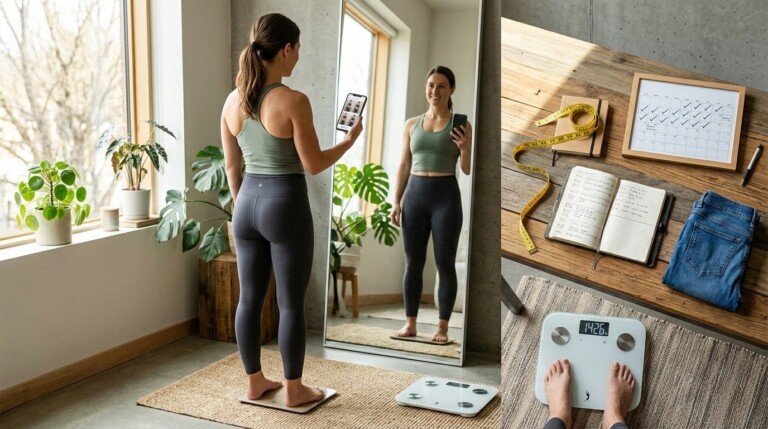
Why the Scale Doesn’t Tell the Whole Story
Exercise often improves body composition even when body weight changes slowly.
For example, someone beginning resistance training may preserve or build muscle while gradually reducing body fat.
Because muscle is denser than fat, body weight may not change dramatically even though waist size decreases.
Instead of relying only on the scale, consider tracking:
- Waist circumference
- Clothing fit
- Progress photos
- Strength improvements
- Walking distance
- Exercise endurance
These measurements often provide a more complete picture of your progress.
Stay Patient and Consistent
Many people abandon their exercise routine because they expect dramatic results within a few weeks.
Healthy changes rarely happen overnight.
The individuals who experience the greatest long-term success are usually those who continue exercising even when progress feels slow.
Rather than asking, “How much fat did I lose this week?” try asking:
- Am I stronger than last month?
- Can I walk farther without getting tired?
- Am I more consistent than before?
- Do I feel healthier?
Those small improvements add up over time.
Frequently Asked Questions
1. What are the best exercises for visceral fat?
Walking, cycling, swimming, jogging, resistance training, and HIIT are all effective options. The best exercise is the one you can perform consistently over the long term.
2. Can walking reduce visceral fat?
Yes. Brisk walking performed regularly can help reduce visceral fat as part of an active lifestyle.
3. Is strength training better than cardio?
Neither is universally better. Cardio improves cardiovascular fitness and increases calorie expenditure, while strength training preserves muscle and improves body composition. Combining both generally provides the greatest benefits.
For a detailed comparison, see our guide on Cardio vs Strength Training for Weight Loss.
4. Is HIIT necessary to lose visceral fat?
No. HIIT is one effective option, but many people successfully reduce visceral fat through regular walking, cycling, swimming, and traditional aerobic exercise.
5. How many days a week should I exercise?
Aim for at least 150 minutes of moderate aerobic activity each week along with two strength-training sessions.
6. Can you target visceral fat with specific exercises?
No. Spot reduction is a myth. Your body loses fat from multiple areas as overall body fat decreases.
Final Thoughts
Choosing the right exercises for visceral fat doesn’t require an expensive gym membership or advanced workout program. The most effective approach combines regular aerobic activity with strength training while encouraging more movement throughout the day.
Walking remains one of the best starting points for beginners because it is simple, accessible, and easy to maintain. As your fitness improves, adding resistance training and, if appropriate, HIIT can further improve strength, endurance, and overall body composition.
Most importantly, remember that reducing visceral fat is a gradual process. Focus on building an exercise routine you genuinely enjoy and can sustain for the long term. Consistent movement, progressive improvement, and patience will deliver far greater results than chasing the latest fitness trend or searching for a perfect workout.
Disclaimer:
This post may contain affiliate links. If you purchase through them, we may earn a small commission at no extra cost to you. Also, this content is for informational purposes only and does not substitute professional medical advice.