
Which Foods Should You Avoid With Insulin Resistance?
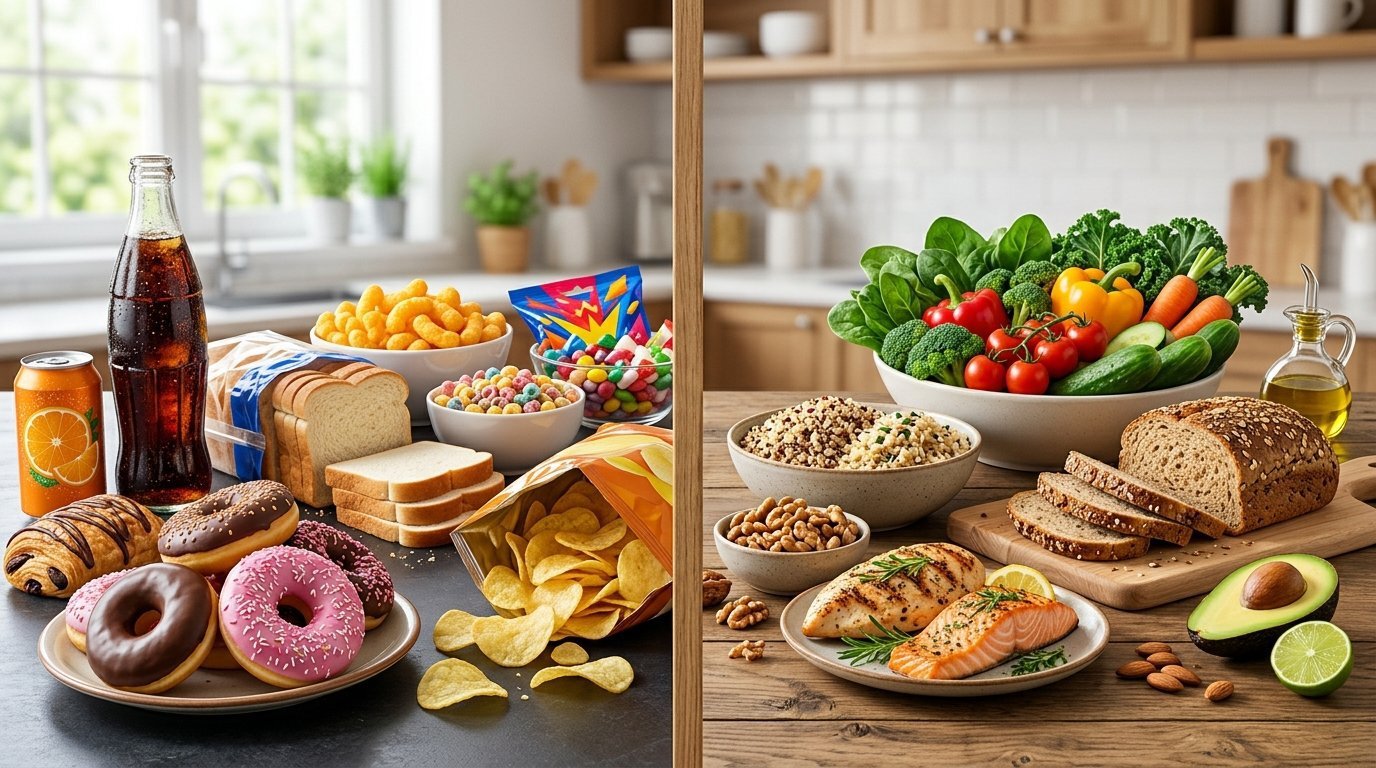
Knowing the Foods to Avoid With Insulin Resistance is just as important as understanding which foods support healthy blood sugar. While there is no single food that causes insulin resistance on its own, regularly eating certain highly processed foods may make it more difficult for your body to maintain healthy blood sugar levels and insulin sensitivity over time.
Insulin resistance develops when the body’s cells become less responsive to insulin, the hormone responsible for moving glucose from the bloodstream into the cells for energy. As the pancreas produces more insulin to compensate, long-term metabolic changes may occur that increase the risk of prediabetes, type 2 diabetes, metabolic syndrome, and abdominal obesity.
Fortunately, improving your diet does not mean eliminating every food you enjoy. The goal is not perfection or strict food rules. Instead, it involves recognizing which foods are more likely to contribute to frequent blood sugar spikes and replacing them with more balanced, nutrient-dense alternatives whenever possible.
Many people mistakenly believe they must completely avoid carbohydrates to improve insulin resistance. In reality, the quality of carbohydrates, portion sizes, and the overall balance of each meal are usually far more important than avoiding one nutrient altogether.
In this article, you’ll learn which Foods to Avoid With Insulin Resistance, why refined carbohydrates and sugary drinks affect blood sugar, how processed foods influence metabolic health, whether carbohydrates can still fit into a healthy eating pattern, and practical ways to build balanced meals without feeling restricted.
Which Foods Make Insulin Resistance Worse?
No individual food causes insulin resistance overnight.
Instead, insulin resistance usually develops after years of lifestyle habits that include excess calorie intake, limited physical activity, poor sleep, chronic stress, and frequent consumption of highly processed foods.
Certain foods are more likely to contribute to rapid increases in blood sugar while providing relatively little fiber, protein, or other nutrients that support metabolic health.
The goal is not to label foods as “good” or “bad.”
Instead, think about which foods deserve a larger place in your diet and which foods are better enjoyed occasionally.
The food categories most often associated with poorer metabolic health include:
- Sugary drinks
- Refined grains
- Highly processed snack foods
- Foods rich in added sugars
- Ultra-processed convenience foods
- Foods containing trans fats
Eating these foods occasionally is unlikely to cause insulin resistance in an otherwise balanced diet.
Problems usually develop when they become a regular part of daily eating patterns.

Why Overall Eating Patterns Matter
Researchers consistently find that overall dietary patterns are more important than individual foods.
Someone who occasionally enjoys dessert while eating a balanced diet rich in vegetables, fruits, whole grains, legumes, lean proteins, and healthy fats will likely have a different metabolic profile than someone whose daily meals rely heavily on highly processed foods.
Building meals around the Best Foods for Insulin Resistance creates a stronger foundation than focusing only on foods to limit.
Why Do Refined Carbohydrates Affect Blood Sugar?
Carbohydrates are the body’s preferred source of energy.
The problem is not carbohydrates themselves.
The biggest difference lies in how carbohydrates are processed before they reach your plate.
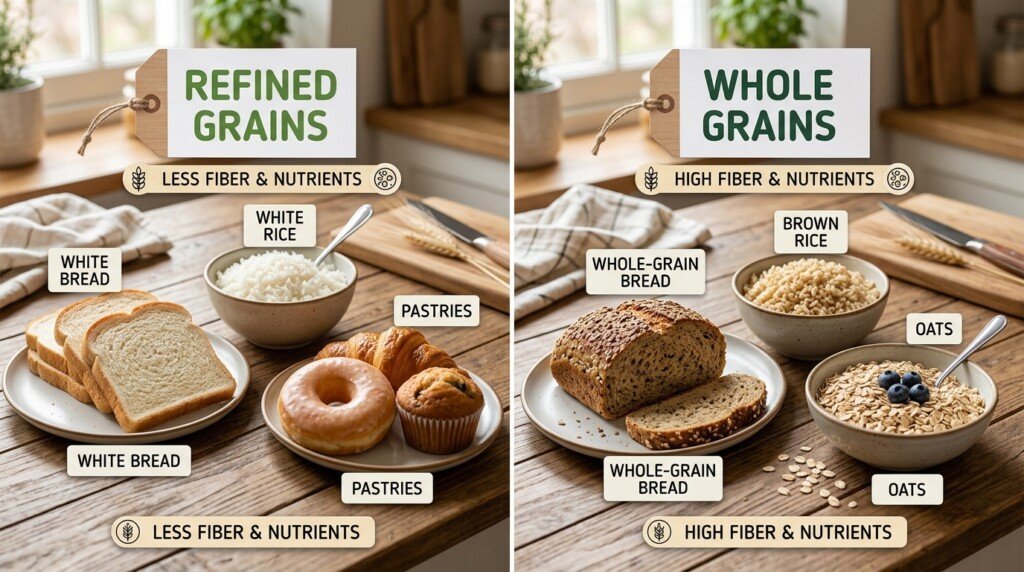
What Are Refined Carbohydrates?
Refined carbohydrates have been processed to remove much of their natural fiber and nutrients.
Common examples include:
- White bread
- White rice
- White pasta
- Regular pastries
- Sweet baked goods
- Many breakfast cereals
- Crackers made with refined flour
Because much of the fiber has been removed, these foods are generally digested more quickly than whole-food carbohydrate sources.
Why Fiber Matters
Fiber naturally slows digestion.
When fiber is removed, glucose enters the bloodstream more rapidly after eating.
This creates larger fluctuations in blood sugar compared with meals that contain plenty of fiber, protein, and healthy fats.
Repeated blood sugar spikes may place greater demand on insulin over many years.
Whole Grains Are Different
Not every carbohydrate behaves the same way.
Whole-food carbohydrate sources generally provide:
- Fiber
- Vitamins
- Minerals
- Plant compounds
Examples include:
- Oats
- Brown rice
- Quinoa
- Barley
- Whole wheat
- Lentils
- Beans
These foods digest more slowly and fit well into balanced meals.
This is one reason many nutrition experts recommend replacing refined grains with whole grains whenever practical rather than eliminating carbohydrates completely.
Portion Size Still Matters
Even nutritious carbohydrates contribute energy.
Building balanced meals with reasonable portions remains an important part of supporting healthy blood sugar regulation.
Many people find it helpful to combine carbohydrates with:
- Lean protein
- Vegetables
- Healthy fats
This combination slows digestion naturally while creating more satisfying meals.
The discussion around Low Carb vs Low Fat Diet explores how different eating patterns can support metabolic health without promoting unnecessary dietary extremes.
Should You Avoid Sugary Drinks?
Among all the Foods to Avoid With Insulin Resistance, sugary drinks deserve special attention because they provide large amounts of added sugar with very little nutritional value.
Unlike whole foods, sugary beverages are consumed quickly and usually do not create the same feeling of fullness. As a result, it is easy to consume a large number of calories without realizing it.
Common examples include:
- Regular soft drinks
- Sweetened fruit drinks
- Energy drinks
- Sweetened iced teas
- Sweetened coffee beverages
- Sports drinks with added sugar
- Flavored sugar-sweetened milk drinks
These beverages are often absorbed rapidly because they contain little or no fiber to slow digestion.

Why Liquid Sugar Affects Blood Sugar Differently
Whole fruits naturally contain fiber that slows the release of glucose into the bloodstream.
Fruit juice and sugar-sweetened beverages, however, contain much less fiber while delivering a concentrated amount of sugar in a relatively small serving.
This can contribute to larger increases in blood glucose after consumption.
Drinking several sugar-sweetened beverages throughout the day may also make it more difficult to maintain a healthy body weight, especially when combined with a generally poor-quality diet.
Better Beverage Choices
Replacing sugary drinks does not mean you have to drink plain water all the time.
Healthier options include:
- Water
- Sparkling water without added sugar
- Unsweetened tea
- Black coffee
- Milk without added sugar
- Water flavored with lemon, cucumber, or fresh mint
Small beverage changes often become some of the easiest improvements people can maintain long term.
Are Processed Foods Linked to Insulin Resistance?
Research suggests that eating patterns high in ultra-processed foods are associated with poorer metabolic health.
This does not mean every processed food is unhealthy.
For example, frozen vegetables, canned beans, plain yogurt, and rolled oats are processed to some degree but remain highly nutritious.
The concern is with ultra-processed foods, which often contain combinations of:
- Added sugars
- Refined starches
- Highly refined oils
- Excess sodium
- Artificial flavorings
- Preservatives
These foods are designed to be convenient and highly palatable, making it easy to consume more calories than intended.
Common Ultra-Processed Foods
Examples include:
- Packaged cookies
- Candy
- Potato chips
- Fast food
- Sweet breakfast cereals
- Frozen desserts
- Highly processed pastries
- Sugary snack bars
- Instant noodles
- Many packaged baked goods
Eating these foods occasionally is unlikely to determine your overall metabolic health.
Problems are more likely when they become the foundation of your daily diet.
Why Whole Foods Are Different
Whole foods generally provide more nutrients while helping create meals that are naturally more satisfying.
Meals based on vegetables, legumes, fruits, lean proteins, whole grains, nuts, seeds, and healthy fats often contain more fiber and protein, both of which support healthier blood sugar regulation.
Improving diet quality does not require eliminating convenience completely.
Simple substitutions repeated consistently often produce meaningful long-term improvements.
For example:
- Choose plain oatmeal instead of sugary cereal.
- Replace chips with roasted chickpeas or a handful of nuts.
- Swap pastries for Greek yogurt with berries.
- Replace refined crackers with whole-grain alternatives.
Small improvements are usually easier to maintain than dramatic dietary changes.
Can You Still Eat Carbohydrates?
Absolutely.
One of the biggest myths surrounding insulin resistance is that carbohydrates must be eliminated completely.
Current evidence does not support that idea for most people.
Carbohydrates remain an important source of energy, especially for the brain and muscles.
The key is choosing better carbohydrate sources and eating them as part of balanced meals.
Focus on Carbohydrate Quality
Instead of asking whether carbohydrates are “good” or “bad,” ask whether they provide useful nutrition.
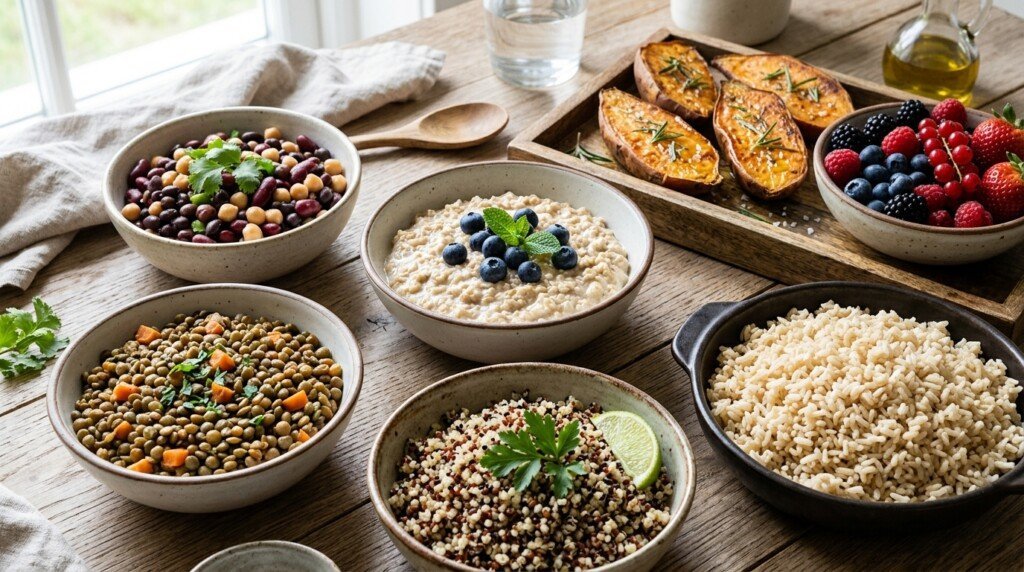
Better carbohydrate choices include:
- Oats
- Brown rice
- Quinoa
- Lentils
- Beans
- Chickpeas
- Sweet potatoes
- Apples
- Pears
- Berries
- Vegetables
These foods naturally contain fiber, vitamins, minerals, and plant compounds that support overall health.
Pair Carbohydrates With Protein and Healthy Fats
Eating carbohydrates together with lean protein and healthy fats slows digestion and helps create more satisfying meals.
For example:
Instead of eating plain toast, try whole-grain toast with eggs.
Instead of eating fruit alone, pair it with Greek yogurt or a handful of nuts.
Instead of eating white rice by itself, serve it with grilled chicken and vegetables.
These combinations naturally improve the balance of a meal without eliminating carbohydrates.
Avoid Extreme Food Rules
Completely removing entire food groups often makes healthy eating difficult to maintain.
Most people achieve better long-term success by improving food quality rather than following highly restrictive diets.
Healthy eating should feel sustainable enough to continue for years, not just a few weeks.
Remember the Bigger Picture
No single meal determines your health.
Your overall eating pattern, physical activity, sleep, stress management, and daily habits all contribute to insulin sensitivity.
Choosing whole-food carbohydrates more often while limiting highly refined options is usually a practical and sustainable approach for most people.
How Can You Build a Balanced Plate?
When managing insulin resistance, focusing only on individual foods can quickly become overwhelming. A much simpler approach is to build balanced meals that naturally support healthy blood sugar regulation.
A balanced plate provides your body with a combination of nutrients that digest at different speeds, helping you stay satisfied while avoiding unnecessary blood sugar fluctuations.
Rather than counting every gram of carbohydrate or eliminating foods you enjoy, think about how different food groups work together at each meal.
Fill Half Your Plate With Vegetables
Vegetables should make up the largest portion of most meals.
Non-starchy vegetables are naturally rich in:
- Fiber
- Vitamins
- Minerals
- Antioxidants
Excellent choices include:
- Spinach
- Broccoli
- Cauliflower
- Bell peppers
- Tomatoes
- Cucumbers
- Zucchini
- Mushrooms
- Green beans
- Brussels sprouts
A colorful plate usually provides a wider variety of nutrients.
Add a Lean Protein Source
Protein helps increase fullness and supports healthy muscle mass.
Choose foods such as:
- Chicken
- Turkey
- Fish
- Eggs
- Greek yogurt
- Cottage cheese
- Tofu
- Lentils
- Beans
Including protein with every meal often helps create more satisfying eating patterns.
Choose High-Quality Carbohydrates
Carbohydrates can absolutely be part of a healthy eating pattern.
Instead of refined grains, choose foods such as:
- Brown rice
- Quinoa
- Oats
- Whole wheat
- Sweet potatoes
- Beans
- Lentils
These foods provide fiber together with valuable nutrients.
Include Healthy Fats
Healthy fats improve meal satisfaction and contribute important nutrients.
Examples include:
- Olive oil
- Avocados
- Walnuts
- Almonds
- Chia seeds
- Flaxseeds
Small portions are usually enough because these foods are naturally energy dense.
Think About Portion Balance
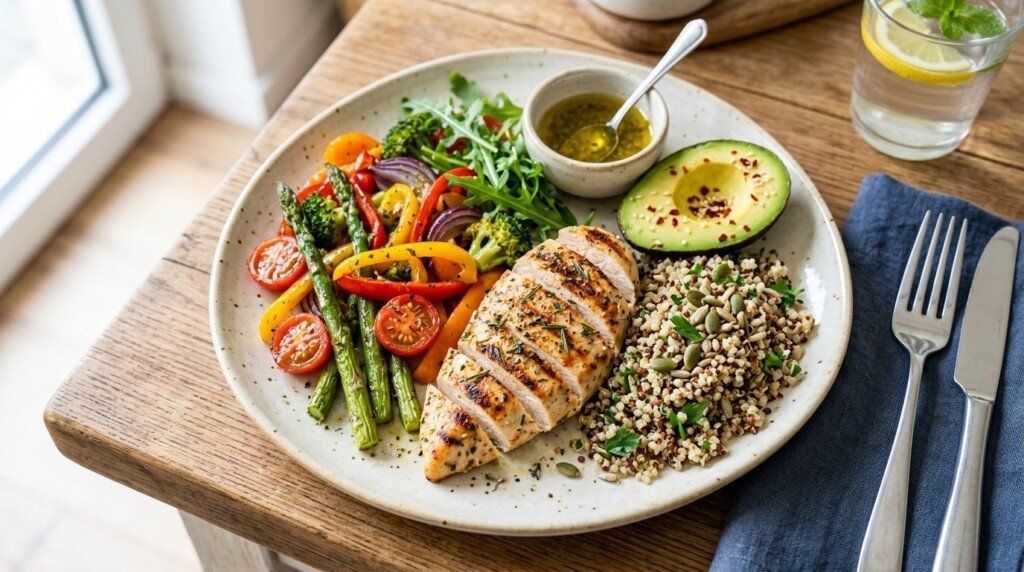
A practical way to build most meals is:
- Half the plate vegetables
- One quarter lean protein
- One quarter high-fiber carbohydrates
- Small serving of healthy fats
This flexible method works for most breakfasts, lunches, and dinners without requiring complicated calculations.
Many people also find that mindful eating and reasonable serving sizes support healthier long-term habits. The principles discussed in Portion Control for Weight Loss can easily be applied alongside an insulin-friendly eating pattern.
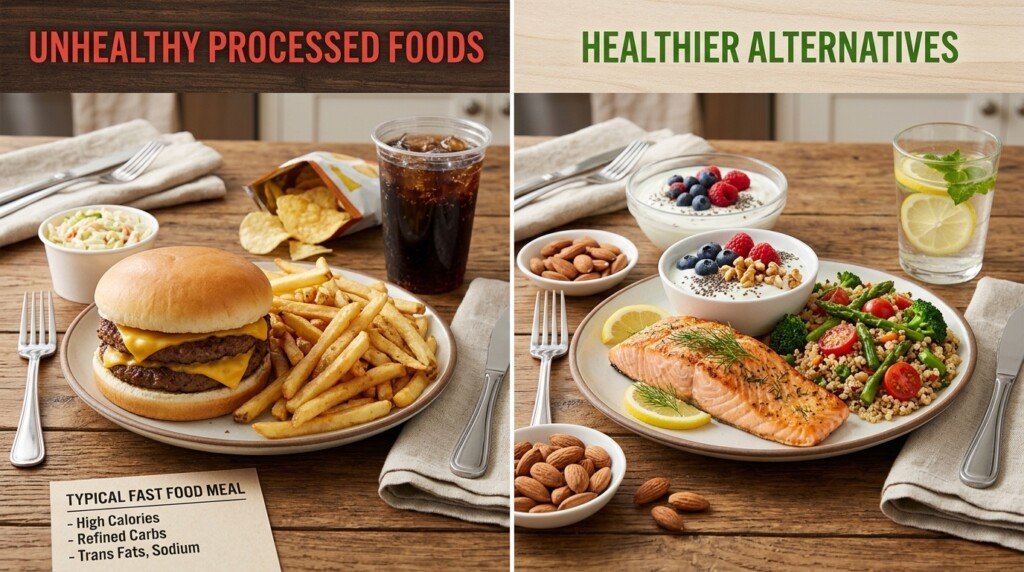
What Are Healthier Alternatives?
Improving your eating habits does not require giving up your favorite foods forever.
In many cases, simple substitutions allow you to enjoy similar meals while improving their nutritional quality.
The goal is progress, not perfection.
Instead of Sugary Breakfast Cereals
Choose:
- Plain oats
- Unsweetened muesli
- Greek yogurt with berries
These options provide more fiber and protein while helping create a satisfying breakfast.
Instead of White Bread
Choose:
- Whole-grain bread
- Whole wheat wraps
- Sprouted grain bread
These alternatives generally contain more fiber and nutrients.
Instead of Sugary Drinks
Choose:
- Water
- Sparkling water
- Unsweetened tea
- Black coffee
- Water infused with fruit slices
Replacing sugar-sweetened beverages is one of the simplest dietary improvements many people can make.
Instead of Chips
Choose:
- Roasted chickpeas
- Unsalted nuts
- Air-popped popcorn
- Sliced vegetables with hummus
These snacks provide more nutrients and often keep you feeling satisfied for longer.
Instead of Pastries
Choose:
- Plain Greek yogurt
- Fresh fruit
- Cottage cheese
- Oatmeal with berries
These foods provide a better balance of protein and fiber.
Instead of Fast Food Several Times Each Week
Try preparing simple meals at home more often.
Examples include:
- Grilled chicken with vegetables
- Baked salmon with brown rice
- Bean and vegetable soup
- Whole-grain wraps with lean protein
Preparing even a few extra meals each week can noticeably improve overall diet quality.
Healthy Eating Should Feel Sustainable
The healthiest eating pattern is one you can realistically maintain.
You do not need to eat perfectly every day.
Small improvements repeated consistently almost always outperform strict diets that are difficult to maintain.
Frequently Asked Questions
1. What are the main foods to avoid with insulin resistance?
Foods that are commonly limited include sugar-sweetened beverages, refined grains, highly processed snack foods, foods rich in added sugars, trans fats, and ultra-processed convenience foods. These foods are best replaced with more nutrient-dense options rather than eliminated out of fear.
2. Do I have to stop eating carbohydrates if I have insulin resistance?
No. Most people can continue eating carbohydrates by choosing higher-quality sources such as vegetables, legumes, whole grains, fruits, and beans while balancing them with protein and healthy fats.
3. Are sugary drinks worse than sugary foods?
Sugar-sweetened beverages often have a greater impact because they provide large amounts of sugar without fiber or significant satiety, making it easier to consume excess calories.
4. Can processed foods increase the risk of insulin resistance?
A diet centered around ultra-processed foods has been associated with poorer metabolic health. Replacing these foods with minimally processed alternatives supports healthier blood sugar regulation and overall nutrition.
5. What is the easiest dietary change to start with?
Many people find the biggest improvements come from simple habits such as replacing sugary drinks with water, choosing whole grains over refined grains, eating more vegetables, and including lean protein with every meal.
Final Thoughts
Understanding the Foods to Avoid With Insulin Resistance is not about creating a long list of forbidden foods. Instead, it is about recognizing which foods are more likely to contribute to frequent blood sugar spikes and gradually replacing them with nutrient-rich alternatives that support better metabolic health.
The strongest evidence continues to support an eating pattern built around vegetables, fruits, legumes, whole grains, lean proteins, healthy fats, and minimally processed foods. Limiting sugary drinks, refined grains, ultra-processed snacks, and foods high in added sugars can further support healthy insulin sensitivity when combined with regular physical activity, quality sleep, and other healthy lifestyle habits.
Rather than aiming for perfection, focus on making one sustainable improvement at a time. Small changes that become lifelong habits are far more effective than extreme diets that are difficult to maintain. Over time, those consistent choices can make a meaningful difference in blood sugar regulation, overall health, and long-term well-being.
Disclaimer:
This post may contain affiliate links. If you purchase through them, we may earn a small commission at no extra cost to you. Also, this content is for informational purposes only and does not substitute professional medical advice.
Fuel Your Body Right
Use our free Nutrition Toolkit to find your protein target, fasting window, and net carbs in minutes.
Open Free Tools →