

How to Build Healthy Eating Habits That Actually Stick
Most people already know that eating more vegetables, drinking enough water, and reducing highly processed foods are healthy choices. Yet knowing what to do and actually doing it every day are two very different challenges. This is why so many eating plans begin with enthusiasm but quietly disappear after a few weeks.
The truth is that healthy eating habits are not built through willpower alone. They develop through small, repeatable actions that gradually become part of everyday life. Healthy eating is less about following strict food rules and more about creating routines that continue working during busy weekdays, vacations, celebrations, and stressful periods.
One of the biggest misconceptions about healthy eating is that it requires perfection. People often believe one unhealthy meal means they have failed, leading them to abandon their progress entirely. In reality, lasting nutrition is built on consistency rather than flawless choices. A balanced pattern maintained for years is far more valuable than a perfect diet followed for only a month.
Another reason many people struggle is that they focus only on individual foods instead of the overall eating pattern. Health is influenced by hundreds of meals over time, not a single breakfast, lunch, or dinner. Every meal becomes one opportunity to move slightly closer toward better health without demanding perfection.
This article explains the foundation of healthy eating habits, how different food groups work together, why gradual improvements are more successful than dramatic changes, and how practical routines such as meal planning help transform healthy eating from a temporary effort into a sustainable lifestyle.
Quick Answer
Healthy eating habits are consistent daily behaviors that support long-term health through balanced food choices, gradual improvement, regular meal planning, and realistic routines. Instead of following restrictive diets, healthy eating focuses on creating sustainable patterns that nourish the body while fitting naturally into everyday life.
What Are the Foundational Principles of a Healthy Diet?
Healthy eating is often presented as a long list of rules.
Avoid this food.
Eat more of that food.
Never eat after a certain time.
Completely eliminate another ingredient.
These messages can make nutrition feel unnecessarily complicated.
In reality, most healthy eating patterns around the world share several simple principles despite cultural differences in foods and cooking styles.
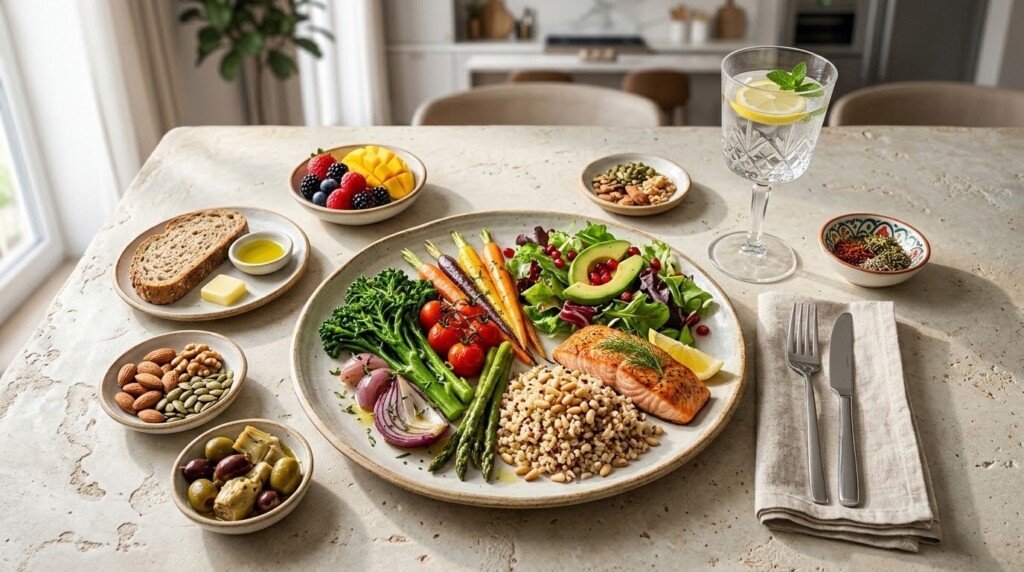
The first principle is balance.
No single food provides every nutrient the body needs. Instead, good nutrition comes from combining different food groups in ways that complement one another over time.
The second principle is variety.
Eating a wide range of foods naturally increases the diversity of vitamins, minerals, fiber, healthy fats, and plant compounds available to the body. Repeating exactly the same meals every day often limits this nutritional variety.
The third principle is consistency.
Healthy eating produces its greatest benefits when practiced regularly rather than occasionally. One nutritious meal cannot compensate for months of unhealthy habits, just as one indulgent meal does not erase an otherwise balanced lifestyle.
The fourth principle is flexibility.
Life includes birthdays, holidays, vacations, family dinners, and celebrations. Healthy eating should allow room for these experiences instead of treating them as failures.
Finally, healthy eating should feel sustainable.
The best nutrition plan is rarely the most restrictive one.
Instead, it is the one that comfortably fits into everyday life year after year.
When these principles work together, eating becomes less about strict rules and more about building habits that naturally support lifelong health.
What Are the Main Food Groups and How Do They Fit Together?
Every meal tells a story.
Not because of one particular ingredient, but because of how different foods work together to provide nourishment.
Rather than viewing foods as “good” or “bad,” it helps to think about the role each food group plays within a balanced eating pattern.
Vegetables provide fiber along with a wide variety of vitamins, minerals, and naturally occurring plant compounds that support overall health. Including colorful vegetables regularly also increases dietary variety, making meals more satisfying both nutritionally and visually.
Fruits contribute many of the same nutritional benefits while adding natural sweetness and hydration. Eating different fruits throughout the week exposes the body to a broader range of nutrients than relying on only one favorite choice.
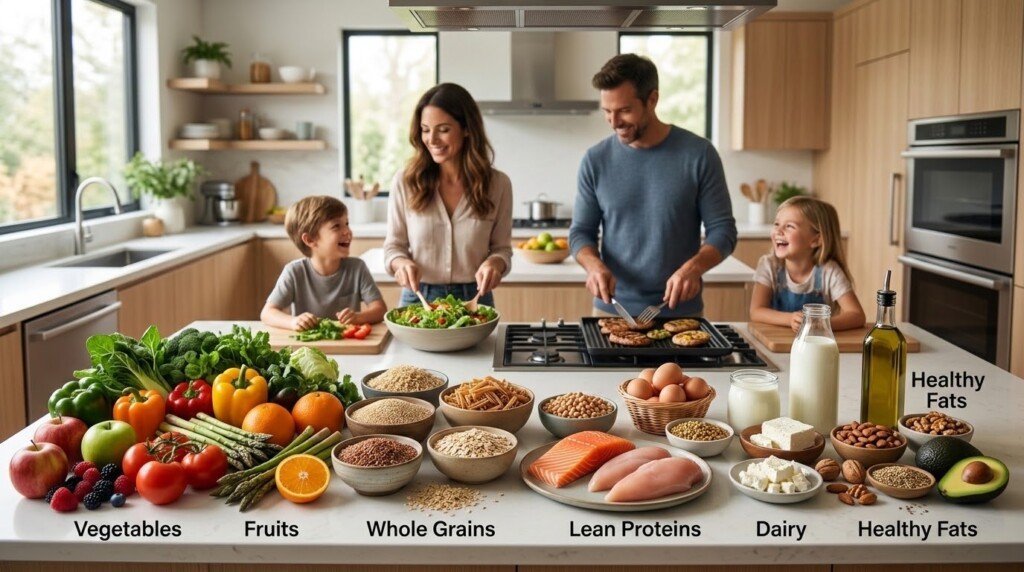
Protein-rich foods support growth, tissue repair, and many essential body functions. Animal and plant protein sources can both contribute to healthy eating patterns depending on personal preferences, cultural traditions, and dietary needs.
Whole grains provide carbohydrates that supply energy while also contributing fiber and other important nutrients. Choosing whole grains more often than refined grains helps many people maintain greater satisfaction after meals.
Healthy fats are equally important despite years of misinformation suggesting that all fats should be avoided. Foods such as nuts, seeds, olive oil, avocados, and certain fish provide fats that support normal body function while adding flavor and satisfaction to meals.
Dairy foods or suitable fortified alternatives may contribute calcium, protein, and additional nutrients depending on individual eating patterns.
The goal is not achieving mathematical perfection at every meal.
Instead, healthy eating gradually creates meals where multiple food groups naturally appear together.
For readers interested in understanding how balanced meals are structured in greater detail, What Is a Balanced Diet explores this topic more thoroughly.
Likewise, if you would like to understand the specific roles nutrients play inside the body, Macronutrients vs Micronutrients explains those differences without changing the practical principles discussed here.
How Does Portion Control Contribute to Healthy Eating Habits?
Healthy eating is influenced not only by what we eat but also by how much we eat.
Balanced portions help meals match the body’s needs without requiring strict restriction or complicated calculations.
Rather than focusing on exact measurements here, it is helpful to recognize that portion awareness supports consistency by encouraging comfortable satisfaction instead of habitual overeating.
Because portion size is an extensive topic on its own, practical strategies for building portion awareness are covered separately in Portion Control for Weight Loss.
What Are Practical First Steps to Start Eating Healthier Today?
One reason healthy eating feels overwhelming is that people try changing everything at once.
A new breakfast.
Different lunches.
Healthier dinners.
No snacks.
No desserts.
Daily meal preparation.
More water.
Less sugar.
More vegetables.
While each goal may be worthwhile individually, attempting all of them simultaneously often creates unnecessary pressure.

Successful habit change usually begins much smaller.
Instead of rebuilding your entire diet overnight, focus on improving one regular routine.
Someone who skips breakfast every morning might begin by simply eating something nourishing a few days each week.
Another person might decide to include vegetables with dinner more consistently.
Someone else may replace one sugary drink each day with water.
These changes appear modest.
However, small habits repeated hundreds of times become surprisingly powerful.
Planning ahead also reduces decision fatigue.
Keeping simple ingredients available at home makes healthier choices easier during busy evenings.
Preparing lunches before work reduces reliance on convenience foods.
Having nutritious snacks nearby decreases the likelihood of making impulsive food decisions when hunger suddenly appears.
Healthy eating also becomes easier when success is measured realistically.
Instead of asking, “Did I eat perfectly today?”
A more useful question becomes,
“Did today’s choices move me slightly closer to the eating habits I want to build?”
This mindset encourages steady improvement rather than perfection, making healthy eating feel achievable even during demanding weeks.
Finally, progress deserves attention.
Tracking habits rather than chasing perfection often reveals encouraging improvements that would otherwise go unnoticed. How to Track Your Healthy Eating Progress explains simple ways to monitor long-term consistency without becoming overly focused on numbers.
How Do I Make Healthy Eating a Sustainable, Lasting Habit?
Many people can eat healthy for a few days.
Some can stay motivated for a few weeks.
The real challenge begins when healthy eating has to survive everyday life.
Work deadlines appear.
Children become sick.
Vacations interrupt routines.
Unexpected dinners happen.
Stress increases.
Schedules change.
These situations reveal an important truth about nutrition. Healthy eating is not tested during perfect weeks. It is tested during ordinary ones.
The people who maintain healthy eating habits for years rarely have stronger willpower than everyone else. Instead, they create routines that continue working even when life becomes unpredictable.

This shift in thinking changes everything.
Rather than asking, “How can I eat perfectly forever?”
A better question becomes,
“How can I make healthy eating the easiest choice most of the time?”
That difference transforms healthy eating from a short-term challenge into a realistic lifestyle.
Lasting habits are built around everyday behavior rather than temporary motivation.
Motivation naturally rises and falls.
Habits continue even when motivation disappears.
Someone who prepares tomorrow’s lunch every evening does not rely on inspiration every morning.
Someone who regularly shops with a grocery list does not have to make healthy decisions in every supermarket aisle.
Someone who keeps fruit visible on the kitchen counter naturally reaches for it more often than someone who stores it out of sight.
These small environmental choices quietly influence hundreds of eating decisions throughout the year.
Sustainable nutrition is therefore less about becoming a different person and more about creating an environment where healthy decisions happen more naturally.
Why Does Gradual Change Work Better Than Drastic Diets for Sustainability?
One of the biggest reasons diets fail is not because people lack commitment.
It is because the changes are too large to maintain.
Imagine someone who normally eats restaurant meals five days a week.
One Monday they decide to cook every meal from scratch, eliminate all desserts, stop drinking sugary beverages, meal prep every weekend, and never eat fast food again.
Technically, these changes may all sound healthy.
Practically, they create an entirely new lifestyle overnight.
That level of change rarely survives everyday life.
When routines become difficult to maintain, many people assume they have failed.
In reality, the problem was not their determination.
The problem was trying to transform years of eating habits all at once.
Gradual improvement works differently.
Instead of replacing every habit, it strengthens one behavior at a time.
A family begins eating vegetables with dinner more consistently.
A commuter prepares lunch twice each week instead of buying fast food daily.
A busy professional keeps healthier snacks at work.
A student starts drinking water with lunch instead of soft drinks.
Each change appears small.
Yet these behaviors repeat hundreds of times throughout the year.
Over months, they become automatic.
Automatic habits require much less mental effort than constant decision-making.
Another advantage of gradual change is confidence.
Every successful habit creates evidence that change is possible.
That confidence encourages the next improvement.
Instead of constantly restarting after restrictive diets, people begin building lasting momentum.
This process also removes the pressure to be perfect.
Missing one healthy meal no longer feels like failure because progress is measured across weeks and months rather than individual days.
Healthy eating therefore becomes a direction instead of a destination.
Small improvements maintained consistently almost always outperform dramatic changes that disappear after several weeks.
What Role Does Meal Planning Play in Making Healthy Choices Last?
Healthy decisions are much easier before hunger arrives.
This is why meal planning consistently appears among the habits shared by people who maintain balanced eating patterns for years.
Meal planning is often misunderstood.
Many people imagine spending entire Sundays preparing dozens of identical containers for the week.
While that approach works for some individuals, it is far from the only option.
At its core, meal planning simply means making food decisions before hunger forces them.

That preparation reduces the number of difficult decisions required during busy days.
Consider what happens after arriving home tired from work.
Without a plan, convenience usually determines dinner.
Takeaway meals.
Highly processed snacks.
Whatever happens to be available.
With even a simple plan, healthier choices become much easier because the decision has already been made.
Meal planning also supports grocery shopping.
Buying ingredients with specific meals in mind reduces unnecessary purchases while making nutritious foods more accessible throughout the week.
Families often benefit as well.
Knowing what will be served each evening reduces last-minute stress while making shared meals easier to organize.
Planning does not require rigid schedules.
Many people simply choose several breakfast options, a few lunch ideas, and multiple dinners they enjoy rotating throughout the week.
This flexibility prevents boredom while maintaining structure.
Meal planning also creates opportunities for food variety.
Instead of repeatedly choosing the same convenient meals, people naturally include different vegetables, fruits, proteins, and whole grains across the week.
Hydration deserves similar attention.
Planning water intake alongside meals often supports healthier eating because thirst is less likely to be mistaken for hunger. Readers interested in this relationship can explore Why Hydration Matters for Healthy Eating for a more detailed discussion.
Perhaps the greatest advantage of meal planning is not nutritional.
It is psychological.
Removing repeated food decisions conserves mental energy, making healthy eating feel simpler instead of more demanding.
How Does This Differ From General Weight Loss Habit Building?
Although healthy eating and weight loss often overlap, they are not identical goals.
Healthy eating focuses primarily on nourishing the body consistently through balanced food choices, enjoyable routines, and sustainable habits.
Weight loss habits, on the other hand, often include additional strategies specifically designed to create an energy deficit and reduce body weight over time.
Someone can practice healthy eating without actively trying to lose weight.
Likewise, someone pursuing weight loss still benefits from building strong nutritional habits because those habits make long-term success far more sustainable.
The important distinction is purpose.
Healthy eating asks,
“How can I support my health every day?”
Weight loss asks,
“How can I reduce body weight safely and sustainably?”
The habits frequently overlap, but they are not interchangeable.
For readers interested specifically in behavior patterns that support sustainable weight management, Weight Loss Habits explores that topic in greater detail.
Healthy eating remains valuable regardless of whether weight change is part of the goal.
It supports energy, overall wellness, and lifelong nutrition for people across many different stages of life.
Key Takeaways
Building healthy eating habits is not about finding the perfect diet or following strict food rules. It is about creating balanced routines that remain practical during ordinary life. Focusing on food variety, balanced meals, gradual improvement, and realistic planning helps healthy eating become part of your daily routine instead of a temporary project.
Long-term success comes from consistency rather than perfection. Small improvements repeated over months and years create lasting results that extreme diets rarely achieve. Healthy eating should feel flexible enough to include celebrations, travel, family meals, and unexpected changes while still supporting your overall well-being.
Frequently Asked Questions
1. How do I start eating healthier?
Begin with one manageable improvement rather than changing your entire diet overnight. Adding vegetables to one meal, preparing lunches in advance, or replacing one sugary drink each day are realistic starting points that are easier to maintain.
2. What are the key principles of healthy eating?
Healthy eating is built on balance, variety, consistency, flexibility, and sustainability. These principles encourage long-term habits instead of short-term dietary restrictions.
3. How do I make healthy eating a lasting habit?
Focus on gradual changes that fit naturally into your daily routine. Planning meals, keeping nutritious foods readily available, and improving one habit at a time make healthy eating much easier to sustain.
4. Is healthy eating the same as dieting?
No. Healthy eating focuses on lifelong nutritional habits and overall well-being, while many diets are designed around temporary goals or specific outcomes such as weight loss.
5. What should I do if I have an unhealthy day of eating?
Treat it as one meal or one day rather than a failure. Healthy eating is determined by your overall pattern across weeks and months, not by occasional indulgences or unexpected situations.
Conclusion
The strongest healthy eating habits are rarely built through dramatic changes or strict rules. They develop gradually through consistent choices that fit naturally into everyday life. When meals include a balance of different food groups, planning becomes part of your routine, and progress is measured over months instead of days, healthy eating becomes far more sustainable than any temporary diet.
Perhaps the most important lesson is that healthy eating is not about perfection. It is about creating a lifestyle that continues working through busy schedules, family gatherings, holidays, and life’s inevitable challenges. Every balanced meal, every thoughtful grocery trip, and every small improvement contributes to a healthier pattern over time. By focusing on consistency instead of flawless execution, you build habits that not only support your health today but continue serving you for years to come.
Disclaimer:
This post may contain affiliate links. If you purchase through them, we may earn a small commission at no extra cost to you. Also, this content is for informational purposes only and does not substitute professional medical advice.
Fuel Your Body Right
Use our free Nutrition Toolkit to find your protein target, fasting window, and net carbs in minutes.
Open Free Tools →