

How Long Does It Take to Become Fat-Adapted? (And How to Speed It Up)
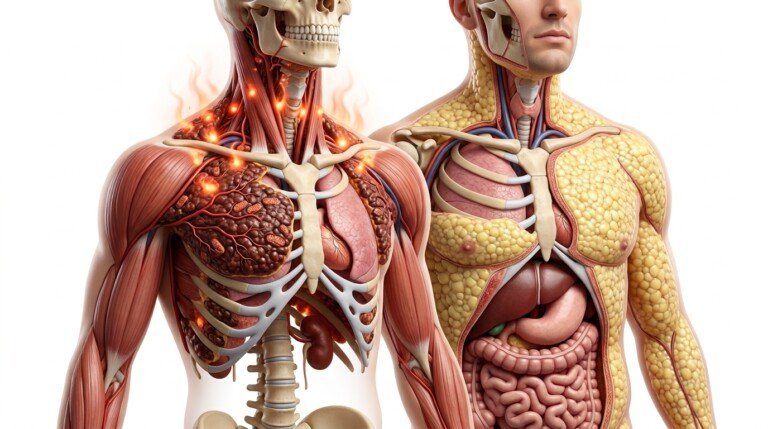
If you are wondering how long to become fat-adapted, the honest answer is that there is no exact day when a switch suddenly flips. For many people following a consistently low-carbohydrate or ketogenic diet, noticeable adaptation can take roughly 2 to 4 weeks, although the experience varies widely.
Some people notice changes sooner. Others need longer before their energy, appetite, exercise performance, and ability to rely on fat feel noticeably different.
That variation is normal. Fat adaptation is a gradual process, not a finish line that arrives at exactly the same time for everyone.
The early stage can also be confusing. You may feel tired, have a headache, notice changes in your workouts, or wonder why you are not suddenly full of energy after cutting carbohydrates. Those early changes do not necessarily mean the approach is failing. Your body is adjusting to a different fuel environment.
What matters is understanding the difference between entering ketosis and becoming more comfortable and efficient at using fat as a significant fuel source. Ketone production can increase relatively quickly, while broader adaptations in fuel use can continue for weeks.
This article focuses specifically on the timeline and practical factors that can influence that process. For the broader explanation of what fat adaptation actually means, see the fat adaptation guide.
How long does it typically take to become fat-adapted?
For many people, a reasonable expectation is around 2 to 4 weeks of consistent carbohydrate restriction before the changes associated with fat adaptation become more noticeable.
That does not mean everyone will be fully adapted at four weeks. It also does not mean nothing is happening during the first few days.
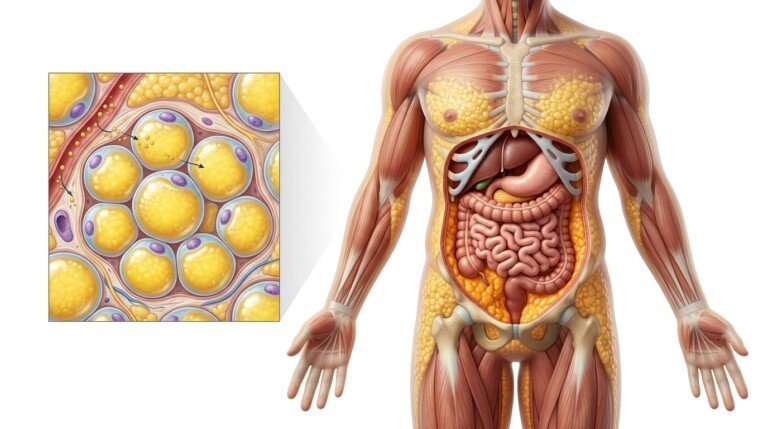
The body starts responding as soon as carbohydrate availability changes. Glycogen stores begin to decline, fat mobilization increases, and ketone production can rise. What takes longer is the broader adjustment in how different tissues use those fuels.
Think of the process as a gradual transition rather than a switch.
During the first few days, your body is responding to a new fuel environment. During the following weeks, metabolic systems continue adjusting. Exercise performance, energy stability, appetite, and the ability to use fat during lower-intensity activity may change as adaptation progresses.
There is also a major difference between biochemical ketosis and feeling fully adapted.
You can produce measurable ketones before you feel noticeably different.
That is one reason people sometimes become frustrated with the process. They expect a dramatic transformation as soon as carbohydrate intake drops, but the body does not work according to a single deadline.
What’s the typical timeline for keto-flu symptoms to subside?
The symptoms commonly called “keto flu” often appear during the early transition to a very low-carbohydrate diet. Fatigue, headache, irritability, difficulty concentrating, dizziness, weakness, and changes in exercise performance are among the complaints some people experience.
For many people, these symptoms are most noticeable during the first several days and begin improving during the first week. Some may continue for longer, particularly when the dietary change is abrupt or when fluid and electrolyte intake changes significantly.
The timeline is not identical for everyone.
Someone who was previously eating a relatively high-carbohydrate diet may notice the transition more strongly than someone who had already reduced carbohydrate intake. The size of the dietary change matters.
So does the person’s overall health, activity level, hydration status, sleep, and previous eating pattern.
The term “keto flu” can also make the experience sound more mysterious than it actually is. It is not an infectious illness, and there is no evidence that the body needs to go through a universal “detox” process.
Several changes happen simultaneously when carbohydrate intake drops sharply. Glycogen stores decline, and glycogen is stored alongside water. Changes in carbohydrate intake can therefore alter fluid balance. Sodium and other electrolyte losses can also change when insulin levels decrease.
That does not mean every headache or bout of fatigue should automatically be blamed on keto.
If symptoms are severe, persistent, unusual, or worsening, it is better to investigate them rather than assuming they are simply part of adaptation.
A useful way to think about the first week is this:
Your body may be adapting before you feel adapted.
The absence of an immediate energy boost does not prove that nothing is happening.
What factors influence how quickly someone adapts?
There is no universal fat adaptation timeline because several variables influence how quickly someone responds.
Starting diet matters. A person moving from a diet very high in refined carbohydrates to a ketogenic diet is making a larger metabolic shift than someone who has already been eating relatively low carbohydrate.
Carbohydrate consistency matters. Repeatedly moving between very low and very high carbohydrate intake can make the transition less predictable. The body responds to the fuel environment it receives.
Physical activity matters. Exercise can influence glycogen use and fuel utilization, although more exercise is not automatically better during the early transition.
Individual metabolism matters. People differ in insulin sensitivity, body composition, energy requirements, activity levels, and how strongly their bodies respond to changes in carbohydrate availability.
Sleep matters too. Poor sleep can make fatigue, hunger, and exercise difficulty feel worse even if the underlying metabolic adaptation is progressing normally.
Stress can influence the experience. High stress does not necessarily prevent fat adaptation, but it can make the transition harder to interpret. Someone sleeping poorly, working long hours, and eating very little may feel exhausted and assume the problem is a lack of metabolic adaptation when several factors are involved.
Dietary adequacy is another important consideration.
Reducing carbohydrates does not mean eliminating adequate calories, protein, micronutrients, or food variety. A poorly constructed ketogenic diet can leave someone feeling weak regardless of whether ketosis is occurring.
The goal is not simply to make carbohydrate intake as low as possible.
The goal is to create a sustainable nutritional environment that allows the body to adapt.
This is why two people can follow seemingly similar diets and report very different experiences after two weeks.
One may feel energetic and comfortable. Another may still be adjusting.
Neither experience automatically proves that one person is “more fat-adapted.”
What common mistakes slow down the process?
One of the biggest mistakes is expecting fat adaptation to happen instantly.
Entering ketosis and becoming comfortable with increased fat utilization are not necessarily the same event. A person can measure ketones early while still experiencing changes in energy and exercise performance.
Another mistake is changing too many variables at once.
Someone might drastically cut carbohydrates, slash calories, increase cardio, start fasting, eliminate several food groups, and dramatically reduce meal frequency all in the same week. If they then feel exhausted, it becomes almost impossible to identify which change caused the problem.
More restriction is not automatically faster adaptation.
A second common mistake is inconsistent carbohydrate intake. Following a very low-carbohydrate diet during the week and then consuming substantially more carbohydrate every weekend can create repeated shifts in fuel availability.
That does not mean one higher-carbohydrate meal permanently destroys adaptation. The body is more flexible than that. But frequent large changes can make it harder to judge how your body is responding to a consistently ketogenic environment.
Another mistake is under-eating.
Because ketogenic diets can reduce appetite for some people, it is possible to unintentionally consume far less energy than usual. Combined with increased exercise, this can produce fatigue that gets incorrectly interpreted as “not being fat-adapted yet.”
Electrolytes and hydration are another consideration.
A major dietary change can alter fluid balance, so ignoring hydration can make the early transition unnecessarily uncomfortable.
Finally, some people become obsessed with chasing ketone numbers.
A higher blood ketone reading is not automatically proof of superior fat adaptation.
The objective is not to produce the highest possible ketone number.
The objective is to create a sustainable metabolic environment in which your body can use available fuels effectively.
How can I safely speed up fat adaptation?
There are ways to make the transition more organized, but there is no legitimate shortcut that turns a multi-week physiological adjustment into an overnight transformation.
The safest approach is consistency.
Rather than trying to force the body into adaptation, create the conditions for adaptation and give the process enough time to develop.
A sensible approach generally involves keeping carbohydrate intake consistently low if you have chosen a ketogenic diet, eating enough nutritious food, maintaining appropriate protein intake, staying hydrated, and gradually returning to normal exercise as your body adjusts.
The temptation to “hack” the process is understandable.
People often want to know whether fasting longer, exercising harder, taking supplements, or eliminating even more carbohydrates will make the transition happen faster.
Sometimes these strategies are discussed as if the body has a hidden turbo button.
It does not.
The metabolic system responds to sustained changes in fuel availability. More aggressive restriction can create more stress without necessarily producing proportionally faster adaptation.
What key dietary changes accelerate the process?
The most important dietary factor is consistency in carbohydrate restriction.
If your goal is nutritional ketosis, carbohydrate intake needs to remain sufficiently low to support that state. The exact amount varies between individuals, so there is no single carbohydrate threshold that guarantees the same response for everyone.
A practical starting point is to remove the major sources of concentrated carbohydrate, particularly sugar-sweetened drinks, sweets, desserts, refined grains, and large portions of starchy foods.
Then build meals around foods that provide protein, healthy fats, and lower-carbohydrate vegetables.
This approach is usually more sustainable than simply trying to eat enormous amounts of fat.
Food quality still matters.
Avocado, olive oil, nuts, seeds, fish, eggs, and minimally processed foods can fit into a ketogenic eating pattern while providing useful nutrients. A diet dominated by highly processed “keto” products can meet a carbohydrate target while still being nutritionally weak.
Another important point is not to confuse carbohydrate restriction with starvation.
If you dramatically reduce carbohydrates while also dramatically reducing total food intake, the resulting fatigue may have little to do with whether your body is becoming better at using fat.
Adequate nutrition gives the body a better foundation for adaptation.
It is also worth remembering that supplements are not magic accelerators.
Certain products are marketed as “fat adaptation supplements,” ketone boosters, or metabolism enhancers. Some may alter circulating ketones, but increasing blood ketones is not necessarily equivalent to accelerating the underlying adaptations that occur in tissues.
A supplement can change a measurement without reproducing the complete physiological process.
That distinction is important when evaluating aggressive claims.
How does exercise influence the speed of fat adaptation?
Exercise can influence fuel use and may support the development of greater capacity to oxidize fat, but the answer is more nuanced than “exercise more to adapt faster.”
During exercise, the body uses a mixture of carbohydrate and fat. The proportion depends on intensity, duration, training status, nutrition, and individual physiology.
Lower-intensity endurance activity generally places greater emphasis on fat oxidation than short, high-intensity efforts.
That does not mean high-intensity exercise is useless.
It simply means different forms of exercise place different demands on the body’s fuel systems.
During the early stages of a ketogenic diet, some people experience a temporary reduction in exercise performance, particularly during high-intensity activity. This can happen because carbohydrate availability and glycogen stores are lower while the body is still adapting to increased fat and ketone utilization.
Trying to compensate by dramatically increasing training volume can backfire.
A better approach is to allow exercise to support the transition rather than turning it into another source of stress.
Walking, easy cycling, moderate aerobic activity, and appropriately scaled resistance training can be easier to tolerate during the early stage than repeatedly pushing maximal intensity.
As adaptation progresses, exercise capacity can be reassessed.
This is particularly important for athletes. Fat adaptation can increase the body’s ability to oxidize fat during prolonged lower-intensity exercise, but that does not automatically mean a ketogenic diet will improve performance in every sport.
Sports requiring repeated high-intensity efforts can place a much greater demand on carbohydrate metabolism.
The right question is therefore not simply, “How much exercise will make me fat-adapt faster?”
It is:
What amount and type of exercise can I recover from while my fuel system is adapting?
That is a much more useful question.


What are the risks of trying to rush fat adaptation too quickly?
Trying to force the process can turn a manageable dietary transition into an unnecessarily difficult one.
One common problem is combining severe carbohydrate restriction with aggressive calorie restriction.
Another is adding prolonged fasting before the body has adjusted to the dietary change.
Another is suddenly increasing exercise volume.
Each of these strategies can place additional demands on the body. Combining all of them creates an even greater challenge.
The result may be headaches, fatigue, poor concentration, dizziness, reduced training performance, excessive hunger, sleep disruption, or difficulty maintaining the diet.
There is also a psychological risk.
If someone expects to become fully fat-adapted within five days and still feels tired after a week, they may assume they have failed. That can lead to increasingly restrictive behavior.
The problem is the expectation, not necessarily the adaptation.
A slower but sustainable transition is often more useful than an aggressive approach that cannot be maintained.
People taking medications that affect blood glucose or blood pressure should be particularly careful with major dietary changes. Carbohydrate restriction can alter glucose levels and fluid balance, which may affect medication requirements.
Pregnant or breastfeeding individuals and people with certain medical conditions should also seek individualized medical guidance before undertaking a restrictive ketogenic diet.
The goal should never be to win a race against your own physiology.
Your body does not reward you for becoming fat-adapted as quickly as possible.
It responds to the environment you repeatedly create.
If you want to assess whether the transition is actually progressing, look beyond one symptom or one ketone measurement. Changes in energy, appetite, exercise tolerance, and overall ability to maintain the diet can provide useful context. The signs of fat adaptation can help you understand what changes may become noticeable as the process develops.
Frequently Asked Questions (How long to become fat-adapted)
1. How long does it take to become fat-adapted?
For many people, noticeable fat adaptation develops over roughly 2 to 4 weeks of consistent carbohydrate restriction, although individual timelines vary. Some metabolic changes begin within days, while broader adaptations can continue for several weeks.
2. Can I speed up fat adaptation?
You can support the process by maintaining consistent carbohydrate restriction, eating an adequate and nutritious diet, staying hydrated, and using exercise appropriately. There is no reliable shortcut that instantly produces full fat adaptation.
3. What slows down fat adaptation?
Inconsistent carbohydrate intake, inadequate nutrition, excessive calorie restriction, poor sleep, excessive training, and repeatedly changing dietary strategies can make the transition more difficult or harder to evaluate.
4. Does exercise make fat adaptation happen faster?
Exercise can increase the body’s capacity to use fat as fuel, particularly during lower-intensity endurance activity. However, pushing exercise volume or intensity too aggressively during the early transition can increase fatigue and make adaptation harder to tolerate.
5. Do I need supplements to become fat-adapted?
No. Supplements are not required for fat adaptation. Some products may increase circulating ketones, but that does not necessarily mean they accelerate the underlying physiological adaptations associated with becoming more efficient at using fat as fuel.
Disclaimer:
This post may contain affiliate links. If you purchase through them, we may earn a small commission at no extra cost to you. Also, this content is for informational purposes only and does not substitute professional medical advice.
Ready to Start Your Journey?
Use our free 7-in-1 Weight Loss Toolkit to calculate your numbers and build your plan in minutes.
Open Free Tools →