
How to Prevent Sarcopenia: Diet, Exercise & Lifestyle
Sarcopenia does not have to be treated as an unavoidable consequence of getting older. While aging changes how muscle responds to exercise and nutrition, daily habits can influence how much strength and muscle function you retain over time.
The most useful way to think about how to prevent sarcopenia is not as one special diet, supplement, or workout. It is a long-term combination of resistance training, adequate protein, good nutrition, regular movement, recovery, and healthy lifestyle habits.
That matters because muscle responds to repeated signals.
Exercise tells the body that muscle is still needed. Protein provides amino acids required for maintenance and repair. Regular movement keeps physical capacity from gradually shrinking. Adequate recovery gives the body an opportunity to adapt.
The goal is not to chase a muscular appearance.
For older adults, preserving muscle means preserving the ability to climb stairs, carry groceries, rise from a chair, walk confidently, maintain balance, and remain independent.
Research and clinical guidance increasingly emphasize resistance exercise and adequate protein as important components of maintaining muscle health with age. The European Society for Clinical Nutrition and Metabolism, for example, recommends combining physical activity, particularly resistance exercise, with adequate protein intake when supporting muscle health in older adults.
A practical prevention plan therefore needs to be realistic enough to continue for years, not just for a few weeks.
What role does exercise play in preventing sarcopenia?
Exercise is one of the strongest practical tools for maintaining muscle as you age because skeletal muscle adapts to the demands placed on it.
If your muscles regularly have to produce force, the body has a reason to preserve their capacity.
If most of your day involves sitting and very little movement, that signal becomes weaker.
This does not mean older adults need exhausting workouts. The objective is to provide a consistent stimulus that challenges the muscles safely and progressively.
Resistance training is particularly important because it directly challenges muscle strength.
Walking, cycling, swimming, and other aerobic activities are valuable for cardiovascular health and general fitness, but they do not provide exactly the same stimulus as resistance exercise.
That distinction matters when the specific goal is maintaining muscle.
The best prevention strategy is therefore not choosing between being active and lifting weights. It is building regular movement into everyday life while giving the major muscle groups a deliberate strength stimulus.

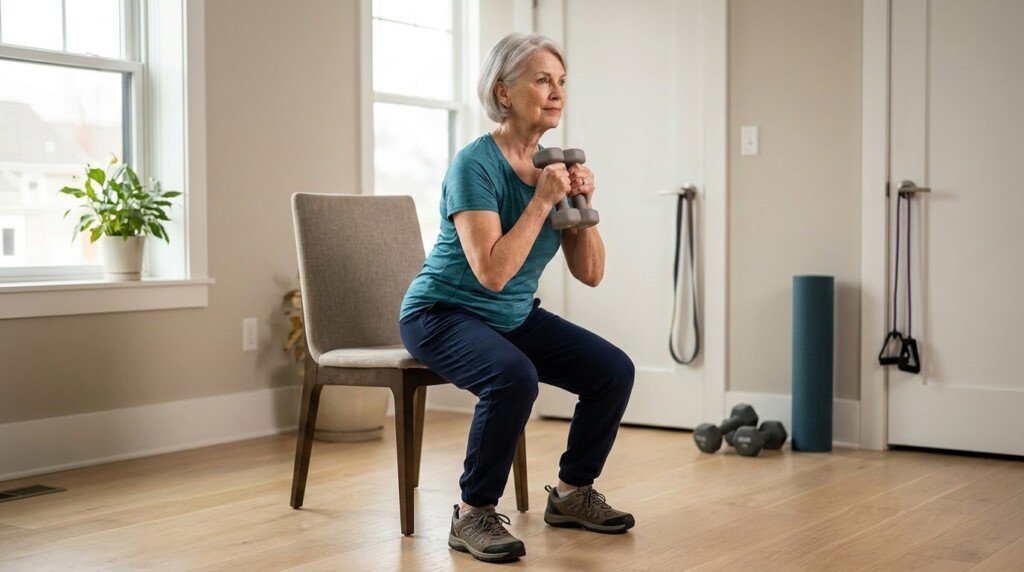
What specific types of exercise are most effective for maintaining muscle mass?
Resistance training should form the foundation of a muscle-preservation plan.
This can involve free weights, machines, resistance bands, bodyweight movements, or other forms of resistance that make the muscles work harder than they would during ordinary daily movement.
The equipment matters less than the stimulus.
A simple chair squat can challenge the legs.
A resistance band row can challenge the upper back.
A light dumbbell press can challenge the shoulders and chest.
Calf raises can challenge the lower legs.
The key is that the exercise should be appropriately challenging for the person’s current ability.
As strength improves, the challenge can gradually increase.
This principle is often called progressive overload.
It does not mean constantly lifting heavier weights.
Progress can involve performing more repetitions, using slightly greater resistance, improving movement control, increasing the range of motion, or gradually making an exercise more demanding.
For an older adult who is new to resistance training, the first objective is often simply becoming comfortable performing the movements consistently.
A person does not need an advanced bodybuilding program to protect muscle.
A practical routine might include movements that train the legs, hips, back, chest, shoulders, and arms.
Lower-body exercises deserve particular attention because leg strength has a direct relationship with everyday independence.
Standing from a chair, climbing stairs, walking uphill, and getting up from the floor all require meaningful lower-body strength.
Upper-body strength matters too.
Carrying groceries, lifting household objects, opening doors, and performing everyday tasks require the arms, shoulders, chest, and back to contribute.
Balance and functional movement should also have a place in an older adult’s overall activity pattern.
However, balance exercises should complement resistance training rather than replace it when the goal is preserving muscle.
Walking remains useful.
Regular walking can help maintain activity levels, cardiovascular fitness, mobility, and confidence. It also provides a simple way to avoid spending most of the day sedentary.
But walking alone should not be expected to provide the same muscle-preserving stimulus as progressive resistance exercise.
The strongest approach combines the two.
One builds cardiovascular and general physical capacity.
The other directly challenges muscular strength.
If someone has a medical condition, significant weakness, a history of falls, or substantial mobility limitations, the exercise plan should be adapted with appropriate professional guidance rather than copied from a generic routine.
The objective is consistency without unnecessary risk.
How often should older adults do resistance training?
For most older adults, resistance training should happen regularly rather than occasionally.
A practical target is at least two days per week, with exercises that involve the major muscle groups. This aligns with major public-health guidance for older adults, including the CDC’s recommendation that adults perform muscle-strengthening activity on at least two days each week.
Two days is a useful starting point, not a maximum.
Some people may eventually benefit from three sessions per week depending on training experience, recovery, health status, and goals.
The important point is to avoid thinking that more is automatically better.
An older adult who performs an intense workout once every two weeks is unlikely to get the same benefit as someone who performs manageable strength sessions consistently.
Frequency also needs to fit real life.
If someone can realistically train on Tuesday and Friday, that is better than designing a perfect five-day routine that they abandon after three weeks.
A simple schedule might look like this:
Monday: walking or other light activity
Tuesday: resistance training
Wednesday: regular movement and recovery
Thursday: walking or another suitable aerobic activity
Friday: resistance training
Weekend: enjoyable physical activity, walking, mobility work, or recovery
The exact schedule can change.
What matters is maintaining a repeated muscle stimulus while allowing enough recovery.
Older adults who are new to resistance training should also avoid the temptation to test their maximum strength.
The goal is controlled, repeatable training.
Good technique matters more than ego.
A resistance exercise should be challenging enough to stimulate adaptation but appropriate enough that the person can perform it safely and consistently.
If strength is already declining noticeably, professional supervision can be especially useful.
A qualified exercise professional can modify exercises based on mobility, balance, previous injuries, and current strength.
How much protein do older adults need, and what are the best sources?
Exercise provides the signal for muscle maintenance, but nutrition provides the raw materials.
Protein is particularly important because it supplies amino acids used to build and repair muscle proteins.
Older adults may need more attention to protein intake than younger adults because aging can reduce the muscle-building response to a given amount of protein.
This does not mean everyone needs huge quantities of protein.
It means protein intake should be adequate and distributed in a way that supports overall nutrition.
For healthy older adults, expert groups commonly recommend protein intakes above the basic adult minimum. The PROT-AGE Study Group proposed approximately 1.0 to 1.2 grams of protein per kilogram of body weight per day for older adults, with higher intakes sometimes appropriate for people who exercise regularly or have certain health circumstances.
That translates roughly to:
60 kg adult: 60 to 72 g/day
70 kg adult: 70 to 84 g/day
80 kg adult: 80 to 96 g/day
These are practical reference ranges, not universal prescriptions.
People with certain medical conditions, particularly kidney disease, may need individualized protein advice from a healthcare professional.
The important mistake to avoid is assuming that more protein is automatically better.
Adequate intake matters.
Excessive intake does not guarantee additional muscle protection.
Protein also works best as part of a broader pattern that includes resistance exercise and sufficient overall nutrition.

What is the recommended daily protein intake for older adults specifically?
A reasonable starting framework for many healthy older adults is 1.0 to 1.2 g/kg/day, with some physically active older adults potentially benefiting from around 1.2 to 1.6 g/kg/day, depending on their circumstances and goals.
For someone weighing 70 kg, that could mean approximately 84 to 112 grams of protein per day.
But a target should not be chosen in isolation.
Body size, physical activity, health status, total calorie intake, appetite, dietary preferences, and kidney function can all matter.
This is particularly important for older adults because some may already struggle to eat enough food.
A person with poor appetite who is told to dramatically increase protein may simply become overwhelmed by the amount of food required.
Instead, protein can be incorporated into meals that are already familiar.
Breakfast might include eggs, Greek yogurt, cottage cheese, or another protein-rich option.
Lunch might include fish, chicken, tofu, beans, lentils, or another suitable source.
Dinner can follow the same principle.
A protein-rich snack can also help someone who struggles to consume enough in three meals.
The objective is not to turn every meal into a bodybuilding meal.
It is to make adequate protein a normal part of the daily diet.
For people following vegetarian or vegan diets, protein can come from combinations of legumes, soy foods, dairy or fortified alternatives, grains, nuts, seeds, and other plant sources.
The quality and total amount of protein matter more than following one particular dietary philosophy.
Another useful consideration is spreading protein across the day.
Older adults often consume relatively little protein at breakfast and lunch and then eat a large protein-heavy dinner.
That pattern may not be ideal for stimulating muscle protein synthesis repeatedly throughout the day.
A more balanced distribution can make it easier to reach the daily target while providing several opportunities for muscle-supporting amino acids.
What role do essential amino acids, especially leucine, play?
Protein is made from amino acids, and essential amino acids must come from food because the body cannot produce them in sufficient amounts.
Leucine is one of the essential amino acids that has received particular attention because it plays an important role in signaling pathways involved in muscle protein synthesis.
Older muscle may require a stronger nutritional stimulus to produce the same response seen in younger muscle, which is one reason protein quality and adequate amounts become increasingly relevant with age.
Foods containing complete, high-quality proteins can provide substantial amounts of essential amino acids.
Examples include eggs, dairy products, fish, poultry, meat, and soy.
Some plant proteins can also contribute meaningfully, particularly when overall protein intake is adequate and a varied diet supplies different amino acid profiles.
This is where the word “leucine” can sometimes become misleading.
You do not necessarily need a standalone leucine supplement to maintain muscle.
For most people, a balanced diet containing adequate high-quality protein can provide leucine naturally.
The priority should be total protein intake and overall diet quality rather than chasing one isolated amino acid.
A protein supplement may be useful in certain circumstances, particularly when appetite is low or normal meals do not provide enough protein.
But it should solve a practical problem, not become a substitute for an adequate diet.
What other nutritional factors beyond protein matter for muscle health?
Protein receives most of the attention, but muscle health depends on more than one nutrient.
Older adults need enough total energy as well.
If calorie intake is chronically too low, the body may have greater difficulty maintaining tissue, particularly when combined with inadequate protein and inactivity.
This is one reason unintentional weight loss in older adults deserves attention.
A person who is losing weight without trying may not simply be losing excess body fat. They may also be losing muscle.
Carbohydrates can support physical activity by providing readily available energy, particularly around exercise.
Healthy fats contribute essential fatty acids and help provide dietary energy.
Micronutrients also matter.
Vitamin D is particularly relevant to bone and muscle function, although supplementation should generally be guided by dietary intake, risk factors, and medical advice rather than automatically prescribed to everyone.
Calcium is important for bone health and works alongside vitamin D.
Magnesium, iron, vitamin B12, and other nutrients can also become relevant depending on the individual’s diet and health status.
Hydration should not be ignored either.
Dehydration can impair physical performance and contribute to fatigue, which may make activity more difficult.
The bigger lesson is that muscle preservation is not created by protein alone.
It requires enough food, adequate nutrients, regular movement, and appropriate exercise.
A protein shake cannot compensate for severe inactivity.
A resistance-training routine cannot fully compensate for chronic undernutrition.
A supplement cannot replace a balanced diet.
Muscle health is the result of several inputs working together.
Are there supplements or other lifestyle changes that help?
Supplements can have a role, but they should sit underneath the basics rather than above them.
The strongest foundation remains resistance training, adequate protein, sufficient overall nutrition, and regular physical activity.
Once those are in place, certain supplements may be useful in specific circumstances.
Protein powder is the most straightforward example.
It is not a special muscle-building substance. It is simply a convenient way to consume protein.
For an older adult who struggles to eat enough protein through ordinary meals, a protein powder can make reaching an appropriate daily target easier.
Whey protein is one option.
Soy, pea, rice, and blended plant proteins can provide alternatives depending on dietary preferences and tolerance.
The best choice is usually the one the person can consume consistently and comfortably.
Creatine is another supplement worth discussing.
Creatine monohydrate has been studied extensively in exercise and muscle research. In older adults, evidence suggests that creatine combined with resistance training can improve strength and lean mass more effectively than resistance training alone in some circumstances.
However, creatine should not be presented as a treatment that independently prevents sarcopenia in every older adult.
People with kidney disease or other medical conditions should discuss supplementation with their healthcare professional before starting it.
Vitamin D is another nutrient that may require attention, especially when deficiency or insufficiency is present.
But supplementation should not be treated as a universal answer to age-related muscle loss.
The same caution applies to products marketed specifically as “sarcopenia supplements.”
A product can contain a promising ingredient without having strong evidence that the finished product prevents or reverses sarcopenia.
Marketing language is not clinical evidence.
Before buying a supplement, ask a simple question:
What specific problem is this product solving?
If the answer is “I am not getting enough protein from food,” a protein supplement may make practical sense.
If the answer is “I want to prevent aging,” the product deserves much more skepticism.

Are there supplements shown to help prevent or manage sarcopenia?
Some supplements have evidence suggesting benefits for aspects of muscle health, particularly when combined with appropriate exercise.
Protein supplements can help older adults reach adequate protein intake when food alone is difficult.
Creatine monohydrate has evidence supporting improvements in strength and lean mass when paired with resistance training in some older populations.
Vitamin D supplementation may be appropriate when someone has inadequate vitamin D status or an identified deficiency.
Other compounds, including various amino acids and specialized nutritional products, continue to be studied.
But the evidence is not equally strong for all supplements.
There is also a major difference between improving a measurement and preventing a clinical condition.
A supplement that slightly increases lean mass on a body-composition scan does not automatically mean it prevents falls, disability, or loss of independence.
That is why supplement decisions should remain secondary.
If someone has not started resistance training, is eating very little protein, and spends most of the day sitting, purchasing multiple supplements is unlikely to address the main problem.
The basics have a much larger role.
Supplements become more useful when they fill a genuine nutritional or practical gap.
For older adults with medical conditions, medications, kidney problems, or complex nutritional needs, professional advice is particularly important before starting multiple supplements.
What lifestyle changes beyond diet and exercise make a real difference?
Muscle health is influenced by the entire lifestyle, not just what happens during a workout.
One of the most important changes is reducing prolonged sedentary time.
You can complete a 30-minute workout and still spend the remaining 14 waking hours sitting.
That does not make the workout useless.
It simply means everyday movement still matters.
Short walks, standing breaks, household tasks, gardening, shopping, and other ordinary activities all contribute to maintaining physical capacity.
Sleep is another part of the equation.
Recovery is when the body has an opportunity to adapt to training. Chronic sleep problems can interfere with energy, appetite, mood, and physical performance.
Stress management also deserves attention.
Chronic stress can affect sleep, eating behavior, activity, and recovery. There is no need to turn stress management into another complicated health project. Simple routines that make daily life more manageable can help.
Social connection can matter too.
Older adults who exercise with friends, attend group classes, walk with a partner, or participate in community activities may find it easier to stay active consistently.
Consistency is often more important than having the theoretically perfect program.
Another useful habit is paying attention to functional changes.
If an older adult notices that stairs are becoming difficult, getting out of a chair requires more effort, or walking has become noticeably slower, that should not simply be dismissed as “getting older.”
The earlier a meaningful decline is noticed, the sooner it can be discussed with an appropriate professional.
This is different from diagnosing sarcopenia at home.
It is simply paying attention to changes in physical capacity.
The broader cause-and-effect picture also matters. If inactivity, poor nutrition, or chronic illness is contributing to muscle decline, addressing those factors may be more important than searching for a single miracle intervention. Understanding what causes sarcopenia makes this relationship much easier to see.
Prevention is ultimately about maintaining capacity before a major decline becomes difficult to reverse.
A useful long-term framework is therefore straightforward:
Challenge the muscles.
Eat enough protein and overall nutrition.
Keep moving outside formal workouts.
Recover properly.
Address health problems that interfere with physical function.
Pay attention to meaningful changes in strength and mobility.
No single step guarantees that someone will never develop sarcopenia.
But together, these habits create a much stronger environment for maintaining muscle throughout older adulthood.
FAQ (How to prevent sarcopenia).
1. How can I prevent sarcopenia?
The strongest prevention strategy combines regular resistance training, adequate protein and overall nutrition, regular daily movement, sufficient recovery, and attention to health conditions that can accelerate muscle loss. For many older adults, resistance training at least twice weekly is a practical starting point.
2. How much protein do I need to prevent muscle loss?
Many healthy older adults can use approximately 1.0 to 1.2 grams of protein per kilogram of body weight per day as a practical starting range. Physically active older adults may need more, depending on their circumstances. A 70 kg person, for example, would need roughly 70 to 84 grams at the 1.0 to 1.2 g/kg range.
3. Do supplements help prevent sarcopenia?
Some supplements can support muscle health in specific circumstances. Protein powder can help people meet protein needs, while creatine combined with resistance training has evidence for improving strength and lean mass in some older adults. Supplements should complement, not replace, exercise and adequate nutrition.
4. Is resistance training safe for older adults?
Resistance training can be appropriate and beneficial for many older adults when exercises are matched to their ability and performed with appropriate technique. People with significant weakness, mobility problems, recent injuries, or medical conditions should seek suitable professional guidance before beginning a new program.
5. Is walking enough to prevent sarcopenia?
Walking is excellent for maintaining mobility and general physical activity, but it does not provide the same muscle-strengthening stimulus as resistance training. A prevention plan is stronger when regular walking or other aerobic activity is combined with resistance exercise.
Disclaimer:
This post may contain affiliate links. If you purchase through them, we may earn a small commission at no extra cost to you. Also, this content is for informational purposes only and does not substitute professional medical advice.
Train Smarter, Not Harder
Use our free Fitness Toolkit to find your heart rate zones and calories burned in minutes.
Open Free Tools →