
NEAT for Desk Workers: A Realistic 9-to-5 Movement Plan
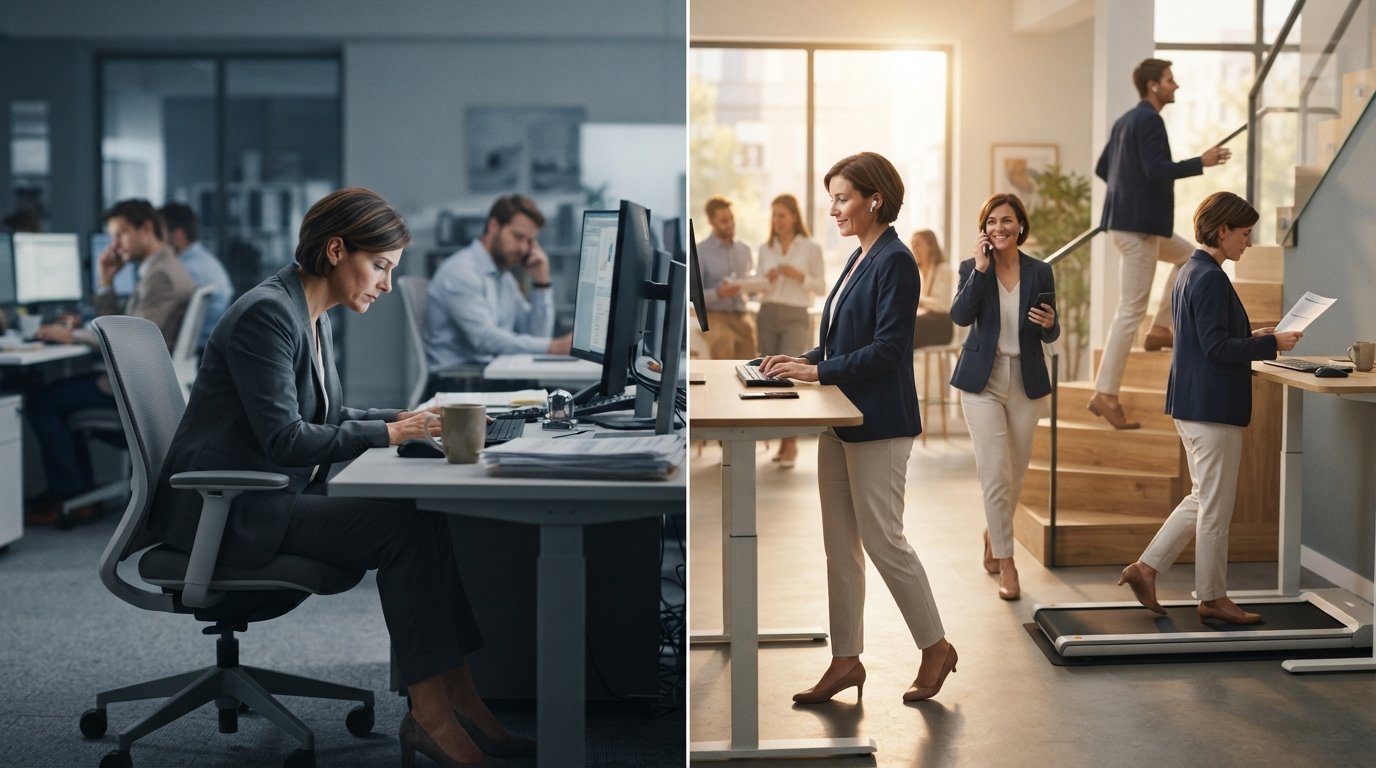
If you work at a desk for eight or more hours every day, you have probably experienced the same routine countless times. You arrive at work, sit through emails, attend meetings, answer messages, finish projects, and suddenly realize the day is almost over. Apart from walking to the restroom or grabbing lunch, very little movement has happened.
This is exactly why NEAT for desk job has become an increasingly important topic in weight management and overall health.
Most office workers do not struggle because they never exercise. Many actually fit in a morning workout or visit the gym after work. The challenge is that the remaining eight to ten hours are often spent sitting almost continuously.
Fortunately, improving NEAT at work does not require expensive equipment or constant exercise breaks.
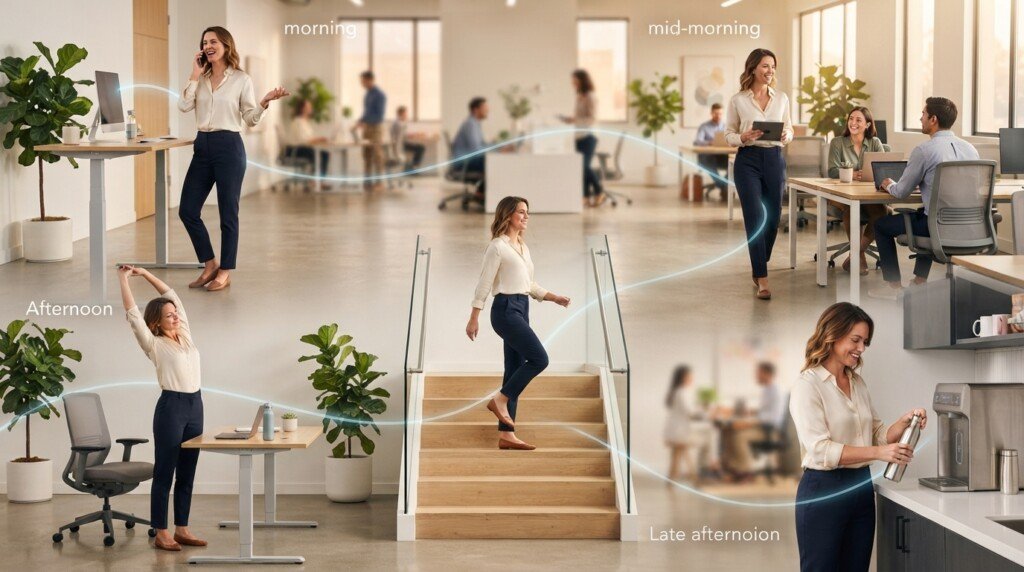
Small changes repeated throughout the workday can increase everyday movement without interrupting productivity. Standing for a few extra minutes, walking while taking phone calls, choosing the stairs, or changing posture more frequently may seem insignificant individually, but together they contribute to a more active lifestyle.
This article focuses specifically on NEAT for desk job, offering practical office-friendly strategies, realistic expectations, and evidence-based insights into how small workplace habits can support long-term weight management.
Quick Answer
NEAT for desk job means increasing everyday movement throughout your workday rather than relying only on scheduled workouts. Standing more often, walking during breaks, taking stairs, moving between meetings, and reducing prolonged sitting can collectively increase daily calorie expenditure while supporting better overall health.
What Are Simple Ways to Increase NEAT at Work?
Many office workers believe they need major lifestyle changes to become more active.
In reality, the opposite is often true.
The biggest opportunities usually come from movements that already fit naturally into a typical workday.
Instead of finding an extra hour for exercise, the goal is to make the hours you already spend at work slightly more active.
These adjustments are generally easier to maintain because they require very little additional planning.

How Can I Incorporate More Movement Into My Workday Without a Standing Desk?
One of the biggest misconceptions about workplace NEAT is that expensive office equipment is required.
While adjustable desks can certainly help, they are far from essential.
Many effective strategies require no equipment at all.
Walk Instead of Sending Every Message
If a coworker is only a short distance away, consider walking over instead of sending another instant message.
Besides increasing movement, face-to-face conversations often resolve questions more quickly.
Take the Long Route
Small route changes accumulate throughout the day.
Examples include:
- Walking to a restroom on another floor.
- Using a printer farther away.
- Taking the longer hallway.
- Parking slightly farther from the office entrance.
Each individual walk may last only a minute or two.
Across an entire workweek, those extra minutes begin adding up.
Stand During Simple Tasks
Not every task requires sitting.
Consider standing while:
- Reading documents.
- Reviewing reports.
- Taking short phone calls.
- Responding to brief emails.
- Brainstorming ideas.
Alternating between sitting and standing also reduces long uninterrupted periods in one posture.
Build Movement Into Existing Habits
One of the easiest ways to improve NEAT for desk job is by attaching movement to activities you already perform.
For example:
- Stand every time your phone rings.
- Walk after finishing a meeting.
- Stretch while waiting for files to load.
- Walk to refill your water bottle instead of using a large container that lasts all day.
Because these actions are connected to existing habits, they often become automatic over time.
What Quick Exercises Can I Do at My Desk to Boost NEAT?
This article focuses on NEAT rather than structured exercise, so the goal is not to complete workouts at your desk.
Instead, think in terms of gentle movement that keeps your body from remaining completely still for hours.
Examples include:
- Shoulder rolls.
- Neck mobility exercises.
- Ankle circles.
- Gentle calf raises while standing.
- Seated leg extensions.
- Standing hamstring stretches.
- Hip mobility movements.
- Light bodyweight squats during short breaks.
These movements are simple enough for most workplaces while encouraging regular changes in posture.
Use Natural Breaks
Many office routines already include short waiting periods.
Examples include:
- Software updates.
- Large file downloads.
- Printing documents.
- Coffee brewing.
- Virtual meeting setup.
Rather than remaining seated, use these moments to stand, stretch, or walk briefly.
Over time, these small actions become part of your normal workflow rather than interruptions.
Movement Snacks Throughout the Day
Health researchers increasingly describe short bursts of movement as “movement snacks.”
Instead of one long activity session, these brief periods help interrupt prolonged sitting.
Examples include:
- Two minutes of walking every hour.
- Standing for several minutes after meetings.
- Walking while thinking through difficult problems.
- Taking stairs whenever practical.
These activities require little effort while helping reduce sedentary time.
What Are the Long-Term Benefits of Consistently Increasing NEAT at Work?
Many people expect dramatic overnight results.
NEAT rarely works that way.
Its strength comes from consistency rather than intensity.
Small increases in movement performed every working day can accumulate over months and years.
More Daily Energy Expenditure
Remaining active throughout the workday increases overall movement compared with sitting continuously.
Although individual activities burn relatively few calories, the combined effect may meaningfully increase daily energy expenditure.
Reduced Sedentary Time
Extended sitting has become increasingly common in modern workplaces.
Breaking up long sitting periods with standing or walking creates more frequent opportunities for movement throughout the day.
Improved Comfort
Many office workers notice that regular posture changes help reduce feelings of stiffness after long work sessions.
Alternating between sitting, standing, and walking allows different muscle groups to remain engaged throughout the day.
Easier Long-Term Consistency
Perhaps the greatest advantage of workplace NEAT is sustainability.
Unlike demanding workout programs, these habits become part of normal work routines.
They require very little additional motivation once established.
If you’re interested in broader strategies beyond the workplace, How to Increase Your NEAT Calories Every Day (Without the Gym) explores ways to increase everyday movement across different settings.
Likewise, if you’d like a deeper understanding of how everyday movement contributes to total daily energy expenditure, NEAT (Non-Exercise Activity Thermogenesis): What It Is and Why It Matters for Weight Loss explains the bigger picture behind workplace movement and overall calorie expenditure.
Are Standing Desks and Walking Pads Worth It for NEAT?
For many office workers, the first solution that comes to mind is buying a standing desk or an under-desk walking pad. While both can support NEAT for desk job, neither is a magic solution.
The value of these tools depends on how consistently you use them.
A standing desk that remains in the sitting position all day provides little benefit. Likewise, a walking pad that becomes an expensive clothes rack will not increase daily movement.
The goal is not to purchase equipment simply because it is popular. The goal is to choose tools that genuinely fit your work style and encourage more movement without making your job harder.
How Many Extra Calories Does a Standing Desk Realistically Burn Per Day?
Standing burns slightly more energy than sitting, but the difference is often smaller than many advertisements suggest.
Research indicates that standing generally increases energy expenditure by a modest amount compared with sitting. For many people, replacing several hours of sitting with standing may contribute approximately 20 to 50 additional calories over the course of a workday, although this varies depending on body size, posture, and movement while standing.
This is why expectations matter.
Standing should not be viewed as a weight-loss shortcut.
Instead, its greatest benefits include:
- Breaking up prolonged sitting
- Encouraging posture changes
- Making it easier to move around the office
- Increasing opportunities for brief walking breaks
- Supporting overall daily movement
Think of a standing desk as a tool that makes movement easier rather than a device that dramatically increases calorie burn.
Standing Still Is Not the Goal
One common mistake is standing in exactly the same position for hours.
Standing without moving can eventually become uncomfortable and may even lead to fatigue.
A better approach is to alternate naturally between:
- Sitting
- Standing
- Walking
- Stretching
- Returning to seated work
Changing positions regularly is usually more practical than trying to stand all day.
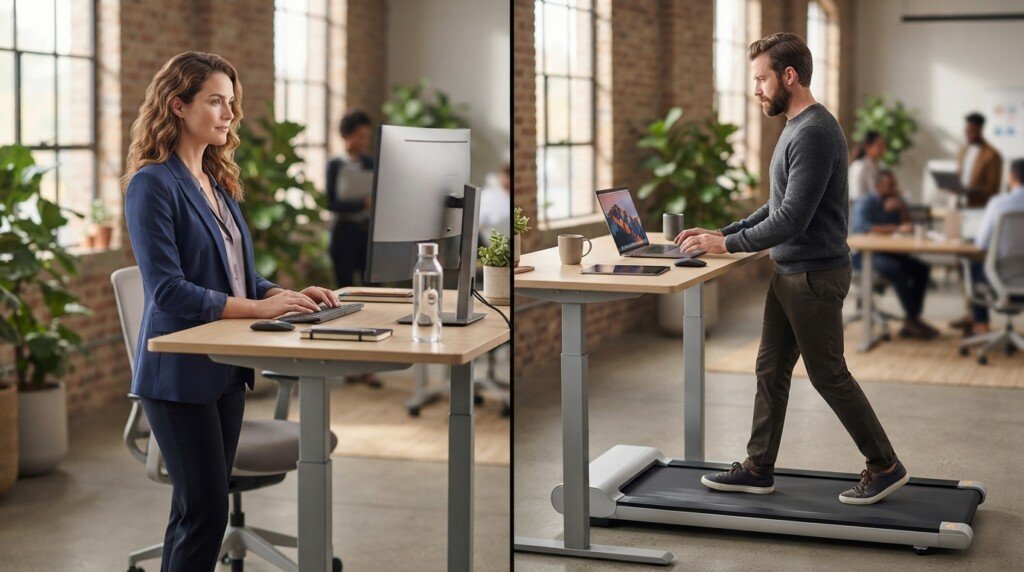
How Does a Walking Pad Compare to a Standing Desk for NEAT?
Walking pads have become increasingly popular among people who spend long hours working at a computer.
Unlike standing desks, walking pads introduce continuous low-speed movement while performing suitable tasks.
Examples include:
- Reading emails
- Joining virtual meetings without presenting
- Reviewing documents
- Listening to webinars
- Administrative work
Because walking requires more energy than standing, walking pads generally contribute more to NEAT than standing desks alone.
However, they are not appropriate for every task.
Activities requiring detailed spreadsheets, graphic design, coding, or intensive writing may be easier while sitting or standing still.
The most practical approach is often combining multiple work positions throughout the day.
For example:
- Sitting during highly focused work.
- Standing during routine computer tasks.
- Walking slowly during meetings where active typing is minimal.
Walking Pads Are Not Replacements for Exercise
Although walking pads increase movement, they should not replace structured exercise.
Exercise provides additional benefits including:
- Improved cardiovascular fitness
- Greater muscular strength
- Bone health
- Athletic performance
- Higher exercise capacity
Walking pads simply make sedentary workdays less sedentary.
They complement workouts rather than replacing them.
Readers interested in understanding how workplace movement contributes to overall calorie expenditure can find additional context in How Are NEAT Calories Calculated and Why They Vary Between People, which explains how daily movement influences total energy expenditure.
How Can I Build NEAT Habits Into Meetings and Commutes?
One reason workplace NEAT often succeeds is that it becomes part of routines you already follow.
Instead of creating entirely new habits, you simply add movement to activities that already occur every workday.
Meetings and commuting provide two excellent opportunities.

What Are Realistic Ways to Add Movement During Virtual Meetings?
Remote work has reduced commuting for many people, but it has also increased sitting time.
Virtual meetings can become surprisingly sedentary.
Fortunately, many meetings allow light movement without affecting productivity.
Depending on your role, consider:
- Standing during video calls.
- Walking during audio-only meetings.
- Stretching while listening.
- Changing posture between agenda items.
- Standing while presenting shorter updates.
If cameras are off, slow walking during certain meetings may also be practical.
Of course, movement should never interfere with communication or concentration.
The objective is subtle activity rather than distraction.
Build Meeting Triggers
Instead of remembering to move randomly, attach movement to recurring work events.
Examples include:
- Stand whenever a meeting begins.
- Walk immediately after every meeting ends.
- Refill your water bottle after long presentations.
- Stretch before opening the next calendar appointment.
Because meetings already occur throughout the day, they become reliable reminders to move.
Can Active Commuting Meaningfully Raise Daily NEAT?
For many office workers, commuting represents an overlooked opportunity.
Active commuting does not necessarily require cycling several miles to work.
Small changes also contribute.
Examples include:
- Parking farther from the building.
- Getting off public transport one stop earlier.
- Walking during lunch breaks.
- Using stairs instead of escalators.
- Walking to nearby coffee shops instead of driving.
These activities may seem minor individually.
Performed every workday, however, they contribute meaningful additional movement over months and years.
Think in Terms of an Entire Workday
Rather than asking whether one habit burns many calories, ask a different question:
“Will this make my workday more active than yesterday?”
That mindset shifts attention away from perfection.
The goal is not maximizing every calorie.
The goal is reducing prolonged inactivity while making movement a normal part of office life.
Key Takeaways
| Topic | Main Insight |
|---|---|
| Workplace NEAT | Small movements performed consistently throughout the workday often matter more than occasional bursts of activity. |
| Standing desks | They modestly increase energy expenditure but are most valuable for reducing prolonged sitting and encouraging movement. |
| Walking pads | They generally increase movement more than standing desks but work best during suitable low-intensity computer tasks. |
| Meetings | Standing, stretching, or walking during appropriate meetings helps interrupt long periods of sitting. |
| Commuting | Small changes to daily travel routines can meaningfully increase everyday movement over time. |
Frequently Asked Questions
1. How can I increase NEAT at a desk job?
Simple strategies include standing more often, walking during breaks, taking stairs, moving between meetings, and reducing long uninterrupted periods of sitting.
2. Are standing desks worth it for calorie burn?
Standing desks burn only modestly more calories than sitting. Their greatest benefit is encouraging regular movement and reducing prolonged sedentary time.
3. Is a walking pad better than a standing desk?
Walking pads generally increase energy expenditure more than standing desks because they involve continuous movement. However, they are not practical for every work task.
4. Can I improve NEAT without buying office equipment?
Yes. Many effective workplace NEAT habits, such as walking during breaks, standing during calls, and taking the stairs, require no equipment at all.
5. Will workplace NEAT replace regular exercise?
No. Workplace NEAT complements structured exercise but does not replace the cardiovascular, strength, and fitness benefits that planned workouts provide.
Conclusion
Improving NEAT for desk job is less about making dramatic changes and more about rethinking how movement fits into an ordinary workday. Standing occasionally, walking between tasks, using active commuting opportunities, and incorporating movement into meetings all help reduce prolonged sitting without disrupting productivity.
Standing desks and walking pads can be valuable tools when used consistently, but they are most effective as part of a broader approach that encourages regular movement throughout the day. They should support your routine rather than define it.
Ultimately, lasting progress comes from habits you can maintain. By making small, realistic adjustments to the way you work instead of relying on occasional bursts of activity, you create an office routine that supports healthier movement patterns and contributes to long-term weight management.
Disclaimer:
This post may contain affiliate links. If you purchase through them, we may earn a small commission at no extra cost to you. Also, this content is for informational purposes only and does not substitute professional medical advice.
Train Smarter, Not Harder
Use our free Fitness Toolkit to find your heart rate zones and calories burned in minutes.
Open Free Tools →