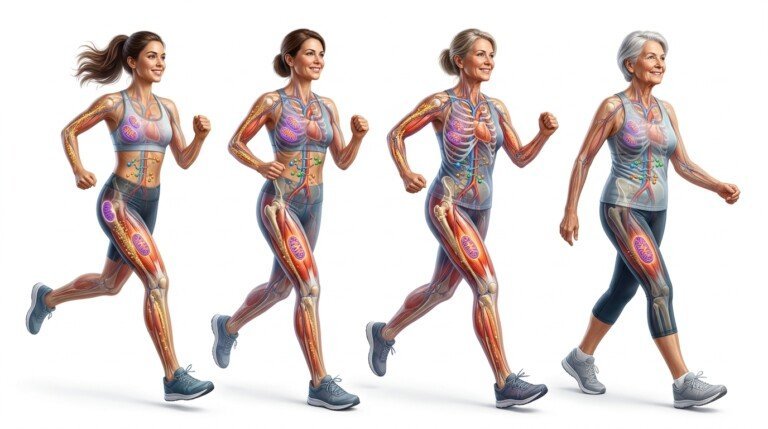

How Are NEAT Calories Calculated and Why They Vary Between People
Many people understand that moving more throughout the day burns extra calories. The difficult part is figuring out how are NEAT calories calculated and whether those numbers shown on fitness trackers actually reflect reality.
Unlike a treadmill workout, where distance, speed, and duration are easy to measure, NEAT is made up of hundreds of small movements that happen naturally throughout the day. Standing to answer the door, walking to the kitchen, carrying shopping bags, changing posture in your chair, or pacing during a phone call all contribute to your daily energy expenditure.
Because these movements are spontaneous and constantly changing, measuring them is far more challenging than measuring structured exercise.
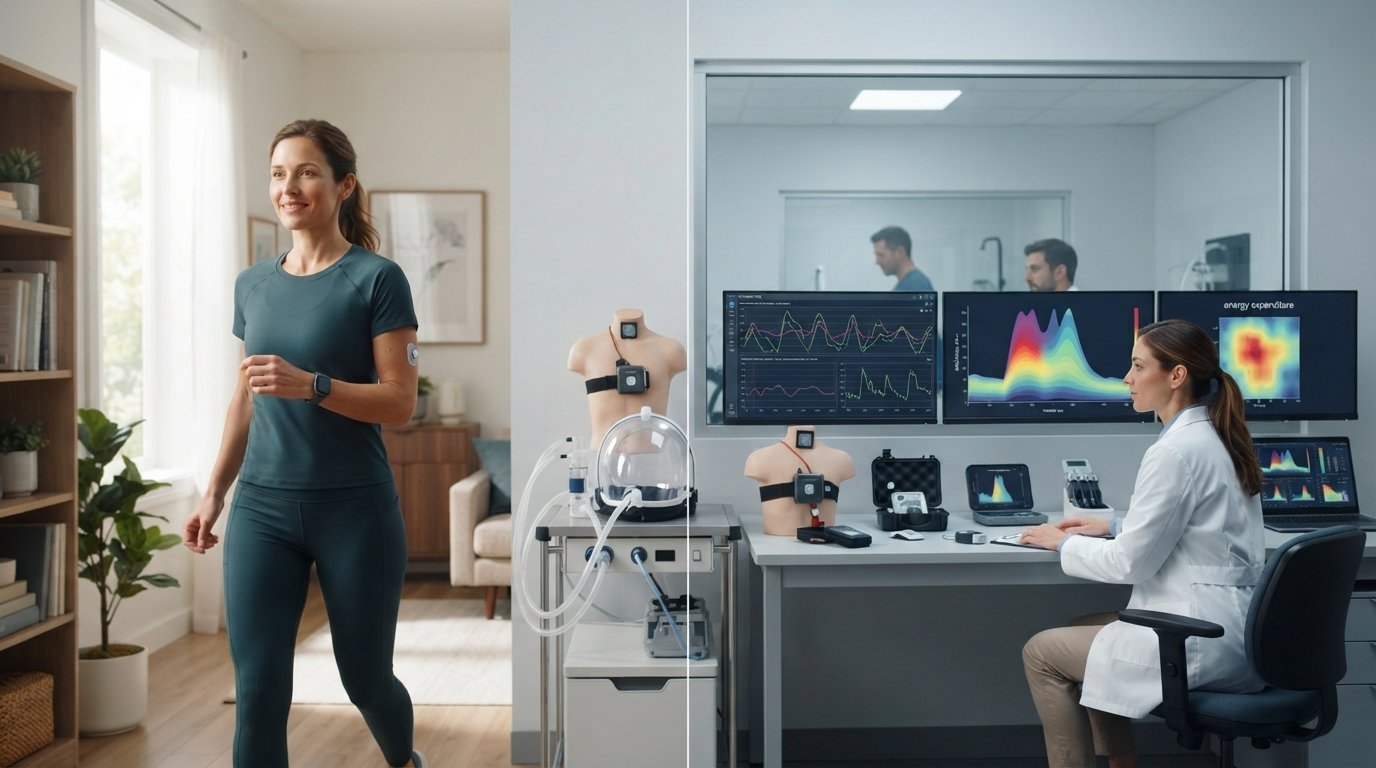
Researchers have developed sophisticated laboratory techniques to estimate NEAT, while wearable devices use sensors and algorithms to provide practical daily estimates. Neither approach is perfect, but together they help explain why some people naturally burn far more calories than others despite having similar exercise routines.
In this article, you’ll understand how are NEAT calories calculated, how scientists measure them, how smartwatches estimate them, why results differ from person to person, and why perfect accuracy isn’t necessary for NEAT to support healthy weight management.
Quick Answer
How are NEAT calories calculated? Researchers usually estimate NEAT by subtracting basal metabolic rate, the thermic effect of food, and planned exercise energy expenditure from total daily energy expenditure. Consumer wearables estimate NEAT differently by combining movement sensors, heart rate, and proprietary algorithms. Both methods provide estimates rather than exact numbers because everyday movement changes constantly.
How Is NEAT Calculated?
Unlike counting steps or measuring a running workout, calculating NEAT is not as simple as adding together individual activities.
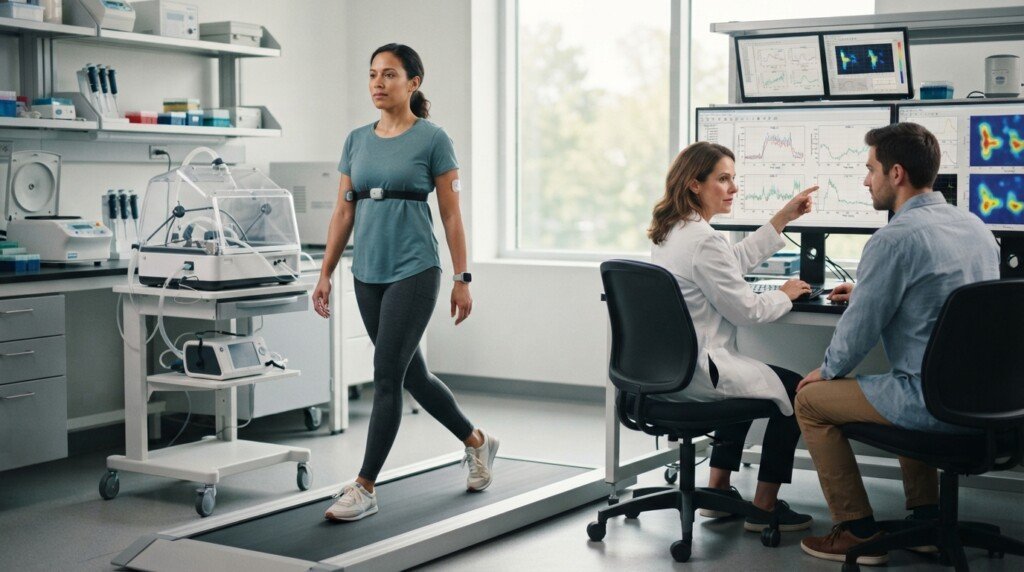
Researchers rarely measure NEAT directly.
Instead, they estimate it by measuring several components of daily energy expenditure and then determining how much remains after the other components have been accounted for.
This indirect approach has become the standard method in human metabolism research.

What Is the Core Formula Used to Calculate NEAT?
The human body uses energy throughout the day for several different purposes.
Scientists generally divide total daily energy expenditure into four major components:
- Basal metabolic rate (BMR)
- Thermic effect of food (TEF)
- Exercise activity thermogenesis (EAT)
- Non-Exercise Activity Thermogenesis (NEAT)
Because these components together account for most daily energy use, researchers estimate NEAT using a subtraction method rather than measuring every individual movement.
The simplified relationship looks like this:
NEAT = Total Daily Energy Expenditure − Basal Metabolic Rate − Thermic Effect of Food − Exercise Energy Expenditure
Rather than calculating the calories burned by every step, every posture change, or every household task, scientists first estimate the body’s overall daily energy use.
After accounting for the calories needed for basic bodily functions, digestion, and structured exercise, the remaining energy is attributed to NEAT.
This approach is far more practical than trying to measure thousands of individual movements separately.
For readers unfamiliar with the overall role of NEAT within daily calorie expenditure, NEAT (Non-Exercise Activity Thermogenesis): What It Is and Why It Matters for Weight Loss explains how this component fits into total daily energy expenditure.
What Are the Key Components That Contribute to the NEAT Calculation?
Although the formula appears straightforward, each component requires its own measurement.
Basal Metabolic Rate
Basal metabolic rate represents the calories your body needs simply to stay alive.
Even while resting quietly, your body continues:
- Breathing
- Pumping blood
- Regulating body temperature
- Maintaining organ function
- Supporting brain activity
- Repairing tissues
For most adults, this is the largest contributor to total daily energy expenditure.
Thermic Effect of Food
Digesting food also requires energy.
Chewing, digesting, absorbing nutrients, transporting them through the bloodstream, and storing them all increase calorie expenditure slightly after eating.
These calories are classified separately from NEAT.
Exercise Activity Thermogenesis
This includes intentional workouts such as:
- Running
- Weightlifting
- Swimming
- Cycling
- Fitness classes
- Organized sports
These activities are planned specifically for exercise and therefore are not included within NEAT.
Non-Exercise Activity Thermogenesis
Everything that remains from ordinary daily movement belongs here.
Examples include:
- Standing
- Walking around the home
- Climbing stairs
- Shopping
- Cleaning
- Carrying groceries
- Gardening
- Walking between meetings
- Changing posture throughout the day
Instead of measuring each movement individually, researchers estimate the combined contribution of all these activities.
How Do Body Weight and Muscle Mass Influence NEAT?
One reason two people can perform the same activity yet burn different numbers of calories is that bodies require different amounts of energy to move.
Body Weight
Moving a heavier body generally requires more energy than moving a lighter one.
For example, two people may each spend fifteen minutes walking around a supermarket.
Although their activity is identical, the individual with greater body weight will usually expend more energy performing the same movement.
This does not necessarily mean one person’s NEAT is “better.”
It simply reflects differences in energy requirements.
Muscle Mass
Lean muscle tissue also influences energy expenditure.
People with greater muscle mass often require slightly more energy to perform everyday activities because muscle tissue is metabolically active.
Muscle also affects movement efficiency.
Someone with higher muscle mass may naturally choose more active behaviors throughout the day, although this varies widely among individuals.
Movement Efficiency
Experience also matters.
An individual who performs the same physical job every day may complete movements more efficiently than someone unfamiliar with those tasks.
Greater efficiency sometimes reduces the energy required for repeated activities.
This helps explain why NEAT varies even among people performing similar routines.
What Methods Do Researchers Use to Accurately Measure NEAT?
Because everyday movement changes from minute to minute, directly measuring NEAT is extremely difficult.
Researchers therefore rely on sophisticated scientific methods that estimate overall energy expenditure with high accuracy.
Doubly Labeled Water Method
This is widely regarded as the gold standard for measuring total daily energy expenditure in free-living individuals.
Participants drink specially prepared water containing stable isotopes.
Researchers then analyze how those isotopes leave the body over several days.
The results provide an accurate estimate of total energy expenditure while people continue their normal daily lives.
NEAT is then estimated after accounting for basal metabolism, digestion, and exercise.
Metabolic Chambers
Some research studies use specially designed rooms where oxygen consumption and carbon dioxide production are continuously measured.
These chambers allow scientists to calculate energy expenditure with exceptional precision while carefully monitoring participants’ activities.
Although highly accurate, they are expensive and not practical for everyday use.
Indirect Calorimetry
Indirect calorimetry measures oxygen consumption and carbon dioxide production to estimate calorie expenditure.
It is commonly used in laboratories to determine resting metabolic rate and occasionally supports broader energy expenditure research.
Accelerometers
Accelerometers measure body movement using motion sensors.
Unlike laboratory methods, they can be worn during everyday activities, allowing researchers to monitor movement patterns outside controlled environments.
However, movement alone does not always reflect calorie expenditure accurately, which is why accelerometer data are often combined with additional measurements.
Are There Practical Ways to Estimate Your Own NEAT Without Specialized Equipment?
Most people will never visit a metabolic laboratory.
Fortunately, perfect precision is unnecessary.
Several practical approaches can provide useful estimates.
You can monitor:
- Daily step counts
- Time spent standing
- Overall daily movement
- Active minutes recorded by wearable devices
- Time spent sitting versus moving
Although these measurements do not calculate NEAT directly, they offer valuable insight into your overall activity patterns.
Rather than focusing on whether today’s NEAT was exactly 412 or 437 calories, it is usually more helpful to observe long-term trends.
Consistently moving more throughout the week generally matters far more than knowing an exact calorie value.
Understanding your personal movement patterns often provides greater practical value than pursuing laboratory-level precision.
How Do Wearable Devices Estimate NEAT Calories?
Many people glance at the calorie numbers on their smartwatch or fitness tracker and assume they represent an exact measurement of everything they burned that day.
In reality, wearable devices do not measure NEAT directly.
Instead, they estimate it by collecting information from multiple sensors and using mathematical models to predict how much energy your body is likely using throughout the day.
Although these estimates have improved significantly over the years, they should still be viewed as useful guides rather than precise laboratory measurements.
Understanding how these devices work helps explain why different watches often report different calorie totals for the same person.

What Specific Sensors Do Wearable Fitness Trackers Use to Detect NEAT?
Modern fitness trackers collect several types of information simultaneously.
Instead of relying on a single measurement, they combine data from multiple sensors to estimate overall movement.
Accelerometers
The accelerometer is the most important sensor for estimating everyday movement.
It detects changes in motion in multiple directions.
This allows the device to recognize activities such as:
- Walking
- Standing up
- Sitting down
- Climbing stairs
- General body movement
- Frequent posture changes
Because NEAT consists largely of ordinary daily movement, accelerometers provide much of the information used for these estimates.
Gyroscopes
Many wearable devices also include gyroscopes.
These sensors detect body orientation and rotational movement.
Together with accelerometers, they improve the watch’s ability to recognize different movement patterns more accurately.
Optical Heart Rate Sensors
Most modern smartwatches continuously monitor heart rate using optical sensors.
Heart rate alone does not measure calorie expenditure.
However, when combined with movement data, it helps algorithms estimate how much energy your body is using during different activities.
GPS
When users walk, hike, or run outdoors, GPS data can provide information about:
- Distance traveled
- Walking speed
- Elevation changes
- Route characteristics
Although GPS contributes more to structured exercise than everyday indoor movement, it still improves overall activity estimation.
Altimeters
Some devices include barometric altimeters that detect changes in elevation.
This helps identify activities such as climbing stairs or walking uphill, both of which generally require more energy than walking on flat ground.
How Do Algorithms Interpret Sensor Data to Quantify NEAT?
Collecting movement data is only the first step.
The real work happens inside the software.
Wearable devices use proprietary algorithms to analyze information collected from their sensors.
These algorithms combine factors such as:
- Movement intensity
- Frequency of movement
- Duration of activity
- Heart rate patterns
- User age
- Sex
- Height
- Body weight
- Personal activity history
Using these variables, the device estimates total daily energy expenditure.
It then categorizes different periods of activity into:
- Rest
- Light movement
- Moderate activity
- Vigorous exercise
Many devices estimate NEAT indirectly by identifying movement that occurs outside recognized workouts.
Because every manufacturer develops its own algorithms, identical activities may produce different calorie estimates across brands.
This explains why two watches worn by the same individual can display noticeably different daily calorie totals.
What Are the Limitations and Accuracy Issues in Wearable NEAT Measurement?
Although wearable technology continues to improve, several limitations remain.
Everyday Movement Is Highly Variable
Unlike running on a treadmill, daily movement rarely follows predictable patterns.
One minute you may be standing.
The next minute you may:
- Sit briefly.
- Walk to another room.
- Carry groceries.
- Reach for objects.
- Climb a few stairs.
These constantly changing movements make precise calorie estimation challenging.
Small Movements Are Difficult to Detect
Certain forms of NEAT involve subtle muscle activity that sensors may not capture accurately.
Examples include:
- Minor posture adjustments
- Small upper-body movements
- Light fidgeting
- Finger movements
Because these activities produce limited motion, wearable devices may underestimate their contribution.
Heart Rate Is Influenced by Many Factors
Heart rate does not increase only because of physical activity.
It can also change due to:
- Emotional stress
- Anxiety
- Heat
- Caffeine
- Illness
- Poor sleep
Algorithms attempt to account for these factors, but they cannot always distinguish their exact cause.
Brand Differences
Every manufacturer develops its own estimation model.
For example, one device may classify a period of standing as light activity, while another may record it differently.
This variation explains why calorie estimates differ even when users perform identical activities.
For most people, consistency is more valuable than comparing devices.
Tracking long-term trends with one device usually provides more useful information than switching between different brands.
How Can Users Leverage Tracker NEAT Data to Improve Daily Activity?
The most valuable feature of wearable devices is not perfect accuracy.
It is increased awareness.
Many people underestimate how much time they spend sitting until a wearable reminds them to move.
Instead of focusing on whether today’s NEAT estimate is perfectly accurate, use your tracker to monitor broader patterns.
Helpful indicators include:
- Daily step trends
- Standing reminders
- Active minutes
- Sedentary time
- Weekly movement consistency
- Time spent walking
These trends often reveal habits that would otherwise go unnoticed.
For example, you may discover that:
- Mondays involve far less movement than weekends.
- Working from home reduces your activity.
- Long meetings dramatically increase sitting time.
- Travel days decrease overall movement.
Recognizing these patterns makes it easier to understand your lifestyle, even if the exact calorie estimates are not perfectly precise.
Readers interested in how different occupations naturally influence everyday movement can explore NEAT for Desk Workers, which examines how work environments affect daily activity and why office routines often reduce overall NEAT.
Why Trend Data Matters More Than Exact Numbers
One of the biggest mistakes people make is treating wearable calorie estimates as absolute facts.
In reality, they are estimates based on probabilities.
A difference of 80 or 100 calories on a given day rarely changes long-term progress.
What matters much more is whether your average movement is increasing over time.
Someone who gradually raises their daily activity over several months is likely benefiting from higher NEAT, even if their smartwatch never reports the exact number perfectly.
For this reason, wearable technology should be viewed as a coaching tool rather than a laboratory instrument.
Its greatest strength is helping you recognize patterns, build awareness, and maintain consistency, not delivering perfectly precise calorie calculations.
How Can Technology Help Me Track and Increase My NEAT?
Technology has made it much easier to understand daily movement than it was a decade ago.
Instead of guessing whether you’re active enough, today’s devices can estimate steps, standing time, walking distance, sedentary periods, and overall movement throughout the day.
That said, technology should be viewed as a guide rather than a judge.
Its greatest value isn’t producing a perfect calorie number. It’s helping you recognize patterns that are otherwise easy to miss.
If your goal is improving everyday movement, the right technology can increase awareness and help you stay consistent over time.

What Wearable Devices Are Best for Tracking NEAT?
There is no single wearable designed specifically to measure NEAT.
Instead, most modern fitness trackers estimate everyday movement using a combination of sensors and software.
Common options include:
- Smartwatches
- Fitness bands
- Activity trackers
- Hybrid smartwatches
- Smart rings with activity tracking
Although these devices differ in appearance and features, most monitor:
- Daily steps
- Standing time
- Active minutes
- Walking distance
- Heart rate
- Sedentary periods
Rather than choosing the device with the highest number of features, consistency is usually more important.
Using the same tracker every day allows you to compare long-term trends instead of constantly switching between different measurement systems.
Features Worth Prioritizing
If your primary interest is tracking everyday movement rather than sports performance, useful features include:
- Automatic activity detection
- Hourly movement reminders
- Daily step history
- Standing goals
- Sedentary alerts
- Easy-to-read weekly summaries
- Long battery life
These functions encourage awareness of movement throughout the day rather than focusing only on workouts.
Which Apps Help Monitor and Analyze Daily NEAT Activity?
Many people never explore the information their wearable already collects.
Most companion apps provide valuable insights beyond simple step counts.
They often display:
- Daily activity trends
- Weekly movement summaries
- Hourly activity patterns
- Standing time
- Walking history
- Calories burned estimates
- Sedentary time
Looking at these reports over several weeks is usually more informative than focusing on one day’s numbers.
For example, you may notice that:
- Your activity drops significantly on workdays.
- Weekends naturally produce more movement.
- Long meetings reduce your standing time.
- Holidays increase walking considerably.
These observations help explain why progress sometimes changes even when workouts remain consistent.
Focus on Trends Rather Than Daily Perfection
One unusually inactive day rarely affects long-term progress.
Instead of worrying about yesterday’s activity score, ask yourself questions like:
- Am I moving more this month than last month?
- Have my sedentary hours decreased?
- Am I standing more often than I used to?
- Are my weekly averages improving?
These longer-term patterns provide much more meaningful information than isolated daily values.
Can AI-Powered Fitness Coaches Give Personalized NEAT Recommendations From Tracked Data?
Artificial intelligence is becoming increasingly common in health and fitness applications.
Many modern platforms analyze activity data to provide suggestions based on personal movement habits.
Examples may include:
- Reminders after long periods of sitting
- Suggestions to increase walking frequency
- Weekly movement summaries
- Personalized activity goals
- Notifications about declining activity trends
These recommendations can improve awareness, but they should not be viewed as precise medical advice.
AI relies on the same wearable data discussed earlier.
If the underlying measurements contain some uncertainty, the recommendations will also reflect that uncertainty.
The most useful AI systems encourage consistency rather than perfection.
They help users recognize opportunities to move more instead of attempting to calculate exact calorie expenditure.
Why Do Some People Have Higher NEAT Than Others?
One of the most fascinating findings in metabolism research is that people with similar body sizes and identical workout routines can still burn very different numbers of calories throughout the day.
The explanation often lies in differences in NEAT.
Some individuals naturally move much more without consciously trying.
Others remain relatively still unless they intentionally exercise.
Understanding why this happens helps explain why everyday movement varies so dramatically between people.

What Daily Activities Increase NEAT Most?
Although structured workouts burn substantial calories during a limited period, NEAT accumulates through ordinary daily life.
Activities involving repeated whole-body movement generally contribute the most.
Examples include:
- Walking throughout the day
- Climbing stairs
- Carrying household items
- Gardening
- Cleaning
- Shopping on foot
- Standing frequently
- Moving between different locations
These activities often occur dozens of times every day.
Their cumulative effect explains why NEAT can vary considerably even among people who never visit a gym.
Unlike formal exercise, these movements are spread across many hours rather than concentrated into one workout session.
Are Specific Jobs or Professions Associated With Naturally Higher NEAT?
Occupation has a major influence on everyday movement.
For example, someone working in:
- Construction
- Healthcare
- Retail
- Warehousing
- Landscaping
- Hospitality
may spend much of the day walking, standing, lifting, or moving between locations.
By contrast, individuals working primarily at desks often remain seated for extended periods.
This difference does not necessarily reflect motivation.
Instead, it reflects the physical demands of the job itself.
Readers interested specifically in workplace movement patterns will find additional practical insights in NEAT for Desk Workers, which examines how office environments influence everyday activity.
What Is the Relationship Between NEAT, Metabolism, and Weight Management?
NEAT is only one component of metabolism, but it is also one of the most flexible.
Unlike basal metabolic rate, which changes relatively slowly, NEAT can increase or decrease substantially depending on lifestyle, occupation, environment, and personal habits.
People with naturally higher NEAT often:
- Spend less time sitting.
- Change posture frequently.
- Walk more during ordinary tasks.
- Remain active throughout the day.
Over months and years, these differences may influence total daily energy expenditure and contribute to long-term weight management.
However, NEAT should never be viewed in isolation.
Healthy body weight is influenced by many interacting factors, including nutrition, sleep, genetics, medical conditions, structured physical activity, and overall lifestyle.
One higher NEAT day does not guarantee weight loss, just as one sedentary day does not determine long-term outcomes.
The greatest benefit comes from maintaining an active lifestyle consistently over time.
Key Takeaways
| Topic | Main Insight |
|---|---|
| Research measurement | Scientists estimate NEAT indirectly using total daily energy expenditure rather than measuring every movement individually. |
| Wearables | Smartwatches estimate NEAT using sensors and algorithms, not direct calorie measurement. |
| Accuracy | Consumer devices provide useful estimates but should not be considered exact. |
| Technology | Activity trends over weeks and months matter more than one day’s calorie total. |
| Individual variation | Genetics, occupation, body size, muscle mass, and lifestyle all influence daily NEAT. |
| Practical takeaway | Consistent movement is far more important than achieving perfectly accurate NEAT calculations. |
Frequently Asked Questions
1. How is NEAT calculated?
Researchers typically estimate NEAT by subtracting basal metabolic rate, the thermic effect of food, and structured exercise energy expenditure from total daily energy expenditure.
2. Are fitness tracker NEAT estimates accurate?
Fitness trackers provide useful estimates based on movement sensors, heart rate, and proprietary algorithms, but they cannot measure NEAT with laboratory precision.
3. Why do NEAT calories vary between people?
Differences in occupation, body size, muscle mass, genetics, lifestyle, and natural movement patterns all contribute to variation in NEAT.
4. Can I measure my NEAT at home?
You cannot directly measure NEAT without specialized equipment, but wearable devices, step counts, standing time, and movement trends provide practical estimates for everyday use.
5. Do I need exact NEAT numbers to benefit from increasing daily movement?
No. Long-term consistency in staying active is much more valuable than knowing an exact calorie value. Monitoring overall movement patterns is usually sufficient for supporting healthy lifestyle changes.
Conclusion
Understanding how are NEAT calories calculated helps explain why measuring everyday movement is far more complex than counting workout calories. Researchers rely on sophisticated methods to estimate NEAT, while consumer wearables combine motion sensors, heart rate data, and algorithms to provide practical approximations.
Although no smartwatch can perfectly calculate every calorie burned from standing, walking, posture changes, or spontaneous movement, these tools remain valuable because they reveal long-term activity patterns. They encourage awareness, reduce prolonged sedentary behavior, and make it easier to monitor changes in daily movement over time.
Perhaps the most important lesson is that precision is not the goal. Whether your tracker estimates 350 or 420 NEAT calories on a given day is far less important than maintaining an active lifestyle consistently. Small movements repeated throughout the day continue to add up, making NEAT one of the most practical and sustainable contributors to long-term energy expenditure and healthy weight management.
Disclaimer:
This post may contain affiliate links. If you purchase through them, we may earn a small commission at no extra cost to you. Also, this content is for informational purposes only and does not substitute professional medical advice.
Ready to Start Your Journey?
Use our free 7-in-1 Weight Loss Toolkit to calculate your numbers and build your plan in minutes.
Open Free Tools →