

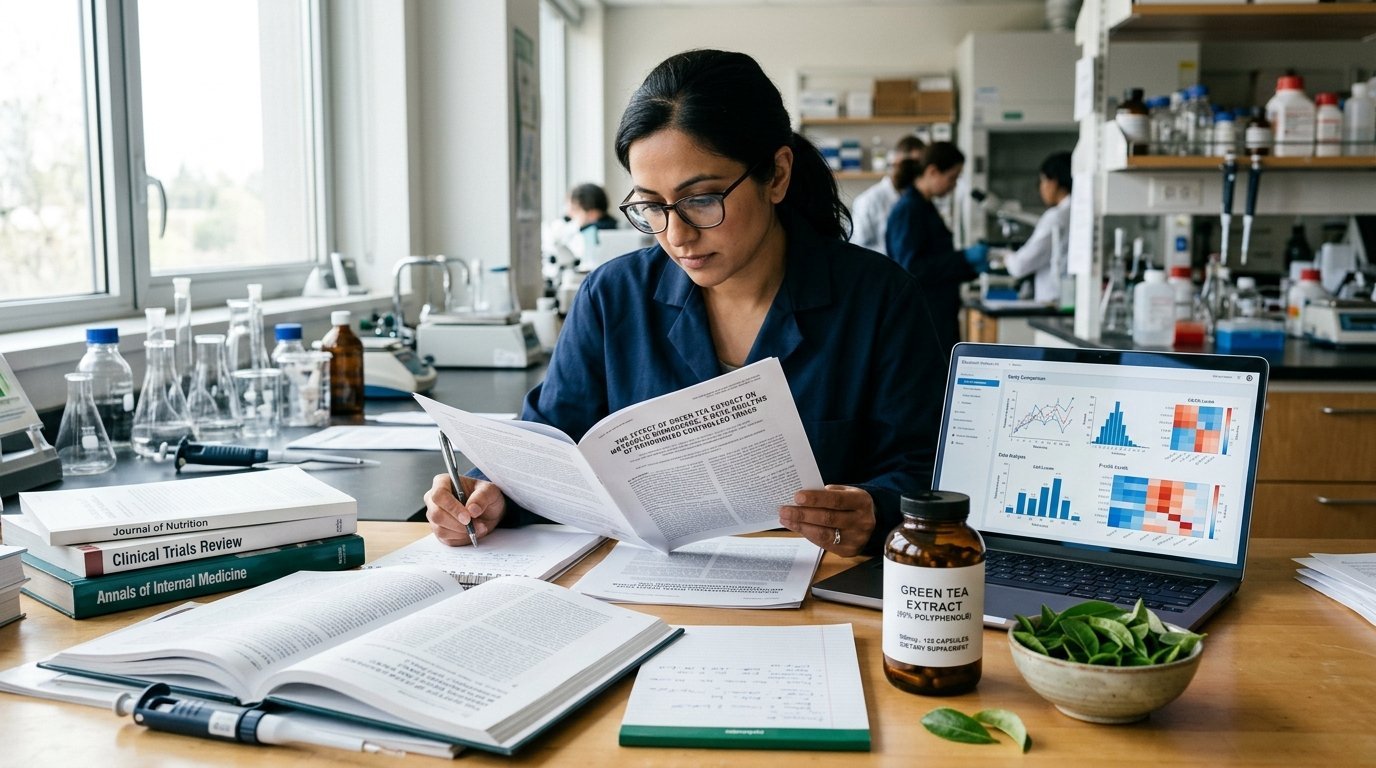
Green Tea Extract for Weight Loss: What Do Human Studies Really Show?
When it comes to weight-loss supplements, almost every product claims to be “scientifically proven.”
But what does that actually mean?
A few laboratory experiments do not prove a supplement works in real people. Animal studies can help researchers understand biological processes, but they cannot predict how the human body will respond. Even one positive clinical trial is rarely enough to draw strong conclusions.
To answer whether green tea extract truly supports weight loss, we need to look at the highest-quality human evidence available.
That is exactly what this article does.
Rather than discussing biological mechanisms or theoretical benefits, we’ll focus entirely on Green Tea Extract Weight Loss Studies involving real participants. We’ll examine randomized controlled trials, systematic reviews, and meta-analyses to understand what researchers have observed, where the evidence is strongest, why some studies disagree, and what practical conclusions readers should take away.
The goal is not to prove that green tea extract works or doesn’t work.
The goal is to understand what the evidence actually says.
Quick Answer
Green Tea Extract Weight Loss Studies suggest that green tea extract may provide modest improvements in body weight, body fat, and waist circumference for some individuals. However, results vary considerably between studies, and the overall effects are generally small rather than dramatic. Researchers consistently conclude that green tea extract works best alongside healthy lifestyle habits rather than as a stand-alone weight-loss solution.
Has Green Tea Extract Been Studied in Humans?
Yes.
Green tea extract is one of the most extensively researched natural ingredients used in weight-management supplements.
Unlike many newer products, it has been evaluated in numerous human clinical trials involving different populations around the world.
Researchers Have Been Studying It for Years
Clinical research has examined green tea extract in people with:
- Overweight
- Obesity
- Metabolic risk factors
- Different activity levels
- Various dietary habits
This wide range of participants allows researchers to evaluate whether results remain consistent across different groups.
Different Types of Human Studies Matter
Not every study provides the same level of evidence.
Researchers often rely on several types of human research, including:
- Randomized controlled trials
- Placebo-controlled studies
- Systematic reviews
- Meta-analyses
Each serves a different purpose.
Randomized controlled trials investigate specific interventions under carefully controlled conditions.
Systematic reviews summarize multiple studies.
Meta-analyses statistically combine results from many clinical trials to provide a broader picture of the evidence.
Human Research Carries More Weight Than Laboratory Findings
Cell culture and animal studies help researchers understand biological questions.
However, when deciding whether a supplement may help people lose weight, well-designed human trials provide much stronger evidence.
This is why this article focuses exclusively on human research.
Readers looking for a broader overview can also explore Green Tea Extract for Weight Loss, while those interested in biological pathways can continue with the mechanism article that explains how researchers believe green tea extract works inside the body.
What Do Clinical Trials Actually Show?
One of the biggest misconceptions is that every clinical trial reaches the same conclusion.
That is not how nutrition research works.


Some Trials Show Modest Benefits
Several randomized controlled trials have reported modest improvements in outcomes such as:
- Body weight
- Body fat
- Waist circumference
- Body mass index (BMI)
These improvements generally occur alongside dietary changes or other healthy lifestyle practices rather than supplementation alone.
Other Trials Find Little or No Difference
Not every study reports positive findings.
Some placebo-controlled trials observe little difference between participants taking green tea extract and those receiving a placebo.
This is completely normal in nutrition research.
Individual clinical trials often produce different outcomes because study populations, research methods, and participant characteristics vary.
The Overall Pattern Matters More Than One Study
When evaluating scientific evidence, researchers rarely rely on a single trial.
Instead, they examine the overall pattern across many studies.
This broader perspective provides a much more reliable understanding than focusing only on one positive or one negative result.
Does Human Research Show Meaningful Weight Loss?
The answer depends on what someone means by “meaningful.”
Researchers Generally Report Modest Changes
Across many human studies, green tea extract has been associated with relatively small improvements in body weight.
These changes are often statistically significant, meaning they are unlikely to have occurred by chance.
However, statistical significance does not always translate into large real-world changes.
Lifestyle Remains the Biggest Influence
Participants who also followed healthier lifestyle habits generally experienced better outcomes than those relying on supplementation alone.
Weight management continues to depend primarily on factors such as:
- Healthy eating
- Physical activity
- Sleep
- Long-term consistency
Green tea extract should therefore be viewed as a supportive addition rather than the primary reason someone loses weight.
Maintaining a Calorie Deficit remains the most important requirement for reducing body fat regardless of supplementation.
Expectations Should Match the Evidence
People expecting dramatic transformations are unlikely to find support for those expectations in the clinical literature.
The available human evidence instead points toward modest assistance that may contribute to long-term weight-management efforts when combined with healthy habits.
Does Green Tea Extract Reduce Belly Fat?
Many advertisements specifically promote green tea extract for abdominal fat.
Human research offers a more balanced perspective.

Waist Circumference Is Commonly Measured
Many clinical trials evaluate waist circumference because it provides one way to estimate changes in abdominal fat over time.
Researchers often include this measurement alongside:
- Body weight
- BMI
- Body fat percentage
These outcomes help provide a more complete picture than weight alone.
Some Studies Report Small Improvements
Several human trials have observed modest reductions in waist circumference among participants using green tea extract.
However, these findings are not consistent across every study.
Some trials report measurable improvements, while others observe minimal or no significant differences.
Belly Fat Is Influenced by Many Factors
Even when green tea extract appears helpful, abdominal fat remains strongly influenced by:
- Overall calorie intake
- Physical activity
- Sleep quality
- Genetics
- Long-term lifestyle habits
No supplement consistently targets belly fat independent of these factors.
Why Do Different Studies Reach Different Conclusions?
If you’ve ever searched online for Green Tea Extract Weight Loss Studies, you’ve probably noticed something confusing.
One article claims green tea extract is highly effective.
Another says the evidence is weak.
Both may be referencing legitimate scientific research.
So why do the conclusions differ?
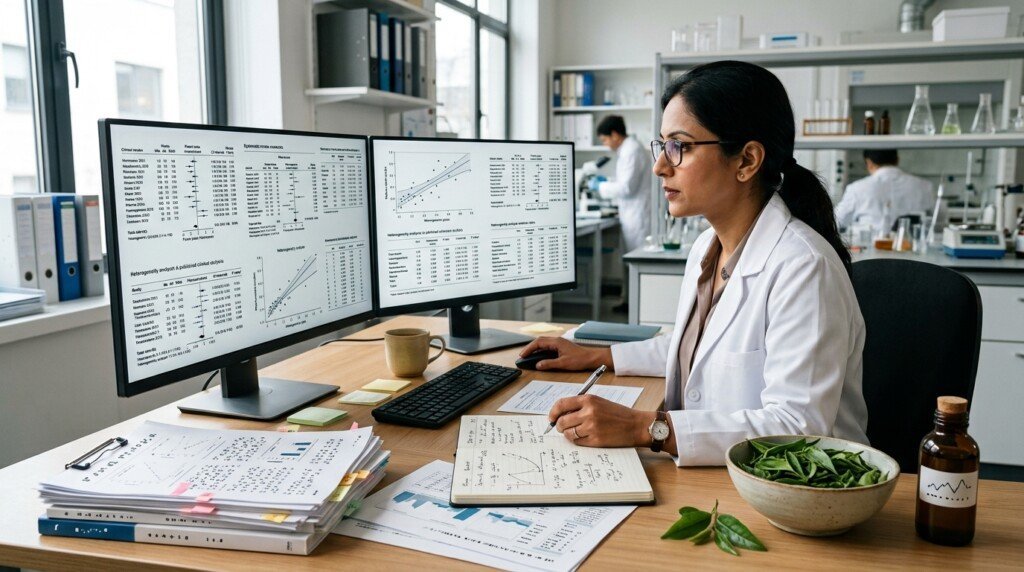
The answer lies in how nutrition research is conducted. Human studies rarely involve identical participants, methods, or conditions. Small differences between studies can lead to different outcomes, even when researchers are investigating the same supplement.
Study Populations Are Never Exactly the Same
One of the biggest reasons for inconsistent findings is participant diversity.
Clinical trials include people with different:
- Ages
- Sexes
- Body weights
- Activity levels
- Dietary habits
- Health conditions
- Ethnic backgrounds
A supplement that produces modest results in one population may have little measurable effect in another.
Lifestyle Factors Can Influence Outcomes
Researchers try to isolate the effects of green tea extract, but participants continue living their daily lives outside the laboratory.
Differences in:
- Food intake
- Physical activity
- Sleep
- Stress
- Medication use
can all influence weight-loss outcomes.
Even small lifestyle differences may affect study results over weeks or months.
Study Design Also Matters
Researchers do not all use the same study design.
Variations may include:
- Trial duration
- Sample size
- Participant selection
- Outcome measurements
- Statistical analysis
These methodological differences help explain why one clinical trial may report positive findings while another reports minimal effects.
For this reason, scientists place greater emphasis on systematic reviews and meta-analyses than on individual studies alone.
What Are the Biggest Limitations of Current Research?
Green tea extract has been studied extensively, but that does not mean the evidence is perfect.
Understanding the limitations helps readers interpret research more realistically.
Many Studies Are Relatively Short
Weight management is a long-term process.
However, many clinical trials evaluate participants over relatively short periods.
Short studies may identify early changes, but they cannot always determine whether those effects continue over months or years.
Sample Sizes Can Be Limited
Some randomized controlled trials involve relatively small groups of participants.
Smaller studies may be more likely to produce results that differ from larger investigations simply because fewer people are included.
This is one reason larger meta-analyses often provide a clearer picture of the overall evidence.
Weight Loss Is Difficult to Isolate
Human weight management depends on countless interacting factors.
Researchers cannot completely control every participant’s:
- Diet
- Daily movement
- Sleep quality
- Stress levels
- Lifestyle habits
Even carefully designed studies cannot eliminate every variable.
Publication Bias Is Always Considered
Scientists also recognize the possibility of publication bias.
Positive findings are sometimes more likely to be published than neutral findings.
To address this concern, systematic reviews attempt to include as many relevant studies as possible rather than relying only on highly publicized research.
What Can We Honestly Conclude From Human Evidence?
One of the strengths of scientific research is that it allows conclusions to become more balanced as additional evidence accumulates.
Rather than asking whether green tea extract “works” or “doesn’t work,” researchers usually ask a more practical question.
What does the total body of evidence suggest?
The Evidence Supports Modest Benefits
When researchers evaluate multiple clinical trials together, the overall pattern suggests that green tea extract may contribute to modest improvements in:
- Body weight
- Body fat
- Waist circumference
- BMI
These improvements tend to be relatively small but appear consistently enough across many studies to remain scientifically interesting.
It Is Not a Stand-Alone Solution
Human research does not support the idea that green tea extract produces substantial weight loss without healthy lifestyle changes.
Participants who combine supplementation with balanced nutrition and regular physical activity generally achieve better outcomes than those relying on supplements alone.
This explains why many health professionals consider green tea extract a supportive nutritional tool rather than a primary treatment for obesity.
People exploring broader supplement options may also find Best Weight Loss Supplements useful for comparing evidence across different ingredients.
Researchers Continue to Study Long-Term Outcomes
Although the existing evidence is encouraging in some areas, researchers continue investigating questions such as:
- Which populations benefit most
- Long-term effectiveness
- Individual variability
- Differences in measurable outcomes
Future articles will also examine how long results may realistically take to appear, helping readers better understand the expected timeline.
Evidence Is Stronger Than Marketing, But More Nuanced Than Headlines
The conversation surrounding Green Tea Extract Weight Loss Studies often becomes oversimplified.
Marketing materials frequently highlight only positive findings, while critics may focus only on studies showing little benefit.
The scientific literature paints a more balanced picture.
Human research suggests green tea extract may provide modest support for weight management in some individuals, particularly when combined with healthy eating, regular physical activity, and a sustained calorie deficit. At the same time, the evidence does not support unrealistic expectations of dramatic fat loss from supplementation alone.
Looking at the entire body of evidence instead of isolated studies allows for a more accurate understanding of what green tea extract can realistically contribute to a long-term weight-management plan.
Key Takeaways
| Topic | Key Point |
|---|---|
| Human evidence | Green tea extract has been evaluated in numerous randomized controlled trials and systematic reviews. |
| Weight loss | Most studies report modest rather than dramatic improvements in body weight. |
| Belly fat | Some trials show small reductions in waist circumference, while others find little difference. |
| Study differences | Results vary because of participant characteristics, study design, and lifestyle factors. |
| Research limitations | Short study durations, small sample sizes, and uncontrolled lifestyle variables affect outcomes. |
| Overall conclusion | Current human evidence supports green tea extract as a supportive tool, not a stand-alone weight-loss solution. |
Frequently Asked Questions
1. Is green tea extract scientifically proven?
Green Tea Extract Weight Loss Studies suggest that green tea extract may support modest weight-management improvements. However, the evidence does not support it as a miracle weight-loss solution.
2. Does research support green tea extract for weight loss?
Yes. Numerous randomized controlled trials, systematic reviews, and meta-analyses have investigated green tea extract. Overall, the evidence points toward small but potentially meaningful benefits when combined with healthy lifestyle habits.
3. Does green tea extract reduce body fat?
Some human studies report modest reductions in body fat and waist circumference, although results are not consistent across every clinical trial.
4. Why do studies disagree?
Differences in participant characteristics, research methods, sample sizes, study duration, and lifestyle factors all contribute to varying outcomes between clinical trials.
5. What is the overall conclusion from human research?
The current body of evidence suggests green tea extract may provide supportive benefits for weight management, but lasting results still depend on maintaining a Calorie Deficit, eating a balanced diet, staying physically active, and following sustainable lifestyle habits.
Conclusion
Green Tea Extract Weight Loss Studies provide one of the strongest bodies of human evidence available for a natural weight-management supplement. Across numerous randomized controlled trials, systematic reviews, and meta-analyses, researchers have observed modest improvements in body weight, body fat, and waist circumference in some participants. While these findings are encouraging, they are generally small and should be interpreted within the context of overall lifestyle habits.
The most reliable conclusion is that green tea extract can be a supportive addition to a comprehensive weight-loss strategy, not a replacement for it. Healthy nutrition, regular physical activity, adequate sleep, and long-term consistency continue to have the greatest influence on sustainable weight management, while green tea extract may offer an additional, evidence-based advantage for some individuals.
Disclaimer:
This post may contain affiliate links. If you purchase through them, we may earn a small commission at no extra cost to you. Also, this content is for informational purposes only and does not substitute professional medical advice.