How Does Green Tea Extract Help with Weight Loss? The Science Explained
Have you ever wondered why green tea extract appears in so many weight-loss supplements?
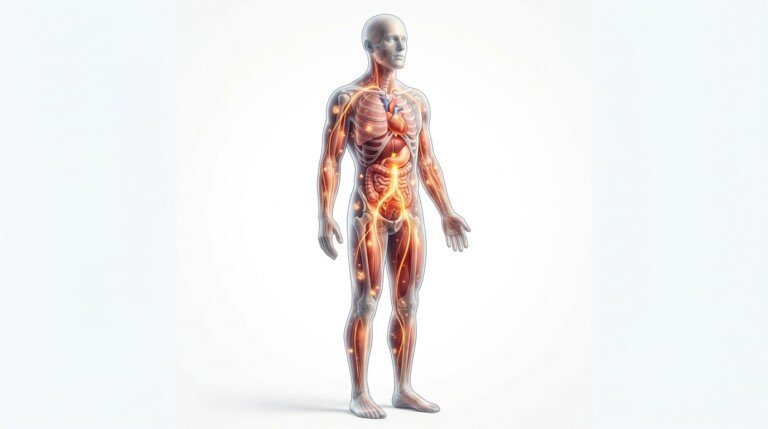
It’s not because researchers believe it magically melts body fat. Instead, scientists have spent years investigating how naturally occurring compounds in green tea interact with the body’s metabolic processes.
That difference is important.
When people search How Green Tea Extract Helps with Weight Loss, they often expect a simple answer such as “it burns fat.” Human metabolism, however, is much more complex. Green tea extract appears to support several biological pathways involved in energy use, fat oxidation, and thermogenesis, but none of these mechanisms work independently of your overall lifestyle.
Think of your metabolism as an orchestra.
Calories, hormones, physical activity, sleep, nutrition, and genetics all play different instruments. Green tea extract does not replace the orchestra. At best, it may help one or two sections perform a little more efficiently.
This article focuses entirely on the biological mechanisms behind green tea extract. We’ll explain how it may influence metabolism, thermogenesis, fat oxidation, appetite, and exercise performance while avoiding topics such as dosage, timing, side effects, buying advice, or detailed human studies.
Quick Answer
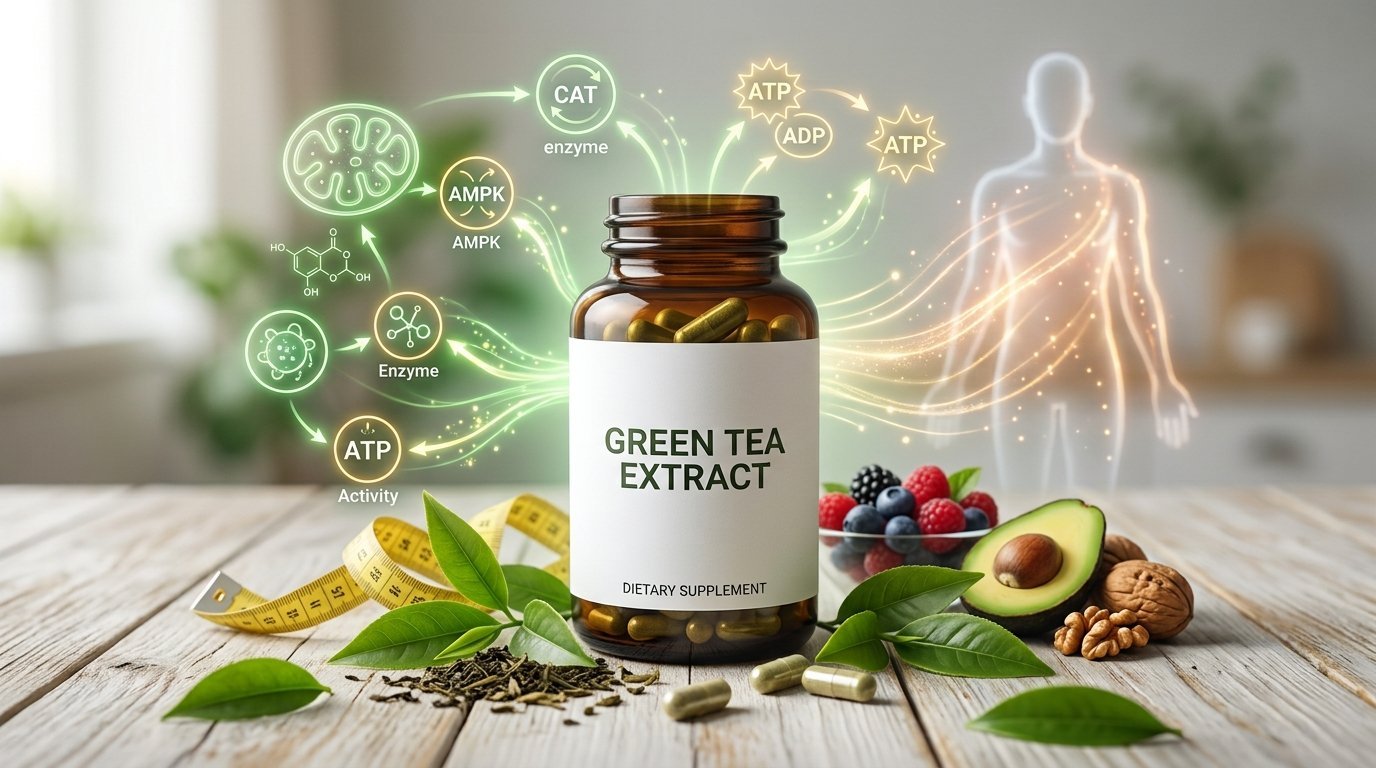
How Green Tea Extract Helps with Weight Loss is primarily through supporting natural metabolic processes rather than directly burning body fat. Researchers believe compounds such as catechins, EGCG, and naturally occurring caffeine may modestly increase thermogenesis, encourage fat oxidation, and support energy expenditure. These biological effects are generally indirect and work best alongside a calorie deficit and healthy lifestyle habits.
How Does Green Tea Extract Actually Work Inside the Body?
Green tea extract influences several biological systems simultaneously.
Instead of triggering one dramatic change, it appears to create multiple small physiological effects that together may support weight management.
Green Tea Extract Contains Several Active Compounds
Unlike single-ingredient supplements, green tea extract naturally contains multiple compounds that interact with the body.
Among the most important are:
- Catechins
- EGCG
- Naturally occurring caffeine
- Polyphenols
Each contributes differently to the body’s metabolic processes.
Future articles will explore these active compounds individually, especially EGCG, which has attracted the greatest scientific interest.
The Body Responds Through Multiple Pathways
Rather than targeting only body fat, green tea extract appears to influence several systems involved in:
- Energy expenditure
- Fat oxidation
- Heat production
- Cellular signaling
- Metabolic regulation
These processes work together continuously throughout the day.
Small Biological Changes Can Add Up
Many people expect supplements to create immediate changes.
In reality, metabolism functions through countless small reactions occurring every second.
Researchers believe green tea extract may slightly influence several of these reactions instead of dramatically changing any single one.
Readers looking for a broader overview may also find Green Tea Extract for Weight Loss helpful before exploring these biological mechanisms in greater detail.
How Can Green Tea Extract Increase Thermogenesis?
One of the most discussed mechanisms involves thermogenesis.


What Is Thermogenesis?
Thermogenesis is the process of producing heat.
Whenever your body generates heat, it uses energy.
Examples include:
- Maintaining body temperature
- Digesting food
- Exercising
- Responding to cold environments
These activities all require calories.
Why Does Heat Production Matter?
Because thermogenesis requires energy, researchers have investigated whether slightly increasing heat production could contribute to higher daily calorie expenditure.
Green tea extract appears to influence this process modestly through interactions involving catechins and caffeine.
The effect is generally small but biologically interesting.
Thermogenesis Is Only One Piece of the Puzzle
Even if thermogenesis increases slightly, body weight still depends on many additional factors such as:
- Nutrition
- Physical activity
- Sleep
- Hormonal regulation
- Energy balance
Thermogenesis should therefore be viewed as one supportive mechanism rather than the primary driver of fat loss.
How Does Green Tea Extract Support Fat Oxidation?
Another frequently discussed mechanism is fat oxidation.
Although often confused with fat loss, these terms describe different biological processes.
What Is Fat Oxidation?
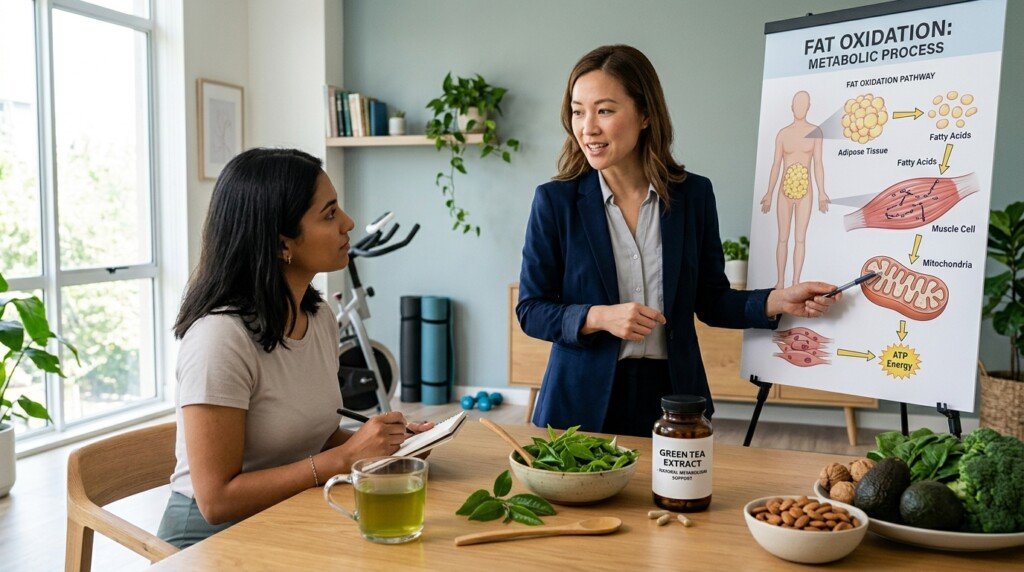
Fat oxidation refers to the body’s ability to use stored fat as fuel.
Instead of relying only on carbohydrates, the body may also convert stored fat into usable energy under certain conditions.
This process occurs naturally every day.
Green Tea Extract May Encourage Fat Utilization
Researchers believe compounds within green tea extract may help the body rely slightly more on fat as an energy source during certain activities.
This does not mean stored body fat disappears automatically.
Instead, it suggests the body may become somewhat more efficient at using fat for energy under favorable conditions.
Fat Oxidation Still Depends on Lifestyle
The body continually switches between different fuel sources depending on:
- Exercise intensity
- Food intake
- Hormonal signals
- Overall energy balance
Green tea extract may support these natural processes, but it does not override them.
Maintaining a Calorie Deficit remains essential because increased fat oxidation alone does not guarantee long-term fat loss.
Does Green Tea Extract Affect Appetite?
Many people assume every weight-loss supplement works by suppressing hunger.
Green tea extract appears to be different.
Appetite Is Controlled by Many Systems
Your desire to eat depends on interactions between:
- Hormones
- Brain signaling
- Digestion
- Stress
- Sleep
- Food quality
Because appetite regulation is so complex, researchers have not identified one single pathway through which green tea extract consistently reduces hunger.
Appetite Changes May Be Indirect
Some scientists believe improvements in energy regulation or metabolic efficiency could indirectly influence eating behavior in certain individuals.
However, this is very different from acting as a powerful appetite suppressant.
Current evidence suggests appetite effects, when they occur, are generally modest.
Healthy Eating Still Leads the Process
Even if appetite changes slightly, food choices remain the biggest influence on long-term body composition.
Supplements cannot replace balanced nutrition or sustainable eating habits.
Does Caffeine Make Green Tea Extract More Effective?
One reason green tea extract receives so much scientific attention is that its naturally occurring caffeine appears to work alongside catechins rather than independently.
Caffeine Stimulates the Nervous System
Caffeine influences the central nervous system by increasing alertness and temporarily reducing feelings of fatigue.
As a result, some people naturally become more active throughout the day.
That additional movement may contribute to overall energy expenditure.
Catechins and Caffeine May Work Together
Researchers believe catechins and caffeine may have complementary roles.
Together they may support:
- Thermogenesis
- Energy expenditure
- Fat oxidation
- Metabolic activity
This interaction is one reason many studies evaluate green tea extract as a complete ingredient rather than isolating individual compounds.
Not Everyone Responds the Same Way
People differ greatly in how they metabolize caffeine.
Factors such as genetics, habitual caffeine intake, and overall health can influence individual responses.
For this reason, the biological effects of green tea extract are unlikely to be identical for everyone.
Does Exercise Make Green Tea Extract Work Better?
Green tea extract and exercise are often discussed separately, but from a biological perspective, they may complement one another.
The supplement does not replace physical activity. Instead, researchers believe some of its metabolic effects may become more relevant when the body is already using energy through movement.

Exercise Naturally Increases Energy Demand
During physical activity, your muscles require additional fuel.
To meet that demand, the body increases:
- Energy expenditure
- Fat oxidation
- Blood circulation
- Oxygen delivery
- Cellular energy production
These changes occur regardless of supplementation.
Green tea extract may simply support some of these existing physiological processes rather than creating entirely new ones.
Fat Oxidation Becomes More Relevant During Activity
Because exercise increases the body’s need for energy, researchers have explored whether green tea extract may encourage greater use of fat as a fuel source during certain types of physical activity.
The proposed effect appears to involve supporting normal fat oxidation rather than dramatically increasing fat loss.
This distinction is important because using fat as fuel during exercise does not automatically translate into greater long-term body fat reduction.
Different Types of Exercise May Offer Different Benefits
No single workout is responsible for successful weight management.
Instead, combining different forms of activity often provides the greatest metabolic benefits.
Examples include:
- Walking
- Resistance training
- Cycling
- Swimming
- Interval training
Many people interested in improving metabolic health also incorporate Exercise for Metabolic Health or HIIT for Fat Burning, both of which support many of the same physiological systems involved in energy metabolism.
What Does Current Science Suggest About These Mechanisms?
Understanding biological mechanisms is different from proving long-term outcomes.
Mechanisms explain how something may work inside the body.
They do not automatically guarantee meaningful weight loss.
Scientists Have Identified Several Plausible Pathways
Researchers believe green tea extract may influence:
- Thermogenesis
- Fat oxidation
- Energy expenditure
- Cellular signaling
- Nervous system activity
Together, these mechanisms help explain why green tea extract continues to receive scientific attention.
The Effects Appear to Be Modest
One important point often overlooked in marketing is the size of these biological effects.
Current evidence suggests the mechanisms are generally modest rather than dramatic.
Green tea extract appears to support existing metabolic processes instead of fundamentally changing how the human body regulates weight.
Biology Still Depends on Lifestyle
Even the most promising metabolic mechanisms cannot overcome poor lifestyle habits.
Nutrition, sleep, stress management, and physical activity continue to influence metabolism far more than any individual supplement.
This explains why researchers consistently describe green tea extract as supportive rather than transformative.
Future articles will examine the human evidence behind these biological mechanisms, including clinical trials and a detailed look at EGCG and other active compounds.
What Should You Realistically Expect From These Biological Effects?
Understanding how something works is only useful if expectations remain realistic.
Many people confuse biological activity with guaranteed results.
The two are not the same.
Small Mechanisms Can Support Long-Term Progress
The body regulates weight through thousands of biological reactions every day.
A supplement does not need to create a massive effect to be biologically meaningful.
Instead, several small improvements working together over months may contribute to healthier weight management for some individuals.
Healthy Habits Determine the Outcome
Even if green tea extract supports metabolism, thermogenesis, or fat oxidation, those mechanisms still depend on:
- Balanced nutrition
- Physical activity
- Adequate sleep
- Stress management
- Long-term consistency
Without these foundations, the body’s overall energy balance remains unchanged.
Think of Green Tea Extract as a Biological Assistant
Perhaps the easiest way to understand these mechanisms is to imagine green tea extract as a helper rather than the main worker.
It may assist normal metabolic processes.
It does not replace them.
That perspective aligns much more closely with current biological understanding than the exaggerated claims often seen in advertisements.
The Biology Explains the Potential, Not the Promise
Understanding How Green Tea Extract Helps with Weight Loss requires looking beyond simple marketing phrases such as “fat burner.”
The available biological evidence suggests green tea extract may support several natural processes involved in energy metabolism, including thermogenesis, fat oxidation, and energy expenditure. These mechanisms provide a scientific explanation for why the ingredient has remained one of the most researched natural supplements for weight management.
At the same time, these biological pathways represent supportive influences rather than guaranteed outcomes. Sustainable fat loss still depends on maintaining a calorie deficit, staying physically active, eating a balanced diet, sleeping well, and building consistent daily habits.
The biology explains why green tea extract may help.
Your lifestyle determines how much that potential matters.
Key Takeaways
| Topic | Key Point |
|---|---|
| Mechanism | Green tea extract may support multiple metabolic pathways rather than acting through a single process. |
| Thermogenesis | It may modestly increase heat production and energy expenditure. |
| Fat oxidation | Green tea extract may help the body use fat as an energy source more efficiently under certain conditions. |
| Caffeine and catechins | These compounds may work together to support metabolic activity. |
| Exercise | Physical activity may enhance the biological processes associated with green tea extract. |
| Overall effect | The mechanisms are supportive and work best alongside healthy lifestyle habits. |
Frequently Asked Questions
1. How does green tea extract work?
How Green Tea Extract Helps with Weight Loss involves several biological mechanisms, including supporting thermogenesis, fat oxidation, and energy expenditure through naturally occurring catechins, EGCG, and caffeine.
2. Does green tea extract increase metabolism?
Research suggests green tea extract may modestly increase metabolic activity by supporting normal energy expenditure. However, the effects are generally small and work best as part of a healthy lifestyle.
3. Does green tea extract burn fat?
Green tea extract does not directly burn body fat. Instead, it may support the body’s natural fat oxidation processes, particularly when combined with balanced nutrition and regular physical activity.
4. Does exercise improve the effects of green tea extract?
Exercise naturally increases energy expenditure and fat oxidation. Green tea extract may complement these biological processes, making healthy physical activity an important part of any weight-management strategy.
5. Is thermogenesis enough to cause weight loss?
No. While thermogenesis contributes to daily energy expenditure, long-term weight loss still depends on maintaining a calorie deficit and following sustainable lifestyle habits.
Conclusion
Understanding How Green Tea Extract Helps with Weight Loss begins with recognizing that the supplement works by supporting natural biological processes rather than creating dramatic changes on its own. Research suggests its active compounds may modestly influence thermogenesis, fat oxidation, energy expenditure, and metabolic activity, helping explain why green tea extract remains one of the most widely studied natural ingredients for weight management.
However, biology is only part of the equation. These mechanisms are most meaningful when combined with healthy eating, regular exercise, quality sleep, effective stress management, and a sustainable calorie deficit. Viewed this way, green tea extract becomes a supportive tool that complements your body’s natural metabolism instead of replacing the habits that drive lasting weight loss.
Disclaimer:
This post may contain affiliate links. If you purchase through them, we may earn a small commission at no extra cost to you. Also, this content is for informational purposes only and does not substitute professional medical advice.