

What Is a Weight Loss Plateau? Causes, Signs, and How to Break Through
You started your weight loss journey with steady progress. The number on the scale dropped consistently for several weeks, your clothes fit better, and your motivation was high. Then, without warning, everything seemed to stop. Despite eating well and exercising regularly, your weight refused to budge. If this sounds familiar, you may have reached a Weight Loss Plateau.
A plateau is one of the most common experiences during long-term weight management. Nearly everyone who loses a meaningful amount of weight encounters a period where progress slows or temporarily stops. While it can feel frustrating, a plateau does not necessarily mean your efforts have failed or that your metabolism is “broken.”
As your body changes, so do its energy needs. Losing weight affects metabolism, calorie requirements, daily movement, and even hormone regulation. Over time, the calorie deficit that once produced steady fat loss may become much smaller than you realize. Small changes in eating habits, activity levels, sleep, or stress can also contribute to stalled progress.
Understanding why plateaus happen helps remove much of the frustration. Instead of assuming something is wrong, you can evaluate your habits, identify possible causes, and make thoughtful adjustments that support continued progress.
It is also important to remember that body weight naturally fluctuates from day to day. Water retention, sodium intake, hormones, digestion, and muscle recovery can temporarily mask fat loss even when you are making excellent progress.
In this article, you’ll learn what a Weight Loss Plateau is, why weight loss slows down, how to recognize a true plateau, the most common causes behind stalled progress, how long plateaus typically last, practical strategies to move past them, habits that help prevent future plateaus, and when it is appropriate to seek medical advice.
Why Does Weight Loss Suddenly Stop?
One of the biggest misconceptions about weight loss is expecting the scale to decrease at the same rate every week.
In reality, successful weight loss rarely follows a perfectly straight line.
Progress naturally slows as your body adapts, and temporary plateaus are a normal part of the process rather than a sign of failure.
Understanding why weight loss changes over time helps set realistic expectations.

Early Weight Loss Is Often Faster
Many people notice rapid progress during the first few weeks.
Part of this early loss comes from:
- Water weight
- Glycogen depletion
- Reduced food volume in the digestive system
Although fat loss is also occurring, the initial drop on the scale is often larger than what continues long term.
As these temporary changes stabilize, weight loss naturally becomes slower.
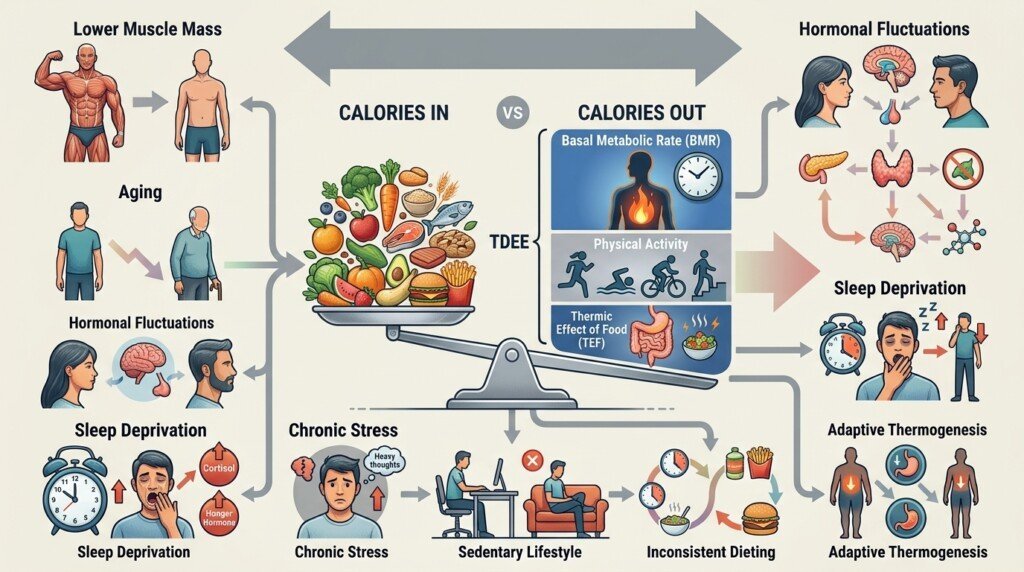
Your Body Requires Fewer Calories
As body weight decreases, your body simply requires less energy to function.
A smaller body generally burns fewer calories during:
- Walking
- Climbing stairs
- Daily activities
- Exercise
- Rest
This means the calorie deficit that worked several months ago may no longer be large enough to produce the same rate of fat loss.
The Body Adapts Over Time
The human body is designed to conserve energy.
When calorie intake remains below energy needs for an extended period, the body gradually becomes more efficient.
Researchers often refer to this as metabolic adaptation.
This does not mean your metabolism stops working.
Instead, your body adjusts to conserve energy while continuing to support essential functions.
Daily Movement Often Decreases
Many people unknowingly move less after losing weight.
This reduction in spontaneous activity is sometimes called non-exercise activity thermogenesis (NEAT).
Examples include:
- Standing less often
- Taking fewer steps
- Reduced fidgeting
- Sitting longer
- Lower overall movement during the day
These small reductions can significantly decrease daily calorie expenditure over time.
Weight Fluctuations Can Hide Progress
Body weight naturally changes from one day to another.
Temporary increases may occur because of:
- Higher sodium intake
- Larger meals
- Hormonal changes
- Muscle soreness after exercise
- Water retention
- Digestive contents
These fluctuations sometimes hide ongoing fat loss for several days or even weeks.
For this reason, relying on long-term trends rather than single weigh-ins provides a much clearer picture of progress.
How Do You Know If You’ve Hit a Weight Loss Plateau?
Not every week without weight loss qualifies as a plateau.
Because body weight changes naturally from day to day, patience is often necessary before concluding that progress has stopped.
Recognizing a true plateau helps prevent unnecessary changes to a plan that may already be working.

The Scale Hasn’t Changed for Several Weeks
A true Weight Loss Plateau generally means your weight has remained relatively unchanged for at least three to four weeks despite maintaining consistent nutrition and physical activity.
One or two weeks without progress usually reflects normal fluctuations rather than a genuine plateau.
Your Healthy Habits Remain Consistent
Before assuming you’ve reached a plateau, ask yourself whether your habits have actually remained the same.
Consider questions such as:
- Am I still tracking portions accurately?
- Has my activity level changed?
- Am I exercising consistently?
- Am I sleeping enough?
- Have weekend eating habits become less structured?
Small lifestyle changes often explain stalled progress more than metabolism alone.
Body Measurements Stay the Same
Weight is only one way to measure progress.
Also monitor changes in:
- Waist circumference
- Hip measurements
- Clothing fit
- Progress photos
- Strength improvements
Sometimes body composition continues improving even when scale weight remains stable.
For example, gaining muscle while losing fat may produce little overall change on the scale.
This relationship between body composition and overall health is explored further in Metabolic Health, where body composition is discussed beyond body weight alone.
Energy and Fitness Continue Improving
A plateau on the scale does not always mean overall progress has stopped.
You may still notice:
- Increased strength
- Better endurance
- Improved mobility
- Higher daily energy
- Better recovery
- Healthier habits
These improvements remain meaningful even if body weight temporarily stalls.
What Causes a Weight Loss Plateau?
Several factors often contribute to stalled weight loss.
Usually, no single cause is responsible.
Instead, multiple small changes gradually reduce your calorie deficit until progress slows or stops.
Your Calorie Deficit Has Become Smaller
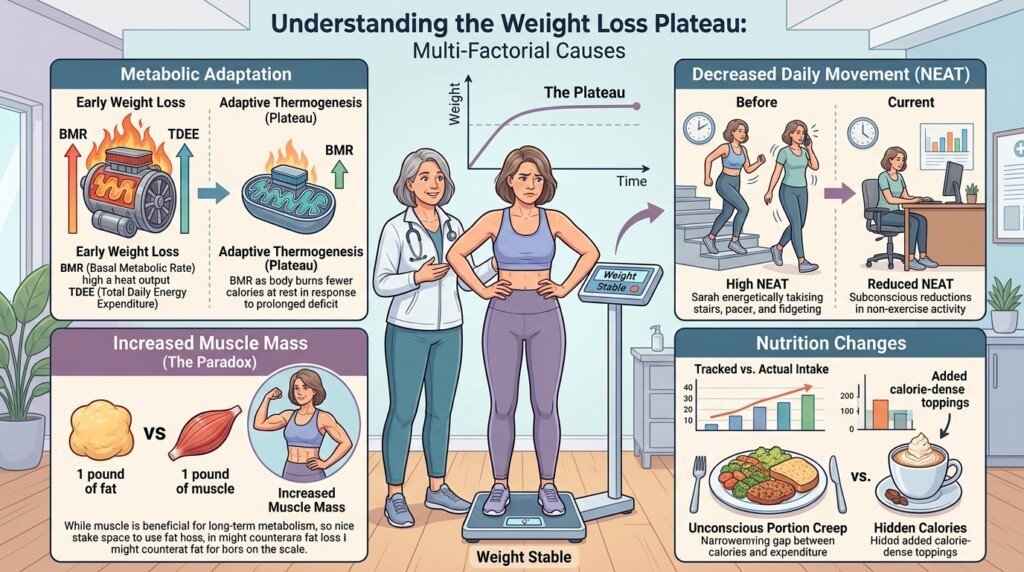
One of the most common explanations is that your calorie needs have decreased as you’ve lost weight.
Without realizing it, the same amount of food that once created a deficit may now be close to your maintenance calorie needs.
Periodic reassessment of calorie intake can help account for these changes.
Portion Sizes Gradually Increase
Many people become less precise with portions over time.
Examples include:
- Larger servings
- More cooking oils
- Extra snacks
- Weekend indulgences
- Frequent restaurant meals
Even small increases can significantly reduce a calorie deficit over several weeks.
Physical Activity Declines
Exercise routines sometimes become less challenging over time.
Additionally, daily movement outside the gym often decreases without people noticing.
Increasing overall movement through walking, household activities, or recreational exercise can help restore energy expenditure.
Many practical strategies for staying active are discussed throughout Active Lifestyle Tips for Weight Loss.
Muscle Gain Can Mask Fat Loss
If you’ve recently started resistance training, gaining lean muscle while losing fat may cause scale weight to remain relatively stable.
This is particularly common during the first several months of strength training.
The importance of preserving muscle while losing fat is explained further in Strength Training for Fat Loss.
Sleep and Stress Influence Progress
Chronic stress and inadequate sleep may indirectly affect weight management by influencing:
- Appetite
- Food choices
- Energy levels
- Recovery
- Physical activity
While they do not eliminate the importance of calorie balance, they can make healthy habits much more difficult to maintain consistently.
Behavioral factors that influence consistency are discussed throughout Psychology of Weight Loss.
Unrealistic Expectations
Perhaps the most overlooked cause of perceived plateaus is expecting weight loss to occur too quickly.
Healthy, sustainable progress naturally slows over time.
Long-term success comes from consistent habits rather than rapid weekly changes.
This balanced perspective is one reason Sustainable Weight Loss focuses on gradual improvements that remain realistic for everyday life.
How Long Does a Weight Loss Plateau Last?
A plateau can last anywhere from a couple of weeks to several months, depending on its underlying cause.
Some plateaus resolve naturally after temporary water retention decreases.
Others require adjustments to nutrition, physical activity, or lifestyle habits before progress resumes.
The important thing to remember is that plateaus are temporary.
They are a normal stage of long-term weight management rather than a permanent stopping point.
Avoid making drastic changes after only a few days without progress.
Instead, evaluate your habits carefully, remain consistent, and look for gradual improvements rather than immediate results.
How Can You Break a Weight Loss Plateau?
Reaching a Weight Loss Plateau does not mean you need to completely change your eating plan or spend hours exercising every day. In most cases, small, thoughtful adjustments are far more effective than making extreme changes.
The goal is to identify which habits may have gradually changed since you began losing weight and make realistic improvements that you can continue over the long term.

Reassess Your Calorie Intake
As your body becomes lighter, it naturally requires fewer calories to maintain itself.
The calorie deficit that worked when you first started losing weight may no longer be large enough to produce consistent fat loss.
Rather than drastically cutting calories, review your current eating habits honestly.
Consider whether:
- Portion sizes have increased
- Snacks have become more frequent
- Restaurant meals are more common
- Drinks now contain extra calories
- Weekend eating differs from weekdays
Small adjustments are often enough to restore progress.
Increase Daily Movement
Many people focus entirely on formal exercise while overlooking everyday movement.
Walking more, taking the stairs, standing regularly, gardening, housework, and other daily activities all contribute to total energy expenditure.
These activities may seem minor individually, but together they can significantly increase calorie burn.
Simple ways to increase daily movement include:
- Taking a short walk after meals
- Parking farther away
- Standing during phone calls
- Using stairs instead of elevators
- Taking regular movement breaks while working
Many practical ideas are discussed throughout Active Lifestyle Tips for Weight Loss, where sustainable movement is prioritized over intense workouts.
Continue Strength Training
One mistake people often make during a plateau is focusing only on cardio.
Strength training remains one of the most valuable forms of exercise because it helps preserve lean muscle while losing body fat.
Maintaining muscle supports healthy metabolism and improves body composition over time.
Progressive strength training also encourages long-term fitness improvements beyond the number on the scale.
The role of resistance exercise is explored further in Strength Training for Fat Loss, where muscle preservation is discussed in greater detail.

Prioritize Protein
Protein helps support muscle maintenance while promoting fullness.
Including a quality protein source at every meal can make it easier to remain satisfied without unnecessary snacking.
Examples include:
- Eggs
- Greek yogurt
- Chicken
- Fish
- Cottage cheese
- Lentils
- Beans
- Tofu
Balanced meals that combine protein with vegetables and fiber-rich carbohydrates often support better appetite control throughout the day.
Improve Sleep and Recovery
Sleep is often overlooked during weight management.
Poor sleep may affect:
- Appetite
- Energy
- Recovery
- Food choices
- Motivation for exercise
Improving sleep quality often makes healthy habits easier to maintain consistently.
Aim for a regular bedtime and create an evening routine that supports quality rest.
Manage Stress More Effectively
Long-term stress may influence eating habits even when calorie balance remains the primary driver of weight loss.
Stress can encourage:
- Emotional eating
- Larger portions
- More cravings
- Less physical activity
- Poor sleep
Healthy stress-management strategies include:
- Walking
- Meditation
- Stretching
- Journaling
- Spending time outdoors
- Talking with supportive friends or family
Developing healthy coping habits supports consistency during long-term weight management.
Be Patient With Temporary Plateaus
Perhaps the most important strategy is avoiding unnecessary panic.
Many plateaus resolve naturally after water retention decreases.
Changing your entire nutrition plan after only a few days without progress often creates more problems than it solves.
Focus on long-term trends instead of daily fluctuations.
Which Habits Help Prevent Future Plateaus?
Although plateaus cannot always be avoided completely, several habits reduce their likelihood while supporting sustainable progress.

Monitor Progress in Different Ways
The scale is only one measurement.
Also pay attention to:
- Waist circumference
- Progress photos
- Clothing fit
- Strength improvements
- Energy levels
- Fitness performance
These indicators often reveal progress even when body weight remains unchanged.
Review Your Habits Regularly
Every few weeks, evaluate your routines honestly.
Ask yourself:
- Am I eating the same portions?
- Am I still moving enough?
- Has my exercise routine become easier?
- Am I sleeping consistently?
- Have stress levels increased?
Regular reflection helps identify small changes before they become larger problems.
Avoid All-or-Nothing Thinking
One high-calorie meal or one missed workout does not create a plateau.
Likewise, one perfect day will not eliminate one.
Long-term consistency matters far more than occasional setbacks.
This balanced mindset is one of the foundations of Weight Loss Habits, where sustainable routines are emphasized instead of perfection.
Continue Challenging Yourself
As your fitness improves, your body gradually adapts to familiar routines.
Consider introducing gradual changes such as:
- Slightly heavier weights
- More walking
- Additional weekly activity
- New exercise variations
- Improved workout intensity
Small progressions encourage continued adaptation without overwhelming the body.
Focus on Lifestyle Rather Than Dieting
People who maintain long-term success usually stop thinking in terms of temporary diets.
Instead, they build habits that feel realistic for everyday life.
This long-term perspective is central to Sustainable Weight Loss, where consistency is valued over quick results.

When Should You Talk to a Doctor?
Most weight loss plateaus are a normal part of the process and improve with time and lifestyle adjustments.
However, certain situations deserve medical evaluation.
Progress Has Stopped for Several Months
If weight has remained unchanged for an extended period despite consistently following a balanced nutrition plan and regular exercise program, discussing your progress with a healthcare professional is appropriate.
They can review your overall health and determine whether additional evaluation is necessary.
Other Symptoms Are Present
Seek medical advice if a plateau occurs together with symptoms such as:
- Persistent fatigue
- Unexplained weight changes
- Hair loss
- Feeling unusually cold
- Changes in appetite
- Digestive problems
These symptoms may indicate an underlying medical condition that deserves further assessment.
Exercise Feels Increasingly Difficult
If fatigue, dizziness, weakness, or other unusual symptoms make physical activity increasingly difficult, consult a healthcare professional before continuing your exercise routine.
You Feel Discouraged or Overwhelmed
Weight management is both physical and psychological.
If repeated plateaus leave you feeling discouraged or tempted to abandon healthy habits altogether, speaking with a qualified healthcare professional or registered dietitian may provide valuable guidance and support.

Frequently Asked Questions
1. What is a weight loss plateau?
A Weight Loss Plateau is a period where body weight remains relatively unchanged for several weeks despite maintaining consistent nutrition and physical activity.
2. Why does weight loss slow down?
Weight loss often slows because your body requires fewer calories after losing weight, daily movement may decrease, and metabolic adaptation gradually reduces energy expenditure.
3. How long does a weight loss plateau last?
A plateau may last from a few weeks to several months depending on factors such as eating habits, physical activity, water retention, sleep, stress, and overall lifestyle.
4. Can strength training help break a weight loss plateau?
Yes. Strength training helps preserve lean muscle, improves body composition, and supports healthy metabolism while encouraging continued fitness progress.
5. Should I eat less if my weight loss has stalled?
Not necessarily. Before reducing calories further, review portion sizes, activity levels, sleep, stress, and consistency. Small lifestyle adjustments are often more effective than drastic calorie restriction.
Final Thoughts
Experiencing a Weight Loss Plateau can feel discouraging, but it is also one of the most normal stages of long-term weight management. As your body adapts to weight loss, your calorie needs, daily energy expenditure, and overall metabolism naturally change. This does not mean your progress has ended. It simply means your body is responding to the changes you have already achieved.
Rather than reacting with extreme diets or excessive exercise, focus on the habits that create lasting success. Reassessing calorie intake, increasing daily movement, continuing strength training, eating enough protein, improving sleep, managing stress, and monitoring progress beyond the scale are all practical strategies that support continued fat loss.
Most importantly, remember that successful weight management is measured over months and years, not days. Plateaus are temporary, but the healthy habits you build while working through them can support sustainable progress long after the scale starts moving again.
Disclaimer:
This post may contain affiliate links. If you purchase through them, we may earn a small commission at no extra cost to you. Also, this content is for informational purposes only and does not substitute professional medical advice.
Ready to Start Your Journey?
Use our free 7-in-1 Weight Loss Toolkit to calculate your numbers and build your plan in minutes.
Open Free Tools →