

What Is NEAT? The Hidden Calories You Burn Every Day
Most people think calorie burning happens only during workouts. They picture running on a treadmill, lifting weights, or sweating through an intense fitness class. While those activities certainly burn energy, they account for only part of your daily calorie expenditure.
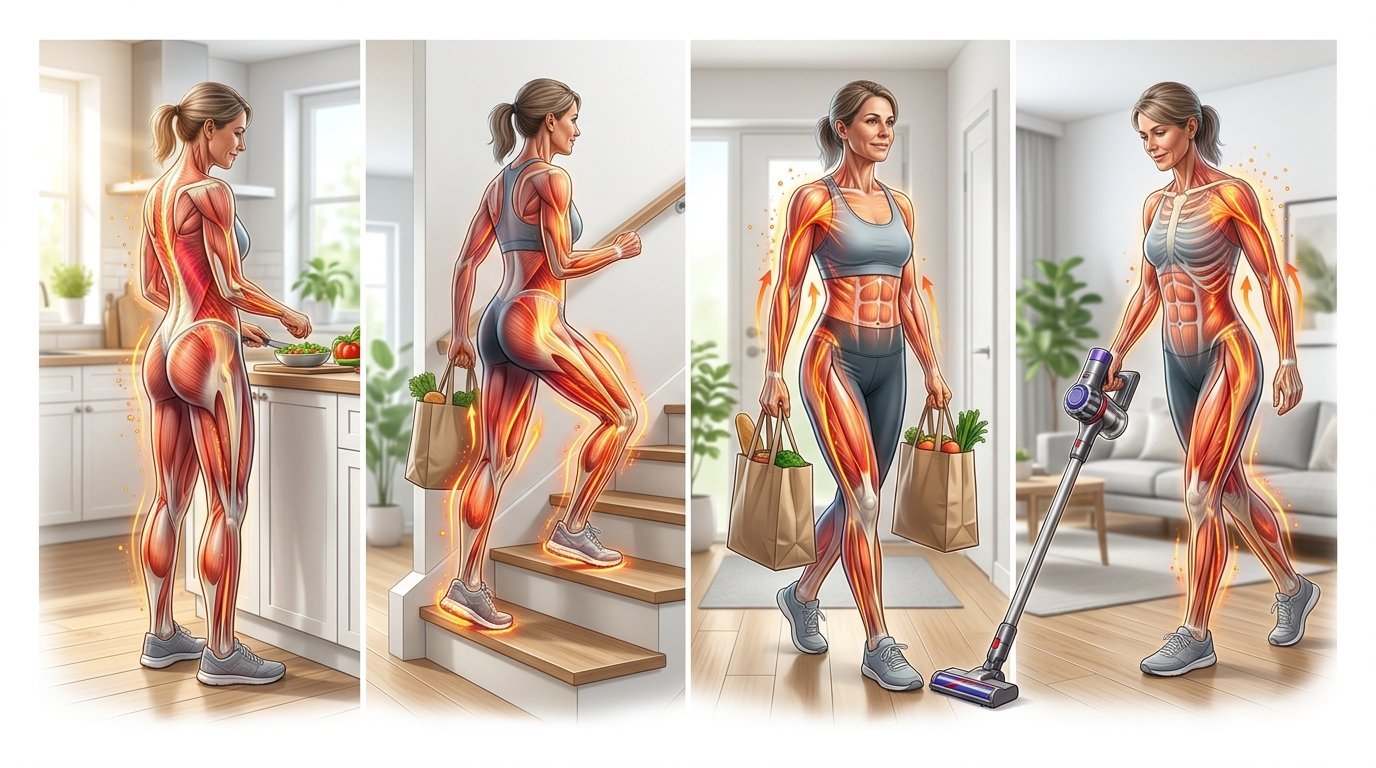
In reality, your body burns calories almost every minute through ordinary movements that barely feel like exercise. Standing while talking on the phone, carrying groceries, cleaning the kitchen, walking to another room, climbing a few stairs, or even fidgeting in your chair all require energy. Collectively, these everyday movements are known as NEAT, one of the most overlooked contributors to daily calorie burn.
Understanding NEAT can completely change the way you think about metabolism and weight management. Instead of believing that one hour at the gym determines your daily calorie expenditure, you’ll discover how small movements performed throughout the day quietly influence your overall energy balance.
In this article, you’ll learn what NEAT is, how it differs from formal exercise, why some people naturally burn more calories than others, and how simple daily habits can gradually increase energy expenditure without following a structured workout program.
Quick Answer
NEAT stands for Non-Exercise Activity Thermogenesis. It refers to the calories your body burns through everyday movement that is not planned exercise, including standing, walking around the house, doing chores, changing posture, carrying objects, and fidgeting. Although each activity burns only a small number of calories, their combined effect throughout the day can make a meaningful contribution to total energy expenditure.
What Is NEAT and Why Does It Matter More Than Most People Think?
The human body is designed to move.
Even when you are not exercising, hundreds of small movements occur throughout the day. These movements require energy, and that energy contributes to your daily calorie expenditure.
Scientists group these activities under one term:
Non-Exercise Activity Thermogenesis, or NEAT.


NEAT Includes Every Movement That Isn’t Planned Exercise
If you intentionally go to the gym for a workout, that activity is not considered NEAT.
However, movements such as these are:
- Standing while working
- Walking to another room
- Carrying laundry
- Cooking dinner
- Gardening
- Cleaning the house
- Shopping
- Taking the stairs
- Changing posture
- Fidgeting
Each individual activity burns only a small number of calories.
Together, they add up surprisingly quickly.
Small Movements Happen All Day
One reason NEAT is so important is its frequency.
Unlike exercise, which usually lasts between 30 and 90 minutes, everyday movement occurs repeatedly from morning until bedtime.
These frequent movements continuously contribute to energy expenditure.
NEAT Is Part of Thermogenesis
NEAT belongs to the broader category of thermogenesis, the process through which your body produces heat while using energy.
Unlike exercise-related heat production, NEAT focuses on ordinary daily movement rather than structured physical activity.
Readers interested in heat production and calorie burning can explore Thermogenesis, where this broader physiological process is explained in greater detail.
How Does NEAT Differ From Exercise?
Many people mistakenly believe NEAT simply means light exercise.
The two are related, but they are not the same.

Exercise Is Planned
Exercise involves intentional physical activity performed to improve:
- Fitness
- Strength
- Endurance
- Flexibility
- Athletic performance
Examples include:
- Resistance training
- Running
- Cycling
- Swimming
These activities are structured and goal-oriented.
NEAT Happens Naturally
NEAT occurs during ordinary life.
You are usually not thinking about burning calories when you:
- Walk across the office
- Prepare meals
- Fold laundry
- Put away groceries
- Play with children
- Stand during conversations
Yet your muscles still require energy for each movement.
Both Burn Calories
Although exercise generally burns more calories over a short period, NEAT often occupies many more hours of the day.
This explains why two people with similar workouts can still have very different total calorie expenditures.
Daily Lifestyle Matters
Someone with a physically active occupation may accumulate far more NEAT than someone sitting at a desk for eight hours.
This difference occurs even if neither person participates in formal exercise.
Readers comparing different activity types may also find Walking vs Running for Weight Loss useful when evaluating structured versus everyday movement.
How Many Calories Can NEAT Burn?
The answer varies considerably from person to person.
Unlike resting metabolism, NEAT depends almost entirely on daily behavior.

Every Movement Uses Energy
Simple activities require your muscles to contract.
Examples include:
- Standing up
- Sitting down
- Reaching for objects
- Carrying bags
- Climbing stairs
- Walking through the house
Each action uses only a small amount of energy.
Repeated hundreds of times throughout the day, however, those calories accumulate.
Occupation Plays a Major Role
Someone working in construction, healthcare, retail, or hospitality often accumulates much higher NEAT than someone working at a computer all day.
Neither lifestyle is inherently better.
They simply involve different amounts of daily movement.
Lifestyle Differences Add Up
Two individuals may have similar age, height, and body weight.
However, one person may:
- Pace while talking
- Stand frequently
- Perform household chores
- Walk more often
- Change posture regularly
These seemingly insignificant habits can increase total daily energy expenditure over time.
NEAT Varies More Than People Realize
Researchers have found substantial differences in NEAT between individuals with similar body sizes.
This variation helps explain why some people naturally burn more calories throughout the day despite performing similar formal exercise.
Which Everyday Activities Increase NEAT?
The best part about NEAT is that it develops through normal life rather than structured workouts.
Small choices repeated consistently often matter more than occasional bursts of activity.

Standing More Often
Standing activates muscles throughout the body that remain relatively inactive while sitting.
Although standing does not dramatically increase calorie expenditure, regularly alternating between sitting and standing contributes to greater daily movement.
Simple Opportunities
Examples include:
- Standing during phone calls
- Standing while reading
- Using a standing desk periodically
- Waiting while standing instead of sitting
These habits require almost no additional planning.
Household Chores
Many ordinary household responsibilities involve continuous movement.
Activities such as:
- Vacuuming
- Sweeping
- Mopping
- Washing dishes
- Folding clothes
- Organizing shelves
all contribute to NEAT.
Although rarely viewed as exercise, these movements require energy throughout the task.
Fidgeting and Small Movements
Many people naturally tap their feet, shift positions, stretch, or move while sitting.
These seemingly insignificant movements are legitimate forms of NEAT.
Small muscle contractions performed repeatedly throughout the day gradually contribute to overall energy expenditure.
Walking During Daily Tasks
Walking deserves brief mention because many daily routines naturally involve movement without becoming formal exercise.
Examples include:
- Walking to a coworker’s desk instead of sending a message
- Parking slightly farther away
- Taking stairs when practical
- Walking while shopping
- Moving around the house during routine tasks
These everyday movements illustrate how NEAT develops naturally throughout ordinary life.
Readers looking for broader daily movement strategies may also enjoy Active Lifestyle Tips for Weight Loss, which explores sustainable movement habits without focusing on structured workouts.
Everyday NEAT Activities at a Glance
| Daily Activity | Counts as NEAT? |
|---|---|
| Standing while working | ✅ Yes |
| Washing dishes | ✅ Yes |
| Vacuuming the house | ✅ Yes |
| Carrying groceries | ✅ Yes |
| Gardening | ✅ Yes |
| Walking to the printer | ✅ Yes |
| Gym workout | ❌ No |
| Running for fitness | ❌ No |
| Resistance training | ❌ No |
These examples show that many calories are burned during ordinary life without ever feeling like a workout.
Can NEAT Help With Weight Loss?
NEAT plays a much larger role in weight management than many people realize.
When people think about burning calories, they usually focus on workouts. However, a workout may last only 30 to 60 minutes, while NEAT continues throughout the entire day. Every trip to the kitchen, every staircase climbed, every household chore completed, and every change in posture contributes to your total energy expenditure.
On its own, no single NEAT activity burns a large number of calories. The real benefit comes from the cumulative effect of dozens or even hundreds of small movements performed every day.

Small Movements Create Meaningful Differences
Imagine two people with similar age, height, and body weight.
One person:
- Stands frequently.
- Walks around the office.
- Does household chores.
- Takes the stairs.
- Moves regularly throughout the day.
The other remains seated for most of the day except for one gym workout.
Even if both exercise for the same amount of time, their total daily calorie expenditure may be quite different because of NEAT.
Consistency Beats Occasional Effort
One reason NEAT is so valuable is that it does not rely on motivation to complete a structured workout.
Instead, it becomes part of normal daily life.
Small habits repeated every day often contribute more over months and years than occasional bursts of activity.
NEAT Supports Sustainable Weight Management
NEAT should not replace healthy eating or regular exercise.
Instead, it complements them.
When combined with balanced nutrition and consistent movement, NEAT becomes another way your body naturally increases daily energy expenditure.
Readers interested in building long-term routines may also find Weight Loss Habits and Sustainable Weight Loss helpful because both emphasize consistency over perfection.
Why Do Some People Naturally Burn More Calories?
Have you ever wondered why some people seem unable to sit still?
They pace while talking, tap their feet, stand frequently, or constantly move around the room.
Researchers believe these natural movement patterns contribute to differences in NEAT.

Everyone Has Different Movement Patterns
Some people naturally:
- Gesture while speaking.
- Change sitting positions frequently.
- Walk more often.
- Stand whenever possible.
- Move continuously during daily tasks.
Others remain relatively still.
These differences influence daily calorie expenditure.
Occupation Also Matters
Jobs requiring regular movement generally produce higher NEAT than occupations involving prolonged sitting.
Examples include:
- Retail work
- Healthcare
- Construction
- Hospitality
- Teaching
By comparison, office-based jobs often involve long periods of sitting unless movement is intentionally added throughout the day.
Environment Influences NEAT
Your surroundings also affect how much you move.
For example:
- Using stairs instead of elevators.
- Walking to nearby destinations.
- Standing during meetings.
- Completing household tasks manually.
These environmental choices gradually increase everyday movement.
Biology May Also Play a Role
Research suggests some individuals naturally exhibit more spontaneous movement than others.
Scientists continue studying why these differences exist, but genetics, personality, occupation, and environment all appear to contribute.
Future discussions in Muscle and Metabolism will explain how body composition also influences overall energy expenditure.
How Can You Increase NEAT Every Day?
The encouraging part about NEAT is that increasing it rarely requires major lifestyle changes.
Instead, small adjustments throughout the day often produce the greatest long-term benefit.

Look for Opportunities to Move
Rather than scheduling additional exercise sessions, ask yourself where movement naturally fits into your routine.
Examples include:
- Standing while making phone calls.
- Walking to speak with coworkers.
- Carrying groceries in several trips.
- Doing light housework throughout the day.
- Stretching during work breaks.
None of these activities feel like formal exercise.
Yet each contributes to NEAT.
Reduce Long Periods of Sitting
Modern lifestyles often encourage prolonged sitting.
Breaking up those periods with short movement breaks helps increase daily activity.
Even brief changes in posture contribute to overall movement.
Make Movement Convenient
People are more likely to move when movement fits naturally into daily life.
Simple environmental changes can encourage this without requiring extra motivation.
Focus on Daily Habits Rather Than Numbers
Unlike step goals or workout programs, NEAT is less about reaching a specific target and more about creating a generally active lifestyle.
Over time, these habits become automatic.
Why NEAT Matters Even If You Exercise Regularly
Many people believe completing a workout means they have done everything necessary for the day.
In reality, what happens during the remaining waking hours still matters.
Exercise Is Only One Part of Daily Activity
Imagine someone who completes a one-hour workout each morning.
If that person then spends the next ten hours sitting almost continuously, total daily movement remains relatively limited.
By comparison, someone who moves consistently throughout the day may accumulate substantial additional calorie expenditure through NEAT.
NEAT Complements Exercise
These two forms of movement serve different purposes.
Exercise improves:
- Fitness
- Strength
- Endurance
- Cardiovascular health
NEAT supports:
- Daily calorie expenditure
- Regular movement
- Reduced sedentary behavior
- Active living
Together, they contribute to a healthier lifestyle.
Readers looking for structured physical activity can continue with Morning Exercise for Weight Loss, while this article focuses specifically on the value of non-exercise movement.
NEAT at a Glance
| Question | Answer |
|---|---|
| What does NEAT stand for? | Non-Exercise Activity Thermogenesis |
| Does NEAT include workouts? | No |
| Does standing count? | Yes |
| Do household chores count? | Yes |
| Does fidgeting count? | Yes |
| Does daily movement burn calories? | Yes |
| Can NEAT support weight management? | Yes, as part of overall energy balance |
The easiest way to remember NEAT is this:
If you’re moving but you’re not intentionally exercising, there’s a good chance it counts as NEAT.

Frequently Asked Questions
1. Does standing count as NEAT?
Yes. Standing requires more muscle activity than sitting and contributes to Non-Exercise Activity Thermogenesis.
2. Is walking considered NEAT?
Walking performed as part of everyday life, such as walking around the office or while shopping, is considered NEAT. Structured walking workouts are generally classified as exercise.
3. Can NEAT replace exercise?
No. NEAT complements exercise but does not replace the unique cardiovascular and strength benefits of structured physical activity.
4. How much NEAT do you need each day?
There is no universal target. The goal is simply to reduce sedentary time by incorporating more natural movement throughout the day.
5. Why do some people have higher NEAT?
Natural movement habits, occupation, environment, and individual behavior all influence NEAT.
6. Does fidgeting really burn calories?
Yes. Although the calorie expenditure is small, repeated movements throughout the day contribute to overall energy use.
7. Can desk workers increase NEAT?
Yes. Standing more often, changing posture, walking during breaks, and moving around the workplace all increase NEAT.
8. Is NEAT part of metabolism?
NEAT contributes to total daily energy expenditure and is considered one form of Non-Exercise Activity Thermogenesis, which is part of the body’s overall metabolic activity.
9. Does age affect NEAT?
Daily movement patterns often change with age, occupation, and lifestyle, which may influence NEAT over time.
10. Why is NEAT important?
NEAT helps increase daily calorie expenditure through ordinary movement, making it an important contributor to long-term metabolic health and weight management.
Final Thoughts
NEAT proves that calorie burning is not limited to gyms, running trails, or structured workout sessions. Every time you stand up, carry groceries, clean your home, change posture, or walk across the room, your body uses energy. Individually, these actions may seem insignificant, but together they represent a meaningful portion of your daily calorie expenditure. This is why two people with similar workouts can still burn very different numbers of calories over the course of a day.
Perhaps the greatest advantage of NEAT is that it fits naturally into everyday life. It does not require special equipment, a fitness membership, or a dedicated training schedule. Instead, it encourages a lifestyle where movement becomes a regular part of ordinary routines. When combined with healthy eating habits, structured exercise, and consistent daily activity, NEAT supports long-term energy balance and overall metabolic health. As this metabolism series continues, future articles on Thermogenesis, Metabolism, and Muscle and Metabolism will further explain how everyday movement works together with other physiological processes to influence the calories your body burns each day.
Disclaimer:
This post may contain affiliate links. If you purchase through them, we may earn a small commission at no extra cost to you. Also, this content is for informational purposes only and does not substitute professional medical advice.
Ready to Start Your Journey?
Use our free 7-in-1 Weight Loss Toolkit to calculate your numbers and build your plan in minutes.
Open Free Tools →