
What Is Muscle and Metabolism? Separating Facts from Myths
If you’ve ever heard someone say, “Build more muscle and you’ll burn calories all day long,” you’re not alone. It’s one of the most common claims in the fitness world. Social media posts, workout advertisements, and even well-meaning advice often suggest that adding muscle is the secret to a dramatically faster metabolism.
The reality is more nuanced.
Muscle and Metabolism are closely connected, but not in the exaggerated way many headlines suggest. Yes, muscle tissue burns more calories than fat tissue, even while you’re resting. However, the difference is much smaller than many people expect. That doesn’t mean building muscle isn’t valuable. It simply means its benefits extend far beyond calorie burning alone.
Understanding how muscle truly influences metabolism helps you set realistic expectations, avoid common misconceptions, and make better decisions for long-term health and weight management.
In this article, we’ll separate myths from evidence, explain how muscle affects calorie expenditure, and explore why increasing lean muscle mass remains one of the smartest investments you can make for lifelong metabolic health.
Quick Answer
Muscle and Metabolism are connected because muscle tissue requires energy to maintain, even at rest. However, the calorie-burning effect of muscle is often exaggerated. While gaining muscle can increase resting energy expenditure, the change is gradual rather than dramatic. The greatest metabolic benefits of muscle come from improved body composition, better metabolic health, healthier aging, and increased daily energy expenditure over time.
Does Muscle and Metabolism Really Work the Way Most People Think?
Few fitness topics generate more confusion than muscle and metabolism.
Many people believe adding a few pounds of muscle will suddenly transform their calorie-burning ability. Others assume muscle has little effect at all.
The truth lies somewhere in between.

Myth vs Reality #1
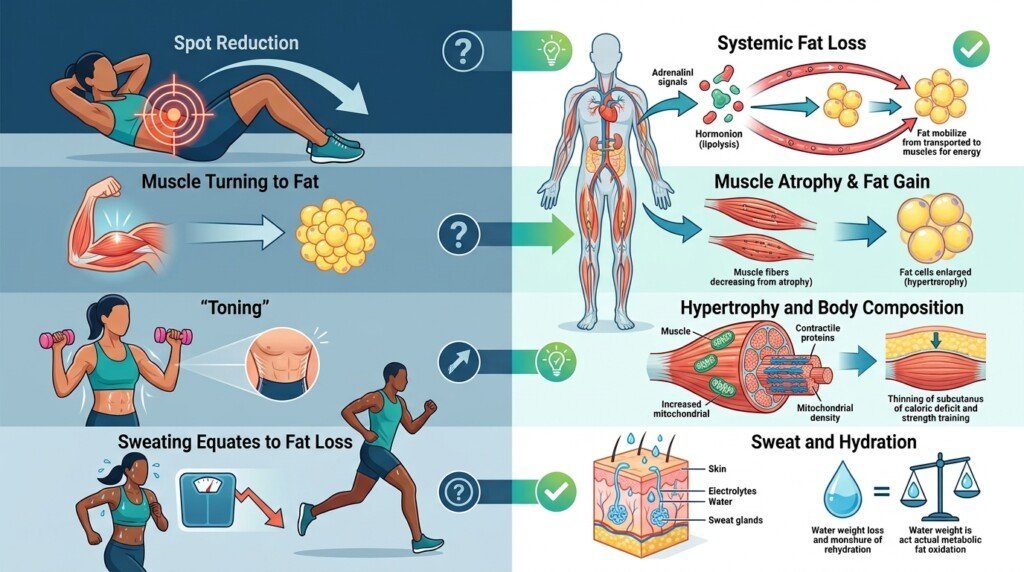
Myth: More muscle means your metabolism becomes dramatically faster.
Reality: Muscle does increase metabolism, but the effect is gradual rather than dramatic.
Every tissue in your body requires energy.
Your:
- Brain
- Heart
- Liver
- Kidneys
- Muscles
all burn calories continuously to stay alive and function properly.
Muscle tissue is metabolically active, meaning it requires energy even while resting.
However, muscle is not the largest calorie-burning organ in the body, and its resting energy requirements are often overstated.
Muscle Is Active Tissue
Unlike body fat, skeletal muscle constantly performs important functions.
It helps with:
- Movement
- Posture
- Balance
- Joint stability
- Blood sugar regulation
- Heat production
Supporting these functions requires energy around the clock.
This explains why increasing lean muscle mass can gradually increase resting calorie expenditure.
Bigger Changes Come Over Time
A small increase in muscle mass does not instantly transform your metabolism.
Instead, the effect accumulates gradually as:
- Lean body mass increases
- Daily movement improves
- Physical activity becomes easier
- Overall energy expenditure rises
These long-term adaptations often matter more than the calories burned by muscle tissue alone.
Readers wanting a broader understanding of calorie expenditure may also enjoy Metabolism, which explains how multiple systems work together to determine daily energy use.
How Many Calories Does Muscle Actually Burn?
This question has fueled countless myths.
Some sources claim a pound of muscle burns 50 calories every day.
Others suggest much higher numbers.
Scientific evidence tells a different story.
Myth vs Reality #2
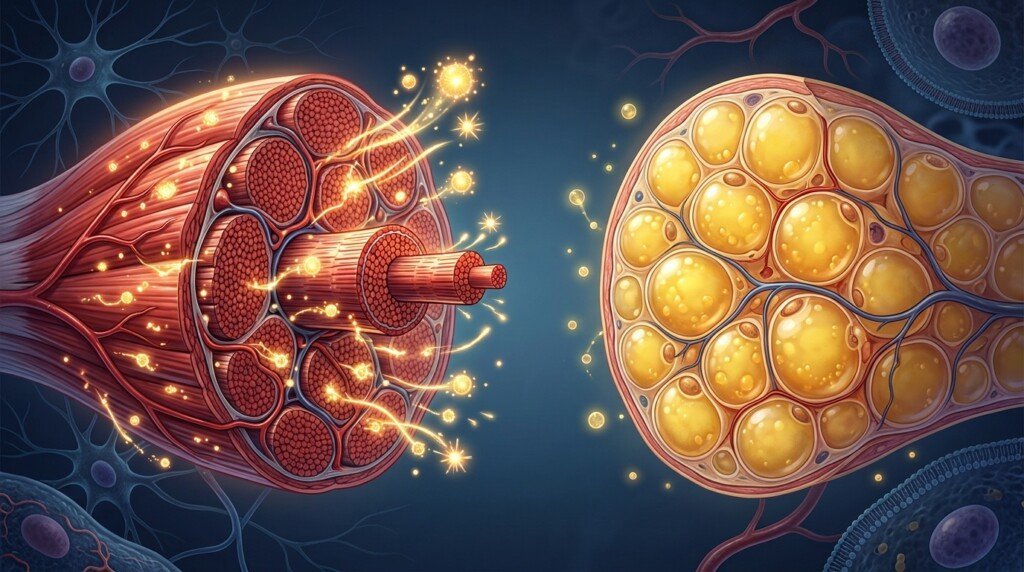
Myth: One pound of muscle burns 50 calories every day while resting.
Reality: Research suggests muscle burns considerably fewer calories at rest.
Although exact values vary between studies, skeletal muscle generally uses only a modest amount of energy while resting.
This does not mean muscle is unimportant.
It simply means its metabolic value comes from multiple benefits rather than resting calorie burn alone.
Why the Numbers Vary
Estimating calorie expenditure is complicated.
Resting energy use depends on many factors, including:
- Age
- Sex
- Body composition
- Hormonal status
- Overall health
- Individual metabolism
For this reason, researchers usually provide estimated ranges rather than one exact number.
Muscle Burns More Than Fat Tissue
Although muscle does not burn enormous numbers of calories at rest, it still requires more energy than fat tissue.
This difference becomes increasingly meaningful as lean body mass grows over time.
Resting Calories Are Only Part of the Picture
Focusing only on resting calorie burn overlooks several important advantages of muscle.
Muscle also contributes to:
- Higher energy expenditure during activity
- Better physical function
- Improved insulin sensitivity
- Greater exercise capacity
- Healthier aging
These combined benefits often have a much greater long-term impact than resting calorie burn alone.
Readers interested in resting calorie expenditure can continue with Resting Metabolic Rate, where this concept is explored in greater depth.
Estimated Resting Energy Use of Different Body Tissues
| Tissue | Relative Resting Energy Use |
|---|---|
| Brain | Very High |
| Heart | Very High |
| Liver | Very High |
| Kidneys | Very High |
| Skeletal Muscle | Moderate |
| Fat Tissue | Low |
This comparison illustrates why muscle contributes to metabolism without becoming the dominant source of resting calorie expenditure.
Is Building Muscle the Best Way to Boost Metabolism?
The answer depends on what you mean by “boost.”
If you expect muscle alone to dramatically increase calorie burning overnight, the answer is no.
If you’re looking for one of the most reliable long-term strategies for improving metabolic health, the answer becomes much closer to yes.

Muscle Supports Multiple Metabolic Processes
Building lean muscle influences far more than resting calorie expenditure.
It also supports:
- Healthy movement
- Glucose regulation
- Physical performance
- Functional independence
- Long-term energy balance
These improvements extend well beyond simple calorie calculations.
Muscle Makes Activity Easier
As strength improves, many people naturally become more active.
Everyday tasks often require less effort, making it easier to:
- Carry groceries
- Climb stairs
- Perform household chores
- Stay active throughout the day
This additional movement contributes to overall energy expenditure.
Future discussions in NEAT explain how these everyday activities quietly increase calorie burning without structured exercise.
Muscle Complements Other Metabolic Processes
Healthy metabolism is never determined by one factor.
It reflects the combined influence of:
- Resting metabolic rate
- Daily movement
- Thermogenesis
- Physical activity
- Nutrition
- Body composition
Muscle contributes to each of these systems rather than acting independently.
Think Beyond Calories
One of the biggest mistakes people make is judging muscle solely by how many calories it burns.
Its greatest value often lies in supporting long-term health, mobility, metabolic flexibility, and healthy aging rather than dramatically increasing resting metabolism.
Does Strength Training Improve Metabolic Health?
Strength training is often promoted as a way to “boost metabolism,” but its greatest value goes far beyond increasing calorie burn.
Rather than dramatically changing your resting metabolic rate overnight, strength training helps create long-term improvements in body composition, muscle function, and metabolic health. These changes work together to support healthier energy use throughout life.

Muscle Is Metabolically Active
When you challenge your muscles through resistance exercise, your body adapts by repairing and strengthening muscle fibers. Maintaining this tissue requires energy, which contributes to resting calorie expenditure.
Although the increase is modest, it becomes more meaningful when combined with other benefits such as improved movement and physical function.
Better Muscle Supports Better Glucose Control
Muscle tissue acts as one of the body’s largest storage sites for glucose.
Healthy muscles help:
- Remove glucose from the bloodstream.
- Improve insulin sensitivity.
- Store carbohydrates for future energy.
- Support stable energy metabolism.
These effects contribute to overall metabolic health rather than simply increasing calorie burn.
Recovery Also Uses Energy
One commonly overlooked benefit of strength training is the recovery process.
After resistance exercise, the body continues working to:
- Repair muscle fibers.
- Rebuild protein structures.
- Restore energy stores.
- Adapt to future training.
These recovery processes require additional energy, contributing to total daily energy expenditure.
Readers interested in training methods can continue with Strength Training for Fat Loss, which focuses on exercise strategies rather than the science of metabolism.
How Much Muscle Do You Need Before You Notice a Difference?
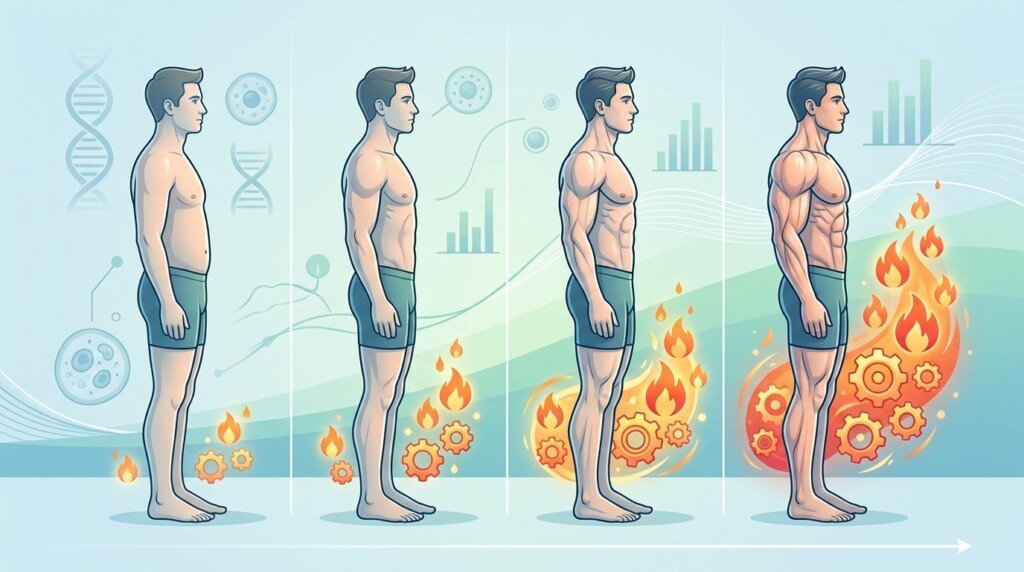
Many people expect dramatic metabolic changes after gaining a small amount of muscle.
Realistically, noticeable changes usually occur gradually.
There Is No Magic Number
No research identifies a specific amount of muscle that suddenly transforms metabolism.
Instead, improvements occur progressively as lean body mass increases over time.
Even modest gains can contribute to:
- Improved strength.
- Better daily function.
- Greater physical independence.
- Slightly higher resting energy expenditure.
Body Composition Matters More Than Scale Weight
Two people may weigh exactly the same while having very different body compositions.
Someone with more lean muscle often has:
- Better physical performance.
- Greater functional capacity.
- Different calorie requirements.
- Healthier metabolic markers.
This demonstrates why body composition provides more useful information than body weight alone.
Healthy Aging Changes the Conversation
Maintaining muscle becomes increasingly important with age.
Natural age-related muscle loss, known as sarcopenia, may reduce strength and physical function over time.
Preserving lean muscle supports:
- Healthy mobility.
- Independence.
- Balance.
- Overall metabolic health.
The benefits extend far beyond calorie burning.
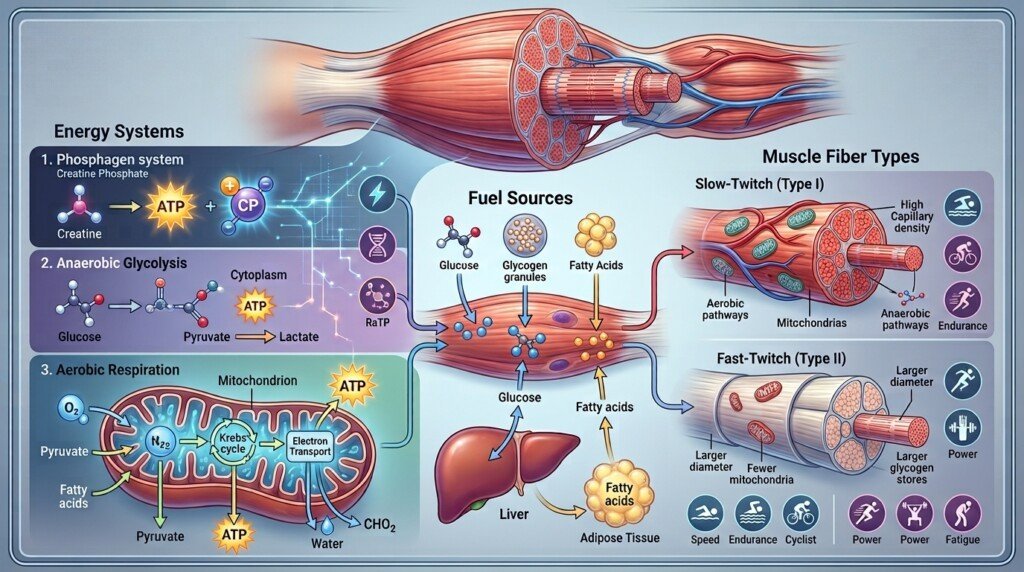
What Are the Biggest Myths About Muscle and Metabolism?
Few topics generate as many misconceptions as muscle metabolism.
Let’s separate the most common myths from what research actually shows.
Myth: Muscle Burns Huge Numbers of Calories While Resting
Reality
Muscle burns more calories than fat tissue, but the difference is much smaller than many social media posts suggest.
Its greatest value comes from supporting overall metabolic health rather than acting as a massive calorie-burning engine.
Myth: Building Muscle Automatically Leads to Weight Loss
Reality
Muscle supports long-term weight management, but body weight still depends on overall energy balance.
Building muscle alone does not guarantee fat loss.
Myth: Muscle Continues Burning Calories Forever After a Workout
Reality
Recovery increases energy expenditure temporarily.
Eventually, the body returns to its normal resting metabolic rate.
Myth: Only Athletes Benefit From More Muscle
Reality
People of every age benefit from maintaining healthy muscle mass.
Benefits include:
- Improved mobility.
- Better balance.
- Greater strength.
- Healthier aging.
- Improved metabolic function.
These advantages are valuable regardless of athletic ability.
Myth: Cardio Is Always Better for Metabolism
Reality
Cardiovascular exercise and muscle both contribute to metabolic health through different mechanisms.
Neither completely replaces the other.
One supports cardiovascular fitness.
The other supports strength, body composition, glucose regulation, and resting energy expenditure.
Myth vs Reality Summary
| Common Myth | What Research Shows |
|---|---|
| Muscle burns huge numbers of calories | Muscle burns more than fat, but the increase is modest. |
| Muscle alone causes weight loss | Weight management depends on total energy balance. |
| One pound burns 50 calories every day | Scientific estimates are considerably lower. |
| Muscle only matters for athletes | Muscle benefits people of all ages. |
| Cardio makes muscle unnecessary | Both support metabolic health in different ways. |
Muscle and Metabolism at a Glance
| Question | Answer |
|---|---|
| Does muscle increase metabolism? | Yes, but gradually. |
| Does muscle burn more calories than fat? | Yes. |
| Is the effect dramatic? | No. |
| Does muscle improve metabolic health? | Yes. |
| Does strength training support metabolism? | Yes. |
| Should muscle be the only weight-loss strategy? | No. |
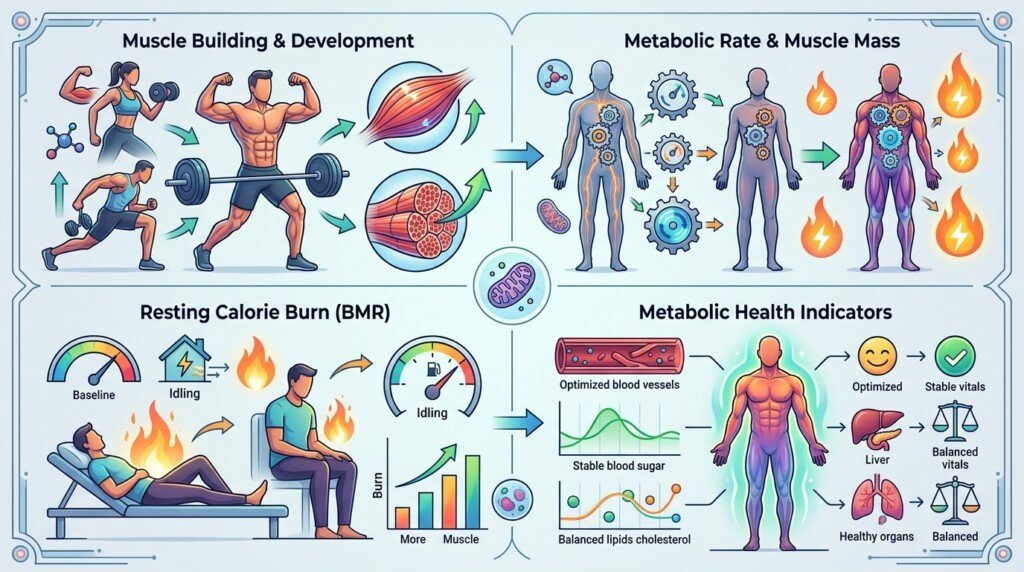
The simplest way to remember this relationship is:
Muscle supports metabolism, but it is only one part of a much larger metabolic system.
Frequently Asked Questions
1. Does one pound of muscle burn 50 calories?
No. Modern research suggests the resting calorie expenditure of muscle is much lower than this commonly repeated claim.
2. Does muscle burn fat while resting?
Muscle does not directly burn fat. Instead, it requires energy to maintain itself and contributes modestly to resting calorie expenditure.
3. Is cardio better than muscle for metabolism?
Cardio and muscle support metabolism differently. Cardiovascular exercise improves heart and lung health, while muscle supports resting energy expenditure, glucose regulation, and physical function.
4. Can older adults increase metabolism by maintaining muscle?
Yes. Preserving lean muscle supports healthier aging and helps maintain metabolic function as people grow older.
5. Does gaining muscle automatically increase calorie needs?
Usually yes, although the increase is gradual and depends on the amount of muscle gained.
6. Is muscle more metabolically active than fat?
Yes. Muscle tissue requires more energy to maintain than fat tissue.
7. Does strength training improve metabolism immediately?
No. Metabolic improvements occur gradually as the body adapts over time.
8. Why do people exaggerate muscle’s effect on metabolism?
Older estimates were often simplified or misunderstood, leading to unrealistic expectations that continue to circulate online.
9. Does muscle improve weight management?
Yes. Along with healthy eating and regular physical activity, maintaining muscle supports long-term weight management.
10. What is the biggest takeaway about muscle and metabolism?
Muscle contributes to a healthy metabolism, but lasting metabolic health depends on multiple factors working together rather than muscle alone.
Final Thoughts
The relationship between Muscle and Metabolism is real, but it is often misunderstood. Muscle tissue does require more energy than fat tissue, which means increasing lean body mass can modestly raise resting calorie expenditure. However, the true value of muscle extends far beyond the number of calories it burns while you rest. Strong, healthy muscles improve movement, support glucose regulation, contribute to better physical function, and help maintain metabolic health throughout life. These long-term benefits are far more significant than the exaggerated calorie-burning claims often seen online.
Rather than viewing muscle as a shortcut to rapid weight loss, it is more accurate to think of it as an important part of a healthy metabolic system. Combined with consistent physical activity, balanced nutrition, everyday movement, and sustainable lifestyle habits, muscle supports long-term energy balance and healthy aging. As this metabolism series continues, future articles on How Much Does Muscle Increase Metabolism, Thermogenesis, NEAT, and Protein for Weight Loss will explore these connected topics in greater depth, helping you build a clearer understanding of how the body uses and manages energy every day.
Disclaimer:
This post may contain affiliate links. If you purchase through them, we may earn a small commission at no extra cost to you. Also, this content is for informational purposes only and does not substitute professional medical advice.
Ready to Start Your Journey?
Use our free 7-in-1 Weight Loss Toolkit to calculate your numbers and build your plan in minutes.
Open Free Tools →