

What Are Emotional Cravings?
Have you ever reached for a favorite snack after a difficult conversation, a stressful day at work, or even while feeling bored on a quiet evening? If so, you’ve experienced something many people struggle to understand: emotional cravings.
Unlike physical hunger, emotional cravings rarely begin because your body needs energy. Instead, they often appear in response to feelings, situations, or habits that have become closely connected with eating over time.
That distinction is important.
Many people blame themselves for lacking willpower when they experience emotional cravings. In reality, these cravings are a normal part of human behavior. The brain naturally forms associations between food and emotions, especially when certain foods repeatedly provide comfort, distraction, celebration, or relaxation.
This does not mean every emotional craving leads to emotional eating, nor does it mean emotional cravings are always unhealthy. Everyone experiences them occasionally. The key is learning how to recognize them before automatically responding with food.
In this article, you’ll learn exactly what emotional cravings are, how they differ from physical hunger, what commonly triggers them, and how to recognize the difference between eating because your body needs nourishment and eating because your emotions are asking for relief.
Quick Answer
Emotional cravings are strong urges to eat that are triggered primarily by emotions rather than physical hunger. They often appear suddenly, focus on specific comfort foods, and are commonly linked to stress, boredom, sadness, loneliness, celebration, or established habits. Unlike physical hunger, emotional cravings usually persist even after you’ve recently eaten.
What Are Emotional Cravings?
Not every craving begins in the stomach.
Many begin in the mind.
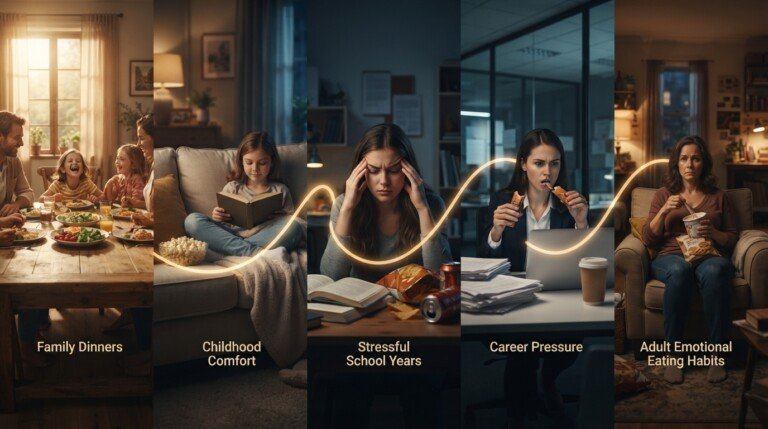
Emotional cravings occur when feelings become connected with eating. Instead of responding to physical energy needs, the brain starts looking for foods that have previously been associated with comfort, relaxation, reward, or distraction.
This process develops gradually.
Imagine someone who always eats ice cream after difficult workdays.
Or someone whose family celebrated every achievement with dessert.
Or someone who automatically reaches for popcorn every time they watch a movie.
Over time, these repeated experiences strengthen connections between certain emotions and certain foods.
Eventually, the emotion itself becomes enough to trigger the craving.
The important point is that emotional cravings are genuine experiences.
They are not imaginary.
They are not signs of weakness.
They are learned responses influenced by both psychology and biology.

What Is the Difference Between Emotional Cravings and Physical Cravings?
One of the most useful skills anyone can develop is learning to distinguish emotional cravings from physical hunger.
Although both involve wanting food, they usually feel very different.
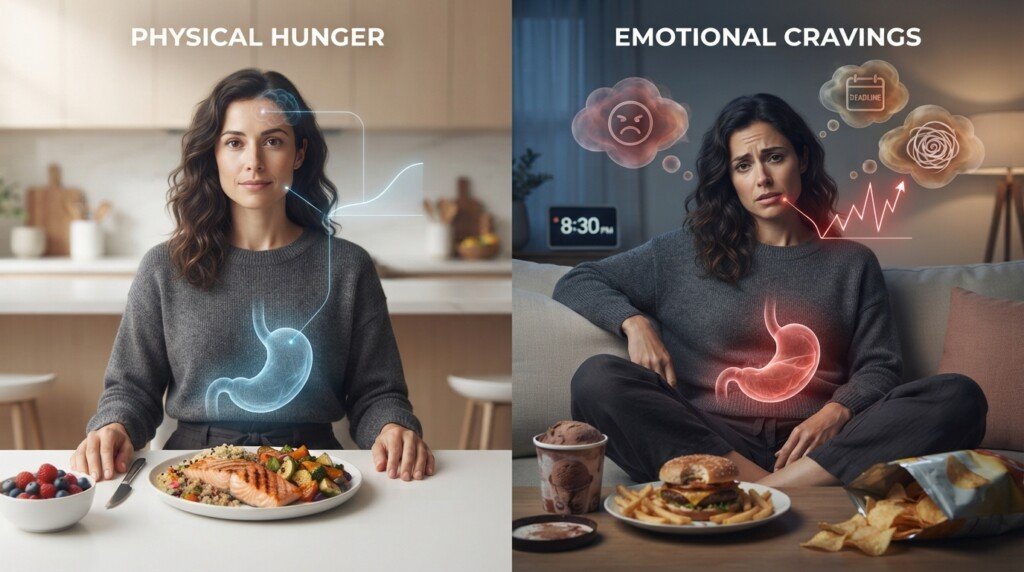
Physical Hunger Develops Gradually
Physical hunger builds over time.
You may notice:
- An empty feeling in the stomach.
- Gradually increasing appetite.
- Lower energy.
- Difficulty concentrating.
- Willingness to eat a variety of foods.
When physical hunger is satisfied, eating usually resolves the feeling.
Emotional Cravings Often Appear Suddenly
Emotional cravings are different.
They frequently:
- Appear quickly.
- Focus on one specific food.
- Feel urgent.
- Occur after emotional situations.
- Continue despite having eaten recently.
Someone experiencing an emotional craving may reject perfectly satisfying meals while continuing to think about chocolate, pizza, chips, or another favorite comfort food.
That level of specificity is one of the biggest clues.
Timing Can Offer Important Clues
Physical hunger generally follows biological rhythms.
For example:
- Several hours after eating.
- Following physical activity.
- After long workdays.
Emotional cravings often follow emotional events instead.
Examples include:
- An argument.
- A stressful meeting.
- Feeling lonely.
- Watching television.
- Celebrating success.
- Feeling bored.
The timing often reveals more than the food itself.
Satisfaction Is Different
Physical hunger usually ends once enough food has been eaten.
Emotional cravings may continue.
Someone might feel physically full but still think:
“I still want dessert.”
or
“I just need something sweet.”
That lingering desire often reflects emotional rather than physical appetite.
Comparing Emotional and Physical Hunger
| Physical Hunger | Emotional Cravings |
|---|---|
| Develops gradually | Appears suddenly |
| Accepts many foods | Wants one specific food |
| Driven by energy needs | Triggered by emotions or situations |
| Stops after eating | May continue after eating |
| Usually follows time since last meal | Often follows emotional events |
Neither experience is “good” or “bad.”
The goal is simply recognizing which one you’re experiencing.
What Are Common Triggers for Emotional Cravings?
Emotional cravings can be triggered by many different feelings.
Stress is one of the most common, but it is far from the only one.
Common emotional triggers include:
- Stress.
- Anxiety.
- Boredom.
- Loneliness.
- Frustration.
- Sadness.
- Happiness.
- Celebration.
- Fatigue.
- Procrastination.
Sometimes the emotion itself is obvious.
Other times the craving appears automatically before the person even recognizes how they are feeling.
Habits Become Emotional Triggers
Many emotional cravings begin as simple routines.
Examples include:
- Dessert after dinner.
- Popcorn during movies.
- Chocolate after work.
- Fast food on Fridays.
Eventually, these routines become emotionally meaningful.
Even if hunger is absent, the familiar situation triggers the craving.
Environment Also Matters
Emotional cravings are influenced by surroundings.
Examples include:
- Walking past a favorite bakery.
- Seeing advertisements.
- Smelling fresh cookies.
- Watching others eat.
- Visiting family gatherings.
These environmental cues activate memories that can trigger cravings independent of physical hunger.
Emotional Cravings Often Involve Comfort Foods
Although comfort foods differ between individuals, they frequently share certain characteristics.
Common examples include:
- Ice cream.
- Chocolate.
- Cookies.
- Pizza.
- Chips.
- Pasta.
- Bread.
- Macaroni and cheese.
These foods often carry personal emotional meaning developed over many years.
What Are Some Healthy Coping Mechanisms for Emotional Distress Instead of Cravings?
Recognizing an emotional craving does not mean you must ignore it completely.
Nor does it mean every craving should be resisted.
Instead, awareness creates an opportunity to pause before reacting automatically.
Many people find it helpful to briefly ask themselves:
“What am I feeling right now?”
Sometimes the answer is hunger.
Sometimes it is exhaustion.
Sometimes it is loneliness.
Sometimes it is simply boredom.
Identifying the underlying emotion often provides valuable context.
Create Space Before Responding
One simple strategy is delaying immediate action for a few minutes.
This brief pause allows you to determine whether the craving becomes stronger, weaker, or disappears entirely.
Many emotional cravings lose intensity when attention shifts elsewhere.
Explore Alternative Responses
Food is only one possible response to emotional discomfort.
Depending on the situation, alternatives might include:
- Taking a short walk.
- Calling a friend.
- Reading.
- Listening to music.
- Journaling.
- Stretching.
- Practicing mindfulness.
- Spending time outdoors.
These activities are not intended to replace food completely.
Instead, they simply expand the number of available responses.
Avoid Judging Yourself
Perhaps the most important principle is avoiding guilt.
Everyone experiences emotional cravings.
Occasionally responding to them is part of normal human behavior.
Problems usually develop only when food becomes the primary or only strategy for managing difficult emotions.
Because long-term emotional eating deserves much deeper discussion, practical behavior-change strategies are intentionally kept brief here. The broader causes behind recurring cravings are explored in Food Cravings: Causes, Types & How to Manage Them, while a more structured approach to identifying personal triggers is covered in How to Identify the Root Cause of Your Cravings.
Why Do Emotional Cravings Happen?
If emotional cravings are not caused by physical hunger, what creates them?
The answer lies in the way the brain connects emotions, memories, habits, and food over time.
Every eating experience teaches the brain something.
If eating chocolate consistently follows stressful workdays, the brain gradually begins pairing stress with chocolate.
If family celebrations always include cake, birthdays eventually become linked with dessert before the meal even begins.
These learned associations are remarkably powerful.
Eventually, emotions alone can trigger the desire to eat, even when the body has enough energy.
Unlike the biological mechanisms discussed in Stress and Food Cravings, emotional cravings are better understood as learned behavioral responses shaped by both psychology and experience.
What Are the Biological and Psychological Triggers for Emotional Cravings?
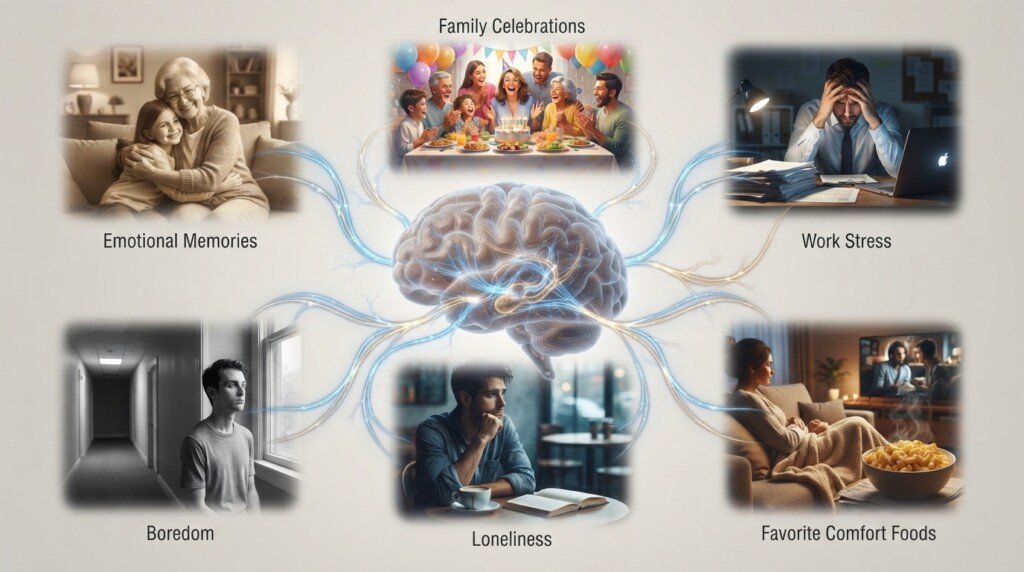
Although emotional cravings begin with feelings, they involve both the mind and the body.
Psychological experiences influence attention, decision-making, and memory, while biological systems help reinforce repeated behaviors.
Rather than working separately, these processes continuously influence one another.
Learned Associations Become Automatic
One of the strongest contributors to emotional cravings is repetition.
For example:
- Ice cream after stressful days.
- Popcorn during movies.
- Pizza on Friday nights.
- Chocolate after exams.
- Cookies while studying.
None of these foods are inherently connected to those situations.
The connection develops because they repeatedly occur together.
Eventually, the situation itself becomes enough to trigger the craving.
Memories Shape Food Preferences
Food memories are often emotional memories.
Many favorite comfort foods remind people of:
- Childhood.
- Family gatherings.
- Holidays.
- Cultural traditions.
- Celebrations.
- Loved ones.
These emotional associations make certain foods feel comforting even when physical hunger is absent.
The craving reflects the experience surrounding the food as much as the food itself.
Environment Reinforces Emotional Cravings
Many emotional cravings are triggered before conscious awareness.
Simple environmental cues include:
- Walking into the kitchen.
- Smelling fresh cookies.
- Watching television.
- Passing a favorite restaurant.
- Seeing advertisements.
- Opening the pantry.
These familiar situations activate memories that increase the likelihood of craving particular foods.
Routine Makes Cravings Predictable
People often believe cravings are random.
In reality, many follow highly predictable routines.
Examples include:
- Afternoon chocolate.
- Evening dessert.
- Weekend takeout.
- Movie popcorn.
- Coffee with pastries.
Repeating the same pattern strengthens it.
Eventually, the routine itself becomes the trigger.
Emotional States Can Change Food Preferences
Different emotions often influence different food choices.
For example:
Stress may increase interest in familiar comfort foods.
Boredom may encourage mindless snacking.
Celebration often increases interest in desserts.
Loneliness may lead someone toward nostalgic family foods.
Fatigue may increase the appeal of convenient, ready-to-eat meals.
Although these patterns are common, individual experiences vary considerably.
Can Specific Personality Types Be More Prone to Emotional Cravings?
Researchers have explored whether personality influences eating behavior for many years.
The answer appears to be yes, although personality is only one piece of a much larger picture.
No personality trait guarantees emotional cravings.
However, certain tendencies may influence how someone responds to emotional situations.
Emotional Awareness Varies
Some people easily recognize emotions as they happen.
Others notice physical sensations long before identifying the emotion behind them.
When emotions remain unrecognized, eating may become an automatic response before the person realizes they were feeling stressed, bored, or overwhelmed.
Perfectionism Can Influence Eating Behaviors
Individuals with perfectionistic tendencies sometimes place enormous pressure on themselves.
During periods of disappointment or perceived failure, comfort foods may become temporarily appealing because they provide familiarity during emotionally difficult moments.
Again, this is not inevitable.
It is simply one pattern researchers have observed.
Highly Habit-Oriented Individuals
People who enjoy routine often develop consistent eating patterns.
While routines can support healthy eating, they can also reinforce emotional cravings when certain foods become attached to specific daily events.
Examples include:
- Dessert every evening.
- Coffee with pastries every morning.
- Chips while watching television.
These routines become increasingly automatic over time.
Emotional Sensitivity
Some individuals naturally experience emotions more intensely than others.
Greater emotional intensity may increase awareness of cravings during emotionally significant situations.
However, emotional sensitivity alone does not determine eating behavior.
Support systems, coping skills, personal experiences, and environment all influence the final response.
Personality Is Never the Whole Explanation
It is important to avoid assuming that personality alone causes emotional cravings.
Eating behavior develops from many interacting influences, including:
- Habits.
- Family traditions.
- Culture.
- Sleep.
- Environment.
- Stress.
- Previous experiences.
- Food availability.
No single personality type explains emotional eating by itself.
What Are the Long-Term Consequences of Frequent Emotional Eating?
Occasional emotional eating is completely normal.
Most people celebrate with food.
Most people occasionally eat when bored.
Most people sometimes reach for comfort foods after difficult days.
These experiences are part of ordinary human behavior.
The concern arises only when emotional eating becomes the primary way someone manages emotions.

Food Begins Replacing Emotional Coping
When eating consistently becomes the first response to sadness, stress, frustration, or loneliness, fewer opportunities remain to develop other coping strategies.
Over time, this may reduce emotional flexibility.
Instead of asking:
“What do I need right now?”
the brain automatically answers:
“Food.”
Emotional Eating Can Become Habitual
Habits strengthen with repetition.
If emotional eating happens frequently over months or years, cravings often become more automatic.
Eventually, relatively minor emotional events may trigger eating without conscious thought.
Feelings of Guilt May Follow
Many people describe a repeating cycle:
Emotional discomfort.
↓
Eating.
↓
Temporary relief.
↓
Guilt.
↓
More emotional discomfort.
The guilt itself may become another emotional trigger.
Recognizing this cycle is often the first step toward changing it.
Food Is Not the Problem
Perhaps the most important point is this:
Comfort foods themselves are not harmful.
Enjoying dessert during celebrations or eating favorite family meals for comfort is part of normal life.
Problems arise only when food consistently becomes the primary solution for emotional distress.
A future article in this content cluster will explore long-term emotional eating patterns and behavior change in much greater detail.
Key Takeaways
| Topic | Main Insight |
|---|---|
| Emotional cravings | Triggered primarily by emotions, habits, and learned associations rather than physical hunger. |
| Physical vs emotional hunger | Emotional cravings appear suddenly, target specific foods, and often continue despite recent eating. |
| Common triggers | Stress, boredom, loneliness, celebration, fatigue, routines, and environmental cues are among the most common triggers. |
| Personality | Personality may influence eating behaviors, but it is only one factor among many. |
| Long-term pattern | Occasional emotional eating is normal, but relying on food as the primary coping strategy may reinforce emotional cravings over time. |
Frequently Asked Questions
1. What are emotional cravings?
Emotional cravings are urges to eat that arise mainly from emotions, habits, or situations rather than genuine physical hunger. They usually involve specific comfort foods and often appear suddenly.
2. How do I know if a craving is emotional or physical?
Physical hunger develops gradually and can usually be satisfied by a variety of foods. Emotional cravings tend to appear quickly, focus on one specific food, and are often linked to feelings such as stress, boredom, sadness, or celebration.
3. Are emotional cravings a problem?
Not necessarily. Occasional emotional cravings are a normal part of life. They become more concerning only if eating consistently becomes the main way of coping with emotions or begins affecting overall health and well-being.
4. Can habits create emotional cravings?
Yes. Repeatedly pairing certain foods with specific emotions or situations can create strong learned associations that trigger cravings even when you are not physically hungry.
5. Do emotional cravings ever go away?
Emotional cravings often become easier to recognize with greater awareness of personal triggers and eating patterns. Understanding why they occur can help reduce automatic responses over time.
Conclusion
Emotional cravings are not simply about food. They reflect the complex relationship between emotions, memories, habits, and personal experiences that shape how we eat throughout life. While physical hunger helps the body obtain energy, emotional cravings often represent the mind’s search for comfort, familiarity, or temporary relief during emotionally significant moments.
Recognizing the difference between emotional and physical hunger allows you to respond with greater awareness instead of reacting automatically. Most emotional cravings are completely normal, especially when they occur occasionally. By paying attention to your personal triggers and patterns, you can better understand why certain foods become appealing during specific emotional situations and build a healthier relationship with eating without viewing every craving as something that must be eliminated.
Disclaimer:
This post may contain affiliate links. If you purchase through them, we may earn a small commission at no extra cost to you. Also, this content is for informational purposes only and does not substitute professional medical advice.
Ready to Start Your Journey?
Use our free 7-in-1 Weight Loss Toolkit to calculate your numbers and build your plan in minutes.
Open Free Tools →