How to Read a Nutrition Label (A Beginner’s Guide)
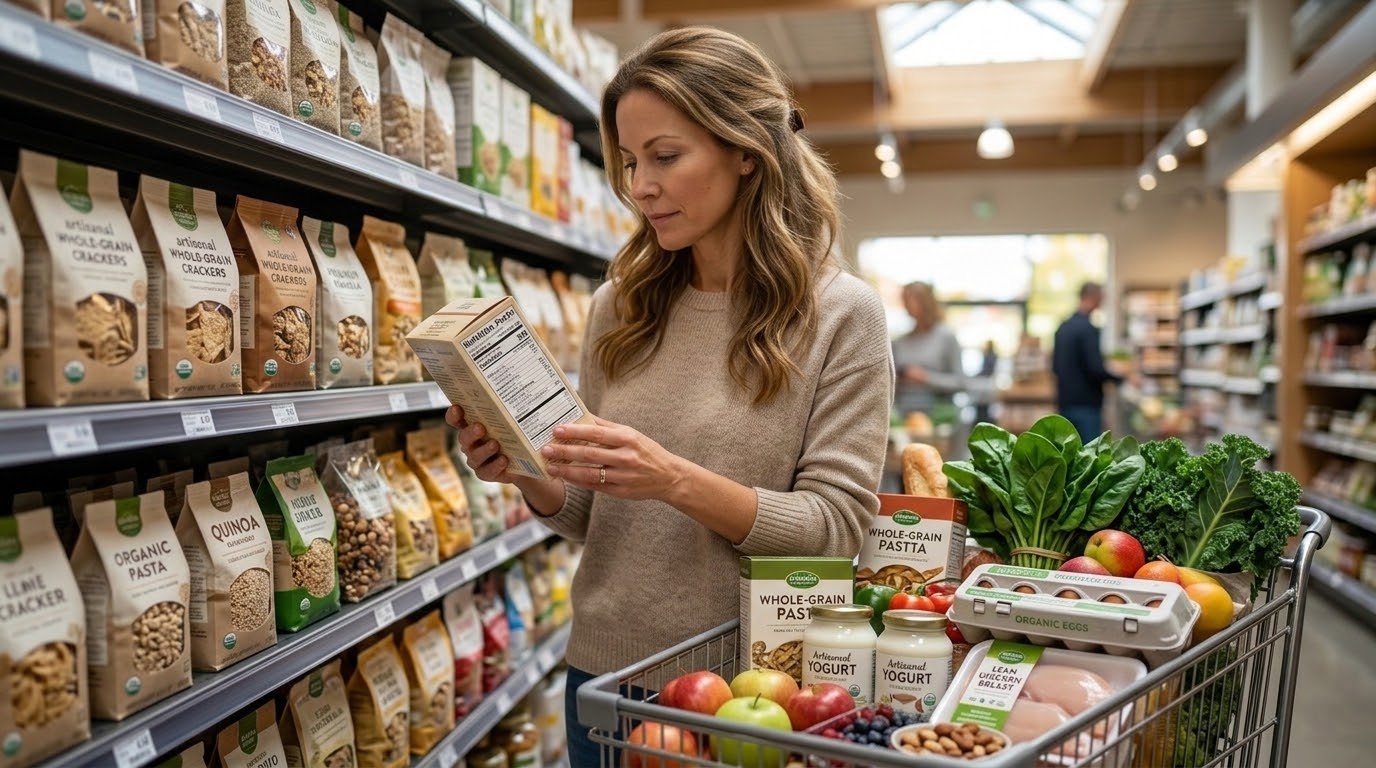
Walk into any supermarket and pick up two products that appear almost identical. They may have similar packaging, similar marketing claims, and even similar prices. One promises to be “high protein,” another says “low fat,” while another proudly displays phrases like “natural,” “wholesome,” or “made with whole grains.” Yet the real story is rarely told on the front of the package. It is hidden on the back, inside the nutrition facts panel and ingredient list.
Learning how to read a nutrition label is one of the most valuable skills you can develop if your goal is to make informed food choices. It allows you to look beyond advertising and understand what is actually inside the food you are buying. Instead of relying on colorful packaging or health claims, you begin making decisions based on factual nutritional information.
Many people avoid reading nutrition labels because they seem confusing. Percentages, serving sizes, ingredient lists, and unfamiliar nutrient names can make the label feel more complicated than it actually is. The good news is that once you understand what each section means, reading a nutrition label becomes a quick habit that takes less than a minute while shopping.
It is also important to understand what nutrition labels are designed to do. They are not intended to tell you whether a food is “good” or “bad.” Instead, they provide standardized information so consumers can compare products fairly and understand how each food contributes to their overall eating pattern.
This article explains how to read a nutrition label step by step, using plain language instead of technical nutrition jargon. By the end, you’ll know exactly where to look first, what each section means, which numbers deserve the most attention, and how to avoid being misled by clever food marketing.
Quick Answer
How to read a nutrition label starts with checking the serving size, then reviewing calories, macronutrients, and the % Daily Value to understand how much of each nutrient the food provides. Finally, examine the ingredient list, paying close attention to added sugars and the order of ingredients, since ingredients appear from highest to lowest quantity.
What Are the Key Sections of a Nutrition Facts Label?
At first glance, a nutrition facts label can look overwhelming because it contains so many numbers. Fortunately, it follows a consistent structure. Once you know the purpose of each section, the label becomes much easier to understand, regardless of which packaged food you are buying.
The first section is the serving size. This tells you the amount of food that the nutritional information is based on. Everything else on the label, including calories and nutrients, relates directly to that serving rather than the entire package.
Below the serving size comes the calorie information. Calories indicate how much energy one serving provides. While calories matter, they should never be the only number you consider. Two foods with identical calorie counts can differ dramatically in their nutritional quality depending on the protein, fiber, fats, vitamins, minerals, and added sugars they contain.
Next comes the nutrient breakdown. This section usually lists total fat, saturated fat, trans fat, cholesterol, sodium, total carbohydrates, dietary fiber, total sugars, added sugars, protein, and sometimes additional vitamins and minerals.
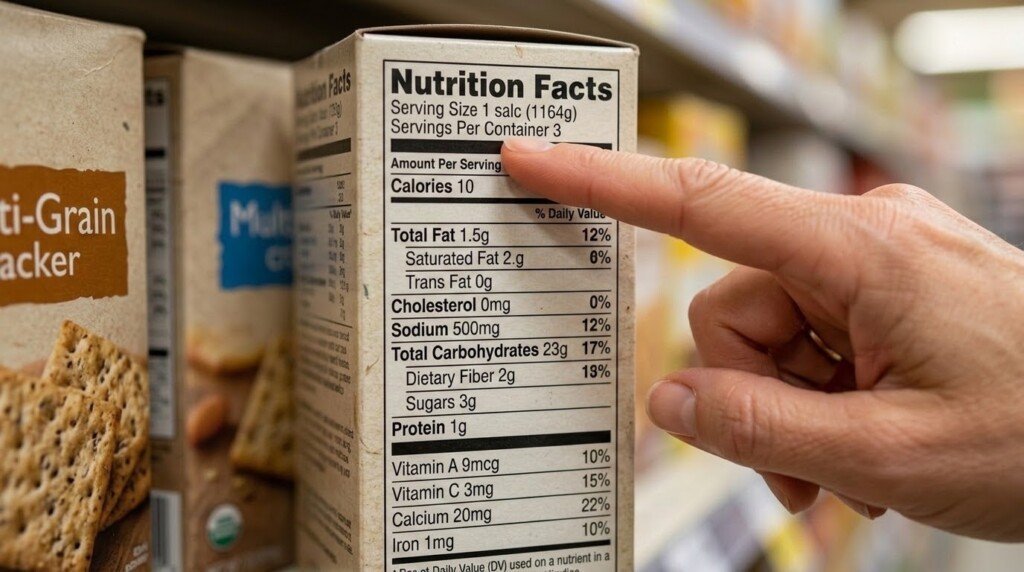
Each nutrient helps paint a clearer picture of the food’s nutritional profile. Instead of judging a product by one number alone, this section encourages looking at the food as a whole.
Toward the right side of many labels you’ll find the % Daily Value, which helps place each nutrient into the context of an average daily diet. Rather than memorizing recommended nutrient amounts, shoppers can use these percentages to quickly compare foods.
Finally, the ingredient list appears below or beside the nutrition panel. Unlike the nutrition facts, which summarize nutrients, the ingredient list tells you exactly what ingredients were used to make the product. This often provides valuable context that numbers alone cannot show.
Together, these sections create a complete picture of what you are actually buying. Understanding all of them is far more useful than focusing only on calories or one highlighted nutrient.
What Does “% Daily Value” Actually Mean?
One of the most misunderstood parts of a nutrition label is the % Daily Value, often abbreviated as %DV. Many shoppers either ignore these percentages completely or assume they represent personalized recommendations, but neither assumption is correct.
The % Daily Value estimates how much one serving of a food contributes toward the average daily intake of a particular nutrient. Rather than showing exactly what every individual needs, it provides a standardized reference that makes different products easier to compare.
For example, imagine two breakfast cereals. One provides 8% of the Daily Value for fiber, while another provides 20%. Even without knowing the exact number of grams recommended each day, you can immediately recognize that the second cereal contributes considerably more fiber per serving.
The same comparison works for nutrients such as calcium, iron, potassium, sodium, saturated fat, and added sugars. Looking at the percentages helps place individual nutrients into context instead of evaluating numbers in isolation.
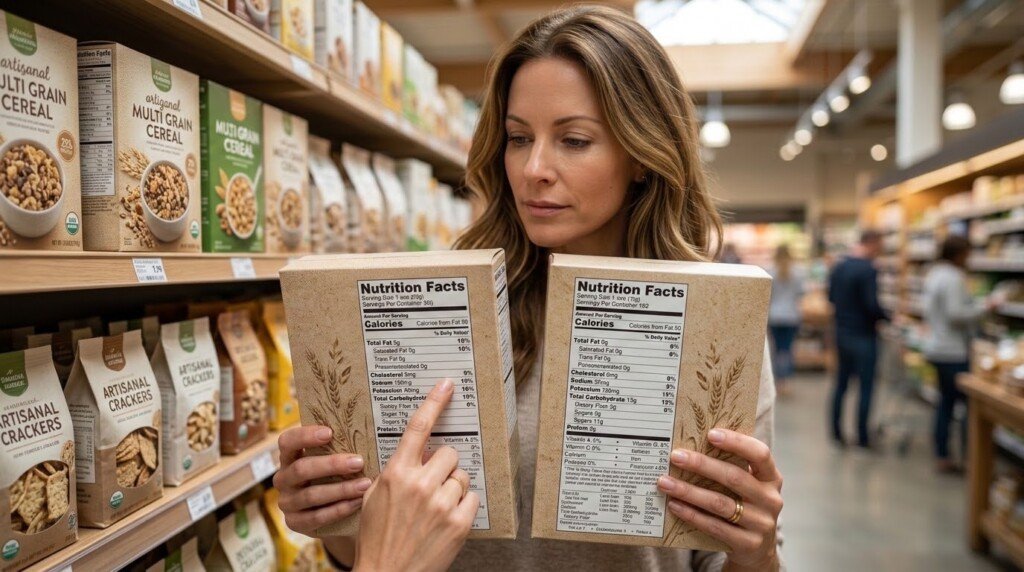
It is important to remember that these values are based on general nutrition guidance rather than your personal requirements. Someone who is highly active, pregnant, older, or managing a medical condition may have different nutritional needs.
For everyday grocery shopping, however, the % Daily Value serves as a practical comparison tool. It allows you to evaluate similar products quickly without needing advanced nutrition knowledge or complicated calculations.
When comparing foods, avoid looking at only one percentage. Consider the overall nutritional profile so that high amounts of beneficial nutrients are balanced against nutrients you may wish to consume in moderation.
How Does Serving Size on the Label Relate to How Much You Actually Eat?
Among all the information shown on a nutrition label, serving size is probably the section most often misunderstood.
Many people assume the serving size tells them how much they should eat.
It does not.
The serving size simply represents the amount of food used to calculate the nutritional information displayed on the label.
Imagine purchasing a bottle of juice that contains two servings.
If you drink the entire bottle, you have consumed twice the calories, sugars, carbohydrates, and every other listed nutrient because the label describes only one serving.
The same situation occurs with snack bags, frozen meals, breakfast cereals, ice cream, and countless other packaged foods. Looking only at the calorie number without checking the serving size can easily create misleading impressions about the nutritional content of a product.
This is why serving size should always be the first place your eyes go when reading a nutrition label.
Understanding serving size also connects naturally with broader discussions about portion awareness. Practical serving recommendations and everyday examples are covered in Recommended Portion Sizes for Every Food Group, while Common Portion Size Mistakes explains why people often underestimate how much they actually eat.
Recognizing the difference between serving size and personal portion size is one of the simplest ways to interpret nutrition labels more accurately without becoming overly focused on numbers.
What Should I Watch Out for on a Label?
Reading the nutrition facts panel is only half the process. The other half involves understanding what the numbers and ingredient list are actually telling you. Two products may appear nearly identical when you compare calories alone, yet one may contain significantly more added sugars, sodium, or highly processed ingredients than the other.
This is why experienced shoppers rarely stop after looking at calories. Instead, they use the nutrition label as a complete picture rather than focusing on a single number. Calories tell you how much energy a food provides, but they do not explain where that energy comes from or how nutritious the food is.
The ingredient list, sugar content, sodium level, and nutrient balance often provide far more useful information than the front-of-package marketing claims. A product advertised as “light,” “natural,” or “made with real fruit” may still contain large amounts of added sugar or highly refined ingredients. Likewise, a food that appears ordinary may actually provide an excellent nutritional profile when you examine the label carefully.
Learning to recognize these details does not mean avoiding every packaged food. Modern grocery shopping includes many nutritious packaged options. The goal is simply becoming a more informed consumer who understands what is inside the package before placing it in the shopping cart.
Fortunately, there are only a few sections that deserve extra attention once you understand the basics. Among the most important are added sugars and the ingredient list, both of which often reveal far more than the marketing on the front of the package.
How Do I Spot Hidden or Added Sugars in the Ingredient List?
Sugar is one of the easiest ingredients to overlook because it does not always appear under the simple word “sugar.” Food manufacturers may use a variety of names for sweetening ingredients, making it difficult for beginners to recognize how much sweetness has actually been added to a product.
Modern nutrition labels have made this easier by including a separate line for Added Sugars beneath Total Sugars. This distinction matters because total sugars include both naturally occurring sugars, such as those found in fruit and milk, and sugars added during food manufacturing.
For example, plain yogurt naturally contains lactose, which contributes to the total sugar content. A flavored yogurt may contain that same naturally occurring lactose plus additional sweeteners added during processing. Looking at the Added Sugars line helps you understand how much extra sugar has been introduced beyond what naturally occurs in the food.
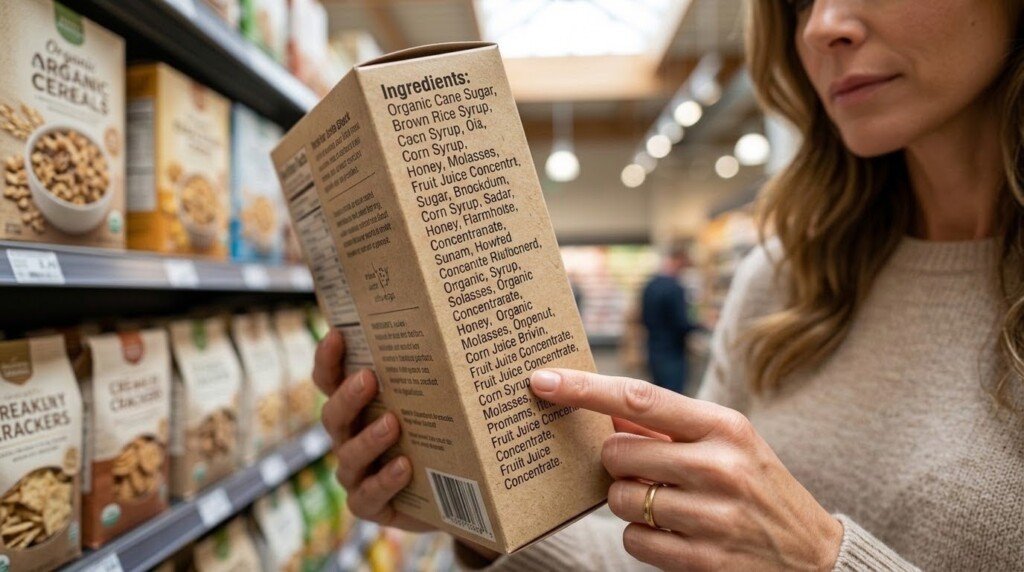
The ingredient list provides another useful clue. Ingredients are listed in descending order by weight, meaning the ingredient used in the greatest quantity appears first. If several forms of sugar appear near the beginning of the list, the product may contain more added sweeteners than the front label suggests.
You may encounter names such as cane sugar, brown sugar, corn syrup, glucose syrup, honey, maple syrup, fruit juice concentrate, malt syrup, molasses, dextrose, fructose, sucrose, or maltose. Although these ingredients differ slightly, they all contribute sweetness to the finished product.
This does not automatically make a food unhealthy. The purpose of reading the label is not to eliminate every product containing added sugar. Instead, it allows you to compare similar foods and make choices that better fit your overall eating pattern.
For example, if two breakfast cereals provide similar fiber and protein but one contains substantially less added sugar, the nutrition label allows you to recognize that difference immediately without relying on advertising claims.
Understanding added sugars also supports healthier eating without becoming overly restrictive. Rather than fearing sugar completely, you gain the ability to recognize where it appears and make balanced decisions based on the complete nutritional picture.
Why Does Ingredient Order on a Label Matter?
Many shoppers glance at the ingredient list without realizing that its order follows a specific rule.
Ingredients always appear from the greatest quantity to the smallest quantity by weight at the time the food is manufactured.
This simple rule provides valuable insight into what makes up most of the product.
If whole oats appear first on a cereal label, oats represent the primary ingredient. If refined flour appears first on a cracker package, refined flour forms the largest portion of that product. Likewise, if sugar appears among the first few ingredients, sweeteners contribute a significant share of the food.
This ordering helps shoppers compare products more intelligently.
Imagine two granola bars with nearly identical calorie counts.
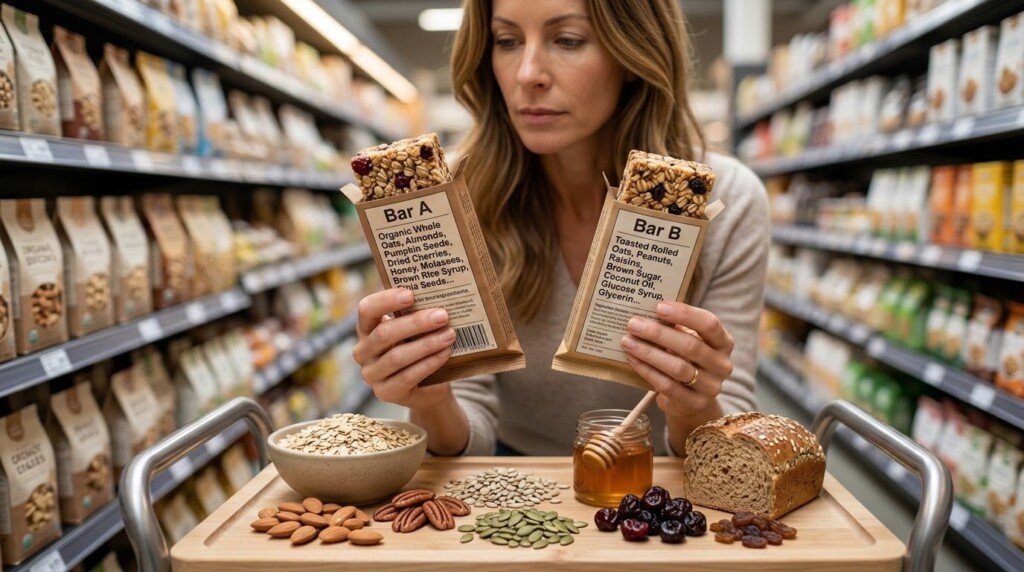
The first begins with whole oats, almonds, and seeds before listing sweeteners much later.
The second starts with sugar, syrup, and refined grains before mentioning oats farther down the list.
Even before examining every nutrient, the ingredient order already tells you these products are built quite differently.
Ingredient order also helps identify highly processed foods that rely heavily on refined ingredients rather than whole-food components.
That does not mean every packaged food should contain only a handful of ingredients. Foods requiring baking, preservation, flavoring, or fortification naturally contain more complex ingredient lists. The important point is understanding which ingredients make up the majority of the product rather than judging foods solely by the total number of ingredients.
When comparing similar products, looking at the first several ingredients often provides a clearer understanding than focusing exclusively on marketing claims placed on the front of the package.
Over time, checking ingredient order becomes second nature. It requires only a few seconds but often reveals information that front-of-package labels intentionally leave out.
Key Takeaways
Learning how to read a nutrition label is less about memorizing numbers and more about understanding how different sections work together. The serving size provides the foundation for every other value on the label, while calories, nutrients, and the % Daily Value help explain what one serving contributes to your overall diet. The ingredient list then adds another layer of information by revealing exactly what the product contains and in what order those ingredients appear.
Rather than relying on marketing claims, nutrition labels allow you to compare products objectively. Looking beyond calories, paying attention to serving sizes, reviewing added sugars, and checking ingredient order all contribute to making more informed food choices. Once these habits become familiar, reading a nutrition label takes only a few moments and becomes one of the simplest ways to support healthier eating.
Frequently Asked Questions
1. How do I read a nutrition label?
Start by checking the serving size, then review calories, nutrients, and the % Daily Value. Finish by reading the ingredient list to understand what ingredients make up most of the product.
2. What does % Daily Value mean?
The % Daily Value shows how much one serving contributes toward the average daily intake of a nutrient. It helps compare foods without needing to memorize recommended nutrient amounts.
3. How do I spot added sugar on a label?
Look for the Added Sugars line beneath Total Sugars on the nutrition facts panel, and review the ingredient list for sweeteners such as cane sugar, syrup, dextrose, glucose, honey, or molasses.
4. Why is serving size so important?
All calories and nutrients listed on the nutrition label are based on one serving. If you eat more than one serving, your intake of calories and nutrients increases accordingly.
5. Should I always avoid foods with long ingredient lists?
Not necessarily. Some nutritious packaged foods naturally contain multiple ingredients. Instead of judging by length alone, pay attention to the first several ingredients and the overall nutritional profile.
Conclusion
Understanding how to read a nutrition label gives you the confidence to evaluate packaged foods based on facts rather than marketing. Instead of being influenced by eye-catching claims on the front of the package, you learn to examine serving size, calories, nutrient content, % Daily Value, and ingredient order to build a more complete picture of what you are eating.
The goal is not perfection or avoiding every processed food. It is developing the knowledge to compare products, recognize added sugars, understand serving sizes, and make food choices that align with your overall eating habits. With a little practice, reading nutrition labels becomes a quick, practical skill that supports healthier decisions every time you shop.
Disclaimer:
This post may contain affiliate links. If you purchase through them, we may earn a small commission at no extra cost to you. Also, this content is for informational purposes only and does not substitute professional medical advice.
Fuel Your Body Right
Use our free Nutrition Toolkit to find your protein target, fasting window, and net carbs in minutes.
Open Free Tools →