
How to Take Ashwagandha for Weight Loss: Dosage, Forms, and Common Mistakes
Buying a high-quality Ashwagandha supplement is only the first step. The next question is one that almost everyone asks:
How should you actually take it?
Search online, and you’ll find conflicting advice. Some sources recommend taking it once a day, while others suggest splitting the dose. Some recommend capsules, while others insist powders work better. There are also countless opinions about gummies, drinks, and herbal blends.
The reality is much simpler.
Understanding How to Take Ashwagandha for Weight Loss is less about following complicated routines and more about choosing an appropriate serving, using a quality product consistently, and building it into an overall healthy lifestyle. Small daily habits usually matter far more than complicated supplement schedules.
In this article, you’ll learn what current guidance says about dosage, whether daily use is appropriate, how different supplement forms compare, and the common mistakes that often prevent people from getting the most from Ashwagandha. We will not cover the best time of day to take it, product comparisons, side effects, or research reviews because those topics are discussed separately.
Quick Answer
How to Take Ashwagandha for Weight Loss starts with choosing a high-quality standardized extract and following the serving size recommended by the manufacturer or your healthcare provider. Consistent daily use, proper hydration, and combining Ashwagandha with healthy habits such as a balanced diet and a calorie deficit are generally more important than complicated supplement routines.
What Is the Recommended Ashwagandha Dosage?
One of the biggest misconceptions about supplements is that taking more automatically produces better results.
That is rarely true.
With herbal supplements like Ashwagandha, following appropriate serving recommendations is usually the safest and most practical approach.

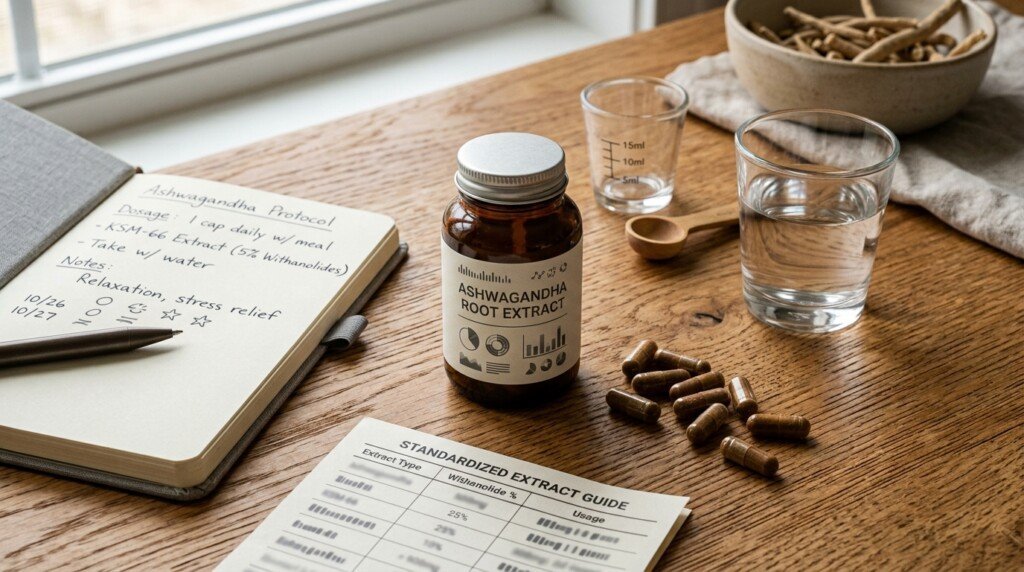
There Is No Single Dosage for Every Product
Ashwagandha supplements are available in many different forms, including:
- Standardized extracts
- Root powder
- Capsules
- Gummies
- Drink mixes
Because manufacturing methods differ, recommended serving sizes can also vary between products.
For this reason, it is important to follow the instructions provided on the product label unless your healthcare provider recommends something different.
Standardized Extracts Often Use Smaller Servings
Many standardized Ashwagandha extracts are more concentrated than simple root powders.
That means a smaller serving may provide similar amounts of active compounds compared with larger amounts of non-standardized powder.
This is one reason reading the Supplement Facts panel is more useful than comparing serving sizes alone.
More Is Not Always Better
People sometimes assume doubling the serving size will produce faster results.
Current evidence does not support that approach.
Taking more than recommended does not necessarily improve effectiveness and may increase the likelihood of unwanted effects.
Consistency is generally much more valuable than unnecessarily increasing intake.
Should You Take Ashwagandha Every Day?
Daily use is another common question.
Unlike products designed for occasional use, Ashwagandha is commonly taken as part of a regular wellness routine.
Consistency Is Usually More Important Than Perfection
Healthy routines produce results because they are repeated over time.
The same principle applies to many herbal supplements.
Taking Ashwagandha consistently is generally considered more practical than taking it only when you feel stressed or motivated.
Build It Into an Existing Habit
One of the easiest ways to remember any supplement is to connect it with something you already do every day.
For example:
- Eating breakfast
- Preparing lunch
- Drinking water
- Brushing your teeth in the morning
Linking a new habit to an existing routine often improves long-term consistency.
Lifestyle Still Comes First
Even when taken daily, Ashwagandha should support healthy habits rather than replace them.
Successful weight management continues to depend on:
- Balanced nutrition
- Regular physical activity
- Adequate hydration
- Quality sleep
- Maintaining a Calorie Deficit
Ashwagandha works best as one part of a larger wellness strategy rather than a standalone solution.
Which Form of Ashwagandha Is the Easiest to Use?
Modern supplements offer plenty of choices.
Fortunately, effectiveness depends more on product quality than on whether you choose capsules, powders, or gummies.

Capsules Are the Simplest Choice
Capsules remain the most widely used option because they are:
- Convenient
- Easy to transport
- Pre-measured
- Simple to include in a daily routine
Many people also appreciate that capsules usually contain fewer added sweeteners than gummies.
Powders Offer Greater Flexibility
Powdered Ashwagandha can be mixed into foods and beverages such as:
- Smoothies
- Yogurt
- Oatmeal
- Protein shakes
This flexibility appeals to people who prefer not to swallow capsules.
However, some powders have a strong herbal flavor that takes time to get used to.
Gummies Are Convenient but Deserve a Closer Look
Gummies have become increasingly popular because they are pleasant to consume.
Before choosing gummies, check the ingredient label for:
- Added sugars
- Artificial colors
- Flavorings
- Sweeteners
Convenience is valuable, but ingredient quality remains equally important.
People comparing supplement forms may also benefit from understanding how different products are evaluated in Best Ashwagandha for Weight Loss.
Can You Combine Ashwagandha With Other Supplements?
Many people interested in weight management already take more than one supplement.
This naturally raises questions about combining products.
Your Goals Should Guide Your Supplement Routine
Rather than taking multiple supplements simply because they are popular, choose products that support your specific health goals.
For example, some people focus on:
- General wellness
- Metabolic health
- Exercise recovery
- Nutritional support
Building a supplement routine around clear objectives usually leads to better decisions than following trends.
Avoid Taking Similar Products Without a Reason
Some herbal blends already contain Ashwagandha.
Adding another standalone Ashwagandha supplement without realizing it may result in unnecessary duplication.
Reading ingredient labels carefully helps prevent this mistake.
Professional Guidance Can Be Helpful
If you take prescription medications or multiple dietary supplements, discussing your routine with a qualified healthcare professional is a sensible way to identify potential interactions and ensure your supplement plan matches your individual needs.
People comparing broader nutritional options may also find Best Weight Loss Supplements, Supplements for Weight Loss, and Ashwagandha for Weight Loss useful when deciding how Ashwagandha fits into a complete weight-management strategy.
What Mistakes Stop Ashwagandha From Working as Well as It Could?
Many people assume a supplement is ineffective when they do not notice immediate changes.
In reality, the problem is often not the supplement itself but how it is being used.
Avoiding a few common mistakes can help you get the most from your routine.

Expecting Overnight Results
Ashwagandha is not designed to produce instant changes.
Like many herbal supplements, it is intended to become part of a consistent daily routine rather than provide immediate effects after a single serving.
Patience and realistic expectations are important.
Choosing Low-Quality Products
Not every Ashwagandha supplement offers the same level of quality.
Products made with poorly standardized ingredients or unnecessary fillers may not provide the same consistency as well-manufactured supplements.
Selecting a quality product remains one of the most important decisions you can make.
Forgetting Daily Consistency
Skipping several days each week makes it difficult to establish a regular supplement routine.
Consistency is usually more valuable than trying to compensate by taking extra servings later.
Ignoring Healthy Lifestyle Habits
Ashwagandha cannot compensate for:
- Poor nutrition
- Inadequate sleep
- Lack of exercise
- Chronic dehydration
- An inconsistent calorie deficit
Supplements work best when they support healthy habits rather than replace them.
Can You Take Too Much Ashwagandha?
Another common misconception is that larger servings always produce better outcomes.
Current evidence does not support that assumption.
Follow the Recommended Serving Size
The safest approach is to stay within the serving size recommended on the supplement label unless your healthcare provider advises otherwise.
Manufacturers base these recommendations on the specific extract and concentration used in each product.
Avoid Combining Multiple Ashwagandha Products
Some people unknowingly take Ashwagandha from several different supplements at the same time.
Examples include:
- Stress support blends
- Sleep formulas
- Adaptogen combinations
- Standalone Ashwagandha capsules
Reading ingredient labels carefully helps avoid unnecessary duplication.
More Does Not Mean More Effective
Increasing intake beyond the recommended amount does not guarantee better results.
Building consistent healthy habits remains far more important than increasing supplement intake.
Questions regarding possible adverse reactions are covered separately in the upcoming Side Effects article.
How Should You Store Ashwagandha?
Storage may seem like a small detail, but it helps maintain product quality throughout its shelf life.

Keep It Cool and Dry
Most Ashwagandha supplements should be stored in:
- A cool location
- A dry environment
- Away from direct sunlight
- Away from excessive humidity
Bathrooms and kitchens with frequent steam are not always ideal storage locations.
Keep the Container Properly Sealed
Closing the container immediately after use helps reduce exposure to:
- Moisture
- Air
- Heat
- Light
These simple habits may help preserve product quality.
Always Check the Expiration Date
Like other dietary supplements, Ashwagandha products have expiration dates.
Before beginning a new bottle, confirm that the product is still within its recommended shelf life.
Simple Habits That Make Your Supplement Routine Easier
Many people focus on finding the perfect supplement while overlooking the importance of building a sustainable routine.
Small habits often have a much bigger impact over time.
A practical routine may include:
- Keeping the supplement in a visible location
- Drinking enough water throughout the day
- Following the serving instructions consistently
- Pairing supplementation with balanced meals
- Tracking healthy lifestyle habits instead of only body weight
These simple strategies help make supplementation part of a long-term wellness plan rather than a temporary experiment.
Questions about the ideal time of day to take Ashwagandha will be covered separately in the upcoming Best Time to Take Ashwagandha article.
The Best Routine Is the One You Can Maintain
Understanding How to Take Ashwagandha for Weight Loss is not about finding complicated schedules or hidden tricks.
Instead, success usually comes from choosing a quality supplement, following the recommended serving size, using it consistently, and supporting it with healthy lifestyle habits.
The people who benefit most from supplements are often those who build simple routines they can follow every day. Combined with balanced nutrition, regular exercise, adequate hydration, and a sustainable calorie deficit, Ashwagandha becomes one supportive part of a much larger picture.
Key Takeaways
| Topic | Key Point |
|---|---|
| Dosage | Follow the manufacturer’s recommended serving size or your healthcare provider’s advice. |
| Daily use | Consistency is generally more important than taking larger or irregular servings. |
| Supplement forms | Capsules, powders, and gummies can all be effective when choosing a quality product. |
| Combining supplements | Check labels carefully to avoid taking multiple products containing Ashwagandha. |
| Common mistakes | Poor consistency, unrealistic expectations, and unhealthy habits often reduce success. |
| Storage | Store Ashwagandha in a cool, dry place with the container tightly sealed. |
Frequently Asked Questions
1. How much Ashwagandha should I take for weight loss?
How to Take Ashwagandha for Weight Loss begins by following the serving size recommended on the product label or by your healthcare provider, since different extracts and formulations vary.
2. Can I take Ashwagandha every day?
Yes. Many people include Ashwagandha as part of a consistent daily wellness routine, provided they follow the recommended serving instructions.
3. Should I choose capsules, powder, or gummies?
All three forms can be appropriate. The best choice depends on convenience, ingredient quality, and your personal preference.
4. Can I combine Ashwagandha with other supplements?
Yes, but review ingredient labels carefully to avoid duplicate Ashwagandha from multiple products, and consult a healthcare professional if you use medications or several supplements.
5. What is the biggest mistake people make when taking Ashwagandha?
One of the most common mistakes is expecting fast results while overlooking consistency and healthy lifestyle habits. Supplements work best when combined with balanced nutrition, regular exercise, and a sustainable routine.
Conclusion
Knowing How to Take Ashwagandha for Weight Loss is about building consistency rather than chasing shortcuts. Following the recommended serving size, choosing a quality supplement, storing it properly, and making it part of your daily routine are practical habits that can help you get the most from your supplement.
At the same time, Ashwagandha should never replace the foundations of successful weight management. Balanced nutrition, regular physical activity, adequate hydration, quality sleep, and maintaining a calorie deficit remain the factors that drive long-term results. Used alongside these habits, Ashwagandha can become a valuable addition to a well-rounded wellness plan.
Disclaimer:
This post may contain affiliate links. If you purchase through them, we may earn a small commission at no extra cost to you. Also, this content is for informational purposes only and does not substitute professional medical advice.