
How Can You Sleep Better During Menopause and Support Weight Loss?
For many women, menopause brings more than hot flashes and hormonal changes. One of the biggest challenges is sleep. Falling asleep may take longer, staying asleep becomes more difficult, and waking up several times during the night can quickly become the new normal. Even after spending enough hours in bed, you may still wake up feeling exhausted.
Poor sleep affects much more than your energy levels.
Many women notice stronger food cravings, reduced motivation to exercise, increased fatigue, and gradual weight gain during periods of disrupted sleep. This is not simply a matter of feeling tired. Sleep plays an important role in regulating hormones that influence appetite, recovery, metabolism, and body composition. When sleep quality declines over weeks or months, maintaining a healthy weight often becomes more challenging.
Fortunately, improving sleep does not require complicated routines or expensive products. Small, consistent habits can make a meaningful difference. Creating a comfortable sleep environment, following a regular bedtime schedule, staying physically active, and managing stress all support better sleep while also helping with long-term weight management.
It is also important to understand that menopause affects every woman differently. Some experience only occasional sleep disruption, while others struggle with frequent night sweats, hot flashes, or early morning waking. Recognizing these changes allows you to adjust your daily routine instead of assuming poor sleep is something you simply have to accept.
In this article, you’ll learn why Menopause Sleep and Weight Loss are closely connected, how poor sleep influences appetite and metabolism, why night sweats interrupt restorative sleep, which bedtime habits improve sleep quality, how better sleep supports healthy weight management, practical lifestyle changes that make a difference, and when persistent sleep problems deserve medical attention.
Why Does Menopause Affect Sleep?
Sleep changes are among the most common symptoms reported during menopause.
Although every woman’s experience is different, fluctuating hormones often influence the body’s natural sleep cycle, making restful sleep more difficult to achieve.
Rather than one single cause, several biological and lifestyle factors usually work together.
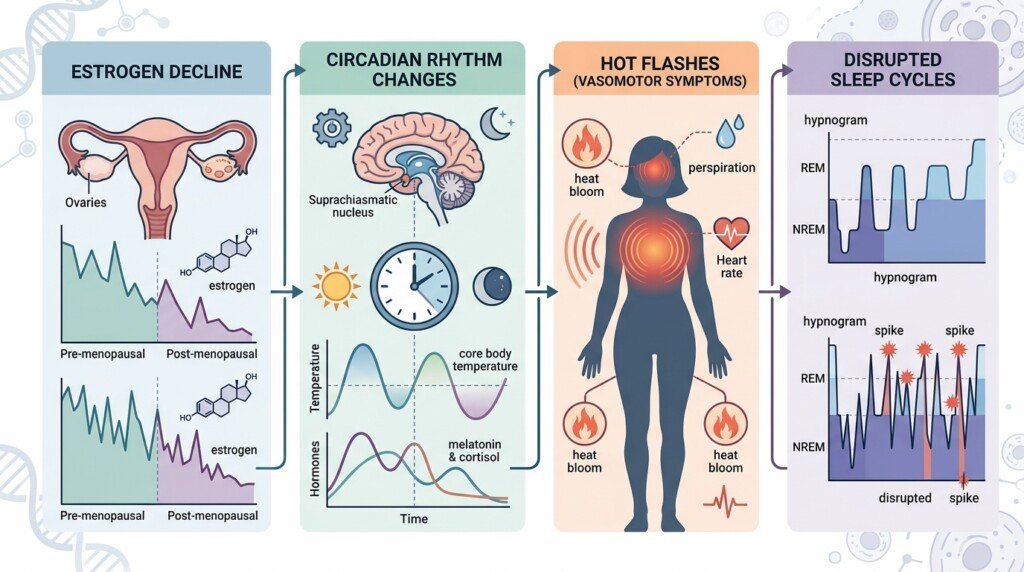
Hormonal Changes Influence Sleep
As estrogen and progesterone levels fluctuate and gradually decline, many women notice changes in sleep quality.
These hormonal changes may contribute to:
- Difficulty falling asleep
- Frequent waking
- Lighter sleep
- Less refreshing sleep
Because hormones influence many body systems, sleep often becomes less predictable during menopause.
Hot Flashes Can Interrupt Rest
Hot flashes frequently occur during both the day and the night.
When they happen while sleeping, they may cause sudden awakenings that interrupt the body’s normal sleep cycles.
Even if you fall asleep again quickly, repeated interruptions reduce the amount of restorative sleep your body receives.
Circadian Rhythm May Shift
Your circadian rhythm acts as the body’s internal clock.
Hormonal changes, aging, and lifestyle habits can influence this natural rhythm, making it harder to feel sleepy at the usual bedtime or causing you to wake earlier than expected.
Maintaining a consistent sleep schedule helps reinforce healthy circadian patterns.
Stress Often Becomes More Noticeable
Menopause frequently coincides with busy careers, caregiving responsibilities, and other life transitions.
Chronic stress may make relaxing before bedtime more difficult while increasing nighttime wakefulness.
Managing stress is therefore an important part of improving sleep quality.
Sleep Problems Can Build Over Time
Many women initially experience only occasional restless nights.
Over several months or years, repeated sleep disruption may gradually become a persistent pattern.
Addressing sleep habits early often prevents these difficulties from becoming long-term routines.
Can Poor Sleep Make Weight Loss Harder?
Yes.
Research consistently shows that poor sleep influences several biological processes involved in weight management.
Although sleep alone does not determine body weight, regularly sleeping poorly can make healthy eating and physical activity more difficult to maintain.
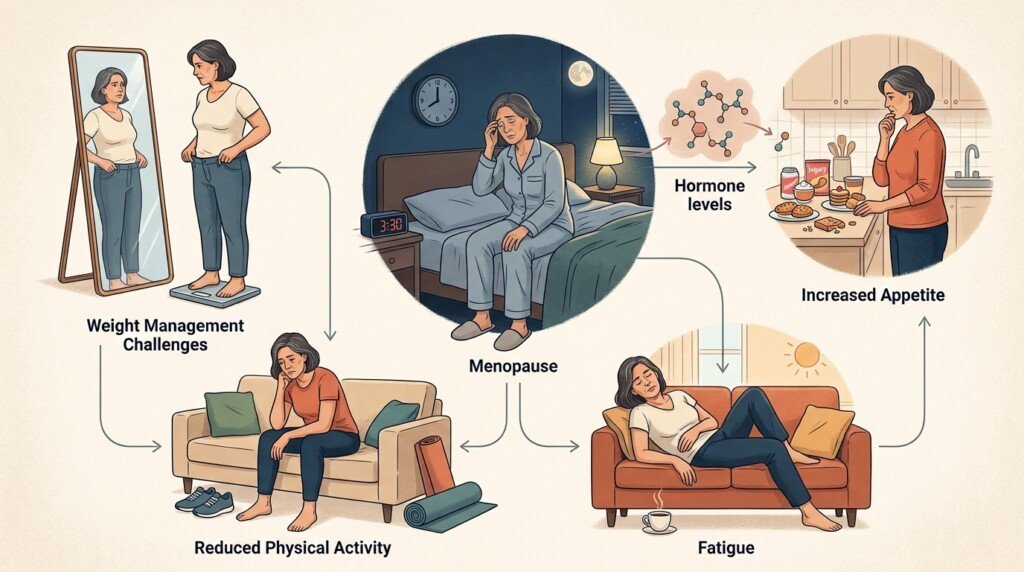
Appetite Often Increases
After a poor night’s sleep, many people notice stronger hunger throughout the day.
This often leads to:
- Larger portions
- More frequent snacking
- Increased cravings
- Reduced satisfaction after meals
These changes make maintaining a moderate calorie deficit more challenging.
Fatigue Reduces Physical Activity
Lack of sleep affects more than appetite.
It also reduces energy for exercise and everyday movement.
Many women notice they are less likely to:
- Walk
- Exercise
- Prepare healthy meals
- Stay active
Reduced daily movement lowers total energy expenditure over time.
Recovery Becomes Less Effective
Sleep is when your body performs much of its repair and recovery.
Poor sleep may reduce recovery after exercise, making future workouts feel more difficult.
Consistent recovery supports long-term fitness progress.
Decision-Making Changes
Sleep deprivation often influences food choices.
Highly processed foods may become more appealing simply because your brain is seeking quick sources of energy.
Planning meals ahead can help reduce these impulsive decisions.
Weight Management Becomes More Difficult
Poor sleep rarely causes weight gain by itself.
Instead, it creates conditions that make healthy habits harder to maintain.
This is one reason sleep remains an important part of long-term Menopause Weight Loss, alongside balanced nutrition and regular exercise.
Do Night Sweats Affect Sleep Quality?
Night sweats are one of the most common reasons women wake during menopause.
Although not every woman experiences them, they can significantly reduce sleep quality.

Night Sweats Interrupt Sleep Cycles
A sudden feeling of intense warmth often causes women to wake unexpectedly.
These awakenings interrupt the body’s normal progression through different sleep stages.
As a result, you may spend enough hours in bed but still wake feeling tired.
Frequent Waking Reduces Deep Sleep
Deep sleep supports:
- Physical recovery
- Memory
- Immune function
- Muscle repair
Repeated awakenings reduce the amount of restorative sleep your body receives each night.
Bedroom Temperature Matters
A cooler sleeping environment often feels more comfortable during menopause.
Helpful adjustments include:
- Lightweight bedding
- Breathable sleepwear
- Keeping the bedroom cool
- Improving airflow with a fan if desired
Small environmental changes sometimes reduce nighttime discomfort.
Stress May Increase Sleep Disruption
Worrying about poor sleep can itself become part of the problem.
Many women begin anticipating another difficult night, making relaxation more challenging.
Developing calming bedtime routines helps interrupt this cycle.
Night Sweats Affect More Than Sleep
Repeated nighttime waking may contribute to:
- Daytime fatigue
- Reduced concentration
- Lower exercise motivation
- Greater hunger
- Mood changes
Addressing sleep quality therefore supports many aspects of overall health.
Which Bedtime Habits Improve Sleep?
Healthy sleep begins long before you get into bed.
Creating a consistent evening routine helps prepare both your body and your mind for restful sleep.

Follow a Regular Sleep Schedule
Going to bed and waking at similar times each day supports your natural body clock.
Consistency often matters more than sleeping late after a poor night.
Create a Comfortable Sleep Environment
Your bedroom should encourage relaxation.
Consider:
- A cool room temperature
- Minimal noise
- Comfortable bedding
- Limited light exposure
Small improvements often make falling asleep easier.
Reduce Screen Time Before Bed
Phones, tablets, and televisions may keep your brain mentally stimulated close to bedtime.
Replacing screen time with quiet activities such as reading or gentle stretching may help your body transition toward sleep more naturally.
Avoid Large Late-Night Meals
Heavy meals immediately before bed may make falling asleep less comfortable.
Instead, aim to finish dinner a few hours before bedtime whenever possible.
Develop a Relaxing Evening Routine
Choose calming activities that signal the end of the day.
Examples include:
- Reading
- Deep breathing
- Gentle stretching
- Journaling
- Listening to relaxing music
Repeating these habits consistently helps reinforce healthy sleep patterns.
Many of these practices also support overall Sleep and Metabolic Health, where the relationship between restorative sleep and metabolism is explored further.
Can Better Sleep Support Metabolism?
Sleep is often viewed simply as a time to rest, but your body remains remarkably active throughout the night. During sleep, important processes related to hormone regulation, tissue repair, muscle recovery, and energy balance take place. When sleep quality improves, many aspects of metabolic health improve as well.
Better sleep will not suddenly speed up your metabolism overnight, but it creates the conditions that make healthy weight management much easier.
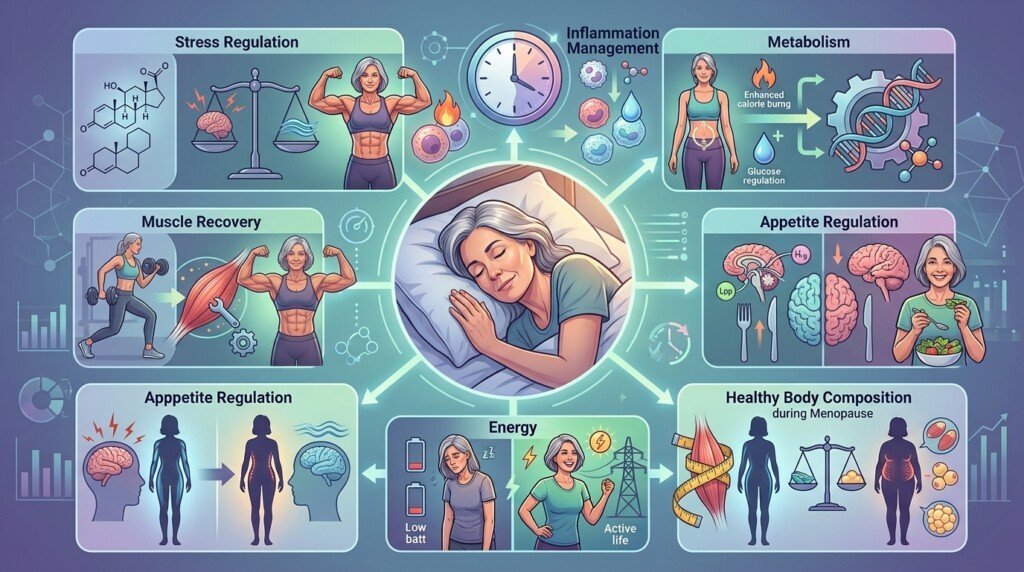
Sleep Supports Appetite Regulation
Your body relies on healthy sleep to regulate hormones involved in hunger and fullness.
When sleep becomes fragmented or consistently too short, many people experience:
- Increased hunger
- Stronger cravings
- Reduced satisfaction after meals
- More frequent snacking
Restorative sleep helps these natural appetite signals function more effectively.
Recovery Supports Muscle Preservation
Exercise creates small amounts of stress on your muscles.
Sleep is when much of the repair process occurs.
Better recovery supports:
- Muscle maintenance
- Physical performance
- Exercise consistency
- Healthy body composition
Because lean muscle contributes to overall energy expenditure, protecting muscle during menopause remains an important part of long-term metabolic health.
Better Sleep Encourages Daily Movement
After a restful night, most people naturally feel more energetic.
This often leads to:
- More walking
- Better workouts
- Increased daily movement
- Higher motivation to stay active
These behaviors contribute to healthier energy balance over time.
Sleep Supports Healthy Metabolism
Healthy sleep works together with nutrition and physical activity.
Rather than acting as a separate strategy, sleep strengthens the effectiveness of every other healthy habit.
Women who prioritize sleep often find it easier to remain consistent with exercise and balanced eating.
Many of these relationships are discussed further throughout Menopause Metabolism, where muscle preservation and daily energy expenditure are explored in greater detail.
Which Lifestyle Changes Help You Sleep Better?
Although menopause introduces new sleep challenges, several simple lifestyle habits can improve sleep quality for many women.
Small improvements practiced consistently often produce meaningful long-term results.

Stay Physically Active
Regular exercise supports healthier sleep.
Walking, resistance training, cycling, swimming, and other enjoyable activities may help improve nighttime rest.
Aim to stay active throughout the day rather than remaining sedentary for long periods.
Get Morning Natural Light
Exposure to daylight shortly after waking helps reinforce your circadian rhythm.
Spending time outdoors during the morning may make it easier to feel sleepy later in the evening.
Even a short walk outside can help support your body’s natural sleep cycle.
Keep Caffeine Earlier in the Day
Caffeine affects everyone differently.
Many women find that limiting coffee, tea, or energy drinks later in the afternoon improves their ability to fall asleep at night.
Pay attention to how your own body responds.
Maintain Healthy Eating Habits
Large meals immediately before bedtime may reduce sleep comfort.
Instead:
- Eat balanced meals during the day.
- Finish dinner a few hours before bedtime when possible.
- Stay hydrated throughout the day.
Healthy eating habits support both sleep quality and long-term weight management.
Practice Relaxation Daily
Relaxation should not begin only after you are already lying in bed.
Build calming habits into your evening routine such as:
- Gentle stretching
- Reading
- Meditation
- Journaling
- Deep breathing
These activities help your body transition toward sleep more naturally.
Manage Stress Throughout the Day
Stress often accumulates gradually.
Rather than waiting until bedtime to relax, look for opportunities to reduce stress throughout the day.
Many women benefit from:
- Walking outdoors
- Mindfulness
- Spending time with family
- Creative hobbies
- Regular breaks during work
These habits complement many of the strategies discussed throughout Stress and Weight Loss, where chronic stress and healthy behavior change are explored further.
Build Consistent Daily Habits
Consistency often matters more than perfection.
Simple daily routines such as eating regular meals, exercising most days, following a consistent bedtime, and managing stress create an environment that supports better sleep for years to come.
These habits also strengthen many of the long-term behaviors discussed throughout Weight Loss Habits, making healthy routines easier to maintain.
When Should You Talk to Your Doctor?
Sleep changes are common during menopause, but persistent or severe problems should not be ignored.
Seeking medical advice helps determine whether additional factors may be affecting your sleep.
Sleep Problems Persist for Several Weeks
Occasional poor nights happen to everyone.
However, if sleep difficulties continue for several weeks despite improving your sleep habits, it is reasonable to seek professional guidance.
Fatigue Affects Daily Life
Persistent tiredness that interferes with work, exercise, concentration, or daily responsibilities deserves medical evaluation.
Night Sweats Become Severe
Frequent night sweats that consistently interrupt sleep and reduce quality of life should be discussed with your healthcare professional.
Weight Changes Continue Despite Healthy Habits
If you consistently follow balanced nutrition, regular exercise, and healthy sleep routines but continue experiencing unexpected weight changes, individualized medical advice may be appropriate.
Focus on Overall Health
Remember that healthy sleep supports much more than weight management.
Better sleep contributes to:
- Heart health
- Mental well-being
- Physical recovery
- Energy
- Healthy aging
- Quality of life
Improving sleep is an investment in your long-term health.

Frequently Asked Questions
1. Why does menopause affect sleep?
Hormonal changes during menopause may contribute to hot flashes, night sweats, circadian rhythm changes, and increased nighttime waking, all of which can reduce sleep quality.
2. Can poor sleep make weight loss harder during menopause?
Yes. Poor sleep may increase hunger, reduce physical activity, impair exercise recovery, and make healthy eating habits more difficult to maintain.
3. Do night sweats affect metabolism?
Night sweats do not directly slow metabolism, but they interrupt restorative sleep, which may indirectly affect appetite regulation, recovery, and long-term weight management.
4. What bedtime habits improve sleep during menopause?
Maintaining a regular sleep schedule, creating a cool sleep environment, reducing evening screen time, practicing relaxation techniques, and avoiding large late-night meals may all improve sleep quality.
5. Can better sleep help with menopause weight loss?
Better sleep supports healthier appetite regulation, exercise recovery, daily energy levels, and consistent healthy habits, all of which contribute to successful long-term weight management.
Final Thoughts
Menopause Sleep and Weight Loss are closely connected because restful sleep influences many of the same systems that regulate appetite, metabolism, recovery, and daily energy levels. While menopause can make sleeping more difficult through hormonal changes, hot flashes, and night sweats, poor sleep is not something you simply have to accept. Small improvements in your evening routine and daily habits can have a meaningful impact on both sleep quality and overall well-being.
Instead of searching for quick solutions, focus on building habits that support restorative sleep. Staying physically active, maintaining a consistent bedtime, creating a comfortable sleep environment, managing stress, and eating balanced meals all work together to improve sleep while making healthy weight management easier. These changes may seem simple, but their combined effect often becomes noticeable over time.
Perhaps the most important lesson is that sleep deserves the same attention as nutrition and exercise. When these three pillars work together, they create a strong foundation for better metabolic health, improved energy, healthier body composition, and successful weight management throughout menopause. By treating quality sleep as an essential part of your wellness routine, you give yourself another powerful tool for navigating menopause with greater confidence and long-term health.
Disclaimer:
This post may contain affiliate links. If you purchase through them, we may earn a small commission at no extra cost to you. Also, this content is for informational purposes only and does not substitute professional medical advice.
Ready to Start Your Journey?
Use our free 7-in-1 Weight Loss Toolkit to calculate your numbers and build your plan in minutes.
Open Free Tools →