
Sleep and Testosterone: Why Rest Matters
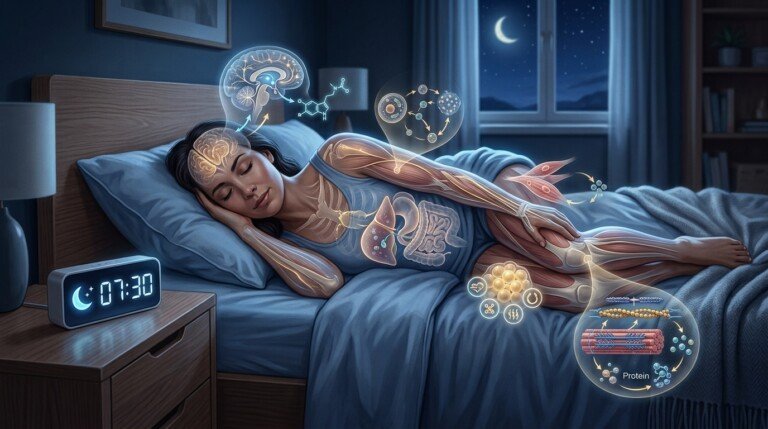
If you are wondering whether Sleep and Testosterone are connected, the short answer is yes. Sleep is not simply the time when your body switches off. It is an active biological process during which several hormonal systems are regulated, including testosterone production.
That does not mean one short night will suddenly cause testosterone deficiency. It also does not mean that sleeping longer automatically produces dramatically higher testosterone. The relationship is more practical than that.
Testosterone naturally changes across the day, and research suggests that sleep itself is an important part of that pattern. In controlled studies, testosterone increased during sleep and declined during waking.
The bigger concern is persistent poor sleep. Regularly cutting sleep short, experiencing fragmented sleep, or dealing with a sleep disorder can interfere with the conditions under which healthy testosterone regulation occurs.
That makes sleep one of the least glamorous but most relevant pieces of men’s hormonal health.
It also explains why someone who feels tired, less motivated, or less interested in sex after weeks of poor sleep should not automatically assume that testosterone is the only problem. Sleep deprivation itself can produce several symptoms that overlap with testosterone deficiency.
Does sleep actually affect testosterone levels?
Yes, sleep can affect testosterone levels, but the relationship is more complicated than the popular claim that “more sleep equals more testosterone.”
Testosterone production follows a daily pattern that is closely connected to sleep and wakefulness. In young men, testosterone secretion tends to rise during sleep and decline while awake. Research has found that this increase occurs during both nighttime and daytime sleep, suggesting that the sleep state itself plays an important role rather than the clock alone.
This matters because testosterone is not produced at one fixed moment every morning.
Instead, hormone production is part of a broader biological rhythm. Sleep, wakefulness, circadian timing, and sleep architecture all interact with that rhythm.
A man who regularly sleeps poorly may therefore be disrupting more than just his energy levels.
When testosterone is produced during sleep
Testosterone secretion is closely linked with the progression of sleep.
Research examining healthy young men found that testosterone increased during sleep and declined during waking. Interestingly, the increase occurred during both nighttime sleep and daytime sleep, although circadian effects were still present. (PubMed)
This helps explain why the common idea that testosterone is “made at 7 AM” is too simplistic.
Your morning testosterone measurement can partly reflect what happened during the preceding night.
If you slept well, your hormone profile may look different from what it would look like after severe sleep restriction or fragmented sleep.
One of the better-known experiments on this subject involved healthy young men who spent one week with approximately five hours of sleep per night. Compared with a well-rested condition, their daytime testosterone levels were about 10% to 15% lower after the restricted sleep period. The study was small, involving only 10 men who completed the protocol, so it should not be interpreted as proof that every man loses exactly that amount of testosterone after a week of poor sleep. (JAMA Network)
Still, the experiment is useful because it demonstrates something important: severe sleep restriction can measurably affect testosterone in healthy men.
The same study also found that participants experienced declining vigor during the sleep-restriction period. That matters because fatigue and reduced energy can easily be mistaken for signs of low testosterone.
The relationship is also not limited to sleep duration.
Sleep fragmentation and obstructive sleep apnea have been associated with lower testosterone levels. A review of sleep and male reproductive health describes insufficient, disrupted, and misaligned sleep as factors associated with problems including low testosterone, erectile dysfunction, and fertility-related outcomes.
So when someone asks whether sleep affects testosterone, the more useful answer is:
Healthy, sufficient, consolidated sleep supports the normal hormonal environment in which testosterone is regulated.
That is different from saying sleep is a testosterone booster.

Is 7 hours of sleep enough?
Seven hours can be enough for some adults, but it should not be treated as a universal testosterone threshold.
The mistake is assuming that there is one magic number at which testosterone becomes optimal.
There is not.
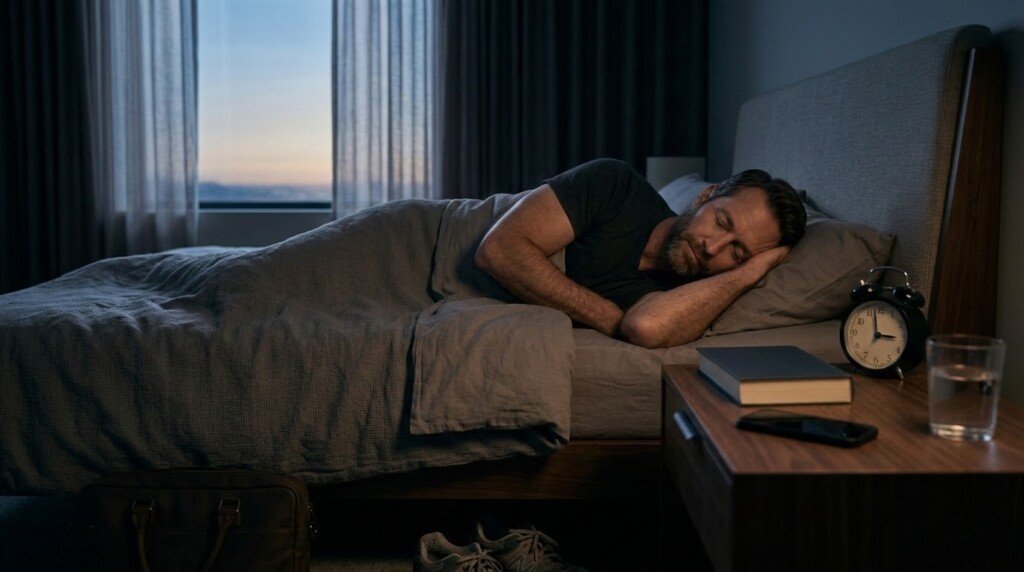
Sleep requirements vary between individuals, and sleep quality matters alongside duration. A person who spends seven hours in bed but wakes repeatedly throughout the night may not experience the same restorative benefit as someone who gets seven hours of relatively uninterrupted sleep.
Current sleep research also continues to examine how sleep duration recommendations should be interpreted across populations. A 2026 systematic review examining a decade of evidence found that sleep-duration recommendations remain an area of active research rather than a simple one-number rule for everyone. (PubMed)
For testosterone specifically, the strongest lesson from the research is not that seven hours is bad or eight hours is automatically better.
It is that chronic sleep restriction is a problem worth taking seriously.
The controlled study of young men provides a useful example. Their sleep was restricted to roughly five hours per night for one week, and testosterone declined compared with their rested condition.
That is very different from occasionally getting seven hours because work ran late.
There is also an important distinction between sleep opportunity and actual sleep.
Someone may give themselves eight hours in bed but sleep only six because of insomnia, stress, noise, alcohol, sleep apnea, or repeated awakenings.
Another person may sleep seven hours efficiently and wake feeling refreshed.
Simply counting hours does not tell the entire story.
What should you focus on instead of chasing a perfect number?
Think in terms of consistency.
If your normal routine leaves you regularly exhausted, struggling to stay awake, or relying heavily on caffeine to function, your sleep may not be adequate for your individual needs.
If you routinely sleep through the night, wake reasonably refreshed, and function normally during the day, there is no reason to assume that you need to force yourself into a specific sleep duration simply because an online testosterone article recommends it.
This is especially relevant for men who worry that they are losing testosterone.
Poor sleep can cause tiredness, reduced concentration, lower motivation, and changes in sexual interest even without clinically low testosterone.
That overlap can make self-diagnosis unreliable.
If you are experiencing persistent symptoms that concern you, Low Testosterone Symptoms: How to Tell explains why symptoms should be evaluated alongside appropriate testing rather than used as a diagnosis on their own.
What happens to testosterone with poor sleep?
Poor sleep can affect testosterone through several overlapping pathways.
The most obvious is simply not getting enough sleep.
But fragmented sleep, irregular schedules, circadian disruption, and sleep disorders can also matter.
The body does not treat sleep as passive downtime. Hormonal signaling, metabolism, nervous-system activity, immune function, and tissue recovery all change during sleep.
When sleep becomes consistently disrupted, those systems can become less stable.
A small controlled study illustrates the point clearly. Healthy young men who had their sleep restricted to approximately five hours per night for one week experienced a 10% to 15% reduction in daytime testosterone compared with their rested condition. They also reported progressively lower vigor.
The study was not designed to show what happens to every man with an occasional bad night. It examined significant sleep restriction under controlled conditions.
That distinction matters.
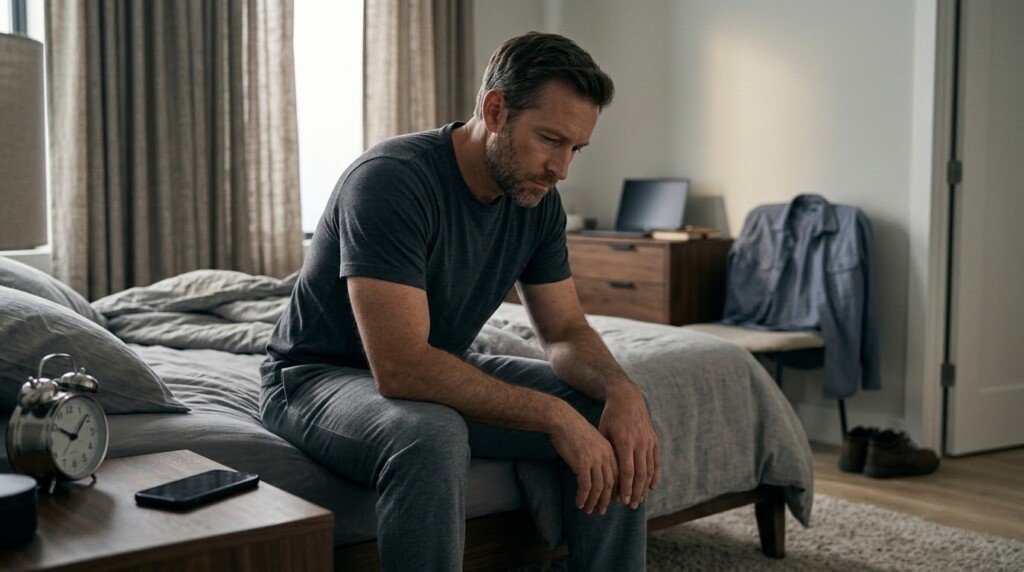
Sleep deprivation is not the same as testosterone deficiency
This is one of the most important distinctions in the entire topic.
A man who sleeps badly may experience:
- Low energy
- Poor concentration
- Reduced motivation
- Sleepiness
- Lower sexual interest
- Worse mood
- Reduced exercise performance
Those symptoms can overlap with testosterone deficiency.
Therefore, waking up exhausted after several weeks of poor sleep does not automatically mean your testosterone is low.
It may mean your sleep is poor.
That sounds obvious, but it is an important distinction because testosterone is heavily marketed online as the explanation for almost every unwanted change in men’s energy, body composition, and sexual health.
Sometimes the more useful intervention is not a hormone.
It is addressing the sleep problem.
What about sleep apnea?
Sleep apnea deserves special attention because it can interfere with normal sleep architecture.
Obstructive sleep apnea causes repeated interruptions in breathing during sleep. A person may not remember waking up, but the body can repeatedly move out of deeper sleep states as it responds to disrupted breathing.
Research has found an association between obstructive sleep apnea and lower testosterone, although the relationship is complex and not every study produces identical results. A 2023 systematic review and meta-analysis examined 24 case-control studies involving more than 2,000 participants and evaluated the relationship between obstructive sleep apnea and serum testosterone. (PubMed)
The practical point is more important than the exact biological explanation.
If you regularly snore loudly, wake choking or gasping, experience repeated nighttime awakenings, have morning headaches, or feel excessively sleepy during the day, the possibility of sleep apnea deserves medical attention.
Treating an underlying sleep disorder is fundamentally different from taking a testosterone supplement.
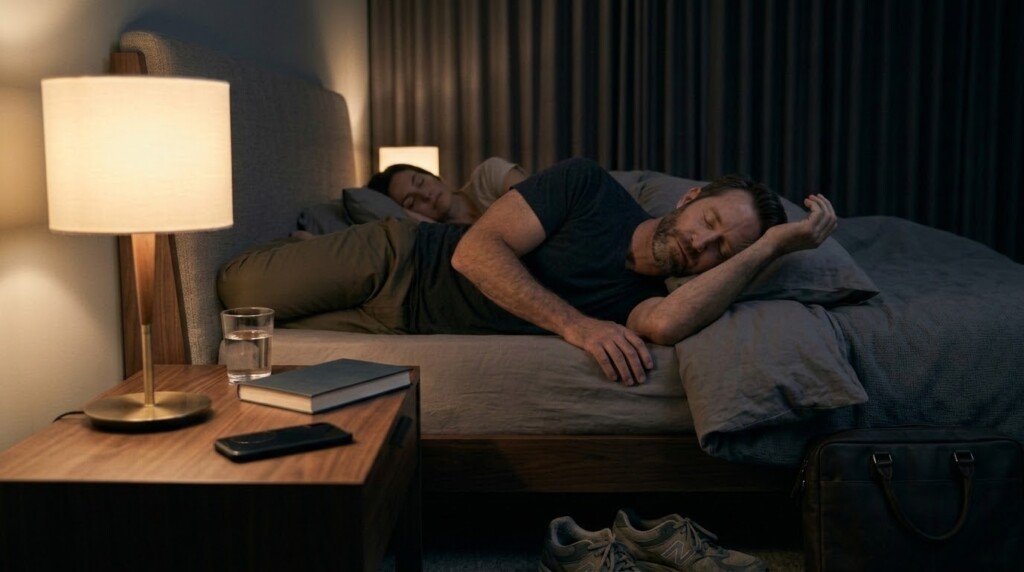
Why fragmented sleep matters
You can technically spend eight hours in bed without getting eight hours of healthy sleep.
Imagine someone who goes to bed at 10:30 PM and gets out of bed at 6:30 AM.
On paper, that is eight hours.
But suppose the person wakes repeatedly because of snoring, anxiety, an uncomfortable environment, late-night alcohol, or breathing interruptions.
The clock says eight hours.
The body experienced something else.
This is why sleep quality should not be reduced to a stopwatch.
Sleep architecture also matters. Testosterone secretion is linked with sleep stages and overall sleep organization, making fragmented or disrupted sleep relevant even when total time in bed looks adequate. Reviews of sleep and reproductive hormones support this broader relationship between sleep quality and testosterone regulation.
What about cortisol?
Cortisol and testosterone are often presented online as if they are locked in a simple tug-of-war.
Real physiology is more complicated.
The sleep-restriction experiment discussed earlier did not find a significant increase in cortisol despite the testosterone reduction.
That does not mean stress hormones are irrelevant to men’s health.
It means you should be skeptical of simplistic claims such as “poor sleep raises cortisol, which immediately destroys testosterone.”
Hormonal systems interact, but they do not operate like two competing switches.
The practical takeaway remains much simpler: chronic sleep disruption is not a good environment for healthy hormonal function.
What sleep habits actually raise testosterone?
There is no bedtime trick that reliably creates a dramatic testosterone surge.
Sleeping naked does not have a proven special testosterone-boosting effect. Neither does sleeping in a particular position, buying an expensive mattress, or following a viral “testosterone sleep hack.”
The useful habits are considerably less exciting.
They involve protecting consistent, sufficient, high-quality sleep.
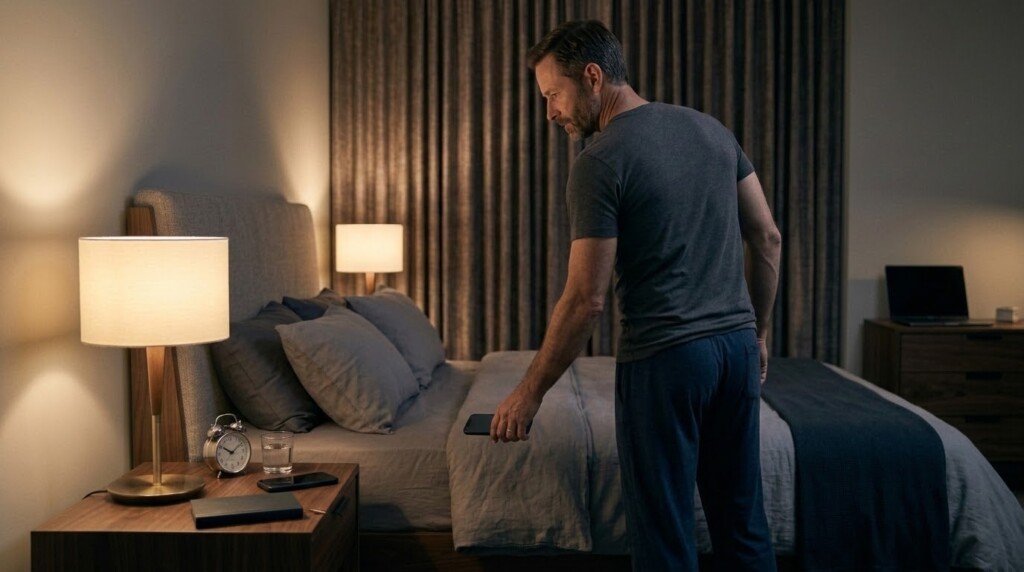
Keep a reasonably consistent sleep schedule
Your body responds to regular patterns.
Going to bed and waking up at roughly consistent times can make it easier to maintain a stable sleep-wake rhythm.
That does not mean you need to go to bed at precisely the same minute every night.
The goal is to avoid a constant cycle of sleeping at one time on weekdays, staying awake several extra hours on weekends, then trying to compensate later.
A stable routine gives your body a more predictable environment for sleep.
Give yourself enough opportunity to sleep
If you routinely have to choose between another hour of work and another hour of sleep, sleep should not automatically be the thing you sacrifice.
The evidence does not support a single universal “testosterone sleep number.”
It does, however, provide reason to avoid chronic severe restriction. In the controlled JAMA study, cutting sleep to roughly five hours per night for a week was enough to produce a measurable testosterone reduction in the small group studied. (JAMA Network)
Seven hours may be adequate for some men.
Others may need more.
The important question is whether your normal sleep pattern allows you to function well without persistent daytime sleepiness.
Make your bedroom boring
This is one situation where boring is useful.
A dark, quiet, comfortable bedroom makes sleep easier than a bright room with television noise, constant phone notifications, and an uncomfortable temperature.
You do not need an expensive “biohacking” bedroom.
Basic environmental control is often enough.
Keep the room dark.
Reduce unnecessary noise.
Put the phone away if notifications repeatedly wake you.
Keep the temperature comfortable.
Make the bed a place associated with sleep rather than hours of scrolling.
These habits do not directly “boost testosterone” in the way a supplement advertisement might suggest.
They improve the conditions needed for healthy sleep.
That distinction matters.
Be careful with late-night stimulation
Phones and other screens are often blamed for testosterone problems, but the more defensible concern is their effect on sleep behavior.
Scrolling can push bedtime later.
Work emails can keep the brain engaged.
Social media can make it difficult to disengage.
Streaming can turn a planned 30-minute break into a two-hour delay.
The problem is often not that a screen is magically lowering testosterone.
It is that the screen keeps you awake.
If you regularly sacrifice sleep because of late-night digital habits, changing that behavior is much more relevant than buying a product marketed as a testosterone booster.
Watch alcohol and other sleep disruptors
Alcohol can make some people feel sleepy initially while still disrupting sleep quality later in the night.
If you consistently wake during the night after drinking, that pattern is worth noticing.
Again, the point is not that one drink automatically lowers testosterone.
The larger issue is whether a repeated habit is interfering with the quality and continuity of your sleep.
Treat persistent sleep problems as health problems
If you have persistent insomnia, loud snoring, breathing interruptions, restless sleep, or severe daytime sleepiness, do not reduce the problem to “I need more testosterone.”
The underlying sleep problem deserves attention.
A 2019 clinical review concluded that abnormal sleep is associated with several aspects of men’s health, including low testosterone and erectile dysfunction, while also emphasizing the complexity and bidirectional nature of these relationships. (PubMed)
That is a more useful way to think about the subject.
Sleep is not simply a testosterone treatment.
It is part of the environment in which your entire body operates.
What about naps?
Napping is an interesting case.
A nap can help reduce sleepiness and may be useful when nighttime sleep has been insufficient.
But there is not strong evidence that taking a nap should be viewed as a reliable testosterone-boosting strategy.
Research showing testosterone rising during sleep demonstrates that sleep itself is relevant, but it does not establish that adding a short daytime nap produces a meaningful testosterone increase in otherwise well-rested men.
If a nap helps you function better, that can be useful.
If you need long naps every day because you cannot stay awake, however, the better question may be why your nighttime sleep is not restorative.
A nap should not become a way of masking a persistent sleep problem.
What raises testosterone the fastest?
There is no responsible answer that involves a guaranteed rapid testosterone increase from a sleep trick.
Claims about a particular sleeping position, sleeping naked, a specific bedtime, or one “perfect” number of hours should be treated cautiously.
Healthy sleep supports normal physiology.
It is not a shortcut around medical testosterone deficiency.
If repeated testing confirms low testosterone alongside compatible symptoms, the appropriate next step is medical evaluation rather than trying to manipulate sleep for a dramatic hormonal spike.
Frequently Asked Questions
1. Do you get more testosterone from sleeping?
Sleep is closely associated with testosterone production. Research in healthy men has found testosterone increasing during sleep and declining during waking. However, this does not mean that simply sleeping longer will automatically produce a large testosterone increase. Sleep quality, duration, timing, and individual factors all matter.
2. Is 7 hours of sleep enough for testosterone?
Seven hours may be adequate for some men, but there is no universal seven-hour testosterone threshold. Consistently severe sleep restriction is more clearly concerning. In a small controlled study, healthy young men restricted to about five hours of sleep per night for one week experienced lower daytime testosterone than when rested.
3. What lowers testosterone the most?
There is no single factor that lowers testosterone the most in every man. Persistent sleep restriction, sleep disorders, certain medical conditions, medications, obesity, and other factors can all contribute to lower testosterone. The cause matters more than ranking one factor above everything else.
4. Does napping boost testosterone?
There is not enough evidence to recommend naps specifically as a testosterone-boosting strategy. Sleep itself is linked with testosterone secretion, but research showing testosterone changes during sleep does not prove that adding a short nap will meaningfully increase testosterone in a well-rested man.
The Better Way to Think About Sleep and Testosterone
The internet tends to turn men’s hormone health into a competition.
Sleep eight hours and “boost testosterone.”
Sleep naked and “raise testosterone.”
Wake up early and “increase testosterone.”
Take a cold shower and “maximize testosterone.”
Most of these claims take a small piece of physiology and stretch it into a promise.
The reality is less dramatic and more useful.
Sleep and Testosterone are connected because testosterone production is intertwined with the normal sleep-wake cycle.
But sleep is not a magic hormone switch.
If you regularly sleep five hours, wake repeatedly throughout the night, or have untreated sleep apnea, improving sleep may address an important part of your health.
If you already sleep well, adding another hour solely because you expect a dramatic testosterone increase may not produce the result you are imagining.
And if you have persistent symptoms that make you concerned about testosterone, do not try to diagnose yourself from sleep quality alone.
Low testosterone requires a proper clinical assessment and appropriate testing.
The most sensible goal is therefore not to chase the highest possible testosterone number.
It is to build a sleep routine that gives your body a reliable opportunity to perform the biological work that sleep is designed to support.
That means consistent sleep, enough sleep for your individual needs, fewer unnecessary disruptions, and medical attention when sleep problems persist.
Your hormones do not need a viral hack.
They need a healthy environment in which normal physiology can happen.
Disclaimer:
This post may contain affiliate links. If you purchase through them, we may earn a small commission at no extra cost to you. Also, this content is for informational purposes only and does not substitute professional medical advice.
Know Your Body Better
Use our free tools to track your cycle, find your fertile window, estimate your due date, and more.
Open Free Tools →