Types of Food Cravings (Sweet, Salty, Fatty, Non-Food & More)
Have you ever noticed that your cravings seem to follow a pattern? Some days you want chocolate, other times you cannot stop thinking about salty chips, and occasionally you may crave foods that don’t seem related at all. While cravings often feel random, they usually fall into recognizable categories.
Understanding the types of food cravings is one of the easiest ways to better understand your own eating behaviors.
Not every craving has the same cause.
A craving for chocolate may develop for very different reasons than a craving for salty popcorn. Likewise, someone who constantly wants crunchy foods may not experience the same biological or psychological triggers as someone who prefers creamy desserts.
Recognizing these differences helps explain why there is no single solution that works for every craving.
Most cravings are completely normal and reflect a combination of biology, emotions, habits, memories, environment, and personal food preferences. However, there is one important exception. Cravings for non-food items such as ice, clay, paper, or dirt can sometimes indicate a medical condition that deserves prompt evaluation.
This article provides a practical overview of the major types of food cravings, explains what makes each category unique, and highlights situations where professional medical advice may be appropriate.
Quick Answer
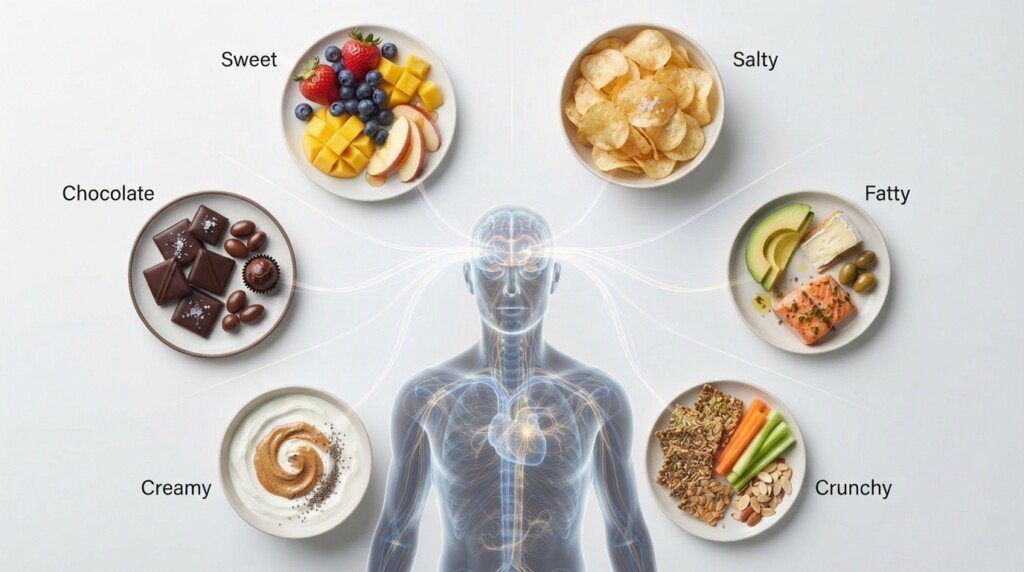
The most common types of food cravings include sweet, salty, fatty, savory, chocolate, crunchy, creamy, and comfort food cravings. Most are influenced by a combination of habits, hormones, emotions, and food preferences. Non-food cravings, known as pica, are different and may require medical evaluation because they can sometimes be linked to underlying health conditions.
What Are the Most Common Types of Food Cravings?
Although thousands of individual foods can be craved, most cravings fit into several broad categories.
Understanding these categories makes it easier to recognize patterns rather than viewing every craving as a completely separate event.
Researchers generally describe cravings based on the type of food desired rather than assuming one universal cause.
Sweet Cravings
Sweet cravings are among the most frequently reported worldwide.
Common examples include:
- Chocolate
- Ice cream
- Cookies
- Cake
- Candy
- Doughnuts
- Sweet coffee drinks
Sweet foods often become associated with celebrations, rewards, relaxation, or daily routines.
The biological reasons behind sugar cravings are discussed separately in Why Do I Crave Sugar So Much?, since they involve unique hormonal and metabolic factors.
Salty Cravings
Some people rarely crave sweets but frequently think about foods high in salt.
Examples include:
- Potato chips
- Pretzels
- Salted popcorn
- Salted nuts
- French fries
Salty cravings often appear differently from sweet cravings because they involve different taste preferences and eating habits.
Fat-Rich Cravings
Foods high in fat are also commonly craved.
Examples include:
- Pizza
- Cheeseburgers
- Fried chicken
- Pastries
- Creamy pasta
- Cheese
Many highly craved foods actually combine fat with refined carbohydrates, making them particularly satisfying.
Savory Cravings
Savory cravings focus more on rich flavors than sweetness.
Examples include:
- Steak
- Roasted meats
- Soup
- Cheese
- Pizza
- Umami-rich foods
These cravings often reflect taste preferences more than simple hunger.
Crunchy Food Cravings
Sometimes texture becomes the primary attraction.
People may crave:
- Chips
- Crackers
- Popcorn
- Toast
- Crispy vegetables
The sensory experience itself becomes rewarding.
Creamy Food Cravings
Other people prefer smooth textures.
Examples include:
- Ice cream
- Yogurt
- Cheesecake
- Pudding
- Mashed potatoes
Texture can influence satisfaction just as much as flavor.
Comfort Food Cravings
Comfort foods differ between individuals because they are strongly shaped by personal memories.
Examples include:
- Family recipes
- Childhood desserts
- Holiday meals
- Cultural favorites
These foods often carry emotional meaning beyond nutrition.
What Are the Differences Between Cravings for Sweet, Salty, and Fatty Foods?
Although these three categories are often discussed together, they are not identical.
Each tends to have different influences.
Sweet Cravings
Sweet cravings often involve:
- Dessert habits
- Learned routines
- Reward associations
- Blood sugar regulation
- Hormonal influences
Because this topic deserves its own detailed discussion, it is covered separately in Why Do I Crave Sugar So Much?
Salty Cravings
Salty foods appeal because of their strong flavor profile and satisfying crunch.
For many people, salty snacks become associated with:
- Television
- Sporting events
- Social gatherings
- Relaxation
These learned experiences reinforce future cravings.
Fat-Rich Cravings
Foods rich in fat tend to provide prolonged satisfaction while also delivering enjoyable textures and flavors.
Many commonly craved foods actually combine fat with sugar or refined carbohydrates.
Examples include:
- Ice cream
- Doughnuts
- Pizza
- Pastries
This combination often explains why these foods are remembered so vividly.
Cravings Often Overlap
People rarely crave one nutrient in isolation.
Instead of craving “fat,” someone usually craves pizza.
Instead of craving “salt,” they think about chips.
Instead of craving “sugar,” they imagine chocolate cake.
This distinction matters because cravings involve memories, habits, and experiences rather than isolated nutrients.
How Do Cravings Differ Between Individuals?
One of the most fascinating aspects of food cravings is how personal they are.
Two people exposed to the same stressful situation may crave completely different foods.
For example:
Person A:
- Chocolate
- Brownies
- Ice cream
Person B:
- Pizza
- French fries
- Chips
Person C:
- Bread
- Pasta
- Popcorn
Why?
Because cravings develop from unique combinations of:
- Childhood experiences
- Cultural background
- Family eating habits
- Personal memories
- Food availability
- Emotional associations
- Daily routines
There is no universal craving profile.
This is one reason personalized approaches to understanding cravings often work better than one-size-fits-all advice.
What Are the Most Common Non-Food Cravings?
Not every craving involves food.
Some people experience persistent urges to eat or chew substances that have no nutritional value.
Unlike ordinary food cravings, these should never be dismissed as simple preferences.

What Is Pica and What Causes Non-Food Cravings?
The medical term pica describes repeated cravings for non-food substances.
Examples include:
- Ice
- Clay
- Dirt
- Chalk
- Paper
- Laundry starch
- Soap
Pica differs completely from ordinary food cravings.
It is recognized as a medical condition rather than a normal variation in appetite.
Researchers continue studying why pica develops.
Several possible contributing factors include:
- Certain nutritional deficiencies
- Pregnancy
- Developmental conditions
- Mental health conditions
- Other medical disorders
Not every case has the same explanation.
Because of this complexity, professional medical evaluation is important.
Ice Craving Deserves Special Attention
One of the most commonly reported forms of pica is craving ice.
Repeatedly chewing large amounts of ice has been associated with iron deficiency in some individuals.
However, not everyone who enjoys chewing ice has iron deficiency.
Only appropriate medical evaluation can determine the underlying cause.
Pica Is Different From Curiosity
Children occasionally place non-food objects in their mouths while exploring their environment.
This is developmentally normal.
Pica refers to persistent, repeated consumption of non-food substances beyond what would be expected for age.
When Do Non-Food Cravings Signal a Health Concern?
Unlike cravings for chocolate or salty snacks, persistent cravings for non-food items should always be taken seriously.
Medical evaluation is especially important if someone regularly consumes:
- Dirt
- Clay
- Paint
- Paper
- Soap
- Hair
- Chalk
- Laundry starch
These substances may:
- Damage teeth.
- Injure the digestive tract.
- Cause poisoning.
- Lead to intestinal blockage.
- Introduce harmful chemicals.
- Reflect an underlying nutritional or medical condition.
Because pica has many possible causes, self-diagnosis is not appropriate.
Persistent non-food cravings should always be discussed with a qualified healthcare professional.
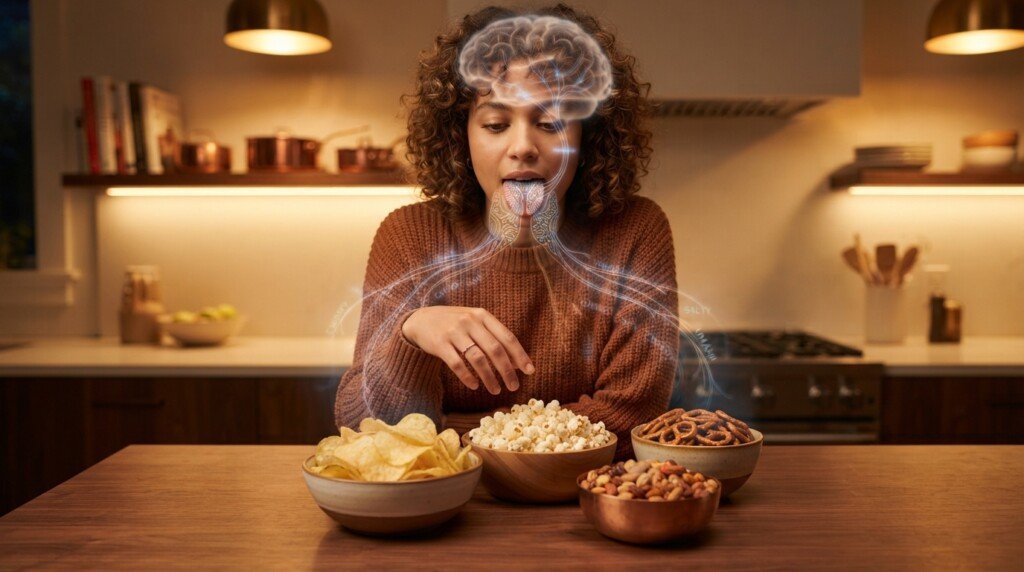
Why Do People Crave Salty Snacks?
Sweet foods receive most of the attention, but salty cravings are just as common.
Many people find themselves reaching for potato chips, pretzels, popcorn, fries, salted nuts, or crackers even when they are not particularly hungry.
Unlike sweet cravings, salty cravings often revolve around flavor intensity, crunch, and satisfaction rather than dessert.
Although researchers continue studying why salty cravings occur, there is rarely one single explanation.
Instead, they usually reflect a combination of physiology, habits, environment, and personal food preferences.
Salt Is an Essential Nutrient
Unlike sugar, sodium performs several important biological functions.
It helps regulate:
- Fluid balance
- Nerve function
- Muscle contraction
- Blood pressure regulation
Because sodium is essential, the body has systems that help maintain appropriate levels.
However, this does not mean every salty craving reflects a physiological need for sodium.
Most everyday salty cravings are better explained by learned behaviors and eating patterns than by true sodium deficiency.
Habit Plays a Major Role
Many salty foods are linked to specific situations.
For example:
- Popcorn during movies.
- Chips while watching sports.
- Pretzels during travel.
- Salted snacks during social gatherings.
Over time, these repeated experiences create strong mental associations.
Eventually, simply sitting down to watch a movie may trigger popcorn cravings regardless of physical hunger.
Texture Can Be Just as Important as Flavor
Many salty foods share another characteristic.
They are crunchy.
Crunchy foods provide sensory satisfaction beyond taste alone.
The sound, texture, and mouthfeel become part of the craving itself.
This explains why someone craving potato chips may not feel equally satisfied by another salty food with a softer texture.
Lifestyle Factors Can Influence Salty Cravings
Some everyday situations may increase awareness of salty foods, including:
- Long, busy workdays.
- Eating while distracted.
- Emotional stress.
- Habitual snacking.
- Highly processed food environments.
These situations do not necessarily create sodium deficiency.
Instead, they often increase exposure to familiar snack routines.
When Might Salty Cravings Need Attention?
Occasional cravings for salty foods are completely normal.
However, if salty cravings become unusually intense, persistent, or occur alongside symptoms such as dizziness, unexplained fatigue, persistent thirst, or other concerning health changes, discussing them with a healthcare professional may be appropriate.
Medical conditions, medications, and other health factors can sometimes influence appetite and taste preferences.
Why Do Cravings for Chocolate Occur Specifically?
Chocolate occupies a unique place among food cravings.
Across many countries and cultures, it consistently ranks among the most frequently craved foods.
Interestingly, people often crave chocolate specifically rather than simply craving something sweet.
This suggests chocolate cravings involve more than sugar alone.

Chocolate Is a Multi-Sensory Food
Chocolate combines several characteristics people naturally enjoy.
Depending on the product, it may contain:
- Sweetness.
- Creaminess.
- Fat.
- Rich aroma.
- Smooth texture.
Because several rewarding sensory experiences occur together, chocolate becomes highly memorable.
Many people also associate chocolate with:
- Celebrations.
- Gifts.
- Holidays.
- Relaxation.
- Comfort.
- Personal rewards.
These positive memories strengthen future cravings.
Emotional Associations Matter
Chocolate is frequently used to celebrate achievements or improve mood.
Examples include:
- Receiving chocolate as a gift.
- Eating chocolate after difficult days.
- Sharing desserts with family.
- Celebrating birthdays.
Repeated experiences gradually strengthen emotional associations.
Eventually, simply feeling stressed or tired may remind the brain of chocolate.
This does not necessarily indicate that chocolate contains something the body specifically requires.
Instead, it reflects the powerful relationship between memory and eating behavior.
Hormonal Changes May Influence Chocolate Cravings
Some individuals notice stronger chocolate cravings during periods of hormonal fluctuation.
Researchers continue studying these relationships.
Current evidence suggests hormonal changes may influence appetite and food preferences, although the exact reasons vary between individuals.
Hormones represent only one part of the overall picture.
Habits, emotions, environment, and cultural experiences also contribute.
Chocolate Is Not the Same as Sugar Cravings
Although chocolate contains sugar, chocolate cravings deserve separate consideration.
Many people specifically want chocolate rather than:
- Candy.
- Cake.
- Soft drinks.
- Cookies.
This distinction suggests that flavor, aroma, texture, and personal experiences all contribute to chocolate cravings.
Readers interested specifically in sweet food cravings can explore Why Do I Crave Sugar So Much?, which examines the biology behind sugar cravings in greater detail.
Key Takeaways
| Craving Type | Common Characteristics |
|---|---|
| Sweet | Often influenced by habits, hormones, meal patterns, and personal preferences. |
| Salty | Frequently associated with crunchy snacks, routines, and sensory satisfaction rather than sodium deficiency. |
| Fat-rich | Commonly involves comfort foods combining fat with refined carbohydrates. |
| Chocolate | Influenced by flavor, texture, memories, emotions, and hormonal changes. |
| Non-food (Pica) | Persistent cravings for substances like ice, clay, or dirt require medical evaluation. |
Frequently Asked Questions
1. What are the most common food cravings?
The most common food cravings include sweet foods, salty snacks, chocolate, fatty foods, savory meals, crunchy snacks, creamy foods, and comfort foods. Individual preferences vary widely.
2. What causes non-food cravings?
Persistent cravings for non-food substances are known as pica. They may be associated with nutritional deficiencies or other medical conditions and should always be evaluated by a healthcare professional.
3. Why do I crave salty snacks?
Salty snack cravings are often influenced by habits, texture, personal preferences, and eating routines rather than an actual need for sodium.
4. Why is chocolate one of the most commonly craved foods?
Chocolate combines sweetness, fat, creaminess, aroma, and positive emotional associations, making it one of the most memorable and frequently craved foods.
5. Are all food cravings a sign of poor nutrition?
No. Most food cravings are a normal part of eating behavior and are influenced by a combination of biology, emotions, habits, memories, and environment rather than poor nutrition alone.
Conclusion
Understanding the different types of food cravings makes it easier to recognize that not all cravings have the same cause. A desire for salty chips, rich chocolate, creamy desserts, or crunchy snacks may reflect completely different biological signals, personal habits, emotional experiences, or sensory preferences. Looking at cravings through this broader lens provides a more accurate picture than assuming every craving points to a single nutrient or health problem.
While most food cravings are a normal part of everyday life, persistent cravings for non-food substances should always be treated differently. Conditions such as pica deserve medical attention because they may indicate an underlying health concern rather than an ordinary food preference.
By recognizing the category your cravings belong to, you can better understand the factors that may be influencing them. The remaining articles in this content cluster explore specific craving types in greater detail, helping you examine their unique causes without assuming that every craving follows the same pattern.
Disclaimer:
This post may contain affiliate links. If you purchase through them, we may earn a small commission at no extra cost to you. Also, this content is for informational purposes only and does not substitute professional medical advice.
Fuel Your Body Right
Use our free Nutrition Toolkit to find your protein target, fasting window, and net carbs in minutes.
Open Free Tools →