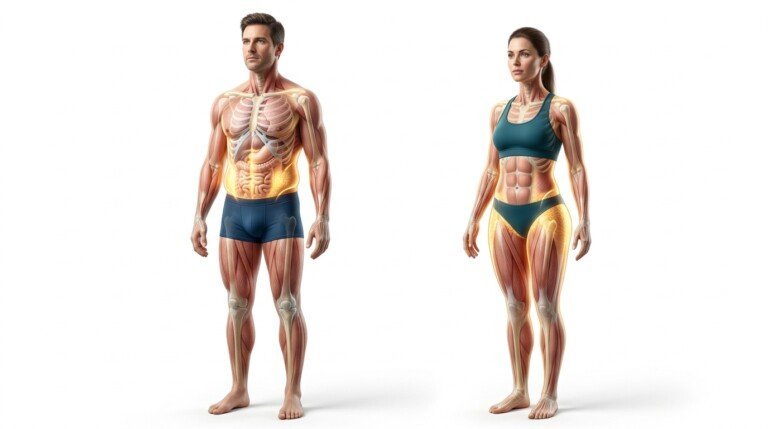

Where Does Your Body Get Energy in a Calorie Deficit? The Science Explained
You eat fewer calories than your body needs, yet you continue breathing, walking, thinking, exercising, and carrying out thousands of biological processes every day. Have you ever wondered where all that energy comes from when you’re not eating enough to meet your daily needs?
The answer lies in the remarkable way your body manages its energy reserves.
Where Does Your Body Get Energy in a Calorie Deficit is a question that goes beyond weight loss. It explains how your body decides whether to use carbohydrates, stored glycogen, body fat, or even protein to keep you alive and functioning. Rather than relying on a single fuel source, your body constantly switches between different energy systems depending on your activity level, nutrition, and overall energy balance.
Understanding these processes helps explain why fat loss takes time, why glycogen is important, how fat oxidation works, and why preserving muscle matters during a calorie deficit.
In this article, you’ll explore the science behind the body’s fuel selection, the role of glycogen and body fat, when stored fat becomes the primary energy source, and how different nutrients contribute to keeping your body running during weight loss.
Quick Answer
Where Does Your Body Get Energy in a Calorie Deficit depends on the body’s available fuel stores. Initially, it uses carbohydrates and stored glycogen along with body fat. As the calorie deficit continues, fat oxidation contributes more energy, while the body also works to preserve lean muscle whenever possible through normal metabolic adaptations.
Where Does Your Body Get Energy During a Calorie Deficit?
The human body requires energy every second of the day.
Even while sleeping, calories are needed to support:
- Breathing
- Heart function
- Brain activity
- Body temperature
- Cellular repair
- Hormone production
When food provides fewer calories than your body requires, stored energy helps make up the difference.
The Body Uses Multiple Fuel Sources
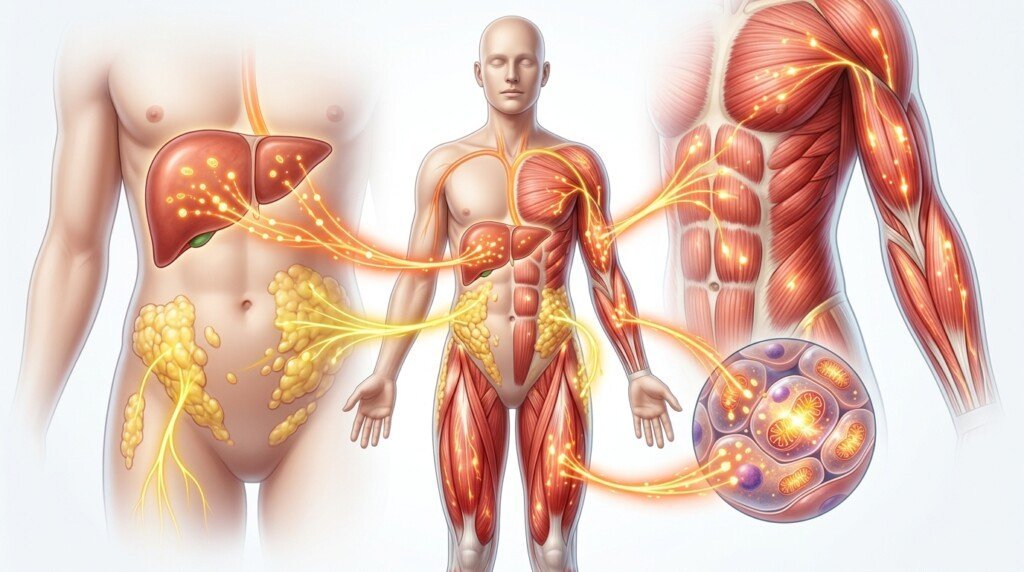
Contrary to popular belief, the body does not rely on only one fuel source at a time.
Instead, it continuously draws energy from a combination of:
- Carbohydrates
- Body fat
- Small amounts of protein
The proportion changes depending on factors such as:
- Activity level
- Exercise intensity
- Nutrition
- Duration of the calorie deficit
This flexibility allows the body to maintain a stable supply of energy throughout the day.
ATP Is the Body’s Energy Currency
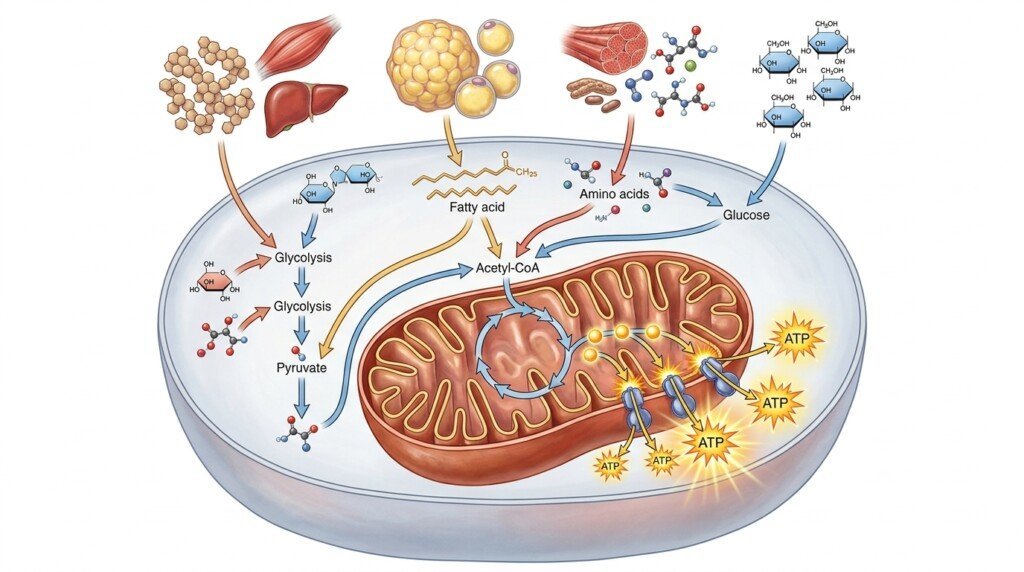
Regardless of whether energy comes from carbohydrates, fats, or protein, cells ultimately convert these nutrients into ATP (adenosine triphosphate).
ATP is the immediate source of energy used for virtually every biological process.
Inside tiny structures called mitochondria, nutrients are broken down to produce ATP, which powers everything from muscle contractions to brain function.
Readers interested in the broader process of energy production may also enjoy Metabolism, which explains how calories become usable energy.
Does Your Body Burn Glycogen Before Fat?
This is one of the most common questions in nutrition.
The simple answer is no.
Your body does not completely use up glycogen before it begins burning fat.
Instead, both fuel sources contribute energy at the same time.
The proportion simply shifts depending on your body’s needs.
What Is Glycogen?
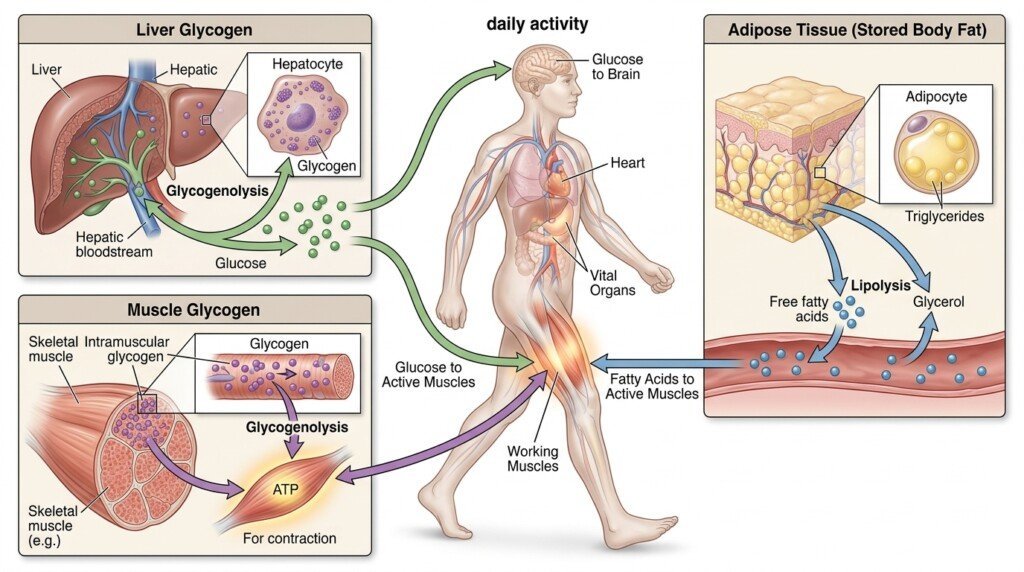
Glycogen is the storage form of carbohydrates.
It is stored primarily in:
- The liver
- Skeletal muscles
These stores provide a readily available source of glucose whenever additional energy is required.
Liver Glycogen and Muscle Glycogen Have Different Jobs
Although both store carbohydrates, they serve different functions.
Liver glycogen helps maintain normal blood glucose levels, supplying energy to organs such as the brain.
Muscle glycogen provides energy directly to working muscles during physical activity.
Because these stores serve different purposes, the body regulates them differently.
Fat Is Always Being Used Too
Even while glycogen contributes energy, fat oxidation continues to occur.
At lower exercise intensities and during rest, body fat often provides a larger proportion of total energy.
During higher-intensity activity, carbohydrate use generally increases because glycogen can supply energy more rapidly.
Readers interested in the biological process of fat use may also enjoy How Fat Burning Works, which explores these mechanisms in greater detail.
When Does Your Body Start Using Stored Fat?
Your body begins using stored fat much earlier than many people realize.
It does not wait until glycogen stores are completely empty.
Instead, stored fat contributes to energy production throughout the day.
Fat Is Stored for Future Energy
Body fat serves as the body’s largest long-term energy reserve.
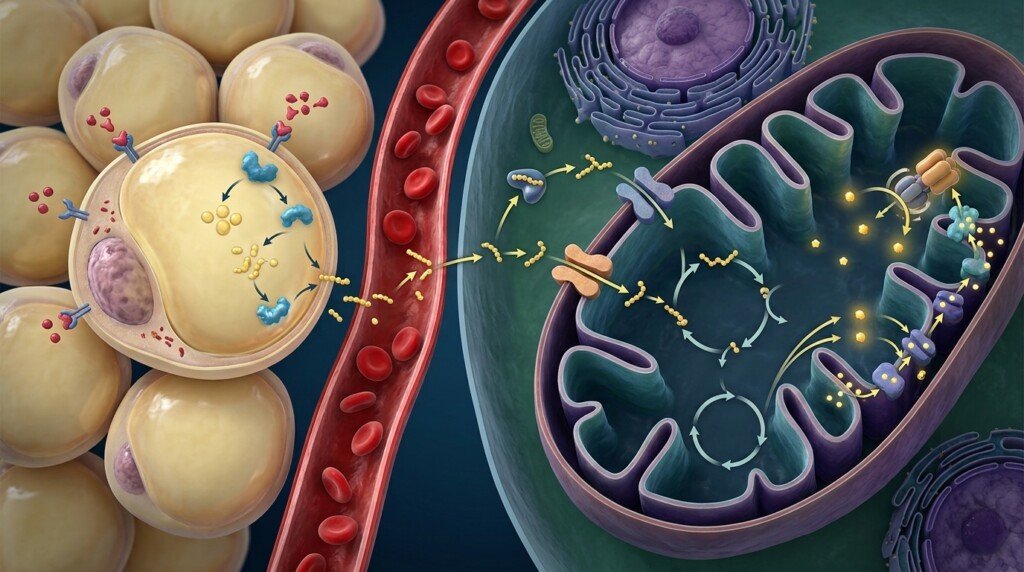
When calorie intake falls below energy needs, stored triglycerides inside fat cells become an important source of fuel.
Lipolysis Releases Stored Fat
Before fat can be used for energy, it must first be released from fat cells.
This process is known as lipolysis.
During lipolysis:
- Triglycerides are broken down.
- Fatty acids enter the bloodstream.
- Cells take up these fatty acids for energy production.
Lipolysis itself does not burn fat.
Instead, it prepares fatty acids so they can be used by cells.
Fat Oxidation Produces Energy
Once fatty acids enter cells, they are transported into the mitochondria.
There they undergo fat oxidation, producing ATP that powers normal body functions.
Lipolysis and fat oxidation work together throughout a calorie deficit.
Readers wanting a deeper explanation may also find Fat Burning useful because it explains how stored fat becomes usable energy.
How Do Carbohydrates, Fat, and Protein Contribute to Energy?
Each macronutrient plays a unique role in energy production.
Rather than competing with one another, carbohydrates, fats, and proteins work together to support the body’s constantly changing energy needs.
Carbohydrates Provide Readily Available Energy
Carbohydrates are the body’s preferred fuel for many higher-intensity activities because they can be converted into ATP relatively quickly.
Stored glycogen helps maintain performance during everyday movement and exercise.
Fat Supports Long-Term Energy Needs
Fat contains a large amount of stored energy.
Because body fat reserves are much larger than glycogen stores, fat becomes increasingly important during prolonged calorie deficits and lower-intensity activities.
This gradual shift supports sustainable energy production while preserving essential body functions.
Protein Has Other Priorities
Protein’s primary roles include:
- Building muscle tissue
- Repairing cells
- Producing enzymes
- Supporting hormones
- Maintaining body structures
Although protein can contribute to energy production when necessary, the body generally prioritizes its structural and functional roles whenever possible.
Eating sufficient dietary protein also supports lean muscle preservation during weight loss.
Readers interested in nutrition may also enjoy High-Protein Foods That Burn Fat, which explains how protein supports healthy body composition without claiming it directly burns fat.
Can Muscle Be Used for Energy?
Yes, but the explanation is often oversimplified.
Many people worry that the moment they enter a calorie deficit, their body immediately starts breaking down muscle for energy. Fortunately, that is not how a healthy body normally works.
Your body is designed to preserve lean tissue whenever possible because muscle plays essential roles in movement, posture, metabolism, and overall health.
Protein Can Be Used When Needed
Unlike carbohydrates and fat, protein is not stored solely for energy.
Most protein in your body is part of important structures such as:
- Skeletal muscle
- Organs
- Enzymes
- Hormones
- Connective tissues
When necessary, some amino acids can be converted into glucose through a normal metabolic process called gluconeogenesis.
This helps maintain blood glucose levels, particularly during periods when carbohydrate availability is lower.
Muscle Preservation Is One of the Body’s Priorities
During a moderate calorie deficit, the body generally attempts to preserve lean muscle by using a combination of:
- Stored glycogen
- Body fat
- Dietary protein
Adequate protein intake and regular resistance exercise help support muscle maintenance while body fat gradually decreases.
Rather than viewing muscle loss as inevitable, it is more accurate to understand that the body continuously balances energy needs with tissue preservation.
Does Exercise Change Which Fuel Your Body Uses?
Yes.
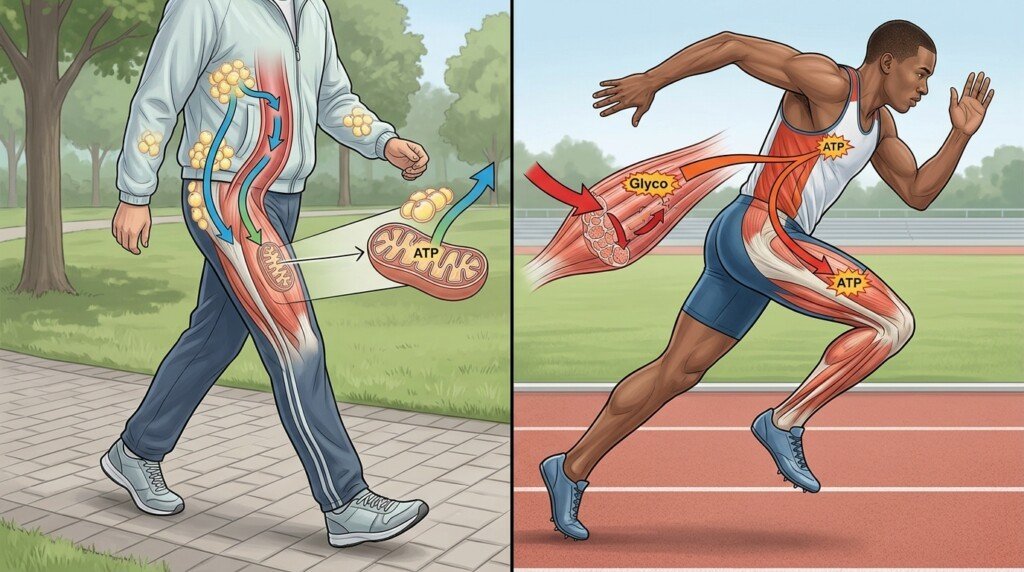
Exercise intensity and duration influence which fuel sources contribute the greatest amount of energy.
However, the body almost always uses a mixture of carbohydrates and fat rather than relying on only one source.
Lower-Intensity Activity Uses More Fat
During activities such as:
- Walking
- Easy cycling
- Household chores
- Gentle hiking
a larger proportion of energy often comes from fat oxidation.
Because the energy demand is relatively moderate, the body has enough time to produce ATP from fatty acids.
Higher-Intensity Exercise Relies More on Glycogen
As exercise intensity increases, the body needs ATP much more quickly.
Stored muscle glycogen becomes increasingly important because carbohydrates can supply energy at a faster rate than fat.
Examples include:
- Sprinting
- Heavy resistance training
- High-intensity interval exercise
- Competitive sports
Even during these activities, fat oxidation continues to contribute energy.
The balance simply shifts toward greater carbohydrate use.
Recovery Also Requires Energy
Exercise does not stop affecting metabolism once the workout ends.
Recovery requires energy for:
- Muscle repair
- Glycogen restoration
- Protein synthesis
- Cellular recovery
This is one reason total daily energy expenditure includes much more than the calories burned during exercise itself.
Does Ketosis Happen in Every Calorie Deficit?
No.
This is one of the most common misconceptions about fat loss.
A calorie deficit and ketosis are not the same thing.
A Calorie Deficit Simply Means Lower Energy Intake
A calorie deficit occurs whenever calorie intake is lower than calorie expenditure.
People can achieve this while eating:
- Higher-carbohydrate diets
- Moderate-carbohydrate diets
- Lower-carbohydrate diets
The body continues adjusting fuel use according to available nutrients.
Ketosis Depends Mainly on Carbohydrate Availability
Ketosis develops when carbohydrate availability becomes sufficiently low for the liver to produce significant amounts of ketones.
This metabolic state is influenced primarily by carbohydrate intake rather than by calorie deficit alone.
Many people successfully lose body fat without entering nutritional ketosis.
Understanding this distinction helps separate normal fat oxidation from ketosis, which are related but different physiological processes.
What Does This Mean for Healthy Weight Loss?
Understanding how your body selects fuel helps remove many of the myths surrounding fat loss.
Rather than switching from one fuel source to another overnight, your body constantly adjusts the proportion of carbohydrates, fat, and protein it uses based on changing energy demands.
Fat Loss Is a Gradual Process
Stored body fat contributes energy every day during a calorie deficit.
However, fat oxidation occurs gradually over time.
Consistent habits matter far more than trying to force the body into using one specific fuel source.
Readers interested in the broader process may also find Why a Calorie Deficit Causes Weight Loss helpful because it explains how energy balance creates the conditions for fat loss.
Nutrition Supports Muscle Preservation
Balanced nutrition provides the nutrients needed for:
- Muscle maintenance
- Tissue repair
- Recovery
- Overall health
While body fat supplies stored energy, dietary nutrients continue supporting essential body functions throughout weight loss.
Sustainable Habits Produce Better Results
Healthy weight loss is rarely about finding a single “fat-burning” trick.
Instead, long-term success comes from:
- Consistent calorie management
- Balanced nutrition
- Regular physical activity
- Patience
- Realistic expectations
Readers looking to understand long-term healthy habits may also enjoy Sustainable Weight Loss, which focuses on maintaining progress beyond the initial stages of fat loss.
Future discussions in Macronutrients for Fat Burning will explore how carbohydrates, protein, and dietary fat each contribute to body composition and energy metabolism.
Key Takeaways
| Topic | What You Should Know |
|---|---|
| Energy sources | The body continuously uses carbohydrates, fat, and small amounts of protein for energy. |
| Glycogen | Liver and muscle glycogen provide readily available carbohydrate energy but are not the only fuel source. |
| Body fat | Stored fat contributes energy throughout a calorie deficit and becomes increasingly important over time. |
| Lipolysis | Releases fatty acids from fat cells before they can be used for energy. |
| Fat oxidation | Converts fatty acids into ATP inside the mitochondria. |
| Muscle preservation | The body generally prioritizes preserving lean muscle during a moderate calorie deficit, especially with adequate protein intake and resistance exercise. |
| Exercise | Exercise intensity influences the proportion of carbohydrates and fat used for energy. |
| Ketosis | A calorie deficit does not automatically cause ketosis. |
Frequently Asked Questions
1. Does your body burn fat first during a calorie deficit?
No. Your body continuously uses a mixture of carbohydrates, fat, and small amounts of protein. The proportion changes depending on activity level, nutrition, and energy demands.
2. Where does your body get energy during a calorie deficit?
Energy comes from stored glycogen, body fat, and small amounts of protein while the body continues producing ATP to support normal functions.
3. Does your body completely use glycogen before burning fat?
No. Glycogen and fat are used simultaneously. The balance shifts depending on exercise intensity and overall energy needs.
4. Can your body use muscle for energy?
Yes, but preserving muscle is a normal priority. During a moderate calorie deficit, the body primarily relies on glycogen and fat while dietary protein and resistance exercise help support lean muscle.
5. What happens when glycogen stores become lower?
As glycogen availability decreases, the body generally increases its reliance on fat oxidation while continuing to use multiple energy sources.
6. What is lipolysis?
Lipolysis is the process of breaking stored triglycerides into fatty acids and glycerol so fatty acids can be used for energy.
7. What is fat oxidation?
Fat oxidation is the process of converting fatty acids into ATP inside the mitochondria, providing usable energy for the body’s cells.
8. Does ketosis happen in every calorie deficit?
No. Ketosis depends mainly on carbohydrate availability, not simply on eating fewer calories.
9. Does exercise affect which fuel the body uses?
Yes. Lower-intensity exercise generally relies more on fat oxidation, while higher-intensity exercise uses a greater proportion of glycogen.
10. Why is understanding fuel selection important for weight loss?
Knowing how the body chooses energy sources helps set realistic expectations and explains why sustainable fat loss depends on overall energy balance rather than a single fuel source.
Conclusion
Understanding Where Does Your Body Get Energy in a Calorie Deficit reveals just how adaptable the human body truly is. Rather than relying on one fuel source, your body continuously balances carbohydrates, stored glycogen, body fat, and small amounts of protein to meet its energy needs. Through processes such as lipolysis and fat oxidation, stored fat gradually becomes an increasingly important fuel source, while ATP production inside the mitochondria keeps every cell functioning. This coordinated system allows the body to maintain essential functions even when calorie intake is lower than energy expenditure.
Perhaps the most important takeaway is that healthy weight loss is driven by consistent energy balance, not by forcing the body to burn one specific fuel. Glycogen, fat, and protein all have important roles, and the proportion of each changes naturally depending on activity, nutrition, and overall physiology. By understanding how these energy systems work together, it becomes easier to appreciate why gradual, sustainable habits support long-term fat loss while helping preserve lean muscle and overall health.
Disclaimer:
This post may contain affiliate links. If you purchase through them, we may earn a small commission at no extra cost to you. Also, this content is for informational purposes only and does not substitute professional medical advice.
Ready to Start Your Journey?
Use our free 7-in-1 Weight Loss Toolkit to calculate your numbers and build your plan in minutes.
Open Free Tools →