Can You Turn Fat Into Muscle? The Truth Behind This Popular Fitness Myth
If you’ve ever started exercising to lose weight, you’ve probably heard someone say, “You’re turning your fat into muscle.” It sounds encouraging, but is it actually true?
This idea has been repeated in gyms, fitness classes, social media posts, and even casual conversations for years. It creates the impression that body fat somehow transforms into muscle tissue, almost like one material changing into another. While this explanation seems simple, it is not how the human body works.
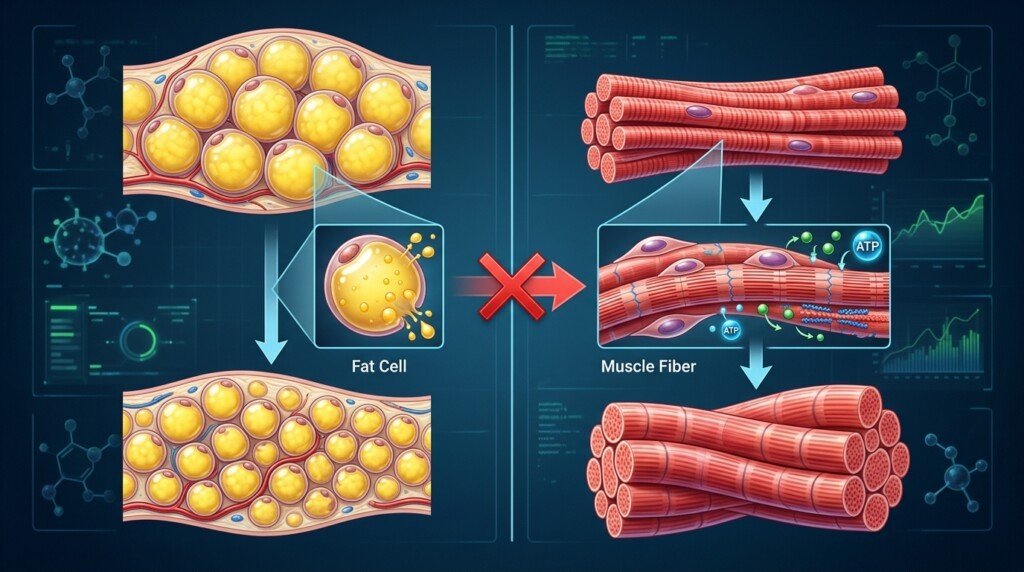
Fat and muscle are two completely different types of tissue. Fat cells store energy, help regulate hormones, and protect the body, while muscle fibers generate movement, support posture, and contribute to strength. Because they have different structures and functions, one cannot physically become the other.
That does not mean you cannot lose fat and gain muscle at the same time.
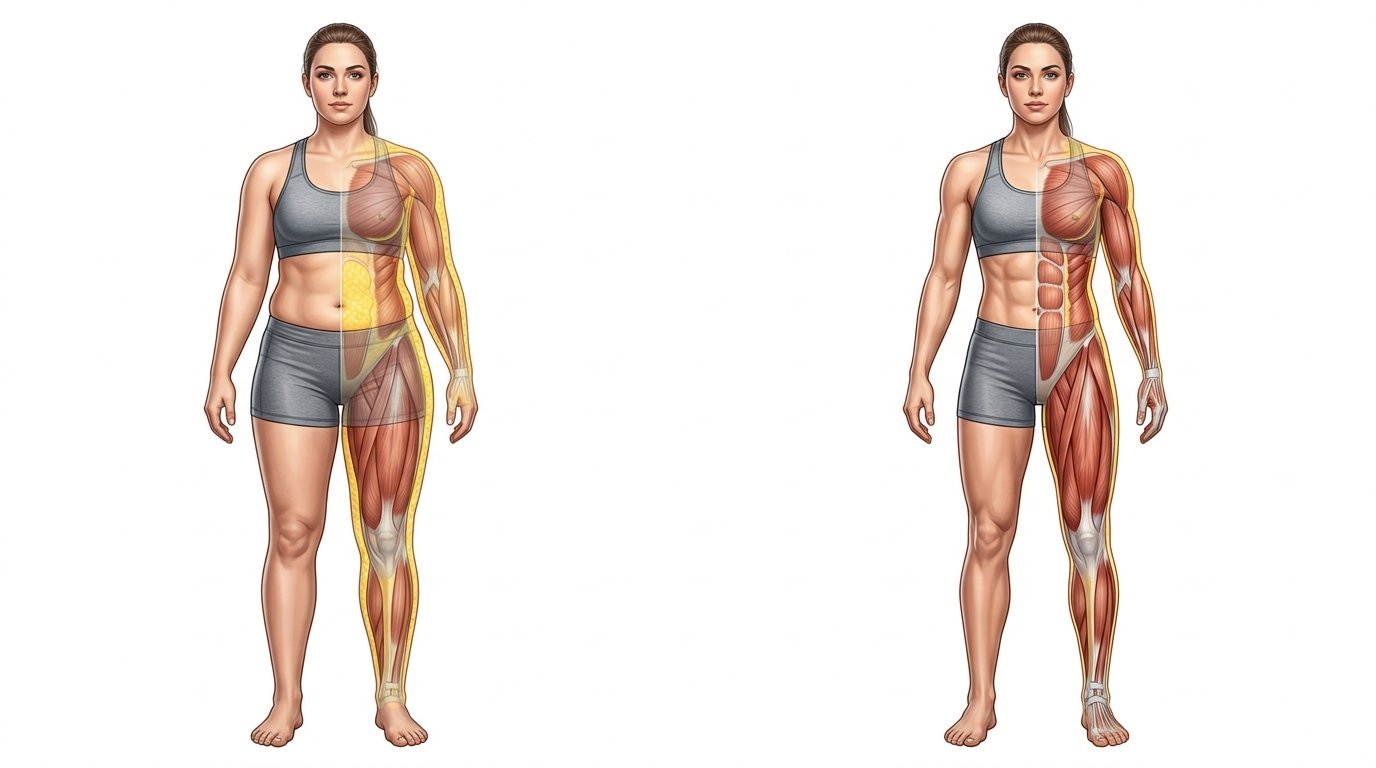
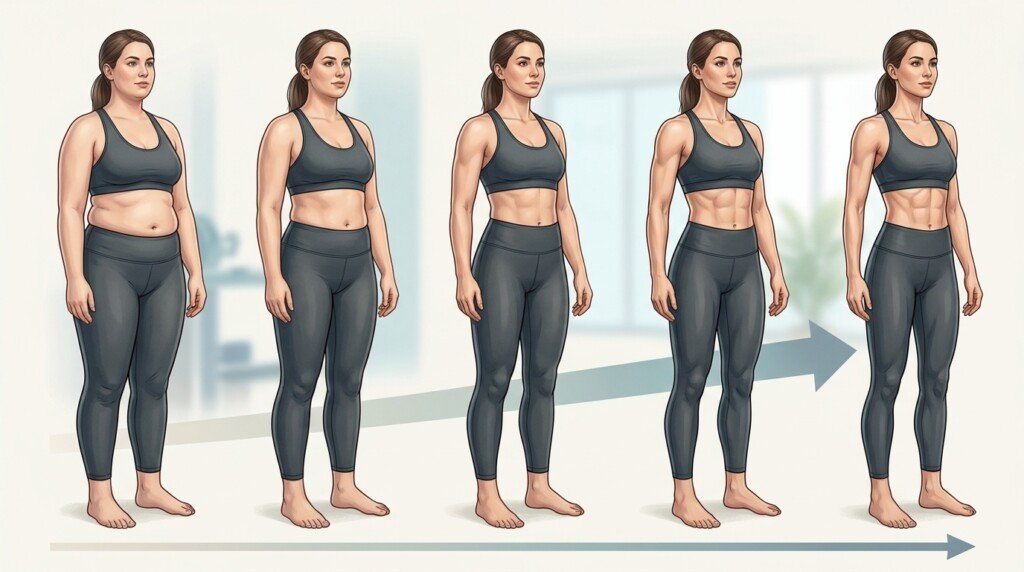
Many people successfully improve their body composition through a process called body recomposition. During body recomposition, body fat gradually decreases while lean muscle mass increases. As a result, your body becomes leaner and stronger, even if the number on the scale changes very little.
Understanding Can You Turn Fat Into Muscle also explains why the scale does not always reflect progress. Someone may lose several pounds of body fat while gaining muscle, causing body weight to remain relatively stable. This is one reason many people notice their clothes fitting better before seeing dramatic changes on the scale.
Rather than chasing myths, learning the science behind fat loss and muscle growth allows you to build realistic expectations. Healthy body recomposition depends on consistent resistance training, adequate protein intake, balanced nutrition, sufficient recovery, and patience. These habits support gradual improvements in strength, body composition, and overall metabolic health.
In this article, you’ll learn whether fat can actually turn into muscle, why fat and muscle are completely different tissues, whether you can lose fat while building muscle, what body recomposition means, which exercises support muscle growth, how protein contributes to muscle development during fat loss, and the biggest myths surrounding fat and muscle.
Can You Turn Fat Into Muscle?
The short answer is no.
Fat cannot physically transform into muscle because they are completely different biological tissues.
Although people often use this phrase to describe successful fitness progress, the body does not convert one tissue into another.
Fat and Muscle Have Different Jobs
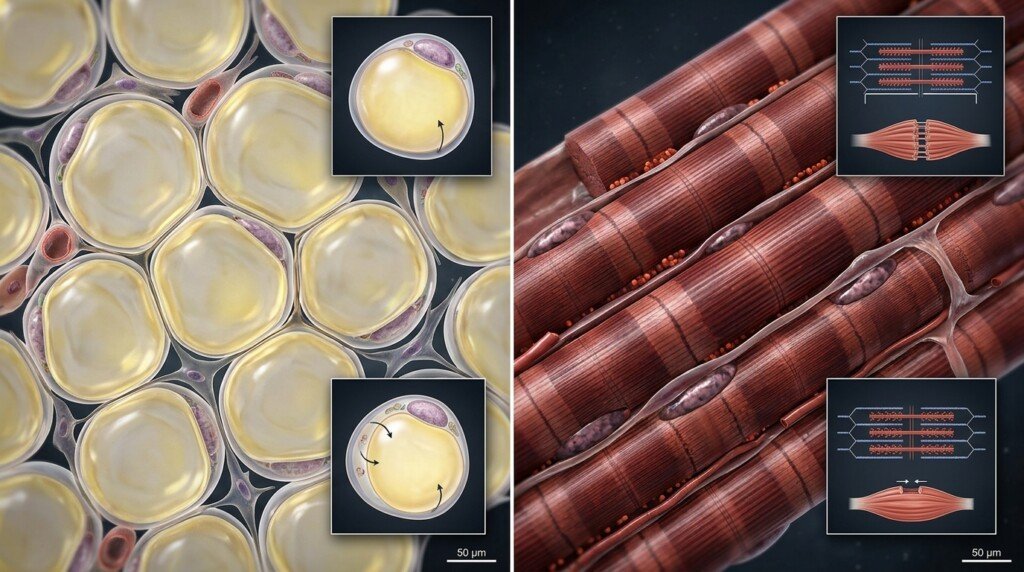
Fat tissue and muscle tissue perform entirely different functions.
Fat tissue primarily:
- Stores energy
- Produces hormones
- Cushions organs
- Provides insulation
Muscle tissue primarily:
- Produces movement
- Generates force
- Supports posture
- Helps maintain joint stability
Since they perform different roles, they are made from different types of cells.
Fat Cells Cannot Become Muscle Cells
Fat cells, known as adipocytes, remain fat cells.
Muscle fibers remain muscle fibers.
Your body has separate biological processes for reducing body fat and building muscle.
One does not transform into the other.
Two Changes Can Happen Together
Although fat does not become muscle, both of these processes may occur simultaneously:
- Fat cells shrink as stored triglycerides are used for energy.
- Muscle fibers grow larger in response to resistance training.
When these changes occur together, your body composition improves.
This often creates the illusion that fat has become muscle.
Body Composition Improves
As body fat decreases and lean muscle increases, you may notice:
- Smaller waist measurements
- Better muscle definition
- Improved strength
- Better posture
- Clothes fitting differently
These improvements occur even though fat never becomes muscle.
Progress Is Often Greater Than the Scale Suggests
Many people become discouraged because body weight changes slowly.
However, losing fat while gaining muscle often produces dramatic physical improvements despite only small changes in total body weight.
The relationship between fat tissue and body composition is discussed further throughout Body Fat, where the different functions of adipose tissue are explained.
Why Are Fat and Muscle Different Tissues?
Understanding why fat cannot become muscle begins with understanding how these tissues are built.
Although both exist throughout the body, they serve completely different biological purposes.
Fat Is Made of Adipocytes
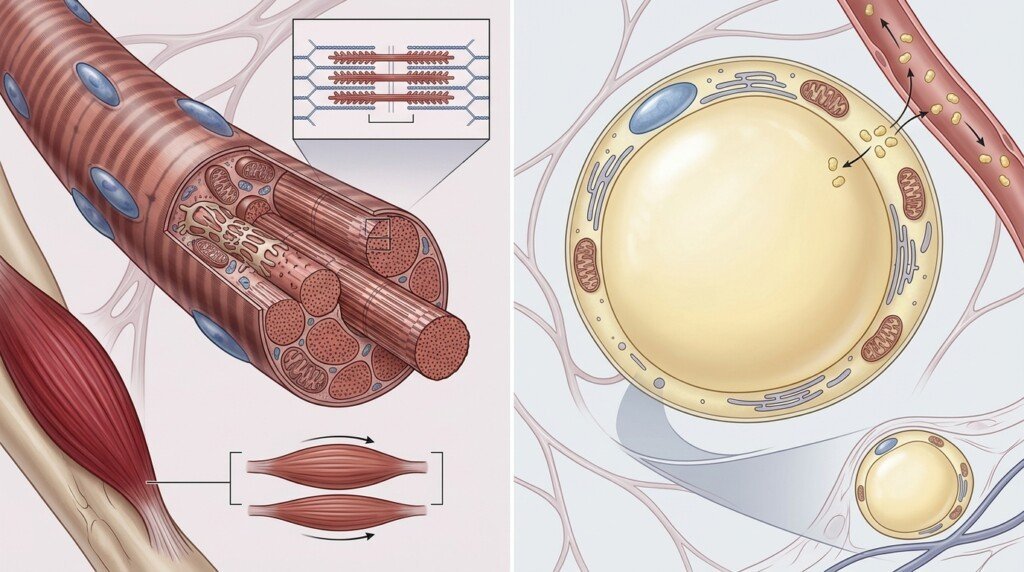
Fat tissue consists primarily of adipocytes.
These specialized cells store triglycerides that provide long-term energy reserves.
They also release hormones involved in metabolism and energy balance.
Muscle Is Made of Muscle Fibers
Muscle tissue contains long muscle fibers capable of contracting.
These fibers allow your body to:
- Walk
- Lift objects
- Climb stairs
- Maintain balance
- Perform physical activity
Unlike fat cells, muscle fibers generate force rather than store energy.
Their Structures Are Completely Different
Fat cells contain large droplets of stored triglycerides.
Muscle fibers contain specialized proteins that slide against one another during contraction.
Because their structures are fundamentally different, one tissue cannot transform into the other.
They Respond Differently to Exercise
Exercise affects fat and muscle in different ways.
Fat cells release stored energy through lipolysis.
Muscle fibers respond to resistance training by repairing and gradually becoming larger and stronger.
These processes occur independently.
They Work Together
Although fat and muscle are different tissues, they interact continuously.
Fat provides stored energy.
Muscle uses energy during movement.
Together they help regulate overall metabolism and body composition.
Can You Lose Fat and Build Muscle at the Same Time?
Yes.
For many people, losing fat while building muscle is absolutely possible.
This process is called body recomposition.
Rather than focusing only on body weight, body recomposition aims to improve the proportion of fat and lean muscle throughout the body.
Beginners Often Experience Both
People who are new to resistance training frequently experience simultaneous fat loss and muscle gain.
Their muscles respond quickly to new exercise while healthy eating supports gradual fat reduction.
Returning Exercisers May Also Benefit
Individuals returning after a long break from exercise often rebuild lost muscle while reducing body fat.
This phenomenon is sometimes called muscle memory.
Adequate Protein Supports Muscle Growth
Muscle development requires amino acids supplied through dietary protein.
Consuming enough protein helps support muscle repair while losing body fat.
The role of protein is discussed further later in this article.
Resistance Training Is Essential
Building muscle requires progressive resistance.
Activities such as:
- Weight training
- Resistance bands
- Bodyweight exercises
stimulate muscle fibers to grow stronger over time.
Progress Requires Patience
Body recomposition usually occurs gradually.
Visible improvements often appear over weeks and months rather than days.
Consistent habits remain the foundation of long-term success.
People who notice Losing Inches but Not Weight are often experiencing improvements in body composition rather than a lack of progress.
What Is Body Recomposition?
Body recomposition refers to improving body composition by reducing body fat while increasing or preserving lean muscle mass.
Unlike traditional weight loss, the goal is not simply making the number on the scale smaller.
Body Composition Changes
During successful body recomposition:
- Fat mass decreases.
- Lean muscle increases or remains stable.
- Physical appearance improves.
- Strength increases.
These changes often occur without dramatic changes in body weight.
Muscle Occupies Less Space Than Fat
A pound of muscle and a pound of fat weigh the same.
However, muscle is denser.
As body composition improves, many people notice they become leaner even if their body weight changes very little.
The Scale Becomes Less Important
Because muscle gain can partially offset fat loss, body weight alone may underestimate progress.
Tracking additional indicators such as:
- Waist circumference
- Strength improvements
- Clothing fit
- Progress photos
often provides a clearer picture.
Your Body Fat Percentage may decrease significantly even when the scale changes only modestly.
Healthy Habits Drive Recomposition
Successful body recomposition depends on combining:
- Resistance training
- Balanced nutrition
- Adequate protein
- Quality sleep
- Recovery
These habits support both muscle growth and fat loss simultaneously.
Sustainable Progress Matters Most
Body recomposition is not about achieving rapid transformation.
Instead, it focuses on gradual improvements that can be maintained over the long term.
Which Exercises Support Muscle Growth?
Building muscle does not require spending hours in the gym every day. Instead, it depends on challenging your muscles consistently, allowing them to recover, and gradually increasing the demands placed on them over time.
The most effective exercises for muscle growth are those that work multiple muscle groups while encouraging progressive overload. Combined with proper nutrition and recovery, these exercises support improvements in strength, lean muscle mass, and overall body composition.
Prioritize Resistance Training
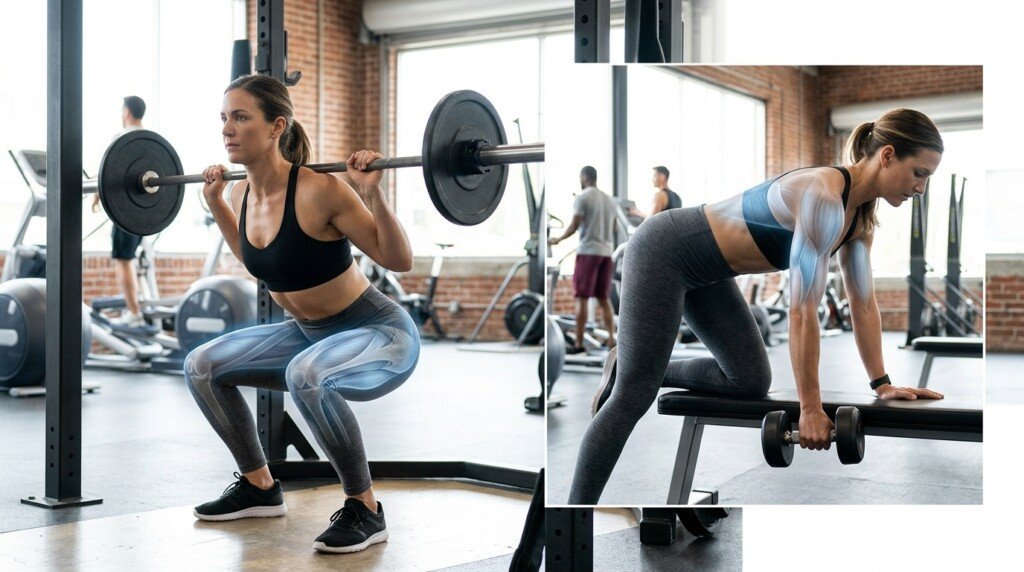
Resistance training is the foundation of muscle growth.
When muscles work against resistance, tiny amounts of stress occur within the muscle fibers. During recovery, the body repairs these fibers, making them stronger and often slightly larger. This process is known as hypertrophy.
Examples of resistance training include:
- Free weights
- Resistance bands
- Bodyweight exercises
- Weight machines
- Cable exercises
Consistent resistance training is one of the most effective ways to improve body composition while reducing excess body fat.
The benefits of resistance exercise are explored further throughout Strength Training for Fat Loss.
Focus on Compound Movements
Compound exercises work several muscle groups at the same time.
Examples include:
- Squats
- Deadlifts
- Push-ups
- Rows
- Lunges
- Overhead presses
Because these movements recruit multiple muscles simultaneously, they are highly effective for building strength and supporting lean muscle development.
Do Not Ignore Cardio
Cardiovascular exercise supports heart health, endurance, and calorie expenditure.
Walking, cycling, swimming, and jogging all contribute to overall fitness while complementing resistance training.
Cardio alone is not the most effective method for building muscle, but combining it with strength training creates a balanced fitness routine.
Progressive Overload Drives Growth
Muscles adapt when they are challenged.
Progressive overload means gradually increasing the demands placed on your muscles over time.
This may involve:
- Increasing resistance
- Performing additional repetitions
- Improving exercise technique
- Increasing training volume
Small improvements performed consistently are far more effective than making dramatic changes occasionally.
Recovery Is Part of Training
Muscles do not grow during exercise.
They grow during recovery.
Adequate sleep, balanced nutrition, and rest days allow muscle tissue to repair and become stronger.
Skipping recovery often slows progress rather than accelerating it.
Does Protein Help Build Muscle While Losing Fat?
Yes.
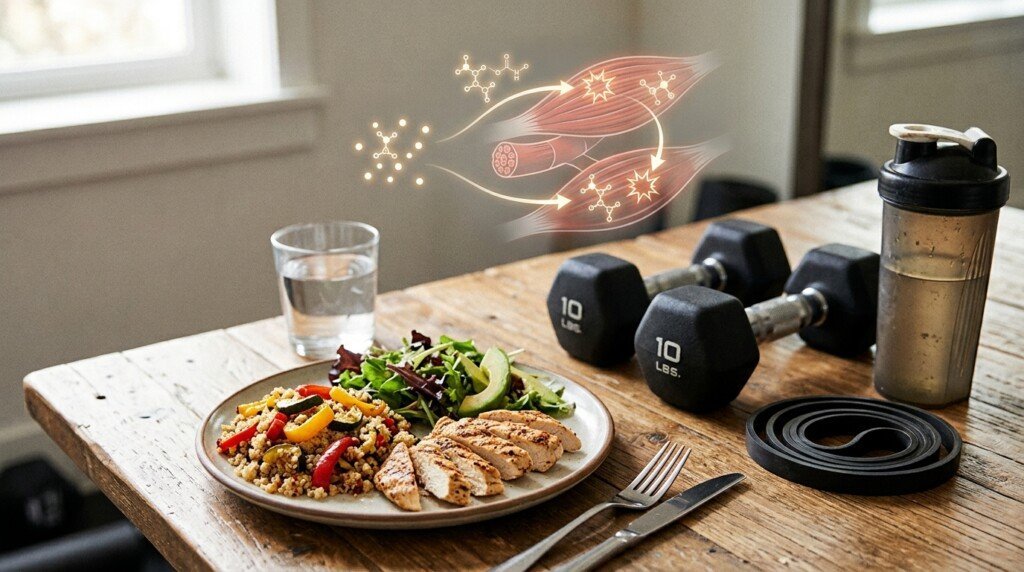
Protein plays a vital role during body recomposition because it provides the amino acids needed to repair and build muscle tissue while helping preserve lean mass during fat loss.
Although protein alone cannot build muscle, it supports the body’s ability to respond to resistance training.
Protein Supplies Building Blocks
Muscle tissue is continually broken down and rebuilt.
Protein provides the amino acids required for this ongoing repair process.
Without adequate protein, muscle development becomes more difficult.
Protein Helps Preserve Lean Mass
During a calorie deficit, the body may lose both fat and muscle.
Consuming enough protein while performing resistance training helps reduce muscle loss and supports lean body mass.
This makes protein especially important during weight-loss efforts.
Protein Supports Recovery
Exercise creates microscopic damage within muscle fibers.
Recovery depends partly on providing the nutrients needed for repair.
Balanced meals containing high-quality protein help support this recovery process.
Many naturally protein-rich foods are discussed throughout High-Protein Foods That Burn Fat, where nutrient-dense options are explained in more detail.
Balanced Nutrition Matters
Protein is important, but muscle growth depends on overall nutrition rather than one nutrient alone.
Healthy eating patterns should also include:
- Fruits
- Vegetables
- Whole grains
- Healthy fats
Together these foods support overall health, exercise performance, and recovery.
Consistency Produces Results
Eating adequate protein occasionally is not enough.
Long-term consistency with balanced nutrition and resistance training produces gradual improvements in muscle mass and body composition.
What Are the Biggest Myths About Fat and Muscle?
Misinformation about fat and muscle continues to circulate online and in everyday conversations.
Understanding the science helps separate facts from myths.
Myth 1: Fat Turns Into Muscle
This is the most common misconception.
Fat and muscle are different tissues made from different types of cells.
Fat cannot physically become muscle.
Instead, fat decreases while muscle increases through separate biological processes.
Myth 2: Muscle Weighs More Than Fat
A pound of muscle and a pound of fat both weigh exactly one pound.
The difference is density.
Muscle occupies less space than the same weight of fat, making the body appear leaner as body composition improves.
Myth 3: Cardio Is the Only Way to Lose Fat
Cardiovascular exercise helps increase calorie expenditure, but resistance training also plays an important role.
Combining both forms of exercise supports healthier body composition than relying on either one alone.
Myth 4: You Must Choose Between Fat Loss and Muscle Gain
Although body recomposition is not equally easy for everyone, many beginners, individuals returning to exercise, and those carrying excess body fat can often lose fat while gaining muscle simultaneously.
Myth 5: The Scale Tells the Whole Story
Body weight reflects much more than body fat.
Changes in:
- Muscle
- Water
- Glycogen
- Food volume
can all influence daily body weight.
This explains why many people experience Weight Loss Plateau even while continuing to improve body composition.
Myth 6: Building Muscle Happens Quickly
Healthy muscle growth is a gradual biological process.
Consistent resistance training, adequate protein, sufficient recovery, and patience produce lasting improvements over time.
There are no legitimate shortcuts that replace these fundamentals.

Frequently Asked Questions
1. Can fat turn into muscle?
No. Fat and muscle are completely different tissues. Fat cells cannot transform into muscle fibers. During body recomposition, fat decreases while muscle increases through separate biological processes.
2. Can you lose fat and gain muscle at the same time?
Yes. Many beginners, people returning to exercise, and individuals with excess body fat can often lose fat while building muscle simultaneously through resistance training, balanced nutrition, and adequate protein intake.
3. What is body recomposition?
Body recomposition refers to reducing body fat while increasing or maintaining lean muscle mass. The goal is improving body composition rather than simply lowering body weight.
4. Does protein help build muscle during weight loss?
Yes. Protein provides the amino acids needed to repair and build muscle tissue while helping preserve lean muscle during a calorie deficit, especially when combined with resistance training.
5. Which exercises are best for muscle growth?
Resistance training exercises such as squats, rows, lunges, push-ups, deadlifts, and overhead presses are highly effective for supporting muscle growth when performed consistently with progressive overload.
Final Thoughts
The idea that you can turn fat into muscle is one of the most persistent myths in fitness, but science tells a different story. Fat tissue and muscle tissue are completely different structures with unique functions. Fat cells store energy, while muscle fibers generate movement and strength. One cannot physically transform into the other.
What actually happens during successful fitness progress is far more impressive. As resistance training stimulates muscle growth and a balanced nutrition plan supports a healthy calorie balance, fat cells gradually shrink while muscle fibers become stronger and larger. This process, known as body recomposition, improves body composition even if the number on the scale changes very little. It also explains why your clothes may fit better, your strength may increase, and your physique may look leaner before you notice dramatic weight loss.
The most effective approach is to focus on sustainable habits instead of chasing fitness myths. Consistent resistance training, adequate protein intake, balanced meals, quality sleep, and regular physical activity all work together to support gradual fat loss and muscle growth. By understanding the science behind body recomposition, you can set realistic expectations, measure progress more accurately, and build habits that improve both your physical health and long-term fitness.
Disclaimer:
This post may contain affiliate links. If you purchase through them, we may earn a small commission at no extra cost to you. Also, this content is for informational purposes only and does not substitute professional medical advice.
Ready to Start Your Journey?
Use our free 7-in-1 Weight Loss Toolkit to calculate your numbers and build your plan in minutes.
Open Free Tools →