

What Are Hunger Hormones? How Leptin and Ghrelin Affect Appetite and Weight
Have you ever eaten a satisfying meal only to feel hungry again an hour later? Or wondered why some days you seem constantly hungry despite eating enough food, while on other days your appetite barely exists? These experiences are not simply a matter of willpower—they are heavily influenced by your Hunger Hormones.
Your body uses an intricate network of hormones to regulate when you feel hungry, when you’re satisfied, and how much energy you store or burn. These hormones constantly communicate with your brain, digestive system, fat tissue, and other organs to help maintain energy balance. Their job is to ensure you eat enough to support your body’s needs without consistently overeating or undereating.
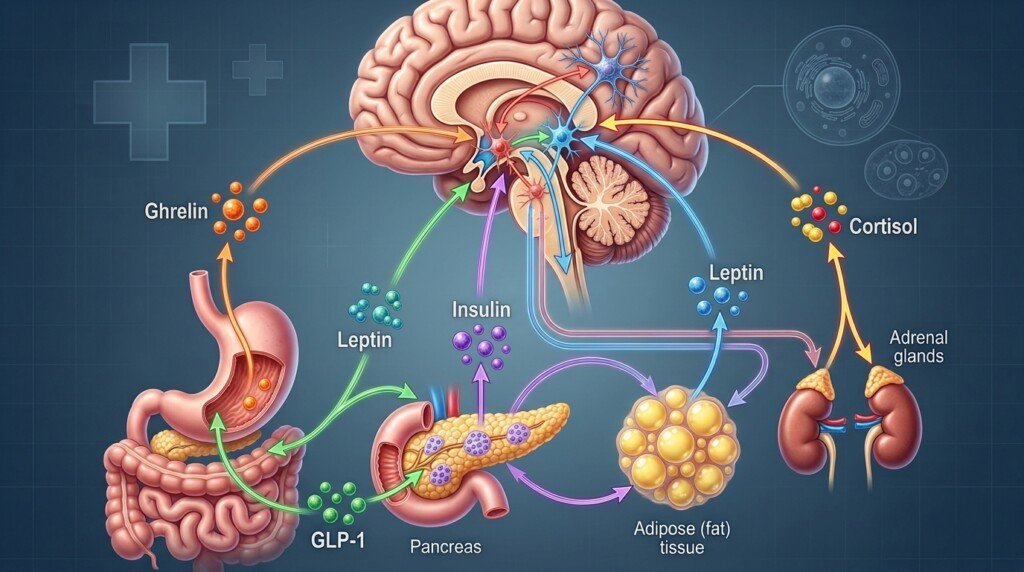
Among the many hormones involved in appetite regulation, leptin and ghrelin are often called the body’s primary hunger hormones. Leptin generally signals fullness, while ghrelin stimulates hunger. However, appetite regulation is much more complex than these two hormones alone. Insulin, cortisol, GLP-1, and several gut hormones also influence how hungry or satisfied you feel throughout the day.
Modern lifestyles can disrupt this delicate system. Poor sleep, chronic stress, highly processed foods, restrictive dieting, irregular meal patterns, and prolonged calorie deficits may all affect hunger hormone signaling. When these hormones become imbalanced, maintaining a healthy weight often feels much more difficult—not because of weak motivation, but because your body’s biological signals are working against you.
The encouraging news is that many lifestyle habits support healthier hormone regulation. Regular sleep, balanced nutrition, physical activity, stress management, and sustainable eating patterns all help your body regulate appetite more effectively over time.
Understanding how hunger hormones work also changes the way we think about weight management. Instead of viewing hunger as something to ignore or fight, it becomes easier to recognize it as a normal biological process influenced by multiple internal signals.
In this article, you’ll learn what Hunger Hormones are, which hormones regulate appetite and fullness, how leptin and ghrelin differ, why hormone imbalances develop, how they influence weight loss, which lifestyle habits support healthier hormone balance, the foods that may promote appetite regulation, and when ongoing appetite changes deserve medical evaluation.
Why Do Hunger Hormones Matter More Than Willpower?
Many people believe that controlling body weight is simply about eating less and exercising more. While nutrition and physical activity are certainly important, they are only part of the picture. Your body has evolved sophisticated biological systems designed to protect its energy supply, and hunger hormones are central to that process.
These hormones don’t merely tell you when your stomach is empty. They influence cravings, meal satisfaction, food preferences, energy expenditure, and even how rewarding certain foods feel. In many situations, they can become stronger than conscious willpower.
Understanding these biological signals helps explain why maintaining healthy eating habits sometimes feels easy and other times feels incredibly challenging.
Your Brain Constantly Monitors Energy Balance
The human body is designed to maintain balance.
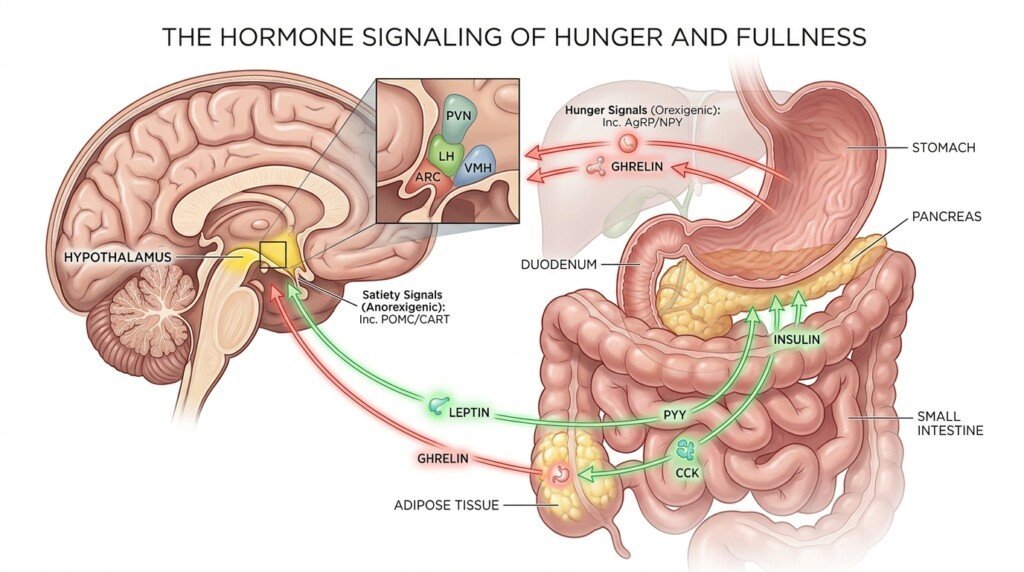
Throughout the day, your brain receives information from:
- Your stomach
- Fat tissue
- Digestive tract
- Pancreas
- Bloodstream
These signals help determine whether your body needs more energy or has already consumed enough food.
The primary control center for this process is the hypothalamus, a region of the brain responsible for regulating hunger, fullness, body temperature, hormones, and many other essential functions.
Rather than making random decisions about eating, your brain continuously analyzes these hormonal messages to help maintain energy balance.
Hunger Is a Biological Signal
Feeling hungry is not a personal failure.
Hunger exists because your body requires energy to perform countless daily functions, including:
- Breathing
- Circulation
- Brain activity
- Movement
- Digestion
- Cell repair
When energy stores begin to decline, hunger hormones encourage you to seek food.
Likewise, once enough food has been consumed, different hormones communicate that you’ve had enough.
This biological system has helped humans survive throughout history.
Appetite Is About More Than an Empty Stomach
Many people assume hunger only begins when the stomach becomes empty.
In reality, appetite is influenced by numerous factors beyond stomach fullness.
These include:
- Sleep quality
- Stress levels
- Meal composition
- Blood sugar regulation
- Physical activity
- Emotional state
- Previous calorie intake
This explains why you may sometimes feel hungry shortly after eating or lose your appetite during stressful periods.
The body integrates many signals simultaneously before deciding how hungry you feel.
Hunger Hormones Influence Food Choices
These hormones don’t simply determine whether you eat—they may also influence what you want to eat.
When hunger becomes intense, many people naturally crave:
- Sweet foods
- Refined carbohydrates
- Highly processed snacks
- Energy-dense meals
This biological response developed to help humans quickly restore energy during times of scarcity.
In today’s food environment, however, these cravings often lead to excess calorie intake.
Understanding these biological influences complements the behavioral strategies discussed in Psychology of Weight Loss, where eating habits are explored beyond simple calorie counting.
Healthy Hormones Make Healthy Eating Easier
One important takeaway is that healthy lifestyle habits often reduce the need to rely solely on self-control.
When appetite-regulating hormones function well, people generally find it easier to:
- Stop eating when satisfied
- Avoid constant snacking
- Experience fewer cravings
- Maintain steady energy
- Follow balanced eating patterns
Supporting healthy hormone function therefore becomes an important part of sustainable weight management.
Which Hormones Control Hunger and Fullness?
Although leptin and ghrelin receive the most attention, appetite regulation involves an entire network of hormones working together.
Each hormone provides different information to your brain about your body’s current energy status.
Rather than acting independently, they constantly interact to regulate hunger, fullness, digestion, and metabolism.
Ghrelin: The Hunger Hormone
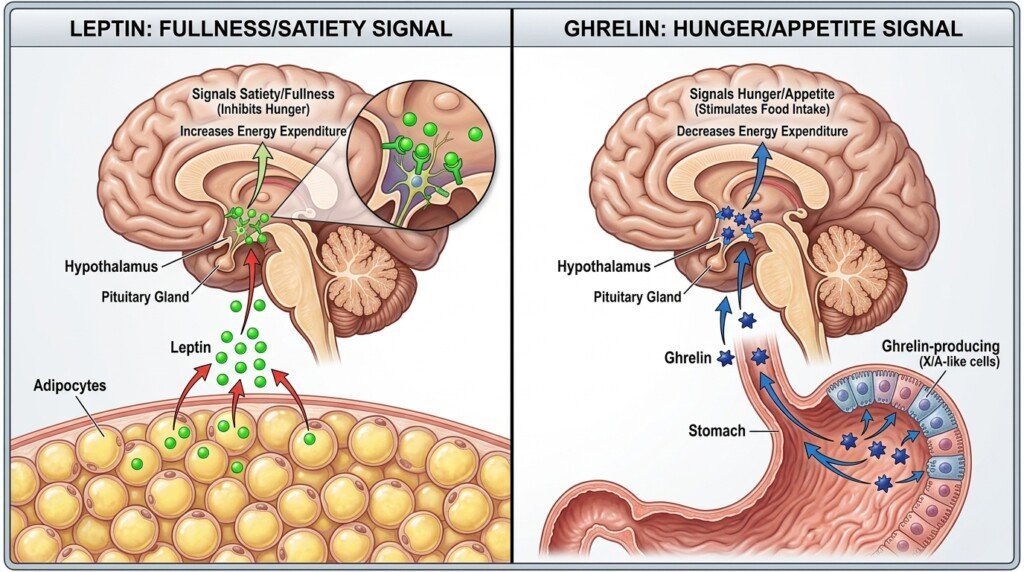
Ghrelin is commonly known as the hunger hormone.
It is produced primarily in the stomach and typically rises before meals.
As ghrelin levels increase, the brain receives signals encouraging food intake.
After eating, ghrelin levels normally decline, helping reduce hunger until the next meal.
Ghrelin also plays roles in:
- Meal initiation
- Appetite stimulation
- Energy balance
- Growth hormone regulation
Its levels naturally fluctuate throughout the day according to eating patterns.
Leptin: The Fullness Hormone
Leptin is often described as the satiety hormone.
Unlike ghrelin, leptin is produced primarily by fat cells rather than the stomach.
Its primary role is communicating information about long-term energy stores to the brain.
When adequate energy reserves exist, leptin helps reduce appetite while supporting normal energy expenditure.
However, some individuals develop leptin resistance, where the brain becomes less responsive to leptin’s signals despite adequate or elevated hormone levels.
Researchers continue studying how this process contributes to long-term weight regulation.
Insulin Also Influences Appetite
Although insulin is best known for regulating blood sugar, it also participates in appetite regulation.
Following meals, insulin helps move glucose into cells where it can be used for energy.
It also communicates with the brain regarding recent food intake.
This illustrates why healthy metabolism and appetite regulation remain closely connected.
The broader relationship between insulin function and overall Metabolic Health becomes increasingly important when considering long-term weight management.
GLP-1 and Other Gut Hormones
Several hormones released from the digestive tract also contribute to fullness.
One example is GLP-1, which helps slow stomach emptying while promoting feelings of satisfaction after meals.
Other gut hormones similarly help signal meal completion.
Together, these hormones influence:
- Meal size
- Satiety
- Digestion
- Blood sugar regulation
- Energy intake
Rather than relying on one hormone alone, appetite regulation depends on this complex hormonal network.
Cortisol Can Influence Appetite Too
Cortisol, often called the stress hormone, also interacts with hunger regulation.
During periods of prolonged stress, cortisol may influence appetite and food preferences in some individuals.
Many people notice stronger cravings for high-calorie comfort foods during stressful situations.
This relationship between stress and appetite explains why emotional well-being often plays an important role in sustainable weight management.
The connection between chronic stress and eating behaviors is explored further in Stress and Weight Loss, where hormonal responses to stress are discussed in greater detail.
What Is the Difference Between Leptin and Ghrelin?
Although both hormones influence appetite, they perform almost opposite functions.
Understanding this difference makes it much easier to understand how your body naturally regulates eating behavior.
Ghrelin Encourages You to Eat
Ghrelin acts as your body’s meal reminder.
Its levels generally increase before meals and decrease after eating.
As ghrelin rises, you may notice:
- A growling stomach
- Increased thoughts about food
- Greater appetite
- Stronger motivation to eat
These responses help ensure your body receives enough energy throughout the day.
Leptin Signals That Energy Stores Are Sufficient
Leptin works over a much longer time frame.
Instead of responding primarily to individual meals, leptin reflects the amount of energy stored in body fat.
When functioning normally, leptin helps the brain recognize that sufficient energy reserves exist, reducing the drive to continue eating.
Because leptin is linked to body fat stores rather than immediate food intake, its effects are more gradual than those of ghrelin.
They Work Together Rather Than Compete
Leptin and ghrelin are often presented as opposing hormones, but in reality they function as part of the same regulatory system.
Throughout the day:
- Ghrelin rises before meals.
- Eating reduces ghrelin.
- Gut hormones increase fullness.
- Leptin helps regulate long-term energy balance.
Together, these signals help the body maintain a relatively stable balance between food intake and energy needs.
Why Do Hunger Hormones Become Imbalanced?
Healthy appetite regulation depends on many aspects of daily life.
When several lifestyle factors begin working against your body’s natural rhythms, hunger hormone signaling may become less effective.
Common contributors include:
- Chronic sleep deprivation
- Long-term stress
- Highly restrictive dieting
- Frequent meal skipping
- Large calorie deficits
- Low physical activity
- Highly processed dietary patterns
None of these factors alone guarantees a hormone imbalance, but together they may influence how effectively your appetite-regulating system functions over time.

Can Hunger Hormones Affect Weight Loss?
Many people assume that losing weight is simply a matter of eating fewer calories than they burn. While a calorie deficit is necessary for weight loss, the body’s hormonal response often determines how easy—or how difficult—that process feels. This is where Hunger Hormones become especially important.
Your body is designed to protect its energy stores. When it senses that energy intake has decreased, it responds by adjusting several hormones involved in appetite, fullness, and energy expenditure. These biological adaptations helped humans survive periods of food scarcity throughout history, but they can make modern weight loss more challenging.
Understanding these hormonal responses allows you to build a more sustainable approach rather than relying on constant willpower.
Calorie Restriction Can Increase Hunger
When calorie intake decreases for an extended period, the body may respond by increasing hunger signals.
Research suggests that prolonged calorie restriction can lead to:
- Increased ghrelin production
- Greater appetite
- More frequent thoughts about food
- Stronger cravings
These responses are normal protective mechanisms rather than signs that your diet has failed.
The body simply attempts to encourage energy intake whenever it perceives that available energy has declined.
Fullness Signals May Become Less Effective
Alongside increased hunger, some people notice that they feel less satisfied after meals while dieting.
This occurs because several satiety hormones may change during prolonged energy restriction.
As a result, meals that previously felt filling may seem less satisfying.
This explains why highly restrictive diets often become increasingly difficult to maintain over time.
Sleep and Stress Can Make Weight Loss Harder
Hunger hormones rarely work alone.
Poor sleep and chronic stress influence several appetite-regulating hormones simultaneously.
For example:
- Sleep deprivation may increase ghrelin.
- Stress may increase cortisol.
- Poor recovery may encourage cravings.
- Fatigue often reduces motivation for physical activity.
Together, these changes may increase overall calorie intake without conscious intention.
This relationship between biological signals and eating behavior reinforces many of the concepts explored in Psychology of Weight Loss, where long-term success depends on understanding behavior as well as nutrition.
Sustainable Weight Loss Supports Better Hormone Balance
Fortunately, appetite regulation often becomes more manageable when weight loss is approached gradually.
Moderate calorie deficits, balanced meals, regular sleep, stress management, and physical activity help reduce the intensity of many hunger signals compared with highly restrictive diets.
Long-term consistency almost always produces better results than aggressive short-term dieting.
How Can You Balance Hunger Hormones Naturally?
Although no lifestyle habit can completely control appetite hormones, many daily behaviors help support healthier hormonal regulation.
Rather than searching for one “magic” solution, focus on building routines that encourage your body’s natural appetite control systems to function effectively.

Prioritize High-Quality Sleep
Sleep is one of the strongest influences on hunger hormones.
Research consistently shows that inadequate sleep may:
- Increase ghrelin
- Reduce feelings of fullness
- Increase cravings
- Affect food choices
- Lower energy for physical activity
Most healthy adults benefit from approximately seven to nine hours of quality sleep each night.
Maintaining consistent sleep schedules also supports healthy circadian rhythms, which influence hormone regulation throughout the body.
Manage Chronic Stress
Stress does not always increase appetite, but prolonged stress often affects eating behaviors.
Many people notice stronger cravings for:
- Sweet foods
- Salty snacks
- Highly processed foods
- Comfort foods
Developing healthy stress-management habits supports overall hormone balance.
Helpful strategies include:
- Walking outdoors
- Meditation
- Deep breathing
- Journaling
- Spending time with family
- Enjoying hobbies
These habits benefit both mental well-being and appetite regulation.
Eat Balanced Meals
Meals that combine:
- Lean protein
- High-fiber carbohydrates
- Healthy fats
- Vegetables
often promote greater fullness than meals dominated by refined carbohydrates alone.
Balanced nutrition helps provide steady energy while supporting healthy appetite regulation throughout the day.
Many people also find that including naturally filling foods discussed in Natural Appetite Suppressants helps make balanced eating patterns easier to maintain.
Avoid Highly Restrictive Dieting
Very low-calorie diets may increase hunger hormones while reducing feelings of fullness.
Although short-term weight loss may occur, maintaining extremely restrictive eating patterns is often difficult.
A moderate, sustainable approach usually provides better long-term results.
Stay Physically Active
Regular exercise supports healthy metabolism while also influencing appetite regulation.
Interestingly, moderate physical activity often helps many people feel more in control of their hunger over time.
Exercise also improves sleep quality, stress management, and metabolic health, all of which indirectly support healthier hormone function.
Which Foods Support Healthy Hunger Hormones?
No individual food can permanently balance Hunger Hormones, but dietary patterns strongly influence appetite regulation.
Choosing nutrient-dense, satisfying foods helps support stable energy levels while reducing the likelihood of frequent hunger between meals.

Protein-Rich Foods
Protein is one of the most filling nutrients.
Including protein with each meal may help promote fullness while supporting muscle maintenance.
Examples include:
- Eggs
- Greek yogurt
- Fish
- Chicken
- Turkey
- Beans
- Lentils
- Tofu
Protein-rich meals often reduce the desire to snack shortly after eating.
Fiber-Rich Foods
Dietary fiber slows digestion and contributes to feelings of fullness.
Excellent sources include:
- Vegetables
- Fruits
- Whole grains
- Legumes
- Oats
- Chia seeds
- Flaxseeds
Fiber also supports digestive health and a diverse gut microbiome.
The relationship between fiber, digestion, and appetite is closely connected to the concepts discussed in Gut Health and Weight Loss, where gut bacteria and dietary fiber play important roles in overall wellness.
Healthy Fats
Healthy fats slow stomach emptying and contribute to meal satisfaction.
Nutritious sources include:
- Avocados
- Olive oil
- Nuts
- Seeds
- Fatty fish
Including moderate amounts of healthy fats often makes meals more satisfying without requiring excessive calorie restriction.
Minimize Highly Processed Foods
Highly processed foods are often:
- Low in fiber
- Low in protein
- Easy to overeat
- Quickly digested
Although they can certainly fit into a balanced lifestyle occasionally, building most meals around minimally processed whole foods generally supports healthier appetite regulation.
Stay Hydrated
Mild dehydration can sometimes be mistaken for hunger.
Drinking water regularly throughout the day supports overall health and may help some people better recognize true hunger signals.
Hydration should complement—not replace—balanced meals.
When Should You Talk to a Doctor?
Changes in appetite are a normal part of life and often reflect temporary changes in sleep, stress, activity, or eating habits.
However, persistent or unexplained appetite changes deserve professional evaluation.
Sudden Appetite Changes
If you experience dramatic increases or decreases in appetite without an obvious explanation, discussing these changes with a healthcare provider is appropriate.
Unintentional Weight Changes
Significant weight gain or weight loss without intentional lifestyle changes may indicate underlying medical conditions requiring evaluation.
Persistent Fatigue or Other Symptoms
If appetite changes occur alongside:
- Extreme fatigue
- Frequent thirst
- Digestive symptoms
- Mood changes
- Persistent weakness
a comprehensive medical assessment may help identify contributing factors.
Early evaluation allows appropriate investigation while helping rule out conditions that may influence appetite regulation.

Frequently Asked Questions
1. What are hunger hormones?
Hunger Hormones are chemical messengers that regulate appetite, fullness, and energy balance. The most well-known are ghrelin, which stimulates hunger, and leptin, which signals fullness.
2. What is the difference between leptin and ghrelin?
Ghrelin is primarily produced in the stomach and increases before meals to stimulate appetite. Leptin is produced mainly by fat tissue and helps signal the brain that sufficient energy has been stored.
3. Can hunger hormones affect weight loss?
Yes. During prolonged calorie restriction, hunger hormones may increase appetite and reduce feelings of fullness, making weight loss more challenging. Sustainable lifestyle habits help support healthier hormone regulation.
4. How can I balance hunger hormones naturally?
Healthy sleep, stress management, regular physical activity, balanced meals containing protein and fiber, and avoiding highly restrictive diets all support healthier appetite regulation.
5. Which foods help regulate hunger hormones?
Protein-rich foods, high-fiber vegetables, fruits, legumes, whole grains, healthy fats, and minimally processed foods help promote fullness and support healthy appetite regulation.
Final Thoughts
Understanding Hunger Hormones changes the way we think about appetite and weight management. Hunger is not simply a matter of self-control—it is a carefully regulated biological process influenced by hormones such as leptin, ghrelin, insulin, cortisol, and several gut-derived signals. These hormones constantly communicate with your brain to help balance energy intake with your body’s needs.
While modern lifestyles can disrupt this system, many daily habits support healthier hormone regulation. Prioritizing quality sleep, managing stress, eating balanced meals rich in protein and fiber, staying physically active, and avoiding overly restrictive dieting all help create an environment where appetite becomes easier to manage naturally.
Rather than fighting your body’s signals, learning how hunger hormones work allows you to work with your biology instead of against it. Over time, these sustainable lifestyle habits not only support healthier appetite regulation but also contribute to better metabolic health, long-term weight management, and overall well-being.
Disclaimer:
This post may contain affiliate links. If you purchase through them, we may earn a small commission at no extra cost to you. Also, this content is for informational purposes only and does not substitute professional medical advice.
Ready to Start Your Journey?
Use our free 7-in-1 Weight Loss Toolkit to calculate your numbers and build your plan in minutes.
Open Free Tools →