NEAT and Metabolic Adaptation: Does Your Body Fight Back When You Diet?
Starting a calorie deficit often feels encouraging. The first few weeks may bring visible progress, the number on the scale drops, and motivation stays high. Then something changes. Weight loss slows despite eating similarly and following the same exercise routine.
Many people immediately assume they have “damaged” their metabolism.
In reality, one overlooked explanation involves NEAT metabolic adaptation.
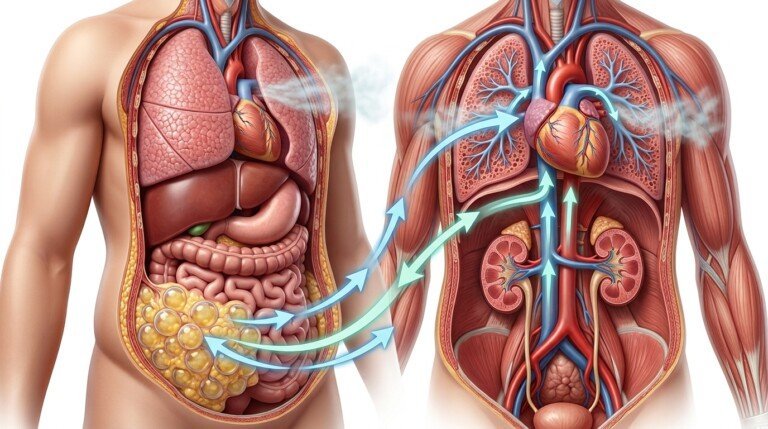
Your body is designed to protect its energy stores. As body weight decreases and calorie intake remains restricted, the brain and hormones begin adjusting how much energy you expend each day. Part of this adaptation happens through resting metabolism, but another important part occurs through Non-Exercise Activity Thermogenesis (NEAT).
Unlike a conscious decision to exercise less, NEAT often decreases automatically. You may sit longer without noticing, gesture less while talking, walk more slowly, or feel less motivated to move throughout the day. These small behavioral changes can accumulate into a meaningful reduction in daily calorie expenditure.
This doesn’t mean your body is working against you in a harmful way. Instead, it reflects a normal biological response that evolved to conserve energy during periods of limited food availability.
Understanding NEAT metabolic adaptation helps explain why some weight-loss plateaus occur even when people remain committed to their nutrition and exercise plan. More importantly, recognizing these changes allows you to respond with realistic expectations rather than frustration.
Quick Answer
NEAT metabolic adaptation refers to the reduction in spontaneous daily movement that often occurs during prolonged calorie restriction. Research suggests many people unconsciously move less as they lose weight, lowering total daily calorie expenditure. This adaptive response may contribute to slower weight loss over time, but awareness, consistent activity, and appropriately planned maintenance periods can help reduce its impact.
What Is Metabolic Adaptation and How Does It Relate to NEAT?
Most people imagine metabolism as a fixed engine that either runs fast or slow.
Human metabolism is far more dynamic.
It constantly adjusts to changes in body weight, food intake, physical activity, sleep, illness, and environmental conditions.
One of these adjustments is known as metabolic adaptation, sometimes called adaptive thermogenesis.
This refers to changes in energy expenditure that are greater than would be expected simply from weighing less.
When someone loses body weight, they naturally burn fewer calories because there is less body mass to maintain and move.
Metabolic adaptation goes a step further.
The body may reduce calorie expenditure beyond what body size alone would predict.
Part of that reduction can occur through resting metabolic rate.
Another significant portion may occur because NEAT declines without conscious awareness.
Rather than deliberately deciding to become less active, people often begin moving less automatically.
These changes may seem insignificant individually but become meaningful over weeks and months.

Why Does NEAT Unconsciously Decrease During a Calorie Deficit?
The human body has evolved to survive periods of food scarcity.
When calorie intake remains lower than energy needs for an extended period, several biological systems attempt to conserve energy.
One way this happens is by reducing spontaneous movement.
Importantly, this is usually not a conscious decision.
People rarely wake up and decide to:
- Walk less.
- Sit longer.
- Stop pacing.
- Gesture less.
- Stand less frequently.
Instead, these behaviors gradually change without much awareness.
Researchers believe several factors contribute.
Reduced Energy Availability
When fewer calories are available, the body becomes more selective about where energy is spent.
Activities essential for survival continue.
Less essential movement may gradually decrease.
This is one reason someone dieting may naturally feel less inclined to wander around the office or complete unnecessary trips around the house.
Increased Perception of Fatigue
Dieting often increases feelings of tiredness.
Even if workouts continue, everyday movement between those workouts may quietly decline.
Examples include:
- Choosing the elevator instead of stairs.
- Sitting during phone calls.
- Driving short distances that were previously walked.
- Remaining seated after meals.
- Spending longer periods resting between tasks.
None of these behaviors appears dramatic on its own.
Together, however, they may noticeably reduce total daily movement.
Hormonal Responses
Researchers have also identified hormonal adaptations during weight loss.
Changes in hormones involved in appetite regulation and energy balance, including leptin and other signaling molecules, may influence both hunger and spontaneous activity.
These hormonal changes help explain why reduced movement is not simply a matter of motivation or willpower.
The body is actively attempting to conserve energy.
Improved Movement Efficiency
As body weight decreases, moving the body itself requires less energy.
Walking the same distance at a lighter weight naturally burns fewer calories than it did before weight loss.
This normal improvement in efficiency combines with reduced spontaneous movement, making overall calorie expenditure fall further.
Small Changes Add Up
One of the most fascinating aspects of NEAT is that it consists of countless tiny movements.
Examples include:
- Shifting posture.
- Standing briefly.
- Walking across a room.
- Fidgeting.
- Carrying light objects.
- Pacing while thinking.
- Taking extra steps during daily routines.
When many of these movements become slightly less frequent, the overall reduction in calorie expenditure can become surprisingly meaningful.
This explains why some people continue exercising consistently yet still notice slower progress over time.
Understanding how NEAT contributes to overall daily energy expenditure is discussed more broadly in NEAT (Non-Exercise Activity Thermogenesis): What It Is and Why It Matters for Weight Loss, while the relationship between everyday movement and structured workouts is explored further in NEAT vs Exercise: Why You Need Both for Long-Term Weight Loss.
What Does Research Show About NEAT Suppression During Prolonged Dieting?
Researchers have studied adaptive thermogenesis for several decades.
One consistent observation is that energy expenditure often declines during weight loss beyond what would be expected from reduced body weight alone.
However, the degree of adaptation varies considerably between individuals.
Some people experience relatively small changes.
Others experience much larger reductions.
One reason for this variation appears to be differences in spontaneous daily movement.
Several controlled studies have demonstrated that prolonged calorie restriction may reduce NEAT as participants lose weight.
Researchers have observed decreases in:
- Standing time.
- General movement.
- Walking.
- Postural changes.
- Daily activity outside structured exercise.
These reductions often occur without participants realizing their behavior has changed.
The Biggest Loser Follow-Up Study
One of the most widely discussed investigations into metabolic adaptation followed contestants from The Biggest Loser television program.
Researchers found that many participants experienced substantial reductions in resting metabolic rate even years after the competition.
The study attracted significant public attention because it suggested metabolic adaptations may persist after extreme weight loss.
However, it is important to interpret these findings carefully.
Contestants underwent exceptionally rapid weight loss combined with extremely high exercise volumes and severe calorie restriction.
This environment differs substantially from the gradual, sustainable approaches recommended for most people.
Therefore, the study should not be viewed as representing typical weight-loss experiences.
Instead, it illustrates how aggressive weight-loss strategies may produce pronounced metabolic adaptations.
Evidence Beyond One Study
The broader scientific literature paints a more balanced picture.
Systematic reviews and controlled metabolic studies generally agree that adaptive thermogenesis exists, but its magnitude varies.
Most researchers now recognize several important points:
- Adaptive thermogenesis is a real biological response.
- NEAT often contributes to this adaptation.
- Not everyone experiences the same degree of suppression.
- Gradual weight loss may produce smaller adaptations than extreme approaches.
- Individual genetics, lifestyle, and behavior all influence the response.
Rather than viewing metabolic adaptation as permanent damage, researchers increasingly describe it as a normal physiological adjustment designed to conserve energy.
Recognizing this distinction helps shift the conversation away from fear and toward realistic long-term weight management strategies.
How Can I Tell if My NEAT Has Dropped Without Realizing It?
One of the most challenging aspects of NEAT metabolic adaptation is that it usually happens quietly.
Few people intentionally decide to become less active while dieting.
Instead, their daily movement gradually changes without conscious awareness.
Because the changes are subtle, they are easy to blame on poor motivation or a “slow metabolism.” In reality, your body may simply be conserving energy in small ways that are difficult to notice.
Recognizing these early signs can help you respond before they contribute to a prolonged weight-loss plateau.
If your overall progress has already slowed, Weight Loss Plateau explores the many possible reasons. This article focuses specifically on the NEAT-related component of metabolic adaptation.

What Are Subtle Signs of Reduced Spontaneous Movement During a Diet?
Reduced NEAT rarely appears as one dramatic change.
Instead, it develops through dozens of small behavioral adjustments.
Each one may seem insignificant on its own.
Together, they can noticeably reduce daily energy expenditure.
Some of the most common signs include:
- Sitting down more often after completing simple tasks.
- Choosing convenience instead of walking.
- Taking fewer trips around the house.
- Spending longer periods watching television or using a phone.
- Standing less during conversations.
- Walking more slowly than usual.
- Using elevators instead of stairs without thinking.
- Feeling less interested in moving between activities.
Most people never consciously notice these changes.
They simply become part of the day’s routine.
Your Daily Routine Feels Smaller
Many people report that their daily routines become less active while dieting.
For example:
Before dieting, you might:
- Walk to speak with a coworker.
- Pace while taking phone calls.
- Browse several aisles while shopping.
- Spend time organizing around the house.
Months later, during a prolonged calorie deficit, you might:
- Send a message instead of walking.
- Sit during every phone call.
- Finish shopping as quickly as possible.
- Delay household tasks until another day.
None of these choices feels important.
Yet together they may reduce hundreds of small movements throughout the week.
You Feel Tired Even When Exercise Continues
Another common sign is persistent low-level fatigue.
Many people continue completing their planned workouts but become noticeably less active afterward.
Examples include:
- Remaining seated for the rest of the evening.
- Avoiding unnecessary walking.
- Taking longer breaks between household tasks.
- Spending weekends recovering instead of staying generally active.
Exercise may remain unchanged.
NEAT quietly decreases.
This combination helps explain why overall calorie expenditure can fall despite maintaining a regular training routine.
Your Weight Loss Slows Even Though Nothing Seems Different
One of the most frustrating experiences during dieting is feeling that everything remains the same while progress slows.
In reality, small changes may have accumulated gradually.
For example:
- Daily steps decrease by a few hundred.
- Standing time declines slightly.
- Walking speed slows.
- Sitting periods become longer.
- General movement becomes less frequent.
None of these changes seems dramatic enough to notice individually.
Collectively, however, they may contribute meaningfully to reduced energy expenditure.
This is why researchers often describe NEAT reduction as an unconscious adaptation rather than a deliberate behavioral choice.
Can Tracking Devices Help Catch an Unconscious NEAT Decline?
Although wearable devices cannot measure NEAT perfectly, they can reveal useful patterns over time.
Rather than focusing on exact calorie numbers, look for changes in your overall activity.
Helpful indicators include:
- Daily step counts.
- Standing hours.
- Active minutes.
- Sedentary time.
- Walking distance.
- Movement consistency across the week.
If these numbers gradually decline during a prolonged calorie deficit, they may suggest your spontaneous activity has decreased.
The exact calorie estimates matter less than the overall trend.
For example, if your average daily steps have slowly fallen from 9,500 to 6,800 over several months without any intentional change, your NEAT may also have declined.
Wearables Cannot Diagnose Metabolic Adaptation
It is important to avoid overinterpreting smartwatch data.
Wearables estimate movement.
They do not directly measure adaptive thermogenesis.
They also cannot determine whether a reduction in activity is caused by:
- Fatigue.
- Illness.
- Busy schedules.
- Injury.
- Lifestyle changes.
- NEAT metabolic adaptation.
Instead, they provide clues.
When viewed alongside your overall routine, they can help identify whether spontaneous movement has gradually changed.
Earlier in this NEAT series, How Are NEAT Calories Calculated and Why They Vary Between People explains why wearable estimates should be interpreted as useful trends rather than exact measurements.
How Can I Counteract NEAT-Related Metabolic Adaptation?
The encouraging news is that metabolic adaptation is not something you simply have to accept.
Although your body naturally attempts to conserve energy during prolonged dieting, several evidence-informed strategies may help reduce the impact of declining NEAT.
The goal is not to fight your biology.
It is to understand it well enough to make thoughtful adjustments.

Does Taking Diet Breaks Help Restore Suppressed NEAT?
One strategy receiving increasing scientific attention is the planned diet break.
Instead of remaining in a continuous calorie deficit for many months, some structured weight-loss programs include short periods of eating at estimated maintenance calories.
Researchers believe these planned breaks may help reduce some of the physiological and psychological stress associated with prolonged dieting.
Potential benefits include:
- Improved energy levels.
- Better workout performance.
- Increased motivation.
- Reduced feelings of restriction.
- Greater willingness to move throughout the day.
Evidence is still evolving.
Current research suggests diet breaks may be helpful for some individuals, but they are not a guarantee that NEAT will fully return to previous levels.
Their effectiveness depends on factors such as:
- Diet duration.
- Overall calorie intake.
- Body fat level.
- Individual metabolic responses.
- Long-term adherence.
How Does Refeeding or a Maintenance Phase Affect NEAT Recovery?
Maintenance phases differ slightly from brief diet breaks.
Rather than temporarily increasing calories for only a few days, a maintenance phase involves eating approximately enough calories to maintain body weight for a longer period before beginning another calorie deficit.
This approach may offer several advantages.
People often report:
- Feeling physically refreshed.
- Recovering better from exercise.
- Experiencing less fatigue.
- Becoming naturally more active again.
Researchers believe increased energy availability may encourage spontaneous movement to rise in some individuals.
However, recovery is not identical for everyone.
Some people experience noticeable improvements in NEAT.
Others experience only modest changes.
The current evidence suggests that metabolic adaptation is dynamic rather than permanent.
As energy balance changes, many adaptive responses gradually improve.
Focus on Awareness Rather Than Perfection
One of the biggest mistakes people make after learning about adaptive thermogenesis is assuming they must constantly monitor every movement.
That approach usually creates unnecessary stress.
Instead, focus on broad habits.
Ask yourself questions such as:
- Am I spending most of the day sitting?
- Have my daily movement patterns changed recently?
- Am I feeling unusually inactive outside workouts?
- Has fatigue caused me to avoid ordinary movement?
These observations are often more valuable than obsessing over precise calorie estimates.
Build a Lifestyle That Supports Consistent Movement
Ultimately, the best long-term strategy is not chasing perfect NEAT numbers.
It is creating an environment where movement naturally remains part of daily life.
Exercise continues to play an important role by supporting cardiovascular health, muscle mass, and overall fitness.
NEAT complements those benefits by keeping the body active during the many hours spent outside structured workouts.
Together, they create a more sustainable foundation for long-term weight management than either approach alone.
Key Takeaways
| Topic | Main Insight |
|---|---|
| NEAT metabolic adaptation | During prolonged calorie restriction, spontaneous daily movement often decreases without conscious awareness. |
| Why it happens | The body attempts to conserve energy by reducing unnecessary movement as part of adaptive thermogenesis. |
| Detection | Falling step counts, increased sitting, lower standing time, and persistent fatigue may indicate reduced NEAT. |
| Wearables | Smartwatches help identify movement trends but cannot directly diagnose metabolic adaptation. |
| Recovery | Planned maintenance phases and diet breaks may help some individuals restore energy and spontaneous movement, though responses vary. |
Frequently Asked Questions
1. Why does NEAT decrease when dieting?
A prolonged calorie deficit may trigger adaptive thermogenesis, causing the body to conserve energy by unconsciously reducing spontaneous daily movement.
2. Can I get my NEAT back after a diet slows it down?
In many cases, NEAT can increase again as energy availability improves, particularly during well-planned maintenance phases or after dieting ends. The extent of recovery varies between individuals.
3. Does everyone experience NEAT metabolic adaptation?
No. Research shows considerable individual variation. Some people experience only small reductions in spontaneous movement, while others experience larger changes.
4. Can a smartwatch detect NEAT metabolic adaptation?
Not directly. Wearables estimate activity levels and can reveal declining movement trends, but they cannot measure adaptive thermogenesis itself.
5. Is metabolic adaptation permanent?
Current evidence does not support the idea that metabolic adaptation permanently damages metabolism. Many adaptations improve over time as calorie intake, body weight, and energy balance stabilize.
Conclusion
Understanding NEAT metabolic adaptation changes the way many people think about weight-loss plateaus. Instead of assuming progress has stopped because of a lack of effort, it becomes clear that the body naturally adjusts to prolonged calorie restriction by conserving energy in subtle ways. One of those adjustments is a gradual decline in spontaneous daily movement.
This response is a normal part of human physiology rather than a sign that your metabolism is permanently damaged. While adaptive thermogenesis can make continued weight loss more challenging, it does not make success impossible.
Monitoring overall movement, recognizing early signs of declining NEAT, maintaining realistic expectations, and using thoughtful strategies such as planned maintenance phases may help reduce the impact of this adaptation. Combined with consistent nutrition, regular exercise, and patience, these approaches support a more sustainable path toward long-term weight management.
Disclaimer:
This post may contain affiliate links. If you purchase through them, we may earn a small commission at no extra cost to you. Also, this content is for informational purposes only and does not substitute professional medical advice.
Ready to Start Your Journey?
Use our free 7-in-1 Weight Loss Toolkit to calculate your numbers and build your plan in minutes.
Open Free Tools →