

Best Natural Appetite Suppressants for Weight Loss
Have you ever noticed that weight loss sounds incredibly simple until hunger shows up?
Most people already know the basics.
Eat fewer calories.
Choose healthier foods.
Move more.
The problem is that hunger doesn’t care about good intentions.
You can start the day fully committed to healthy eating and still find yourself standing in front of the refrigerator a few hours later wondering what happened.
That’s why appetite control has become one of the most important topics in weight management.
Many people don’t struggle because they lack knowledge.
They struggle because they’re fighting biology.
The good news is that nature provides several tools that may help.
Certain foods, nutrients, and dietary strategies can support fullness, reduce cravings, and make it easier to stay consistent with healthy habits.
These are known as natural appetite suppressants.
Unlike stimulant-heavy products or prescription medications, natural appetite suppressants focus on helping your body feel satisfied using nutritional and behavioral approaches.
They’re not magic.
They won’t eliminate hunger entirely.
But they may help tip the odds in your favor.
Why Does Hunger Feel Like the Biggest Obstacle to Weight Loss?
Ask ten people why their diet failed and you’ll hear similar answers.
“I couldn’t stop snacking.”
“I was always hungry.”
“My cravings got out of control.”
“I did great during the day and overeating happened at night.”
Notice a pattern?
The problem usually isn’t knowledge.
It’s appetite.

Hunger Is Not a Character Flaw
Many people blame themselves for feeling hungry.
That mindset often creates unnecessary frustration.
Hunger is a normal biological signal designed to keep us alive.
Your body doesn’t know you’re trying to lose weight.
It simply recognizes when energy intake decreases and responds by encouraging you to eat.
That’s why hunger tends to increase during calorie restriction.
The Battle Between Logic and Biology
Weight loss often creates a conflict.
Your brain says:
“I want to lose weight.”
Your body says:
“I want food.”
The stronger those hunger signals become, the harder consistency becomes.
This is why appetite management deserves attention.
Many successful weight-loss strategies focus less on willpower and more on reducing the intensity of hunger itself.
Why Some People Feel Hungrier Than Others
Several factors influence appetite, including:
- Sleep quality
- Stress levels
- Food choices
- Physical activity
- Hormonal responses
This helps explain why one person can skip snacks effortlessly while another struggles throughout the day.
Understanding those factors is often the first step toward improving appetite control naturally.
What Actually Happens Inside Your Body When You Feel Hungry?
Most people think hunger starts in the stomach.
In reality, the process is far more complicated.
Appetite involves communication between:
- The brain
- Digestive system
- Hormones
- Blood sugar regulation
- Nervous system
These systems constantly exchange information.
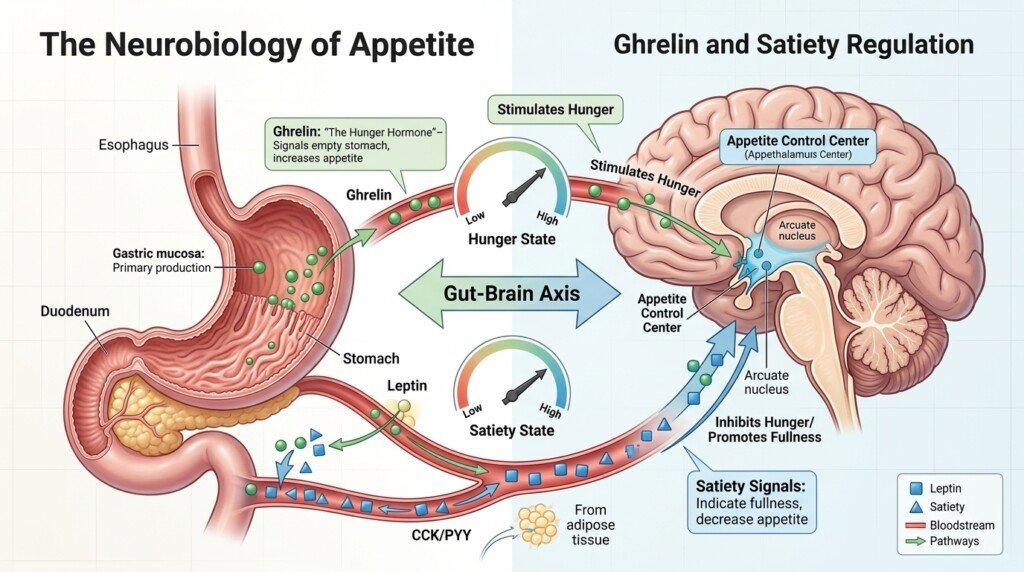
Meet Ghrelin: The Hunger Hormone
One of the most discussed appetite-related hormones is ghrelin.
Ghrelin levels typically rise before meals and fall after eating.
Higher ghrelin levels are often associated with stronger hunger signals.
This is one reason meal timing and food quality can influence appetite so dramatically.
Satiety: The Feeling Everyone Wants
The opposite of hunger is satiety.
Satiety refers to the feeling of satisfaction after eating.
When satiety remains high, people naturally eat less without feeling deprived.
Many natural appetite suppressants work by increasing satiety rather than eliminating hunger altogether.
This distinction is important.
The goal isn’t to stop feeling hungry forever.
The goal is to stay satisfied long enough to maintain healthy eating habits.
How Do Natural Appetite Suppressants Actually Work?
Different appetite suppressants work in different ways.
Some increase fullness.
Others slow digestion.
Some help stabilize energy levels.
Others support healthier eating behaviors.
The most effective options often influence several mechanisms simultaneously.
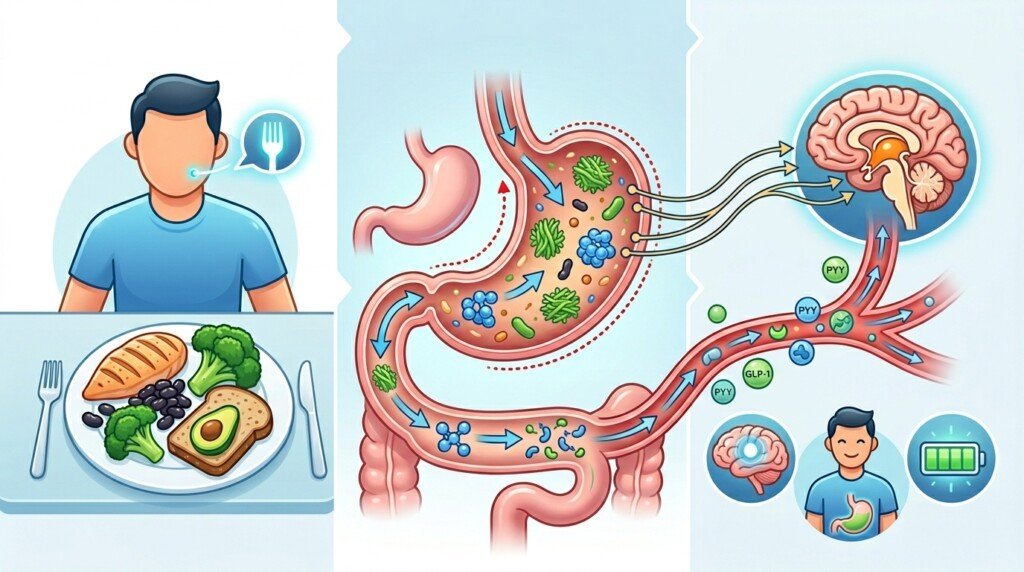
They Increase Fullness
Foods that expand in the stomach or digest slowly often help people feel satisfied longer.
They Slow Digestion
Slower digestion frequently leads to steadier energy and reduced hunger between meals.
They Reduce Cravings
Some foods help minimize dramatic blood sugar swings that contribute to cravings.
They Encourage Better Food Choices
When hunger feels manageable, healthy decisions often become easier.
This may sound simple, but the impact can be significant.
Which Natural Appetite Suppressants Actually Deserve Attention?
The internet is full of products claiming to suppress appetite.
Many deserve skepticism.
However, several natural options continue to appear in nutrition research and practical weight-management discussions.

Protein
If there were a “most underrated” appetite suppressant, protein would be near the top of the list.
Protein-rich meals consistently outperform many highly processed foods when it comes to satisfaction.
Examples include:
- Eggs
- Fish
- Chicken
- Turkey
- Greek yogurt
- Cottage cheese
- Tofu
- Legumes
Many people notice that protein-rich breakfasts reduce hunger throughout the day.

Fiber
Fiber and appetite control often go hand in hand.
Fiber-rich foods absorb water, slow digestion, and promote fullness.
Excellent sources include:
- Oats
- Lentils
- Beans
- Vegetables
- Fruits
- Chia seeds
- Flaxseeds
One reason fiber receives so much attention is because it helps address hunger without adding excessive calories.

Water
People frequently underestimate hydration.
Mild dehydration can sometimes be confused with hunger.
Drinking water before meals may also help some individuals feel fuller.
Water is not a miracle appetite suppressant.
But it remains one of the simplest tools available.
Potatoes
Potatoes have an undeserved reputation.
When prepared simply rather than deep-fried, potatoes rank surprisingly high on satiety indexes.
They often leave people feeling full relative to their calorie content.
Oats
Oats combine fiber, volume, and slow digestion.
Many people find oatmeal significantly more satisfying than sugary breakfast cereals.
Chia Seeds
When mixed with liquid, chia seeds absorb water and expand.
This contributes to fullness and makes them popular in appetite-control discussions.
Legumes
Beans, lentils, and peas combine protein and fiber.
That combination makes them particularly useful for satiety.
Green Tea
Green tea is often discussed for metabolism.
However, some people find it helpful for appetite management as part of a balanced routine.
Its effects are generally modest rather than dramatic.
Are Foods Better Than Supplements?
This question comes up constantly.
Should you focus on food or supplements?
For most people, food should remain the foundation.

Why Food Usually Wins
Whole foods provide:
- Nutrients
- Fiber
- Protein
- Volume
- Satisfaction
Supplements rarely provide all of these benefits simultaneously.
When Supplements May Help
Supplements may be useful when dietary intake falls short.
For example:
- Fiber supplements
- Protein powders
can help support appetite control when used appropriately.
However, they generally work best as additions to a healthy diet rather than replacements for one.
The Most Effective Strategy
The strongest approach usually combines:
- Protein-rich foods
- High-fiber foods
- Adequate hydration
- Consistent meal habits
Supplements can support this foundation, but they rarely outperform it.
Who Benefits Most From Natural Appetite Suppressants?
Not everyone struggles with hunger in the same way.
Some people naturally maintain appetite control.
Others feel hungry almost constantly.
Natural appetite suppressants may be particularly useful for:

People Who Snack Frequently
Frequent snacking often indicates poor satiety from previous meals.
People Trying to Reduce Portion Sizes
Feeling satisfied with smaller portions can make calorie control easier.
People Struggling With Cravings
Managing cravings often improves dietary consistency.
People Looking for Sustainable Solutions
Many individuals prefer gradual lifestyle-based approaches rather than extreme interventions.
For readers exploring more targeted hunger-management strategies, our guide to the best appetite suppressant covers additional evidence-based options.
Similarly, individuals interested in broader metabolic and appetite-support approaches may find our article on natural alternatives to Ozempic useful for understanding related strategies.
The Biggest Mistake People Make With Appetite Control
Most people search for one magical solution.
One supplement.
One food.
One trick.
Real appetite management rarely works that way.
Successful appetite control typically comes from combining multiple habits:
- More protein
- More fiber
- Better hydration
- Better sleep
- Stress management
- Consistent meal patterns
Each improvement may seem small.
Together, they can dramatically change how hunger feels throughout the day.

Frequently Asked Questions
1. What is the strongest natural appetite suppressant?
Protein and fiber are often considered among the most effective natural appetite suppressants because they promote satiety and help reduce hunger.
2. Do natural appetite suppressants really work?
They can support appetite management, but they are not magic solutions. Their effectiveness depends on overall diet, lifestyle, and consistency.
3. What foods suppress appetite naturally?
Protein-rich foods, high-fiber foods, oats, legumes, chia seeds, and potatoes are commonly discussed for their ability to increase fullness.
4. Can drinking water reduce hunger?
Water may help some individuals feel fuller before meals and can sometimes reduce confusion between thirst and hunger.
5. Is fiber good for appetite control?
Yes. Fiber slows digestion and often helps increase feelings of fullness after meals.
6. Are supplements better than foods for appetite suppression?
For most people, whole foods provide greater overall benefits. Supplements may be useful when dietary intake is inadequate.
7. How can I control hunger naturally?
Focus on protein, fiber, hydration, sleep quality, stress management, and consistent eating habits.
Final Thoughts
The best natural appetite suppressants are rarely exotic supplements or miracle products.
More often, they are simple nutritional tools hiding in plain sight.
Protein.
Fiber.
Water.
Whole foods.
Consistent habits.
These strategies may not generate flashy headlines, but they continue to appear at the center of successful weight-management plans.
The goal is not eliminating hunger.
The goal is making hunger manageable enough that healthy choices become easier to maintain.
And in the long run, that consistency is often what produces lasting results.
Disclaimer:
This post may contain affiliate links. If you purchase through them, we may earn a small commission at no extra cost to you. Also, this content is for informational purposes only and does not substitute professional medical advice.