
Does Magnesium Help With Weight Loss? What Research Says
Magnesium for weight loss has become a surprisingly popular topic in recent years.
Search online and you’ll find thousands of articles claiming magnesium can melt fat, boost metabolism, reduce belly fat, improve sleep, balance hormones, and solve almost every weight-loss challenge imaginable.
That’s a lot of responsibility for one mineral.
The problem is that many of those claims stretch far beyond what the evidence actually shows.
Magnesium is essential for human health.
Without it, your body simply cannot function properly.
It supports hundreds of biological processes every day, including energy production, muscle function, blood sugar regulation, nerve signaling, and sleep quality.
But does that mean magnesium directly causes weight loss?
Not exactly.
The real story is more interesting.
Magnesium may influence several factors that affect body weight indirectly.
And for certain individuals, correcting a magnesium deficiency could help remove obstacles that make weight management more difficult.
The key is understanding what magnesium actually does and what it doesn’t do.

If Magnesium Is So Important, Why Don’t We Talk About It More?
Most people think about vitamins and minerals only when they become deficient.
Vitamin D gets attention.
Iron gets attention.
Protein gets attention.
Magnesium often gets overlooked.
That’s surprising because magnesium is involved in more than 300 biochemical reactions throughout the body.
Every heartbeat.
Every muscle contraction.
Every nerve signal.
Every time your body converts food into energy.
Magnesium is involved.
Yet many people fail to consume enough magnesium through food.
Modern eating habits often prioritize convenience foods while reducing intake of magnesium-rich foods like vegetables, legumes, nuts, and seeds.
As a result, low magnesium intake has become increasingly common.
That doesn’t automatically cause weight gain.
But it may influence several systems connected to weight management.
What Magnesium Does in the Body
Imagine trying to run a factory while removing one of the key workers responsible for keeping everything running smoothly.
The factory might still function.
But efficiency would suffer.
That’s similar to what can happen when magnesium levels become inadequate.
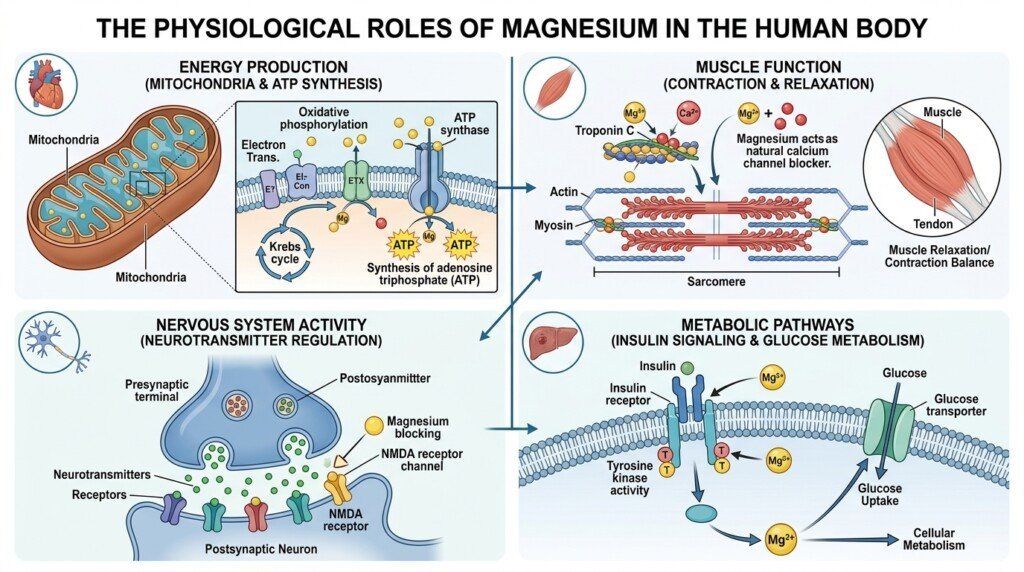
Energy Production
Your body relies on magnesium to help convert food into usable energy.
This process occurs continuously.
Without adequate magnesium, energy production becomes less efficient.
Many people experiencing low magnesium levels report fatigue, low energy, or reduced exercise capacity.
Those factors may indirectly affect weight-management efforts.
Muscle Function
Magnesium helps muscles contract and relax properly.
This is important for:
- Physical activity
- Recovery
- Exercise performance
- Daily movement
When magnesium intake is inadequate, muscle cramps and discomfort may become more common.
Nervous System Regulation
Magnesium also supports healthy nervous system function.
This role becomes important when discussing stress, sleep, and eating behavior later in the article.
Blood Sugar Regulation
Researchers continue studying magnesium’s relationship with insulin sensitivity and glucose metabolism.
This area has attracted particular attention because blood sugar regulation can influence hunger, cravings, and metabolic health.
Magnesium for Weight Loss: What Does the Research Show?
This is the question most readers want answered.
Let’s address it directly.
Magnesium is not a fat-burning supplement.
Taking magnesium does not automatically trigger weight loss.
It does not magically increase calorie expenditure.
It does not force the body to burn stored fat.
And it certainly does not create dramatic weight-loss results overnight.
If that were true, magnesium would dominate every weight-loss discussion on the internet.
Instead, researchers focus on a different question:
Can magnesium support processes that influence body weight?
The answer may be yes.

The Difference Between Direct and Indirect Effects
Many supplements promise direct weight loss.
Magnesium operates differently.
Rather than directly causing fat loss, magnesium may influence factors such as:
- Sleep quality
- Blood sugar regulation
- Stress management
- Energy levels
- Physical activity
Those factors can affect weight-management outcomes over time.
Why This Distinction Matters
A supplement that supports better sleep may indirectly support weight loss.
A supplement that improves insulin sensitivity may indirectly support weight loss.
A supplement that reduces fatigue may indirectly support weight loss.
These effects are very different from claiming the supplement itself burns fat.
Understanding that distinction helps set realistic expectations.
Could Blood Sugar Be the Missing Link?
One reason magnesium frequently appears in weight-management discussions involves its relationship with blood sugar.
Blood sugar regulation affects much more than diabetes risk.
It also influences:
- Hunger
- Cravings
- Energy levels
- Food choices
When blood sugar fluctuates dramatically, many people experience stronger cravings and greater difficulty maintaining healthy eating habits.
Magnesium and Blood Sugar
Researchers have explored the relationship between magnesium and insulin sensitivity for many years.
Insulin helps move glucose from the bloodstream into cells.
When insulin function becomes impaired, blood sugar regulation may become more challenging.
Magnesium appears to play a role in these processes.
This doesn’t mean magnesium cures insulin resistance.
However, maintaining adequate magnesium intake may support normal metabolic function.

Why This Matters for Weight Management
Imagine two people.
One experiences stable energy throughout the day.
The other experiences repeated energy crashes and cravings.
Which person is more likely to stick to a healthy eating plan?
The answer is obvious.
Small improvements in metabolic health can create meaningful differences in daily behavior.
What Does Sleep Have to Do With Weight Loss?
More than most people realize.
In fact, sleep may be one of the most underrated factors in weight management.
Yet many individuals focus on supplements while ignoring sleep entirely.
Sleep and Hunger Hormones
Poor sleep has been associated with changes in hormones involved in hunger and satiety.
When sleep suffers, appetite often increases.
Cravings become stronger.
High-calorie foods become more appealing.
This creates a situation where healthy choices require more effort.
Magnesium and Sleep
Magnesium has gained attention because of its potential role in supporting relaxation and sleep quality.
Many people take magnesium in the evening as part of a bedtime routine.
Research results remain mixed, but some individuals report improvements in sleep quality and relaxation.

Why Better Sleep May Support Weight Loss
Better sleep does not burn fat directly.
However, it may support:
- Appetite regulation
- Energy levels
- Recovery
- Exercise performance
- Decision-making around food
Those effects can influence long-term outcomes.
Is Stress Quietly Affecting Your Weight?
Many people focus exclusively on food and exercise.
Meanwhile, stress quietly operates in the background.
Stress influences:
- Eating behavior
- Cravings
- Sleep quality
- Motivation
- Recovery
This is one reason stress management appears repeatedly in discussions about sustainable weight loss.
The Stress-Eating Connection
Some people lose their appetite during stressful periods.
Others experience the opposite.
They crave comfort foods, snack more frequently, and struggle with portion control.
Both responses are common.
Magnesium and Stress
Magnesium participates in nervous system function and relaxation processes.
Researchers continue exploring how magnesium status may influence stress resilience and mood.
This doesn’t mean magnesium eliminates stress.
But adequate magnesium intake may support normal nervous system function.

Why Stress Matters for Weight Management
A stressed person often behaves differently around food than a well-rested and relaxed person.
Anything that supports healthier stress management may indirectly support weight-management efforts.
For readers interested in how stress influences body weight, our guide to stress and weight loss explores this relationship in greater detail.
Who Is Most Likely to Benefit From Magnesium?
At this point, an important question emerges.
If magnesium doesn’t directly cause weight loss, who should actually care about it?
The answer is surprisingly broad.
Magnesium is not just relevant to athletes or people taking supplements.
It may be relevant to anyone whose lifestyle, diet, or health status increases the likelihood of inadequate intake.

People Who Struggle With Sleep
Poor sleep and weight management often travel together.
When sleep quality declines, appetite frequently increases.
Cravings become harder to resist.
Energy levels fall.
Exercise becomes less appealing.
For people dealing with chronic sleep issues, magnesium is often one of the first nutrients discussed because of its role in relaxation and nervous system function.
Again, magnesium isn’t a sleeping pill.
But maintaining adequate magnesium levels may support healthy sleep patterns.
People Experiencing High Stress Levels
Modern life places many individuals under constant pressure.
Work demands.
Financial concerns.
Family responsibilities.
Health challenges.
All of these contribute to ongoing stress.
Because magnesium participates in nervous system regulation, people under chronic stress are often interested in ensuring they consume enough of it.
People With Poor Dietary Habits
Many processed foods provide calories but relatively few nutrients.
As intake of vegetables, legumes, nuts, and seeds decreases, magnesium intake often decreases as well.
People whose diets rely heavily on convenience foods may benefit from paying closer attention to magnesium-rich foods.
People Focused on Metabolic Health
Because magnesium has been studied in relation to insulin sensitivity and glucose metabolism, individuals concerned about metabolic wellness frequently become interested in magnesium intake.
This doesn’t mean magnesium is a cure-all.
It simply means it plays a role in several systems connected to metabolic function.
Could You Be Low in Magnesium Without Knowing It?
Possibly.
Magnesium deficiency doesn’t always announce itself dramatically.
Sometimes the signs are subtle.
Common Signs Associated With Low Magnesium Intake
Potential signs may include:
- Fatigue
- Low energy
- Muscle cramps
- Difficulty sleeping
- Increased stress sensitivity
- Weakness
- Reduced exercise performance
These symptoms are not unique to magnesium deficiency.
Many health issues can produce similar symptoms.
However, they help explain why magnesium receives attention in wellness discussions.
Why Testing Isn’t Always Simple
Unlike some nutrients, determining magnesium status can be complicated.
Most magnesium is stored inside cells and tissues rather than circulating in the bloodstream.
As a result, blood levels do not always tell the full story.
Anyone concerned about deficiency should speak with a healthcare professional for personalized guidance.
What Foods Naturally Contain Magnesium?
Whenever possible, food should remain the primary source of nutrients.
Whole foods provide much more than isolated vitamins and minerals.
They also provide:
- Fiber
- Protein
- Antioxidants
- Phytonutrients
- Additional minerals
Fortunately, many nutritious foods contain magnesium.

Nuts and Seeds
Some of the richest sources include:
- Pumpkin seeds
- Chia seeds
- Almonds
- Cashews
These foods provide magnesium alongside healthy fats and other beneficial nutrients.
Legumes
Beans, lentils, and peas are excellent sources.
They also provide fiber and plant-based protein.
This combination makes them valuable for overall health and appetite management.
Leafy Green Vegetables
Spinach often appears on magnesium-rich food lists for good reason.
Other leafy greens also contribute meaningful amounts.
Whole Grains
Examples include:
- Oats
- Quinoa
- Brown rice
Whole grains generally provide more nutrients than highly refined grain products.
Dark Chocolate
This is usually everyone’s favorite section.
Dark chocolate contains magnesium and several beneficial plant compounds.
Of course, moderation still matters.
Avocados
Avocados provide healthy fats, fiber, and magnesium, making them a nutrient-dense addition to many eating patterns.
Food or Supplements: Which Is Better?
This question appears in almost every nutrition discussion.
Should you get nutrients from food or supplements?
For most people, food comes first.
Why Food Has Advantages
Whole foods provide nutritional packages rather than isolated compounds.
For example, eating beans provides:
- Magnesium
- Fiber
- Protein
- Micronutrients
A supplement usually provides only one component.
When Supplements Make Sense
Supplements may become useful when:
- Dietary intake is inadequate
- A deficiency exists
- A healthcare professional recommends supplementation
In those situations, supplements can help fill nutritional gaps.
The Goal Shouldn’t Be More Magnesium
This may sound strange.
But the goal isn’t maximizing magnesium intake.
The goal is achieving adequate intake.
More is not always better.
Balance matters.
What Does the Research Actually Say?
Many articles jump from “magnesium is important” to “magnesium causes weight loss.”
That’s a mistake.
The research paints a more nuanced picture.
What Research Supports
Evidence supports magnesium’s role in:
- Energy metabolism
- Blood sugar regulation
- Nervous system function
- Muscle function
- Sleep-related processes
What Research Does Not Support
Current evidence does not support magnesium as a standalone fat-loss supplement.
Taking magnesium alone is unlikely to produce dramatic changes on the scale.
Why People Still Talk About It
Because weight management involves more than calories.
Sleep quality matters.
Stress matters.
Metabolic health matters.
Energy levels matter.
Magnesium intersects with several of these factors.
That’s why the discussion continues.
Where Does Magnesium Fit Into a Weight-Loss Plan?
Imagine building a house.
The foundation matters.
The walls matter.
The roof matters.
No single component creates the entire structure.
Weight management works similarly.
Magnesium is not the foundation.
It is not the entire house.
But it may be one of the supporting pieces.
For some individuals, correcting a deficiency may help improve:
- Energy
- Sleep
- Recovery
- Overall well-being
Those improvements may make healthy habits easier to maintain.
And consistency is often what drives long-term results.
Readers interested in the broader role of nutrients in abdominal fat management may find our guide to vitamins for belly fat useful.
Likewise, those comparing multiple evidence-based options can explore our roundup of the best weight loss supplements for a wider perspective.

Frequently Asked Questions
1. Does magnesium help with weight loss?
Magnesium does not directly cause weight loss. However, it may support processes related to sleep, blood sugar regulation, energy production, and stress management.
2. Can magnesium burn fat?
No. Magnesium is not considered a fat-burning supplement.
3. Which magnesium is best for weight loss?
There is no specific form of magnesium proven to cause weight loss. Different forms are used for different purposes and absorption characteristics.
4. Can magnesium reduce belly fat?
There is no strong evidence that magnesium directly reduces belly fat. Its role is primarily supportive rather than fat-burning.
5. Does magnesium help with cravings?
Indirectly, it may support factors such as blood sugar regulation and sleep quality that can influence appetite and cravings.
6. What foods are highest in magnesium?
Pumpkin seeds, almonds, spinach, legumes, oats, dark chocolate, and avocados are among the richest dietary sources.
7. Should everyone take a magnesium supplement?
Not necessarily. Many people can meet their magnesium needs through a balanced diet. Supplementation should be considered based on individual needs and professional guidance.
Final Thoughts
Magnesium occupies an interesting place in the weight-loss conversation.
It isn’t a miracle supplement.
It won’t melt fat.
And it won’t replace healthy eating or regular physical activity.
Yet dismissing magnesium entirely would also be a mistake.
This essential mineral supports hundreds of biological functions, including several that influence overall health and weight-management success.
Sleep quality.
Stress regulation.
Blood sugar balance.
Energy production.
These factors may not grab headlines the way fat-burning claims do, but they often play a larger role in long-term results.
The most accurate answer to the question “Does magnesium help with weight loss?” is this:
Not directly.
But for the right person, maintaining healthy magnesium levels may support several processes that make successful weight management easier.
And sometimes removing obstacles is just as important as finding new solutions.
Disclaimer:
This post may contain affiliate links. If you purchase through them, we may earn a small commission at no extra cost to you. Also, this content is for informational purposes only and does not substitute professional medical advice.